


 Claim Ownership
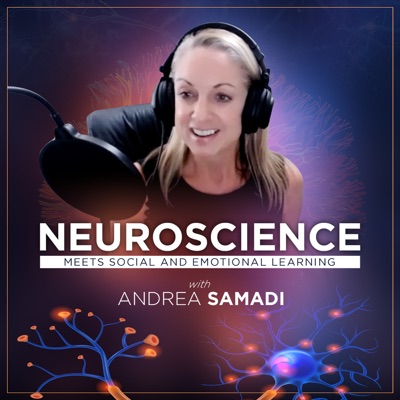
Neuroscience Meets Social and Emotional Learning

Description
Welcome to the Neuroscience Meets Social and Emotional Learning Podcast
The Neuroscience Meets Social and Emotional Learning Podcast was created to bridge the gap between cutting-edge neuroscience research and its practical application in education, business, leadership, athletics, health, and personal development.
Since launching in 2019, the podcast has grown into a global platform, reaching listeners in more than 190 countries, publishing 400+ episodes, and sharing conversations with many of the world's leading experts in neuroscience, psychology, education, medicine, and human performance.
Our mission is simple:
To make neuroscience understandable, practical, and actionable—helping people learn, lead, and perform at their highest potential.
Every episode translates complex brain science into evidence-based strategies that listeners can immediately apply to improve learning, strengthen emotional intelligence, optimize health, build resilience, and achieve measurable improvements in performance.
The Evolution of the Podcast
The podcast has evolved over seven years, with each season building on the discoveries of the last.
Season 1 – Foundations of Neuroscience & Social and Emotional Learning
Introduced the neuroscience behind social and emotional learning (SEL) and emotional intelligence, providing educators and leaders with practical strategies for implementation in schools and workplaces.
Season 2 – High Performance Across Domains
Expanded into education, sports, and business, exploring how social, emotional, and cognitive strategies contribute to high performance.
Season 3 – Motivation, Mindset & Peak Performance
Connected influential business principles and motivational thinking with modern neuroscience to explore how mindset shapes achievement and productivity.
Seasons 4 & 5 – Mental Health, Wellness & Applied Neuroscience
Focused on stress management, mental health, cognitive resilience, and practical neuroscience strategies for improving well-being and performance.
Seasons 6–8 – Brain Health & The Science of Learning
Explored educational neuroscience, brain health, and the Science of Learning, demonstrating how understanding the brain improves learning across every stage of life.
Seasons 9 & 10 – Neuroscience 101
Returned to the fundamentals, simplifying core neuroscience concepts and building a strong foundation for understanding learning, behavior, and performance.
Seasons 11–13 – The Neuroscience of Self-Leadership
Examined self-awareness, emotional regulation, habits, decision-making, identity, and purpose, showing how neuroscience can help people lead themselves before leading others.
Season 14 – Reflect
Reviewed the podcast's most impactful interviews, identifying recurring themes and timeless lessons from years of conversations with world-leading experts.
Season 15 – Apply
Moved from reflection to implementation by organizing key insights into practical, evidence-based strategies that listeners could apply immediately in their own lives.
Season 16: The Brain's Operating System for Human Performance
Season 16 marks the next evolution of the podcast, introducing The Brain's Operating System for Human Performance—an evidence-based framework developed from more than 400 episodes and years of conversations with leading experts.
The framework is organized into three interconnected phases:
Phase 1 – Regulation & Safety
Every high-performing brain begins with regulation. This phase explores how sleep, stress regulation, trauma, autonomic balance, recovery, and psychological safety create the biological foundation for learning, resilience, and peak performance.
Phase 2 – The Motivation Loop
Once the brain is regulated, motivation becomes possible. This phase explores how beliefs, thoughts, attention, dopamine, reward, and repetition shape behavior, build lasting habits, and sustain meaningful achievement.
Phase 3 – The Movement Loop
Movement is not simply exercise—it is one of the brain's most powerful inputs. Through evidence-based research on exercise, neuroplasticity, recovery, sleep, metabolism, and performance, this phase demonstrates how movement changes the brain, strengthens the body's ability to adapt, and leads to measurable improvements in cognitive function, resilience, health, leadership, and human performance.
The Movement Loop is built around one simple framework:
Movement is the input.
Adaptation is the biological process.
Performance is the measurable outcome.
Season 16 provides practical, science-backed strategies that listeners can apply immediately to learn, lead, and perform at their highest potential.
Looking Ahead
The Brain's Operating System for Human Performance continues to evolve.
Future seasons will expand the framework through two additional phases:
Phase 4 – The Connection Loop (Working Title)
Exploring how trust, relationships, communication, belonging, and collaboration shape the brain and create the conditions for teams, organizations, and communities to thrive.
Phase 5 – The Purpose Loop (Working Title)
Bringing the entire framework together by exploring how purpose, identity, leadership, and contribution transform high performance into meaningful, lasting impact.
As this framework continues to grow, it will be accompanied by The Brain's Operating System Workbook—a practical guide designed to help readers apply each phase to their own lives through self-assessments, guided reflections, evidence-based exercises, and implementation tools.
Together, the podcast and workbook are designed to form a complete learning system—providing both the science and the practical application needed to create lasting change.


 United States