


 Claim Ownership
RRR podcast
Subscribed: 1Played: 78
Subscribe

© Rajesh Ramdev Ram
Description
Dive into the world of captivating audiobooks and engaging podcasts on RRRpodcast. We offer a variety of content to suit your interests, whether you're looking to lose yourself in a good story or learn something new.
Available on YouTube, Apple Podcasts, Spotify, Google Podcasts, Amazon Music, Stitcher, Pocket Casts, Overcast, Podcast Addict, Castro, TuneIn Radio, Deezer, iHeartRadio, Castbox, Pandora, Listen Notes.
#podcast, #audiobook, #storytelling, #learning, #selfimprovement, #knowledge, #education, #explore, #discover, #entertainment, #relaxation, #leisure, #enjoy, #audiobooklover,
Available on YouTube, Apple Podcasts, Spotify, Google Podcasts, Amazon Music, Stitcher, Pocket Casts, Overcast, Podcast Addict, Castro, TuneIn Radio, Deezer, iHeartRadio, Castbox, Pandora, Listen Notes.
#podcast, #audiobook, #storytelling, #learning, #selfimprovement, #knowledge, #education, #explore, #discover, #entertainment, #relaxation, #leisure, #enjoy, #audiobooklover,
288 Episodes
Reverse
THERE IS a very significant distinction to be made in the very beginning: the distinction between knowledge and knowing. Knowledge only appears to know, it knows not. Knowing may not appear to know, but it knows. Knowledge is borrowed, knowing is one’s own. Knowledge is verbal, knowing is through living. Knowledge is information gathered from here and there. Knowing is existential: you have lived it, it has come through your very experience; it is an experience. When knowing happens, a man is freed, he is liberated. Through knowledge, man becomes more of a prisoner. Knowledge binds; knowing liberates.
It is said that whenever God creates a person he whispers into his ear ’You are my favourite. I have never made such a beautiful person before, and I am not going to make such a beautiful person again. You are simply unique.’ But this he has been doing to everybody and everybody deep down in his heart thinks ’Whatsoever God has said. one believes.’ You are my favourite. And this is not addressed to anybody in particular, but to everybody. In fact, to choose a favourite or not is not possible for me. It depends on you, you can become my favourite, you may not become; it is one-way traffic. If you allow, you will become; if you don’t allow, you will not become. As far as I am concerned I am not.
But man can approach through two ways towards this truth. Those two ways have to be understood. Truth is one but the paths are two. Thew first path is VIA AFFIRMATIVA, the positive path, the ‘yes-sayers’ path, The path of the devotee. Jesus, Mohammed, Krishna-they have followed the path of affirmation. The path of affirmation seems the path of effort, the great effort: one is trying to reach God, one has to make all the effort that is possible, one has to do the utmost, one has to put oneself at stake. In modern times, Gurdjieff, Ramakrishna-they followed the path of affirmation, VIA AFFIRMATIVA. The other path is VIA NEGATIVA, through negation, through the ’no’. Lao Tzu, Buddha, Nagarjuna – they followed the path of negation. In modern times, Ramana Maharshi, J. Krishnamurti – they follow the path of the ’no’. These two paths have to be understood as clearly as possible because much will depend on it; you will have to choose someday or other. They move in different dimensions; they reach the same goal, but they move in different directions.
CAN ONE BELIEVE IN TAO, NOT INTERFERING WITH OTHER PEOPLE’S LIVES, ACCEPTING WHAT IS NOW, AND BY PROFESSION BE A PSYCHOTHERAPIST? WHAT, OR HOW, IS A TAO WAY OF DOING THERAPY? It is from Poonam.
It is of tremendous significance. The first thing: ’Can one believe in Tao...?’ Tao does not depend on belief. You cannot believe in it. Tao knows no belief system. It does not say ’ Belief.’ That’s what other religions do. Tao is the dropping of all belief systems. Then arises a totally new kind of trust – trust in life. Belief means believing in concepts. Concepts are ABOUT life. Trust is not concerned with concepts. Trust is immediate, direct, in life; it is not about life. Belief is far away from life. The stronger the belief, the greater the barrier. Tao is neither a belief nor disbelief but the dropping of all beliefs and disbeliefs. When you drop all beliefs and disbeliefs and you are immediate, in contact with life, a trust arises, a great ’yes’ arises in your being. That ’yes’ transforms, transforms totally.
TZU KUNG GREW WEARY OF STUDY AND TOLD CONFUCIUS ’I WANT TO FIND REST.’ ’THERE IS NO REST FOR THE LIVING.’ ’THEN SHALL I NEVER FIND IT?’ ’YOU SHALL. LOOK FORWARD TO THE LOFTY AND DOMED MOUND OF YOUR TOMB AND KNOW WHERE YOU SHALL FIND REST.’ ’GREAT IS DEATH! THE GENTLEMAN FINDS REST IN IT, THE MEAN MAN SUBMITS TO IT!’ ’TZU KUNG, YOU HAVE UNDERSTOOD. ALL MEN UNDERSTAND THE JOY OF BEING ALIVE, BUT NOT ITS MISERY, THE WEARINESS OF GROWING OLD, BUT NOT ITS EASE, THE UGLINESS OF DEATH, BUT NOT ITS REPOSE.’ PHILOSOPHY IS the enemy of truth. And when I say philosophy I mean all philosophy, mine included, because the philosophy creates a screen of words and you cannot see the reality as it is. It distorts reality, it interprets reality, it gives a garb to reality, it hides reality, it covers reality.
I am not against taste because I am not against the senses. To be sensitive is to be intelligent, to be sensitive is to be alive. Your so-called’ religions’ have tried to de-sensitize you, to make you dull. They are against taste, they would like you to make your tongue absolutely dull so you don’t taste anything. But that is not a state of health; the tongue becomes dull only in illness. When you have a fever. the tongue becomes dull. When you are healthy the tongue is sensitive; alive, throbbing, pulsates with energy. I am not against taste, I am for taste. Eat well, taste well; the taste is divine. And so, exactly like the taste, you have to look at beauty and enjoy; you have to listen to music and enjoy; you have to touch the rocks and leaves and human beings – the warmth, the texture – and enjoy. Use all your senses, use them at their optimum, then you will really live and your life will be aflame; it will not be dull, it will be aflame with energy and vitality. I am not for those people who have been teaching you to kill your senses; they are against the body.
Tao is not rational. It is not anti-national either. It is superrational. Life is more than reasonable. Life is more than can be understood by the mind. Life has to give you more than you can learn. It is bigger than your capacity for learning. It is bigger than you can ever know, but it can be felt. Tao is intuitive. Tao is more total. When you approach life through the head, and only through the head, it is a part approach; misunderstanding is bound to be there. A man who is trying to figure it out is bound to fall into a tremendous trap and will not be able to come out of it easily. Once you start intellectualizing about life, you start going astray. Live has to be lived. Life has to be lived existentially and not intellectually. Intellect is not a bridge., but a barrier. This has to be understood-then the parable is of tremendous importance. And we are going to go into it very slowly, trying to understand each sentence in it, each word actually. A Confucian approach is a mental approach. A Taoist approach is a no-mind approach. Confucius thinks about life. Lao Tzu, Chuang Tzu, Lieh Tzu, don’t think about life because they say: You can go on thinking and thinking about and about, and you will go round and round and you will never reach to the center. About and about is not the way. Go directly, be immediate. SEE life, don’t think about it.
All is an illusion except the witness. All is a dream except the witness. Only the knower is true, is real. Whatsoever you see is illusory; the seer is not illusory. In the night you see one type of dream, in the day you see another type of dream. In the night the dreams of the day are forgotten, in the day the dreams of the night are forgotten. Sometimes you dream with open eyes and sometimes you dream with closed eyes, but one thing remains eternally there, never changing, and that is your consciousness. In the night you see dreams; in the day you see things, the world. Everything changes night into day, day into night, dreams into thoughts, thoughts into dreams; only one thing remains eternally there – your witnessing. That which is eternal is true. That which is changing is illusory. Remember, by ’illusion’ I don’t mean that it is not, by ’illusion’ I only mean that it is not eternally true. And what is the meaning of something being temporarily true, only for the moment? Before the moment it was untrue, after the moment it again becomes untrue. That’s why in the East we have not been chasing life. Before birth it was not there, after death it will not be there again, so this momentary phenomenon is not of much value. There is no need to get obsessed with it; one can pass through it unconcerned, untouched by it.
Singing, music, dancing, are the language of joy, of happiness. They are an expression that the person is not miserable. But it may be just an appearance, it may be just projected, it may be just cultivated; deep down the situation may be just the opposite. Sometimes it happens that you laugh because you don’t want to cry. Sometimes it happens that you smile because tears are coming and, if you don’t smile, they will start rolling down your cheeks. Sometimes you maintain an attitude, a cultivated face, a mask, that you are happy, because what is the point of showing your unhappiness to the world? That’s why people look so happy. Everybody thinks he is the unhappiest person in the world. because he knows his reality and he knows only the faces of others the cultivated faces. So everybody deep down thinks: ’I am the most miserable person, and why am I the most miserable person when everybody is so happy?’

Tao knows nothing of discipline. Tao is anarchic, spontaneous, effortless. All disciplines are unnatural – they have to be. Nature needs no discipline, it is sufficient unto itself. Trees and rivers and animals and stars – they don’t know anything of discipline. Discipline is man-created, manmade. and because of discipline man becomes split. One part starts manipulating the other part, then a rift is created. The mind tries to manipulate the body, and the body tries to manipulate the mind in subtle ways or at least tries to sabotage it. This conflict creates confusion: all conflict is confusion. Because of conflict, the fusion cannot happen: you cannot be one, you cannot be fused in one, hence the confusion. And the ultimate result can only be schizophrenia. You go on fighting and fighting, and by and by you are no longer one individual, you become many – at least two, and if worse happens, then many – then you become a crowd. And when you are not one, you cannot be happy.
Truth cannot be expressed: that inexpressibility is intrinsic to the truth. Thousands and thousands of people have tried to express it – very few have succeeded even in giving a reflection of it. Lieh Tzu is one of those very few; he is rare. Before we start entering into his world, a few things have to be understood about him... his approach. His approach is that of an artist: the poet, the story-teller – and he is a master storyteller. Whenever somebody has experienced life, his experience has flowered into parables: that seems to be the easiest way to hint at that which cannot be said. A parable is a device, a great device; it is not just an ordinary story. The purpose of it is not to entertain you, the purpose of it is to say something which there is no other way to say. Life cannot be put into a theory – it is so vast, it is so infinite.
 1
1Whenever your heart falls out of line with the whole you are in trouble, you are ill; whenever the heart is in rhythm with the whole you are healthy. Let this be the definition of health. Whenever there is no conflict between you and the whole, not even a rumor of conflict, you are healthy. To be whole is to be healthy. To be whole is to be holy. And what is the way to be holy, healthy, whole? Your heart should beat in the same rhythm as the heart of the whole. You should not fall out of line, out of step. It is a great cosmic dance. It is a great harmony. When you sit still, silent, not doing anything, meditative, prayerful, suddenly you start merging into the whole. You come closer and closer and closer and your steps are no longer heard as separate from the whole. You become part of this great symphony. Suddenly you are healthy, holy, whole. How to come to this tuning with the whole? Why are you missing it? You are constantly in discord, you have many contradictions within you. Those contradictions go on like a tug of war within continuously, day and night, awake and asleep. You are constantly pulled into opposite directions. This tense state of affairs does not allow you to listen. OSHO
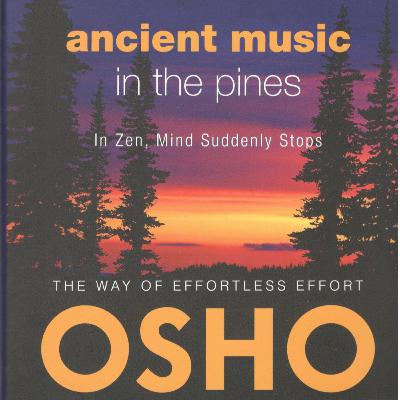
Death is already happening. Whether you face it or not, whether you look at it or not, it is already there. It is just like breathing. When a child is born, he inhales. he breathes in for the first time. That is the beginning of life. And when one day he becomes old, dies, he will exhale. Death always happens with exhalation and birth with inhalation. But exhalation and inhalation are happening continuously. With each inhalation you are born; with each exhalation, you die. So the first thing to understand is that death is not somewhere in the future, waiting for you, as it has been always pictured. It is part of life; it is an ongoing process -- not in the future, here, now. Life and death are two aspects of existence. simultaneously happening together. Ordinarily, you have been taught to think of death as being against life. Death is not against life -- life is not possible without death. Death is the very ground on which life exists. Death and life are like two wings: the bird cannot fly with one wing, and the being cannot be without death. So the first thing is a clear understanding of what we mean by death. Death is an absolutely necessary process for life to be. It is not the enemy, it is the friend. And it is not there somewhere in the future, it is here, now. It is not going to happen, it has been always happening. Since you have been here it has been with you. With each exhalation it happens -- a little death, a small death -- but because of fear we have put it in the future. OSHO
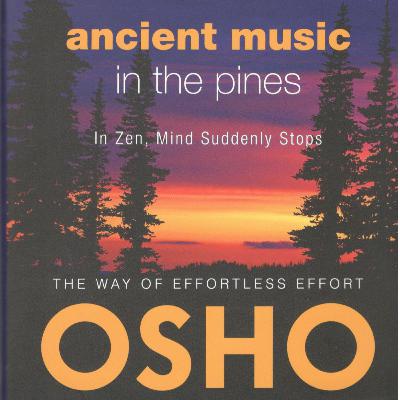
Meditation is a state of clarity, not a state of mind. The mind is confused. The mind is never clear. It cannot be. Thoughts create clouds around you -- they are subtle clouds. A mist is created by them, and the clarity is lost. When thoughts disappear, when there are no more clouds around you, when you are in your simple beingness, clarity happens. Then you can see far away; then you can see to the very end of existence; then your gaze becomes penetrating -- to the very core of being. Meditation is clarity, absolute clarity, of vision. You cannot think about it. You have to drop thinking. When I say, 'You have to drop thinking,' don't conclude in a hurry, because I have to use language. So I say, 'Drop thinking,' but if you start dropping, you will miss, because again you will reduce it to a doing. - OSHO
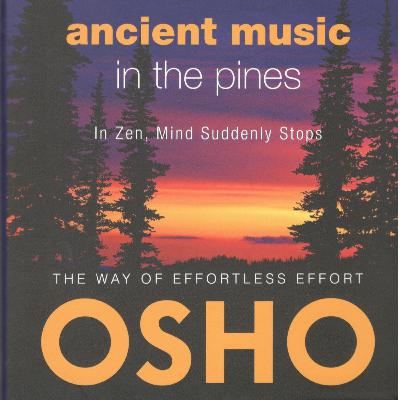
Life is illogical. It is wild. In life, contradictions are not contradictions but complementaries. Life does not believe in the division of either/or, life believes in both. The day becomes night, the night becomes day. They melt and merge. Boundaries are not clear. Everything is overlapping everything else: you are overlapping into your beloved, your beloved is overlapping into you. Your child is still a part of you and yet he is independent. Boundaries are blurred. - Osho
THE ocean is not only hidden behind the waves, but it is also manifesting itself in the waves. It is there on the surface as much as it is in-depth. The depth and the surface are not two separate things: they are two polarities of the same phenomenon. The center comes to the circumference; it is as much on the circumference as it is at the center. God is not only the unmanifest, but it is also the manifest. God is not only the Creator, but God is also the creation. God is as much in his world as he is in himself. Just the other night, a new sannyasin asked me,' Osho, can you show me the Divine form?' I told him, 'All forms are Divine. I have not seen a single form which is not Divine. The whole existence is Divine -- don't divide it into profane and sacred.' All the time, what else am I doing? Showing the Divine form. What else are you doing? Showing the Divine form. What else is happening all over existence? The Divine is spread everywhere. It is as much in the small as it is in the great; it is as much in a grass leaf as in a faraway great star.
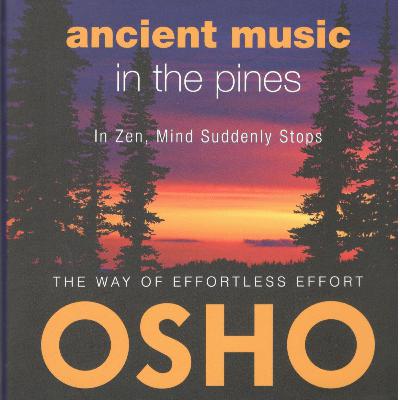
The essential surrender happens within you, it has nothing to do with anybody outside you. The basic surrender is a relaxation, a trust -- so don't be misguided by the word. Linguistically, surrender means to surrender to somebody, but religiously, surrender simply means trust, relaxing. It is an attitude rather than an act: you live through trust. Let me explain. You swim in water -- you go to the river and swim. What do you do? You trust the water. A good swimmer trusts so much that he almost becomes one with the river. He is not fighting, he does not grab the water, he is not stiff and tense. If you are stiff and tense you will be drowned; if you are relaxed the river takes care. That's why whenever somebody dies, the dead body floats on the water. This is a miracle. Amazing! The alive person died and was drowned by the river, and the dead person simply floats on the surface. What has happened? The dead person knows some secret about the river which the alive person did not know. The alive person was fighting. The river was the enemy. He was afraid, he could not trust. But the dead person, not being there, how could he fight? The dead person is totally relaxed with no tension -- suddenly the body surfaces. The river takes care. No river can drown a dead person.
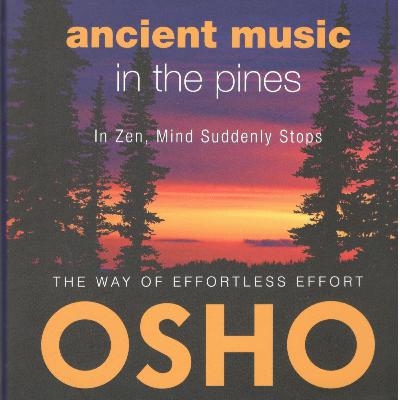
Maturity is a deep trust in your own consciousness; immaturity is a distrust in your own consciousness. When you distrust your consciousness you trust your knowledge, but that is a substitute and a very poor substitute at that. Try to understand this -- it is important. You have been living, you have experienced many things; you have read, you have listened, you have thought. Now all those conclusions are there. When a certain situation arises. you can function in two ways. You can function through all the accumulated past, according to it -- that's what I mean by functioning through a center. through conclusions, through experience, stale, dead -- then whatsoever you do your response is not going to be a response, it will be a reaction. And to be reactionary is to be immature. Or, if you can function right now, here in this moment, through your consciousness, through your being aware, putting aside all that you have known -- this is what I call functioning through no-knowledge, this is functioning through innocence. And this is maturity.
Main Dhyan tab tak kaise Kar sakta hu, jab tak Ki duniya me itna dukh Hai..?
iamrrr.co.in

Comments

Download from Google Play

Download from App Store
 United States