


 Claim Ownership
Farm4Profit Podcast
Subscribed: 571Played: 42,563
Subscribe

Description
Our mission is to provide farms and operators an independent and unbiased outlet for information related to increasing the profitability of their farming operation. We will be providing farms and operators of all sizes and experience levels access to the latest trends, projections, and the tools necessary to increase farming profitability. We will take each episode to deliver latest news, what's working for active farms, and a topic of focus each episode. Remember, if you aren't farming for profit you won't be farming for long.
624 Episodes
Reverse

Why can mental health be so difficult to talk about in agriculture? Sam and Easton explore the unique pressures farmers carry—from finances and isolation to the responsibility of keeping land and a family legacy alive. Rather than blaming farmers for being unwilling to talk, they challenge agriculture to create better opportunities for conversations to happen naturally and earlier.Sam shares the story behind Perfect Sundays, a six-episode fictional drama created after farmers repeatedly encouraged him to address farmer suicide following the success of his film Silo. The series follows a dairy family rebuilding after losing its patriarch to suicide and a mother's attempt to create a value-added ice cream business. By using entertainment and authentic farm storytelling, Sam hopes viewers see themselves in the characters and begin conversations that may otherwise be difficult to have. Easton introduces Project Farm Dog, a nonprofit shaped in part by his family's experience losing his father after a long battle with alcoholism. Farm Dog isn't intended to replace crisis resources such as 988. Its focus is prevention: reducing stigma, connecting farmers with professionals who understand agriculture, and funding care so cost and insurance don't become additional barriers. Its “trusted ear” concept comes from the relationship many farmers have with their farm dog—a place where even the toughest farmer may let their guard down. The message is ultimately about acting before the difficult season arrives. Just as farmers prepare equipment, marketing plans and labor before harvest, Easton argues that health, wellness and relationships should be part of that same checklist. Building resilience, checking on a neighbor, saying a problem out loud, and knowing where to turn for help can all make a difference. Farmer mental health isn't one person's responsibility—it will take farmers, families, agribusinesses and communities working together to make asking for help a normal part of agriculture.
Want Farm4Profit Merch? Custom order your favorite items today!https://farmfocused.com/farm-4profit/ Don’t forget to like the podcast on all platforms and leave a review where ever you listen! Website: www.Farm4Profit.comShareable episode link: https://intro-to-farm4profit.simplecast.comEmail address: [email protected]/Text: 515.207.9640Subscribe to YouTube: https://www.youtube.com/channel/UCSR8c1BrCjNDDI_Acku5XqwFollow us on TikTok: https://www.tiktok.com/@farm4profitllc Connect with us on Facebook: https://www.facebook.com/Farm4ProfitLLC/Farm4Profit Media is not a financial, legal, or tax advisor. Content is provided for informational purposes only, and we serve solely as a platform for third-party opinions. Any actions taken based on this content are at your own risk. Hosted by Simplecast, an AdsWizz company. See pcm.adswizz.com for information about our collection and use of personal data for advertising.

Tom Brown didn't grow up farming. After studying anthropology and horticulture at Kansas State, he spent roughly 15 years living and working in Pakistan and Afghanistan, where he gained experience in agribusiness development, seed production, horticulture, and helping farmers improve their operations. When he eventually returned to the United States, the desire to build a farm of his own was still there.Instead of starting with what he wanted to grow, Tom started by asking potential customers what they wanted to buy. The answer was fresh, pick-your-own peaches. He intentionally searched within a 30-minute drive of Wichita and purchased 80 acres in 2010 for $225,000.00. Today, Meadowlark includes roughly 18 acres of peaches, 17–18 acres of apples, two acres of strawberries, two acres of pumpkins, and a hard cider business. Tom explains how agritourism changes the way a farmer thinks about everything from orchard layout and parking to crop selection and customer experience. Feedback from families helped drive Meadowlark's expansion into apples, while fallen fruit that could have become waste created an additional opportunity through hard cider. The result is a business built around multiple revenue streams rather than production alone. The conversation also gets into the numbers. Tom uses Ambrook to help track the finances of a complicated operation with multiple enterprises and direct costs. As the orchard approaches its physical production limits, he sees future growth coming primarily from cider sales and on-farm experiences, which he believes could significantly increase gross revenue over the next five years. His biggest lesson applies well beyond specialty crops: farming changes slowly, mistakes are expensive, and “every lesson takes a year.”
Want Farm4Profit Merch? Custom order your favorite items today!https://farmfocused.com/farm-4profit/ Don’t forget to like the podcast on all platforms and leave a review where ever you listen! Website: www.Farm4Profit.comShareable episode link: https://intro-to-farm4profit.simplecast.comEmail address: [email protected]/Text: 515.207.9640Subscribe to YouTube: https://www.youtube.com/channel/UCSR8c1BrCjNDDI_Acku5XqwFollow us on TikTok: https://www.tiktok.com/@farm4profitllc Connect with us on Facebook: https://www.facebook.com/Farm4ProfitLLC/Farm4Profit Media is not a financial, legal, or tax advisor. Content is provided for informational purposes only, and we serve solely as a platform for third-party opinions. Any actions taken based on this content are at your own risk. Hosted by Simplecast, an AdsWizz company. See pcm.adswizz.com for information about our collection and use of personal data for advertising.

https://agxplore.com/assessment/?utm_source=google&utm_medium=cpc&utm_campaign=us_branding_search&utm_content=us_branding_search&utm_creative=&utm_term=nitrogen%20fertilizer%E2%80%A8&gad_source=1&gad_campaignid=19647814938&gbraid=0AAAAABcjE32bUOUfaJpssNXD_ZsSRg9jE Potassium is a macronutrient crops need throughout the growing season, but simply having adequate soil levels doesn't guarantee the plant can access it. The AgXplore team explains that roots only explore a portion of the soil profile and potassium movement is heavily tied to water—creating a challenge during dry late-season conditions when crop demand can still be significant.Dr. John and Ben discuss potassium acetate as a highly plant-available form and explain potassium's role in photosynthesis, stalk quality, standability, and the opening and closing of stomata. That stomatal function becomes especially important under heat and moisture stress because it affects transpiration and the plant's ability to continue moving water and nutrients.The conversation then turns to timing. AgXplore's Nutri-K provides potassium acetate, while KSB combines potassium, sulfur, boron, and biostimulants. The team says late-season applications have produced positive results across several crops and geographies. In one replicated Wisconsin trial discussed in the episode, potassium treatments improved yield by roughly 5–10 bushels, with the guests citing a minimum ROI around 6-to-1 in that trial. They also found that stacking an earlier application with a later application performed better than a single application.The bigger takeaway isn't simply to apply more potassium. It's about understanding the crop's demand curve and supplying “the right groceries at the right time.” Soil fertility still provides the foundation, but strategically timed nutrition may help keep the crop functioning and finishing stronger when environmental conditions make soil uptake more difficult.
Want Farm4Profit Merch? Custom order your favorite items today!https://farmfocused.com/farm-4profit/ Don’t forget to like the podcast on all platforms and leave a review where ever you listen! Website: www.Farm4Profit.comShareable episode link: https://intro-to-farm4profit.simplecast.comEmail address: [email protected]/Text: 515.207.9640Subscribe to YouTube: https://www.youtube.com/channel/UCSR8c1BrCjNDDI_Acku5XqwFollow us on TikTok: https://www.tiktok.com/@farm4profitllc Connect with us on Facebook: https://www.facebook.com/Farm4ProfitLLC/Farm4Profit Media is not a financial, legal, or tax advisor. Content is provided for informational purposes only, and we serve solely as a platform for third-party opinions. Any actions taken based on this content are at your own risk. Hosted by Simplecast, an AdsWizz company. See pcm.adswizz.com for information about our collection and use of personal data for advertising.

Does tillage make money? The answer isn't simply yes or no. The KUHN team explains why the industry is moving away from “recreational tillage” toward more calculated, specialized passes designed to solve specific problems. From managing heavy residue and correcting compaction to creating a seedbed, the goal is to understand what the field needs and then determine whether the fuel, labor, equipment, and time required can generate a return.The conversation also challenges the idea that broadcast fertilizer is simply “slinging it.” Garrick explains how modern precision spreaders control drop points, spread patterns, application rates, section control, and border spreading. KUHN's EMC system measures torque on the spinner discs every second and can respond to changing material flow, clogs, and over- or under-application to maintain the target rate. Then the guys get into strip-till and KUHN's new 24-row 1210 Gladiator XL. Beyond reducing passes, strip-till can combine targeted tillage with concentrated fertilizer placement in the root zone. KUHN discusses trials where an 8- to 10-bushel yield gain across enough acres could potentially create a roughly two-year equipment payback, while more efficient nutrient placement may offer opportunities to rethink fertilizer rates. Ultimately, this episode isn't about convincing every farmer to till—or not to till. It's about knowing why you're making the pass. Soil type, compaction, residue, fertility, pH, equipment, labor, timeliness, and management style all matter. The right system is the one that solves a problem on your farm and can justify its cost.
Want Farm4Profit Merch? Custom order your favorite items today!https://farmfocused.com/farm-4profit/ Don’t forget to like the podcast on all platforms and leave a review where ever you listen! Website: www.Farm4Profit.comShareable episode link: https://intro-to-farm4profit.simplecast.comEmail address: [email protected]/Text: 515.207.9640Subscribe to YouTube: https://www.youtube.com/channel/UCSR8c1BrCjNDDI_Acku5XqwFollow us on TikTok: https://www.tiktok.com/@farm4profitllc Connect with us on Facebook: https://www.facebook.com/Farm4ProfitLLC/Farm4Profit Media is not a financial, legal, or tax advisor. Content is provided for informational purposes only, and we serve solely as a platform for third-party opinions. Any actions taken based on this content are at your own risk. Hosted by Simplecast, an AdsWizz company. See pcm.adswizz.com for information about our collection and use of personal data for advertising.
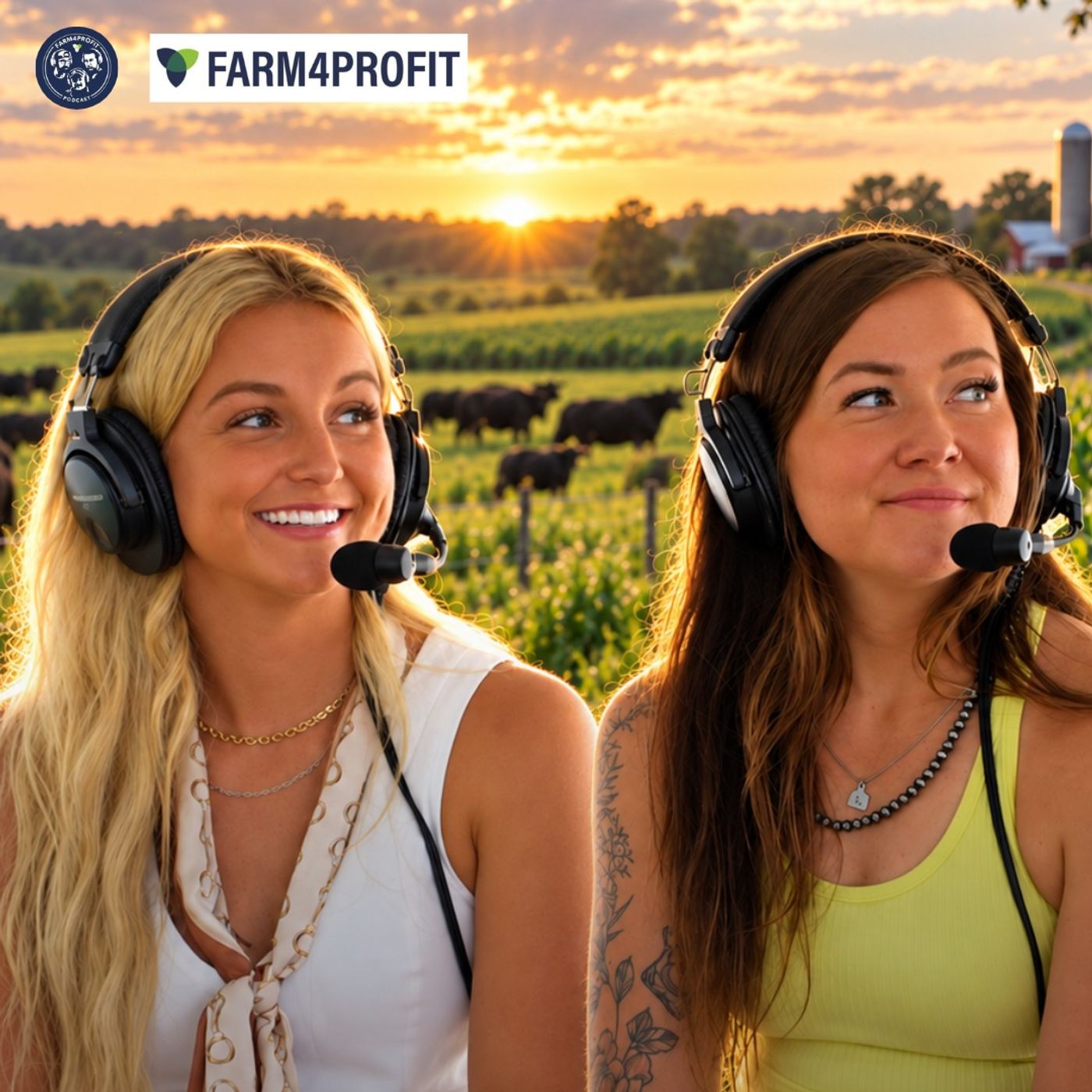
Andrea Fleming and Regan Bieber return to Farm4Fun to share how their lives and operations have changed since their previous appearances. Regan talks about stepping back into her South Dakota family farm during the COVID era while continuing to grow The Cactus Brand, which she started in high school. Andrea shares how a plan to become a veterinarian ultimately brought her back to the Minnesota family farm, where she now combines cattle, crops, content creation, personal training, public speaking, agritourism, and a few fainting goats. The conversation gets deeper as they discuss the growing disconnect between farmers and consumers. Andrea explains why she decided to publicly stand up for feedlots and modern livestock production rather than letting outdated images define agriculture. Both women believe farmers need to keep showing up, have conversations, and show people what agriculture actually looks like instead of simply throwing facts at them.They also talk about being women in a traditionally male-dominated industry, encouraging daughters to get involved on the farm, and giving young people the opportunity to prove what they're capable of. Andrea shares the personal story behind her message that changing plans doesn't make you a failure, while Regan explains why farming, fashion, business, and creativity don't have to fit into separate lanes. It's a fun conversation about building a life in agriculture without feeling like there's only one way to do it.
Want Farm4Profit Merch? Custom order your favorite items today!https://farmfocused.com/farm-4profit/ Don’t forget to like the podcast on all platforms and leave a review where ever you listen! Website: www.Farm4Profit.comShareable episode link: https://intro-to-farm4profit.simplecast.comEmail address: [email protected]/Text: 515.207.9640Subscribe to YouTube: https://www.youtube.com/channel/UCSR8c1BrCjNDDI_Acku5XqwFollow us on TikTok: https://www.tiktok.com/@farm4profitllc Connect with us on Facebook: https://www.facebook.com/Farm4ProfitLLC/Farm4Profit Media is not a financial, legal, or tax advisor. Content is provided for informational purposes only, and we serve solely as a platform for third-party opinions. Any actions taken based on this content are at your own risk. Hosted by Simplecast, an AdsWizz company. See pcm.adswizz.com for information about our collection and use of personal data for advertising.

Comments

Download from Google Play

Download from App Store
 United States