


 Claim Ownership
Religiously Literate
Subscribed: 4Played: 52
Subscribe

© Religiously Literate
Description
Religiously Literate explores how religion and spirituality shape our lives in ways we often overlook—from politics and health to identity and community. Through stories, expert interviews, and global perspectives, we unpack how faith and belief continue to influence the modern world. Whether you're deeply religious, spiritual but not religious, or just curious, this podcast offers accessible, thought-provoking conversations about why religion still matters.
16 Episodes
Reverse
With so many religions in the world it can be hard to keep up with what everyone believes. Religiously Literate is here to help! Join Jay and Ryan on this episode as we learn about the religious origins of basketball, the man who invented it, and the movement that inspired him.SHOW NOTES:KU Origins: Naismith’s Rules: https://www.youtube.com/watch?v=O8z1Al87sCgKU History and Traditions: https://www.youtube.com/watch?v=PdMxn0fvRHE&list=PLt5CYCjV3zLs83dg7VT-BeKBWopx3aoI5First game of basketball: https://www.youtube.com/watch?v=xiJJIacdF-E https://union.ku.edu/rulesNaismith recording: https://exhibits.lib.ku.edu/exhibits/show/naismith150/collections/radio-interview https://www.artofmanliness.com/https://strenuouslife.co/Putney, Clifford. Muscular Christianity: Manhood and sports in protestant America, 1880-1920. Harvard University Press, 2009.Rains, Rob. James Naismith: The man who invented basketball. Temple University Press, 2011.HarvardNaismith, James. The James Naismith Reader: Basketball in His Own Words. U of Nebraska Press, 2021.
With so many religions in the world it can be hard to keep up with what everyone believes. Religiously Literate is here to help! Join Jay and Ryan on this episode as we learn about The Church of the Flying Spaghetti Monster.In this episode we give a general overview of The Church of the Flying Spaghetti Monster. Is it a mocking of religion or an actual religious tradition? Find out in this episode. SHOW NOTES:Church website: https://www.spaghettimonster.org/ Creation story: https://www.youtube.com/watch?v=XZ7SBii4JKAEight "I'd Rather You Didn'ts": https://flyingspaghettimonster.wikia.org/wiki/The_Eight_I%27d_Really_Rather_You_Didn%27tshttps://wrldrels.org/2016/10/08/church-of-the-flying-spaghetti-monster/
With so many religions in the world it can be hard to keep up with what everyone believes. Religiously Literate is here to help! Join Jay and Ryan on this episode as we learn about the last of the Abrahamic faiths, Christianity.In this episode we give a general overview of Christianity, including the history, beliefs, and practices shared by many Christians regardless of denomination.SHOW NOTES:Key Terms:Apostolic succession: the belief that bishops and priests represent an uninterrupted lineage dating back to the apostles of Jesus"The Word": This refers to a whole lot of different things that include, but are not always, readings directly from the Bible. Includes scriptural readings, hymns, prayers, and sermons/homilies given by clergy members and primarily serves as a mechanism for teaching about Jesus’ life and Christian beliefs.Baptism: This is the primary means through which someone becomes incorporated into the “Body of Christ” or Christian community and is meant to be a celebratory public recognition of belief in and commitment to Jesus Christ as the Son of God (can also be baptized in recognition of the whole Trinity).Communion: The sharing of bread and wine or grape juice among Christians. Meant to be a recognition of Jesus’ sacrifice through his death on the cross and resurrection.Christmas: Annual festival commemorating the birth of Jesus Christ. Typically celebrated on December 25th, but varies by tradition.Lent: 40-day period of Christian fasting preceding Easter. Commemorating Jesus' 40-day fast in the desert. Epiphany: Festival commemorating the arrival of the three Magi (wise men) after the birth of Jesus. Advent: Roughly month-long period preceding Christmas celebrated as a time of anticipation leading up to the birth of Christ.Fat (Shrove) Tuesday: Final day commemorating the period between Epiphany and Ash Wednesday.Palm Sunday: Festival commemorating the arrival of Jesus in Jerusalem before his death. Celebrated the Sunday before Easter.Easter: Holiday commemorating the resurrection of Jesus Christ.Ash Wednesday: Day of prayer and fasting commemorating the beginning of Lent.Maundy Thursday: The day during Holy Week commemorating the Washing of the Feet and the Last Supper of Jesus Christ.Good Friday: Holiday commemorating the crucifixion and death of Jesus Christ.Pentecost: Festival that commemorates the descent of the Holy Spirit on the apostles and followers of Jesus Christ.Ascension: Holiday commemorating the departure of Christ from earth after his resurrection.Glossolalia: Speaking in tonguesTrinity Sunday: First Sunday after Pentecost celebrating the Christian belief in the TrinityTrinity: The Trinity is the belief in God the Father, Jesus the Son and the Holy SpiritSynoptic gospels: Matthew, Mark, Luke (meaning they “see each other,” from the Greek synopsis)Timeline of Jesus' life: https://www.everlastingstrength.org/wp-content/uploads/2019/03/Life-of-Jesus-Timeline-Tabloid-11x17.jpg?x57201 Sources:McGrath, Alister E. Christianity: an introduction. John Wiley & Sons, 2006.Vaughn, Lewis. Anthology of World Religions: Sacred Texts and Contemporary Perspectives. (2017) Oxford University Press: New York.

With so many religions in the world it can be hard to keep up with what everyone believes. Religiously Literate is here to help! Join Jay and Ryan on this episode as we learn about one of Japan's major religious traditions.In this episode, we discuss Shinto, including an overview of history, general beliefs, practices, and its significance with Japanese nationalism.SHOW NOTES:Key terms:Kami: “divine powers of the cosmos in the form of deities, features of nature, and exceptional humans (emperors and ancestors, for example)”Kojiki: Record of Ancient Matters, central Shinto textNihongi (Nihon shoki): Chronicles of Japan, central Shinto textIzanami and Izanagi: Male and female kami revered for the creation of the Japanese archipelagoAmaterasu: sun goddess, associated with the imperial family and the Shrine at IseJinja: dwelling places of the kami, otherwise known as shrinesTorri: red, arbor-like structures found at Shinto shrinesShimenawa: rope often made with rice straw, demarcating sacred spacesShide: lightning bolt shaped paper often hung on shimenawaShrine Shinto: The most prevalent kind, includes practices at shrines to demonstrate “faith” in kamiLived/Popular/Folk Shinto: Everyday practices of people that reflect faith/belief in kami; includes a lot of regional variation and overlap with bigger Shinto practicesState Shinto: Started in the nineteenth century, declared Shinto as state religion; gave rise to some nationalistic beliefs; established the emperor as a “living kami” and direct descendent of AmaterasuMatsuri: Shinto festivalshttps://artsandculture.google.com/streetview/itsukushima-shinto-shrine/6QE34GxKVEkyTQ?sv_lng=132.3184711655607&sv_lat=34.29696387465894&sv_h=324.19&sv_p=5.060000000000002&sv_pid=0PDJMeu0ov36Joqinhu6KA&sv_z=1Shinto by Helen HardacreA new history of Shinto by John Breen and Mark Teeuwen.Shinto, a short history by Inoue Nobutaka (editor), Itō Satoshi, Endō Jun and Mori Mizue ; translated and adapted by Mark Teeuwen and John Breen.Vaughn, Lewis. Anthology of World Religions: Sacred Texts and Contemporary Perspectives. (2017) Oxford University Press: New York.Music used in this episode includes “City of Jewels” by Destiny & Time as well as Ishikari Lore by Kevin MacLeod is licensed under a Creative Commons Attribution license (https://incompetech.com/music/royalty-free/index.html?isrc=USUAN1100192)
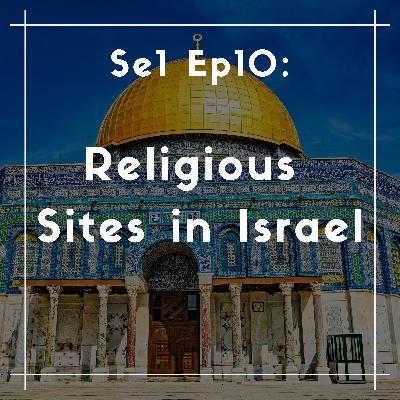
With so many religions in the world it can be hard to keep up with what everyone believes. Religiously Literate is here to help! Join Jay and Ryan on this episode as we learn about one of the most influential regions in world history.In the final to our first season, we'll travel around Israel talking about 10 religious sites important to many traditions that originate in the Middle East, including some we've covered this season and some that will be covered in seasons to come!Ten Religious Sites to Visit in Israel1. The Dome of the Rock2. The Church of the Holy Sepulchre3. The Wailing Wall4. The Church of the Nativity5. The Dead Sea6. Masada7. Cave of the Patriarchs8. Bahji9. Capernaum10. JerichoMap of Religious Sites in Jerusalem https://www.planetware.com/i/map/ISR/old-city-jerusalem-map.jpgMap of Religious Sites in Israel https://images-na.ssl-images-amazon.com/images/I/915kkTT7QEL.jpg

Comments

Download from Google Play

Download from App Store
 United States