


 Claim Ownership
Lectionary.pro
Subscribed: 78Played: 3,126
Subscribe

© John Fairless
Description
243 Episodes
Reverse

From the team at The Lectionary Lab comes the best time-saving, study-enhancing project we have ever designed. The Personal Study Edition of the Lectionary Texts for Year B -- every single one of them! -- are arranged for your use at your desk, in the coffeeshop, at home on the couch, or wherever you do your best contemplating on the texts for the upcoming Sunday.This PDF is ready-to-print and add to your notebook and includes the Sundays from November 29, 2026 to November 21, 2027 all laid out and ready for your notes. The appointed Sunday readings are arranged in calendar order, with space beside the text for personal study notes. Each Sunday begins on a new page. Palm Sunday contains both the Liturgy of the Palms and the Liturgy of the Passion. (Weekday holy days are not included.)The texts are printed (gratefully) from the Berean Standard Bible, which we have begun using ourselves here at the Lab. It is faithfully and beautifully translated from the best available Hebrew, Aramaic, and Greek texts. There are excellent online study aids available for free, as well.You can purchase and download HERE. Try it, and if you don’t like it, all you have to do is let me know and I will think really, really hard about giving your money back. You know we aim to please!John Fairless This is a public episode. If you'd like to discuss this with other subscribers or get access to bonus episodes, visit lectionarypro.substack.com/subscribe

The Gospel is the parable of the talents — the second of three parables in Matthew 25 that close the Matthew arc. A man going on a journey entrusts his property to three slaves. Two invest what they receive and double it; the third buries his in the ground out of fear. When the master returns, he commends the first two and strips the third of what he had. The parable ends with the famous aphorism about those who have and those who have nothing, and with the master casting the third slave into the outer darkness.Track One gives us Deborah — the prophetess, judge, and military leader who summons Barak to deliver Israel from the Canaanites. Track Two gives us Zephaniah’s judgment against the complacent, who have decided that God will neither reward nor punish, and who live accordingly. This guide treats the Zephaniah option, which pairs sharply with the Gospel. If you are using the Judges reading, the pairing with the Gospel is quieter but theologically rich — Deborah is a woman who did not bury what God had given her.The Epistle continues last week’s passage from 1 Thessalonians. Where last week Paul assured the Thessalonians about their beloved dead, this week he turns to the practical question of how to live in the meantime. The day of the Lord will come like a thief in the night — but the Thessalonians are not people of the night. They are children of the day. Their work, in the meantime, is to encourage and build up each other.For preachers continuing the series: this is the second Sunday in the eschatological trilogy that closes the Matthew arc. The bridesmaids were about readiness for the long wait. The talents are about what we do with what we have been given during the wait. Next Sunday brings the sheep and the goats — the recognition of Christ in the hungry, the thirsty, the stranger, the naked, the sick, the prisoner. Readiness, stewardship, recognition. Three parables, one theological sequence, one closing picture of what Jesus wants his disciples to have become by the time of the final meeting.The ReadingsJudges 4:1–7First Reading (Track One) — DeborahSummaryThe Israelites again do what is evil in the sight of the Lord, and God hands them over to Jabin king of Canaan. The commander of Jabin’s army is Sisera, with nine hundred chariots of iron. Israel is cruelly oppressed for twenty years. They cry out to the Lord. The passage introduces Deborah, a prophetess, who at that time was judging Israel. She sits under a palm tree between Ramah and Bethel, and the Israelites come up to her for judgment. She summons Barak and gives him God’s command: take ten thousand men and go to Mount Tabor; God will draw out Sisera to meet you at the Wadi Kishon, and God will give Sisera into your hand. The lectionary reading stops at verse 7, just before Barak answers that he will not go unless Deborah goes with him.Key Ideas for Preaching* Deborah is introduced with three titles: prophetess, judge of Israel, and military convener. She holds spiritual, judicial, and strategic authority at once — an unusual combination in the ancient Near East, and especially remarkable for a woman in that culture. What might your sermon do with the simple fact that God entrusted Deborah with enormous authority and that she did not bury what she had been given?* Deborah sits under a palm tree between Ramah and Bethel, and the people come up to her for judgment. The picture is of accessible, visible authority — a leader who does not hide, who is available to the people she serves, whose seat is in the open under a known tree. Where in your congregation might the specific pastoral image of accessible leadership land as both welcome and challenging?* The lectionary cuts the reading short before Barak’s famous insistence that Deborah come with him. Preachers who want to preach the fuller story will extend the reading themselves. In either case, Deborah’s response in verse 7 is worth attention: she speaks God’s command plainly, tells Barak what will happen, and extends the trust. She does not perform the mission herself; she calls the appointed leader and sends him. What might your sermon do with the specific picture of a leader whose authority empowers others to lead in turn?Significant Cautions* Deborah’s story can be flattened into a “woman succeeds in a man’s world” narrative that misses what is actually distinctive about the text. The passage is not primarily about gender; it is about leadership that God trusts and calls. Deborah’s gender matters — it is unusual, and the text notices — but the point is her fidelity to the call, not merely her overcoming of barriers.* The military context of Judges — Israel’s deliverance through battle — is theologically complicated for modern hearers. The violence in the fuller story (including Jael’s killing of Sisera with a tent peg) raises real questions about how to preach deliverance narratives whose means are so disturbing. The preacher does not have to resolve these questions, but should be aware of what preaching the fuller story will require.Psalm 123The Psalm (Track One) — Have Mercy upon UsSummaryA short Song of Ascents. The psalmist lifts up his eyes to the one who is enthroned in the heavens. The posture is deliberately that of a servant looking to the hand of a master, a maid looking to the hand of a mistress — waiting for mercy. The prayer is for mercy, because the people have had more than enough of contempt, more than enough of scorn from those who are at ease.Key Ideas for Preaching* The posture of the psalm is specifically the servant’s posture — attentive, watching for the small motion of the master’s hand. It is not a posture of groveling but of attentive waiting. What might your sermon do with the pastoral practice of attending to God’s small signals — the quiet motions of grace that we miss if we are not watching?* “We have had more than enough of contempt.” The psalm names the real experience of being treated with scorn by those who are at ease. The prayer is honest about that experience. Where in your congregation might people be helped by the psalm’s acknowledgment that life under the scorn of the comfortable is a real condition God hears and addresses?Significant Cautions* “Those who are at ease” can be preached in ways that produce class resentment or self-righteous identification with the oppressed. The psalm is a prayer, not a political platform; preachers should be careful about how they deploy its language against specific groups in their context.Zephaniah 1:7, 12–18First Reading (Track Two) — The Lord Will Search Jerusalem with LampsSummaryThe prophet Zephaniah announces the day of the Lord. Be silent before the Lord God, for the day of the Lord is at hand; the Lord has prepared a sacrifice and consecrated his guests. On that day, the Lord will search Jerusalem with lamps — and will punish the people who rest complacently on their dregs, who say in their hearts, “The Lord will not do good, nor will he do harm.” Their wealth will be plundered, their houses laid waste. The great day of the Lord is near — near and hastening fast. It is a day of wrath, of distress and anguish, of ruin and devastation, of darkness and gloom, of clouds and thick darkness. In the fire of God’s passion the whole earth will be consumed; a full, a terrible end God will make of all the inhabitants of the earth.Key Ideas for Preaching* Zephaniah’s specific indictment is of the complacent — those who say in their hearts, “The Lord will not do good, nor will he do harm.” These are not people who deny God’s existence. They are people who have decided that God is irrelevant to their actual lives. What might your sermon do with the pastoral danger of a religious complacency that confesses God on Sunday but lives as if God will neither reward nor punish during the week?* The Lord will search Jerusalem with lamps. The image is of a thorough, methodical, inescapable examination. The complacent cannot hide where they thought they were safe. Where might your sermon do … This is a public episode. If you'd like to discuss this with other subscribers or get access to bonus episodes, visit lectionarypro.substack.com/subscribe

We are just about ready to wrap up another church year (liturgically speaking, that is) and our texts for this week send us into Jesus’ own musings about how things get wound down (or up, depending on your perspective). We will conclude Year A with what is sometimes known as an “eschatological trilogy” of stories that turn our attention toward the ending of time and final judgement and such as that. What a ride it has been! So let’s buckle up and follow along with Larry the Cable Guy: “Get’er Done!”The Gospel is the parable of the ten bridesmaids — the first in a short series of parables Jesus tells about readiness as he nears the end of his public teaching. Five bridesmaids bring extra oil for their lamps; five do not. The bridegroom is delayed. All ten fall asleep. At midnight the cry goes up: the bridegroom is coming. The five who prepared for the delay enter the wedding banquet. The five who did not go off to buy oil and find the door shut when they return. The parable closes with Jesus’s warning: “Keep awake, therefore, for you know neither the day nor the hour.”Image by Margaret Jaszowska from UnsplashTrack One brings us Joshua at Shechem, demanding of Israel that they make a choice about whom to serve. Track Two gives us a double option: the gentler personification of Wisdom in the Wisdom of Solomon, or the fierce prophetic warning of Amos 5 — both of which address the question of what the day of the Lord actually is for those awaiting it. This guide treats the Amos option, which more sharply pairs with the Gospel. If you are using Wisdom 6, the key move is the opposite: Wisdom is readily found by those who seek her, and the pastoral weight is on invitation rather than warning.The Epistle is one of the most pastorally important passages in all of Paul: 1 Thessalonians 4:13–18, written to a congregation grieving their beloved dead, assuring them that those who have died in Christ are not lost. On the Sunday following All Saints’ Day, this Epistle is almost perfectly placed. The congregation that read the names of their beloved dead last Sunday hears this week a specific pastoral word from Paul about where those beloved dead now are.For preachers continuing a series: this is the first of three Sundays in the eschatological trilogy that closes the Matthew arc. Next Sunday brings the parable of the talents. The Sunday after that — Reign of Christ — brings the sheep and the goats. All three parables are about what it looks like to be ready for the final meeting with Christ — readiness, stewardship, and recognition.The ReadingsJoshua 24:1–3a, 14–25First Reading (Track One) — Choose This Day Whom You Will ServeSummaryJoshua gathers all the tribes of Israel to Shechem. He summons the elders, the heads, the judges, and the officers, and they present themselves before God. Joshua recites the story of what God has done — beginning with the ancestors who lived beyond the Euphrates and worshipped other gods, continuing through God’s calling of Abraham and the whole sweep of the exodus. And then he puts the choice directly to them. Fear the Lord and serve him in sincerity and faithfulness. Put away the gods your ancestors served. Choose this day whom you will serve. Then comes the famous declaration: “As for me and my house, we will serve the Lord.” The people answer: we also will serve the Lord. Joshua pushes back — you cannot serve the Lord, he is a holy and jealous God — but the people insist, and a covenant is made that day at Shechem.Key Ideas for Preaching* The choice Joshua puts to Israel is not a single moment but a recurring decision. The people have inherited faith from their ancestors, but inheritance is not enough. Each generation has to choose again. Where in your congregation might people need to hear that the faith of their parents or grandparents does not relieve them of their own choice to serve the Lord?* Joshua pushes back on the people’s easy affirmation. “You cannot serve the Lord,” he tells them, “he is a holy God, a jealous God.” This is a leader refusing to let his people make the covenant lightly. Where in your congregation might the invitation to deeper faith need to be preached with the same honest resistance — the acknowledgment that serving God is not easy, before anyone is asked to say yes?* The declaration “as for me and my house, we will serve the Lord” has become one of the best-known lines in the Hebrew Bible. In context, Joshua is modeling for the people what a public commitment sounds like. The leader states his family’s posture first, and then invites the people to make their own choice. Where might your sermon do something with the specific pastoral practice of leaders stating their own commitments plainly before asking anything of the people they lead?Significant Cautions* “As for me and my house, we will serve the Lord” has sometimes been pulled out of its context and turned into a decorative plaque for home display or into a loyalty test for family members. The context is a public covenant renewal, not a household motto. The decorative use of the line can quietly transfer the covenant’s weight from Joshua’s whole community to one family’s self-image.* The “jealous God” language in verse 19 has historical complexity. In its context it is a theological claim about God’s exclusive claim on Israel’s loyalty, not a psychological description of divine insecurity. Preachers who dwell on the word jealous without framing it carefully can leave hearers with a picture of God that does not match the gospel.Psalm 78:1–7The Psalm (Track One) — Tell the Next GenerationSummaryThe psalmist opens as a teacher, calling the people to pay attention to his instruction. He will utter dark sayings from of old — things we have heard and known, that our ancestors have told us. These stories we will not hide from our children, but will tell them to the coming generation: the glorious deeds of the Lord, his might, and the wonders that he has done. The purpose is explicit: so that the next generation might know, and in turn tell their children, that they might set their hope in God and not forget the works of God but keep his commandments.Key Ideas for Preaching* The psalm names the specific pastoral task of generational transmission. The deeds of God are not a possession the current generation owns; they are a trust held for the next generation. What might your sermon do with the question of how, in your particular congregation, the stories of God’s faithfulness are being passed to the next generation — and what might be lost if the transmission stops?* The purpose of the telling is that the next generation might “set their hope in God.” The transmission is not for its own sake. It is so that the next generation has a foundation for their own hope. Where in your congregation might young people be helped by hearing older members tell them, specifically, where their hope has come from and what has sustained it?Significant Cautions* Generational-transmission texts can slide into guilt-inducement for parents and grandparents whose children have left the faith. The psalm is a positive vision of faithful telling, not a judgment against those whose telling did not produce the result they hoped for.Amos 5:18–24First Reading (Track Two) — Let Justice Roll DownSummaryAmos confronts those who have been looking forward to the day of the Lord with pleasant expectations. “Why do you want the day of the Lord?” he asks. “It is darkness, not light.” He compares it to a man fleeing from a lion only to meet a bear, or going into his house and leaning his hand on the wall only to be bitten by a snake. God then speaks in the first person. “I hate, I despise your festivals, and I take no delight in your solemn assemblies.” The sacrifices will not be accepted. The grain offerings will not be looked on. The sung praises are to be taken away — God will not even listen to the melody of their harps. And then one of the most famous lines in all of Scripture: “But let justice roll down… This is a public episode. If you'd like to discuss this with other subscribers or get access to bonus episodes, visit lectionarypro.substack.com/subscribe

A note on the calendar coincidence: November 1 is All Saints’ Day, which falls on a Sunday this year. Congregations observing All Saints with its own propers will use those readings. This guide covers Proper 26, the ordinary Year A readings for the Sunday, which the lectionary continues to track regardless of festival overlays. If your congregation is observing All Saints and you need materials for that observance, those can be found in our tentative new service (launching officially for Advent — we hope) at this link: Pericope Pro.The Gospel opens Matthew 23 — Jesus’s long and difficult address about the scribes and Pharisees. Our passage is the setup, closing before the Seven Woes begin. Jesus grants the scribes and Pharisees their teaching authority but exposes the gap between what they teach and what they do. They love honor, titles, best seats, and the burdens they lay on others. Jesus closes with the characteristic reversal: the greatest will be the servant; those who exalt themselves will be humbled.Track One brings us Israel crossing the Jordan under Joshua’s leadership. Track Two brings us Micah’s furious judgment against false prophets, rulers who hate good, and priests who teach for a price — the direct prophetic line Jesus is standing in when he confronts the scribes and Pharisees. The Epistle gives us Paul’s continued recollection of his ministry among the Thessalonians, where the gospel was received not as a human word but as the word of God.For preachers continuing a series: last week Jesus bound the two great commandments as inseparable, and the Pharisees dared ask no more questions. This week Jesus turns from them to the crowds and his disciples, and tells them exactly what was wrong with the religious leadership they had been watching. The Matthew arc is now very close to the end of the public teaching. The next scenes will be the full Seven Woes, the Olivet Discourse, and the beginning of the passion narrative.The ReadingsJoshua 3:7–17First Reading (Track One) — Crossing the JordanSummaryGod tells Joshua: today I will begin to exalt you in the sight of all Israel, so that they may know that I will be with you as I was with Moses. The priests are instructed to carry the ark of the covenant into the Jordan. When the soles of their feet touch the waters, the waters will stop flowing. The priests obey. The waters pile up in a heap. Israel crosses on dry ground. The priests stand with the ark in the middle of the Jordan until the whole nation has passed over. The passage is a deliberate echo of the parting of the Red Sea — a new generation, a new crossing, a new entry into what God has promised.Key Ideas for Preaching* God’s word to Joshua is that his exaltation is for the sake of the people — “so that they may know that I will be with you.” The authority is not for Joshua’s benefit. It is for the people’s assurance that God is still with them. Where in your congregation might leadership have been imagined as a reward for the leader rather than as an assurance for the community?* The priests stand in the middle of the Jordan with the ark while the whole nation passes over. That is a specific pastoral image — the leaders hold the position of difficulty until everyone else has crossed safely. What might your sermon do with a picture of leadership that stays in the hard place until the people have been brought through?* The crossing is deliberately an echo of the Red Sea. The new generation receives its own version of the old deliverance. God’s past faithfulness becomes the ground of God’s present faithfulness. Where in your congregation might people be helped by hearing that what God did before is what God does now, in a new form, for a new generation?Significant Cautions* The conquest narratives that follow this passage are deeply difficult — texts that describe the destruction of Canaanite peoples with divine sanction. Preachers who preach the Jordan crossing without any awareness of what comes next hand the congregation a sanitized version of the story. You do not have to resolve the conquest problem in this sermon, but at least do not pretend it is not there.* “I will exalt you in the sight of all Israel” has sometimes been used by religious leaders to claim personal honor. The passage is explicit that the exaltation is for the people’s confidence, not the leader’s. Do not let it drift the other way.Psalm 107:1–7, 33–37The Psalm (Track One) — Give Thanks to the LordSummary“Oh give thanks to the Lord, for he is good, for his steadfast love endures forever.” The psalm celebrates God’s rescuing of the redeemed from various troubles. The selected verses focus on wanderers in desert wastes who found no city, who were hungry and thirsty and whose soul fainted, and whom God led by a straight way to a city to live in. The second selection speaks of God’s power to turn rivers into desert and desert into pools of water — and to turn the hungry into a settled community.Key Ideas for Preaching* “His steadfast love endures forever” is the psalm’s refrain. Every rescue the psalm describes comes back to this one constant. What might your sermon do with the specific practice of returning again and again to the fixed point of God’s steadfast love when the particulars of our lives keep shifting?* The psalm pays close attention to specific kinds of trouble — wandering, hunger, thirst, fainting, exile. God’s rescue is not generic. It meets the specific need. Where in your congregation might people be helped by hearing that God’s help is not vague but specific to the trouble they are actually in?Significant Cautions* The psalm’s pattern of distress leading to rescue has sometimes been preached in a way that implies every faithful cry will be answered as the psalm describes. Many people cry and are not rescued in this life. Keep the psalm’s hope without making it a formula.Micah 3:5–12First Reading (Track Two) — Zion Shall Be Plowed as a FieldSummaryMicah’s judgment against the leaders of Israel. The prophets cry “Peace” when they have something to eat, and declare “war” against those who put nothing in their mouths. The sun will go down upon the prophets. The rulers of the house of Jacob abhor justice and pervert all equity. They build Zion with blood. The heads of Jerusalem give judgment for a bribe, the priests teach for a price, the prophets divine for money. And yet they all lean on the Lord, saying “Is not the Lord in the midst of us? No disaster shall come upon us.” Therefore, Micah thunders, because of you, Zion shall be plowed as a field; Jerusalem shall become a heap of ruins; and the mountain of the house a wooded height.Key Ideas for Preaching* Micah is a prophet standing within Israel, speaking Israel’s hard truth to Israel’s own leadership. Jesus in today’s Gospel is doing exactly the same thing. The two prophetic voices stand in one line. Where might your sermon help a congregation see that prophetic critique has always come from within the tradition, not from outside it?* The specific indictment is that the prophets, rulers, and priests are all for sale — they cry peace to those who pay them, judge for bribes, teach for a price, divine for money. The corruption Micah names is specifically the monetization of religious authority. Where in your congregation might this ancient indictment land uncomfortably in a contemporary religious landscape that also knows what happens when ministry is tied to money?* The leaders who are being judged are described as leaning on the Lord and saying “No disaster shall come upon us.” Their very confidence in God’s presence has become part of their corruption — a shield against hearing the prophetic word. What might your sermon do with a picture of religious confidence that has quietly become religious complacency?Significant Cautions* Micah’s judgment is harsh — Zion plowed as a field, Jerusalem a heap of ruins. These images have historically been used by Christian preachers to describe actual later destructions of Jerusalem as di… This is a public episode. If you'd like to discuss this with other subscribers or get access to bonus episodes, visit lectionarypro.substack.com/subscribe
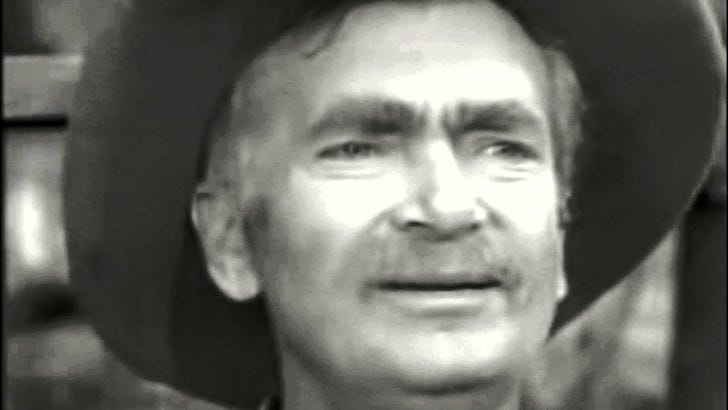
Jed Clampett, head of the fictional clan, The Beverly Hillbillies (sorry if you’re too young for the reference — or too old?) was quoted as saying, “Welll, doggies!” when faced with an unusually challenging or inspiring event. You’ll have to decide which of those the texts for this week are!The Gospel contains what may be the most famous passage in all the Gospels — the great commandment. A lawyer asks Jesus which commandment is the greatest, and Jesus answers by linking two scattered commandments from the Hebrew Bible into one inseparable teaching: love God with everything, love neighbor as yourself. All the law and the prophets hang on these.The passage includes a second scene often skipped by preachers — Jesus’s own counter-question about the Messiah being David’s son. The combined effect: by the end of the passage, no one dares ask Jesus any more questions. The temple controversies are over. Matthew’s next move will be the woes and the apocalyptic discourse.Track One brings us Moses on Mount Nebo, seeing the promised land but not entering it. Track Two brings us the direct source of Jesus’s second commandment: Leviticus 19 and its call to love the neighbor. The Epistle gives us Paul’s tender description of his ministry among the Thessalonians — “like a nurse tenderly caring for her own children.”For preachers continuing a series: last week Jesus turned the Caesar question into a deeper question about whose image we bear. This week he turns the “which commandment” question into a synthesis that will shape the ethics of two thousand years of Christian life. The Matthew arc is now closing out the public ministry. Next week brings All Saints.The ReadingsDeuteronomy 34:1–12First Reading (Track One) — The Death of MosesSummaryMoses climbs Mount Nebo. God shows him the whole promised land — from Gilead to Dan to the sea, from the Plain to Zoar. “This is the land I swore to Abraham, to Isaac, and to Jacob. I have let you see it with your eyes, but you shall not cross over.” Moses dies there in Moab. God buries him in a valley; no one knows his grave to this day. Moses was a hundred and twenty years old when he died, but his sight was unimpaired and his vigor had not abated. Israel wept for Moses in Moab thirty days. The passage closes with one of the great tributes in Scripture: “Never since has there arisen a prophet in Israel like Moses, whom the LORD knew face to face.”Key Ideas for Preaching* Moses sees the land but does not enter it. That is a devastating pastoral image. Where in your congregation might people be living with their own version of this — having worked and prayed and waited for something they will not get to enter themselves? What might your sermon do to honor that experience without pretending it is not loss?* The passage says God buried Moses. Not Joshua. Not the people. God. The great prophet is laid to rest by the hand of the one he served. What might your sermon do with a picture of death held in the specific tenderness of God’s own hand?* “The LORD knew him face to face.” That is the final word on Moses. Not his miracles. Not his leadership. Not his legacy. Knowledge. Mutual recognition. Where might your sermon help a congregation see that the deepest measure of a life is not what we accomplished but who knew us?Significant Cautions* “He did not enter the land” has sometimes been preached as Moses’s punishment for his earlier impatience. The passage does not say this. Preach what the text says, not what the broader narrative implies.* “Never since has there arisen a prophet like Moses” is a text often cited to say every subsequent leader was lesser. The passage is honoring one specific prophet; it is not demeaning the others who would follow.Psalm 90:1–6, 13–17The Psalm (Track One) — Teach Us to Count Our DaysSummaryAttributed to Moses. “Lord, you have been our dwelling place in all generations.” Our days are swept away like a dream, like grass that flourishes in the morning and withers by evening. “So teach us to count our days that we may gain a wise heart.” The psalm closes with a prayer for God to satisfy us in the morning with steadfast love, and to prosper the work of our hands.Key Ideas for Preaching* “Teach us to count our days that we may gain a wise heart.” Not count hours. Not count accomplishments. Count days. That specific accounting leads not to anxiety but to wisdom. Where in your congregation might people be measuring the wrong things, and how might this psalm invite them into a different reckoning?* “Prosper the work of our hands” is the prayer that closes the psalm. The psalmist asks God not to prosper our status, our success, or our reputation, but the work of our hands. What might it look like to preach this specific prayer in a culture that is often more interested in reputation than in hands?Significant Cautions* “Our days are seventy, or by strength eighty” has been used to produce anxiety about aging. Keep the psalm’s larger frame: God has been our dwelling place.Leviticus 19:1–2, 15–18First Reading (Track Two) — Love Your Neighbor as YourselfSummaryFrom the holiness code. “You shall be holy, for I the LORD your God am holy.” The selected verses then move to very practical commands. Do not render judgment with partiality. Do not slander your neighbor. Do not profit by your neighbor’s blood. Do not hate your kin in your heart. Reprove your neighbor rather than letting resentment fester. Do not take vengeance or bear a grudge against your own people. “You shall love your neighbor as yourself. I am the LORD.” This is the direct source Jesus quotes in today’s Gospel.Key Ideas for Preaching* “Love your neighbor as yourself” is not an isolated gentle maxim. It sits in the middle of a list of very concrete commandments about not slandering, not holding grudges, not showing partiality in court. Love of neighbor, in Leviticus, is a specific set of practices, not an abstract feeling. What might your sermon do to recover the concreteness of this famous verse?* “Reprove your neighbor” is in this same passage, right next to “love your neighbor.” Reproof — honest, caring correction — is itself an act of love in this text. Where in your congregation might love and honest truth-telling have been imagined as opposites, when Leviticus imagines them as the same thing?* “I am the LORD” closes the passage. The reason you love your neighbor is not sentimentality or civic virtue. It is because God is God, and God is holy, and you belong to this God. What might it look like to preach a love of neighbor grounded not in moral feeling but in divine command?Significant Cautions* “Love your neighbor as yourself” has sometimes been preached in ways that presuppose we already love ourselves. For many people, that assumption does not hold. Handle with pastoral care.* The holiness code includes many commandments that preachers across the centuries have selectively applied. Be honest about this. Do not pull out the loving-your-neighbor verse while hiding the rest of the chapter.Psalm 1The Psalm (Track Two) — Trees Planted by WaterSummaryThe classic two-ways psalm. The happy are those who do not follow the advice of the wicked but delight in the law of the LORD. They are like trees planted by streams of water, yielding fruit in season. The wicked are like chaff that the wind drives away. “The LORD watches over the way of the righteous, but the way of the wicked will perish.”Key Ideas for Preaching* The righteous are “like trees planted by streams of water.” Not like oak trees that grew up through sheer determination. Planted. Someone put them where the water is. What might your sermon do with a picture of the faithful life that includes being planted — having been placed by God in the place where you can bear fruit?* “Yielding its fruit in its season” names something many of us resist: fruit comes in seasons. There are years without visible fruit. The psalm does not panic about those years. What might it look like to preach a faith that trusts the seasonal rhythm of … This is a public episode. If you'd like to discuss this with other subscribers or get access to bonus episodes, visit lectionarypro.substack.com/subscribe

Comments

Download from Google Play

Download from App Store
 United States