



 Claim Ownership
The Go-To Physio
Subscribed: 89Played: 1,399
Subscribe

© Dave O'Sullivan
Description
The Go-To Physio Podcast helps therapists differentiate themselves from other therapists by making sense of the most complex patients symptoms, effectively explain the problem & solution for complete buy in & design a bespoke step by step treatment plan for complete patient adherence while empowering your patients to build resilience that ethically increases your revenue, retention, referrals & reputation as the Go-To Therapist in your town!
Dave O'Sullivan is the Current England rugby league Head Physio, Best selling author, Private Practice owner & Founder of The Go-To Therapist Mentorship.
Dave O'Sullivan is the Current England rugby league Head Physio, Best selling author, Private Practice owner & Founder of The Go-To Therapist Mentorship.
77 Episodes
Reverse

In this episode, David O'Sullivan and Paddy discuss the challenges faced by clinic owners and therapists, focusing on the importance of understanding the therapist's role, the customer journey framework, and the significance of metrics in clinical practice. They explore the transition from problem unaware to solution aware, emphasizing the need for effective coaching and accountability. The conversation highlights the impact of leadership on team dynamics and the necessity of creating a positive clinic culture to foster growth and development.TakeawaysUnderstanding the therapist's role is crucial for clinic success.The customer journey framework helps in identifying patient needs.Ego can blind clinicians to their issues, affecting patient care.Metrics reveal the truth about clinic performance and therapist effectiveness.Navigating the solution aware stage requires careful management.Coaching is more effective than traditional teaching methods.Accountability is vital for both therapists and clinic owners.Creating a positive clinic culture enhances team dynamics.Leadership vision is essential for guiding clinic growth.Reflecting on the journey helps in continuous improvement.Sound Bites"Your biggest problem as a clinic owner.""Ego can blind clinicians to their issues.""Accountability is vital for growth."Chapters00:00 Introduction to Therapist Types and Clinic Challenges02:52 Understanding the Customer Journey in Therapy05:27 Identifying the Problem Unaware Therapist08:43 The Role of Ego in Clinical Practice11:35 Recognizing Mismatched Expectations14:09 Clinic Owner's Perspective on Therapist Performance17:05 Navigating Conversations with Therapists20:11 Moving from Problem Aware to Solution Aware22:50 Setting Standards and Accountability in Clinics25:41 Finding the Right Fit for Your Clinic27:58 The Importance of Honest Conversations30:36 Navigating Difficult Decisions in Leadership32:22 Tracking Metrics for Team Performance35:00 Creating a Vision for Growth35:29 Coaching vs. Teaching in Clinical Practice38:51 Understanding Inputs and Outputs40:16 The Role of Questions in Coaching42:31 Developing Skills Through Experience46:38 The Impact of Leadership on Team Dynamics48:41 Empowering Clinicians to Make Decisions54:37 Podcast Outro (audio fixed).mp4Additional Resources: Free Head Physio Systems 6 Step Checklist: https://thegotophysio.com/checklist/Our Flagship ‘Go To’ Therapist Mentorship Program: https://thegotophysio.com/mentorship/Our Clinic Owner Business Mentorship Program: https://thegotophysio.com/business-mentorship/Happy Progressing Patients Book: https://thegotophysio.com/book/For our Latest Updates, Be Sure To Follow Us On Social Media:Facebook: www.facebook.com/daveosullivansportsphysioInstagram: www.instagram.com/daveosullivanphysio/

In this episode of the ‘Go-To’ Physio podcast, David O'Sullivan and Paddy Mulligan discuss the hidden confidence crisis faced by new therapists in private practice. They explore the common challenges in hiring, the importance of communication and setting clear expectations, and how to build confidence in new hires. The conversation emphasizes the need for clinic owners to provide structured support and mentorship to help therapists thrive in their roles, ultimately leading to better patient outcomes and a more cohesive team.TakeawaysThe hidden confidence crisis affects both new and experienced therapists.Effective communication is crucial in managing expectations between clinic owners and therapists.New therapists often experience fear and uncertainty when starting in a new role.Setting clear expectations from the beginning can prevent mismatches in hiring.Regular check-ins and structured support help build confidence in new hires.Therapists need to feel they are evolving and improving in their roles.A common language among team members enhances collaboration and learning.Clinic owners should prioritize mentorship and training for their staff.Understanding the emotional state of therapists is key to supporting them effectively.Creating a positive and fun work environment fosters better relationships and performance. Sound Bites"I was actually a little bit afraid.""You can't over communicate.""The best therapists are inquisitive."Chapters00:00 The Hidden Confidence Crisis02:54 Communication: The Key to Success05:55 Expectations and Reality in Hiring08:49 Understanding the New Grad Experience11:52 Building Confidence in Clinicians15:06 The Importance of Clinical Frameworks17:51 Creating a Supportive Environment20:51 The Role of Mentorship24:04 Aligning Goals for Better Outcomes26:52 Top Tips for Successful HiringAdditional Resources: Free Head Physio Systems 6 Step Checklist: https://thegotophysio.com/checklist/Our Flagship ‘Go To’ Therapist Mentorship Program: https://thegotophysio.com/mentorship/Our Clinic Owner Business Mentorship Program: https://thegotophysio.com/business-mentorship/Happy Progressing Patients Book: https://thegotophysio.com/book/For our Latest Updates, Be Sure To Follow Us On Social Media:Facebook: www.facebook.com/daveosullivansportsphysioInstagram: www.instagram.com/daveosullivanphysio/
In this episode of the GoToPhysio podcast, Dave O'Sullivan discusses the three-step hiring process essential for clinic owners seeking true freedom through great staff. He emphasizes the importance of a structured approach to hiring, which includes a phone interview, a Zoom interview, and an in-person interview. Each step is designed to assess candidates' communication skills, core values, and practical abilities, ultimately leading to better hiring decisions. Dave also shares best practices for the hiring process, including the importance of checking references and trusting one's instincts.
Takeaways
Good people are essential for clinic owners' freedom.
The three-step hiring process is effective and time-saving.
Phone interviews help gauge initial interest and communication skills.
Zoom interviews allow for a comfortable environment and technology assessment.
In-person interviews should include role-play scenarios to test skills.
Consistency in answers is crucial throughout the interview process.
Hiring should be a slow process to ensure the right fit.
Involve multiple team members in the hiring process for diverse perspectives.
Always check references before making a hiring decision.
Trust your gut instinct while backing it up with objective observations.
Sound Bites
"What do you know about my company?"
"Hire slow, fire fast is the rule."
"I want them to have core foundations."
Chapters
00:00 Introduction to the GoToClinic Hiring Process
00:58 Step 1: The Phone Interview
04:15 Step 2: The Zoom Interview
06:40 Step 3: The In-Person Interview
09:23 Best Practices for Hiring
12:33 Podcast Outro (audio fixed).mp4
Additional Resources:
Free Head Physio Systems 6 Step Checklist: https://thegotophysio.com/checklist/
Our Flagship ‘Go To’ Therapist Mentorship Program: https://thegotophysio.com/mentorship/
Our Clinic Owner Business Mentorship Program: https://thegotophysio.com/business-mentorship/
Happy Progressing Patients Book: https://thegotophysio.com/book/
For our Latest Updates, Be Sure To Follow Us On Social Media:
Facebook: www.facebook.com/daveosullivansportsphysio
Instagram: www.instagram.com/daveosullivanphysio/
In this episode of the GoToPhysio podcast, Dave O'Sullivan discusses the implementation of packages of care in a clinical setting without feeling salesy. He emphasizes the importance of understanding patient value outcomes, empowering patients to co-create their care plans, and ensuring that every session has a clear plan. The conversation highlights the need for clinicians to build trust with patients and the efficiency that packages of care can bring to a healthcare business.
Takeaways
Packages of care can improve efficiency in clinics.
Understanding patient value outcomes is crucial.
Patients should co-create their treatment plans.
Every session should have a clear plan and milestones.
Trust is built through clear communication and progress.
Sales scripts can feel uncomfortable and erode culture.
Packages of care should be positioned as savings for patients.
Empowering patients leads to better engagement and outcomes.
The initial assessment is key to successful package implementation.
Packages help reduce cancellations and improve rebooking rates.
Sound Bites
"If it looks salesy, it probably is salesy."
"99% of patients will turn up anyway."
"There are actual milestones along the way."
Chapters
00:00 Introduction to Packages of Care
02:51 Understanding Patient Value Outcomes
06:05 Empowering Patients in Their Care Plans
08:59 Building Trust and Confidence in Treatment
11:44 The Role of Admin in Package Sales
14:41 Overcoming Mental Blocks and Misconceptions
17:58 Conclusion and Call to Action
19:17 Podcast Outro (audio fixed).mp4
Additional Resources:
Free Head Physio Systems 6 Step Checklist: https://thegotophysio.com/checklist/
Our Flagship ‘Go To’ Therapist Mentorship Program: https://thegotophysio.com/mentorship/
Our Clinic Owner Business Mentorship Program: https://thegotophysio.com/business-mentorship/
Happy Progressing Patients Book: https://thegotophysio.com/book/
For our Latest Updates, Be Sure To Follow Us On Social Media:
Facebook: www.facebook.com/daveosullivansportsphysio
Instagram: www.instagram.com/daveosullivanphysio/

In this episode of the GoToPhysio podcast, Dave O'Sullivan discusses the importance of using performance metrics effectively to enhance therapist accountability and improve patient outcomes. He emphasizes the need to identify therapist willingness, implement patient-defined value outcomes, and understand the patient journey. O'Sullivan also highlights the significance of empowering therapists with the right knowledge and skills, creating a supportive environment, and applying real-world solutions to common challenges faced by clinic owners.
Takeaways
Using numbers can significantly improve therapist performance.
Identifying high-willed versus low-willed therapists is crucial.
Patient value outcomes help hold therapists accountable.
The patient should define their treatment goals.
Understanding the patient journey is essential for success.
Therapists need clarity on where to go next with patients.
Empowering therapists with knowledge leads to better outcomes.
Creating a supportive environment is key for clinic success.
Real-world applications of mentorship can solve common problems.
Effective clinic management requires understanding both clinical and business systems.
Sound Bites
"Six stages of the patient journey"
"Inputs equal outputs in therapy"
"Delivering results in the real world"
Chapters
00:00 Introduction to Performance Metrics in Therapy
02:50 Identifying Therapist Willingness and Accountability
05:45 Implementing Patient Value Outcomes
09:00 Understanding the Patient Journey
11:45 Empowering Therapists with Clarity
15:04 Building Systems for Success
17:54 Conclusion and Call to Action
20:18 Podcast Outro (audio fixed).mp4
Additional Resources:
Free Head Physio Systems 6 Step Checklist: https://thegotophysio.com/checklist/
Our Flagship ‘Go To’ Therapist Mentorship Program: https://thegotophysio.com/mentorship/
Our Clinic Owner Business Mentorship Program: https://thegotophysio.com/business-mentorship/
Happy Progressing Patients Book: https://thegotophysio.com/book/
For our Latest Updates, Be Sure To Follow Us On Social Media:
Facebook: www.facebook.com/daveosullivansportsphysio
Instagram: www.instagram.com/daveosullivanphysio/
In this episode of the GoToPhysio podcast, Dave O'Sullivan discusses how to naturally increase therapist reviews and referrals by focusing on patient value and expectations. He emphasizes the importance of aligning treatment plans with what patients perceive as valuable and setting clear expectations from the first session. The conversation outlines a six-stage patient journey that enhances customer experience and ultimately leads to more positive reviews and referrals. O'Sullivan provides actionable insights for therapists to improve their practice and patient outcomes.
Takeaways
Most patients want to give reviews naturally.
Understanding perceived vs actual value is crucial.
Treatment plans must exceed patient expectations.
Setting expectations in the first session is key.
Align treatment with patient-defined value outcomes.
The first three sessions are critical for patient perception.
Customer experience is fundamentally about feelings.
Therapists need to audit their subjective assessments.
Focus problems often lead to low reviews and referrals.
Building a go-to clinic requires the right mentorship and tools.
Sound Bites
"Patient-defined value outcomes are crucial"
"Customer experience is a feeling"
"Build a go-to clinic with the right tools"
Chapters
00:00 Introduction to Patient Reviews and Referrals
00:56 Understanding Value in Patient Care
03:20 Aligning Treatment with Patient Expectations
06:10 Setting Expectations for Patient Success
09:28 The Importance of Patient Defined Value Outcomes
12:19 Transforming Patient Experience and Confidence
14:26 Podcast Outro (audio fixed).mp4
Additional Resources:
Free Head Physio Systems 6 Step Checklist: https://thegotophysio.com/checklist/
Our Flagship ‘Go To’ Therapist Mentorship Program: https://thegotophysio.com/mentorship/
Our Clinic Owner Business Mentorship Program: https://thegotophysio.com/business-mentorship/
Happy Progressing Patients Book: https://thegotophysio.com/book/
For our Latest Updates, Be Sure To Follow Us On Social Media:
Facebook: www.facebook.com/daveosullivansportsphysio
Instagram: www.instagram.com/daveosullivanphysio/
In this episode of the GoToPhysio podcast, Dave O'Sullivan discusses the implementation and benefits of the Net Promoter Score (NPS) in clinic management. He explains how NPS can enhance therapist performance and clinical standards by categorizing patient feedback into promoters, pacifiers, and detractors. The episode emphasizes the importance of tracking NPS over time and using the insights gained to improve patient experiences and operational efficiency.
Takeaways
The Net Promoter Score (NPS) is crucial for clinic performance.
Tracking NPS helps identify promoters, pacifiers, and detractors.
A high NPS indicates strong patient loyalty and satisfaction.
Implementing NPS can be intimidating but is ultimately beneficial.
Feedback from detractors provides valuable learning opportunities.
NPS should be tracked after the first session and at discharge.
Understanding patient feedback helps improve clinical standards.
Continuous improvement is key to maintaining high NPS scores.
Automation can streamline the collection of NPS data.
Clinic owners must be proactive in addressing feedback and solving problems.
Sound Bites
"Our three month MPS is 91."
"We track MPS after the first session."
"Go research the Net Promoter Score."
Chapters
00:00 Introduction to Net Promoter Score (NPS) in Clinics
03:05 Understanding NPS: Promoters, Pacifiers, and Detractors
05:50 Implementing NPS: Tracking and Learning from Feedback
09:03 The Importance of Continuous Improvement through NPS
10:54 Podcast Outro (audio fixed).mp4
Additional Resources:
Free Head Physio Systems 6 Step Checklist: https://thegotophysio.com/checklist/
Our Flagship ‘Go To’ Therapist Mentorship Program: https://thegotophysio.com/mentorship/
Our Clinic Owner Business Mentorship Program: https://thegotophysio.com/business-mentorship/
Happy Progressing Patients Book: https://thegotophysio.com/book/
For our Latest Updates, Be Sure To Follow Us On Social Media:
Facebook: www.facebook.com/daveosullivansportsphysio
Instagram: www.instagram.com/daveosullivanphysio/
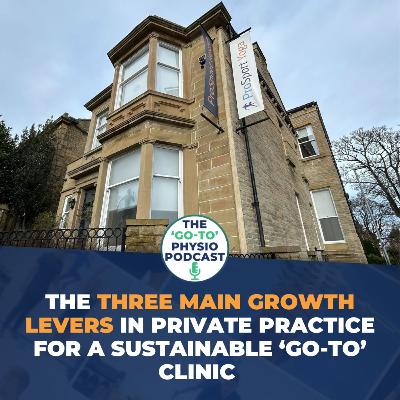
In this episode of the GoToPhysio podcast, Dave O'Sullivan discusses the three main growth levers essential for building a sustainable private practice. He emphasizes the importance of maximizing customer lifetime value, improving sales conversions, and optimizing marketing channels. The conversation highlights the need for realistic budgeting based on historical performance and the significance of understanding key metrics to drive growth. O'Sullivan shares insights on how to create a culture of success within a clinic and the importance of focusing on the right growth strategies to achieve long-term sustainability.
Takeaways
Sustainable growth is about feeling easy, not being easy.
Budgeting should be based on historical performance.
Maximizing customer lifetime value is crucial for growth.
Improving sales conversions can significantly impact revenue.
Not all patients or marketing channels are equal.
Focus on growth levers one and two before marketing.
Understanding your numbers is essential for success.
A culture of success is vital for team morale.
Sustainable growth requires a strategic approach.
You have limited time and energy; focus wisely.
Sound Bites
"Maximize your customer's lifetime value."
"Focus on growth levers one and two first."
"Sustainable growth is less reactive."
Chapters
00:00 Introduction to Sustainable Growth in Private Practice
05:07 Understanding the Three Growth Levers
10:23 Maximizing Customer Lifetime Value
15:35 Improving Sales Conversions
20:50 Optimizing Marketing Channels
22:54 Podcast Outro (audio fixed).mp4
Additional Resources:
Free Head Physio Systems 6 Step Checklist: https://thegotophysio.com/checklist/
Our Flagship ‘Go To’ Therapist Mentorship Program: https://thegotophysio.com/mentorship/
Our Clinic Owner Business Mentorship Program: https://thegotophysio.com/business-mentorship/
Happy Progressing Patients Book: https://thegotophysio.com/book/
For our Latest Updates, Be Sure To Follow Us On Social Media:
Facebook: www.facebook.com/daveosullivansportsphysio
Instagram: www.instagram.com/daveosullivanphysio/

In this episode, Dave O'Sullivan discusses the importance of improving the patient visit average (PVA) in physiotherapy practices. He explains how to calculate PVA, its significance in clinic metrics, and the various factors that influence it, including patient engagement, therapist performance, and the use of packages of care. The conversation emphasizes the need for therapists to align their treatment plans with patient-defined outcomes to enhance retention and profitability. O'Sullivan also shares strategies for clinic owners to implement systems that can lead to better patient outcomes and increased revenue.
Takeaways
Patient visit average is a key metric for clinics.
Aiming for a PVA of six is reasonable for private practices.
Improving IA rebook rates can enhance PVA.
Patient engagement is critical for retention.
Therapists must communicate treatment plans effectively.
Packages of care can significantly boost PVA.
Understanding clinic metrics is essential for growth.
Aligning treatment with patient goals improves outcomes.
Effective systems can transform clinic profitability.
Clinical excellence leads to better patient results.
Sound Bites
"Your patient visit average is crucial."
"Fixing the IA rebook rate improves PVA."
"Packages of care can double your PVA."
Chapters
00:00 Understanding Patient Visit Average
02:55 Importance of Patient Visit Average
05:42 Strategies to Improve Patient Visit Average
09:04 The Role of Therapist in Patient Outcomes
11:57 Integrating Metrics for Business Success
14:42 Achieving Clinical Excellence and Profitability
18:20 Podcast Outro (audio fixed).mp4
Additional Resources:
Free Head Physio Systems 6 Step Checklist: https://thegotophysio.com/checklist/
Our Flagship ‘Go To’ Therapist Mentorship Program: https://thegotophysio.com/mentorship/
Our Clinic Owner Business Mentorship Program: https://thegotophysio.com/business-mentorship/
Happy Progressing Patients Book: https://thegotophysio.com/book/
For our Latest Updates, Be Sure To Follow Us On Social Media:
Facebook: www.facebook.com/daveosullivansportsphysio
Instagram: www.instagram.com/daveosullivanphysio/
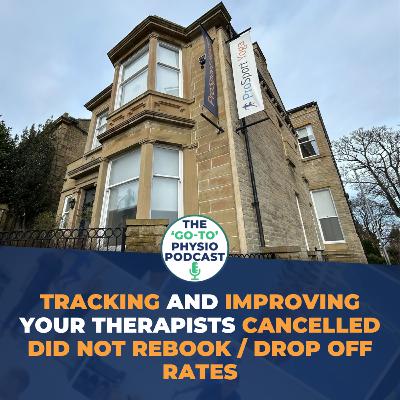
In this episode of the GoToPhysio podcast, Dave O'Sullivan discusses strategies to improve therapist drop off rates and cancellation percentages. He emphasizes the importance of understanding metrics related to patient engagement and the patient journey. The conversation covers the significance of patient value outcomes, the stages of the patient journey, and how to build resilience in patients to ensure they complete their treatment plans. The episode concludes with actionable insights for clinic owners and therapists to enhance their practice and reduce drop off rates.
Takeaways
Understanding drop off rates is crucial for clinic success.
Metrics help in making informed decisions about patient care.
A drop off percentage of 8% is a target for clinics.
Patient engagement is key to reducing cancellations.
The patient journey consists of six stages that impact drop off rates.
Therapists must communicate clear treatment plans to patients.
Building resilience in patients can improve treatment outcomes.
Regular follow-ups are essential for patient retention.
Therapists should be trained to handle difficult patient scenarios.
Improving IA rebook percentages can significantly reduce drop off rates.
Sound Bites
"How to improve your therapist's drop off rates?"
"We need to change the inputs to change the outputs."
"Building resilience for patients is critical."
Chapters
00:00 Introduction to Drop Off Rates
02:52 Understanding Drop Off Percentage
05:55 The Importance of Patient Commitment
08:47 Stages of the Patient Journey
12:05 Improving Follow-Up Sessions
14:58 Building Patient Resilience
17:53 Conclusion and Next Steps
21:34 Podcast Outro (audio fixed).mp4
Additional Resources:
Free Head Physio Systems 6 Step Checklist: https://thegotophysio.com/checklist/
Our Flagship ‘Go To’ Therapist Mentorship Program: https://thegotophysio.com/mentorship/
Our Clinic Owner Business Mentorship Program: https://thegotophysio.com/business-mentorship/
Happy Progressing Patients Book: https://thegotophysio.com/book/
For our Latest Updates, Be Sure To Follow Us On Social Media:
Facebook: www.facebook.com/daveosullivansportsphysio
Instagram: www.instagram.com/daveosullivanphysio/
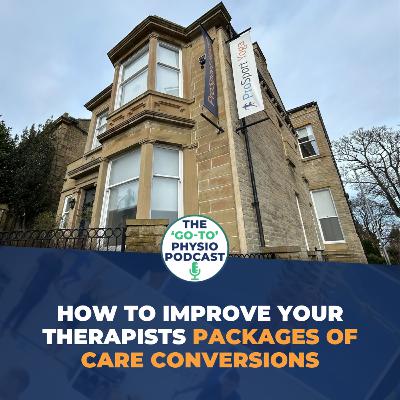
Summary
In this episode, Dave O'Sullivan discusses how to ethically sell packages of care in a therapy setting. He emphasizes the importance of building trust with patients, understanding their needs, and presenting treatment plans that align with their goals. The conversation covers the stages of patient engagement, the significance of clinical systems, and how to effectively present package options without feeling salesy. O'Sullivan provides insights into improving business efficiency through package sales and highlights the importance of patient outcomes and satisfaction.
Takeaways
Selling packages ethically is crucial for therapist success.
Avoid using scripts that feel salesy to patients.
Packages improve business efficiency and patient commitment.
Patients need to feel progress to buy into treatment plans.
Self-trust is a major barrier for patients considering packages.
Align treatment progress with patient-defined goals.
Present package options as a way to save money.
Fulfilment in therapy starts with effective service delivery.
Clinical systems play a vital role in package sales.
Building trust with patients leads to better outcomes.
Titles
Ethical Selling in Therapy: A Guide
Transforming Patient Care with Packages
Sound Bites
"Don't be salesy, be genuine"
"Get the money out of the way"
"Packages can be sold ethically"
Chapters
00:00 Introduction to Packages of Care
02:51 Understanding the Importance of Packages
06:08 Stages of Patient Engagement
09:00 Building Trust and Commitment
11:48 The Role of Admin in Package Sales
14:40 Ethical Selling of Packages
17:58 Conclusion and Future Insights
21:17 Podcast Outro (audio fixed).mp4
Additional Resources:
Free Head Physio Systems 6 Step Checklist: https://thegotophysio.com/checklist/
Our Flagship ‘Go To’ Therapist Mentorship Program: https://thegotophysio.com/mentorship/
Our Clinic Owner Business Mentorship Program: https://thegotophysio.com/business-mentorship/
Happy Progressing Patients Book: https://thegotophysio.com/book/
For our Latest Updates, Be Sure To Follow Us On Social Media:
Facebook:www.facebook.com/daveosullivansportsphysioInstagram: www.instagram.com/daveosullivanphysio/
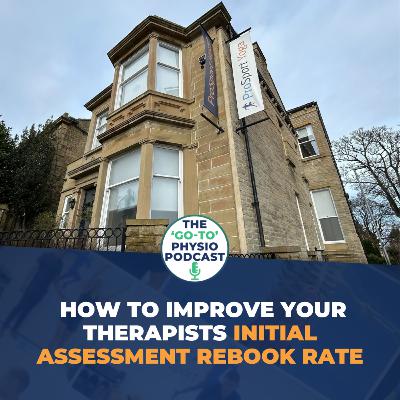
Summary
In this episode of the GoToPhysio podcast, Dave O'Sullivan discusses the critical importance of improving the initial assessment rebook rate (IA Rebook Rate) for therapists. He emphasizes that this metric is a key indicator of patient engagement and clinic success. The conversation covers various strategies to enhance the IA Rebook Rate, including building patient trust, effectively communicating treatment plans, and ensuring patients feel progress in their treatment. O'Sullivan also highlights the significance of understanding patient-defined value outcomes and how they relate to the overall patient journey.
Takeaways
Improving the IA Rebook Rate can significantly impact clinic success.
The IA Rebook Rate is a leading indicator of patient engagement.
Building patient trust is essential for treatment adherence.
Effective communication of treatment plans enhances patient buy-in.
Patients need to feel progress in their first session to rebook.
Self-trust is a major barrier for patients in committing to treatment.
Therapists must understand patient-defined value outcomes.
Reassurance plays a crucial role in patient satisfaction.
Therapists need a structured approach to clinical reasoning.
The IA Rebook Rate should be a focus for all clinics.
Titles
Maximizing Your Therapist's IA Rebook Rate
The Key to Patient Retention: IA Rebook Rate
Sound Bites
"Patients come in looking for help."
"The IA Rebook percentage is king."
"Reassurance is a painkiller."
Chapters
00:00 Understanding the Importance of IA Rebook Rate
02:50 Key Actions to Improve Patient Engagement
05:40 Overcoming Patient Objections
08:56 The Role of Subjective Assessment
11:41 Building Trust and Confidence in Treatment
14:59 Effective Communication of Treatment Plans
18:07 Strategies for Immediate Patient Progress
20:56 Aligning Treatment with Patient Goals
23:51 Final Thoughts on Improving IA Rebook Rate
28:43 Podcast Outro (audio fixed).mp4
Additional Resources:
Free Head Physio Systems 6 Step Checklist: https://thegotophysio.com/checklist/
Our Flagship ‘Go To’ Therapist Mentorship Program: https://thegotophysio.com/mentorship/
Our Clinic Owner Business Mentorship Program: https://thegotophysio.com/business-mentorship/
Happy Progressing Patients Book: https://thegotophysio.com/book/
For our Latest Updates, Be Sure To Follow Us On Social Media:
Facebook: www.facebook.com/daveosullivansportsphysio
Instagram: www.instagram.com/daveosullivanphysio/
LinkedIn: www.linkedin.com/in/daveosullivanphysio/
summary
In this episode, Dave O'Sullivan discusses the importance of creating self-managing therapists in private practice. He emphasizes the need for clinic owners to empower their therapists with the right tools, knowledge, and a supportive culture that prioritizes patient value outcomes. The conversation covers the significance of having high-will therapists, establishing a patient value outcome culture, and utilizing resources like the head physio dashboard to ensure accountability and success. Ultimately, the goal is to foster a self-managing environment that allows clinic owners to focus on growth and patient care without micromanaging their staff.
takeaways
Self-managing therapists are accountable and deliver results.
Empower therapists with tools and knowledge for success.
High-will therapists are essential for a positive clinic culture.
Patient value outcomes are crucial for accountability.
The head physio dashboard helps track therapist performance.
Clinical leadership is vital for guiding therapists.
Creating a self-managing culture leads to clinic freedom.
Therapists must understand their numbers for improvement.
Investing in therapist training enhances patient outcomes.
A supportive environment fosters self-management in clinics.
titles
Creating Self-Managing Therapists in Private Practice
Empowering Therapists for Better Patient Outcomes
Sound Bites
"You can't manage people, empower them instead."
"Therapists need to understand their numbers."
"Empower your team for better patient outcomes."
Chapters
00:00 Introduction to Self-Managing Therapists
02:45 Empowering Therapists for Accountability
06:01 Building a High-Will Therapist Culture
09:03 Implementing Patient Value Outcomes
11:47 Tools for Self-Management
14:40 The Role of the Head Physio Dashboard
18:00 Clinical Leadership and Accountability
20:51 Summary of Key Steps for Self-Managing Therapists
27:12 Podcast Outro (audio fixed).mp4
Additional Resources:
Free Head Physio Systems 6 Step Checklist: https://thegotophysio.com/checklist/
Our Flagship ‘Go To’ Therapist Mentorship Program: https://thegotophysio.com/mentorship/
Our Clinic Owner Business Mentorship Program: https://thegotophysio.com/business-mentorship/
Happy Progressing Patients Book: https://thegotophysio.com/book/
For our Latest Updates, Be Sure To Follow Us On Social Media:
Facebook: www.facebook.com/daveosullivansportsphysio
Instagram: www.instagram.com/daveosullivanphysio/
LinkedIn: www.linkedin.com/in/daveosullivanphysio/

Summary
In this episode of the GoToPhysio podcast, Dave O'Sullivan discusses strategies for clinic owners to ethically double their profits without needing to acquire new patients. He emphasizes the importance of defining success, understanding financial metrics, and optimizing the patient journey. By leveraging patient value outcomes and focusing on retention, clinic owners can significantly increase their profitability. The episode also highlights the need for effective training and accountability among clinicians to ensure that patients achieve their desired outcomes, ultimately leading to a more successful practice.
Takeaways
Doubling profits can be achieved ethically without new patients.
Defining success is crucial for financial planning.
Key metrics include rebooking rates, patient visit averages, and drop-off rates.
Understanding the patient journey is essential for clinic success.
Patient value outcomes hold clinics accountable to their patients.
Comparative analysis shows the impact of retention on profits.
Optimising marketing strategies is important for sustainable growth.
Training and accountability for clinicians enhance patient outcomes.
Clinics can dominate their market by understanding their numbers.
Many clinics are underutilizing their potential for profit.
Sound Bites
"Double your clinic's profit today!"
"What is your definition of success?"
"We want that to be around 90%."
Chapters
00:00 Introduction to Doubling Profits Ethically
02:29 Key Metrics for Clinic Success
05:18 Understanding the Patient Journey
07:07 Leveraging Patient Value Outcomes
10:02 Comparative Analysis of Clinics A and B
17:10 The Importance of Patient Retention
20:31 Optimizing Marketing Strategies
23:14 Training and Accountability for Clinicians
26:08 Conclusion and Call to Action
Additional Resources:
Free Head Physio Systems 6 Step Checklist: https://thegotophysio.com/checklist/
Our Flagship ‘Go To’ Therapist Mentorship Program: https://thegotophysio.com/mentorship/
Our Clinic Owner Business Mentorship Program: https://thegotophysio.com/business-mentorship/
Happy Progressing Patients Book: https://thegotophysio.com/book/
For our Latest Updates, Be Sure To Follow Us On Social Media:
Facebook: www.facebook.com/daveosullivansportsphysio
Instagram: www.instagram.com/daveosullivanphysio/
LinkedIn: www.linkedin.com/in/daveosullivanphysio/
Summary
In this episode of the GoToPhysio podcast, Dave O'Sullivan discusses the GoToClinic patient journey, outlining a six-stage framework designed to enhance patient engagement, improve therapy outcomes, and increase referrals. Each stage is critical for ensuring patients progress through their treatment effectively, from initial buy-in to achieving their defined value outcomes. The conversation emphasises the importance of metrics in tracking success and the need for therapists to adapt their approaches based on patient feedback and experiences.
Takeaways
The GoToClinic framework consists of six essential stages for patient engagement.
Understanding the difference between inputs and outputs is crucial for a clinic's success.
Patient buy-in is the most critical factor in the treatment process.
Therapists must ensure patients feel a difference after the first session.
Rebooking and aligning rehab plans with patient goals are vital for continued progress.
Achieving initial milestones within the first three sessions is key to patient retention.
Patients need to understand that progress continues even after pain relief.
Exposing patients to challenges builds confidence and enhances their experience.
Metrics help track patient progress and identify areas for improvement.
A structured approach can lead to increased referrals and clinic growth.
Sound Bites
"We want a package of care for patients who bought a plan to be 50 per cent."
"These numbers are absolutely critical to your reputation in your clinic."
"Stage one is probably the most important out of all of them."
Chapters
00:00 Introduction to the GoToClinic Patient Journey
02:57 Understanding the Six Stages Framework
05:52 Stage One: Patient Buy-In to Treatment Plan
08:47 Stage Two: Patient Experience in the First Session
11:58 Stage Three: Rebooking and Rehab Alignment
15:14 Stage Four: Achieving Initial Milestones
18:03 Stage Five: Progressing Beyond Pain Relief
20:55 Stage Six: Exposing Patients to Challenges
24:11 Conclusion and Future Insights
Additional Resources:
Free Head Physio Systems 6 Step Checklist: https://thegotophysio.com/checklist/
Our Flagship ‘Go To’ Therapist Mentorship Program: https://thegotophysio.com/mentorship/
Our Clinic Owner Business Mentorship Program: https://thegotophysio.com/business-mentorship/
Happy Progressing Patients Book: https://thegotophysio.com/book/
For our Latest Updates, Be Sure To Follow Us On Social Media:
Facebook: www.facebook.com/daveosullivansportsphysio
Instagram: www.instagram.com/daveosullivanphysio/
LinkedIn: www.linkedin.com/in/daveosullivanphysio/
In this episode of the ‘Go-To’ Physio podcast, Dave O'Sullivan discusses the ‘Go-To’ Clinic Head Physio dashboard and the essential metrics for achieving clinical success. He emphasises the importance of understanding and utilising numbers to improve clinic performance, patient outcomes, and profitability. The conversation covers key metrics, the patient journey, and strategies for enhancing clinical excellence while maintaining ethical profits. Dave also highlights the significance of training therapists to leverage these metrics effectively.
Takeaways
Clinical success involves both clinical excellence and profitability.
Numbers provide insights into performance and opportunities for improvement.
High performers view numbers as tools for growth, not punishment.
Lagging indicators help assess past performance and inform future actions.
Understanding inputs and outputs is crucial for clinic success.
Key metrics include rebook rates, package conversions, and drop-off percentages.
Utilisation rates should be monitored to prevent therapist burnout.
Improving clinical standards can enhance patient lifetime value.
Marketing spend should be informed by clinic performance metrics.
Training therapists on numbers can lead to better patient outcomes and clinic growth.
Chapters
00:00 Introduction to Clinical Success Metrics
03:11 Understanding Numbers in Clinical Practice
06:01 Key Metrics for Clinic Performance
12:37 Growth Levers for Clinic Owners
17:22 Opportunities for Growth and Clinical Excellence
Resources:
Free Head Physio Systems 6 Step Checklist: https://thegotophysio.com/checklist/
Our Flagship ‘Go To’ Therapist Mentorship Program: https://thegotophysio.com/mentorship/
Our Clinic Owner Business Mentorship Program: https://thegotophysio.com/business-mentorship/
Happy Progressing Patients Book: https://thegotophysio.com/book/
For our Latest Updates, Be Sure To Follow Us On Social Media:
Facebook: www.facebook.com/daveosullivansportsphysio
Instagram: www.instagram.com/daveosullivanphysio/
LinkedIn: www.linkedin.com/in/daveosullivanphysio/
Summary
In this episode of the ‘Go-To’ Physio podcast, Dave O'Sullivan discusses the importance of embracing a patient defined value-based outcomes culture in clinics. He emphasises the need for clinic owners and therapists to understand and prioritise patient expectations and perceived value over internal clinical outcomes. By focusing on how patients define value and ensuring that their expectations are met or exceeded, clinics can foster patient satisfaction, referrals, and overall success which leads to sustainable clinic growth. Dave provides actionable insights for implementing this culture within clinics and encourages reflection on current practices to enhance patient care and clinic management for true sustainable clinic growth and freedom for you as the clinic owner.
Takeaways
Embrace a ‘patient defined value-based outcomes’ culture for clinic success.
Understand patient expectations to improve satisfaction.
Perceived value is crucial for patient retention.
Actual value is created when patient expectations are met.
Raving fans are generated by exceeding patient expectations.
Focus on patient outcomes rather than just clinical metrics.
Condition therapists to think in terms of patient value.
Implement systems to track and measure patient outcomes.
Reflect on current practices to identify areas for improvement.
Start building a value-based culture today for long-term benefits.
Chapters
00:00 Introduction to Patient Defined Value-Based Outcomes Culture
02:54 Understanding Patient Expectations and Perceived Value
06:05 Delivering and Exceeding Patient Value
08:57 The Importance of Patient Outcomes
11:45 Implementing a Value-Based Culture in Clinics
15:10 Reflection and Next Steps for Clinic Owners

Summary
In this episode, David O'Sullivan interviews Liz Cummins, a physical therapist and clinic owner of Enhanced Motion, about her journey from starting out in her career to successfully running her own clinic. They discuss the challenges and fears Liz faced when transitioning to full-time private practice, the importance of hiring staff, and how she has defined her success in balancing work and family life. Liz shares valuable insights and lessons learned along the way, emphasising the significance of mindset and adaptability in achieving business growth.
Takeaways
Liz's journey from working part-time to owning a clinic is inspiring.
Overcoming financial fears was a significant hurdle for Liz.
Hiring her first admin was a pivotal moment in her business.
Understanding numbers is crucial for business success.
Defining personal success is essential for work-life balance.
Mindset plays a critical role in achieving goals.
It's important to adapt and learn from mistakes.
Having a mentor can provide valuable guidance.
Taking risks can lead to rewarding outcomes.
Reflecting on progress boosts confidence and motivation.
Chapters
00:00 The Journey Begins: From Humble Beginnings to Clinic Owner
04:49 Facing Fears: The Leap into Full-Time Practice
09:57 Building a Team: The Importance of Hiring
15:12 Defining Success: Balancing Work and Life
19:49 Lessons Learned: Advice for Future Clinicians
This episode of the ‘Go-To’ Physio podcast focuses on the six head physio milestones that help solve complex cases and consistently generate reviews and referrals. The head physio systems are crucial for clinic owners to achieve true freedom and protect the reputation of their clinic. The head physio systems are responsible for the profit engine of the clinic, as it is the follow-up income that generates revenue and profits. The episode discusses the importance of understanding patient value, exceeding expectations, and the six stages that patients need to go through to achieve successful outcomes. The conversation focuses on the six stages of the patient journey in a private practice clinic.
Key Takeaways
The head physio systems are crucial for clinic owners to achieve true freedom and protect the reputation of their clinic.
Understanding patient value and exceeding expectations are key to generating reviews and referrals.
Therapists need to have the knowledge, skills, and communication framework to effectively explain the problem, solution, and treatment plan to patients.
Focusing on patient outcomes and aligning the treatment plan with patient values is essential for success in private practice. The patient journey in a private practice clinic consists of six stages.
It is important for the patient to buy into the treatment plan and notice progress in the first session.
Rebooking and turning up for the second session is a key milestone.
The patient should hit the first three milestones at home or in the real world.
Even when the patient's pain eases, they should feel there is more progress to be made.
The ultimate goal is for the patient to be discharged having achieved their definition of success.
Chapters
00:00 Building a ‘Go-To’ Clinic with Head Physio Systems
09:17 Cleaning Up Leaks in the Bucket
19:13 Stage One: Buying into the Treatment Plan
24:49 Stage Two: Noticing Progress in the First Session
27:06 The Value of Mapping the Treatment Plan
29:13 Designing Rehab Exercises for Everyday Life
31:45 Hitting the First Three Milestones
35:25 Continuing to Strive for Progress
Resources:
Free Head Physio Systems 6 Step Checklist: https://thegotophysio.com/checklist/
Our Flagship ‘Go To’ Therapist Mentorship Program: https://thegotophysio.com/mentorship/
Our Clinic Owner Business Mentorship Program: https://thegotophysio.com/business-mentorship/
Happy Progressing Patients Book: https://thegotophysio.com/book/
For our Latest Updates, Be Sure To Follow Us On Social Media:
Facebook: www.facebook.com/daveosullivansportsphysio
Instagram: www.instagram.com/daveosullivanphysio/
LinkedIn: www.linkedin.com/in/daveosullivanphysio/

This episode of the ‘Go-To’ Physio podcast focuses on building a ‘Go-To’ Clinic that provides true freedom for clinic owners. The hosts, Dave O'Sullivan and Paddy Mulligan, discuss the importance of having a clear vision, understanding how time is spent, and setting goals. They emphasise the need for numbers, people, and systems to achieve freedom. They also highlight the significance of the clinic owner mindset and the constant evolution of systems. Overall, the episode provides practical advice and insights for clinic owners looking to achieve balance and success.
Key Takeaways
Having a clear vision and understanding of success is crucial for building a go-to clinic that provides freedom.
Analysing how time is spent and setting goals are important steps in achieving true freedom.
Numbers, people, and systems are key components in creating a successful clinic.
The clinic owner mindset plays a significant role in making decisions and solving problems.
Systems should be constantly reviewed and evolved to ensure efficiency and effectiveness.
Chapters
00:00 Introduction: From Burnout to Balance
04:13 Numbers, People, and Systems: The Foundation of a Successful Clinic
07:27 Time Management and Structuring Success
10:31 Delaying Gratification for Sustainable Success
19:06 The Clinic Owner Mindset and Problem Solving
23:36 Constantly Evolving Systems for Efficiency and Effectiveness
Resources:
Free Head Physio Systems 6 Step Checklist: https://thegotophysio.com/checklist/
Our Flagship ‘Go To’ Therapist Mentorship Program: https://thegotophysio.com/mentorship/
Our Clinic Owner Business Mentorship Program: https://thegotophysio.com/business-mentorship/
Happy Progressing Patients Book: https://thegotophysio.com/book/
For our Latest Updates, Be Sure To Follow Us On Social Media:
Facebook: www.facebook.com/daveosullivansportsphysio
Instagram: www.instagram.com/daveosullivanphysio/
LinkedIn: www.linkedin.com/in/daveosullivanphysio/

Comments

Download from Google Play

Download from App Store
 United States