


Happy English Podcast (Natural American English)
Subscribed: 33,706Played: 1,477,337
Subscribe


© 2014 -2026 Michael DiGiacomo, Happy English Language Services Co.
Description
The Happy English Podcast helps English learners learn natural American English with clear lessons, practical phrases, everyday conversation tips, and listening practice.
Hosted by American English teacher Michael DiGiacomo, the show features short and practical lessons to help you build vocabulary, improve pronunciation, and speak English confidently in real conversations.
Episodes range from quick tips to longer explanations and cover useful topics like phrasal verbs, idioms, pronunciation, grammar, and natural conversation patterns used by native speakers.
If you want to learn English, improve your American English pronunciation, practice English listening, and speak English more confidently in everyday conversation, the Happy English Podcast will help you step by step.
Since 2014, the podcast has published over 1,000 episodes and reached more than 8 million downloads worldwide.
Get free weekly English lessons plus instant access to my FREE Vocabulary Workshop.:
https://learn.myhappyenglish.com/free-english-lessons
Watch video versions of the podcast:
https://www.youtube.com/@HappyEnglishNY/podcasts
1127 Episodes
Reverse
 1
I’ve lived here for two years. Jack has been here since Monday. I haven’t seen her in ages. I haven’t been there in forever.English has several very natural ways to talk about something that started in the past and connects to now. And while this grammar often appears in lessons about the present perfect, today I don’t want to turn this into a big grammar lesson. Instead, we’re going to look at the time expressions for, since, how long, in ages, and a few other phrases you can use in everyday conversation.The Happy English PodcastHelping people speak English better since 2014Over 1,000 episodes • 8 million downloads📘 Get free weekly English lessons plus instant access to my FREE Vocabulary Workshop.:https://learn.myhappyenglish.com/free-english-lessons🎥 Watch video versions of the Happy English Podcast on YouTubehttps://www.youtube.com/@HappyEnglishNY/podcasts🌐 Learn more about my English lessons and courseshttps://www.myhappyenglish.com
It’s worth seeing. It’s worth the money. It’s not worth worrying about. Is it worth going? It’s worth it. Worth is a very useful word in everyday English, but the grammar after it can be surprising. We don’t say, “It’s worth to see.” We say, “It’s worth seeing.” So why do we use -ing after worth? And how can you use expressions like worth the money and worth it naturally? That’s what we’re going to look at today.The Happy English PodcastHelping people speak English better since 2014Over 1,000 episodes • 8 million downloads📘 Get free weekly English lessons plus instant access to my FREE Vocabulary Workshop.:https://learn.myhappyenglish.com/free-english-lessons🎥 Watch video versions of the Happy English Podcast on YouTubehttps://www.youtube.com/@HappyEnglishNY/podcasts🌐 Learn more about my English lessons and courseshttps://www.myhappyenglish.com
I had my hair cut. I had my car fixed. I got my phone repaired. I had Jenny fix my computer. Wait a minute. Why do we say I had my hair cut instead of something like I cut my hair, if another person actually did the work? And why can we also say I had Jenny fix my computer? These are two very useful patterns for talking about services and situations where another person does something for us. So today, we’re going to look at how you can use them naturally in everyday English.The Happy English PodcastHelping people speak English better since 2014Over 1,000 episodes • 8 million downloads📘 Get free weekly English lessons plus instant access to my FREE Vocabulary Workshop.:https://learn.myhappyenglish.com/free-english-lessons🎥 Watch video versions of the Happy English Podcast on YouTubehttps://www.youtube.com/@HappyEnglishNY/podcasts🌐 Learn more about my English lessons and courseshttps://www.myhappyenglish.com
I’m having trouble with this. I mean I’m really struggling with it. Like, I'm trying, but I can’t seem to figure it out. When something is difficult, there are a lot of natural ways to talk about what you’re experiencing. Some expressions focus on the problem, some focus on your effort, and one of them shows that things are finally starting to improve. So today, we’re going to look at five natural ways to talk about something difficult in everyday English.The Happy English PodcastHelping people speak English better since 2014Over 1,000 episodes • 8 million downloads📘 Get free weekly English lessons plus instant access to my FREE Vocabulary Workshop.:https://learn.myhappyenglish.com/free-english-lessons🎥 Watch video versions of the Happy English Podcast on YouTubehttps://www.youtube.com/@HappyEnglishNY/podcasts🌐 Learn more about my English lessons and courseshttps://www.myhappyenglish.com
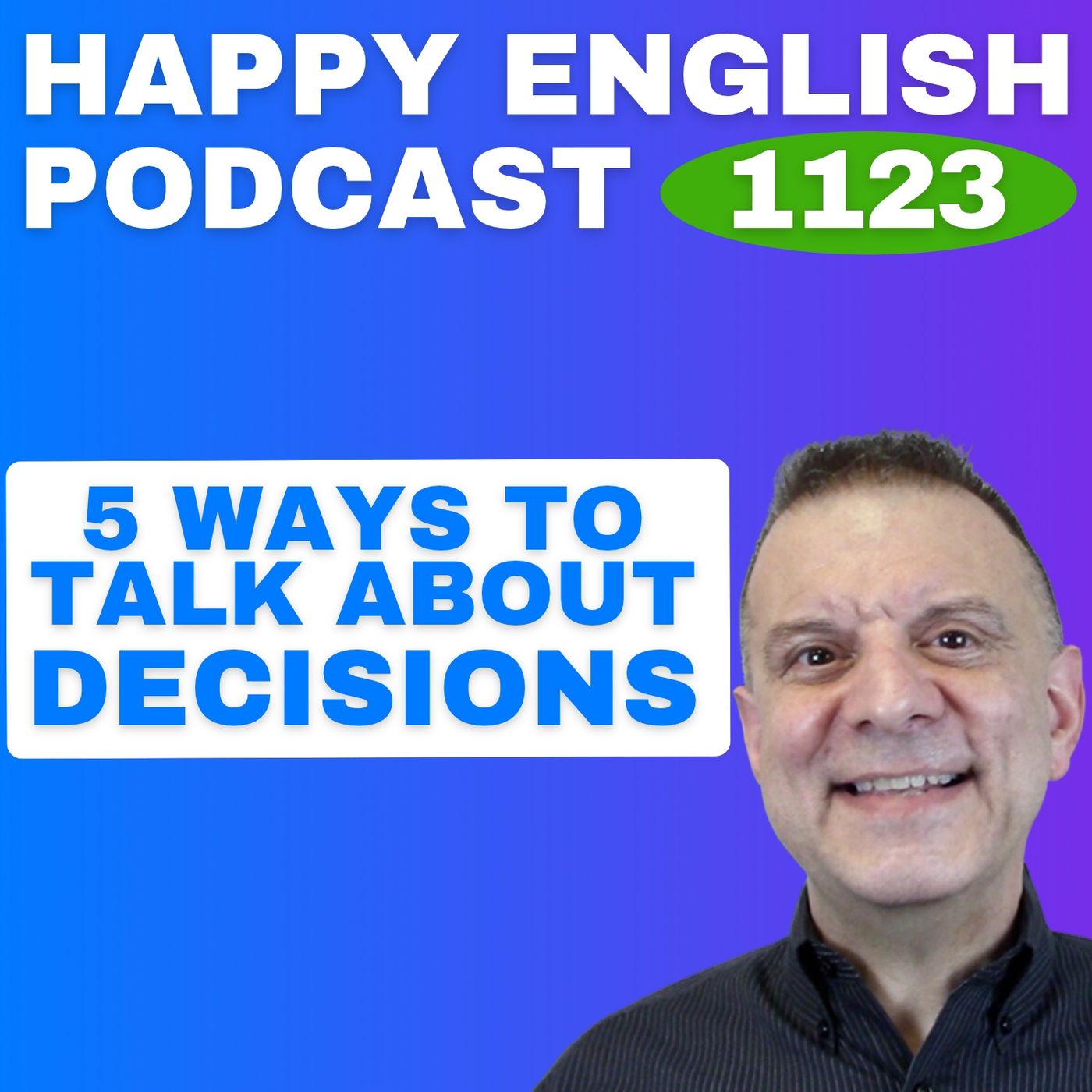
Making decisions is part of everyday life, and depending on where you are in the decision-making process, there are different natural phrases you can use. So today, we’re going to look at five useful ways to talk about decisions in everyday English. These are: I haven’t decided yet. I’m still thinking about it. I’m leaning toward the blue one. I’ve made up my mind. It’s up to you. The Happy English PodcastHelping people speak English better since 2014Over 1,000 episodes • 8 million downloads📘 Get free weekly English lessons plus instant access to my FREE Vocabulary Workshop.:https://learn.myhappyenglish.com/free-english-lessons🎥 Watch video versions of the Happy English Podcast on YouTubehttps://www.youtube.com/@HappyEnglishNY/podcasts🌐 Learn more about my English lessons and courseshttps://www.myhappyenglish.com

Comments

Download from Google Play

Download from App Store
 United States