


CFO THOUGHT LEADER
Subscribed: 1,350Played: 40,512
Subscribe


© Middle Market Media LLC, 2019
Description
CFO THOUGHT LEADER is a podcast featuring firsthand accounts of finance leaders who are driving change within their organizations.
We share the career journey of our spotlighted CFO guest: What do they struggle with? How do they persevere? What makes them successful CFOs? CFO THOUGHT LEADER is all about inspiring finance professionals to take a leadership leap. We know that by hearing about the successes — (and yes, also the failures) — of others, today’s CFOs can more confidently chart their own leadership paths across the enterprise and take inspired action.
We share the career journey of our spotlighted CFO guest: What do they struggle with? How do they persevere? What makes them successful CFOs? CFO THOUGHT LEADER is all about inspiring finance professionals to take a leadership leap. We know that by hearing about the successes — (and yes, also the failures) — of others, today’s CFOs can more confidently chart their own leadership paths across the enterprise and take inspired action.
1161 Episodes
Reverse
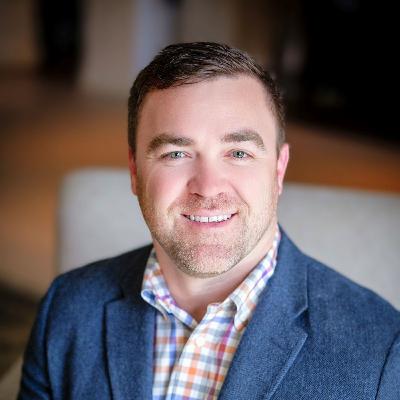
Andrew Bender still remembers a moment from high school football practice when a coach challenged him with a simple question: “Do you want to be all conference or all state?” The comment surprised him. At the time, Bender tells us he wasn’t even sure he had the potential to reach the lower bar. Yet the moment stayed with him because it revealed something important—that sometimes others see possibilities before we do.That lesson about recognizing potential shaped how Bender approached his career decisions. Early on, while working at William Blair, he faced a choice common among his peers: continue toward private equity or pursue a different path. Instead of following the typical investment track, he realized he preferred working inside organizations rather than advising them from the outside. The parts of investment banking he enjoyed most involved “diving into the organizations” he represented, Bender tells us.Over time, that realization led him toward roles blending strategy and finance. Consulting and business school helped him develop structured problem-solving skills and the ability to learn new industries quickly. Later, at Snyder’s-Lance, he worked across corporate strategy and business-unit finance, gaining operational perspective that would prepare him for future CFO roles.That blend of strategy and finance thinking surfaced again after Bender joined BNI Global. Preparing board materials, he realized the company tracked numerous KPIs but struggled to explain performance drivers. If the metrics didn’t link to financial outcomes, he recalls thinking, “what are we doing here?”The solution was simplification. Bender helped refocus leadership on five core business drivers—member renewals, visitor activity, conversion rates, chapter launches, and pricing—while teaching operational leaders how those metrics translate into financial performance.

Early in Lucanet’s expansion, two Chinese employees working in Germany had a moment of insight. Seeing how configurable the consolidation software was, they believed it could succeed in their home market. Acting on that conviction, they traveled from Berlin back to China and built what would become Lucanet’s Chinese business. The story illustrates how a tool designed for global complexity could travel easily across borders, Gurney tells us.Lucanet’s origins are firmly rooted in Germany, where the company first built its reputation with a consolidation platform designed for companies operating across multiple jurisdictions. That design decision proved foundational. Because customers often consolidate entities across countries, the platform had to integrate financial data from different jurisdictions and support multiple accounting frameworks, Gurney tells us. The system can report under German GAAP, IFRS, or different management accounting rules and allows users to toggle between those views efficiently, he tells us.Read MoreToday, the company’s geographic reach reflects that original cross-border orientation. While Germany remains Lucanet’s strongest market, the company now operates across Europe and Asia, including the Netherlands, Switzerland, France, Italy, Spain, the United Kingdom, China, and Singapore, Gurney tells us. Increasingly, a majority of new customer bookings come from outside Lucanet’s historical DACH and Netherlands markets, he tells us.Growth has also been shaped by capital structure changes. After roughly eighteen years as a founder-run business, HG Capital made a majority investment in 2022, accelerating both product development and geographic expansion, Gurney tells us.For Gurney, who joined Lucanet at the start of May last year, the company’s focus remains clear: build tools that make the Office of the CFO more effective across borders and systems, he tells us.

Ashley Still, Executive Vice President and General Manager of Intuit’s mid-market business, discusses how the expectations of finance leaders are shifting as AI reshapes the finance function. She explains how Intuit is expanding beyond its small-business roots with Intuit Enterprise Suite, designed to serve growing mid-market organizations seeking faster implementation and lower total cost than traditional ERP systems. Still highlights how AI-powered agents are helping finance teams reduce manual work, accelerate month-end insights, and focus more on strategic decision-making. As the CFO role evolves from scorekeeper to growth driver, she believes technology will increasingly enable finance leaders to connect data, manage risk, and guide business growth.
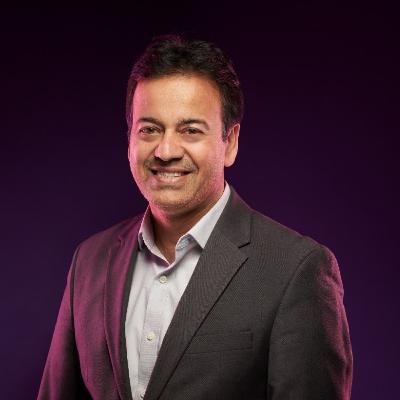
Early in his career, Intekhab Nazeer found himself sitting in go-to-market meetings rather than finance reviews. A CFO mentor had pushed him beyond traditional accounting responsibilities, exposing him to pipeline discussions and sales forecasting. That experience changed how he viewed finance leadership. Instead of simply reporting financial results, he began understanding “how pipeline is generated, how deal flow is measured, how the forecasting really works,” Nazeer tells us. The exposure reshaped his perspective, shifting his mindset from reporting outcomes to influencing them.The shift became even more real when he stepped into an interim CFO role after his mentor moved on. Responsibility changed overnight. “I was no longer supporting decisions. I was making decisions,” Nazeer tells us, describing board meetings, capital allocation choices, and the balancing act between growth and risk.Throughout his career, he continued to place finance alongside operations rather than apart from them. At one venture-backed company, that mindset proved critical. Revenue targets were being met, yet something felt wrong. When Nazeer overlaid unit economics—customer acquisition cost, payback period, and expansion revenue—he discovered the company was optimizing growth while quietly locking in unprofitable customer behavior, he tells us.The response required collaboration rather than spreadsheets alone. He worked with sales and product leaders to redefine the ideal customer profile, adjust pricing discipline, and elevate metrics like payback period and the “magic number” into core operating indicators, he tells us.The experience reinforced a lesson he carries today: the CFO role is “far less about spreadsheets and more about psychology,” Nazeer tells us. Precision creates accuracy, but influence creates outcomes.
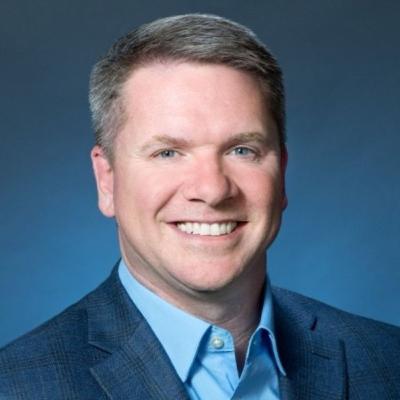
Fiber is “a lot of investment up front for that stream of cash flow in the future,” Derek Doyle tells us. At C Spire, that reality defines nearly every strategic decision.The advanced technology and communications company has been reinventing itself for more than 70 years, Doyle tells us. Today, it is the largest privately held wireless carrier in the U.S. and operates 22,000 miles of fiber, placing it among the top 20 fiber internet providers in the country by premise passings, he tells us. The company has invested hundreds of millions of dollars expanding beyond Mississippi into Alabama, Tennessee, and Florida, Doyle tells us—moves that require disciplined capital judgment.For Doyle, capital allocation is not just about near-term profit. It is about equity value. Public companies may emphasize shareholder return metrics, but as a private company, C Spire centers on equity value growth, he tells us. “I’m a big intrinsic value person,” Doyle explains, grounding decisions in discounted cash flow and intrinsic value models, he tells us.That approach requires looking beyond projected profit to the full funding equation—how much must be borrowed, how much capital deployed up front, and what long-term cash flows justify the investment, Doyle tells us.Ultimately, the objective is clear: invest resources in what “drives that needle the most,” he tells us—ensuring that growth in connectivity translates into sustainable enterprise value.

In this episode of Planning Aces, hosts Jack Sweeney and Glenn Hopper lead a focused discussion spotlighting the thinking of CFO Kevin Rubin of Zscaler, CFO Bruce Schuman of Universal Technical Institute, and CFO Razzak Jallow of FloQast on how disciplined FP&A leadership is shaping AI adoption. Rubin frames AI as a capital allocation decision, supported by centralized governance to prevent tool sprawl. Schuman underscores foundational readiness—data governance, ERP consolidation, and process redesign—before deploying AI-driven forecasting. Jallow cautions against fragmented “spaghetti AI,” advocating for platform coherence and skill development.As resident thought leader, Glenn Hopper reinforces a unifying insight: AI should function as an “exoskeleton” for finance—amplifying sound processes, not replacing them. Together, Jack and Glenn connect the perspectives, highlighting a shared conclusion: AI success in FP&A depends less on speed and more on governance, architecture, and trust embedded in the planning process.

Nearly 90% of Americans suffer from metabolic disease, Manu Diwakar tells us, citing a recent McKinsey & Company study. For Diwakar, CFO of Virta Health, that statistic defines both the scale of the challenge and the clarity of the mission.Metabolic disease, he explains, includes type 2 diabetes, obesity, liver disease, kidney disease, heart disease, and high blood pressure—“branches of a tree,” he tells us, all sharing the same root cause: poor nutrition. Virta’s model blends medical professionals and technology to reverse those conditions, partnering with insurers, employers, and government entities in a B2B2C framework.From a finance perspective, the impact is measurable. Diwakar tells us Virta uses pharmacy and medical claims data to compare enrolled members with non-enrolled employees who share the same conditions—creating what he describes as a “really clean A/B test.” For type 2 diabetes, the company delivers a “two-to-one ROI,” he tells us, making the value proposition tangible.In a market captivated by GLP-1 drugs, the numbers sharpen further. Virta charges about $150 per month, Diwakar tells us, compared with roughly $1,000 per month list price for GLP-1s—about $500 after rebates. More important, he notes that when patients stop GLP-1s, weight often returns. By targeting the root cause—nutrition habits—Virta aims to make results sustainable and long-lasting, he tells us.For Diwakar, disciplined measurement and root-cause thinking align strategy with impact—improving health while lowering cost.

Before his first cup of coffee, Alex Melamud opens Slack—not to scan revenue charts first, but to read customer feedback. “The first one that may surprise you as a CFO that I look at is actually NPS,” he tells us. At Engine, every survey drops into a shared channel so “every executive can see” what customers said, he tells us.That habit fits a finance leader who didn’t grow up in the CFO seat. Melamud started in investment banking and then spent 16 years in private equity, learning to build theses, chase signal, and “sell… the product of private equity,” he tells us. Sitting on boards, he watched the CFO role evolve from “corporate governance accounting” into “executive first and maybe CFO second,” he tells us—someone who can talk like product, sales, or operations and earn board trust.Engine became the moment he stepped inside. After leading the company’s round “18 months ago,” joining the board, and helping with a CFO search, he looked at founder “Elia” and asked, “what if I joined you as CFO?” he tells us. The draw was a focused mission: serving SMB travel, where customers book “like a consumer” and lose corporate rates and visibility, he tells us.Now his investor lens shows up in the unglamorous work. During annual planning, he dug into the “top 50 costs” outside headcount and pushed leaders to treat each contract “as a brand new relationship,” he tells us—an inspection that produced “10, 15%” savings and “tens of millions of dollars,” he tells us.
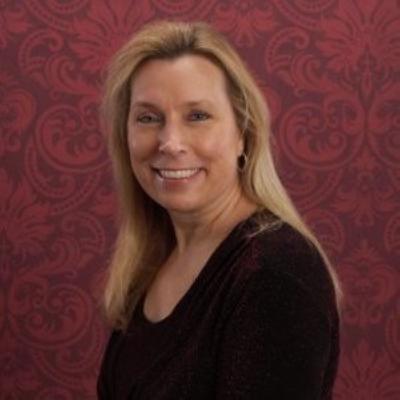
On her first day as CFO at Greenphire, Sue Vestri sat in a conference room “learning all of the acronyms” of the clinical trial industry, she tells us. There were “many, many, many,” she recalls, and she listened to the sales team outside her door to understand how the product was positioned and why it mattered.That willingness to learn from the ground up defines her career. Earlier, a mentor warned her she would stagnate if she stayed in the safety of a large company. “You’ve got to go to grow,” he told her. She left for a 100-employee cloud software firm, a decision that launched a string of growth-company chapters, transactions, and ultimately multiple CFO seats.At Greenphire, she joined when the company had roughly 72 employees and “very low double digit revenue,” she tells us. Under private equity ownership, it expanded globally, shifted from clinical sites to big pharma customers, and supported the Pfizer clinical trial during COVID. Sue and her CEO conducted “20 or 30 presentations” during a remote exit process, she tells us.Today, as CFO of CRIO, she describes finance as embedded in the business—not “sitting behind a desk… producing financial statements.” Her filter for AI is deliberate: avoid the “shiny object” and invest in what is “truly transformational,” she explains. Whether evaluating predictive revenue indicators or AI tools, Sue’s throughline remains the same—grow, but with discipline.

In his early 30s, Guillermo Lopez walked into finance as an outsider. “Nobody was giving me a chance in finance because I was an engineer,” he tells us. Then a boss took “a risk” and moved him into a finance role—partly because he was “good with numbers,” and partly because his consulting background meant he could be put “in front of…external parties,” Lopez tells us.That entry point set the tone for how he builds a career: intentionally and with breadth. At American Express, he moved across businesses and finance roles on purpose, because “it’s important to get breath, especially if you’re thinking about a CFO,” he tells us. Over time, he came to describe himself as “very data driven”—the “non emotional part of the decision making,” he tells us—while also learning to make decisions with “imperfect information” in global roles, he tells us.A later inflection arrived after Visa acquired Tink. Lopez became “the grown up” Visa sent to Stockholm, commuting from London each week, he tells us. The environment was smaller, faster, and short on big-company support. It was “daunting,” he tells us, but it taught him to move quickly, focus on priorities, and take bigger career risks.That same blend—speed and discipline—shows up in his definition of finance’s strategic role: being embedded in investment and capital-allocation decisions with data in hand, Lopez tells us.His proof point comes from an earlier chapter. In an international CFO role, he helped reframe how a business allocated “close to $700 million a year,” building ROI insights that pointed to “$30 million more of revenue every year,” he tells us.
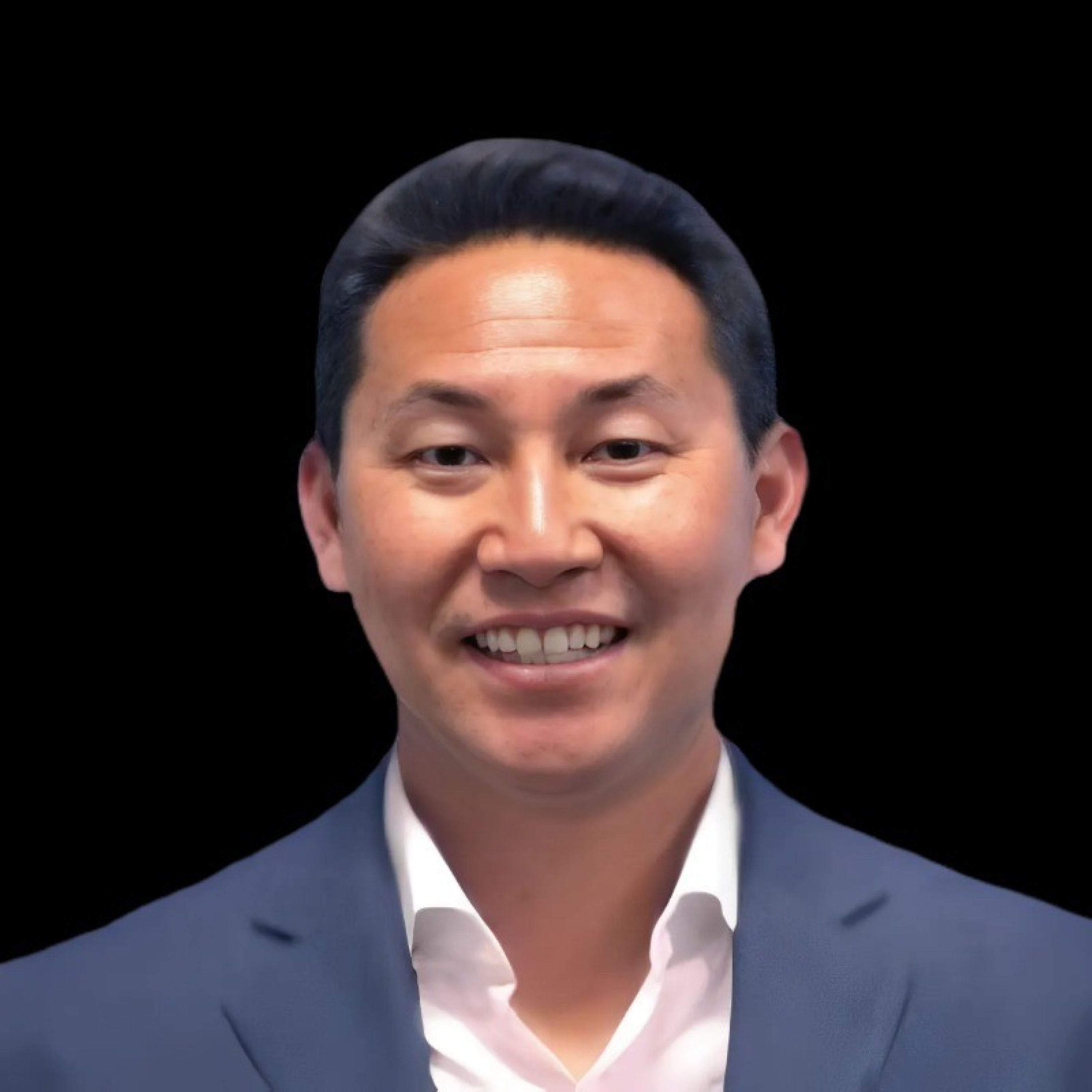
An employee is on vacation in the mountains when it happens: “I left my laptop at home.” Instead of scrambling, the employee logs into a virtual desktop from another device, pulling up what looks and feels like their own PC, delivered through the cloud. That simple moment captures how Steve Shimizu describes Omnissa’s mission—helping companies enable a digital employee experience that allows people to work from anywhere, on any device, he tells us.For Shimizu, this practical use case reflects a broader evolution in end-user computing. What began with desktop computers moved to laptops and mobile devices, and now extends to “everything” that consumes data—from retail scanners to cars, Shimizu tells us. Omnissa operates at that expanding edge, supporting both physical and virtual endpoints while helping employees stay productive regardless of location.That same blend of flexibility and discipline shapes how Shimizu thinks about the company’s growth. Although Omnissa emerged from a carve-out, he resists the startup label. Running a multi-billion-dollar organization with thousands of employees is more like earning a pilot license and being handed a “747” as your first plane, he tells us. Growth matters, but only when paired with financial stability—what he calls “profitable growth.”Finance plays a central role in that balance. Shimizu explains that real partnership comes from moving beyond surface-level metrics and “double-clicking” into the data until it becomes actionable. Just as importantly, finance must revisit those decisions, measuring what worked and what didn’t, to guide the company through its next phase of transformation, he tells us.
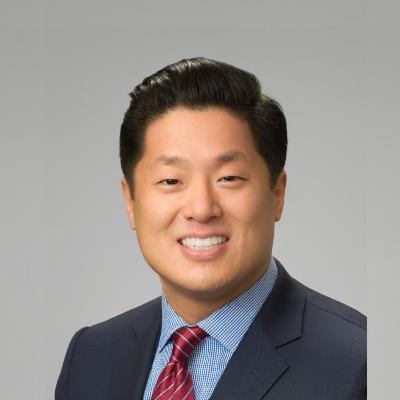
As he nears the end of his first 100 days at Nintex, Burt Chao is doing something many new CFOs resist: listening more than talking. Understanding the business, its people, and its real growth potential comes before dashboards or directives, he tells us.Chao describes Nintex as a company with a “long and rich history” of helping organizations automate mission-critical work, but one now entering a new season. That evolution centers on orchestration—whether AI-enabled, agent-based, or rooted in RPA—while remaining clear-eyed about identity. Nintex, he explains, will not “become an AI company.” Instead, it aims to help customers leverage AI deliberately, embedding it where it strengthens the foundation of their operations, he tells us.That emphasis on fundamentals shows up quickly in how Chao evaluates performance. In today’s environment, “there’s no more important number than growth,” he tells us. Margins, profitability, and even rule-of-40 metrics only make sense once leadership understands what growth is possible and how it can be accelerated. Benchmarks matter, but only as tools; every business must be understood on its own terms, he tells us.That discipline has shaped some of the most challenging moments of his career. Chao recalls “shrink to grow” decisions—walking away from investments that still produced revenue but no longer delivered the best return. Those moments are rarely spreadsheet problems alone. They are emotional, cultural, and deeply human, requiring influence rather than authority, he tells us. For Chao, that balance—grounding strategy in numbers while leading people through change—defines the modern CFO role.

The lesson arrived abruptly in a boardroom in Battle Creek. After months of analysis, charts, and market data, the president of Kellogg’s cereal division looked up and said, “That’s all interesting. I just don’t know what to do with it,” Dean Neese tells us. The comment landed hard. It forced him to confront a blind spot early in his consulting career: insight without action is inert.Neese and his team went back, rebuilt the presentation, and returned a week later with clear recommendations tied directly to decisions, he tells us. That moment rewired how he communicates to this day. Every deck now starts with the message and earns credibility with data, not the other way around.That discipline carried forward as Neese moved from consulting into operating roles. At DocuSign, he chose to run both corporate development and integration so there would be no ambiguity about outcomes, he tells us. Strategy, in his view, only becomes real when someone owns the consequences. Living and working overseas reinforced that belief, teaching him that even the best analysis fails if it ignores cultural context, he tells us.Today, as CFO of Placer.ai, Neese applies those lessons through capital allocation. He often asks to see the budget before the strategy document because “where you’re spending the money” reveals true priorities, he tells us. Drawing on research involving 400 executives, he points out that top performers make roughly twice as many major decisions each year as underperformers, he tells us.From a single uncomfortable moment at Kellogg’s to scaling a data-driven company, Neese’s career reflects a consistent principle: finance creates value when it accelerates decisions, clarifies tradeoffs, and turns insight into action.

This special episode of CFO Thought Leader explores how finance leaders develop not through authority or technical brilliance, but through moments that reveal emotional intelligence. Drawing on recent conversations with Kevin Rubin, Toby Driver, and Bruce Schuman, the episode highlights a consistent pattern: leadership is forged through judgment, empathy, and self-awareness when stakes are high and answers unclear. Structured in two parts, the episode first examines formative moments that reshaped how CFOs think, featuring Shelagh Glaser, John McCauley, and Joe Euteneuer. It then shows how those lessons are applied in practice—through difficult decisions, organizational change, and trust-based leadership under real pressure.
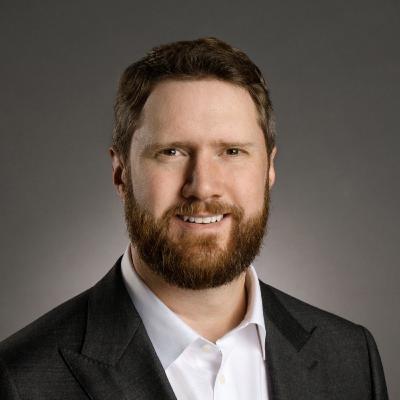
The accounting team at Looker showed up every day knowing their jobs might disappear within a year. The company was in limbo—acquired by Google but still waiting on European approval—so the deal hadn’t closed, integration hadn’t begun, and uncertainty hung over the office. Yet the team continued to deliver “absolutely excellent work,” taking pride in their craft even when the upside had faded, Razzak Jallow tells us.That moment stayed with him. For Jallow, now CFO of FloQast, it crystallized a belief that professionalism and pride are not situational—they’re intrinsic. “We get to choose what we do,” he says, reflecting on how the team’s attitude revealed character when incentives were stripped away. It’s a lesson that echoes throughout his career, from Adobe’s subscription transition to Apple’s sales finance organization and into his first CFO role.At FloQast, that mindset shows up in how he approaches scale. Early on, the work was about fixing what was directly controllable—the “low-hanging fruit,” as he puts it. Over time, the challenge shifted. As teams and systems matured, the hardest problems required multiple functions to change together, Jallow tells us. Speed gave way to coordination; individual fixes gave way to shared ownership.The same discipline shapes how he thinks about growth. Efficient growth, in his view, starts with customer value, not the P&L. If teams are investing in the highest-ROI initiatives for customers, the financial results will follow—“maybe not in three months… but certainly long term,” he tells us.Whether navigating acquisition limbo or platform expansion, Jallow’s throughline is clear: strategy is built on judgment, culture, and pride in the work—especially when no one is watching.

At 18, while many of his peers were heading off to university, Toby Driver made a different choice. He joined an accounting practice through an apprenticeship, a decision driven by his desire for a “quick learning curve” and real exposure to business, he tells us. From the outset, he was less interested in credentials than in understanding how organizations actually work.That instinct carried him through years in audit and into transaction services, where he learned to dissect businesses at speed. In deal advisory, Driver was tasked with getting “under the nuts and bolts” of companies, performing financial health checks with significant value at stake, he tells us. The work sharpened his ability to spot value drivers—but it also revealed a blind spot he wouldn’t fully appreciate until later.That realization came after he moved into operations at Ideagen. Leading M&A integrations end-to-end meant sitting with the CEO and C-suite to align sales, product, technology, and culture. Bringing two organizations together was far more complex than it ever appeared from the advisory side, Driver tells us. The experience reshaped his mindset, pushing him to think “business first, rather than necessarily finance first.”As Ideagen scaled from roughly £50 million in ARR to five times that size, Driver faced another inflection point. The company reorganized into regional operating units to restore accountability and clarity, a change finance helped design, he tells us. Today, he carries those lessons forward as CFO—focused on structure, transparency, and creating an environment where people surface issues early. “Bad news never gets better with time,” he says, a principle that now defines both his leadership style and his approach to scale.
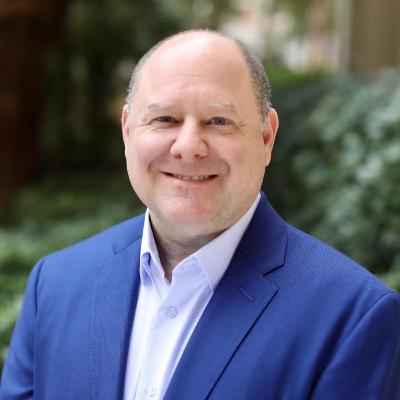
When Kevin Rubin arrived at Zscaler in May 2025, he joined an established organization following the retirement of the company’s longtime CFO, taking responsibility for continuing the work of a finance leader who had already built a strong foundation. Rubin describes stepping into a business with scale, experienced leadership, and a customer base that included some of the world’s largest enterprises, he tells us.In explaining what Zscaler does, Rubin walks through the company’s core idea: zero trust. Traditional cybersecurity, he says, relied on network-centric “castles and moats,” requiring large amounts of equipment to connect people, applications, and data. Zscaler challenged that model by treating the internet as a “superhighway” and applying a principle of minimal access. If an employee wants to use Salesforce or email, Rubin explains, the system first authenticates the user and then limits access to only what that person is authorized to see, he tells us.Zscaler was founded in 2007 and went public in 2018, Rubin tells us. Today, roughly 40 percent of the Global 2000 and about 45 percent of the Fortune 500 use the company’s platform. Rubin attributes that adoption to a model that delivers security with less overhead and infrastructure than traditional approaches, he tells us. At its core, he says, cybersecurity comes down to two problems: stopping malicious activity from entering the network and preventing sensitive data from leaving it.Reflecting on his first 100 days, Rubin says the transition was shaped by continuity and people. He describes a welcoming executive team and an organization already positioned for growth. Cybersecurity, he notes, remains a dynamic market, with new vulnerabilities constantly emerging, and staying ahead of those threats continues to define the work ahead, Rubin tells us.

At Intel, Bruce Schuman remembers walking into a meeting as a controller, proud of a product change his team had worked on “for months.” Then CFO Andy Bryant asked one question—one that reframed the proposal around customer impact. “Nobody had thought about (it),” Schuman tells us, and that question “completely changed the entire conversation,” leading to a “10 times better” outcome.That moment captures why Schuman spent “two decades plus 27 years” at Intel, he tells us. Rotational roles pushed him into new challenges every few years, while leaders modeled what influence and partnership looked like in practice. Intel even had a term for it—“constructive confrontation,” Schuman tells us—encouraging finance leaders to put difficult issues on the table in service of better decisions.When Schuman later moved into CFO roles outside Intel, he carried that mindset with him. FP&A, he says, should not simply “report the score of the game,” but act like “people on the field literally changing the outcome of the game,” Schuman tells us. That expectation shaped how he built finance teams and approached decision-making in smaller, faster-moving organizations.Today, as CFO of Universal Technical Institute, Schuman applies those lessons to a mission-driven business focused on workforce development. UTI works with “about 35 OEM partners” and “about 6000 employer partners,” Schuman tells us, and measures success through “70% graduation rates” and “about 85% placement rates,” Schuman tells us. Growth remains disciplined: “We’ll never sacrifice student outcomes,” he tells us, even as the company plans to build “anywhere from two to five campuses a year for the next five years,” Schuman tells us.
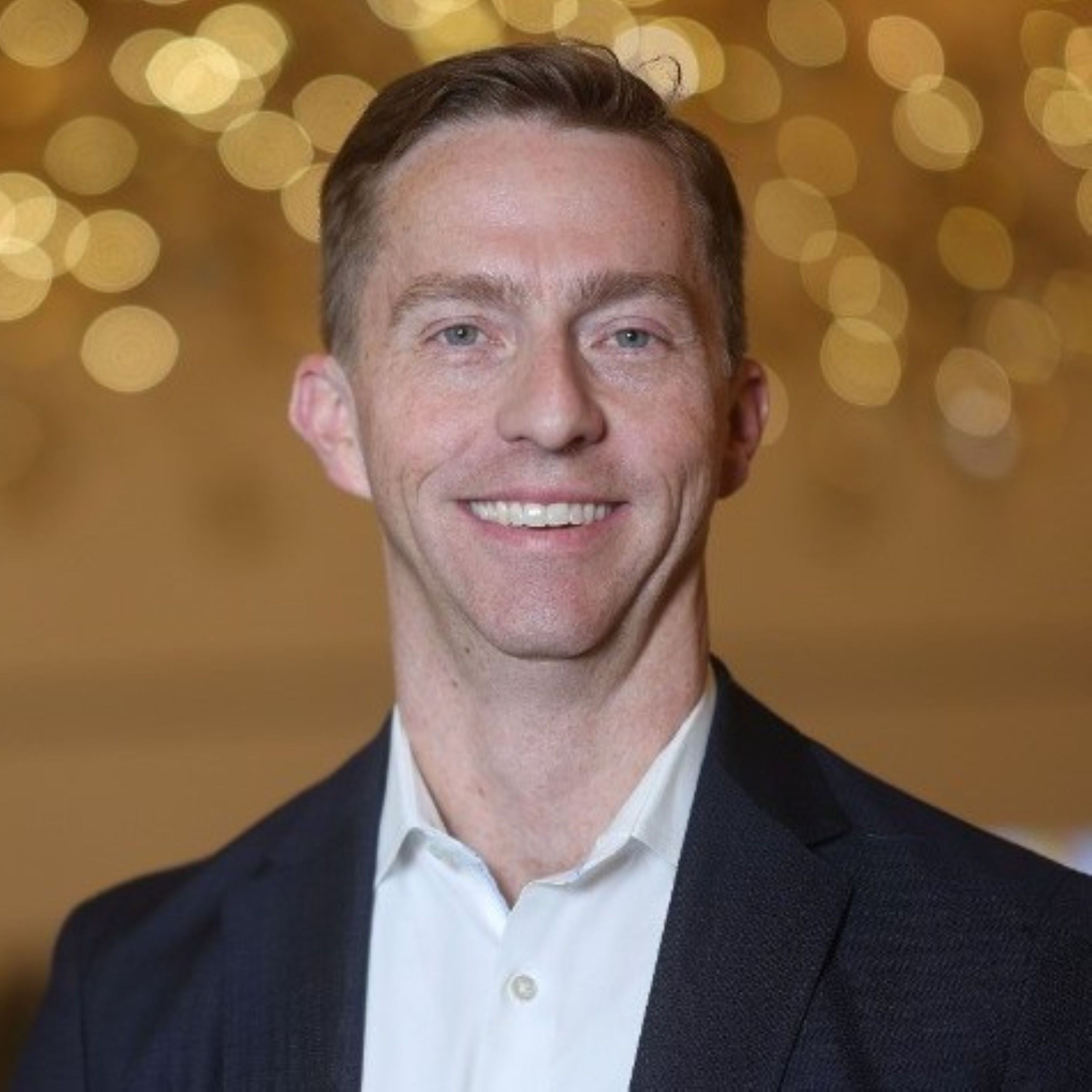
When Drew Laxton looks back on the past year at Outreach, one moment stands out—not a transaction, but a plan. The company set its annual targets, executed against them, and then exceeded expectations. “When you see green numbers at every quarterly all-hands,” Laxton tells us, “it’s amazing how that little bit of momentum just builds the company.” What surprised him most was the cultural impact: morale rose, confidence compounded, and belief followed performance.That belief didn’t happen by accident. Laxton’s career has consistently positioned him at the intersection of numbers and narrative. He began in investment banking, where he learned early that finance only matters if people can retain the story behind it. “If you can’t tell the story, it just stays there,” he tells us. That mindset carried him from banking into operating roles, and later to Apptio, where he experienced nearly the full corporate lifecycle—from IPO preparation to public markets and eventually a private-equity take-private.Serving as Chief of Staff during Apptio’s Vista ownership pushed him beyond traditional finance. The role, he explains, was about making sure the CEO “didn’t run into a locked door,” anticipating decisions and asking the questions leadership would need answered. That experience sharpened his instinct for alignment.Today, as CFO of Outreach, Laxton applies those lessons through planning discipline, FP&A embedded in the business, and storytelling that connects strategy to execution. Finance, in his view, is not a back-office function—it is the force that helps people understand why the company is moving where it is going.

In this Planning Aces special episode, CFO Thought Leader brings together three finance executives operating in very different industries—but facing remarkably similar planning challenges. David Lee of WEBTOON, Cristina Kim of Octaura, and Zane Rowe of Workday share how FP&A has evolved from a periodic planning function into a continuous decision system. Across global consumer platforms, fintech infrastructure, and enterprise software, each CFO explains how they use leading indicators, forecasting discipline, and real-time data to guide resource allocation. The conversation highlights how modern FP&A enables faster learning, sharper prioritization, and disciplined adaptability in an environment defined by rapid growth and accelerating change.


Download from Google Play

Download from App Store
 United States
enjoyed this well
This is one of the best podcasts I've listened to in awhile. Please offer additional ones from Rick Young - he's great!