


 Claim Ownership
Urban Political Podcast
Subscribed: 132Played: 2,724
Subscribe

Description
The **Urban Political** delves into contemporary urban issues with activists, scholars and policy-makers from around the world.
Providing informed views, state-of-the-art knowledge, and unusual insights, the podcast aims to advance our understanding of urban environments and how we might make them more just and democratic.
The **Urban Political** provides a new forum for reflection on bridging urban activism and scholarship, where regular features offer snapshots of pressing issues and new publications, allowing multiple voices of scholars and activists to enter into a transnational debate directly.
Hosted and produced by:
Ross Beveridge (University of Glasgow)
Markus Kip (Georg-Simmel-Center for Metropolitan Studies - Humboldt-Universität zu Berlin)
Mais Jafari (Technische Universität Dortmund)
Nitin Bathla (ETH-Zürich)
Julio Paulos (Université de Lausanne)
Nicolas Goez (Bauhaus-Universität Weimar)
Talja Blokland (Humboldt-Universität zu Berlin)
Hanna Hilbrandt (Universität Zürich)
Powered in partnership with the Georg-Simmel-Center for Metropolitan Studies at the Humboldt-Universität zu Berlin.
Music credits: "Something Elated" by Broke For Free, CC BY 3.0 US
If you would like to produce an episode with us or have comments, please get in touch!
Follow us on
Twitter: @political_urban
Instagram: @urban_political
Featured on wisspod: https://wissenschaftspodcasts.de/podcasts/urban-political/
Email: urbanpolitical@protonmail.com
Providing informed views, state-of-the-art knowledge, and unusual insights, the podcast aims to advance our understanding of urban environments and how we might make them more just and democratic.
The **Urban Political** provides a new forum for reflection on bridging urban activism and scholarship, where regular features offer snapshots of pressing issues and new publications, allowing multiple voices of scholars and activists to enter into a transnational debate directly.
Hosted and produced by:
Ross Beveridge (University of Glasgow)
Markus Kip (Georg-Simmel-Center for Metropolitan Studies - Humboldt-Universität zu Berlin)
Mais Jafari (Technische Universität Dortmund)
Nitin Bathla (ETH-Zürich)
Julio Paulos (Université de Lausanne)
Nicolas Goez (Bauhaus-Universität Weimar)
Talja Blokland (Humboldt-Universität zu Berlin)
Hanna Hilbrandt (Universität Zürich)
Powered in partnership with the Georg-Simmel-Center for Metropolitan Studies at the Humboldt-Universität zu Berlin.
Music credits: "Something Elated" by Broke For Free, CC BY 3.0 US
If you would like to produce an episode with us or have comments, please get in touch!
Follow us on
Twitter: @political_urban
Instagram: @urban_political
Featured on wisspod: https://wissenschaftspodcasts.de/podcasts/urban-political/
Email: urbanpolitical@protonmail.com
104 Episodes
Reverse
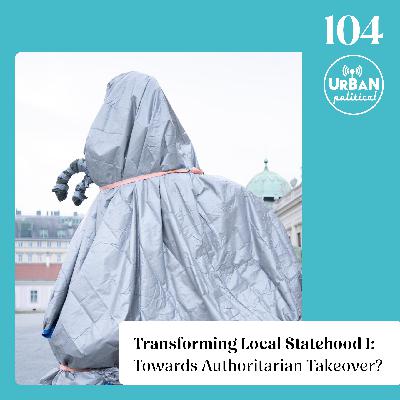
Across Europe, local states are in a dire predicament, experiencing the consequences of austerity cuts, shortage of staff as well as a lack of trust in (local) government.
Overlapping crises such as climate change, military conflicts and displacement, precarious provisions of public services, the production of so-called left-behind spaces and the rise of the far right pose severe challenges to its institutions – on various scales and across a wide range of sectors. This situation has sparked seemingly paradoxical developments. In some contexts, it has evoked the loss of legitimacy of democratic institutions and authoritarian takeover, while in other cases the local state is becoming an arena for progressive statecraft tailored at social justice and sustainability.
Much is being written on these authoritarian and progressive tendencies. In two episodes on the transformation of the local state, we want to complicate binary thinking that can be quick to romanticise progressive local institutions or paint a homogenous picture of authoritarian situations. Paying close attention to the intricacies of the local state, we want to draw attention to its inherent contradictions and frictions by asking: How does progressivism and authoritarianism play out in the everyday processes of the local state? What are the grey spaces where they might overlap and even coproduce each other? What power relations shape these processes?
Both episodes are hosted by Matthias Naumann and Gala Nettelbladt. In the first episode, moderated by Ross Beveridge, we discuss authoritarian developments in local statehood with Harriet Dunn, Crispian Fuller and Theo Temple.
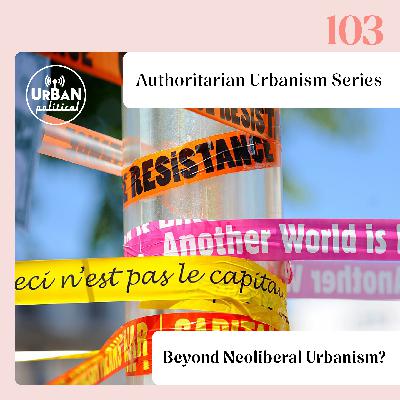
Are we seeing the emergence of a new conjuncture for urbanism? The final part of our mini series asks whether authoritarian neoliberalism has created the conditions for a more illiberal and distinct type of urban governance . Authoritarianism is not new to neoliberalism – the Pinochet regime, Thatcherism in the UK – these were evidently authoritarian and neoliberal, and given crises and stagnation it is no surprise to see these tendencies re-animated. But is something more also happening? The high point of neoliberal hegemony was associated with the development of technocratic, often obscure, market systems as well as notions of ‘sustainable development and even at times ‘participation’ and ‘consensus’ even if these were highly circumscribed. When we look at some new urban projects today, and those envisaged by leading powers, there seems to be less room for both markets, preventing climate breakdown or ‘woke’ notions of democracy and instead a more naked focus on iconoclastic real estate projects regardless of the social and ecological cost.
The episode is hosted by Gareth Fearn with guests Jason Luger, Miklós Dürr, Aysegul Can and Oksana Zaporozhets. This episode is one of a three-part series which cover different aspects of ‘authoritarian neoliberal urbanism’, based on a special issue in the Urban Studies Journal edited by Guldem Ozatagan, Gareth Fearn and Ayda Eraydin.
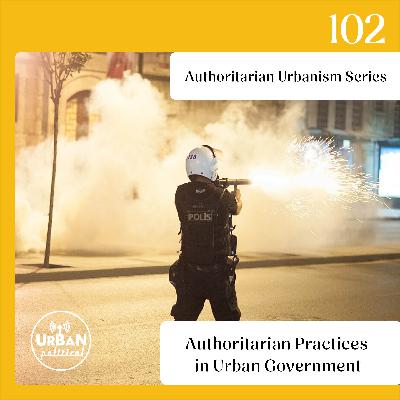
Today it seems fairly obvious to say that urban government has become more authoritarian – there is vastly increased levels of surveillance, violent and militarised policing of dissent and the targeting of migrant, queer and ethnic minority communities. Building on the previous episode on ‘authoritarian populism’, the panel discussion focuses on the ‘authoritarian practices’ of urban governments. We discuss issues of scale i.e. the relationship between central and municipal government and global capital flows drawing on research on Turkey, Mexico, India, Russia and Eastern Europe. We cover overtly draconian practices such as violent crackdowns on protestors and the more subtle ‘sabotaging’ of accountability for key sections of capital – developers, big tech – and national infrastructure and whether this takes us beyond the era of neoliberal urban governance.
The episode is hosted by Gareth Fearn with guests Ebru Kurt Özman, Alke Jenns, Nitin Bathla and Sven Daniel Wolfe. This episode is second in a three-part series which cover different aspects of ‘authoritarian neoliberal urbanism’, based on a special issue in the Urban Studies Journal edited by Guldem Ozatagan, Gareth Fearn and Ayda Eraydin.
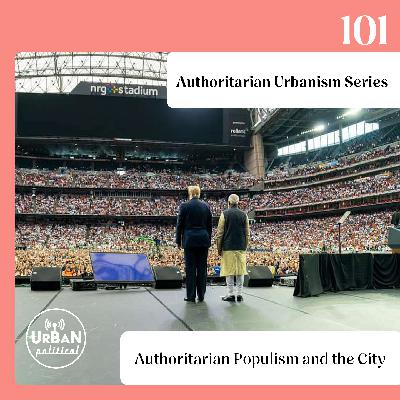
Across the world, a rightward populist turn is reshaping politics, everyday life, and the spaces we inhabit. This series examines the rise of authoritarian urbanism born from the convergence of state power, militarised violence, infrastructure-led development, and racialised and religious nationalism. As neoliberalism faces a crisis of legitimacy, these forces work to consolidate control and drive new waves of urbanisation that deepen social polarisation. Alongside these authoritarian transformations, we trace the everyday democratic practices—subtle acts, collective refusals, and imaginative alternatives—that contest authoritarian rule and open space for different urban futures. Through conversations with researchers, activists, and practitioners, the series takes stock of this authoritarian conjuncture and asks how power, urbanisation, and resistance intersect in shaping our worlds.
This episode focuses on the turn towards an ‘authoritarian populism’ as means of securing and extending neoliberal urban policy, and the extent to which a new political formation is being formed through popular contestation in and over urban space. The episodes discusses research on the USA, India, Brazil and the UK to identify both commonalities and differences across how authoritarian leaders mark out new enemies of the nation, extend police powers over the city, and how populist positioning serves to secure the interests of real-estate developers. We suggest that this authoritarian turn may even take us beyond neoliberalism towards an urbanism that is both illiberal in its politics and development model.
The episode is hosted by Gareth Fearn with guests Natalie Koch, Malini Ranganathan and Leonardo Fontes. It is one of a three-part series which cover different aspects of ‘authoritarian neoliberal urbanism’, based on a special issue in the Urban Studies Journal edited by Guldem Ozatagan, Gareth Fearn and Ayda Eraydin.
This episode is our 100th! We are delighted that we have reached this landmark and thank all our listeners and contributors since we started the Urban Political in 2019. To mark the occasion of this 100th podcast we have produced a special issue containing two parts, in which we look backwards and forwards on all things Urban and Political.
In the first part, Markus Kip and Ross Beveridge talk to Mathilde Gustavussen about the origins of the podcast, why they set up the podcast, how things have changed since the beginning and what their favourite episodes are.
In the second part of the episode, Ross, Markus and Nitin Bathla talk to four of our most regular and brilliant guests: Roger Keil, Colin McFarlane, Julie-Anne Boudreau, Colin MacFarlane and Urban Political collective member Hanna Hilbrandt.
We ask them to look back 6 years - to 2019 - and consider what has changed in the urban political landscape, what urban research and practice needs to do to grasp the contemporary moment.
Finally, the third question is asking what they think, in reality, might change in the coming years.
Thanks for your support as a listener!
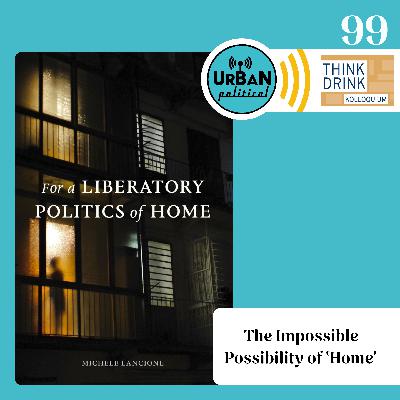
What does it mean to be at 'home', when 'home' is the expression of structural forms of violence, at the intersection of anthropocentrism, patriarchy, heteronormativity and racial capitalism? As the COVID-19 pandemic showed, home can be read as a juncture where many of the inequalities of our time come and are held together structurally; yet, at the same time, home maintains an attractive lure to itself, as a place one is called to defend or to work toward, in order to be freed from subjections that seem to render home impossible in the first place. In this talk, the aim is to stay close to this only apparent contradiction, which Michele would like to name the “impossible possibility of home.” With this notion, he interprets the unjust and violent foundations of home not as opposite to, but as foundational to, its capacity to allude to one’s own betterment in terms of belonging, security, and care. This means to say that the lure of home as a space of belonging is emerging from the foundations of home itself, rather than being a means toward salvation from its violence. The impossible possibility of home lies in home’s capacity to sell a diagram of liberation as a line of flight, a breakthrough from its unjust underpinnings, while in immanent, lived, and felt terms, that diagram is a very powerful function of those.
The speaker in this episode is Michele Lancione, an Urban Scholar, who is not only thinking about cities, but also actively reshaping how we understand them.
This is our second episode in collaboration with the ‘Where is Urban Politics?’ hybrid seminar series hosted by the University of Groningen in the Netherlands between 2024-2026.
This episode ponders urgent issues on (re)politicizing housing across Europe. The first speaker is Josh Ryan-Collins, who talks about the financialisation of housing, drivers, outcomes and options for reform from a United Kingdom perspective. Following his talk, Dirk Benzemer responses from his research perspective.
Josh ponders on the current housing affordability and wealth inequality crisis. He argues that supply side reforms, which means increasing the amount of housing, will not be sufficient to ameliorate the housing crisis. Beyond this, he sees crucial responses needed in breaking the powerful feedback cycle between depth and wealth driven financial flows and house prices and reducing the potential for rent extraction from home ownership.
Dirk Bezemer begins from the question ‘Roof or real estate?’ to go through counter arguments he has encountered in Dutch political and public debates to which he is connected for many years.
We hope you enjoy the episode!
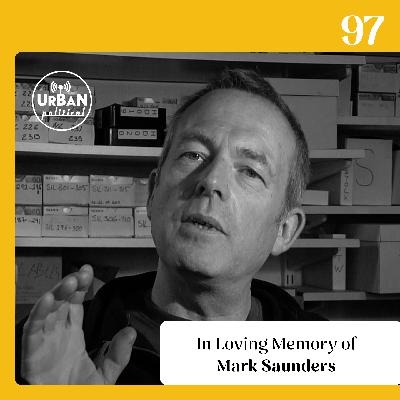
We dedicate this episode to the extraordinary urban filmmaker and tireless social-justice advocate, Mark Saunders, who passed away recently at the age of 68. Mark’s powerful contributions to documentary filmmaking, particularly through Despite TV, gave voice to the marginalized and illuminated urgent political and social issues across the globe. His unwavering commitment to storytelling, empathy, and justice left an indelible mark on everyone who knew him—and his legacy will continue to inspire activists, filmmakers, and listeners alike.
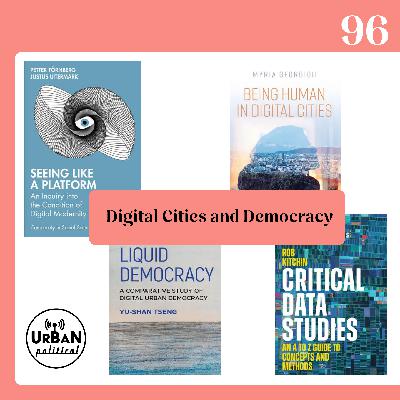
In this episode Ross Beveridge, co-founder of our Podcast, and guests discuss the topic of digital cities and democracy.
Digitalisation is transforming cities, urbanization and urban life – but how is it changing urban politics?
What issues of justice and democracy are at stake in the advance of digital technologies?
What are the power implications of the unending rise of corporate digital platforms, like Amazon?
How are social media platforms reconfiguring the ways we live in cities and the ways we conduct politics?
And what does the future hold?
Ross discusses these questions with 4 scholars who have recently published important books in this field:
Myria Georgiou, who is a Professor of Media and Communications and Head of the Department of Media and Communications at LSE. She is the author of the book: Being Human in Digital Cities, published by Polity Press.
Rob Kitchin, who is a professor in the Maynooth University Social Sciences Institute at Maynooth University. He is the author of Critical Data Studies: An A to Z Guide to Concepts and Methods, published by Polity Press.
Yu-Shan Tseng, who is an Anniversary Research Fellow in Geography at the University of Southampton. She is the author of Liquid democracy: a comparative study of digital urban democracy, published by Wiley & Sons.
Justus Uitermark, who is Professor of Urban Geography and the Academic Director of the Amsterdam Institute for Social Science Research at the University of Amsterdam. He is the author, with Petter Törnberg, of Seeing Like a Platform An Inquiry into the Condition of Digital Modernity, published by Routledge.
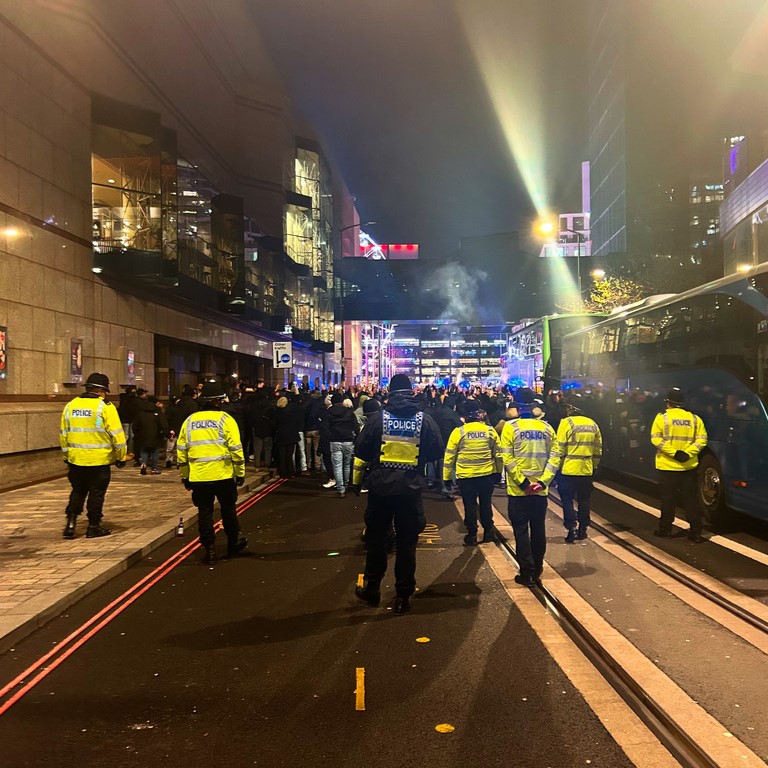
To what extent does the current polycrisis intensify in urban settings during nighttime hours? Night lives are already characterized by precarity, urban inequalities, deeply seeded health and wellbeing concerns and a life 'in the shadows'. In this Polycrisis series episode, Michele Acuto, Andreina Seijas and Alessio Kolioulis take us on a "walking roundtable", recorded on the road after dark in London. The speakers discuss how nighttime perspectives shape how we encounter the urban polycrisis. They reflect on how night studies, and practice, prompt embedded thinking on the intersections of urban health, climate, economics and conflict with the experiences of dwelling, living and working in the city after dark. Crisis talk is being challenged through night talk, while the everyday dimensions of polycrisis are being considered, as they unfold in the mundanities of the night. The talk encourages us to engage with this world of urban research and practice by mixing a scholarly discussion, an insight into the urban challenges of a global city after dark, and a consideration of current solutions to improving nightlife inclusively, while taking us out on the streets of London after midnight.

This episode will be conducted in Spanish, in line with the podcast's aim to de-center urban knowledge production by showcasing distinctive urban perspectives, and linguistic viewpoints.
We are thrilled to introduce you to the second episode of our series on Urban Polycrisis!
Join us for an episode in Spanish exploring the complex urban racial politics of Cartagena, Colombia. In this conversation with historians Javier Ortiz Cassiani and Orlando Deavila Pertuz, we dive into the city’s colonial past and explore how its racialised legacies shape contemporary urban life. We discuss how conflict, violence, and displacement have shaped racial politics, from Cartagena’s role in the transatlantic slave trade to its recent remaking as a tourist hub. The episode also looks at how Afro-descendant communities resist urban segregation and dispossession, offering insights into broader issues of racism and Blackness in urban Colombia and Latin America today.
This new Polycrisis series will explore the complex set of protracted, interconnected, and mutually reinforcing crises that disproportionately affect urban centers and urban populations, ranging from housing, democracy, transit, infrastructure, inequality, conflict, the environment, to health.
What relevance do discussions of the “urban polycrisis” have for places in the Global South? This episode of the Urban Political Podcast examines how the urban polycrisis manifests in housing production and urban infrastructure, from an alleged fraying of the social fabric to continually increasing environmental damage and deeply entrenched inequality. Catalina Ortiz (University College London(, Thireshen Govender (UrbanWorks), and Katrin Hofer (ETH Zurich) convey their experiences with the constant state of polycrisis in places like Colombia and South Africa. Where the state cannot fully supply the conditions required for people to flourish – where people are long accustomed to taking the maintenance of everyday life into their own hands “insurgently.”
Hosted by Lindsay Blair Howe (TU Munich), this episode highlights how researches and practitioners are conducting their work in spite of – or even by finding opportunities in – the constant state of crisis. These observations and actions may also provide solutions that the Global North will soon require. As of mid-2025, we have passed the critical 1.5 degrees benchmark, are enduring multiple megalomaniacs at the helm of national governments, and continue to use far more resources than our planet could ever supply. We may not have the tools or imagination to respond to these challenges like places where the polycrisis is the norm.
 1
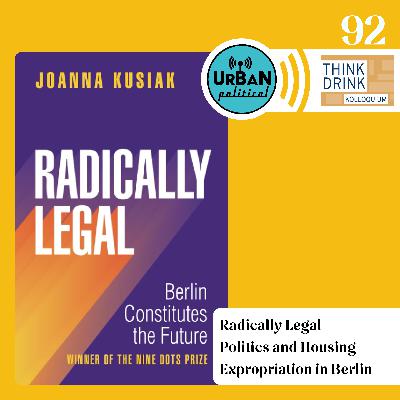
1This episode is a talk by Joanna Kusiak at the Think&Drink Colloquium of Georg-Simmel-Centre for Urban Studies at Humboldt University Berlin. It gives insights into her new book Radically Legal: Berlin Constitutes the Future (2024).
Right in the middle of the German constitution, a group of ordinary citizens discovers a forgotten clause that allows them to take 240,000 homes back from multi-billion corporations. In this work of creative non-fiction, scholar-activist and Nine Dots Prize winner Joanna Kusiak tells the story of a grassroots movement that convinced a million Berliners to pop the speculative housing bubble. She offers a vision of urban housing as democratically held commons, legally managed by a radically new institutional model that works through democratic conflicts. Moving between interdisciplinary analysis and her own personal story, Kusiak connects the dots between the past and the present, the local and the global, and shows the potential of radically legal politics as a means of strengthening our democracies and reviving the rule of law. This title is also available as Open Access on Cambridge Core.
https://www.cambridge.org/core/books/radically-legal/7DB8C3F3E9272466A3926DCE9006CFBE#fndtn-information
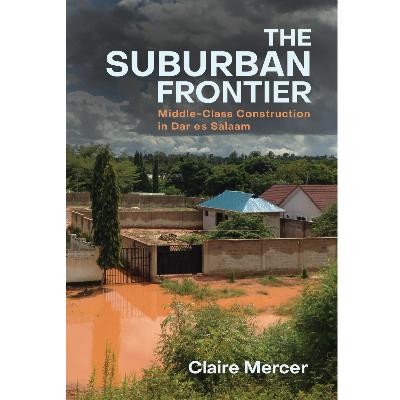
African cities are under construction. Beyond the urban redevelopment schemes and large-scale infrastructure projects reconfiguring central city skylines, urban residents are putting their resources into finding land and building homes on city edges. The Suburban Frontier examines how self-built housing on the urban periphery has become central to middle-class formation and urban transformation in contemporary Tanzania. Drawing on original research in the city of Dar es Salaam, Claire Mercer details how the “suburban frontier” has become the place where Africa’s middle classes are shaped. As the first book-length analysis of Africa’s suburban middle class, The Suburban Frontier offers significant contributions to the study of urban social change in Africa and urbanization in the Global South.
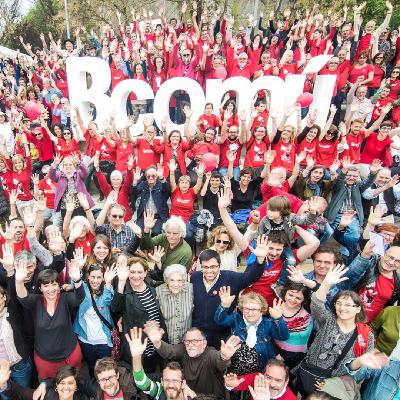
In this episode, we reflect on the rise, evolution, and legacy of Barcelona en Comú, the emblematic movement-party that governed the city of Barcelona from 2015 to 2023. Joined by long-time activist and former political advisor Elia Gran, as well as researchers Silke van Dyk and Luzie Gerstenhöfer (University of Jena), the conversation explores the key ambitions, successes, and tensions of this bold experiment in municipalist governance.
The episode draws from the sociological research project „Public Politics and the Future of the Commons“ to unpack strategic shifts in areas like housing, municipalization of public services as well as social and economic policies. Together, the guests consider what can be learned from the Comuns’ experience, how the party related to social movements and class politics.
Now that the Comuns are out of office, the time is ripe for a candid assessment beyond their frequent representation as a European lighthouse case for alternative local politics: What did the municipalist turn achieve—and where did it fall short? Tune in for a rich researcher-activist dialogue on the possibilities and pitfalls of transforming politics from the ground up.
Kulkul presents her ethnographic work with Turkish Muslim women in Berlin as evidence that community is not an entity but is produced by instrumentalizing specific forms of identification and boundary-making.
In examining the role of community in the case of her participants, Kulkul finds that religion and culture are important not for the values they perpetuate, but for their role in forming and sustaining the community. She looks at the importance of boundaries and especially their reciprocity. Social boundaries are a set of codes of exclusion often used against migrants and refugees, while symbolic boundaries are typically understood as the way one defines one's own group. Kulkul argues that these two types of boundaries tend to trigger each other and thus be mutually reinforcing. At the same time, she presents a picture
of everyday life from the perspective of migrants and the children of migrants in a cosmopolitan European city – Berlin.
A valuable read for scholars of migration and culture, which will
especially interest scholars focused on Europe.
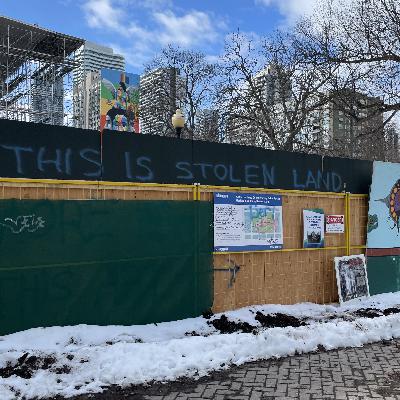
In this episode of The Urban Lives of Property, Markus Kip and Hanna Hilbrandt speak with Heather Dorries, about the intersections of settler colonialism and racial capitalism in urban property regimes. Drawing on Dorries’ recent publications and her wider expertise on property, Indigeneity, and urbanism the episode centers the ways in which planning practices contribute to Indigenous dispossession while also serving as a site of resistance and assertions of sovereignty. We foreground three themes: First, the conversation addresses planning’s complicity in processes of dispossession, examining how legal frameworks and land sales have historically undermined Indigenous political authority. This discussion delves into Dorries research on Brantford on how nuisance bylaws work as mechanisms that uphold white privilege. Second and more conceptually, we discuss tensions between and productive conversations emerging from combining the analytical lenses of settler colonialism and the lens of racial capitalism. Finally, Dorries reflects on Indigenous conceptions of property and alternative terminologies that better capture Indigenous relationships to land, emphasizing co-dependence and collective stewardship.
This talk focuses on the role of public services in delineating the boundaries of belonging and possibilities of participation in cities. Drawing on the notion of 'infrastructural citizenship', it asks how non-citizens navigate access to urban circulations and how rights and responsibilities are negotiated at these interfaces. Based on ethnographic, participatory and design research conducted with migrants, refugees and asylum seekers in the UK, Lebanon and Germany, it concentrates in particular on the physical and social infrastructures supporting the circulation of food and waste. The talk will outline the various ways in which migrants use infrastructural engagement to craft novel forms of belonging at the local level, contributing to our understanding of participation and equitable service delivery in increasingly diverse cities.
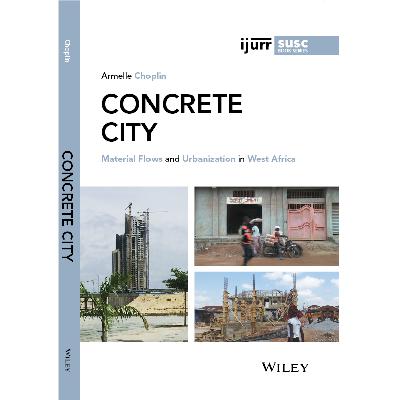
Concrete City: Material Flows and Urbanization in West Africa delivers a theoretically informed, ethnographic exploration of the African urban world through the life of concrete. Emblematic of frenetic urban and capitalistic development, this material is pervasive, shaping contemporary urban landscapes and societies and their links to the global world. It stands and circulates at the heart of major financial investments, political forces and environmental debates. At the same time, it epitomises values of modernity and success, redefining social practices, forms of dwelling and living, and popular imaginaries.
The book invites the reader to follow bags of cement from production plant to construction site, along the 1000-kilometre urban corridor that links Abidjan to Accra, Lomé, Cotonou and Lagos, combining the perspectives of cement tycoons, entrepreneurs and political stakeholders, but also of ordinary men and women who plan, build and dream of the Concrete City. With this innovative exploration of urban life through concrete, Armelle Choplin delivers a fascinating journey into and reflection on the sustainability of our urban futures.
This episode is part of our Think&Drink Series in collaboration with the Georg-Simmel-Centre for Urban Studies working with the Humboldt University Berlin. Today’s speaker is Andrei Semenov, an assistant professor at the Department of Political Science and International Relations at Nazarbayev University in Astana, Kazakhstan.
Authoritarian urbanism has recently become a buzzword applied to different settings and situations. Andrei attempts to clarify the conceptual foundations of this term by using a combination of political science and urban sociology analytical frameworks. He shows that the authoritarian part refers to the dictators' response to two key challenges to their rule: elite factionalism and mass uprisings. While a wide set of strategies is available to dictators, the instruments and practices of urban development constitute one possible way of responding. More specifically, he argues that authoritarian urbanism simultaneously aims at two (not always compatible) goals: providing rents to ensure the elites' loyalty and satisfying the mass demand for housing and a comfortable urban environment. He illustrates these features with examples from Eurasian countries and concludes with some further research questions.


Download from Google Play

Download from App Store
 United States
That's really remarkable.