


 Claim Ownership
It's Baton Rouge: Out to Lunch
Subscribed: 14Played: 238
Subscribe

© 2026 ItsBatonRouge.la
Description
OUT TO LUNCH finds Baton Rouge Business Report Editor Stephanie Riegel combining her hard news journalist skills and food background: conducting business over lunch. Baton Rouge has long had a storied history of politics being conducted over meals, now the Capital Region has an equivalent culinary home for business: Mansur's. Each week Stephanie holds court over lunch at Mansur's and invites members of the Baton Rouge business community to join her. You can also hear the show on WRKF 89.3FM.
382 Episodes
Reverse
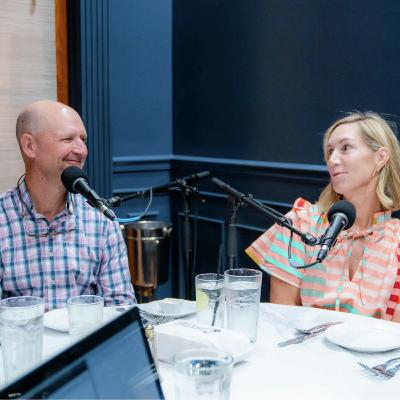
In Hollywood, power couples from the 30s, 40s, and 50s, icons like Humphrey Bogart and Lauren Bacall, Clark Gable and Carole Lombard, and Spencer Tracy and Katharine Hepburn, exemplified glamour both on and off the screen. At the pinnacle of their careers, these romantic couples were closely followed and adored by movie-goers, capturing the public’s imagination during a Golden Age of film. Today, power couples are more often found on smaller screens, not in a seductive embrace but wielding power tools while knocking down interior walls or building decks. I’m thinking of course of the husband and wife teams on popular home decor and renovation shows, couples like Dave and Jenny Marrs of “Fixer to Fabulous,” and Egypt Sherrod and Mike Jackson of “Married to Real Estate.” You might not have ever heard of Don and Susan Charlet, co-owners of the home decor and furniture gallery The Corbel, but you can be sure that in social circles from Zachary to St. Francisville, Don and Susan are a local power couple. Don Charlet is no stranger to entrepreneurship—he worked in the family funeral home business for the first decade of his career. Then in 2000, with his brother, Don launched Charlet Brothers Construction, a custom residential homebuilder and remodeler responsible for some of the first homes built in the Copper Mill neighborhood. In 2003, Don and Susan opened The Corbel on Highway 61 between Zachary and St. Francisville. Then, after 20 years of business, they relocated The Corbel to downtown St. Francisville where the curated home goods and antique furniture shop became the anchor store for a multi-business redevelopment project called North Commerce. Today, North Commerce includes The Corbel, boutiques Barlow and Deyo, the eight-room Hotel Toussaint, event venue Mallory, a pizza restaurant and a microbrewery. Starting a business is stressful and challenging under most circumstances. What often determines whether a business succeeds or fails is the commitment and perseverance of the business partners. With 5 successful businesses and a lifetime of memories in marriage, it’s safe to say Don & Susan have struck the right balance for success. Out to Lunch is recorded live over lunch at Mansurs on the Boulevard. You can find photos from this show by Ian Ledo & Miranda Albarez at itsbatonrouge.com.See omnystudio.com/listener for privacy information.
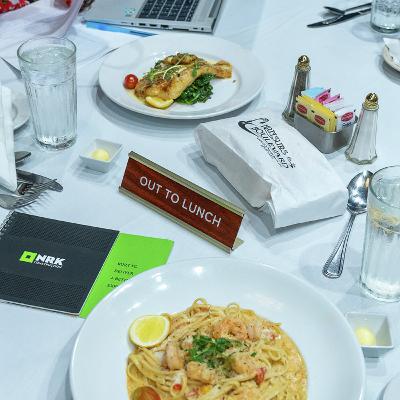
There’s a line I keep hearing from people who run small businesses in Baton Rouge. It goes something like: I didn’t plan this. I was doing something else, I saw a gap, and I walked through it. Norisha Kirts Glover has a degree in mass communication and an MPA. She spent years in nonprofit fundraising in Washington, D.C. and California. In 2015 she walked through a door marked “commercial construction” — an industry where women and people of color were barely present — and decided that was exactly where she needed to be. Norisha is originally from the Alexandria area. She came to LSU for college and stayed. In 2015, an opportunity came along to enter commercial construction. She researched it, noticed that women and people of color were dramatically underrepresented, and decided to launch NRK Construction anyway — or maybe because of that. The firm picked up early traction after the 2016 floods, working through extensive residential renovation before moving deeper into commercial work. NRK is intentionally small — three to four employees, about $3 million in annual revenue, with two major projects at a time. Norisha says that’s not a limitation; it’s a choice. Her superintendent is on every job site and every client meeting comes with an agenda. Norisha’s aiming next at healthcare, education and federal contracting. Ralph Whalen grew up in New Orleans, studied English at Dartmouth, and has tried to leave Louisiana several times. Chicago, New Hampshire. He keeps coming back. Ralph started his career implementing Epic — the electronic health records platform that runs inside most major hospitals — and worked his way up to Senior Vice President at a healthcare IT firm called Divurgent. In September 2020, he launched Benzait, a consulting firm that helps hospitals and health systems figure out how to adopt artificial intelligence responsibly. Benzait works with medium to large health systems, building the governance frameworks and technical infrastructure that AI actually requires before it goes anywhere near a patient. Ralph says the biggest problem in healthcare AI right now isn’t a lack of technology — it’s organizations rushing to adopt it before they’ve figured out what problem they’re trying to solve. His job, a lot of the time, is to slow people down just enough to get it right. Ralph and Norisha both entered rooms where the conventional wisdom said they didn’t quite belong — a woman in commercial construction, an English major in healthcare tech — and found that being the unexpected person in the room turned out to be an advantage. Out to Lunch is recorded live over lunch at Mansurs on the Boulevard. You can find photos from this show by Ian Ledo and Miranda Albarez at itsbatonrouge.com.See omnystudio.com/listener for privacy information.
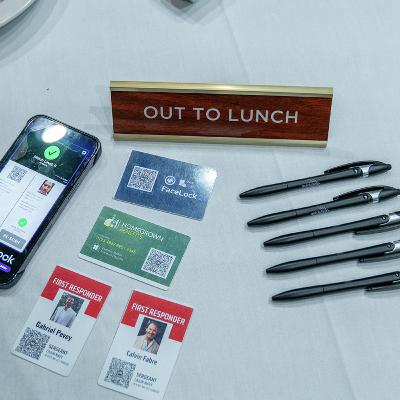
Think about the last time you showed your ID. Maybe at the airport, maybe at a bar, maybe somewhere you had to prove you were who you said you were. You pulled out a card. A piece of plastic. Maybe it was a little beat up. Maybe the photo was from ten years ago. There’s a decent chance that if you live in Louisiana, you’ve also used a phone to do that. That digital driver’s license on your phone — that was built right here, in Baton Rouge, by a company called Envoc. Calvin Fabre built it. Calvin is a long-time friend of Out to Lunch: he's made multiple appearances on this show over the years as he's developed his company, and some of Louisiana's most advanced tech. He's been writing code since he was 12 years old — 1978, give or take — when he got an Atari 800 and discovered that he could make a computer do exactly what he told it to do. He has essentially been doing that ever since. Calvin studied computer science at Southeastern Louisiana University and built Envoc into a software firm that now works on some of the most consequential identity technology in the country. You may know Envoc best as the company behind LA Wallet — Louisiana’s digital driver’s license. Calvin divested the IP on that about a year ago, but the work continues: he’s now sitting at international standards meetings with Apple, Samsung, Google, and representatives from Hong Kong, New Zealand and Canada, working out what digital identity should look like everywhere. He’s also thinking carefully about who gets left behind when identity goes digital — seniors, low-income users, people who don’t trust the technology or can’t easily access it. For Calvin, that’s not an afterthought. It’s the whole point. Samantha Morgan started her career as a journalist — arts writing, then Hurricane Katrina turned it into hard news overnight, then broadcast, then the BP oil spill, then digital. Eventually she stopped working for other people’s newsrooms and started her own production company - Quick Flip Media. She says she named it after a phrase she repeated every day for twenty years in television: flip it quick. Samantha is a Baton Rouge native — Old Goodwood, specifically — who has tried to leave more than once. She jokes that the natural disasters keep pulling her back. Calvin and Samantha have both ended up running their own business after years of building something for someone else. And in both cases, the reason seems to be the same: the problem was too interesting to leave to other people. Calvin has been at this long enough that he was building software before most of the people who use it were born. Samantha has covered enough Louisiana history that she has a personal archive most newsrooms would envy. Not surprisingly, neither one of them are done. Because, after all, tech never sleeps. Out to Lunch is recorded live over lunch at Mansurs on the Boulevard. You can find photos from this show by Ian Ledo and Miranda Albarez at itsbatonrouge.com.See omnystudio.com/listener for privacy information.
I’m Amy Irvin, host of Out to Lunch in Baton Rouge. I was a college student once. A long time ago. And like a lot of college students, I picked some of my classes based on the professor. Word of mouth, mostly. What my friends said. Whether the 8 a.m. course section was worth getting out of bed for or not. These days, there’s a website that tries to do that systematically. You’ve probably heard of it. Rate My Professor. And if you’ve ever spent time on it, you might have noticed it’s also a place where students settle scores, write reviews about a professor’s appearance, and occasionally make things up entirely. My lunch guest, Nash Mahmoud, noticed the same thing. He happens to be a professor. He also happens to be a software engineer. So he built something better. Nash came to the United States from Jordan in 2008 to pursue a graduate degree at Mississippi State. He got his master’s, then his PhD, then a tenure-track faculty offer at LSU — and somewhere along the way between learning his way around campus, walking to football games, and dining at local spots around town, Baton Rouge became home. He’s been teaching software engineering at LSU for the better part of a decade. A few years ago, while advising nearly 40 students at once, he started paying close attention to how they were using Rate My Professor to make decisions about their education. What he saw bothered him: anonymous reviews, no way to verify whether the reviewer was even a real student, bias against female faculty, and a single bad comment that could follow a professor for years. Nash spent a couple of years researching the problem. Then he started coding. On March 14th, 2024 — Pi Day — Nash launched Professor Index, a verified, AI-powered professor review platform designed to reduce misinformation and bias. It’s now live at 20 universities and has more than 3,500 downloads. Professor Index has become so popular that students are sending in requests to add more campuses faster than he can keep up. My other lunch guest, Courtney Sparkman, taught himself to code because a problem at his job was driving him crazy and he couldn’t find anyone else to fix it. He was running security companies, then. Now he runs a software company that serves 700 of them. Courtney is from Chicago and moved to Baton Rouge when his wife — his fiancée at the time — got a job here after pharmacy school. He says the thing that surprised him most about Baton Rouge was how welcoming the city is to newcomers. Courtney is a self-described serial entrepreneur. Before coming to Baton Rouge, he helped his father build a security guard company from the ground up — zero employees to about 300, and several million dollars in revenue — before they sold it. Then he went to work for a larger security firm and immediately recognized every problem he thought he’d left behind: guards showing up late, incident reports written hours after the fact, supervisors with no real-time visibility into what was happening in the field. Courtney taught himself to code and built the solution himself. It’s called OfficerApps. OfficerApps launched in 2013. Today, OfficerApps serves about 700 security companies, from five-person operations to firms with thousands of officers in the field. Nash and Courtney have both figured out — the hard way, mostly — that building the thing is only the beginning. Getting people to use it, trust it, and tell someone else about it: that’s the actual work. Nash launched his Professor Index app on Pi Day and is now traveling to college campuses to make the case in person. And in Courtney's case, besides being the software developer he also answers OfficerApps support calls himself so customers know somebody’s there. Neither of these fathers of apps born in Baton Rouge planned it quite the way it happened. That turns out to be a pretty common feature of good ideas. Out to Lunch is recorded live over lunch at Mansurs on the Boulevard. You can find photos from this show by Ian Ledo and Miranda Albarez at itsbatonrouge.com. See omnystudio.com/listener for privacy information.
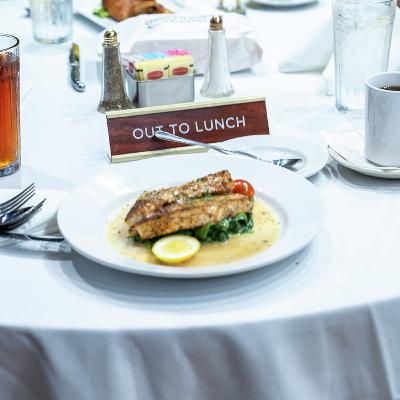
Think about the last time you visited a city you’d never been to before. Not for business — just to go. What made you decide to stay somewhere? What made you feel like the place wanted you there? Most of the time, we don’t give a lot of credit to the people who set that stage. The campground owner who keeps a shuttle running at midnight so you can get back safely from the French Quarter. The art curator who figured out that if he put a show up in a doctor’s office, more people would see it than in any gallery. These are the people who decide, quietly and without much fanfare, what kind of place a city is going to be. Camping Mike Dunn did not grow up dreaming of owning a campground. He grew up on a dairy farm in Maryland, spent his career running cranes and heavy equipment, and took a wrong turn somewhere around 2011 that led him to a night attendant job at the New Orleans KOA — which, as wrong turns go, turned out pretty well. Within six months, KOA had promoted him to run the park. A few years after that, he and his wife Deborah bought it. They are now in their third year as owners of the New Orleans KOA Holiday in River Ridge — 100 RV sites, three deluxe lodges, 12 full-time employees, shuttle service to the French Quarter and the Superdome, a souvenir shop, a dog park, and a recreation hall. For most of its history the park’s guests were 60% international. Canadians, Europeans, Australians. In the last year or so that has flipped to 90% domestic. Mike and Deborah are figuring out what that means for a business built around introducing the world to New Orleans. If you're wondering what a person with a business in New Orleans is doing on a show about Baton Rouge business - well, people who stay in an RV park are generally not people who live in the same city as the RV park. So I thought it might be useful for those of us here in Baton Rouge who visit New Orleans to know about it. Art Keidrick Alford grew up in Zachary, Louisiana. His parents let him draw on the walls. That tells you most of what you need to know. He went to college, spent time in real estate, then nearly a decade in hospitality — long hours, demanding work, not a lot left over at the end of the day. The whole time, he was watching something on the side: Baton Rouge was turning out artists from LSU who had no idea what to do with themselves once they left. The business side of being an artist — contracts, galleries, marketing, pricing — nobody was helping them with any of that. In 2018, Keidrick started Ellemnop to fill that gap. Since then, he’s curated nearly 90 exhibitions — in galleries, in medical offices, in whatever space made sense. Today he’s a managing partner in The Pearl, a 5,000-square-foot warehouse in Old South Baton Rouge that will house gallery space, artist residencies, and apprenticeship programs in bodyshop work, barbering, and welding. Yes, all in the same building. There’s a word that comes up a lot when you talk to Mike and Keidrick, and that word is “guests.” Mike uses it for the people who pull into his campground, and Keidrick uses it for the people who walk into his exhibitions. They both mean the same thing by it: these are people who trusted you with their time, and you don’t waste it. Mike went to New Orleans planning to stay a little while. Keidrick has been in Baton Rouge his whole life, looking for ways to make it worth staying. Different journeys, same destination. Out to Lunch is recorded live over lunch at Mansurs on the Boulevard. You can find photos from this show by Ian Ledo and Miranda Albarez at itsbatonrouge.com.See omnystudio.com/listener for privacy information.
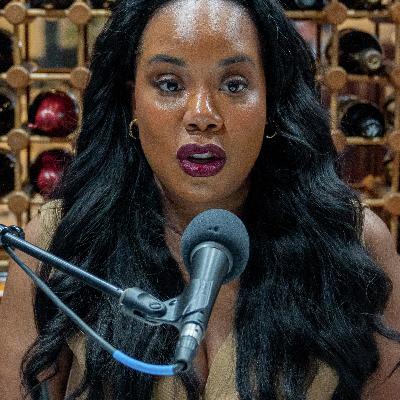
Today’s edition of Out to Lunch sits at the intersection of two big ideas: immersion and reach. One guest is building virtual worlds for the world’s largest energy companies and the U.S. Air Force — right here in Baton Rouge. The other is shaping how millions of people around the globe experience the NFL — from a home office in Baton Rouge. Both guests grew up in Louisiana, both left, both came back or stayed — and both are doing work that most people wouldn’t expect to find anchored in the Capital Region. The through-line is this: the future doesn’t always happen in Silicon Valley or New York. Sometimes it’s being built from a studio off Perkins Road and a home office in Baton Rouge. Today we’re talking about what it looks like when Louisiana shows up on the cutting edge. Cody Louviere grew up in Lake Charles dreaming about video games and ended up building simulations for the U.S. Air Force and ExxonMobil. He’s the founder of King Crow Studios, a Baton Rouge company that uses virtual reality, augmented reality and AI to train people on equipment worth tens of millions of dollars — without anyone ever touching the real thing. Cody came to Baton Rouge when his ex-wife enrolled at LSU, and the city kept him. More than 50 simulations later, King Crow is quietly doing some of the most sophisticated technical work happening anywhere in the South. Danielle Brown is a Baton Rouge High graduate who interned at Google as a college student and never really left — except that she did come back, during the pandemic, and helped rewrite Google’s remote work policies so she could stay. Today Danielle leads global marketing for NFL Sunday Ticket on YouTube TV, overseeing a 15-person team, co-marketing partnerships with the NFL itself, and subscriber strategy for one of the most-watched sports products in the world. Eighteen million people watched a recent international NFL game on the platform she helps run. She is doing that work from Baton Rouge, Louisiana — and she seems to think that’s exactly right. Out to Lunch is recorded live over lunch at Mansurs on the Boulevard. You can find photos from this show by Ian Ledo and Miranda Albarez at itsbatonrouge.com.See omnystudio.com/listener for privacy information.
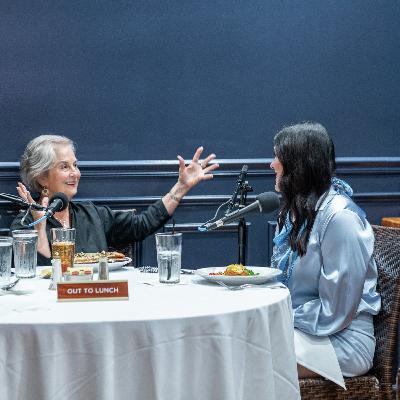
A little wartime history: In 1940, at the start of World War II, approximately 12 million women were working outside the household in the United States, comprising about 25% of the female population. That number rose significantly during the war to over 18 million by 1945, as the U.S. government encouraged women in posters and commercial advertising to volunteer for wartime service in factories. Inspired by a song by Redd Evans and John Jacob Loeb, Rosie the Riveter, the brawny brunette with a red, polka dotted headscarf, became an icon of the war and women’s movement. Today, women make up nearly half of the total U.S. labor force. And if, like me, you grew up with a mother who owned a small business, then you won’t be surprised at all that women make up nearly 45% of all businesses in the U.S., employing over 10.5 million workers and generating over $3.3 trillion in revenue. As an ad from the Sixties used to say, “You’ve come a long way, baby.” Sidney Coffee became a small business owner after decades of public service. Originally from Texas, Sidney came to Baton Rouge to attend college at LSU. She began her career in journalism at The Advocate, working on special sections, then moved to WBRZ Channel 2 as a news producer, creating morning and evening broadcasts. Sidney then pivoted to positions in public communications—first as Gov. Buddy Roemer’s press secretary, which then led to a position with the Lower Mississippi Delta Development Commission, chaired at the time by then-Arkansas Gov. Bill Clinton. Recognizing her work in coastal policy, Govs. Mike Foster and Kathleen Blanco each tapped Sidney for positions during their administrations. For the last decade, Sidney has been the owner and operator of The Guru, an art gallery, spiritual retreat, and event venue, set inside a restored 1920s mechanic’s garage on Government Street. When we think about the factors that drive consumer purchases, convenience often tops the list, with 77% to 83% of consumers citing it as a key factor that influences, or sometimes dictates, their buying decisions. From fast food to five-minute oil changes, our modern lifestyles demand ease and immediacy. Anna Beth Guillory, has developed an app for busy professional women to book appointments directly with beauty professionals. It's called BeautyFindr. After nearly a decade of co-owning a blowout bar in Lake Charles, Anna Beth identified a persistent problem: connecting clients to available beauty professionals in real time. Working with a developer, Anna Beth spent 11 months building the BeautyFindr app, which launched in 2024. Today, BeautyFindr operates in 19 states and is quickly evolving into a business-development hub for beauty professionals, and, as well as scheduling, offers peer networking, social sharing and business-growth tools. Out to Lunch is recorded live over lunch at Mansurs on the Boulevard. You can find photos from this show by Ian Ledo and Miranda Albarez at itsbatonrouge.com.See omnystudio.com/listener for privacy information.
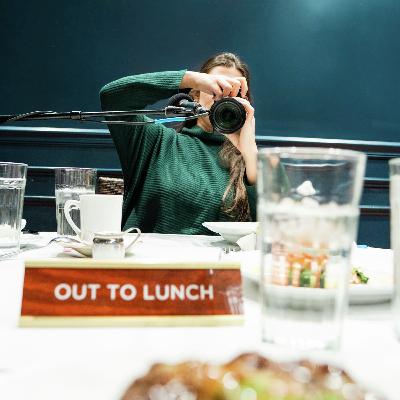
If you listen to this show you’ve heard at the end of every episode the credits “today’s show was engineered by J T O’Neal” and “photos were taken by Ian Ledo and Miranda Albarez.” But do you know what that actually means? What is an audio engineer? What do photographers actually do that’s different from what you do with your phone? On today's Out to Lunch we turn the mics on our production crew. J T O’Neal got into audio engineering by recording his own music as a teenager. He started by making beats and recording instruments, which naturally led him to learn how to record live drums and bands. J T got his big break when, while working as a barback at Spanish Moon, he took over for the house sound engineer who was going on tour. He was such a success that J T became the full-time sound engineer there in 2013. J T is now a full-time freelance audio engineer, working at such diverse locations as Chelsea’s Live, Varsity Theatre, Bethany Church, and touring with Small Pools and Marc Broussard. Miranda Albarez and Ian Ledo met while studying at LSU and working in marketing at LSU UREC. Both had creative backgrounds—Miranda in digital art, communications, and music, and Ian in photography, videography, and screen arts. It was while they were dating that they realized how well they work together. So, they decided to launch Albaledo Media while still full-time students. Now, after just a few years in business, Albaledo Media has completed more than 40 projects, ranging from small-business branding and websites to large-scale creative work for Louisiana Public Broadcasting, Tulane University and LSU Opera. JT, Ian and Miranda are vital contributors to the production Out to Lunch. In the future when you hear their credits at the end of the show you'll have an appreciation of what their professional lives entail. Out to Lunch is recorded live over lunch at Mansurs on the Boulevard. You can find photos from this show by Ian Ledo and Miranda Albarez at itsbatonrouge.com.See omnystudio.com/listener for privacy information.
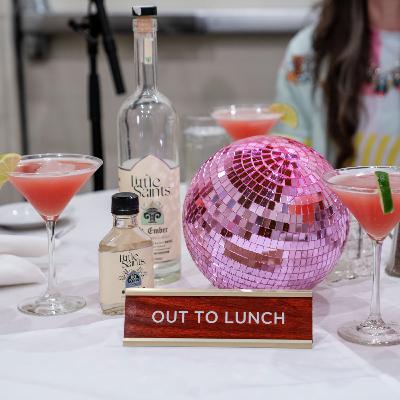
The disco era of the Seventies is characterized by a danceable "four-on-the-floor" beat, lush orchestration, synthesizers, and glamorous fashion, ultimately exploding into mainstream pop culture with hits, iconic clubs like Studio 54, and films like Saturday Night Fever, before fading by 1980. Filmed in 1977, Saturday Night Fever was a critical and commercial success, helping to popularize disco around the world. The soundtrack, featuring songs from the Bee Gees, has sold over 40 million copies worldwide, making it one of the best-selling albums and the second-biggest-selling soundtrack of all time. I don’t know about you but I still like dancing to Stayin’ Alive, Jive Talkin, and More than a Woman. By all accounts, so does my lunch guest Alyssa Lundy, Founder & CEO of 5 to 9 Dance Club, a sober, early-evening dance club for women only. Turning coffee shops into Miami-themed dance floors, 5 to 9 Dance Club transforms each venue into a full, nightclub experience with lighting, screens, DJ production, and beach décor. Every event also includes access to mental health professionals, business resources, and women-focused non-profits, as well as a welcome committee to ensure no one feels excluded. The most famous dinosaur, Barney, an anthropomorphic purple Tyrannosaurus rex, didn’t come onto the scene until 1992 but was as ubiquitous on television and in toy stores for three decades as the disco ball was on dance floors in the Seventies and Eighties. Beloved by school children, Barney, of Barney & Friends, conveyed educational messages through songs and small dance routines with a friendly, huggable and optimistic attitude. Dinosaurs dominated Earth for over 165 million years, and still dominate the imagination of scientists and children alike today. Martin Wilmott, owner of The Dinosaur Experience, has seen for himself both the wonder and delight children have for dinosaurs. A Londoner, Martin first came to Louisiana in 2009 for a Saints game. In 2013, he moved to Baton Rouge after marrying his wife, a Louisiana native. Martin began noticing children’s love for dinosaur themes while hosting water-slide and bounce house parties. Armed with his first dinosaur costume purchased from a specialty store in England, Martin began performing. The business exploded during COVID when he and his wife created a drive-around dinosaur show to cheer up children, growing his Facebook page from 400 followers to 10,000 in one month. Today, Martin is one of only a handful of dinosaur entertainers in the U.S., and the only one in Louisiana. He performs at birthday parties, school events, corporate events, and museums. He’s especially popular at libraries across multiple states. What’s striking about both of Alyssa and Martin is neither of them set out to “disrupt an industry.” They weren’t trying to invent trends. They were trying to solve human problems—loneliness, disconnection, stress, isolation—with experiences that feel safe, playful, and immersive. Alyssa has built a space where women don’t have to be impressive—they just have to show up. Martin has built a world where adults remember what it feels like to be amazed. And what I think they both remind us is that joy isn’t decorative. It’s functional. It heals. It rebuilds. It gives people permission to breathe. So whether it’s through dancing or dinosaurs, what Martin and Alyssa are really offering is the same thing: a moment where people feel seen, lighter, and less alone. And in today’s world, that’s not entertainment—that’s infrastructure. Out to Lunch is recorded live over lunch at Mansurs on the Boulevard. You can find photos from this show by Ian Ledo and Miranda Albarez at itsbatonrouge.com.See omnystudio.com/listener for privacy information.
Louisiana cuisine is famous for its bold, flavorful dishes like gumbo, jambalaya, and crawfish étouffée. Stemming from rich French, Spanish, African, and Native American influences, our world famous fare is illuminated primarily through Cajun and Creole traditions, using local seafood, smoked meats, rice, and spices for iconic meals. Take my favorite Louisiana dish, gumbo, for instance. There are certain ingredients, flavors, and texture to be expected in every delicious spoonful of gumbo. Yet, everyone’s idea of a perfect gumbo is different, depending often on family recipes and traditions for making gumbo. Here, at the award-winning Mansurs on the Boulevard, gumbo is made with chicken, duck, and andouille sausage, making for a rich and flavorful stew. Arguably, it's both the ingredients and care that go into making gumbo that makes it special. Most Louisianans would argue that making gumbo is an art. Much like a chef making gumbo, my lunch guests, Veni Harlan and Madeline Johnson, are creative entrepreneurs combining and utilizing multiple disciplines to build thriving businesses in the Baton Rouge community. A multidisciplinary creative, Veni Harlan of Veni Harlan Creative, has enjoyed a varied career as a graphic designer, photographer, art director, and writer. As a communications specialist, Veni uses these creative disciplines to solve communication problems for clients—everything from bank reports and toys to packaging, billboards, food shoots and location work. Veni’s work often intersects with Louisiana culture and environment, for instance when she helped brand the Louisiana Shrimp Coalition, rebranded the Louisiana Black Bear Coalition, or co-founded Marsh Dog, a nutria-based dog treat company, as a way to address coastal erosion and combat invasive nutria, while building a business. Madeline Johnson, owner of Miss Madeline’s, holds two licenses that rarely go together: speech-language pathologist and licensed barber. Like a contestant on the reality shows Cooked or Guy’s Grocery Games, Madeline has taken two seemingly unrelated professions to start a business that provides an essential but overlooked service for people with special needs. During and after the pandemic, Madeline began a barber apprenticeship while working in speech therapy at Our Lady of the Lake Children’s Hospital. She passed the barber board just weeks after finishing her master’s degree. In January 2025, Madeline decided to combine her two fields and launched Miss Madeline’s, an atypical hair salon that looks and feels more like a therapy room. Unlike other salons, Miss Madeline’s offers minimal decor in neutral tones and sensory tools like Pop-Its, a weighted lion, and textured toys. The hour-long hair appointments take into consideration the full sensory system — visual, auditory, tactile, smell and movement — because a typical salon experience can be overstimulating for Madeline’s roster of 150 clients, all of whom are kids or adults with sensory differences. Out to Lunch is recorded live over lunch at Mansurs on the Boulevard. You can find photos from this show by Ian Ledo and Miranda Albarez at itsbatonrouge.com.See omnystudio.com/listener for privacy information.
Each year, the U.S. Patent and Trademark Office grants hundreds of thousands of patents to people who embody what we sometimes refer to as “American ingenuity”. These are folks who are creative problem-solvers, capable of out-of-the box thinking that leads to innovation. From Thomas Edison to Steve Jobs, American ingenuity has resulted in a host of innovations and inventions that most of us now take for granted. I’m thinking of course of modern electricity and personal computers but also smartphones and, let’s face it, Artificial Intelligence. Our healthcare system has benefitted from American ingenuity too. In the last 50 years, medical advances in diagnostics and imaging, and biotechnology and genetics, have revolutionized healthcare, leading to improved treatments, enhanced patient experience, better public health, and greater efficiency and cost savings. Perhaps the most obvious benefit of American ingenuity in healthcare is that Americans — and people living around the globe — are just living longer, healthier lives. Amy's lunch guests, Dr. Blake Williamson and Dr. Lawrence Salone, are both contributing to this universal progress with their individual insight and innovation. Dr. Blake Williamson is the President and Managing Partner of Williamson Eye Center, a vertically integrated ophthalmology practice, combining optometry and ophthalmology to provide comprehensive eye care—from pediatrics to retirement age. Founded more than 80 years ago by Blake’s grandfather, Williamson Eye Center has grown significantly over the past decade, operating one of the highest-volume eye surgery centers in Louisiana. The center is often among the first practices in the world to access new eye-care technologies. For instance, Dr. Williamson was the first surgeon in the world to implant the Odyssey lens, a breakthrough cataract implant. After serving in the military, including a deployment in Iraq, Dr. Lawrence Salone returned to Baton Rouge where he became acutely aware of the lack of accessible mental health services and the high rates of suicide among service members. In 2012, Dr. Salone launched Post Trauma Institute, a Louisiana-based mental health organization offering integrated psychiatric services under one umbrella, including medication management, psychological testing, therapy, and substance abuse treatment. An early adopter of virtual mental health care, PTI has been offering telehealth services since 2014, well before telehealth became mainstream. Today, PTI employs five prescribers and seven therapists, offering services to veterans, National Guard members, and reservists, as well as a growing roster of employers concerned about absenteeism, burnout, and productivity. the U.S. healthcare system is rapidly changing, driven by escalating costs, technological integration, and evolving policies affecting insurance. Despite these challenges, your approach to innovation will ensure your respective practices continue to provide affordable and accessible healthcare to our Baton Rouge community. For a mid size city in the south, the presence of PTI and the Williamson Eye Center are two of the reasons we're punching way above our weight in healthcare here in Baton Rouge. Out to Lunch is recorded live over lunch at Mansurs on the Boulevard. You can find photos from this show by Ian Ledo and Miranda Albarez at itsbatonrouge.com.See omnystudio.com/listener for privacy information.
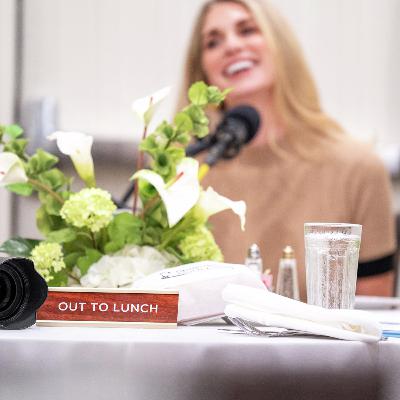
Recent brides and their fathers who paid for the wedding won’t be surprised to learn that the average cost of a wedding in the U.S. is between $30,000 and $36,000, depending on the couple's choices, incuding the wedding location and number of guests. One of the major costs of any wedding is photography. In an image-driven society where pics of the most mundane activities are posted online for public consumption, capturing the biggest day of many women’s lives in pictures is often complicated. Along with conflicting emotions about body image, and the stress of a major financial investment, unlike the informal pictures of a birthday or a vacation, wedding photos capture a rite of passage and who doesn’t want to look their best for posterity? Wedding photographer Katelyn Craven of Butterflies of Hope Photography knows how to ensure that the money is well spent. Butterflies of Hope Photography is a family-owned photography studio founded by Katelyn’s mother, Heather Banker. Working out of their Prairieville studio, Katelyn leads all wedding photography under her own brand, Butterflies of Hope by Katelyn, and frequently travels across South Louisiana— from Baton Rouge to New Orleans, Lafayette and St. Francisville—for weddings and engagements. During the pandemic, many brides were either postponing big-ticket weddings or opting for smaller backyard unions at home. As a result, couples have become more aware of the environmental impact of their special day. Invitation cards, welcome bags, and other plastic props and tchotchkes that were once trendy but too often discarded are now passe for the environmentally-friendly couple. Wedding bouquets and flowers aren’t immune to the trend either, with planners noting fewer boutonnieres and more pocket squares for the groom and groomsmen. But what of the bride and her maids? Inspired by her own disappointing experience with a wedding florist, Lauren Bercier co-founded Something Borrowed Blooms, a rental service featuring premium silk floral collections that couples can rent for about 70% less than fresh flowers. What started with a dozen weddings a month has grown to more than 2,000 weddings per month during peak season, with over 55,000 weddings fulfilled to date. Out to Lunch is recorded live over lunch at Mansurs on the Boulevard. You can find photos from this show by Ian Ledo and Miranda Albarez at itsbatonrouge.com. See omnystudio.com/listener for privacy information.
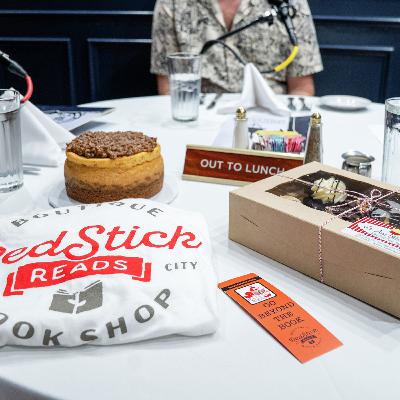
There are a lot of things to plan for when moving to a new city: renting a UHaul, forwarding personal mail, driving the most efficient route to a new job. But few people plan for or even consider what perhaps is the most important aspect to a successful transition to a new city: making friends. Making new friends is hard in any city but especially so in small towns and cities where friends have known each other since grade school, raised children together, or gone to the same church for decades. In communities like Baton Rouge, friends are built-in to a rich life often centered around family. Making friends is further complicated by our obsession with our digital devices. Go to most any place, including a restaurant or bar where you might expect to meet someone, and you’ll notice people’s heads bent towards their phones, scrolling past social media posts and videos. Today, “friends” are often people you’ve never met IRL. Still, there are reasons and even places where a newcomer can meet friends with whom to have an in-person conversation. Stephanie Hansen of Les Amis Bake Shoppe and James Hyfield of Red Stick Reads own two such businesses in Baton Rouge. Following in the footsteps of her aunt and grandmother and using family recipes, Stephanie Hansen opened Les Amis Bake Shoppe in August 2013 with the help and support of her mom. What started as a weekend operation baking and selling cupcakes has grown over the last ten years into a retail shop and a commercial supplier specializing in French macarons and made-to-order cakes, selling wholesale to restaurants, hotels and venues like L’Auberge Casino. Les Amis, which is French for "the friends" increases its own circle of friends and customers with a move from Coursey Boulevard to Downtown Baton Rouge where it welcomes locals, newcomers, and tourists alike with their slogan "Where Good Friends Meet." If, by no fault of your own, you find yourself downtown at Les Amis without company but in need of companionship, then what goes better with a slice of cake than a good book? After years of working in management in food service at Whole Foods, James Hyfield yearned for a different career. He had always enjoyed reading, so with his wife Tere, James started small with a pop-up at the Mid City Makers Market that combined his love for books and his experience in food service. Prior to Covid, James and Tere ran eight to nine pop-ups around the city before in 2019 they opened their Red Stick Reads brick and mortar store on Eugene St., now located in a renovated warehouse off Government Street, near the Baton Rouge Music Studios. Today, Red Stick Reads bills itself as a gift shop designed as a bookstore where you can meet book-loving friends at weekly storytime events, author talks, and poetry readings. Some of our most vivid childhood memories are of birthday parties with multi-tiered, frosted cake with candles, small gifts wrapped in bright paper, and a gaggle of our closest friends. If we’re lucky, those same friends have celebrated other, equally memorable milestones with us over many years. But, if not, businesses like Les Amis Bake Shoppe, Red Stick Reads, and even Out to Lunch offer opportunities to make new friends and create lasting memories. Out to Lunch is recorded live over lunch at Mansurs on the Boulevard. You can find photos from this show by Ian Ledo and Miranda Albarez at itsbatonrouge.com.See omnystudio.com/listener for privacy information.
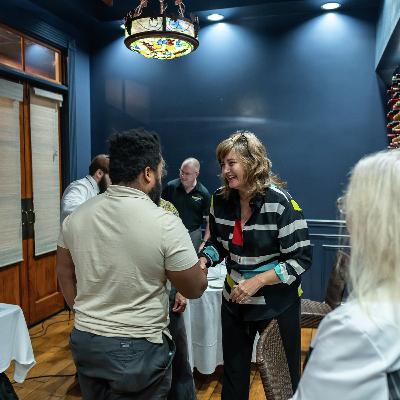
Would you be surprised to learn that the top five degrees in demand in the US are in healthcare, technology, engineering, business, and mathematics? Probably not. But as AI is introduced into nearly every facet of the workplace, college admission managers and HR directors are increasingly pointing to the importance of soft skills, the personal attributes and interpersonal abilities that define how you interact with others in the workplace. In the workplace of the future, they say, employers will seek out employees who demonstrate superb communication, teamwork, and problem-solving abilities. Yet, our nation’s best colleges and universities don’t offer degrees in active listening or collaboration, do they? So what is an incoming freshman to do? My two lunch guests,Travis Noote of Boomerang Comedy Club, and Terence Delaine of NO Show Comedy, would say take a class in improv. Or explore stand up. Travis Noote fell in love with comedy in 2013 and became a devotee to improv, a form of live theatre in which the plot, characters, and dialogue are made up spontaneously by the performers at the moment of performance. Travis took improv classes in South Carolina, Atlanta, and Savannah before moving to Baton Rouge to be closer to family. As he’d done in other cities, Travis signed up for and was taking classes at the Latco theatre, which he learned was going to dissolve soon. So, acting a bit on a whim and with a good deal of spontaneity, in 2022 Travis took the reins of the Latco venue and founded The Boomerang Comedy Theater, effectively turning a hobby into a 9-5 job. If you are further in your comedic studies and perhaps pine for larger audiences on the West Coast, then Terence Delaine of NO Show Comedy is your man. No Show is a live production company operating in Los Angeles and Louisiana, hosting a monthly show at Squeaky Pete's in downtown Baton Rouge, as well as frequent shows at The Station. A native of Lake Charles, Terence has degrees in political science and public administration and a full-time job at the United Way. He's been working as a stand up comic for more than a decade. Terence recorded a comedy special album that will soon be released on all streaming sites, including YouTube. Living in Louisiana, when it comes to entertainment we often think of Baton Rouge as playing second fiddle to New Orleans. Well, that's the role people put Chicago in for years, in relation to New York City. But it might be worth pointing out that some of the nation's most famous and memorable comics, like Dan Aykroyd, John Belushi, Steve Carell, Chris Farley, Tina Fey, Bill Murray, Catherine O’Hara, and Joan Rivers got their start at Chicago’s Second City, which recently celebrated 65 years of business. It will be interesting to see who comes out of the Baton Rouge comedy scene in the next 5 or 6 years. Out to Lunch is recorded live over lunch at Mansurs on the Boulevard. You can find photos from this show by Ian Ledo and Miranda Albarez at itsbatonrouge.com.See omnystudio.com/listener for privacy information.
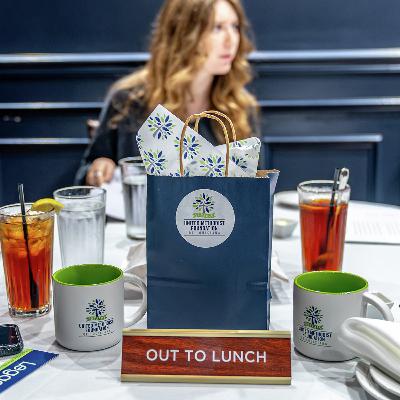
Imagine if you had a few thousand dollars to spend however you wanted? What would you do? A few of my friends might put a down payment on a house. Others would take a long-dreamed about vacation. Or buy an expensive piece of art. Most would give some money to their favorite charity. Yes, Americans certainly are generous with their money. In 2023, individuals gave $374 billion dollars, representing 67% of total giving, according to Giving USA. Americans gave to organizations and grantmaking foundations working in human services, health, education, environment, and the arts, financially supporting an array of causes and programs essential to the social fabric of our communities. But by far, Americans gave to religious institutions and organizations: the churches, synagogues, and mosques that offer spiritual guidance and solace – a community of the faithful. Chris Spencer knows something about the importance of supporting your parish church. As CEO and President of the United Methodist Foundation of Louisiana, Chris manages nearly $250 million on behalf of churches and philanthropists in the state, using his background in banking to help Methodist churches manage their investments and help donors with planned and legacy giving. The spiritual can be found in nature, too, and in different art movements, including Surrealism, Symbolism, and Spiritualism, a 19th-century movement that directly influenced modern art. Cana Brumfield began her exploration of art at a young age. Inspired by her mother, an art therapist and teacher, Cana grew up taking art classes and going to art camps. In 2024, Cana began selling her art to the public under the brand name Luna Leaf Studio. Incorporating upcycled materials, Cana’s art evokes a childlike love and wonder for nature and the environment by incorporating whimsical aspects of design. Her work can be found at local art markets, including Brickyard South and The Magical Spring market at the Unitarian Church of Baton Rouge. Art and religion have long shared an inseparable bond. From ancient cave paintings and illuminated medieval manuscripts to grand cathedrals and temple sculptures, art has historically functioned as a visual language of faith. And, all along, but perhaps today more than ever, art and religion both rely to some extent on a foundation of finance. Which is what brings Chris and Cana together over lunch on a show about business in Baton Rouge! Out to Lunch is recorded live over lunch at Mansurs on the Boulevard. You can find photos from this show by Ian Ledo and Miranda Albarez at itsbatonrouge.com.See omnystudio.com/listener for privacy information.

You've probably heard that public radio currently exists in an environment of less than zero public funding. "Less than zero" because when the Corporation for Public Broadcasting was disbanded, monies that had already been promised to public radio stations like WRKF were clawed back. Today, the only reason you're able to hear this conversation on Out to Lunch is because of the the actions of good corporate citizens who have stepped up to ensure that community conversations continue. One of those good corporate citizens here in Baton Rouge is a company called LUBA Workers Comp. LUBA Workers' Comp is a regional casualty insurance company providing workers compensation coverage in 1/4 of the United states. That is significant market penetration for a company that was founded and continues to be headquartered right here in Baton Rouge. Seeing LUBA Workers' Comp is a sponsor of Out to Lunch we're taking advantage of that relationship to invite an Executive Vice President of the company, Kelli Bondy Troutman, to talk about safety in the workplace. Most of us have heard of OSHA, the federal agency responsible for workplace safety and health. The agency that sets and enforces standards and provides training and assistance to ensure safe working conditions. But how many of us have ever studied the poster issued by OSHA that typically hangs in nearly every workplace cafeteria? Or who among us really studies the section about safety in the employee handbook? Probably very few of us. The reason is the same one most of us don’t pay any attention to the pre-flight safety announcement when we’re waiting for a plane to take off: there are so few plane crashes – or work accidents – that we feel we don’t need to care about it. But, of course, the very reason there are so few plane crashes and serious workplace incidents is because there are people working every single day to make air travel and our work places safe. One of those people is Adam Beary of Bear Process Safety, whose mission is to simplify safety by creating lean, innovative solutions to help build an easily manageable program for companies. Bear Process Safety offers process hazard analysis, process safety auditing, process safety training, standard implementation, and operating procedures. Since 2018, Bear Process Safety has been working primarily with larger chemical manufacturers and renewable energy companies but has recently branched towards smaller customers. Bear Process Safety was recognized as a BRAC Diversity Star award winner in the small business category for 2022, and CEO and President Adam Beary was a 2022 Business Report 40 Under 40 honoree. Out to Lunch is recorded live over lunch at Mansurs on the Boulevard. You can find photos from this show by Ian Ledo and Miranda Albarez at itsbatonrouge.com.See omnystudio.com/listener for privacy information.
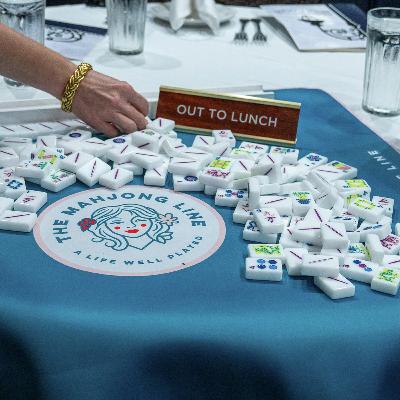
In years past, formal dining rooms were used for Sunday dinner or holiday get-togethers, opportunities to cook a traditional meal, served on fine china, leisurely eaten among family or friends over a glass of wine. Today, estate sales are jam-packed with barely-used china no one wants because in most modern households meals are often fast-food or grabbed from the to-go counter and holiday meals are often catered and sometimes served on paper plates. So, what do you do if you are a homeowner with an underutilized formal dining room? Well, not so long ago Mauree Brooksher was in such a position when she and her husband bought a 50-year-old home with a traditional formal living room. Uncertain what to do with it, Mauree turned to social media for ideas. There, she found a blog showcasing a formal dining room converted into a mahjong room, with beautiful pictures of the tables and tiles. Mauree was hooked. Today, Mauree and her business partner Stephanie Politz, own and operate Mahjong Rouge, a club of sorts that offers mahjong classes and hosts tournaments to promote the game in the Capital Region. Founded in 2024, Mahjong Rouge has taught 1,300 students the tile-based game that dates back to the mid-1800s in China. Now, the game has become so popular that Mauree and Stephanie recently launched Mahjong New Orleans. What constitutes “fun” changes over time and is different in each culture, each community, and each family. Technology has greatly impacted the ways we entertain ourselves and interact with others. From radio to television to games played on our computers, technology is constantly evolving and therefore changing our lives in new and different ways. What hasn’t changed is the simple pleasure and joy of being in the company of others. People with a strong sense of community just feel better, leading to greater emotional resilience and higher life satisfaction. Mahjong is an old game with an enduring purpose of gathering family or friends around a table for an evening of fast-paced skill and cunning. By teaching mahjong classes in Baton Rouge and New Orleans, Mauree and Stephanie are broadening people’s appreciation of Chinese culture and offering new opportunities for fun and community. Out to Lunch is recorded live over lunch at Mansurs on the Boulevard. You can find photos from this show by Ian Ledo and Miranda Albarez at itsbatonrouge.com.See omnystudio.com/listener for privacy information.
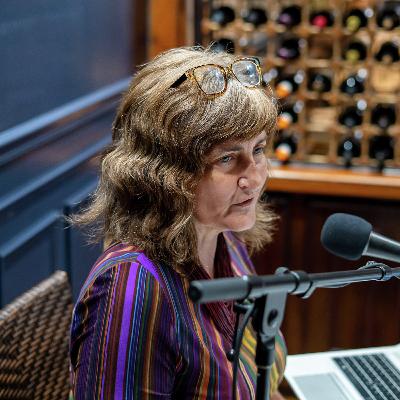
By all accounts, it’s difficult to land a job or even an interview right now. There’s all kinds of reasons for that, including a stagnant labor market and sluggish hiring by cautious employers. Recent college graduates are bearing the brunt of what is one of the most challenging markets in years, with entry-level white-collar jobs being especially hard to secure. If you are unemployed and looking for inspiration, you’re in the right place. It took nearly 18 months for my lunch guest Nick Miner to be offered a job in design after graduating from LSU. After months of getting nowhere in his job search, Nick took a more aggressive approach to applying, made an e-portfolio, and started introducing himself to agencies. He ultimately landed a job at Mesh, a local ad agency where he was hired as the art director. Today, Nick Miner owns his own business Miner Design Company, specializing in logo design, branding, art direction, packaging design, illustration and graphic design. Tony Zanders was born and raised in New Orleans but made his career in tech in Boston and Silicon Valley. Eleven years ago, he returned to Louisiana to be closer to family and, during the pandemic, launched his second tech startup, Skill Type. Leaning into an international network of venture capitalists, Tony fundraised a 4 million dollar investment for his company from contacts in London, Silicon Valley, New York, Miami and in Louisiana, proving the old adage “it pays to have friends in high places.” While building his company in Baton Rouge, Tony became a coach and mentor at Nexus Louisiana. In 2024, Tony threw his hat in the ring for the role of president and CEO and was tapped for the position by the board. Today, he oversees 10 million dollars in annual revenue at Nexus Louisiana. After 2020, for a year or two, our default conversation was the pandemic. No matter what we were talking about, everything came back to what was happening before or after Covid. Today, the default conversation, especially in business, is AI. Is AI coming for my job? If so, when? What should I best do to prevent it taking my job, or what should I do if it does take my job? You might notice the use of "if." The fact is, right now, nobody really knows what the future of work will look like. But as it changes, Tony is in the forefront of that change, working with tech companies that are literally creating the future. On the other side of the coin, Nick is proving that no matter how creative technology can be, the source of all that creativity is, after all, a human being with the equivalent of a pen and piece of paper. Out to Lunch is recorded live over lunch at Mansurs on the Boulevard. You can find photos from this show by Ian Ledo and Miranda Albarez at itsbatonrouge.com.See omnystudio.com/listener for privacy information.
Since Starbucks opened its first store in Seattle in 1971, coffee shops have become a staple in nearly every city. In Berkeley, California there are approximately 59 coffee shops, resulting in one coffee shop for every 2,000+ residents, which is a higher ratio than Seattle. New York City has more coffee shops per capita than any other American city. When I read those numbers, I naturally thought to myself how do they all stay in business? How does each coffee shop or chain distinguish itself from its competitors? Katie Jenkins, Owner and Executive Director of Grace Therapy Center and Stir, has taken a thoughtful approach to business competition and growth. Grace Therapy Center is a clinic for children with autism and other developmental differences that Katie started in 2021. Now with three locations, Grace Therapy Clinic offers applied behavior analysis therapy (otherwise known as ABA) for indiividual children, children in social groups and at summer camps. Of all the positioning possibilities you could imagine for opening a coffee shop, tieing it to a series of specialty autism clinics isn't something even the folks at Starbucks or coffee shops in California or New York have thought of. But that's exactly what Katie Jenkins is doing with Stir Cofffee House on Airline Highway here in Baton Rouge. Stir employs Katie's child clients who mature and are old enough to join the workforce. The coffee industry is responsible for more than 2.2 million U.S. jobs and generates more than $100 billion in wages per year. Over the years, we’ve had several guests on Out to Lunch who have contributed to the coffee industry’s success locally. By providing job opportunities at Stir to those who might struggle to find traditional work because of their intellectual and developmental disabilities, Katie Jenkins is not only contributing to the coffee industry’s success in Baton Rouge but she's providing invaluable work and life experiences for her clients at Grace Therapy Center. Out to Lunch is recorded live over lunch at Mansurs on the Boulevard. You can find photos from this show by Ian Ledo and Miranda Albarez at itsbatonrouge.com.See omnystudio.com/listener for privacy information.
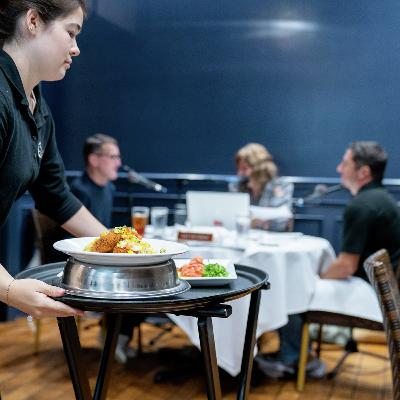
The reasons people give for starting a business aren’t all that surprising. Financial independence, pursuing personal passions, requiring a flexible schedule, or making a positive impact on the community often top the list. What’s surprising is how many businesses start in garages. Many of America’s most successful companies, including tech giants Amazon, Hewlett-Packard, and Microsoft, started in humble garages. Perhaps the most famous of which is Apple, founded by college dropout Steve Jobs in 1976. Today, Apple is a multinational corporation with annual revenue in 2024 of $391 billion. And the infamous garage on Crist Drive? It’s now listed on the city’s historic properties. Blood Closer to home, David Slaughter stepped away from commercial real estate in 2017 to open Orion Laboratories with his wife Rachel in a 800-square-foot garage office at the back of their home. Today, Orion Laboratories is the largest independent laboratory in Louisiana, processing labs seven days a week for area health systems, independent clinics, urgent care clinics, nursing homes, physician groups and surgery centers, stretching all the way from Baton Rouge to Monroe, and in 2023, David was named Business Report’s Young Businessperson of the Year. Oil Some businesses never get out of the garage. Like Vinnie Carollo’s for example. In Vinnie’s case, though, it’s not because the business failed. In fact, it’s a big success. And it’s still in a garage. Vinnie Carollo’s fascination with obscure, odd cars began with a Porsche 944 in need of a repair. As he tried to fix the vehicle, his dad joked that he should go to Porsche school to become a technician. Six months later, Vinnie left home to attend 23 weeks of instructor-led, hands-on training. Then, in 2015, after nine years of working at dealerships and servicing Porsches over the weekends in a friend’s car detailing and cleaning shop, Vinnie Carollo started Vex European and Exotic Auto Repair in a 900 square foot garage with one car lift. Vinnie quickly outgrew that space and, over the next two years, moved three times, ultimately to his current location on Benefit Drive. This garage is around 20,000 square feet, has 13 car lifts and employs up to 25 people. The good news about most modern European cars is, when something's wrong you can hook them up to a diagnostic computer and find out pretty quickly what's probably going on. It's not that simple diagnosing human problems. Yet. There's all kinds of talk about futuristic body scanners, but as far as we know that's way off in the future, and till that day arrives diagnostic medical testing as we know it will probably continue.Vinnie and David are both following a well-worn path taken by generations of entrepreneurs who show ingenuity and perseverance building successful businesses in specialized and essential markets. Out to Lunch is recorded live over lunch at Mansurs on the Boulevard. You can find photos from this show by Ian Ledo and Miranda Albarez at itsbatonrouge.la.See omnystudio.com/listener for privacy information.

Comments

Download from Google Play

Download from App Store
 United States