


Masala Podcast: The South Asian feminist podcast
Subscribed: 12,605Played: 46,208
Subscribe


© 2019 soulsutras
Description
This multi-award-winning South Asian feminist podcast is all about cultural taboos. Everything from sex, sexuality, periods, menopause, porn, mental health, shame, sexual harassment & more. Considered the biggest South Asian feminist podcast representing the voices & views of South Asian women, exploring intersectional feminism from a South Asian lens, Masala Podcast features some of the world's most inspiring South Asian women. Masala Podcast is the winner of multiple British Podcast Awards 2020, 2021, 2022 & 2023. Masala Podcast has been featured in the Guardian, BBC Radio, the Observer, Evening Standard, Cosmopolitan, Stylist, Eastern Eye, Huffington Post, BBC Sounds, Brown Girl Magazine, Women’s Health Austria, Deccan Herald India & more.
67 Episodes
Reverse

Is It Culture or Is It Control? The Truth About 'Honour'-Based AbuseSPECIAL EPISODE IN PARTNERSHIP WITH THE UK GOVERNMENTWhat do you think of when you hear the words ‘Honour’-Based Abuse? If you think it doesn’t happen to people like you, in cosmopolitan cities like London, then this is a must-listen episode.This week, I, Sangeeta Pillai, am talking about something deeply important and often misunderstood: ‘Honour’-Based Abuse (HBA). This isn't just a distant headline; it's a reality for thousands of women in the UK, from all walks of life. I’ll share my own personal story of facing an arranged marriage, and we'll unpack the shocking statistics that show HBA is more common than you think.Let’s do what we always do on Masala Podcast. Let's grab a cup of chai, sit down, and talk about the things we’re not supposed to talk about. Because pressure, control, and fear are not our culture.Support ResourcesIf you or someone you know is experiencing ‘honour’-based abuse, please know that you are not alone and confidential, free help is available.Karma Nirvana: A specialist charity for victims of honour-based abuse and forced marriage.UK Helpline: 0800 5999 247 (Monday - Friday: 9am - 5pm)Website: https://karmanirvana.org.uk/Forced Marriage Unit: +44 (0)20 7008 0151Southall Black Sisters: Providing information and support for Black and minority women experiencing violence and abuse.Helpline: 020 8571 0800Website: https://southallblacksisters.org.uk/Refuge (National Domestic Abuse Helpline): Free, 24-hour confidential support for women experiencing domestic abuse, including HBA.Helpline: 0808 2000 247Website: https://www.nationaldahelpline.org.uk/In an emergency, always call 999.In This Episode, We Talk About:What ‘Honour’-Based Abuse Really Is: Understanding the official definition beyond the headlines.My Personal Story: I share my own experience of being pressured into an arranged marriage at 18.The Shocking Reality of HBA in the UK: Exploring the latest statistics from Karma Nirvana, including the fact that cases have risen by 35% since 2022.Who Are the Victims?: HBA happens to educated, professional women (and men). We look at the data on age, location, and ethnicity.The Triggers for Abuse: From family disputes and having a boyfriend to simply "being female."Stories of Survival: Fictionalised but realistic stories of women like 'Layla' and 'Sonia' to show what coercive control and forced marriage can look like.Understanding Coercive Control: How abuse can be silent, emotional, and financial, leaving no physical bruises.The Burden of "Shame" and "Honour": Why these two powerful words stop so many women from seeking help.How You Can Help: Learning to spot the signs of HBA and understanding that culture is never an excuse for abuse.Thank you for listening to Masala Podcast. Please share this episode with your friends and family—you never know who might need to hear it.Connect with me on Instagram at @soulsutras or email me at [email protected] with your thoughts - I'd love to hear from you.This episode is edited by The Podcasting Company @https://www.linkedin.com/company/thepodcastingcompany/
 1
1Breaking the Cycle of South Asian Cultural Shame | Masala Podcast I'm peeling back the layers on a tough topic for South Asian diaspora experience: Cultural Shame. This isn't just about feeling "different"; it’s about the deep-rooted psychological burden of feeling that our culture, our bodies, and our very existence are "wrong" in a Western context.1. Why We Feel Cultural Shame We didn't wake up with this feeling; it was designed. We explore the "why" behind our embarrassment and our "Log Kya Kehenge" thinking:The Colonial Hangover: Centuries of being told our traditions were "uncivilized" created a deep-seated internalized racism within all of us. It’s so deep-rooted that we don’t even know it’s there. Like everything we’re unaware of, it manifests in so many areas of our lives from school, to work to relationships.The Integration Trap: The pressure to "fit in" to survive and succeed in Western spaces means we learn (often subconsciously) to hide our true South Asian selves. We learn that being more Western, being more accepted in the world we live in.Generational Weight: Our parents' survival instincts taught them to also blend in and now draw attention to their more Desi parts. And growing up with those values, we turned into our cultural baggage.2. How Cultural Shame Manifests in Our Lives Shame isn't just a feeling; it’s a set of behaviours that are deeply rooted in our bodies and minds.The "Log Kya Kahenge" Filter: We might learn that others are judging us and this might dictate our career, clothes, and relationships.Code-Switching: We feel the exhaustion of switching versions of ourselves between home and the outside world. And yet, sometimes this is so embedded in us, we don’t even realise that we’re doing it.Policing How We Look: The shame is subtle yet it’s there. It might surround our hair, our skin tone, and our physical presence. This would explain why we might style our hair to look more Western, why we might wear more “neutral” clothing.3. What We Can Do to Change In this episode, I share how we can begin the work of reclaiming our identity:Radical Vulnerability: Speaking the "shameful" things out loud to strip them of their power and that might even mean admitting it to ourselves.Curating Our Own Culture: Perhaps we could start by picking and choosing those parts of our heritage that nourish us, those parts of ourselves that we have ignored for such a long time.This episode is an invitation to stop hiding, to embrace those beautiful parts of our identity. It’s time to move from shame to radical South Asian pride.I wrote a longer article here about cultural shame and some solutions:https://soulsutras.co.uk/unpacking-cultural-shame-south-asian-diaspora/#MasalaPodcast #SouthAsianIdentity #CulturalShame #DesiMentalHealth #LogKyaKahenge #SouthAsianFeminism #HealingTrauma #DiasporaStories #SangeetaPillai #BrownGirlProblems #UnlearningShame
Have you ever looked at your life and thought it looked perfect on the outside—maybe even "Instagrammable"—yet felt a deep, invisible ache inside? In this episode of the Masala Podcast, host Sangeeta Pillai gets more personal than ever to break the silence around a global epidemic: Loneliness.Sangeeta shares the raw reality of her own "peak" moment—standing in London’s Leicester Square looking at her own face on a giant billboard, only to realize she had no one to call and share the news with. We dive into why so many South Asian women feel like they are living inside a "glass bubble," disconnected even when surrounded by family, friends, or a partner.In this episode, we discuss:The "Invisible" Epidemic: Why you can be in a room full of thousands of people and still feel entirely untetheredThe Health Cost: The shocking reality that loneliness is as damaging to your health as smoking 15 cigarettes a day and its links to anxiety, heart health, and cognitive declineThe Price of Rebellion: How choosing to be a "Bad Daughter" and rejecting traditional cultural scripts—like getting married and "settling down"—can lead to a unique type of isolationThe Transformation Shift: Why your circle might change as you grow, and how to navigate the grief of losing old friendships that no longer fit the woman you’ve becomeFrom Loneliness to Solitude: Practical tips on losing the shame, sitting with your grief, and finally emerging into a world where you are truly seen and heardThis is a conversation for every woman who has ever felt like she was "carrying a beautiful story with no one to tell it to". It’s time to stop the numbing and start the healing.
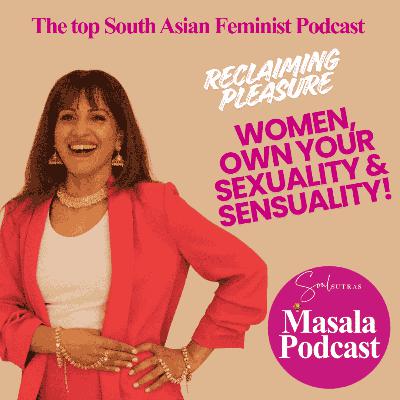
The Pleasure is All Yours: Stop Waiting & Start Owning Your FireWhy is female pleasure still the ultimate taboo? In our community, we talk about marriage, children, and duty—but we rarely talk about a woman’s right to her own sexual satisfaction.This week on the Masala Podcast, we’re exploring the psychology of pleasure and the biology of bliss. This episode is a deep dive into sexual agency—the radical idea that you are the primary driver of your own enjoyment. We are moving past the silence and into a space of embodied empowerment.What We’re Unlocking Today:[02:15] Ending the Pleasure Gap: Why we’ve been conditioned to settle and how to raise your standards for joy.[05:40] Sexual Self-Care & Wellness: Reframing self-pleasure as a fundamental pillar of women’s health.[09:12] Anatomy & Awareness: Breaking through the mental blocks to reach your full sensual potential.[13:45] Practical Pleasure Exercises: A step-by-step guide to mirror work, somatic breathing, and sensory mapping.[17:20] Communicating Your Desires: How owning your joy on your own makes you more powerful in your relationships.Practical Takeaways: This episode is packed with practical intimacy tips and body-connection exercises. I’m sharing the exact tools I used to unlearn shame and reconnect with my erotic self. From pelvic floor awareness to mindful touch, this is the toolkit you didn't get in school.KEY TOPICS: Female Sexuality, Sexual Agency, Pleasure Ownership, Masturbation Taboos, South Asian Women, Somatic Pleasure, Orgasm Equality, Self-Discovery.Mentioned in this episode:The Anti-Retreat in tropical KeralaReal Kerala spirituality. Real sisterhood. No wellness BS.
8 Days, 7 Nights | 4-11 Feb 2026 | Kerala Backwaters
Welcome to The Anti-Retreat. None of the usual yoga babes clutching “chai” lattes here! Just a real reatreat in a beautiful Kerala backwaters resort. You start and end your days with chanting and meditation in sync with the rhythms of Mother Nature. You soak up the energy of this bewitching land land with walking meditations, ancient Kerala rituals & visits to sacred goddess temples. You feast on traditional Kerala food. You connect deeper with yourself every day through a series of daily workshops. You connect with your sisters through a series of practises. The best bit? You connect with local women and women-led businesses (because your money supports them!)
You’ll experience things that no tourist ever would. Are you ready?
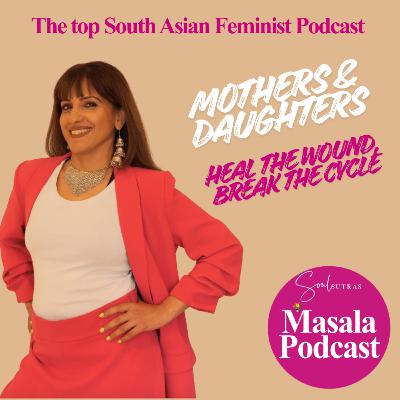
Can you ever truly be a "good" daughter while staying true to yourself?In this episode: understand the the Mother Wound, learn how to stop passing it on.The bond between a mother and daughter is often described as sacred, but for so many of us, it's a complex battlefield of unspoken expectations, inherited trauma, and deep-seated guilt. In this raw and revealing episode of the Bad Daughter miniseries, I get vulnerable, revealing my own pain around my mother - so you can understand yourself better and start exploring how to heal your own mother-daugher wound. In this episode, we peel back the layers of the most influential relationship in a woman’s life: the one with her mother/daughter. We go deep into the "Mother Wound"—the intergenerational pain passed down through lineages of women particularly South Asian women—and explore how cultural pressures can turn love into a burden. From the weight of "log kya kahenge" (what will people say) to the silent sacrifices our mothers made, we discuss why this relationship often feels like a tug-of-war between loyalty and liberation.Inside this episode, we explore:Our emotional triggers: Why the mother-daughter dynamic is uniquely fraught with emotional triggers and high stakes.How we inherit trauma: How we unconsciously carry the unhealed wounds, anxieties, and societal limitations of the women who came before us.The "Bad Daughter" Narrative: Reclaiming your identity when setting boundaries feels like a betrayal.How to Heal: Actionable insights on how to break the cycle of trauma, practice radical empathy, and forge a new path toward reconciliation or self-peace.Whether you are navigating a strained relationship, grieving a connection you never had, or trying to ensure you don’t pass the same patterns to your own children, this conversation is a vital step toward emotional freedom.We’re talking about the trauma we inherit without asking for it, and how to set boundaries without feeling like a "bad daughter." It’s time to stop the cycle. 🛑Enjoyed my book extract? Here's where you can buy my book Bad Daughter:https://baddaughter.co.uk/about/Join me on my women only "Anti-Retreat" in tropical Kerala: https://baddaughter.co.uk/kerala-retreats/Mentioned in this episode:The Anti-Retreat in tropical KeralaReal Kerala spirituality. Real sisterhood. No wellness BS.
8 Days, 7 Nights | 4-11 Feb 2026 | Kerala Backwaters
Welcome to The Anti-Retreat. None of the usual yoga babes clutching “chai” lattes here! Just a real reatreat in a beautiful Kerala backwaters resort. You start and end your days with chanting and meditation in sync with the rhythms of Mother Nature. You soak up the energy of this bewitching land land with walking meditations, ancient Kerala rituals & visits to sacred goddess temples. You feast on traditional Kerala food. You connect deeper with yourself every day through a series of daily workshops. You connect with your sisters through a series of practises. The best bit? You connect with local women and women-led businesses (because your money supports them!)
You’ll experience things that no tourist ever would. Are you ready?

Comments

Download from Google Play

Download from App Store
 United States