


 Claim Ownership
Village Global Podcast
Subscribed: 974Played: 92,703
Subscribe

© Village Global
Description
The Village Global podcast takes you inside the world of venture capital and technology, featuring enlightening interviews with entrepreneurs, investors and tech industry leaders. Learn more at www.villageglobal.vc.
692 Episodes
Reverse
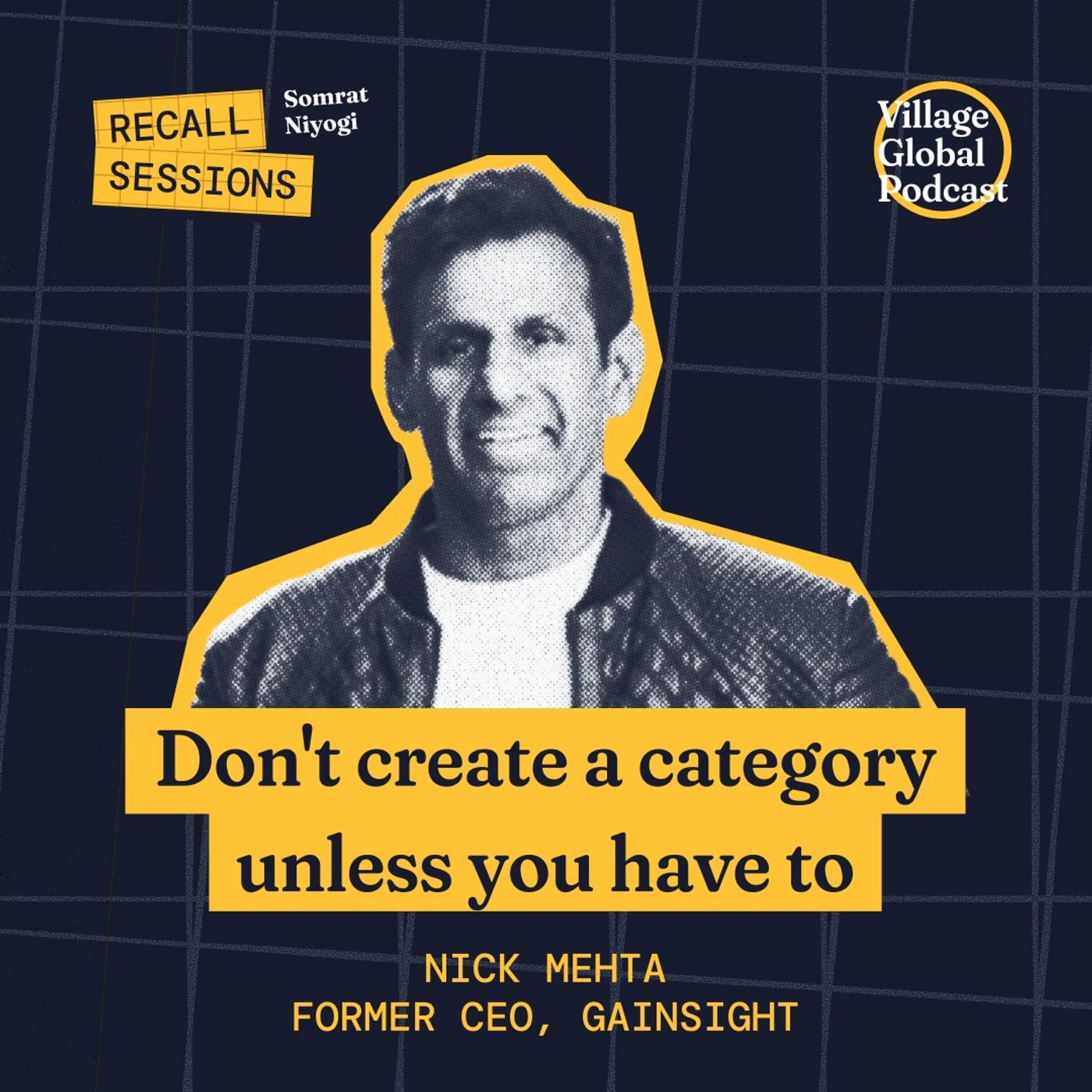
Nick Mehta is the former CEO of Gainsight, the platform that helps companies drive durable growth through customer-led and product-led strategies. Vista Equity Partners acquired Gainsight for $1.1 billion.Nick ran the company as CEO for 13 years before stepping into a board role last year. Nick has also co-authored four books on customer success, was named Entrepreneur of the Year for Northern California, and currently sits on the boards of F5 and PubMatic. Before Gainsight, he was CEO of LiveOffice, which he grew to $25 million in revenue and sold to Symantec. Somrat Niyogi and Nick cover how a meetup with cheap wine and a cheese tray on a ping pong table became the seed of a category, why community mattered more than product in the beginning, what it was like selling software into a role that barely existed, the Box deal that involved a music video parody and memorizing the lobby Wi-Fi password, what happened when Salesforce announced they were the "customer success platform," how to think about category creation vs. joining an existing one, and why Nick got on stage at Pulse coming off pneumonia to talk about being lonely as a kid.In loving memory of Summer Devi Mehta (2008–2026). Support The Trevor Project in Summer's honor: https://give.thetrevorproject.org/fundraiser/6961929Thanks for listening — if you like what you hear, please review us on your favorite podcast platform.Check us out on the web at www.villageglobal.com or get in touch with us on X @villageglobal.Want to get updates from us? Subscribe to get a peek inside the Village. We'll send you reading recommendations, exclusive event invites, and commentary on the latest happenings in Silicon Valley. www.villageglobal.com/signup

Dara Ladjevardian is the Co-Founder and CEO of Delphi, a platform that lets you create a digital version of your mind — an interactive, always-on presence that can share your knowledge, coach others, and represent you at scale.Delphi has raised $16 million in a Series A led by Sequoia, with earlier backing from Founders Fund, Lux Capital, and others. Before Delphi, Dara founded Friday, a text-based commerce tool he built and sold within a year. He previously worked as a forward-deployed engineer at C3 AI and as a product engineer at OpenStore.Sumeet Singh sits down with Dara to talk about the moment he knew he had to build Delphi, which started with trying to recreate his grandfather's mind using GPT-3. They cover why he chose LLMs over crypto and American dynamism, what it was like selling his first startup and joining OpenStore to find a mentor and co-founder, why human connection still matters when information is commoditized, how Delphi solved the trust problem that makes or breaks the entire platform, the micro-pivots that shaped the company, and what world Dara is trying to build.If you have any questions about Delphi, you can talk to Dara's digital mind here: delphi.ai/daraDelphi: https://delphi.aiThanks for listening — if you like what you hear, please review us on your favorite podcast platform.Check us out on the web at www.villageglobal.com or get in touch with us on X @villageglobal.Want to get updates from us? Subscribe to get a peek inside the Village. We'll send you reading recommendations, exclusive event invites, and commentary on the latest happenings in Silicon Valley. www.villageglobal.com/signup
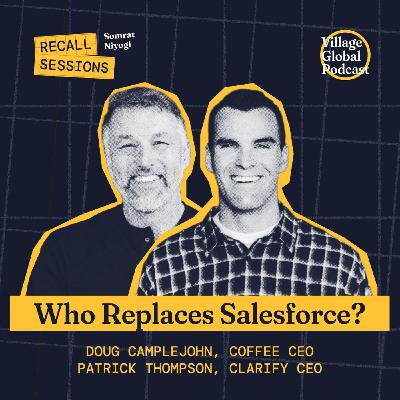
Doug Camplejohn is the Founder & CEO of Coffee, an AI-first CRM. Doug co-founded Fliptop (acquired by LinkedIn), led Sales Navigator at LinkedIn as VP of Product, then ran Sales Cloud at Salesforce as EVP and GM. He's also had exits with Mi5 Networks (acquired by Symantec) and MyPlay (acquired by Bertelsmann).Patrick Thompson is the Co-Founder & CEO of Clarify, an AI-native CRM built for modern go-to-market teams. Clarify has raised $22.5 million. Before Clarify, Patrick co-founded Iteratively, a customer data platform acquired by Amplitude in 2021, where he served as Director of Product and GM for Amplitude CDP. Earlier in his career, he led design for Jira Software at Atlassian.Two founders building competing AI-native CRMs sit down together for the first time. They talk with Somrat Niyogi about why this is the moment for CRM disruption, why you can't just slap an LLM on a legacy database, what it actually takes to build table stakes in CRM, why the term "CRM" has always been a misnomer, how AI changes the business model from per-seat to work-output pricing, what Salesforce and HubSpot are doing behind the scenes, and what they'd tell founders considering the category.Clarify: https://clarify.aiCoffee: https://coffee.ai Thanks for listening — if you like what you hear, please review us on your favorite podcast platform.Check us out on the web at www.villageglobal.com or get in touch with us on X @villageglobal.Want to get updates from us? Subscribe to get a peek inside the Village. We'll send you reading recommendations, exclusive event invites, and commentary on the latest happenings in Silicon Valley. www.villageglobal.com/signup
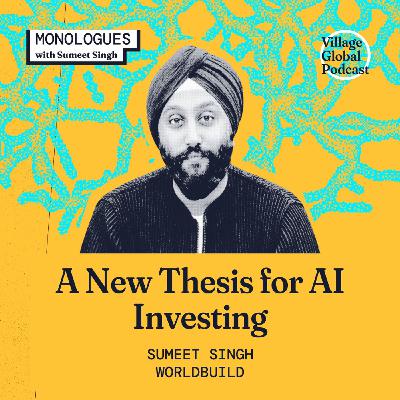
Sumeet Singh, Founder & Managing Partner of Worldbuild, lays out his investing thesis for the AI era: The Model Economy.His argument is that most AI startups being built today are fighting a losing battle against the scaling laws. The models themselves will swallow the application layer. So where does durable value actually go?Sumeet walks through the Bitter Lesson (Richard Sutton's foundational insight on why brute-force scale always beats domain-specific cleverness), what the mobile era teaches us about what's coming, and the two types of companies he believes actually win: infrastructure that keeps models alive and growing, and post-skeuomorphic applications that build workflows only possible with AI.This is the second episode of Worldbuilders — a series on the Village Global Podcast hosted by Sumeet Singh, exploring the people and ideas shaping what comes next.Watch the first episode with Evan Conrad (SF Compute): https://youtu.be/pteKdEGYRjUThanks for listening — if you like what you hear, please review us on your favorite podcast platform.Check us out on the web at www.villageglobal.com or get in touch with us on X @villageglobal.Want to get updates from us? Subscribe to get a peek inside the Village. We'll send you reading recommendations, exclusive event invites, and commentary on the latest happenings in Silicon Valley. www.villageglobal.com/signup

This is the first episode of Worldbuilders, a new series on the Village Global Podcast guest-hosted by Sumeet Singh, Founder & Managing Partner of Worldbuild.Sumeet sits down with Evan Conrad, Founder & CEO of the San Francisco Compute Company, to talk about the real economics of GPU compute, how SF Compute went from an accidental GPU cloud to building supercomputers, where the actual AI bubble is, and why the future of supercomputing should be calm.Topics covered include: the origin story of SF Compute, why GPU contracts require multi-year commitments, the difference between GPU and CPU economics, what "offtake" means and why it matters, the Marriott model for supercomputing, and how SF Compute is working to reduce the risk of an AI bubble.Thanks for listening — if you like what you hear, please review us on your favorite podcast platform.Check us out on the web at www.villageglobal.com or get in touch with us on X @villageglobal.Want to get updates from us? Subscribe to get a peek inside the Village. We'll send you reading recommendations, exclusive event invites, and commentary on the latest happenings in Silicon Valley. www.villageglobal.com/signup
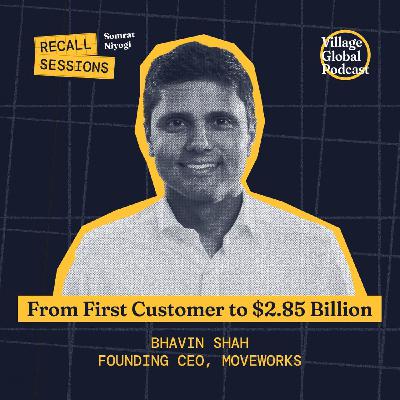
Bhavin Shah spent years building Moveworks into the agentic AI platform behind employee support at Toyota, Siemens, Unilever, and hundreds more. In December 2025, ServiceNow acquired Moveworks for $2.85 billion.In this episode of Recall Sessions, Somrat Niyogi goes back to the beginning. How did four co-founders find each other? Why did Bhavin and his team run 34 CIO conversations to validate the idea before their first investor wrote a check? How did they close their first customer with nothing but a vision demo — and get contractor badges to work out of the customer's office? And what made them finally say yes to an acquisition after turning down offers for years?Bhavin covers the full arc: the founding team, the first customers, how he chose investors, what ChatGPT changed overnight, and what he's building now inside ServiceNow.Thanks for listening — if you like what you hear, please review us on your favorite podcast platform.Check us out on the web at www.villageglobal.com or get in touch with us on X @villageglobal.Want to get updates from us? Subscribe to get a peek inside the Village. We'll send you reading recommendations, exclusive event invites, and commentary on the latest happenings in Silicon Valley. www.villageglobal.com/signup
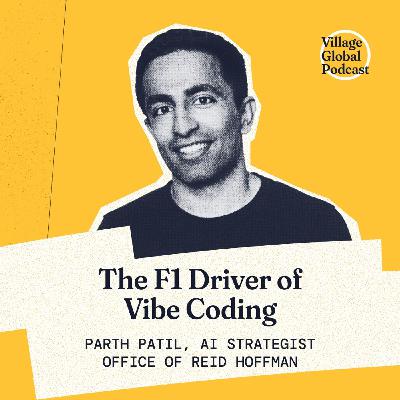
Parth Patil built Reid Hoffman's AI digital twin from scratch, without engineering team or a software background. Before that, he was a data scientist at Clubhouse. When GPT-4 came out, he cashed out his 401k and spent four months talking to the model every day. He came out of that running Reid's AI work. He now manages a fleet of coding agents for most of his waking hours.In this conversation with Village Global VP Sam Kirschner, Parth talks through everything AI: how coding agents have evolved since AutoGPT and BabyAGI, why data analysts tend to make better vibe coders than engineers, how he thinks about multi-agent orchestration and TMUX, context engineering, and what he believes is coming next. Thanks for listening — if you like what you hear, please review us on your favorite podcast platform.Check us out on the web at www.villageglobal.com or get in touch with us on X @villageglobal.Want to get updates from us? Subscribe to get a peek inside the Village. We'll send you reading recommendations, exclusive event invites, and commentary on the latest happenings in Silicon Valley. www.villageglobal.com/signup
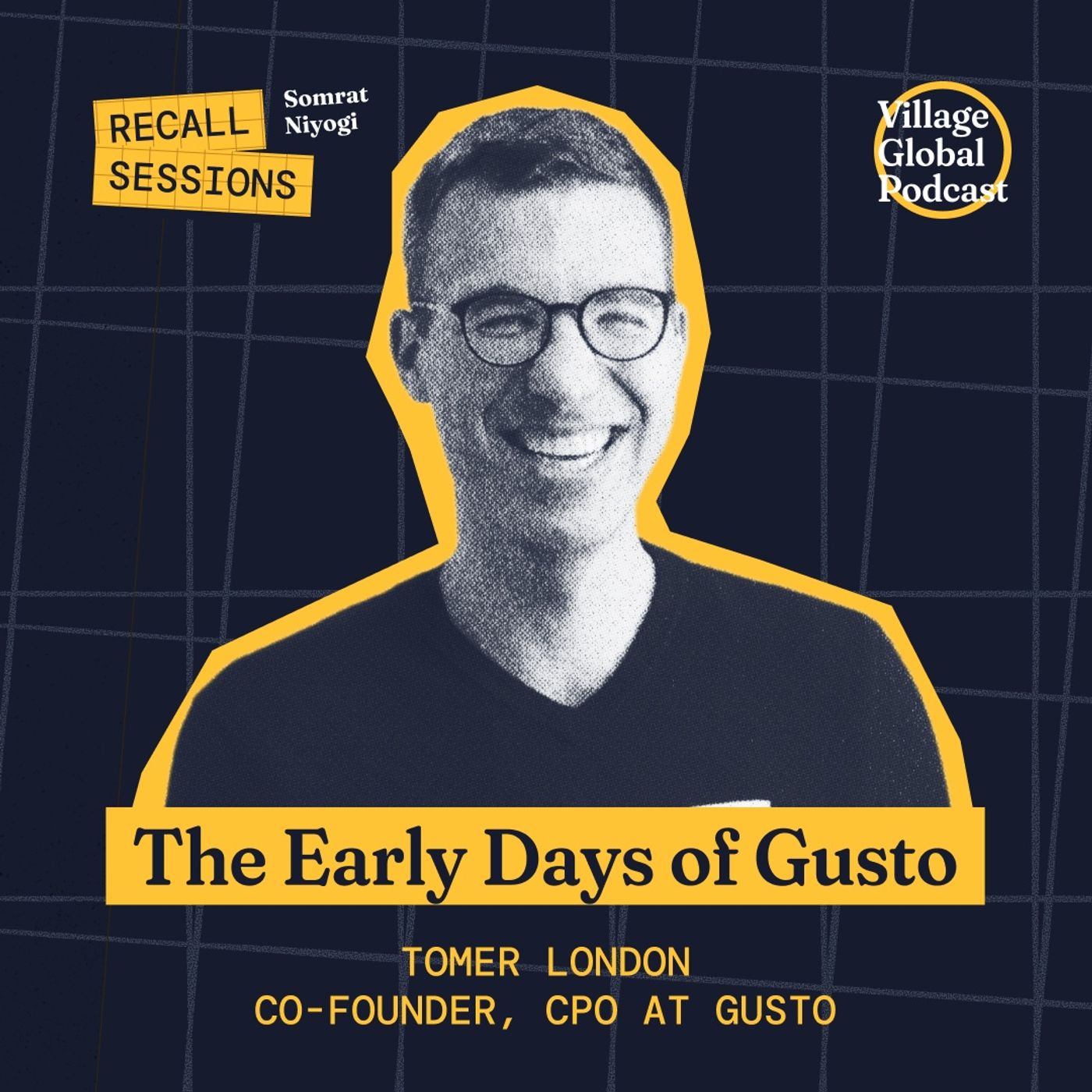
Welcome to Recall Sessions - a series on the Village Global Podcast hosted by Somrat Niyogi, Partner at Recall Capital. Each episode goes deep on how the world's most successful companies got their first customers. In this episode, Somrat sits down with Tomer London, Co-Founder and Chief Product Officer at Gusto, to discuss how he and his co-founders built the leading payroll and HR platform for small businesses. Gusto serves over 400,000 businesses today and is valued at $9.5 billion - but it started as ZenPayroll, with a product scoped down to California-only, under five employees, salary only, and no benefits.Tomer talks about growing up in his dad's clothing store in Israel and building an inventory system at age 12, cold-calling businesses off Yelp before writing a single line of code, the Thai restaurant lunch that confirmed they were onto something, why charging $2 per employee per month was a mistake, and how building for small businesses is startup in hard mode - but worth it if the pain is big enough.Thanks for listening - if you like what you hear, please review us on your favorite podcast platform.Check us out on the web at www.villageglobal.com or get in touch with us on X @villageglobal.Want to get updates from us? Subscribe to get a peek inside the Village. We'll send you reading recommendations, exclusive event invites, and commentary on the latest happenings in Silicon Valley. www.villageglobal.com/signup
![[Highlight] What Happens to Society When We Live to 100? with Celine Halioua](https://s3.castbox.fm/ef/60/b7/ff5de43a0fc6244a8ae6509bce24f31e91_scaled_v1_400.jpg "[Highlight] What Happens to Society When We Live to 100? with Celine Halioua")
This is a short excerpt from our full conversation with Celine Halioua, Founder & CEO of Loyal, which recently raised a $100M Series C, and Village Global GP Sam Kirschner.Celine discusses what's still non-consensus in longevity, how cognitive aging shapes our preferences and worldviews, and what society looks like when parents stay healthier longer — from socioeconomic mobility to financial planning.Listen to the full episode here: https://www.villageglobal.com/podcastThanks for listening — if you like what you hear, please review us on your favorite podcast platform. Check us out on the web at www.villageglobal.com or get in touch with us on X @villageglobal.Want to get updates from us? Subscribe to get a peek inside the Village. We'll send you reading recommendations, exclusive event invites, and commentary on the latest happenings in Silicon Valley. www.villageglobal.com/signup
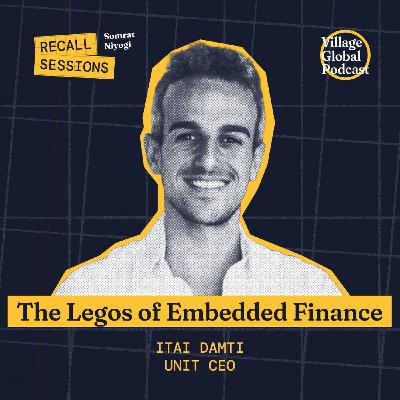
Welcome to Recall Sessions – a new series on the Village Global Podcast.Hosted by Somrat Niyogi, Partner at Recall Capital, each episode goes deep on go-to-market: how the world's most successful companies got their first customers. In this episode, Itai Damti, Co-Founder & CEO of Unit, joins Somrat to break down how Unit went from a year of stealth building with no committed customers to becoming the leading embedded finance platform – moving over $50 billion annually and powering programs at seven public companies.Itai talks about the bet he and co-founder Doron Somech made on a market that barely existed, why they spent a full year building before going to market, how their first customer came through a LinkedIn message, and what he's learned about selling infrastructure that changes how buyers think.He also shares a framework for categorizing buyers – deciders, explorers, and the "unawares" – and why minding the chasm between your first 5% of customers and the next 95% is where companies live or die.Thanks for listening – if you like what you hear, please review us on your favorite podcast platform.Check us out on the web at www.villageglobal.com or get in touch with us on X @villageglobal.Want to get updates from us? Subscribe to get a peek inside the Village. We'll send you reading recommendations, exclusive event invites, and commentary on the latest happenings in Silicon Valley. www.villageglobal.com/signup
This is a short excerpt from our full conversation with Celine Halioua, Founder & CEO of Loyal, which recently raised a $100M Series C, and Village Global GP Sam Kirschner.Celine discusses Loyal's 10-year vision for expanding into cats and humans, why the pharmaceutical industry has been slow to treat aging as a drug category, and why the biological and economic case for going dogs-first is stronger than most people realize.Listen to the full episode here: https://www.villageglobal.com/podcastThanks for listening — if you like what you hear, please review us on your favorite podcast platform. Check us out on the web at www.villageglobal.com or get in touch with us on X @villageglobal.Want to get updates from us? Subscribe to get a peek inside the Village. We'll send you reading recommendations, exclusive event invites, and commentary on the latest happenings in Silicon Valley. www.villageglobal.com/signup
This is a short excerpt from our full conversation with Shishir Mehrotra, CEO of Superhuman (formerly Grammarly), and Village Global's Ben Casnocha.Shishir and Ben discuss the "Silicon Valley Inc. vs. Google Inc." framework for understanding career tradeoffs, when recruitment firms add value vs. when they don't, and how to design a hiring process that produces great outcomes — including the critical role of reference checking.Watch the full episode here: https://youtu.be/S7UO7AOLgBAThanks for listening — if you like what you hear, please review us on your favorite podcast platform.Check us out on the web at www.villageglobal.com or get in touch with us on X @villageglobal.Want to get updates from us? Subscribe to get a peek inside the Village. We'll send you reading recommendations, exclusive event invites, and commentary on the latest happenings in Silicon Valley. www.villageglobal.com/signup
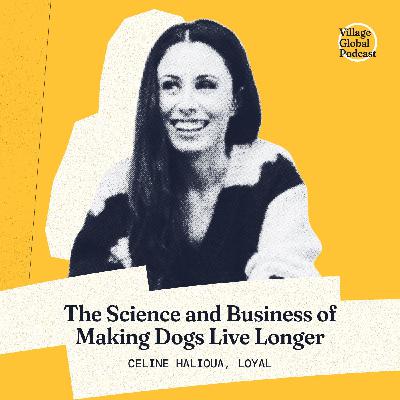
Celine Halioua, Founder & CEO of Loyal, joins Village Global VP Sam Kirschner to discuss her journey building a biotech company developing the first FDA-approved drugs for lifespan extension – going dogs first. Loyal has raised over $250M and recently closed its Series C after clearing major regulatory milestones on both efficacy and safety.In this conversation, Celine breaks down why you can't develop a human longevity drug today (and it's not because of biology – it's logistics and financial norms), why dogs are the fastest path to getting there, and how milestone-based fundraising works for deep tech companies that are years from revenue. She also shares hard-won lessons on understanding the incentives of the people around you, taking people as they are, and staying emotionally unattached to the how while staying committed to the what.Loyal: https://loyal.com Celine on X: https://x.com/celinehalioua Thanks for listening – if you like what you hear, please review us on your favorite podcast platform.Check us out on the web at www.villageglobal.com or get in touch with us on X @villageglobal.Want to get updates from us? Subscribe to get a peek inside the Village. We'll send you reading recommendations, exclusive event invites, and commentary on the latest happenings in Silicon Valley. www.villageglobal.com/signup
This is a short excerpt from our full conversation with Henry Shi (Anthropic, co-founder of Super.com) and Village Global GP Anne Dwane.Henry and Anne discuss the three paths available to successful founders, why traditional venture capital often becomes a sales job, the rise of "seed-strapping" as a new funding model, and what ultimately led Henry to join a frontier AI lab instead of starting another company or becoming an investor.Watch the full episode here: https://www.youtube.com/watch?v=MN88HLFx8-MListen to the full conversation here: https://podcasts.apple.com/us/podcast/from-%24200-million-revenue-founder-to-frontier-lab-with/id1316769266?i=1000746090022Thanks for listening — if you like what you hear, please review us on your favorite podcast platform.Check us out on the web at www.villageglobal.com or get in touch with us on X @villageglobal.Want to get updates from us? Subscribe to get a peek inside the Village. We'll send you reading recommendations, exclusive event invites, and commentary on the latest happenings in Silicon Valley. www.villageglobal.com/signup
This is a short excerpt from our full conversation with Henry Shi (Anthropic, co-founder of Super.com) and Village Global GP Anne Dwane.Henry and Anne discuss how AI coding tools have evolved from autocomplete to junior engineers, what skills will matter when writing code becomes obsolete, and whether humans or AI will end up as the boss in the future of work.Listen to the full episode here: https://podcasts.apple.com/us/podcast/village-global-podcast/id1316769266?i=1000746090022Watch the full episode here: https://www.youtube.com/watch?v=MN88HLFx8-MThanks for listening — if you like what you hear, please review us on your favorite podcast platform.Check us out on the web at www.villageglobal.com or get in touch with us on X @villageglobal.Want to get updates from us? Subscribe to get a peek inside the Village. We'll send you reading recommendations, exclusive event invites, and commentary on the latest happenings in Silicon Valley. www.villageglobal.com/signup
This is an excerpt from our full conversation with Shishir Mehrotra, CEO of Superhuman (formerly Grammarly).Shishir discusses why Grammarly is one of the most underestimated companies in Silicon Valley, how it's transforming from a grammar tool into an open platform for AI agents, and why "assist" AI—which meets you where you work—may be more powerful than chat or autonomous agents.Watch the full episode here: https://www.youtube.com/watch?v=S7UO7AOLgBAThanks for listening — if you like what you hear, please review us on your favorite podcast platform.Check us out on the web at www.villageglobal.com or get in touch with us on X @villageglobal.Want to get updates from us? Subscribe to get a peek inside the Village. We'll send you reading recommendations, exclusive event invites, and commentary on the latest happenings in Silicon Valley. www.villageglobal.com/signup
This is a short excerpt from our full conversation with Shishir Mehrotra, CEO of Superhuman (formerly Grammarly).Shishir discusses the fundamental differences between working at big tech companies versus startups, why skills at large companies are less transferable than you think, and what separates world-class recruiting processes from mediocre ones.Watch the full episode here: https://www.youtube.com/watch?v=S7UO7AOLgBAThanks for listening — if you like what you hear, please review us on your favorite podcast platform.Check us out on the web at www.villageglobal.com or get in touch with us on X @villageglobal.Want to get updates from us? Subscribe to get a peek inside the Village. We'll send you reading recommendations, exclusive event invites, and commentary on the latest happenings in Silicon Valley. www.villageglobal.com/signup
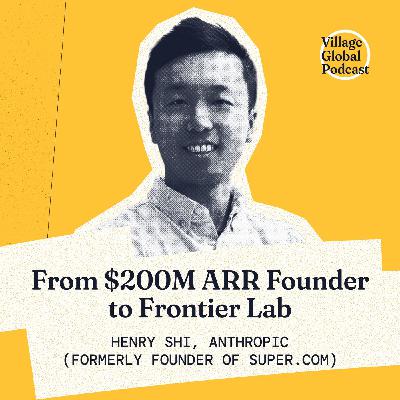
Henry Shi, founder of Super.com (scaled to $200M+ annual revenue, 50 million users, profitable), joins Village Global GP Anne Dwane to discuss his unconventional path from founder to Anthropic.Henry shares why he stepped back from his company at its peak, what he learned during his gap year building AI resources in public, the patterns he discovered tracking lean AI companies, and why he ultimately chose a frontier lab over VC or starting another company. He also gives a candid look inside Anthropic's culture and shares his predictions for what's coming in 2026. Mentioned in the Episode:Lean AI Leaderboard: https://leanaileaderboard.com/AI Crash Course (GitHub): https://github.com/henrythe9th/AI-Crash-CourseAI 2027 Report: https://ai-2027.com/Super.com: https://www.super.comAnthropic: https://www.anthropic.comHenry on X: https://x.com/henrythe9thsHenry on LinkedIn: https://www.linkedin.com/in/henrythe9th/Thanks for listening — if you like what you hear, please review us on your favorite podcast platform.Check us out on the web at www.villageglobal.com or get in touch with us on X @villageglobal.Want to get updates from us? Subscribe to get a peek inside the Village. We'll send you reading recommendations, exclusive event invites, and commentary on the latest happenings in Silicon Valley. www.villageglobal.com/signup
This is a short excerpt from our full conversation with Zoom founder and CEO Eric Yuan and LinkedIn co-founder / Village Global Chairman Reid Hoffman.Eric and Reid discuss what separates companies that last from those that flame out, why hypergrowth can hide critical problems, and how founders should think about their "theory of the game" for the next ten years.Listen to the full episode here: https://podcasts.apple.com/us/podcast/the-future-of-work-with-zoom-ceo-eric-yuan-and-reid-hoffman/id1316769266?i=1000744325171Thanks for listening — if you like what you hear, please review us on your favorite podcast platform.Check us out on the web at www.villageglobal.com or get in touch with us on X @villageglobal.Want to get updates from us? Subscribe to get a peek inside the Village. We'll send you reading recommendations, exclusive event invites, and commentary on the latest happenings in Silicon Valley. www.villageglobal.com/signup
Magnus Sandstrom and Debbie Wiss are senior partners at Swing Search, specializing in go-to-market roles at director, VP, and head levels for nearly 20 years. They joined Village Global partner Lindsay Pettingill to discuss the mistakes founders make when hiring their first sales and marketing talent, and how to get it right.Takeaways:Don't go too senior too early. Look for someone who can see around corners, not over mountains. Senior hires want teams and foundations. You need someone doing outbound calls and chasing deals.Don't try to solve product-market fit with a go-to-market hire. Talk to customers first. If you're pre-PMF, it's too soon to hire sales.You'll never leave sales. Even $100M+ CEOs are on sales calls. Accept this reality and get good at it rather than trying to hand it off.Strong sellers know their metrics to the decimal. "112.2% quota attainment" reveals discipline and ambition. "Around 100%" is a red flag.Hire two founding AEs, not one. They work in the trenches together while competing. If one doesn't work out, you still have revenue coming in.Marketing is more complex than sales. Define whether you need product marketing, demand gen, or brand. Wanting someone analytical and creative is unicorn territory.You can't delegate what you can't document. Write down your processes before expecting new hires to execute them.Thanks for listening — if you like what you hear, please review us on your favorite podcast platform.Check us out on the web at www.villageglobal.com or get in touch with us on X @villageglobal.Want to get updates from us? Subscribe to get a peek inside the Village. We'll send you reading recommendations, exclusive event invites, and commentary on the latest happenings in Silicon Valley. www.villageglobal.com/signup


Download from Google Play

Download from App Store
 United States
the audio quality when played at higher speeds sucks...
Great book. Ordered it and loved it. Regarding 1:37h and "participatory politics": I would have a suggestion how to achieve this even if the incumbent parties don't support it: https://upgradingdemocracy.com/.
1:53:00 Stillman will be remembered longer than Ghandi, because he shipped. It's hugely about the moral purity that can rally followers up. Like Vitalik does
the Bitcoin block reward isn't running out in 20 years... it's 120 years 😒