


 Claim Ownership
MarketScale Radio
Subscribed: 3Played: 121
Subscribe

© Copyright MarketScale
Description
MarketScale is bringing you the best B2B audio content from our studios in Dallas, TX. With relevant industry interviews and shows like Business Casual, Business Class, and the Mecca Minute, we're unpacking the most industry-shaking B2B news, tips, and trends. Whether you're looking for casual content or professional ponderings, MarketScale is your ultimate workday companion.
1351 Episodes
Reverse
Flexibility means everything in education today. Dr. Karen Ingram, national education consultant for Istation, and Dr. Claudia Castillas, a bilingual virtual product development coach at Istation, joined host Hilary Kennedy to dive into ways administrators and personnel can support teachers in this era of education. When a technological solution is comprehensive and flexible — meaning it can be used on or off campus by students — this can help establish consistent instructional routines. However, there must be a plan in place for using these types of learning technology. For example, technology tools must contain quality content. Dr. Ingram explained, “Just because it’s technology doesn’t mean it’s great. It has to have quality content. And by quality content, when we think about teaching kids how to read, the content is built on the science of reading.” Another necessary component is product development specialists who teach instructors how to use programs and progress monitoring tools, such as Dr. Casillas.Administrators can support teachers during this shift through active listening, which places value on teachers’ work efforts. Dr. Casillas said, “Without the relationship, without a meaningful connection, you’re not able to have that space to be able to go deep, to be able to be truly authentic, truly genuine.” Teachers also need more intensive data monitoring time when they can identify which students need support to fill learning gaps resulting from instruction deficits — and administrators must be creative in providing time for this. Istation can assist with efficiency in planning time by providing detailed reports on student performances and growth trajectories.Lastly, administrators can support teachers by providing them with choices and resources that create freedom. This can help offer them autonomy while allowing time for creativity and planning. To hear more from the EdTech Podcast, hit “subscribe” on Apple Podcast or Spotify.

Flexibility means everything in education today. Dr. Karen Ingram, national education consultant for Istation, and Dr. Claudia Castillas, a bilingual virtual product development coach at Istation, joined host Hilary Kennedy to dive into ways administrators and personnel can support teachers in this era of education. When a technological solution is comprehensive and flexible — meaning it can be used on or off campus by students — this can help establish consistent instructional routines. However, there must be a plan in place for using these types of learning technology. For example, technology tools must contain quality content. Dr. Ingram explained, “Just because it’s technology doesn’t mean it’s great. It has to have quality content. And by quality content, when we think about teaching kids how to read, the content is built on the science of reading.” Another necessary component is product development specialists who teach instructors how to use programs and progress monitoring tools, such as Dr. Casillas.Administrators can support teachers during this shift through active listening, which places value on teachers’ work efforts. Dr. Casillas said, “Without the relationship, without a meaningful connection, you’re not able to have that space to be able to go deep, to be able to be truly authentic, truly genuine.” Teachers also need more intensive data monitoring time when they can identify which students need support to fill learning gaps resulting from instruction deficits — and administrators must be creative in providing time for this. Istation can assist with efficiency in planning time by providing detailed reports on student performances and growth trajectories.Lastly, administrators can support teachers by providing them with choices and resources that create freedom. This can help offer them autonomy while allowing time for creativity and planning. To hear more from the EdTech Podcast, hit “subscribe” on Apple Podcast or Spotify.
The pandemic put a significant hindrance on learning. With things getting back into full swing, educators are trying to make up for the lost time. One of the ways they’re doing this is by working on accelerating learning. On this episode of the IStation Podcast, Host Courtney Echerd talked to Dr. Alicia Pruitt, Regional PD Lead/Northeast, Professional Development, IStation. They dug into how educators are trying to make up for lost time through accelerated learning and progress monitoring. “One of the things we’ve done for a long time is to progress monitor and look for gaps in the student’s learning and meet those students where they are,” Pruitt said. “That has really been a process we’ve done in the past.” But, educators are flipping things on the head a bit now by monitoring progress for strengths in the student’s learning, so they can build upon those and help to continue to move the needle in the right direction. “I think it’s really finding those strengths to help those students become better,” Pruitt said. “And to become better readers, better mathematicians, better at whatever area of academic place they’re working in.” As someone that works in professional development, Pruitt works with educators, principals, and superintendents. As a former teacher, she affected change in her classroom, and when she moved to the district level, she did the same. Her scope is a bit broader now, and she hopes to affect change throughout the state and even the country.
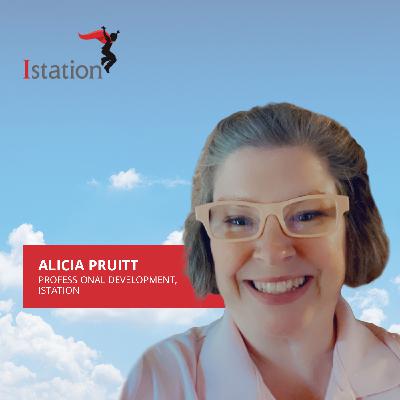
The pandemic put a significant hindrance on learning. With things getting back into full swing, educators are trying to make up for the lost time. One of the ways they’re doing this is by working on accelerating learning. On this episode of the IStation Podcast, Host Courtney Echerd talked to Dr. Alicia Pruitt, Regional PD Lead/Northeast, Professional Development, IStation. They dug into how educators are trying to make up for lost time through accelerated learning and progress monitoring. “One of the things we’ve done for a long time is to progress monitor and look for gaps in the student’s learning and meet those students where they are,” Pruitt said. “That has really been a process we’ve done in the past.” But, educators are flipping things on the head a bit now by monitoring progress for strengths in the student’s learning, so they can build upon those and help to continue to move the needle in the right direction. “I think it’s really finding those strengths to help those students become better,” Pruitt said. “And to become better readers, better mathematicians, better at whatever area of academic place they’re working in.” As someone that works in professional development, Pruitt works with educators, principals, and superintendents. As a former teacher, she affected change in her classroom, and when she moved to the district level, she did the same. Her scope is a bit broader now, and she hopes to affect change throughout the state and even the country.
On this episode of an Istation podcast, Host Courtney Echerd talked with Christy Spivey, VP of Customer Success at Istation, which has become one of the nation’s leading providers of richly animated, game-like educational technology. Istation’s innovative reading, math, and Spanish programs immerse students in an engaging and interactive environment and inspire them to learn. The duo talked about creating a learning environment for teachers. While creating a learning environment is essential for students, it’s also necessary for teachers. It is often an arduous task, with teachers being so busy and on a small budget. Over the past year, they’ve had to adapt and learn on their feet as they switched to online learning. So how do schools create time and space for teacher learning? “It’s something I’ve been curious about for many years and throughout my career,” Spivey said. “Even as a classroom teacher, and then moving into EdTech, I wondered ‘how do we help teachers? How do we support them? How do we make sure teachers have everything they need because, in turn, students are going to have everything they need?’”Spivey elaborated that when you dig into teacher learning, the most crucial aspect is time. One of the most challenging questions to answer is making time for teacher learning, including continuous learning. The question must be considered of how often it will take place, such as weekly, monthly, or how it will be embedded into their day.
On this episode of an Istation podcast, Host Courtney Echerd talked with Christy Spivey, VP of Customer Success at Istation, which has become one of the nation’s leading providers of richly animated, game-like educational technology. Istation’s innovative reading, math, and Spanish programs immerse students in an engaging and interactive environment and inspire them to learn. The duo talked about creating a learning environment for teachers. While creating a learning environment is essential for students, it’s also necessary for teachers. It is often an arduous task, with teachers being so busy and on a small budget. Over the past year, they’ve had to adapt and learn on their feet as they switched to online learning. So how do schools create time and space for teacher learning? “It’s something I’ve been curious about for many years and throughout my career,” Spivey said. “Even as a classroom teacher, and then moving into EdTech, I wondered ‘how do we help teachers? How do we support them? How do we make sure teachers have everything they need because, in turn, students are going to have everything they need?’”Spivey elaborated that when you dig into teacher learning, the most crucial aspect is time. One of the most challenging questions to answer is making time for teacher learning, including continuous learning. The question must be considered of how often it will take place, such as weekly, monthly, or how it will be embedded into their day.
The COVID-19 pandemic was extremely disruptive to students’ ability to learn. Even for students who could adequately access online and hybrid programs, wide and varied learning gaps emerged that will take time and effort to overcome.That means, with the fall semester quickly approaching, it’s time for educational leaders to rethink and reimagine best practices, assessments, intervention strategies and more.To explore the actionable insights and strategies that will help them do just that, Istation Strategy Consultants Julie Kalinowski and Faith Conti joined this episode of the EdTech podcast by Istation to explore ways to position educators for success as they tackle the challenges on the horizon of the new school year.“Everybody is wanting to ensure that we’re meeting the needs of all students as we return back this year,” Kalinowski said. “As we look at the research and everything that’s out there about opportunity gaps that existed pre-pandemic, we know that this pandemic will just have exacerbated [them]. …Those gaps have also been widened disproportionately for some groups of students, such as students of color, students receiving special education services, students facing poverty and more, meaning educators will need to find tailored solutions for serving those groups to the best of their ability.
The COVID-19 pandemic was extremely disruptive to students’ ability to learn. Even for students who could adequately access online and hybrid programs, wide and varied learning gaps emerged that will take time and effort to overcome.That means, with the fall semester quickly approaching, it’s time for educational leaders to rethink and reimagine best practices, assessments, intervention strategies and more.To explore the actionable insights and strategies that will help them do just that, Istation Strategy Consultants Julie Kalinowski and Faith Conti joined this episode of the EdTech podcast by Istation to explore ways to position educators for success as they tackle the challenges on the horizon of the new school year.“Everybody is wanting to ensure that we’re meeting the needs of all students as we return back this year,” Kalinowski said. “As we look at the research and everything that’s out there about opportunity gaps that existed pre-pandemic, we know that this pandemic will just have exacerbated [them]. …Those gaps have also been widened disproportionately for some groups of students, such as students of color, students receiving special education services, students facing poverty and more, meaning educators will need to find tailored solutions for serving those groups to the best of their ability.
The modern education model embraces technology and data. It supports educators and students in many ways, more so now than pre-pandemic. One of the basics of education is literacy, and oral reading fluency is key to improving it. But why does this metric matter?
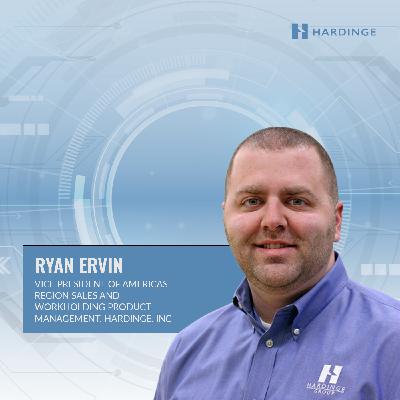
The pandemic brought forth many unknowns, and one of the significant areas of challenge and disruption occurred in the manufacturing supply chain.Ryan Ervin, Vice President of Americas Region Sales and Workholding Product Management at Hardinge, Inc, discussed those challenges, which have bled over well into 2021.
The past two school years have been unprecedented in their difficulty. Students feel it. Teachers and administration feel it. But thankfully, the U.S. government is providing federal funds to help state and local education agencies meet all their students’ increased learning needs.
Companies have been using audio capture for decades, and it’s seen many evolutions. Now, organizations are using it across the enterprise to drive improvement and insights.To get a view of the industry and what’s new, MarketScale Radio host Daniel Litwin spoke with Steve Kaiser, Co-Founder and CEO of OrecX, a developer of call recording software.
Property technology, or prop-tech for short, is a holistic approach to the way people research, rent, buy, sell and manage a property. Matthew Knoff, VP, Service & Fulfillment at Position Imaging, is an entrepreneur in the prop-tech space.
Virtualization is a hot topic in IT and, when achieved, can help organizations find new agility, flexibility and scalability for their IT infrastructure, lessen the burden on IT professionals, and generate cost savings.
Artificial intelligence and machine learning are innovative technologies that provide powerful use cases across all industries, including data management. But with these solutions come some headaches, too, as OT & IT professionals learn to process, analyze and create actionable insights around their data.
Bruno Lempernesse possesses 25 years of experience in real-world patient data analytics and corporate leadership. Still, he wasn’t job hunting when he received a call from Carevive’s Co-founder Madelyn Trupkin Herzfeld.
If there’s anyone qualified to speak to the strategies that work best for students in remote and virtual learning scenarios, it’s Micah Copeland, Elementary Principal at North Carolina Cyber Academy.The Academy’s mission is to “empower children with knowledge, skills and character traits to be successful in their education through an engaging, personalized learning experience in a full-time virtual school.”

The global supply chain is in complete disruption because of the pandemic. Localized incidents often happen that cause shifts, but this was on a worldwide scale. Supply chain expert David Beaird of Beaird Solutions spoke with Tyler Kern about the impact and aftermath.“As a global economy, COVID was a once in a lifetime event. There was supply shock for companies that produce and demand shock from those that consume, with boats and trucks trying to balance it,” Beaird said.Beaird noted that the shocks aren’t over. “We’re about to see a global reopening where demand is going to explode, but there’s still limited capacity.”The port in LA is backed up due to many factors, including local regulations that drive labor and processes. These are all mini storms reverberating from the pandemic. Additionally, consumers were already changing how they get goods and services via digital channels. They had even greater adoption in the last year.Beaird foresees probable scarcity, which the country hasn’t seen since World War II. “It’s about to be not there,” he said regarding goods.Beaird offered some remedies that he’s providing to his clients. “Get freight to other ports besides LA because it’s going to take longer than a month to clear stuff out. Also, add more to your lead times.”He finished with two other points. “You can expect to pay a premium from carriers, but they shouldn’t gouge up because you’re going to have the advantage in the second part of the year.”His strongest takeaway related to decoupling from the global supply chain and bringing more manufacturing back to the U.S. “We can no longer rely on host nations across the world because they can see that not shipping to us can stifle the American economy.”
A growing challenge for businesses across industries is the convergence of IT and OT. How is the merging of these two traditionally separate areas impacting the IT workforce now also managing OT networks?For insights on the common challenges and the opportunities that this transition poses for IT professionals to shine, Making a Connection spoke with someone in OT with a long history in the IT space. Henry Martel, Field Application Engineer with Antaira Technologies, brought his 20-plus years of experience in providing IT and networking solutions to the discussion.
Industrial networks are under threat from cyberattacks. On Feb. 8, Oldsmar, Florida, announced a cyber intrusion into its water treatment system. They detected the attack, but only after network infiltration.David Zaveski, Product Manager at Antaira, spoke about the threats to industrial networks, what makes it easy to infiltrate them, and what IT departments can do to prevent such attacks.Zaveski’s previous roles included working with enterprise networks, and this background gave him a lot of experience in understanding the importance of keeping networks secure. This experience is something he wants to bring to industrial networks, too.“Industrial networks are quite different from enterprise networks,” Zaveski said. “They are required to have quicker responses across networks, but many are unprotected.”Many industrial networks are protected from outside cyber interference through “air gapping” their networks by restricting connectivity from the outside. This provides a sense of protection from cyberthreats. And Zaveski said that does protect them. So, why are there breaches?“What happens is, at some point, another somebody gets the idea that they want to be able to monitor the system remotely, and I want to connect that data and publish it for later planning,” he said. “As soon as they do that and attach that network to the public network, or internet, [risk is there].”Now, a pathway to infiltrating that once-protected industrial network is created, and the cybersecurity risks begin.Protocols and devices deployed across a network can keep them more secure. Still, any organization's most important step is to restrict network access to just what individuals and devices need it, not carte blanche accessibility.“Look at your network, and say, ‘I know I have A, B, C devices, and I know that A needs to communicate with B and C, but B and C never need to communicate with each other. So, I should block all traffic going from B to C.’ That’s great,” Zaveski said. “Because, now, if somebody hacks in at B, at least they can’t get to C.

Comments

Download from Google Play

Download from App Store
 United States