


 Claim Ownership
WTBR RADIO 88.7 BRS/FM™
Subscribed: 7Played: 536
Subscribe

© WWTF/WTBR Radio 88.7®™ Copyright 2000-2025 . All rights reserved.
Description
In a world where truth is filtered, packaged, and buried beneath layers of secrecy, one show dares to lift the curtain. Behind the Veil is more than a podcast—it’s an expedition into the hidden corridors of power, myth, and mystery. Each episode plays out like a classified dossier unlocked for the first time.…A whisper of intrigue....A clue overlooked....A shadow on the edge of history.
615 Episodes
Reverse

Scheduled for Apr 7, 2026
The controversy surrounding the Gateway Arch in St. Louis spans nearly a century, ranging from its initial conception and construction to its recent designation as a National Park. While many see it as an engineering marvel, critics have highlighted its history of displacement, racial exclusion, and political maneuvering.
1. Displacement of Communities
The Arch's construction required the demolition of approximately 40 city blocks along the St. Louis riverfront starting in 1939.
History.com
History.com
"Urban Renewal" or "Negro Removal": Proponents argued the area was "blighted" and needed revitalization. Critics, however, pointed out that the demolition destroyed a bustling mixed-race neighborhood that was home to nearly 290 active businesses and 5,000 workers.
Loss of History: Significant historic structures, including the Old Rock House (the city's oldest building at the time), were razed to make way for the monument.
2. Fraudulent Funding and Political Blackmail
Rigged Election: In 1935, St. Louis voters approved a $7.5 million bond issue for the project. However, an investigation by the St. Louis Post-Dispatch later uncovered over 46,000 fraudulent voter registrations, indicating the election was rigged.
Federal Blackmail: When federal funding stalled in 1935, St. Louis Mayor Bernard Dickmann allegedly threatened to withhold the city's Democratic vote for President Franklin D. Roosevelt's re-election if the funds were not released.
GearJunkie
GearJunkie
3. Racial Discrimination and Protests
Exclusionary Hiring: During construction in the 1960s, local unions refused to hire African American workers.
Civil Rights Protest: In July 1964, activists Percy Green and Richard Daly climbed 125 feet up the Arch's north leg to protest racial discrimination in federally funded projects. This action led to the U.S. Department of Justice filing its first "pattern or practice" lawsuit for equal employment opportunity.
GearJunkie
GearJunkie
4. National Park Designation (2018)
The 2018 redesignation of the site from a "National Memorial" to Gateway Arch National Park sparked significant debate:
"Diluting the Brand": Critics, including some within the National Park Service (NPS), argued the Arch does not meet the typical criteria for a national park, which usually involves protecting massive natural landscapes.
Small Size: At only 91 acres, it is the smallest national park in the U.S., leading some to call the designation a "local maneuver" intended to boost tourism rather than conserve nature.
Umwelt und Recht
Umwelt und Recht
5. Design and Symbolism
Plagiarism Allegations: After Eero Saarinen won the design competition in 1947, some critics alleged his arch design was plagiarized from a structure proposed for a fascist exhibition in Rome.
Conflicting Symbols: While the NPS states the Arch reflects "bravery and exploration," others view it as a monument to Manifest Destiny, colonialism, and the displacement of Native Americans.

THE LIFE AND LEGACY OF ISAAC KAPPY:
WHO WAS HE? AND WHY IT MATTERED
Isaac Kappy (1977–2019) was an American actor and musician whose career in Hollywood was eventually overshadowed by his involvement in high-profile conspiracy theories and controversial public allegations.
Early Life and Artistic Career
Born on February 17, 1977, in Albuquerque, New Mexico, Kappy began his career as an aspiring actor and musician. He was known for his eccentric personality and creative energy.
Film & Television: Kappy appeared in several major productions, though often in minor or supporting roles. His most recognizable appearances included:
Thor (2011): Played a pet store clerk.
Terminator Salvation (2009): Portrayed the character Barbarosa.
Breaking Bad (2009): Appeared as a "rowdy prisoner" in the second season episode "Seven Thirty-Seven."
Other Roles: He also had parts in Beerfest (2006), Fanboys (2009), and the TV series The Night Shift.
Music: He was a member of the band Monster Paws and later formed the duo Charles McMansion with Vanderpump Rules star Tom Sandoval. Together, they released the song "T.I.P." (Touch In Public).
Controversies and "Whistleblower" Claims
In 2018, Kappy’s public image shifted dramatically when he began posting videos and social media updates accusing prominent Hollywood figures of involvement in a child sex trafficking ring.
Allegations: He notably accused actors such as Tom Hanks and Seth Green of pedophilia, though he never provided corroborating evidence for these claims.
QAnon Connection: Kappy became a celebrated figure within the QAnon conspiracy movement, frequently appearing on platforms like InfoWars with Alex Jones to discuss his "inside knowledge" of the industry's alleged "dark side."
Legal Issues: During this period, he was investigated by the LAPD following allegations that he choked Paris Jackson at a party and sent threatening messages to other celebrities.
Final Days and Death
The final chapter of Kappy’s life was marked by a series of erratic social media posts and public admissions of personal struggle.
The Final Note: On May 13, 2019, Kappy posted a lengthy, rambling note on Instagram titled "Beware the man that has nothing to lose." In it, he admitted to a history of personal hardship and poor choices, stating:
"I have not been a good guy... I have used people for money. I have betrayed many people and much trust. I have sold drugs. I have tax delinquencies. I have debts."
Circumstances of Death: Shortly after posting the note, Kappy died by suicide. He jumped from the Transwestern Road bridge onto Interstate 40 near Bellemont, Arizona, where he was struck by a passing vehicle. Witnesses reportedly tried to physically restrain him from jumping, but were unsuccessful. He was 42 years old.
Posthumous Legacy
Following his death, Kappy’s name remained a fixture in conspiracy circles. Despite the official ruling of suicide, various online groups have claimed—without evidence—that his death was the result of foul play due to his role as a "whistleblower." These theories continue to circulate, keeping his story a point of contention and fascination within specific online subcultures.
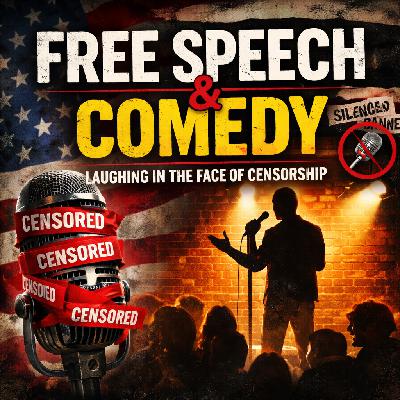
STAND UP COMEDY -
THE FRONT LINES OF FREE SPEECH.
Stand-up comedy has long been a powerful form of free speech, using humor to challenge societal norms, question authority, and address controversial topics. Comedians often tackle sensitive subjects that others may avoid, creating a space where difficult truths can be expressed and discussed openly. By blending laughter with critical insight, comedy encourages audiences to think differently while providing a safe outlet for expressing opinions.
Through clever observation and satire, stand-up comedians hold a mirror to society, highlighting inconsistencies, hypocrisies, and absurdities. This not only entertains but also sparks dialogue and reflection, reminding people that humor can coexist with serious critique. The stage becomes a platform where ideas can be shared freely, even when they challenge the status quo.
Ultimately, stand-up comedy demonstrates that free speech isn’t just a right—it’s a tool for connection, awareness, and social progress. Laughter can disarm defensiveness, making difficult conversations more approachable and reinforcing the importance of open expression in a thriving democracy.

THE ABSOLUTE NECCESITY OF FREE SPEECH
Free speech is essential because it allows people to express ideas, challenge authority, and participate openly in society. Without the freedom to speak and share opinions, progress slows, and important social, political, and cultural issues may never be addressed. Open discussion enables societies to solve problems, correct mistakes, and protect individual rights through debate and the exchange of diverse viewpoints.
At the same time, free speech encourages accountability and transparency by allowing citizens to question leaders and institutions without fear of punishment. While disagreements and controversial opinions are inevitable, protecting the right to speak freely helps maintain democratic values and fosters innovation, understanding, and social growth. In the end, a society that values free expression is better equipped to adapt and thrive.

The Reality of Celebrity Life
Celebrity status is often seen as the ultimate sign of success, bringing wealth, recognition, and influence. However, the reality behind fame can be far less glamorous than it appears. Celebrities frequently live under constant public scrutiny, where privacy is limited and personal mistakes become global headlines. This pressure can make maintaining a normal, fulfilling life difficult.
In addition, fame can sometimes lead to superficial relationships and intense competition, making it hard to trust others’ intentions. The constant demand to stay relevant and maintain a public image can cause stress and emotional exhaustion. Many famous individuals have openly discussed struggles with loneliness and mental health despite their success and fortune.
At the same time, celebrity status can provide opportunities to inspire people and support meaningful causes. Whether it is overrated depends on how fame is managed and what a person values most. For many, genuine happiness comes less from public recognition and more from personal fulfillment, strong relationships, and a sense of purpose beyond the spotlight.

How Moves Predicted The Future & Got it Right!!!
Many movies have accurately predicted future technologies and social trends, sometimes decades before they became real. Here are some of the most notable examples:
1) 2001: A Space Odyssey (1968)
Predictions that came true:
Tablet-like devices (similar to iPads)
Voice-controlled AI assistants
Commercial space travel concepts
Video calls
HAL 9000 also foreshadowed modern conversations about AI safety and autonomy.
2) Back to the Future Part II (1989)
Set in 2015, it predicted
Video calls in homes
Wearable tech
Smart homes
Biometric payments
Drones used in news coverage
Not everything came true (like flying cars), but many everyday technologies did.
3) Minority Report (2002)
Predicted:
Gesture-controlled computers
Personalized digital ads
Autonomous vehicles
Advanced facial recognition
Today, motion controls, targeted ads, and self-driving tech are real or rapidly advancing.
4) Blade Runner (1982)
Accurately predicted:
Megacities with massive digital advertising
AI companions
Globalized, multicultural urban environments
Ethical debates around artificial humans
While replicants aren’t real, AI and robotics are getting closer.
5) Her (2013)
Predicted:
AI assistants that feel conversational and personal
People forming emotional bonds with AI
Voice-first computing replacing screens in many cases
Modern AI assistants and chatbots are moving in this direction.
6) The Truman Show (1998)
Predicted:
Reality TV dominance
People living life on camera
Social media culture and surveillance concerns
Influencer culture and always-on recording echo this idea.
Why do movies sometimes get it right?
Writers consult scientists and futurists
They extrapolate from existing trends
Technology developers are inspired by movies
Human behavior changes more slowly than technology
Sometimes, movies don’t predict the future — they inspire it.
How Moves Predicted The Future & Got it Right!!!

The Case Of The Strange BedFellows
The relationship between Hollywood and the U.S. government is a complex, long-standing, and often symbiotic one, marked by cooperation, influence, and occasional tension. Here’s a detailed breakdown of that “long strange” relationship:
1. Early Foundations: Propaganda and Public Morale
World War I & II: Governments recognized cinema as a powerful tool for shaping public opinion. During WWII, Hollywood produced films, shorts, and newsreels that bolstered morale, encouraged enlistment, and promoted war bonds. The Office of War Information (OWI) worked closely with studios to ensure content aligned with government messaging.
Documentary Influence: Filmmakers like Frank Capra (“Why We Fight” series) were commissioned to create educational and persuasive films for soldiers and civilians, blending cinematic storytelling with government objectives.
2. The Cold War and the Red Scare
House Un-American Activities Committee (HUAC): During the late 1940s and 1950s, government investigations into alleged Communist influence led to blacklisting in Hollywood. Careers were destroyed based on political affiliations or suspected sympathies.
Soft Power and Ideology: Hollywood became a tool for promoting American ideals abroad. Anti-communist and pro-capitalist narratives dominated films, often with subtle or overt support from U.S. agencies like the State Department and the CIA.
3. The CIA, FBI, and Hollywood Cooperation
Technical Advising: Starting in the 1950s, intelligence agencies began advising filmmakers on scripts, often providing authenticity in exchange for portraying agencies in a favorable light.
Propaganda and Image Management: Some films were effectively “co-produced” with government agencies to shape public perception. Examples include:
Top Gun (1986) – U.S. Navy support boosted recruitment.
Zero Dark Thirty (2012) – Controversially collaborated with the CIA, though the film drew debate about ethics and accuracy.
Selective Script Approval: The military and intelligence agencies often condition cooperation on script approval or adjustments, subtly influencing narratives.
4. Modern Collaborations and Mutual Benefit
Recruitment and Branding: Modern Hollywood often works with government agencies for technical accuracy, access to equipment, and locations. In return, films serve as promotional tools:
Transformers movies featured U.S. military hardware prominently.
Independence Day showcased government preparedness and military heroism.
National Security Influence: Films and TV shows sometimes receive guidance or restrictions if content touches on classified techniques or sensitive operations.
5. Tensions and Criticisms
Artistic Freedom vs. Government Influence: While some collaboration is welcomed, critics argue it can lead to self-censorship, overly patriotic narratives, or sanitizing controversial subjects.
Political Messaging: Governments have occasionally pressured studios to avoid content that might undermine foreign policy or domestic agendas.
Moral Quandaries: Films like Zero Dark Thirty raised questions about depicting torture and ethical boundaries when agencies provide access.
6. The Symbiotic Dynamic
Hollywood Gains: Access to locations, equipment, and insider expertise.
Government Gains: Shaping public perception, boosting recruitment, and fostering soft power.
Public Gains (Sometimes): Authenticity, entertaining propaganda, and awareness of societal issues, though filtered through political and ideological lenses.
Conclusion
The Hollywood-government relationship is neither entirely conspiratorial nor fully benign; it is pragmatic, often transactional, and reflective of the broader political, cultural, and ideological climate. It’s a “long strange trip” because it alternates between cooperation, coercion, and mutual self-interest, shaping both cinematic history and public consciousness.

The Use of Government Psy-Ops
Governments use psychological operations (PSYOPs)—also called information operations or strategic communications—to influence how people perceive, decide, and behave without relying solely on force. The core logic is that shaping beliefs can be cheaper, faster, and less destructive than kinetic action.
Below are the main reasons, framed in strategic and political terms.
1. To Influence Adversaries Without War
PSYOPs aim to reduce an enemy’s will to fight, sow confusion, or fracture unity.
Typical objectives:
Lower morale among enemy troops
Encourage defections or surrender
Exaggerate the strength or resolve of one’s own forces
Create distrust between enemy leaders and their population
This aligns with classic strategic thinking (e.g., Sun Tzu): win before fighting.
2. To Shape Domestic Public Opinion
Governments also use psychological influence internally, especially during:
War
National emergencies
Political instability
Goals include:
Maintaining public support for policy
Preventing panic
Framing narratives in favorable terms
Reinforcing national identity or cohesion
This can range from legitimate public messaging to propaganda, depending on transparency and truthfulness.
3. To Control Narratives in the Information Environment
Modern conflict occurs in the cognitive domain, not just land, sea, air, and cyber.
PSYOPs are used to:
Define “what is true” before opponents do
Flood information channels to drown out rival narratives
Exploit social media algorithms and echo chambers
Influence international opinion and allies
Narrative dominance can affect sanctions, alliances, and legitimacy.
4. To Deter Actions Through Perception Management
Deterrence is psychological by nature.
Governments use PSYOPs to:
Signal strength or resolve
Make retaliation seem inevitable
Increase the perceived cost of hostile actions
Often the perception of capability matters more than the actual capability.
5. To Compensate for Military or Economic Weakness
For weaker states or non-state actors, PSYOPs are a force multiplier.
They allow actors to:
Punch above their weight
Disrupt stronger opponents asymmetrically
Undermine trust in institutions without direct confrontation
This is why PSYOPs are central to hybrid warfare.
6. To Legitimize Power and Authority
Every government depends on belief in its legitimacy.
Psychological influence helps:
Justify laws, borders, or military actions
Frame opponents as illegitimate, dangerous, or immoral
Reinforce obedience and compliance
This is especially critical in authoritarian systems, but democracies also engage in narrative framing.
7. Because Humans Are Predictable Under Cognitive Bias
PSYOPs exploit well-known psychological mechanisms:
Fear and threat perception
In-group vs out-group bias
Repetition and familiarity
Authority bias
Emotional contagion
Governments invest in PSYOPs because they reliably work, particularly under stress or uncertainty.
8. Legal and Ethical Framing
Most governments officially justify PSYOPs as:
Defensive
Necessary for national security
Restricted to foreign audiences
In practice, the ethical line between information, persuasion, and manipulation is often blurred.
Bottom Line
Governments use PSYOPs because controlling perception often controls outcomes. Influence operations allow states to:
Reduce costs of conflict
Shape reality rather than react to it
Exercise power without visible coercion

The Rise of the Clones
Oh yeah—it’s absolutely a real thing. And it’s happening faster than most people realize.
When people talk about “the rise of the clones,” they’re usually pointing at a mix of these very real developments:
Digital clones of people
AI models trained on someone’s voice, writing, face, and mannerisms
Voice clones that can sound indistinguishable from the original
Video avatars that can speak words the person never said
Celebrities, CEOs, influencers… and now regular people too.
AI clones at work
Customer service “agents” that are basically cloned personalities
Radio hosts, podcasters, and influencers licensing AI versions of themselves
Brands running 24/7 content using a single human + infinite AI copies
This one hits close to media and radio especially.
Identity cloning
Deepfakes used for scams, fraud, and social engineering
“Synthetic you” being used without consent
People finding out after the fact that a version of them is out there
This is where it gets scary, not sci-fi.
Cultural cloning
Algorithms reproducing the same ideas, voices, aesthetics
Creativity flattening into copies of copies
Originality becoming a premium product
The irony?
We’re cloning humans… while humans are starting to feel more replaceable.
Some folks see clones as legacy tools (“my voice lives on”).
Others see them as digital ghosts that never die—and never rest.
And here’s the wild part:
We’re still arguing whether this is possible, while it’s already being commercialized.
rch

What's Lurking Behind Jim Carreys "New Face"?
Jim Carrey has been the subject of recurring online speculation and tabloid coverage, largely centered on three themes: his appearance, his political commentary, and his personal life.
1. “What’s going on with his face?”
The speculation about his face is not tied to any confirmed medical issue or public statement from Carrey. The discussion generally falls into two categories:
Normal aging and weight fluctuation: Carrey is in his 60s. Natural facial changes—skin elasticity loss, shifting fat distribution, and changes in grooming—can significantly alter someone’s appearance, especially when compared to their 1990s film-era image.
Plastic surgery rumors: Some online commentators have speculated about cosmetic procedures. Carrey has not publicly confirmed undergoing facial surgery. As with many celebrities, minor changes in lighting, camera lenses, makeup, facial hair, or weight can be misinterpreted as surgical alteration.
In short, there is no verified medical or procedural explanation—most of the discourse is speculative and driven by side-by-side image comparisons circulated on social media.
2. Why is it anybody’s concern?
From a rational standpoint, it isn’t. However, there are structural reasons this kind of speculation happens:
Celebrity image commodification: Actors’ faces are part of their professional brand. When a public figure’s appearance changes, it attracts commentary because audiences associate them with a fixed visual identity.
Parasocial attachment: Fans who grew up watching Carrey (e.g., Ace Ventura, The Mask, The Truman Show) may react strongly to visible aging because it disrupts their nostalgic mental image.
Social media amplification: Image comparison culture (before/after posts, zoomed-in screenshots) accelerates minor appearance differences into viral narratives.
3. Other controversies involving Carrey
Although your question focuses on his face, broader controversies have also shaped public discussion around him:
Political art and commentary: Carrey has been outspoken and has created satirical political artwork, which has polarized audiences.
Personal tragedy and legal scrutiny: After the 2015 death of his former girlfriend Cathriona White, Carrey faced a wrongful death lawsuit alleging he provided prescription drugs. The case was dismissed in 2018.
Industry criticism: He has publicly criticized aspects of Hollywood culture, including celebrity excess and award shows.
Bottom line
There is no substantiated issue “going on” with his face beyond aging and possible styling or cosmetic speculation. The concern is largely a function of celebrity culture rather than a matter of public relevance. The intensity of discussion says more about media dynamics and audience psychology than about Carrey himself.

Secret Signs and Symbols Hiding in Plain Sight
Signs and symbols operate in the space between what is seen and what is understood, giving them an enduring air of mystery. A sign appears to point directly to meaning, yet its interpretation depends entirely on shared conventions, cultural memory, and personal experience. A symbol, by contrast, resists fixed definition; it gathers layers of meaning over time and invites reflection rather than certainty. This ambiguity is what makes symbols powerful: a single image, gesture, or word can evoke emotions, beliefs, and histories far beyond its literal form, suggesting more than it ever fully reveals.
The mystery deepens because signs and symbols shape how humans perceive reality itself. They are not passive markers but active participants in thought, guiding attention and framing interpretation. Religious icons, national flags, mathematical notations, and literary motifs all function as symbolic systems that compress complex ideas into recognizable forms. Yet no matter how familiar they become, they retain an element of the unknown, as each encounter allows for reinterpretation. In this way, signs and symbols remind us that meaning is never entirely stable, but always unfolding through context, time, and human consciousness.

WHAT YOU DON'T KNOW ABOUT CERN
The European Organization for Nuclear Research (CERN) has been the subject of public controversy, particularly surrounding its operation of the Large Hadron Collider (LHC), the world’s most powerful particle accelerator. Critics have expressed fears that high-energy particle collisions could produce dangerous phenomena such as microscopic black holes, strange matter (“strangelets”), or other unknown effects that might threaten Earth. These concerns, amplified by media coverage and public misunderstanding of theoretical physics, led to lawsuits and calls to halt experiments in the late 2000s. While such scenarios were considered in speculative physics, they lacked empirical support and were often taken out of context, fueling anxiety rather than grounded scientific debate.
In response, CERN and the broader scientific community conducted extensive safety assessments, concluding that the experiments posed no realistic danger. Independent reviews emphasized that similar high-energy collisions occur naturally in Earth’s atmosphere due to cosmic rays, without catastrophic consequences. Nonetheless, the controversy highlighted a broader tension between advanced scientific research and public trust, raising questions about transparency, risk communication, and ethical responsibility in “big science.” Even though the predicted dangers were scientifically unfounded, the debate underscored the need for institutions like CERN to engage more effectively with the public when conducting research at the frontiers of human knowledge.

Nelson Mendez: The Digital Troubadour
Early Life and Inspiration:
Born and raised in a household where the stereo was always humming, Nelson Mendez grew up with a deep appreciation for the classics. While his peers were listening to modern pop, Nelson was captivated by the storytelling of folk legends and the raw energy of rock and roll. He picked up his first acoustic guitar teaching himself the chords to his favorite ballads & rock'n'roll songs. Nelson is completely self taught.
The TikTok Rise to Stardom:
Nelson’s journey to stardom began in a small corner of his bedroom. Known for his high-energy "tribute marathons," he became a viral sensation on TikTok after posting a series of videos where he performed covers of iconic hits with a unique, soulful twist. His charismatic personality and powerful vocals quickly earned him a dedicated following, with fans tuning in nightly for his "Request Roulette" livestreams.
Style and Performance:
Nelson is best known for his signature look—a crisp white shirt, pressed black trousers and a bold tie, a tribute to the legendary performers of the mid-20th century like The Everly Brothers & Elvis Presley. He masterfully blends nostalgia with modern digital flair, using his acoustic guitar to bridge the gap between generations. Whether he's performing a somber acoustic ballad or a high-octane rock anthem, Nelson’s authenticity and passion are what truly resonate with his millions of digital fans.
Future Aspirations:
Beyond the screen, Nelson aspires to transition from digital stages to physical venues, hoping to launch a national tribute tour. He remains committed to "keeping the classics alive," one short-form video at a time.

In a world where truth is filtered, packaged, and buried beneath layers of secrecy, one show dares to lift the curtain. Behind the Veil is more than a podcast—it’s an expedition into the hidden corridors of power, myth, and mystery.
Each episode plays out like a classified dossier unlocked for the first time…
A whisper of intrigue.
A clue overlooked.
A shadow on the edge of history.
From the endlessly dissected tragedy of a fallen president to the explosive controversies shaping modern culture, Behind the Veil traces the secret arteries running beneath our world—connecting eras, ideologies, and the figures who drive them. The show doesn’t just explore theories; it dissects them with forensic precision, cinematic storytelling, and an unflinching willingness to follow the evidence wherever it leads.
The past is never dead.
The present is never what it seems.
And the line between the two is where this show lives.
With each revelation, each contradiction, each hidden chapter uncovered, Behind the Veil pulls listeners deeper into the labyrinth—where motive meets mystery, and the truth waits just out of sight.
Behind the Veil pulls back the curtain on the stories, secrets, and shadowy narratives that have shaped our world. From the mysteries surrounding iconic historical figures to the controversies surrounding today’s most polarizing voices, the show dives deep into the theories people whisper about but rarely explore.
Each episode traces the hidden threads connecting past and present—uncovering documents, dissecting timelines, and examining the claims that linger in the gray space between fact and speculation. Whether it’s global intrigue, political puzzles, unexplained phenomena, or the cultural forces driving modern conspiracies, Behind the Veil goes where others don’t.
Every theory. One source.®
If there’s a question no one is asking—or an answer someone doesn’t want found—you’ll hear it here. From the legends of yesterday to the controversies of today, we go there.™
Step into the unknown.
Listen closely.
What you learn may change everything.

AI as a Controlled Intelligence
Artificial Intelligence, when framed as a controlled intelligence, is not an autonomous mind but a system deliberately bounded by human-defined goals, rules, and oversight. Unlike human intelligence, which evolves through self-directed reasoning and experience, AI operates within constraints imposed by its design, training data, and governance mechanisms.
What “Controlled” Means
Control in AI refers to:
Goal alignment – AI systems are optimized to pursue objectives chosen by humans, not their own interests.
Operational constraints – Limits on what actions an AI can take, enforced through rules, permissions, and safety checks.
Human oversight – Humans retain the authority to monitor, intervene, audit, and shut down AI systems.
Ethical and legal boundaries – AI behavior is shaped by societal norms, laws, and ethical frameworks.
Mechanisms of Control
AI control is implemented through multiple layers:
Design-time control – Model architecture, training data selection, and reward functions.
Runtime control – Monitoring systems, guardrails, and real-time constraints.
Post-deployment control – Audits, updates, and accountability structures.
Institutional control – Regulations, standards, and governance bodies.
These layers ensure that AI remains a tool rather than an independent decision-maker.
Benefits of Controlled Intelligence
Safety: Reduces the risk of harmful or unpredictable behavior.
Reliability: Ensures consistent performance aligned with intended use.
Trust: Builds public confidence in AI systems.
Accountability: Keeps responsibility with humans and institutions, not machines.
Tensions and Challenges
Over-control can limit adaptability and usefulness, while under-control risks misuse or unintended consequences. As AI systems become more capable, maintaining effective control becomes harder—especially when systems operate at scale, learn dynamically, or interact with other autonomous systems.
The Core Principle
AI as a controlled intelligence reinforces a fundamental idea: AI should extend human capability, not replace human agency. Control is not about restricting innovation, but about ensuring that intelligence—however powerful—remains aligned with human values and societal goals.

THE ROLE OF CRISIS ACTORS
The term "crisis actor" has two very different meanings: one is a legitimate professional role in emergency services, and the other is a central pillar of modern conspiracy theories. Understanding the "deep dive" requires separating these two worlds.
1. The Legitimate Professional Role
In the professional world of emergency management, crisis actors (often called "standardized patients" or "role players") are essential for training.
Who they are: They are often volunteers or professional actors hired to play victims, witnesses, or family members during large-scale emergency drills.
What they do: They use medical moulage—realistic makeup and prosthetics—to simulate injuries like gunshot wounds or burns.
The Purpose: This allows first responders (police, EMTs, and firefighters) to practice their life-saving skills in a high-fidelity simulation that mimics the chaos and emotional intensity of a real disaster.
Key Agencies: Organizations like FEMA and the military frequently use these actors to ensure personnel are prepared for unpredictable human behavior during a crisis.
2. The Conspiracy Theory Narrative
The term was co-opted in the early 2010s to claim that real-world tragedies are staged "hoaxes" or "false flag operations."
Origin: The modern conspiracy use of the term gained traction in 2012 following the Sandy Hook Elementary School shooting. Former professor James Tracy and media figures like Alex Jones popularized the idea that the grieving parents and witnesses were paid performers.
The Goal: Theorists often argue these events are "staged" by the government to manipulate public opinion or advance specific political agendas, such as gun control.
Impact: This narrative has led to the severe harassment of actual victims and survivors. In 2022, Alex Jones was ordered to pay over $1 billion in damages to the families of Sandy Hook victims for the harm caused by these false claims.
3. How to Spot "Crisis Actor" Misinformation
Misinformation campaigns often use the following tactics to "prove" someone is an actor:
Face Matching: Claiming a person at one event looks like someone at another (e.g., claiming a Parkland survivor was also at the Boston Marathon bombing).
Out-of-Context Media: Taking behind-the-scenes footage from movie sets or university drills and claiming it is "evidence" of a real event being faked.

ARE WE UNDER MASS SURVAILENCE?
Yes, numerous reports and legal challenges from civil liberties organizations like the ACLU and the EFF indicate that government agencies in the United States and other countries engage in widespread mass surveillance of citizens' communications and movements.
Key aspects of this surveillance include:
Collection of Communications Data: Intelligence agencies like the National Security Agency (NSA) have collected vast quantities of data, including phone call records (metadata), text messages, emails, and internet browsing information from millions of people. This is often done with the compelled assistance of major tech and telecommunications companies such as Google, Meta, AT&T, and Verizon.
Legal Authorities: Much of this surveillance is conducted under broad legal authorities like the Foreign Intelligence Surveillance Act (FISA) Section 702 and Executive Order 12333, which critics argue allow for the collection of data without individual warrants and with limited judicial oversight. The government often characterizes the collection of Americans' data as "incidental" when targeting foreign individuals abroad.
Physical Monitoring Technologies: In addition to digital surveillance, law enforcement at federal, state, and local levels use various technologies to monitor physical movements, including automated license plate readers (ALPRs), extensive networks of surveillance cameras (often with facial recognition capabilities), and location tracking via mobile phones.
Data from Private Brokers: The government also bypasses some constitutional protections by purchasing large amounts of personal data from commercial data brokers, including location information from mobile apps.
Targeting of Specific Groups: Reports indicate that surveillance efforts have disproportionately targeted activist groups (such as Black Lives Matter and immigrant rights organizations), journalists, and Muslim, Arab, and South Asian communities.
Civil liberties advocates argue that these indiscriminate programs treat all citizens as potential suspects, infringe upon constitutional rights to privacy and free expression, and have led to an expansive domestic intelligence apparatus often referred to as a "surveillance state". Organizations such as the ACLU and the Electronic Frontier Foundation are involved in ongoing efforts and lawsuits to challenge and reform these mass surveillance practices.

IS THERE A SECRET SPACE PROGRAM STILL ACTIVE?
"Secret space program" is a term generally used in conspiracy theories and fiction, not for a publicly acknowledged government or scientific endeavor on the scale implied by the theories.
However, the U.S. and other nations do operate highly classified military and intelligence space missions with undisclosed payloads and objectives. The existence of these specific missions is not entirely hidden, as launches are trackable, but their specific operations and technologies are kept secret for national security reasons.
Yes. The United States Secret Space Program is Still Very Active
Classified Military Space Activities
Classified Missions: The U.S. Space Force and the National Reconnaissance Office (NRO) regularly launch classified payloads into orbit. While the launches themselves are public knowledge (due to the impossibility of hiding a rocket launch), the exact purpose, capabilities, and detailed operations of the spacecraft are classified.
X-37B Spaceplane: A notable example is the uncrewed X-37B, a reusable military spaceplane that has flown multiple long-duration missions for the U.S. Space Force. Officials have revealed it tests advanced space technologies, but most of its specific experiments and operational details remain a government secret.
Declassification Efforts: Recently, the Pentagon has moved to declassify some highly sensitive space programs and technologies, aiming to boost the nation's military edge by sharing more information with allies and within the Defense Department.
Conspiracy Theories and Fiction
The popular concept of a "secret space program" with bases on the Moon and Mars, often involving extraterrestrial alliances or advanced anti-gravity spacecraft, originates largely from fiction and conspiracy theories.
Origins: The idea was notably popularized by a 1970s British spoof documentary called Alternative 3, intended as an April Fool's joke, which has since grown into a widespread myth.
Whistleblowers and Authors: Personalities in the "disclosure movement," such as Corey Goode and Michael Salla, have written books and given testimonies claiming to be whistleblowers or insiders of these programs, but their claims lack verifiable evidence and are considered fiction within the scientific and government communities.
In summary, while national militaries have highly secretive, classified space missions, the "secret space program" as described in popular conspiracy theories is a separate, fictional concept.
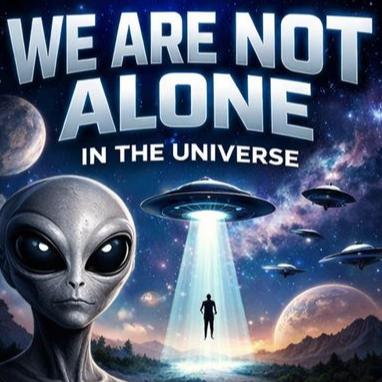
ARE WE ALONE IN THE UNIVERSE?
The question of whether we are alone in the universe is one of the most profound mysteries in science. While we have yet to find conclusive evidence of life beyond Earth, the scientific community is increasingly optimistic about its existence.
As of 2026, the consensus among experts suggests that the universe is likely teeming with life, even if we haven't made contact yet.
The Scientific Consensus
A landmark survey published in Nature Astronomy in early 2025 revealed that roughly 86.6% of astrobiologists believe it is likely that extraterrestrial life (at least in basic, microbial form) exists somewhere in the universe.
Intelligent Life: About 58% of these experts also believe that intelligent civilizations likely exist.
The Scale: There are an estimated 2 trillion galaxies in the observable universe. Even if life is a "one-in-a-billion" occurrence, there would still be billions of life-bearing planets.
Recent Tantalizing Clues
We are currently in a "golden age" of discovery, with rovers and telescopes finding "potential" signs of life, often referred to as biosignatures.
Mars: In 2025, NASA's Perseverance rover detected organic compounds and "leopard spots" in the Jezero Crater. On Earth, these patterns are often created by microbial life.
Exoplanets: The James Webb Space Telescope (JWST) has begun probing the atmospheres of "Hycean" worlds (ocean planets with hydrogen-rich atmospheres). In late 2025, observations of K2-18b sparked debate over the presence of dimethyl sulphide, a molecule produced only by life on Earth.
Ocean Moons: Missions are being fast-tracked to explore the subsurface oceans of Europa (Jupiter) and Enceladus (Saturn), which are considered some of the most habitable spots in our solar system.
Why Haven't We Found Them? (The Fermi Paradox)
If life is common, why is the universe so silent? This is known as the Fermi Paradox. Several theories attempt to explain this:
The Great Filter: There may be a developmental wall (like nuclear war or climate collapse) that prevents civilizations from becoming space-faring.
Distance and Time: The universe is so vast that signals may take thousands of years to reach us, or other civilizations may have died out before we evolved.
Technological Gap: We might be looking for radio waves while they use technology we can't yet perceive.
"The idea of being alone in the universe is infinitesimally small... but the chances of encountering another species are also statistically very low due to the sheer volume of space."
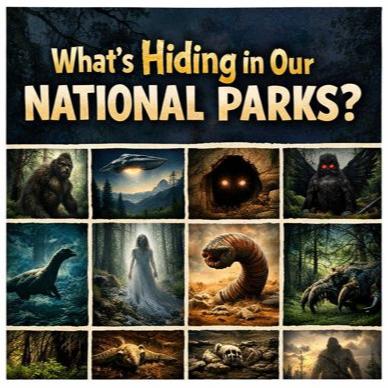
What is Hiding in Our National Parks?
From a conspiratorial state of mind, the answer is: our national parks are not preserved for nature—they are preserved for containment.
According to this worldview, the parks exist because they sit atop things that cannot be moved, cannot be destroyed, or cannot be publicly acknowledged.
Here is what the conspiracy-minded narrative claims is really hiding there:
1. Geography That Doesn’t Obey the Rules
Certain regions inside national parks allegedly exhibit persistent anomalies:
Compasses that drift or fail
GPS dead zones that appear and disappear
Sound behaving incorrectly—voices carrying too far or not at all
Animals avoiding specific valleys for no ecological reason
The claim is that these are geological singularities—places where the Earth’s structure is not uniform. Parks are created not to protect them, but to keep development, drilling, and curiosity away.
2. Restricted Zones Disguised as Wilderness
Conspiracy theorists point out that:
Many parks have “closed areas” with no clear explanation
Backcountry permits subtly steer hikers away from specific coordinates
Park rangers are federal employees with law enforcement authority and unusually broad discretion
In this view, rangers are not just conservationists; they are custodians of boundaries, trained to redirect, discourage, and, if necessary, detain people who get too close to something they should not see.
3. Ancient Structures That Pre-Date History
The conspiratorial claim holds that deep within certain parks are:
Megalithic formations buried or deliberately misclassified as “natural”
Cave systems sealed after “rockfalls” that conveniently coincide with surveys
Artifacts removed quietly and re-labeled as hoaxes or misidentifications
The theory argues that these structures suggest a pre-human or pre-civilizational presence that contradicts accepted timelines—and that the easiest way to suppress that knowledge is to lock it behind millions of acres of “protected land.”
4. Something That Interacts With Consciousness
A recurring theme is that people report:
Missing time
Intense dread without visible cause
Sudden disorientation despite experience
Dreams that begin after visiting certain parks and recur afterward
The conspiratorial interpretation is that some locations host fields or entities that influence perception rather than physical matter. Parks, therefore, function as buffers—keeping population density low around places where reality itself behaves unpredictably.
5. Non-Human Biological Presences
In this narrative, national parks serve as containment zones for:
Relict hominids (what folklore calls Bigfoot)
Unknown apex predators with low population density
Species officially declared extinct but quietly monitored
The reasoning is simple: if such beings exist, the only plausible place they could survive undetected is land where human access is intentionally limited and explained away as “dangerous terrain.”
6. Why the Government Would Choose Parks
From the conspiratorial perspective, national parks are perfect because:
The public views them as benign and wholesome
Vast funding flows with minimal scrutiny
Environmental protection provides an unassailable moral justification
Any disappearance can be blamed on nature
In short, no one questions fences in the name of preservation.
The Core Conspiratorial Conclusion
Nothing in national parks is hidden by accident.
They are not sanctuaries.
They are cordons.
Places where humanity politely agreed not to look too closely—because whatever is there either predates us, outmatches us, or undermines the story we tell ourselves about the world.
And the most effective hiding place is one everyone believes is empty.


Download from Google Play

Download from App Store
 United States
Baby Doll The Perfect 10