


 Claim Ownership
Menzies Leadership Forum
Subscribed: 8Played: 14
Subscribe

© Copyright 2019 All rights reserved.
Description
We speak with outstanding leaders from Australia and around the world to inspire you on your own leadership journey.
69 Episodes
Reverse

How does purpose show up in decisions, trade-offs, and action?
Moving from reflection to action, this episode explores the realities of living one’s purpose in high-stakes, high-pressure environments. Guests share candid accounts of moments when values were tested, decisions were complex, and resilience became essential.
Key Themes & Talking Points:
Leadership in messy, uncertain spaces
Holding true to values under pressure
Purposeful risk-taking and courage in action
With The Hon. Justice Michael Kirby AC CMG – Former High Court Justice, Human Rights Advocate & Hosted by hosted by Elly Hanrahan and Indigo Atkinson, Global Voices
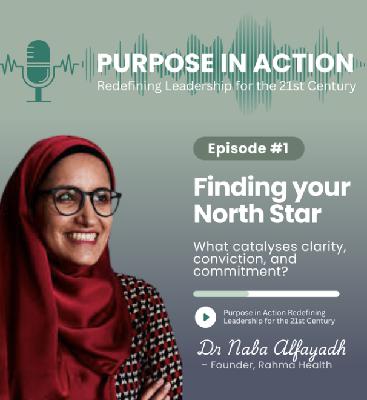
What catalyses clarity, conviction, and commitment?
This episode explores the origins of purpose — those pivotal moments that ignite a leader’s sense of direction. Through personal stories and reflections, guests unpack how identity, experience, and values shape leadership journeys and help distinguish ambition from deeper purpose.
Key Themes & Talking Points:
Defining purpose on your own terms
Identity, lived experience, and leadership emergence
The difference between ambition and deeper purpose
With Dr Naba Alfayadh from Rahma Health & Hosted by hosted by Elly Hanrahan and Indigo Atkinson, Global Voices
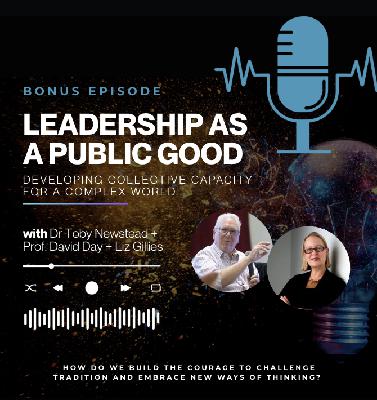
Bonus Episode: Leadership as a Public Good — Developing Collective Capacity for a Complex World
What kind of leadership is needed when no single person can hold the whole picture?
In this Bonus Episode of The Future of Leadership Development, Dr Toby Newstead is joined by Professor David Day and Liz Gillies to explore a defining challenge of our time: the growing gap between the complexity of the world and the way we develop leadership.
As global challenges intensify — from climate disruption and political polarisation to declining trust and the rise of generative AI — leaders are increasingly expected to navigate overlapping crises that no individual can solve alone. This Bonus Episode examines why traditional, individual-focused models of leadership development are no longer fit for purpose and explores the shift toward collective leadership capacity grounded in purpose, ethics, and shared responsibility.
Listeners are invited to rethink leadership not as a scarce commodity or positional role, but as a public good — essential to navigating complexity and shaping a more resilient, humane future.
Key Themes & Talking Points
Why “hero leadership” models are breaking down
Leader development vs leadership development
Collective leadership as a response to complexity
Purpose and ethics as anchors in uncertainty
Leadership as a public good
With Toby P. Newstead from University of Tasmania, Professor David Day from Claremont McKenna College and Liz Gillies, CEO Menzies Leadership Foundation
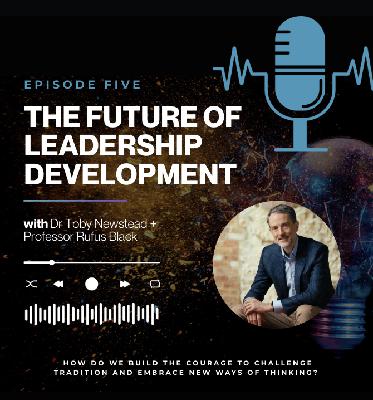
What kind of leadership do we need to shape the future we want?
The final episode looks ahead, asking what a national platform for leadership development should look like in order to meet critical transitions across health, education, climate, and productivity. Do these adaptive challenges demand a new way of leading? And if so, how do we build the individual and collective capabilities required to enable that shift? This conversation will leave listeners with insights into what it will take to ensure leadership development genuinely creates impact for the greater good.
Key Themes & Talking Points:
The critical transitions ahead and what they demand of leadership.
The capabilities leaders must develop to navigate these transitions.
What a national platform for leadership development could look like.
How to ensure leadership development is impactful, inclusive, and future-focused.
With Toby P. Newstead from University of Tasmania and Professor Rufus Black from University of Tasmania
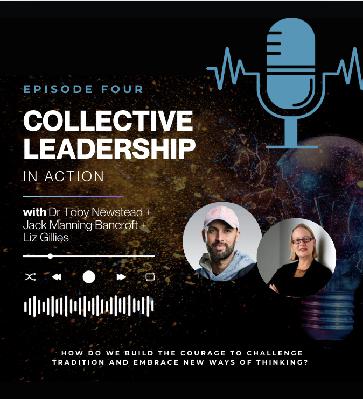
What happens when leadership is shared, not centralised?
Impact at scale requires collaboration across governments, business, philanthropy, and communities. This episode explores real-world stories of distributed leadership, including Indigenous and citizen-led approaches that demonstrate how collective leadership can create more just and sustainable outcomes. Listeners will hear practical lessons on building trust, sharing power, and mobilising diverse groups towards common goals.
Key Themes & Talking Points:
The value of distributed leadership across sectors.
Indigenous and citizen-led models as exemplars of collective leadership.
Building trust and partnerships to drive systemic change.
What collective leadership teaches us about the future of leadership development.
With Toby P. Newstead from University of Tasmania and Jack Manning from AIME and Liz Gillies from Menzies Leadership Foundation
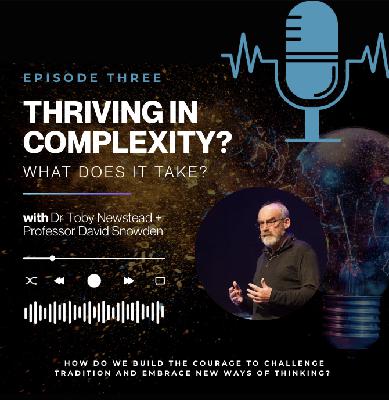
What does it take to lead in an age defined by polycrisis?
his episode examines the capabilities and mindsets leaders need to navigate unprecedented pressures—from climate disruption and geopolitical instability to social division and rapid technological change. We’ll discuss how leaders can not only survive but thrive by embracing emotional intelligence, systems thinking, and collaboration—and what it looks like to develop these traits in practice.
Key Themes & Talking Points:
The crises shaping today’s leadership landscape.
The pressures and tensions these crises create for leaders.
Core mindsets: resilience, systems thinking, ethical reasoning, collaboration.
How these capabilities can be developed through leadership education.
With Toby P. Newstead from University of Tasmania Professor David Snowden from The Cynefin Company
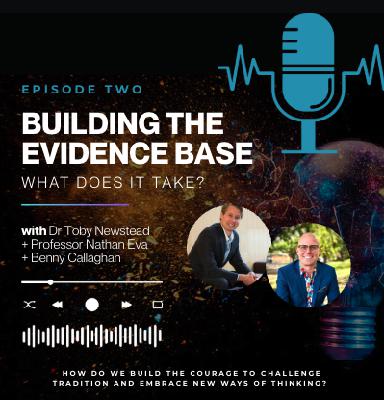
How do we know when leadership development actually makes a difference?
Leadership development is often promoted as the answer to major social, organisational, and global challenges. But how can we tell if it is truly effective? This episode explores how researchers, practitioners, and communities define “evidence,” from measuring individual growth to evaluating broader systems change. Listeners will hear what it takes to design, deliver, and assess programs that not only build capability but also deliver tangible outcomes for society.
Key Themes & Talking Points:
The diversity of leadership programs and the problems they aim to address.
What counts as “evidence” of leadership development.
Balancing research perspectives with practitioner experiences.
Measuring transformation: from personal leadership growth to systemic change.
With Toby P. Newstead from University of Tasmania Professor Nathan Eva from Monash Business School; Benny Callaghan from Systems Collaboration Partners
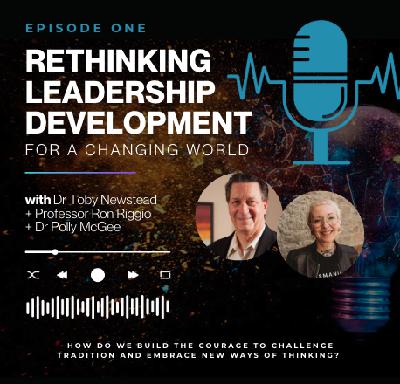
How do we build the courage to challenge tradition and embrace new ways of thinking?
This episode explores why traditional 20th-century models of leadership are no longer fit for today’s realities. By examining the rise of adaptive, collaborative, and ethical approaches, we’ll consider how leadership development must evolve to serve a complex, interconnected world. Listeners will gain insight into what “leadership for the greater good” means in practice—and the risks, resistance, and rewards of reshaping leadership development for a future defined by change.
Key Themes & Talking Points:
Why outdated “hero leadership” models no longer serve today’s challenges.
The rise of adaptive, ethical, and collective leadership approaches.
The influence of global trends on how we develop leaders.
Guardrails to ensure leadership development creates positive, future-focused impact.
With Toby P. Newstead from University of Tasmania Professor Ron Riggio from Claremont McKenna College + Dr Polly McGee from DisCo | Disruptive Consulting

As this eight-part series concludes, we reflect on the leadership Australia needs to meet this moment — bold, purpose-driven and future-focused.
In the final episode of A Purposeful Edge: Leading in Uncertainty, Dr Peter Collins is joined by Rob Scott, CEO of Wesfarmers and former Olympian, to explore how courage, purpose and reform can shape Australia’s future. Listeners gain insights on leading through uncertainty and redefining long-term value creation.; challenging leaders to think generationally, act collaboratively, and lead for the greater good.
Key Themes & Talking Points:
The kind of leadership needed to navigate uncertainty and drive reform.
How courage and clarity of purpose build resilient teams and systems.
The private sector’s role in creating shared, long-term value.
Lessons on discipline, focus, and leadership under pressure.
Dr Peter Collins from Peter Collins and Associates: Rob Scott from Wesfarmers

Science is a powerful force for addressing the world’s most pressing challenges — but courageous leadership is needed to drive meaningful change.
This episode will explore how leaders in science can play a transformative role in responding to complex global issues such as climate change, pandemics, and social inequality. Listeners will gain insights into the role of purpose in scientific inquiry, how to overcome resistance to innovation, and strategies for mobilising science to influence policy and public trust.
Key Themes & Talking Points:
The role of scientific research in tackling 'wicked problems' like climate change and public health crises.
Why courage is essential in pushing the boundaries of scientific inquiry.
Navigating public trust in science during times of polarization.
How purpose-driven science can shape a more sustainable and equitable world.
Dr Peter Collins from Peter Collins and Associates: Dr. Megan Clark AC
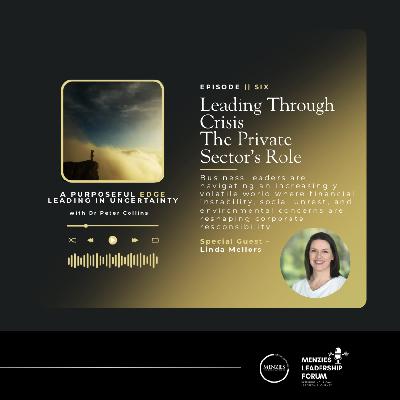
Business leaders are navigating an increasingly volatile world where financial instability, social unrest, and environmental concerns are reshaping corporate responsibility.
This episode will explore how courageous leaders in the private sector are redefining success by blending commercial imperatives with social impact. Highlighting the importance of embedding purpose and adaptability into corporate strategies, plus its role in building resilience and supporting employee well-being - driving sustainable outcomes during challenging times.
Key Themes & Talking Points:
How business leaders can manage economic uncertainty while maintaining social responsibility.
Strategies for balancing financial performance with values-driven leadership.
The importance of adaptability in fostering innovation and resilience.
How corporate leaders can engage employees and customers in purpose-driven strategies.
Dr Peter Collins from Peter Collins and Associates: Linda Mellors from Regis Aged Care

Social divisions are widening across the globe, placing increasing pressure on leaders to foster inclusion and strengthen community ties.
This episode will explore how courageous leadership can address social fragmentation, counter misinformation, and foster empathy. Examining the complexities of navigating migration, asylum, and social cohesion in turbulent times — listeners will hear insights on practical strategies for building trust, promoting intercultural understanding, and creating inclusive environments where communities can thrive.
Key Themes & Talking Points:
How leaders can navigate tensions surrounding migration, asylum, and cultural divides.
Practical strategies for building trust and strengthening social cohesion.
Countering misinformation to create inclusive and informed communities.
Supporting displaced and marginalized communities through purposeful leadership.
Dr Peter Collins from Peter Collins and Associates: Paris Aristotle AO from Foundation House Victoria
Meaningful change in mental health requires courageous leadership that embraces both resilience and compassion.
This episode will explore the complexities of mental health reform, with a focus on the long-term commitment required to shift systems, reduce stigma, and improve access to care. Listeners will hear how purpose-driven leadership can inspire sustained change, promote community resilience, and address the increasing mental health challenges facing individuals and families.
Key Themes & Talking Points:
Why mental health reform requires long-term resilience and courageous leadership.
The growing mental health crisis and its impact on individuals, families, and communities.
How leaders can champion mental health reform in workplaces and public policy.
Personal reflections on leadership through adversity and systemic inertia.
Dr Peter Collins from Peter Collins and Associates: Rachel Green from SANE Australia
As the legal sector rapidly evolves, leaders are faced with difficult decisions about ethics, technology, and tradition.
Episode three will explore how courageous leadership can help reshape legal frameworks to keep pace with social and technological advancements. From the implications of artificial intelligence to innovations that improve access to justice, this episode will explore how purpose-driven leadership can balance digital transformation with social responsibility.
Key Themes & Talking Points:
How technology is reshaping the legal landscape — and what this means for leadership.
The courage required to challenge traditional legal frameworks and embrace innovation.
Balancing technological advancements with ethical practice and justice.
How leaders can embed purpose and trust in digital transformation strategies.
Dr Peter Collins from Peter Collins and Associates: Terri Mottershead from Mottershead International Pty Ltd
Reconciliation requires leadership that is bold, thoughtful, and committed to creating meaningful change.
Episode two will explore how courageous leadership can foster new approaches to Indigenous engagement, including strengthening partnerships between public, private, and community sectors. Reflecting on the importance of building trust, this exploration will promote cultural understanding, and amplify Indigenous voices to create positive social impact.
Key Themes & Talking Points:
How public and private sectors can collaborate to advance Indigenous reconciliation.
The courage required to challenge stereotypes and build inclusive frameworks.
The power of Indigenous knowledge in addressing contemporary societal issues.
Strategies for embedding Indigenous voices in leadership and decision-making.
Dr Peter Collins from Peter Collins and Associates: Dr Terri Janke from Terri Janke and Company
How do we build the courage to challenge tradition and embrace new ways of thinking?
Episode one will explore how leaders can step away from established norms to create more adaptable, purpose-driven institutions. Reflecting on how higher education, governance, and leadership frameworks are evolving, this episode will examine how leaders can embrace disruption while maintaining a clear sense of purpose.
Expect insights on the risks, resistance, and rewards that come with leading differently in a complex world.
Key Themes & Talking Points:
How global shifts are impacting educational institutions and leadership in academia.
The role of universities in fostering civic engagement and social impact.
Courageous decision-making in navigating the tension between tradition and innovation.
Insights into how education leaders can prepare students for complexity and uncertainty.
Dr Peter Collins from Peter Collins and Associates: Dr Rufus Black, University of Tasmania
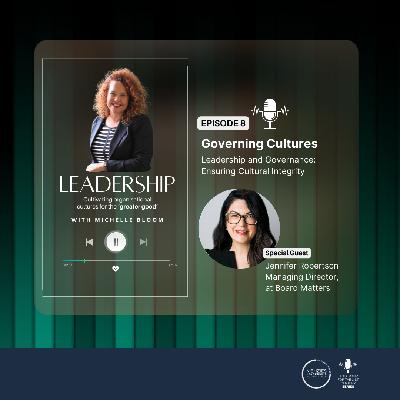
In this episode of Cultivating Cultures for the Greater Good, host Michelle Bloom speaks with Jennifer Robertson about the board's role in sustaining cultural and ethical integrity, beyond compliance.
Jennifer discusses the importance of boards aligning culture with corporate purpose and values, shifting from “can we” to “should we” in contemporary governance.
She shares insights on how boards can influence organisational culture, including examples from the recent Qantas culture report, and the role of leadership in driving cultural change.
Michelle Bloom from ANSTO; Jennifer Robertson from Board Matters
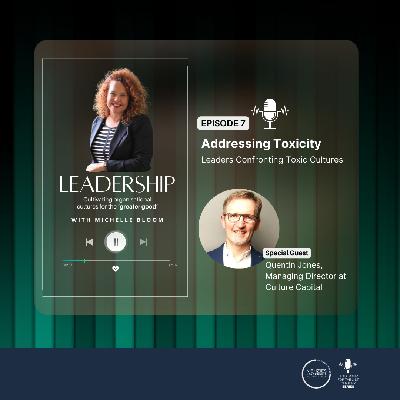
In this episode of Cultivating Cultures for the Greater Good, host Michelle Bloom speaks with Quentin Jones from Culture Capital about addressing and transforming toxic cultures.
Quentin explores the role of ethical leadership, transparency, and accountability in turning around toxic environments.
He discusses why focusing only on “bad apples” doesn’t solve the issue and how leaders can create sustainable change by addressing the wider organisational culture and relational dynamics.
Michelle Bloom from ANSTO; Quentin Jones from Culture Capital
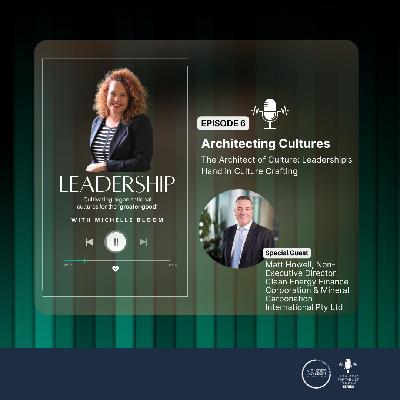
In this episode of Cultivating Cultures for the Greater Good podcast, host Michelle Bloom speaks to Matt Howell, the former Chief Executive Officer of Tomago Aluminium. Matt shares the incredible turnaround story of Tomago, an aluminium smelter in the Hunter Valley, NSW, where he served as CEO for nine years. He discusses the cultural change journey that not only resulted in significant financial returns but also improved safety standards to world-class levels, increased efficiency, and enhanced working conditions for employees. This transformation created the largest and most efficient aluminium smelter in Australasia, all underpinned by the value of care. Matt shares how he and the executive team led both the culture and business turnaround, the lessons learned, and key insights on how to architect and cultivate a culture for the greater good.
Michelle Bloom from ANSTO; Matt Howell from Nystar
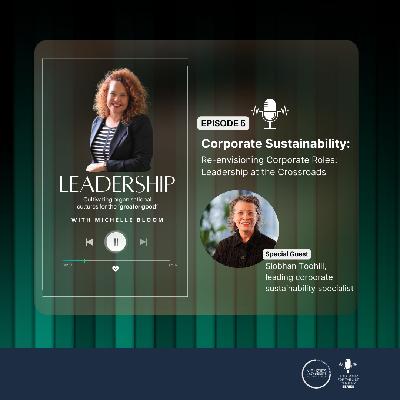
In this episode of Cultivating Cultures for the Greater Good, host Michelle Bloom speaks with Siobhan Toohill, a corporate sustainability expert, about strategies that benefit shareholders, customers, and society.
Siobhan explores the alignment of ethical business practices and profitability, the rise of ESG factors in investment decisions, and how sustainability influences organisational culture.
She also discusses the moral obligation of businesses to address social justice issues and the impact on corporate culture.
Michelle Bloom from ANSTO; Siobhan Toohill a corporate sustainability specialist

Comments

Download from Google Play

Download from App Store
 United States