


 Claim Ownership
"Jaxon and the Pharmacist"
Subscribed: 2Played: 63
Subscribe

Description
With more than 60 years of radio experience between them, the legendary team has reunited for the first time in over two decades. Catch them live, weekdays at 3 p.m. Eastern, on The Ground Control Radio Network.
100 Episodes
Reverse

Unfortunately, this edition represents the end of our run here for "Coping on the Couch with Courtney and Brian." Our hearts are both heavy, and grateful. To anyone who took the time to give us a listen, our appreciation and gratitude literally know no bounds. As to the "whys" behind this difficult decision, the details are contained within the episode itself. We wish you, and your mental health, nothing but the best, as we deliver our heartfelt farewell, and a most sincere thank you.

"Don't sweat the small stuff." It's an excellent piece of advice which has been kicking around now for decades. But what is "the small stuff" exactly? How much can it vary from person to person, and what are some of the best ways to identify, and treat it, in therapy and/or elsewhere?

In what is for the most part a post-pandemic, and very politically-charged/polarized world, many people are continually struggling to find their mental health footing. Over the last couple of weeks especially, Brian has been one of them. How is he attempting to adjust on the fly, and if you just so happen to feel precisely the same way, what should you be doing?

Ben DeCastro is in this week for the vacationing Brian. In general, our brains are hard-wired for protection, self-doubt, and insecurity. At our core, we tend to be risk-averse, and more often than not, that can stunt and prevent us from growing personally, professionally, and emotionally. What are some of the best ways to work around this, and overcome whatever may be keeping us from potentially becoming the best possible version of ourselves?

What with inflation taking a toll on all of us, and coming off of an insanely volatile week on Wall Street, many are being forced to cut financial corners in areas which can be of a major concern...therapy, being one of them. A recent article revealed that the average out of pocket cost for that is $178 per month. If you've had to make that painful move yourself, what are some potential/alternative options?

How often in life do you put yourself "first"? So much else typically requires our attention -- family, career, "adulting." That having been said, does "taking care of you" tend to go by the wayside? And how much more difficult do all of those other obligations become when not making yourself a priority inevitably begins to take its toll?

Ben DeCastro is in this week for the vacationing Courtney Kelley. For those who may not know, career-wise, Ben is a jack of many trades. His jobs are varied, and his hours are all over the map. And while that can at times be overwhelming and stressful for him, it can also be complicated for both his wife and daughter. For others who may hate their jobs, many spend an awful lot of time doing them to be that unhappy. What are some ways to navigate around it all, in the hopes of bringing your life balance?

In a social media world where society at large constantly seems to be all up in everyone else's business, what about focusing more on yourself? How much drama is created through the practice of judging others? And given those tendencies, is it any wonder that intolerance is on the rise, while compassion and understanding are both clearly on the decline?

As the old saying goes, "K.I.S.S.: keep it simple, stupid." When it comes to our increasingly busy and complicated lives, that can often appear to be easier said than done. So, what's the best way to address, and attack, this approach?

According to a recent article, more than half of Americans feel as if they're in imminent danger at least once a day -- even in their own homes. What are some of the most common triggers, and how can one hope to "face those fears", head-on?
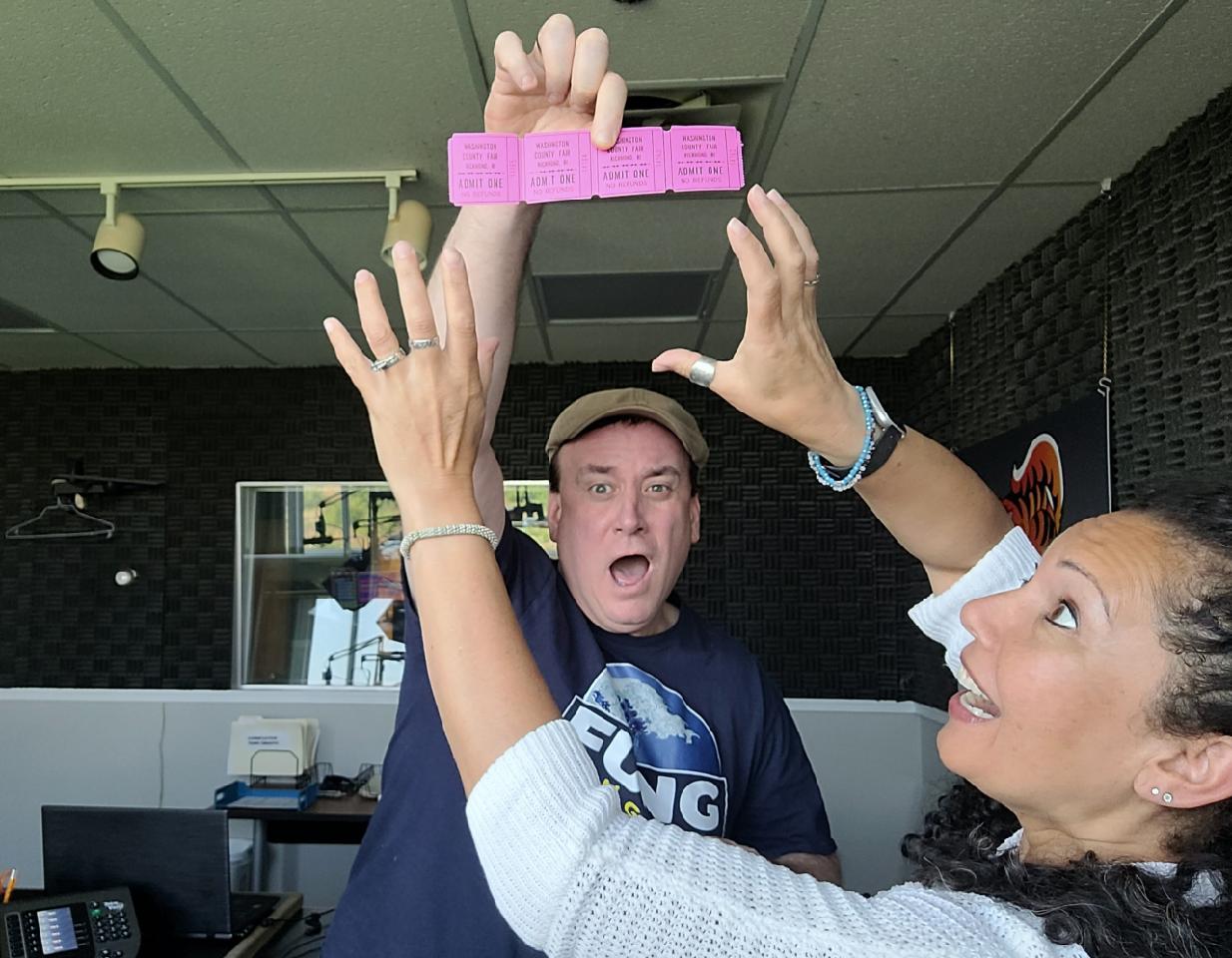
Schizophrenia. Delusions. Psychosis. Dementia. Paranoia. Obsessions with conspiracy theories. Not only can the line between perception and reality become blurred for those who are enduring these experiences. The same can hold true for the people who love and care about them. Managing it on either end can be exhausting and complicated. It also presents its own set of challenges for a mental health therapist.

It was a bit surprising to realize that it took 110 episodes for panic attacks to be covered. What are potential triggers? Once one begins, how should it be addressed? If a loved one is stricken, how can you help? Can they be hereditary? Is there a link between those, and night terrors? What role can therapy, and/or meds, play in treating these episodes?

Ben DeCastro joined Courtney Kelley for the vacationing Brian Mulhern. As the average American feels relaxed for only 40-minutes per day, how can one use self-care to (hopefully) do much better than that?

There's much more to age than the standard physical/chronological number. New studies show that "how young you feel" likely has a much higher impact on your overall mental health, as opposed to what your birth certificate says. As such, what steps can be taken to help you "feel younger," and be better?

Divisive judicial rulings. Political turmoil. School shootings. Economic strife. Inflation. A pandemic. In some ways, we're all in this together. Yet in others, we're most definitely not. All of it can take an emotional toll. What are some of the best ways to handle it? Find some tips, here.

For as much as there are no guarantees in life, the same holds true in therapy. At times, a satisfied patient may become blindsided to learn that their therapist of choice is moving onto another opportunity without them. This news can be devastating for anyone already dealing with mental health challenges, and just as difficult for the therapist involved, as well. How can both parties best navigate their way through this potentially untenable situation?

There's a big difference between risky behavior, and taking risks which can be both beneficial, and healthy. What is "therapeutic risk-taking," and how can it best be identified?

Regret typically carries with it such a negative connotation. A book entitled "The Power of Regret: How Looking Backward Moves Us Forward," by Daniel H. Pink, suggests otherwise.

How can a mental health discussion be had in regard to the senseless tragedy which occurred in Uvalde, Texas earlier this week, when it feels as if there are no words? Courtney and Brian give it their very best effort, here.

How difficult is it to realize when it's you, who is in fact, being your own worst enemy? When can what appears to be perfectly reasonable (if not admirable) behavior serve as a detriment to your overall mental health? And once identified, what can be done to stop it?

Comments

Download from Google Play

Download from App Store
 United States