


 Claim Ownership
Audio Branding
Subscribed: 34Played: 974
Subscribe

© Copyright 2026 Jodi Krangle
Description
Keeping a consistent sound in how you present your company really is the "hidden gem" of marketing. But audio or sonic branding influences us in many different ways and in many different places within our lives. Education is key! I explore that here, both with my own observations and by interviewing knowledgeable professionals in the field of advertising, marketing, music, technology and science.
Want to be a guest on Audio Branding? Do you contribute something unique to the world of sound? Send me a message on PodMatch, here: https://www.podmatch.com/hostdetailpreview/jodikrangle and we'll talk.
This podcast uses the following third-party services for analysis:
OP3 - https://op3.dev/privacy
Want to be a guest on Audio Branding? Do you contribute something unique to the world of sound? Send me a message on PodMatch, here: https://www.podmatch.com/hostdetailpreview/jodikrangle and we'll talk.
This podcast uses the following third-party services for analysis:
OP3 - https://op3.dev/privacy
331 Episodes
Reverse
“What can we do to make that number a thousand? That’s the kind of stuff we really focus on. We have tools and analytics within our dashboard to kind of help guide you with that and provide insight onto what strategies are needed to get to that place. But also, I think what makes a lot of sense is to have the right team around you for independent artists. You’ve got to have a really good manager, obviously a great distributor, a good entertainment lawyer, a good publicist, and a good online marketing and social media strategist. If you have those five people in your camp, you’re off to good start.” – Jesse FloresThis week’s guest was recently named VP, Artist and Label Partnerships at Intercept Music. He’s a seasoned music industry executive with over two decades of experience in business development, artist partnerships and label relations, and, as Senior Director of Label and Business Development at Virgin Music Group, he played a pivotal role in securing and managing relationships with high-profile artists and independent labels, working with artists such as Stephen Marley, Slum Village, Carla Morrison, Dax and more. With a background in both tech and sound, he’s built tools that treat music not just as art but as a powerful business asset.His name is Jesse Flores, and in this episode, we’ll be talking about what it really means for artists to own their sound, why marketing is part of the creative process, and how the right tools can help great music get the recognition it deserves.As always, if you have questions for my guest, you’re welcome to reach out through the links in the show notes. If you have questions for me, visit audiobrandingpodcast.com, where you’ll find a lot of ways to get in touch. Plus, subscribing to the newsletter will let you know when the new podcasts are available, along with other interesting bits of audio-related news. And if you’re getting some value from listening, the best ways to show your support are to share this podcast with a friend and leave an honest review. Both those things really help, and I’d love to feature your review on future podcasts. You can leave one either in written or in voice format from the podcast’s main page. I would so appreciate that.(00:00) – Jesse’s Journey into the Music BusinessOur conversation starts off with Jesse’s early memories of sound, particularly an unforgettable concert when he was a child. “It was my first concert ever,” he recalls. “I was seven years old, and it was the Jacksons’ Victory Tour. Obviously, at the time, Michael Jackson was probably the biggest artist in the planet. And I was young, but I was a fan.” He shares his professional journey, from music student to music executive in Los Angeles, and how narrowly he avoided an early career pitfall. “I really had a good time to, you know, sit down and think about it and weigh the pros and cons,” he explains, recalling a job transfer that would’ve sent him across the country. “And, at the end of the day, I decided to stay in L.A., which was a blessing and the right decision because if I’d moved to Miami, I probably would have lost my job in the next year or two because they closed that office down.”(9:45) – Working with Independent ArtistsJesse tells us more about his work at Universal and what goes into building an up-and-coming musician’s brand. “We had a team just nationwide of people where, you know, they bring them into our market and we were the experts in our region,” he says. “So we knew exactly where to take them, what stations made the most sense, what retailers were really supporting them, where we were selling the records.” He talks about his transition from Universal to Intercept records and explains how he’s still leveraging his connections to help indie artists. “Any artist that was coming off their major label deal but still wanted to release music,” he tells us, “we gave them that opportunity to do that, and not only just put out their music and using our pipes, but also have major label services.”(13:00) – Rising Above the Digital NoiseJesse and I take a closer look at social media, and the double-edged sword that music platforms can represent for musicians who are just starting out. “Anybody can release music,” he says, “so there’s just so much clutter out there, you kind of have to sift through it. And in order to rise above the noise, I think the key thing is to have a good distribution partner.” We discuss which platforms are the best choices for artists, and his strategies for helping bands find success. “Not everybody is gonna perform as well as some other platform,” he says. “One might have great success on YouTube, but not so much on Spotify and Apple Music. So what we want to do is sit down with the artists, figure out what they’ve done up to this point, and what we can do to really augment what they’ve been doing.”Episode SummaryJesse discusses his lifelong progression from music fan to music industry insider.His strategies for helping independent artists succeed via social media.We discuss whether live performances are still important in the digital age.Be sure to tune in for next week’s episode as Jesse shares his thoughts on AI, why consistency is key for both new and established artists, and his tips for standing out from the musical crowd.Connect with the Audio Branding Podcast:Book your project with Voice Overs and Vocals by visiting https://voiceoversandvocals.comConnect with me on Instagram - https://www.instagram.com/jodikrangle/Watch the Audio Branding Podcast on YouTube - https://www.youtube.com/c/JodiKrangleVOConnect with me on LinkedIn - https://www.linkedin.com/in/jodikrangle/Leave the Audio Branding Podcast a review at https://lovethepodcast.com/audiobranding (Thank you!)Share your passion effectively with these Tips for Sounding Your Best as a Podcast Guest!https://voiceoversandvocals.com/tips-for-sounding-your-best-as-a-podcast-guest/Get my Top Five Tips for Implementing an Intentional Audio Strategyhttps://voiceoversandvocals.com/audio-branding-strategy/Editing/Production by Humberto Franco - https://humbertofranco.com/This podcast uses the following third-party services for analysis: OP3 - https://op3.dev/privacy
“In this age of AI and, you knew I was going to go here at some point, so how can an artist differentiate themselves now that AI can basically create music with the push of a button? Like, it’s hard. It was hard before, and now we have this to worry about. I think you touched on it maybe indirectly earlier in the connection, the spirit of creating and being a human. I think it is the dopest superpower that we have, and I do believe that everyone has it. It’s just, you know, what level it’s in, but just because it’s not, like, music or visual art or dance or something doesn’t mean you’re not creative.” – Jastin ArtisThis episode is the second half of my conversation with artist, producer, and creative sound leader and founder of A&R in Your Pocket Jastin Artis, as we talk about what musicians need to know when they’re starting out as professionals, whether record deals still matter in the digital music scene, and how AI, from digital assistants to licensed voice cloning, is reshaping the industry.As always, if you have questions for my guest, you’re welcome to reach out through the links in the show notes. If you have questions for me, visit audiobrandingpodcast.com, where you’ll find a lot of ways to get in touch. Plus, subscribing to the newsletter will let you know when the new podcasts are available, along with other interesting bits of audio-related news. And if you’re getting some value from listening, the best ways to show your support are to share this podcast with a friend and leave an honest review. Both those things really help, and I’d love to feature your review on future podcasts. You can leave one either in written or in voice format from the podcast’s main page. I would so appreciate that.(00:00) – Navigating the Fine PrintWe start the second half of our conversation with a focus on some of the lingo of the music industry, such as PRO, short for performance rights organization, payments. “That’s how you get paid royalties on the back end,” Jastin explains. “You might hear that phrase, right? For when your stuff is played on these different avenues and, you know, obviously streaming.” We talk about split sheets and how payments are divided in a group, and the importance of figuring things out ahead of time. “It’s easy if it’s just you, which I know most of us are often doing, right?” he says. “But you have your producer, maybe you have another songwriter, that’s three people. You wanna make sure you have your equally splits or whatever share… you guys agree to. Do not do that after the song is out.”(13:13) - Creativity in the Age of AIThe conversation shifts to building the foundation for musical success early and the challenge of starting out in the industry. “There’s people obviously we’ve seen in music that are A-list artists because they did have the team,” he tells us. “But if you talk to them in the beginning, they didn’t know what they were doing. They felt like they could figure it out, and they did.” He shares how AI has changed his workflow and approach to music, and his confidence that the human touch isn’t going away anytime soon. “We still have to just believe in, like, the human aspect of what we do,” Jastin says. “That can’t ever go away. I don’t care, regardless of what is happening now, what could happen. It just, and maybe that’s just my belief, that’s just where I’m gonna keep my eyes on the prize.”(28:55) - Human Connections in MusicOur discussion comes to a close as Jastin tells us how listeners can get in touch and what he’s working on right now, including a leadership coaching program. “It’s a 12-week program that’s centered around being sync-ready,” he explains. “Like, that’s a big thing that I’m leading with, and we’ll continue now that I’ve seen how it works. And, I know I’m still learning too, but man, I’m getting paid for beats that I made in, like, 2006.” He also shares his latest musical successes, including his upcoming album. “There will be new music coming,” he says. “Probably not by the end of [2025], but… I’m working on my thirteenth album. That’s kind of like, wow, I can’t even believe I’m saying that.”Episode SummaryJasten shares his insights on forming a strong musical career foundation.Our discussion on how AI and the digital music scene has affected musicians.Jasten’s thoughts on the necessity of human creativity amidst AI growth.Connect with the Audio Branding Podcast:Book your project with Voice Overs and Vocals by visiting https://voiceoversandvocals.comConnect with me on Instagram - https://www.instagram.com/jodikrangle/Watch the Audio Branding Podcast on YouTube - https://www.youtube.com/c/JodiKrangleVOConnect with me on LinkedIn - https://www.linkedin.com/in/jodikrangle/Leave the Audio Branding Podcast a review at https://lovethepodcast.com/audiobranding (Thank you!)Share your passion effectively with these Tips for Sounding Your Best as a Podcast Guest!https://voiceoversandvocals.com/tips-for-sounding-your-best-as-a-podcast-guest/Get my Top Five Tips for Implementing an Intentional Audio Strategyhttps://voiceoversandvocals.com/audio-branding-strategy/Editing/Production by Humberto Franco - https://humbertofranco.com/This podcast uses the following third-party services for analysis: OP3 - https://op3.dev/privacy
“I mean, you know how it was with Michael. And when I heard that phrase, it was just... He saved my life. Like, what? He just sung a song, right? Like, but, you know, take probably one of my favorites, ‘Man in the Mirror.’ Man, it still gets me. So, just from an experience standpoint, and I’ve done some travels in mental health and, you know, talking to people, I do understand how important music, or how powerful I should say, music is. So it absolutely feels like that being a musician, and then, I think, if you’re a musician in church, it’s… I’ve had some moments, Jodi.” – Jastin ArtisThis episode’s guest is a multi-faceted artist, producer, engineer, and indie A&R who bridges creativity with leadership. With twelve albums to his name, his work in sync licensing includes placements with the NBA alongside agency and micro-sync representation. His company A&R In Your Pocket empowers independent artists with industry knowledge and opportunity, and he inspires audiences worldwide as a keynote concert speaker teaching leadership through music. As a chronic health warrior, husband, and father of two, he embodies both artistry and perseverance.His name is Jastin Artis, and in this episode we’ll be exploring his creative journey, the lessons behind the music, and how he believes the music industry can survive and thrive into the future.As always, if you have questions for my guest, you’re welcome to reach out through the links in the show notes. If you have questions for me, visit audiobrandingpodcast.com, where you’ll find a lot of ways to get in touch. Plus, subscribing to the newsletter will let you know when the new podcasts are available, along with other interesting bits of audio-related news. And if you’re getting some value from listening, the best ways to show your support are to share this podcast with a friend and leave an honest review. Both those things really help, and I’d love to feature your review on future podcasts. You can leave one either in written or in voice format from the podcast’s main page. I would so appreciate that.(00:00) - How Sound Shapes Our EmotionsAs we start things off, Jastin tells us about his early musical influences, from Jimi Hendrix and Led Zeppelin to growing up with Michael Jackson on the radio. “I would say I was probably four or five,” he recalls. “It was when the movie came out, Moonwalker, and I used to go to my mom’s friend’s house who was in the neighborhood every day after school and watch that movie.” We talk about the power of sound and music, and how easy it is to lose touch with our musical side as adults. “Everybody who has a guitar that’s for decoration, that’s sitting there,” he says. “I’m telling you, please pick it up. Play it while you’re watching your favorite show, whatever. That little time adds up.”(10:45) – Harnessing the Power of MusicOur conversation focuses on the healing power of sound, and the impact it’s made on Jastin’s own life. “If it weren’t for music,” he tells us, “I don’t think I would be here… if I didn’t have access to these records, if I didn’t have that, just, I don’t think I would be the man that I am.” He shares his perspective as producer and A&R executive, and how hard it can be to shake off that perspective sometimes when it comes to just sitting back and enjoying music. “I’m listening and I’m like, wait a minute,” he says, “what did they do, know what I mean? And then other times you’re just, let me just chill.”(18:30) - The Intersection of Sound and BrandingAs the first half of our conversation wraps up, Jastin tells us more about his A&R work and what it’s taught him about the sound industry. “I like to call being an A&R is like the cool uncle or auntie,” he explains, “while being the manager is the parent. There is some separation there.” He talks about his role as a teacher of sound and music, and what it takes to turn musical talent into commercial success. “I was just telling someone today,” he explains, “what good is it learning music production and writing and all this other stuff… [if] you don’t know how to run your business?”Episode SummaryJasten shares some of his formative experiences with music and artists.We discuss how music influences emotions and even impacts mental health.Jasten talks about the importance of nurturing talent in the music industry.Tune in for next week’s episode as Jastin explains the financial language of the music industry, such as PRO payments and split sheets, his advice on how to sell yourself as an artist on social media, and his observations as an industry veteran on the growth of AI and what it means for musicians.Connect with the Audio Branding Podcast:Book your project with Voice Overs and Vocals by visiting https://voiceoversandvocals.comConnect with me on Instagram - https://www.instagram.com/jodikrangle/Watch the Audio Branding Podcast on YouTube - https://www.youtube.com/c/JodiKrangleVOConnect with me on LinkedIn - https://www.linkedin.com/in/jodikrangle/Leave the Audio Branding Podcast a review at https://lovethepodcast.com/audiobranding (Thank you!)Share your passion effectively with these Tips for Sounding Your Best as a Podcast Guest!https://voiceoversandvocals.com/tips-for-sounding-your-best-as-a-podcast-guest/Get my Top Five Tips for Implementing an Intentional Audio Strategyhttps://voiceoversandvocals.com/audio-branding-strategy/Editing/Production by Humberto Franco - https://humbertofranco.com/This podcast uses the following third-party services for analysis: OP3 - https://op3.dev/privacy
“I’m blown away by it. So, when I close my eyes and I listen to these things, and I hear those textures and I understand the footsteps coming from afar and getting closer and, you know, like, this stuff matters. Like, it paints the picture [so] that I don’t even have to have my eyes open. I can see the whole movie happen with sound.” – Michael DargieThis episode is the second half of my conversation with founder & executive creative director at Make More Creative, and Author of BrandJitsu™, Michael Dargie as we talk about his approach to uncovering and building up a sonic brand, how close we are to fully synthetic voiceover, and his insights as a marketer and director into what he’s looking for in a voiceover artist.As always, if you have questions for my guest, you’re welcome to reach out through the links in the show notes. If you have questions for me, visit audiobrandingpodcast.com, where you’ll find a lot of ways to get in touch. Plus, subscribing to the newsletter will let you know when the new podcasts are available, along with other interesting bits of audio-related news. And if you’re getting some value from listening, the best ways to show your support are to share this podcast with a friend and leave an honest review. Both those things really help, and I’d love to feature your review on future podcasts. You can leave one either in written or in voice format from the podcast’s main page. I would so appreciate that.(00:00) - Finding Your Brand’s Unique SoundThe second half of our conversation begins as Michael talks about how the art of quickly building up a story in improv intersects with storytelling in branding. “What do you do? Why do you do it? Who do you do it for? Why do they care?” he asks. “It’s that circle of expectations. And it doesn’t have to be perfect and it doesn’t have to be sales-y.” He shares more about his process for establishing a brand’s sonic identity and the building blocks of a successful campaign. “I think from a brand standpoint,” he explains, “and a sound specific standpoint is, ‘What is true for the brand?’ Just to oversimplify, ‘are you comedy, are you rock and roll, or are you country? Are you Donnie or Marie?’”(12:30) - The Balance of Sound and StorytellingMichael walks us through his process for casting and directing an ad campaign for a company that wanted to build a more versatile brand image. “We were trying to show that it’s manufacturing,” he tells us, “going from idea to thing to in the hands of somebody who needs a thing. That was the narrative arc. So part of it was I really wanted a feminine voice to tell that story.” He describes the casting process and what sets the right voiceover artist apart from the competition. “I think the other thing too,” he says, “that you’ll know as well is like, are you direct-able? Can you take a note and then do something with it and surprise us with your new approach to it? …Especially when you’re doing a read that’s maybe not even half a page, but you have to go through eight emotions.”(24:37) - The Future of Sound in BrandingOur conversation wraps up as Michael shares his thoughts about the power of sound, and how critical it is to a successful ad campaign. “It’s not something to be thrown away or to be tucked in at the end,” he tells us. “It’s your palette, and I think it… serves the visual that you’re going for. It’s the subtext for it all.” He tells listeners how they can get in touch and offers his thoughts on AI and where humans fit into the mix. “My agency name is Make More Creative,” he explains, “because that’s what we do… We are using AI for a lot of stuff right now, but we always have people in the mix.”Episode SummaryMichael’s improv-inspired process for discovering what sound represents a brand.He explains the importance of sound in building the brand’s narrative.Michael’s insights on AI voices and the evolving role of sound in marketing.Connect with the Audio Branding Podcast:Book your project with Voice Overs and Vocals by visiting https://voiceoversandvocals.comConnect with me on Instagram - https://www.instagram.com/jodikrangle/Watch the Audio Branding Podcast on YouTube - https://www.youtube.com/c/JodiKrangleVOConnect with me on LinkedIn - https://www.linkedin.com/in/jodikrangle/Leave the Audio Branding Podcast a review at https://lovethepodcast.com/audiobranding (Thank you!)Share your passion effectively with these Tips for Sounding Your Best as a Podcast Guest!https://voiceoversandvocals.com/tips-for-sounding-your-best-as-a-podcast-guest/Get my Top Five Tips for Implementing an Intentional Audio Strategyhttps://voiceoversandvocals.com/audio-branding-strategy/Editing/Production by Humberto Franco - https://humbertofranco.com/This podcast uses the following third-party services for analysis: OP3 - https://op3.dev/privacy
“I don’t know if you can see it, [but] that’s an octopus. Yeah, on my upper arm. If you’re not watching this, the audio version is, there’s sunlight coming through and it’s dappling across this octopus. I’m a scuba diver. I really did believe, when I was young, that I was going to be a marine mammal biologist. That was my destiny. I watched Jacques Cousteau and I was all about it, and then life happened and I wasn’t all about it. It was until later in life that I got into scuba diving.” – Michael DargieThis week’s guest is a storyteller, creative instigator, occasional octopus whisperer, and founder of Make More Creative. He mentors with Calgary Economic Development and Canada’s Trade Accelerator Program, and speaks regularly at incubators, colleges, and universities. He’s the author of BrandJitsu™: Move Your Brand From ‘Meh’ To Memorable, a methodology that helps companies find, shape, and share their stories, and he’s a creative chaos agent with Loose Moose Theatre and Dropbear & Panda Productions, and the host of the multi-nominated RebelRebel podcast.His name is Michael Dargie, and in this episode, we’ll be diving into the power of sound in storytelling, branding, and bold creative expression. From podcasting to performance, he shares how voice and sound shape everything he creates—emotionally, strategically, and playfully. You’ll hear how his experiences as a comedian, filmmaker, and entrepreneur all connect through the thread of sound. And whether you’re a fellow storyteller or just love great audio, you’ll leave this conversation inspired to find your own voice, and maybe stir up a little creative trouble while you’re at it.As always, if you have questions for my guest, you’re welcome to reach out through the links in the show notes. If you have questions for me, visit audiobrandingpodcast.com, where you’ll find a lot of ways to get in touch. Plus, subscribing to the newsletter will let you know when the new podcasts are available, along with other interesting bits of audio-related news. And if you’re getting some value from listening, the best ways to show your support are to share this podcast with a friend and leave an honest review. Both those things really help, and I’d love to feature your review on future podcasts. You can leave one either in written or in voice format from the podcast’s main page. I would so appreciate that.(00:00) - Becoming an Octopus WhispererWe start the conversation off with Michael’s early memories of sound, which in his case includes gunslinger ballads on the family stereo. “I would just listen to these songs,” he says, “these stories, and just get lost in the moment. I would let my brain drift away and see it all happening.” He also tells us more about what it means to be an octopus whisperer. “I have been diving with them,” he explains, “I’ve interacted with them, I’ve hung out with them. I love them. They’re. They’re smart. They’ve got, like, nine brains. You know, each arm has its own brain. It’s like distributive intelligence.”(13:01) - Creative Rebel in SoundMichael talks more about being a creative rebel, and how his podcast, The RebelRebel Podcast, aims for people who don’t necessarily fit just one creative box. “It’s for creative rebels and entrepreneurs,” he says, “people that go left when people go right, you zig when others zag, and I’m curious about that story. So if you fit that model, then you’d be a great fit to the show.” We discuss his improv comedy experience and the lessons it taught him about marketing. “[Improv] is a huge part of it,” he tells us. “Like, you agree to what’s happening and then see where it goes instead of blocking the scene or stopping the action… You’d be like, you know what? Heck with it, let’s find out.”(22:24) - Podcasting and Sound DesignAs the first half of our conversation wraps up, Michael tells us about his book BrandJitsu™ and the foundational role of sound in branding. “The top of the iceberg,” he explains, “is the stuff that people see or hear or interact with your brand. What’s below the surface are all the things that matter and enable it to be there for you to enjoy. This book is all about all those pieces below the surface.” We talk about how sound sets the stage for a brand, and how it’s best utilized by a brand. “I think music and sound becomes subtext,” he says. “It contrasts what we see, and I think contrast is the most important part of any experience… What are these things? Why are they pulling at each other?”Episode SummaryMichael shares his formative memories involving music and storytelling.An exploration of what it means to be a creative rebel when it comes to sonic branding.Michael talks about his podcasting experiences and the importance of sound.Be sure to tune in for next week’s episode as we continue to explore the surprising intersection of improv comedy and audio branding, we talk about some of the commercial campaigns Michael’s worked on, and about his approach to finding the sound, mood, and voiceover artist.Connect with the Audio Branding Podcast:Book your project with Voice Overs and Vocals by visiting https://voiceoversandvocals.comConnect with me on Instagram - https://www.instagram.com/jodikrangle/Watch the Audio Branding Podcast on YouTube - https://www.youtube.com/c/JodiKrangleVOConnect with me on LinkedIn - https://www.linkedin.com/in/jodikrangle/Leave the Audio Branding Podcast a review at https://lovethepodcast.com/audiobranding (Thank you!)Share your passion effectively with these Tips for Sounding Your Best as a Podcast Guest!https://voiceoversandvocals.com/tips-for-sounding-your-best-as-a-podcast-guest/Get my Top Five Tips for Implementing an Intentional Audio Strategyhttps://voiceoversandvocals.com/audio-branding-strategy/Editing/Production by Humberto Franco - https://humbertofranco.com/This podcast uses the following third-party services for analysis: OP3 - https://op3.dev/privacy
“I think there’s nothing that truly resonates across all of your senses like sound does. If I’m watching something gorgeous, it’s a feast for my eyes, and it starts and ends there. But if I’m listening to something, it’s the one thing that can truly always be in your brain presence — always bringing things up or bringing things down. I mean, if you’re in a bad mood, one of the five ways to get out of it is going to be put on music, guaranteed.” – Jeremy ToemanThis episode is the second half of my conversation with founder of Augie, media and technology leader, and entrepreneur Jeremy Toeman as we discuss the sometimes-random twists and turns that created social media as we know it, the lessons he’s drawn from video-game design to help improve audio-first UX, and his perspective on balancing AI efficiency and human authenticity.As always, if you have questions for my guest, you’re welcome to reach out through the links in the show notes. If you have questions for me, visit audiobrandingpodcast.com, where you’ll find a lot of ways to get in touch. Plus, subscribing to the newsletter will let you know when the new podcasts are available, along with other interesting bits of audio-related news. And if you’re getting some value from listening, the best ways to show your support are to share this podcast with a friend and leave an honest review. Both those things really help, and I’d love to feature your review on future podcasts. You can leave one either in written or in voice format from the podcast’s main page. I would so appreciate that.(00:00) - The Role of Sound in BrandingThe second half of our discussion begins with a look at podcasting, and why Fortune-500 interviews aren’t always the best approach for a business podcast. “They’re not really leverage-able,” he explains. “There’s not a lot of practical value in, like, ‘he gets up at 5 AM every day and does a 20-minute cold plunge, and he doesn’t look at any device and only eats oysters.’ Okay, but I’m never going to do that.” We talk about what AI has to offer podcasters and about how its ability to sift through user data and predict trends can impact even the most seemingly human elements. “I had someone blow my mind the other day,” he says, “He got on my podcast, and he had used an AI tool to listen to my other episodes and then predict for him what questions I would ask him… And it was pretty on spot.”(12:15) - Practical Tips for CreatorsWe talk about UX design for everything from software apps to smart devices, and how he’s taking his cues from the video game industry. “Think about tech products,” he says, “video games have music. They have sound effects, music... There should be so much more in our tech world where audio can make it a more satisfying experience..” He tells us about his daughter, who’s just published her first indie video game, and the hands-on approach to Foley sound effects that her experience taught him. “We were in my car and it was making this weird noise when you open the door,” he recalls, “and she’s like, hang on, can everybody be quiet? And she grabbed her phone and went to record it.”(20:00) - Enhancing Your Brand IdentityAs our conversation comes to a close, Jeremy talks more about the power of sound as a branding tool. “I think there’s nothing that truly resonates across all of your senses like sound does, right?” he says. “Like, if I’m watching something gorgeous, it’s a feast of my eyes, and it starts and ends there.” He tells us about his upcoming projects and AI developments, and how he’s working to balance the human and AI elements of new media. “We don’t want to take away from video editing or voiceover actors or principal photographers or any of these people,” he explains. “We look at how what we’re doing will be additive overall to the video ecosystem, and that includes voiceover actors and all the rest.”Episode SummaryDiscussion on how sound influences brand perception and user experience.Jeremy offers advice on using sound effectively in product design.Jodi wraps up the conversation with key insights and calling for action.Connect with the Audio Branding Podcast:Book your project with Voice Overs and Vocals by visiting https://voiceoversandvocals.comConnect with me on Instagram - https://www.instagram.com/jodikrangle/Watch the Audio Branding Podcast on YouTube - https://www.youtube.com/c/JodiKrangleVOConnect with me on LinkedIn - https://www.linkedin.com/in/jodikrangle/Leave the Audio Branding Podcast a review at https://lovethepodcast.com/audiobranding (Thank you!)Share your passion effectively with these Tips for Sounding Your Best as a Podcast Guest!https://voiceoversandvocals.com/tips-for-sounding-your-best-as-a-podcast-guest/Get my Top Five Tips for Implementing an Intentional Audio Strategyhttps://voiceoversandvocals.com/audio-branding-strategy/Editing/Production by Humberto Franco - https://humbertofranco.com/This podcast uses the following third-party services for analysis: OP3 - https://op3.dev/privacy
“I love the use of AI voices or synthetic voices for people who might, you know, they’re embarrassed. I’ve worked with engineers my whole career, and sometimes, like, it’s not that they don’t want to tell their story or break something out there, but maybe they just don’t have the self-confidence or they were made fun of as a kid. I mean, I’ve always thought I had a super nasally voice and never liked the sound of my voice. And years into public speaking, I’m like, fine, I can, handle it now. So I love it from that perspective of, if, for some reason you couldn’t, now you can. I hate it from the perspective of, well, you can’t have the human do all this stuff, but instead you just sort of one-clicked it and now it’s sort of an average, generic, mediocre, you know, as they say, AI slop.” – Jeremy ToemanThis episode’s guest is the founder and CEO of Augie, an AI-assisted video creation and editing studio for marketers and social media managers. He’s also the creator and host of Founder at 50, a podcast and newsletter exploring the challenges and reinventions faced by entrepreneurs later in life. He’s held leadership roles at WarnerMedia, Etsy, CBS Interactive, and Sling Media, and founded several successful startups in the media tech space. His name is Jeremy Toeman, and we’ll be digging into how sound shapes trust, helps tech feel more human, and why even a simple “ding” can change a user’s experience. If you love the magic where tech and storytelling meet, this one’s for you.As always, if you have questions for my guest, you’re welcome to reach out through the links in the show notes. If you have questions for me, visit audiobrandingpodcast.com, where you’ll find a lot of ways to get in touch. Plus, subscribing to the newsletter will let you know when the new podcasts are available, along with other interesting bits of audio-related news. And if you’re getting some value from listening, the best ways to show your support are to share this podcast with a friend and leave an honest review. Both those things really help, and I’d love to feature your review on future podcasts. You can leave one either in written or in voice format from the podcast’s main page. I would so appreciate that.(00:00) - The Emotional Power of SoundOur discussion starts with Jeremy’s early memories of sound, including a childhood movie that’s made a lifelong impression on him. “They incorporate, like, opera,” he describes 1979’s Breaking Away, “into the scenes. When he’s bike racing, you’re hearing like The Marriage of Figaro in the background. And the last time I watched it through, there’s something, like, every time the music would hit these moments, I’m just like weeping on my couch.” He shares his perspective as both a child and a parent when it comes to watching scary movies, and we talk about the hidden role cinematic sound plays in setting the mood. “If you not only turn on the lights,” he explains, “but simply mute it... They might still get tense, but, like, the thing that rocks them to their core goes completely away.”(11:46) - The Evolution of Audio TechnologyJeremy tells us more about his career journey, including the pioneering MP3 and streaming technologies he helped develop around the turn of the millennium, and how the limitations of the early internet led to a stronger focus on sound quality. “If the video buffered,” he explains, “you would be expecting it. It was normal. It was 2005, all video buffered, there was no such thing as non-buffering video. Whereas if the audio skipped even a little bit, it would just be really jarring.” He discusses some of the major brands he’s worked for, such as CBS and WarnerMedia, and the people skills that working at such large companies taught him. “There’s a saying that nobody quits a company,” Jeremy says, “they quit a manager. And so for me, a lot of my time was really trying to grow my, what they call the soft skills, but I think are the hard skills, which is how do you make teams of people with disparate priorities, perspectives, values, needs, how do you get them to really align?”(19:01) - AI’s Role in Creative ProductsThe first half of our conversation wraps up as Jeremy talks about Augie’s approach to AI and the hurdles his company’s working to avoid. “It bothers me personally,” he says, “that [we could] end up in this place where, like, 80% of the content is written by a bot, said by a bot, visualized by a bot, and then, wait for it, watched by a bot.” He explains how his technology balances the human and algorithmic elements of content, and his belief that, when there’s a choice to be made between the two, the human side should come first. “Is it all about what’s going to get me the absolute maximum new audience?” he explains. “I mean, from one angle, sure. But from the other angle, I want the audience that is like, I like this Jeremy guy, he talks about this, that, and the other. And, like, oh, you put a clip up talking about Arrested Development, not AI. Well, AI is going to do better SEO, but Arrested Development is my favorite TV show. So that’s the one that went live.”Episode SummaryDiscussion on how sound shapes audience emotions in movies.Jeremy discusses his career journey and the tech behind sound.The role of AI in enhancing creativity and audio branding.Tune in for next week’s episode as we talk about why podcasters shouldn’t always aim for the biggest success stories, how his daughter’s work as an indie game developer has given him a behind-the-scenes look at video game sound design, and how AI video editing is transforming the ad industry.Connect with the Audio Branding Podcast:Book your project with Voice Overs and Vocals by visiting https://voiceoversandvocals.comConnect with me on Instagram - https://www.instagram.com/jodikrangle/Watch the Audio Branding Podcast on YouTube - https://www.youtube.com/c/JodiKrangleVOConnect with me on LinkedIn - https://www.linkedin.com/in/jodikrangle/Leave the Audio Branding Podcast a review at https://lovethepodcast.com/audiobranding (Thank you!)Share your passion effectively with these Tips for Sounding Your Best as a Podcast Guest!https://voiceoversandvocals.com/tips-for-sounding-your-best-as-a-podcast-guest/Get my Top Five Tips for Implementing an Intentional Audio Strategyhttps://voiceoversandvocals.com/audio-branding-strategy/Editing/Production by Humberto Franco - https://humbertofranco.com/This podcast uses the following third-party services for analysis: OP3 - https://op3.dev/privacy
“That’s a big thing that I always like to try to put together in the shows — creating the sense of space, where we are taking that audience somewhere. And sonically, what does that sound like? I like having a lot of detail on, okay, this space, i.e. this portion of the episode. It’s like, if I go back to the American Kennel Club example, okay, this is Missouri in the 1850s in the summer. Okay, cool. I can work within that. There’s a lot of information and detail there that I could pull out.” – Joshua SuhyThis episode is the second half of my conversation with JSS Audio Sound Designer, Audio Engineer, and Producer Joshua Suhy as we discuss how he helps synergize the aural and visual components of a branded podcast, his advice to people who are still building a reputation in the sound industry, and the best strategy to new podcasters looking to avoid the dreaded “podcast graveyard.”As always, if you have questions for my guest, you’re welcome to reach out through the links in the show notes. If you have questions for me, visit audiobrandingpodcast.com, where you’ll find a lot of ways to get in touch. Plus, subscribing to the newsletter will let you know when the new podcasts are available, along with other interesting bits of audio-related news. And if you’re getting some value from listening, the best ways to show your support are to share this podcast with a friend and leave an honest review. Both those things really help, and I’d love to feature your review on future podcasts. You can leave one either in written or in voice format from the podcast’s main page. I would so appreciate that.(00:00) - The Importance of Sonic BrandingAs the second half of our discussion begins, Joshua talks about his work with marketing teams and what it takes to align a new audio brand with an established visual identity. “A missed opportunity that lots of brands aren't paying attention to is trying to figure out what do we sound like,” he says. “How are we coming across to an audience on an audio, an aural component versus just visual?” We discuss how music and sonic logos fit into branded podcasts, and about the versatility of original music content. “You can begin to see the possibilities,” he explains, “if you own the IP, [of] how much more capability you have creatively if you actually own the content that you're working with.”(14:20) - Branded Podcasts and Flagship ShowsWe talk about sound design and his advice for sound engineers who are just starting out in the industry. “The biggest thing, I think,” he says, “is to establish rapport with the agency or the people that you're working with, being able to trust them, but with the understanding that it's a symbiotic relationship between the two of you.” He tells us about how branded podcasts differ from regular content, and how the branding goes beyond just commercials and interstitials. “A big thing is really being able to figure out what is your voice,” he says. “What is the brand voice? What are you looking for in your show? What audience do you want to reach? And, essentially, creating an audience avatar of this.”(20:30) - Advice for New Audio ProfessionalsOur conversation wraps up as Joshua explains why it’s better to start slow as a podcaster, and why monetization shouldn’t necessarily be the primary goal. “If it leads to that, that's great,” he tells us. “But if your sole and only motivation behind your podcast is to make money, chances are you're going to be disappointed, and chances are your show is going to end up in the podcast graveyard with a lot of other people.” He shares how listeners can get in touch, and why sound designers shouldn’t write off their early mistakes. “That particular approach that you did for that episode may not have worked,” he says, “or the sound design approach didn't work for this, but that could be exactly what’s needed to help make the next episode or the next show go from good to great.”Episode SummaryHow brands can set themselves apart from the crowd through sonic branding.Exploring how branded podcasts blend brand identity and useful content.Joshua shares his insights as a sound designer for those starting in the industry.Connect with the Audio Branding Podcast:Book your project with Voice Overs and Vocals by visiting https://voiceoversandvocals.comConnect with me on Instagram - https://www.instagram.com/jodikrangle/Watch the Audio Branding Podcast on YouTube - https://www.youtube.com/c/JodiKrangleVOConnect with me on LinkedIn - https://www.linkedin.com/in/jodikrangle/Leave the Audio Branding Podcast a review at https://lovethepodcast.com/audiobranding (Thank you!)Share your passion effectively with these Tips for Sounding Your Best as a Podcast Guest!https://voiceoversandvocals.com/tips-for-sounding-your-best-as-a-podcast-guest/Get my Top Five Tips for Implementing an Intentional Audio Strategyhttps://voiceoversandvocals.com/audio-branding-strategy/Editing/Production by Humberto Franco - https://humbertofranco.com/This podcast uses the following third-party services for analysis: OP3 - https://op3.dev/privacy
“But from that point, it was just a matter of, okay, I’ve got to put all this kind of stuff together now. And now that there isn’t a moving image that I’m necessarily locked into, I wield more power in regards to molding the action, so I could decide how a scene breaks down. And I think the example that I had given to you was, if we have a scene where two characters are in a room or one character walks up to another one, I can decide, am I the character already in the room? Or am I the person outside of the room coming up to the other character? Because obviously those are two vastly different sound design approaches.” – Joshua SuhyThis week’s guest is the founder of JSS Audio and a veteran of over fifteen years in the audio industry as a Sound Designer, Audio Engineer and Producer. His goal is to capture the essence of creative people’s ideas and bring tangible experiences to their audiences. Helping people tell stories through sound is his passion. His name is Joshua Suhy, and we’ll be talking about the subtle power of audio, the unexpected moments that define a mix, and why even the smallest sound can shape how we experience a story. If you want to learn how sound can influence feeling, this episode’s for you.As always, if you have questions for my guest, you’re welcome to reach out through the links in the show notes. If you have questions for me, visit audiobrandingpodcast.com, where you’ll find a lot of ways to get in touch. Plus, subscribing to the newsletter will let you know when the new podcasts are available, along with other interesting bits of audio-related news. And if you’re getting some value from listening, the best ways to show your support are to share this podcast with a friend and leave an honest review. Both those things really help, and I’d love to feature your review on future podcasts. You can leave one either in written or in voice format from the podcast’s main page. I would so appreciate that.(00:00) - Using AI in Sound DesignOur conversation starts off with how Joshua has been putting AI to work for him in the studio, from finding gigs to helping manage his schedule. “One thing that I use it a lot for is to send me, like, a digest every morning of verified, paid, open audio gigs,” he explains. “I'm trying to use AI for the sake of what AI is supposed to do, [to] try to make my life easier.” He shares his early memories of sounds and the path that led him to become a sound engineer and producer, including a memorable sound editing project in his film class “Specifically it was the Bugs Bunny vs Elmer Fudd boxing match,” he says, “being able to blend real life sound effects, and we had the Hanna-Barbera sound library available at the school. So I'm like, I have [all] the stuff that I had always heard as a kid.”(18:30) - Transition to Audio ProductionThe discussion turns to how the pandemic created a podcast boom that helped revolutionize audio and deepened Joshua’s approach to sound engineering. “Over time, we've changed it to where we wanna have full control over what's going on,” he tells us, “in regards to sending microphones out to people, sound checking people, making sure that they sound as good as possible, because I want the best quality coming in.” We talk about how audio standards loosened at the height of the pandemic as more people than ever before joined the podcasting sphere, and how technology has been working since to close the gap between home and work studios. “What I liked about it, though,” he explains, “was [how] it humanized podcasting and humanized the personalities... So being able to see, in an interview, somebody's child [walking] in the room, like these are people with real life situations.”(25:00) - Impact of the Pandemic on PodcastingAs the first half of our conversation comes to a close, Joshua tells us about some of the podcasts he’s worked on that have left a big influence on him, such as the American Kennel Association’s Down & Back podcast. “Mike would write the script,” he says, “we would record Bud doing the voiceover, and then I just put everything together and build all the sound effects and music and all that kind of stuff in there, and they're just so much fun.” He shares his process for creating a Foley library of sound effects, and what he does when there isn’t a ready-made sound that fits his needs. “Footsteps, clothing sounds, things like that,” he says, “if I didn't have good cloth movement sounds, let's say, in my library, I would do my best to try to just shove a mic in front of my shirt and manipulate it that way.”Episode SummaryExploring how Joshua utilizes ChatGPT for studio planning and finding new gigs.His career journey from music and cinema to audio post-production.How the pandemic changed the podcasting landscape and audio technology.Be sure to tune in for next week’s episode as we talk about his work on branded podcasts, and what sets them apart from traditional podcasting, where he stands on licensed vs original music content, and why monetization shouldn’t necessarily be the starting goal of an up-and-coming podcast.Connect with the Audio Branding Podcast:Book your project with Voice Overs and Vocals by visiting https://voiceoversandvocals.comConnect with me on Instagram - https://www.instagram.com/jodikrangle/Watch the Audio Branding Podcast on YouTube - https://www.youtube.com/c/JodiKrangleVOConnect with me on LinkedIn - https://www.linkedin.com/in/jodikrangle/Leave the Audio Branding Podcast a review at https://lovethepodcast.com/audiobranding (Thank you!)Share your passion effectively with these Tips for Sounding Your Best as a Podcast Guest!https://voiceoversandvocals.com/tips-for-sounding-your-best-as-a-podcast-guest/Get my Top Five Tips for Implementing an Intentional Audio Strategyhttps://voiceoversandvocals.com/audio-branding-strategy/Editing/Production by Humberto Franco - https://humbertofranco.com/This podcast uses the following third-party services for analysis: OP3 - https://op3.dev/privacy
“Step sounds in a game is a sample being repeated, and then people start to make little variations in pitch of this sample. And then they became increasingly sophisticated with middleware, and so a whole set of software emerged, a type of software game, audio middleware, that serves only the purpose of making sound, usually sample-based sounds, pleasurable to use in an interactive context. And there are many different strategies, layering, adaptive mixing, even spectral shaping and stuff like that. And, of course, generative approaches as well are coming in, and that’s so interesting.” – Daniel Hug This episode is the second half of my conversation with sound and interaction designer, researcher, and head of the Sound Design MA at Zurich University of the Arts, Daniel Hug, as we talk about what the Avengers and Matrix movies can teach us about sound design, how video games helped pave the way for audio-first UX, and the importance of learning not just music but the language of sound. As always, if you have questions for my guest, you’re welcome to reach out through the links in the show notes. If you have questions for me, visit audiobrandingpodcast.com, where you’ll find a lot of ways to get in touch. Plus, subscribing to the newsletter will let you know when the new podcasts are available, along with other interesting bits of audio-related news. And if you’re getting some value from listening, the best ways to show your support are to share this podcast with a friend and leave an honest review. Both those things really help, and I’d love to feature your review on future podcasts. You can leave one either in written or in voice format from the podcast’s main page. I would so appreciate that. (0:00:00) - The Evolution of Sound DesignAs we start the second half of our discussion, Daniel and I talk about how Hollywood blockbusters have shown that a strong first impression can have diminishing returns, and how video-game design demonstrates the value of planning for repetition when it comes to sound. “Game sound, I always say, it has taught me probably the most about interactive or use-oriented sound design,” he explains. “Although you would not expect it from there, it’s not product sound design, it has nothing to do with cars or appliances or whatever, but it’s the [same] basic mechanisms. It’s about interaction.” We talk about his work on electric vehicle soundscapes and the sound designs in sci-fi movies that helped shape his design philosophy. “The sound of the car changes based on the way I press the gas pedal,” he says. “So if I’m being too aggressive, the sound can actually tell me, make me feel that, oh, now you’re overdoing it. And that’s what a film sound designer would do in a science-fiction film.”(0:14:37) - Empowering Sound Design for Everyday LifeDaniel tells us more about the considerations that go into automobile sound design, including legal concerns that go well beyond the car’s interior. “In Europe,” he tells us, “they have this regulation that from zero to thirty you have to have some noise generator. So even Teslas have, since, I don’t know how many years, but eventually they started to make noise as well.” We talk about how COVID and the shift to virtual spaces and online content brought more attention to sound design, and how the language to describe sounds is still evolving. “We have all kinds of visual languages that are established and normative, so to say,” he explains. “They tell us how to think, or to think of a certain image. In sound, especially if it’s non-musical, this is often missing. We have to come up with something.” Episode SummarySound design in films, games, and cars, and the challenges of preventing user fatigue.Daniels’ approach to integrating synthetic sound design into everyday life. Connect with the Audio Branding Podcast:Book your project with Voice Overs and Vocals by visiting https://voiceoversandvocals.comConnect with me on Instagram - https://www.instagram.com/jodikrangle/Watch the Audio Branding Podcast on YouTube - https://www.youtube.com/c/JodiKrangleVOConnect with me on LinkedIn - https://www.linkedin.com/in/jodikrangle/Leave the Audio Branding Podcast a review at https://lovethepodcast.com/audiobranding (Thank you!)Share your passion effectively with these Tips for Sounding Your Best as a Podcast Guest!https://voiceoversandvocals.com/tips-for-sounding-your-best-as-a-podcast-guest/Get my Top Five Tips for Implementing an Intentional Audio Strategyhttps://voiceoversandvocals.com/audio-branding-strategy/Editing/Production by Humberto Franco - https://humbertofranco.com/ This podcast uses the following third-party services for analysis: OP3 - https://op3.dev/privacy
“And I read this book, it was about acoustic communication. It was about how sound in everyday life mediates our relationship to the environment, and how we use it to communicate with each other, and so on, and that opens really a totally new field for me. So this was kind of the ignition, probably, for me to enter the non-musical sound world, which I’m still in. So there’s the world of noises, of everyday sounds and so on, and that’s how it started, basically. And from there I then came into interaction game design more or less by accident, and they had no one that knew anything about sound. And I kind of built up in this relatively new field of interaction game design at the time. This was in the early noughties.” – Daniel HugThis episode’s guest is a sound and interaction designer who co-directs the Master’s in Sound Design at Zurich University of the Arts. His work explores how sound shapes our experiences, from health technology to movement and education. He’s a leader in Sonic Interaction Design who serves on the steering committees for key sound design conferences and awards, and through research, teaching, and hands-on design, he bridges science, creativity, and business. He’s also a fellow jury member of the International Sound Awards, which is how we met. His name is Dr. Daniel Hug, and we’ll be exploring how sound can influence how we feel, move, and interact with the world around us.As always, if you have questions for my guest, you’re welcome to reach out through the links in the show notes. If you have questions for me, visit audiobrandingpodcast.com, where you’ll find a lot of ways to get in touch. Plus, subscribing to the newsletter will let you know when the new podcasts are available, along with other interesting bits of audio-related news. And if you’re getting some value from listening, the best ways to show your support are to share this podcast with a friend and leave an honest review. Both those things really help, and I’d love to feature your review on future podcasts. You can leave one either in written or in voice format from the podcast’s main page. I would so appreciate that.(0:00:01) - Exploring Early Sound Memories and DesignOur conversation starts with Daniel’s earliest memory of sound, a lightning bolt striking a river one night when he was child. “It was like somebody just jumping on top of a huge church organ,” he says, “with the whole body, like really all the keys playing at once… it was really amazing, [and] I have never heard this again.” We talk about how he got into sound, from jazz school and piano lessons to his early work on video-game sound design, and he recalls how a book by composer Barry Truax changed his perspective on sound and music. “It was about acoustic communication,” Daniel recalls. “It was about how sound in everyday life mediates our relationship to the environment and how we use it to communicate with each other and so on, and that opened a totally new field for me.”(0:13:19) - Creating Environmental Sound InnovationsOur discussion turns to his work with Caru, a medical company whose devices use an audio-first UX, and the importance of considering how such work contributes to and fits into the user’s soundscape. “That’s our sonic environment and that’s our relationship to this environment,” he explains, “and by designing it, we design experiences or we contribute to experiences which are multi-sensory all the time. So even if there is no sound, there is a sound, but it’s one that you didn’t design.” We talk about how he draws inspiration from such wide-ranging sources as nature sounds to sci-fi movies, and how quickly those sounds can become integrated into our everyday experiences, regardless of their origin. “Design quality is only one aspect,” he says, “but the other aspect is to have positive experiences together with a certain sound that makes the sound actually work. Like a coffee machine doesn’t make a nice sound, but we love it because it’s related to this act of producing coffee.”(0:24:27) - The Art of Sound GrowthAs the first half of our discussion wraps up, he shares a few samples of his UX work and tells us more about how he blends familiar and impossible sounds together into a unique design. “I always try to design sounds in a way that uses layers,” he says, “actually many layers, really, along with traces of familiar, material sounds with more synthetic stuff, but with the goal that the individual components cannot be extracted clearly, that you get more the feeling of something.” We touch on the impact of AI and how it challenges sound designers to push themselves further. “Maybe that’s one positive aspect,” Daniel tells us, “it pushes you to focus on our thinking out of the box and thinking in terms that a probabilistic machine doesn’t anticipate, and thus creating sound experiences that are new.”Episode SummaryHow jazz, piano, and a bolt of lightning helped shape Daniel’s career in sound design.Daniel’s work on the audio-first UX design of Caru, a screenless medical alert device.Weaving new audio UX sounds and the surrounding soundscape into a seamless whole.Be sure to tune in for next week’s episode as Daniel and I talk about the cautionary tales that Hollywood franchises like the MCU offer to sound designers, what video games and household audio sounds have in common, and Daniel’s approach to making sound design more inclusive.Connect with the Audio Branding Podcast:Book your project with Voice Overs and Vocals by visiting https://voiceoversandvocals.comConnect with me on Instagram - https://www.instagram.com/jodikrangle/Watch the Audio Branding Podcast on YouTube - https://www.youtube.com/c/JodiKrangleVOConnect with me on LinkedIn - https://www.linkedin.com/in/jodikrangle/Leave the Audio Branding Podcast a review at https://lovethepodcast.com/audiobranding (Thank you!)Share your passion effectively with these Tips for Sounding Your Best as a Podcast Guest!https://voiceoversandvocals.com/tips-for-sounding-your-best-as-a-podcast-guest/Get my Top Five Tips for Implementing an Intentional Audio Strategyhttps://voiceoversandvocals.com/audio-branding-strategy/Editing/Production by Humberto Franco - https://humbertofranco.com/This podcast uses the following third-party services for analysis: OP3 - https://op3.dev/privacy
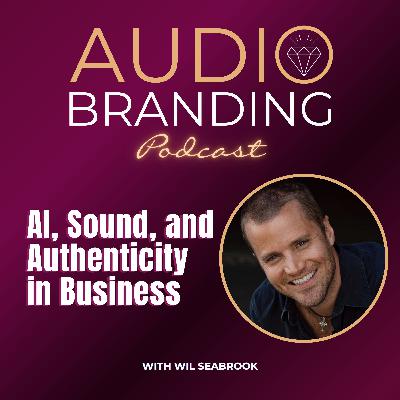
“I said, ‘this is a tsunami that is coming, and I'm either going to be crushed by it and drowned under it and it's going to destroy everything I've built, or I'm going to learn to surf the big waves, and I'm going to do whatever I have to do to surf this wave,’ which is what I did sort of at the dawn of online video. I was sort of one of the first probably one hundred agencies in the country that were consistently making online video back in 2008 or 2009. So was a brand new thing, right? And so, I just decided, okay, I'm going to do that again. And once I made that decision, I actually got excited again, and my entrepreneurial instincts kicked in, and it was not fun. I sort of had to set off a grenade in the middle of my own business and say, okay, I'm going to start over.” – Wil Seabrook This episode is the second half of my conversation with singer, songwriter, and Light Touch Media Group’s founder and chief creative Wil Seabrook as we talk about where the AI revolution is leading the music industry, the one mistake small-business owners and freelancers make when it comes to finding clients, and how a retro-themed ad campaign made a splash in the TikTok era. As always, if you have questions for my guest, you’re welcome to reach out through the links in the show notes. If you have questions for me, visit audiobrandingpodcast.com, where you’ll find a lot of ways to get in touch. Plus, subscribing to the newsletter will let you know when the new podcasts are available, along with other interesting bits of audio-related news. And if you’re getting some value from listening, the best ways to show your support are to share this podcast with a friend and leave an honest review. Both those things really help, and I’d love to feature your review on future podcasts. You can leave one either in written or in voice format from the podcast’s main page. I would so appreciate that. (0:00:01) - Navigating AI in Changing Business LandscapeThe second half of our conversation picks up with a look at AI’s growing impact on the music industry, and where Wil sees it all heading. “I am an eternal optimist as a person,” he explains, “and so I think we are in so many ways we're actually headed for a golden age. I think we're going to solve a lot of logistical problems, a lot of medical and health problems.” He tells us more about how we might eventually get to that point, and some of the hurdles we’ll need to overcome, and the role human artists have to play. “It needs artists, it needs creative people guiding it, shaping it,” he says. “If you're going to change the system, essentially change it from the inside. I think that's very important.”(0:10:29) - Evolution of Technology in BusinessWil shares the biggest mistake he sees when working with voice talent: “The number one mistake that I see small business owners of all kinds make, but this absolutely goes for voiceover artists [and] other types of creative people, they just don't promote remotely enough.” He offers his tips on getting your name and brand out there as an artist, and the value of human creativity, even if it seems like AI can do it all. “If you have an innate talent that moves people,” Wil says, “that people gravitate toward, it's special and it's worth cultivating. It's worth persisting, it's worth learning and stumbling and scraping your knees and getting back up again, because that's not a gift that everybody's given.” Episode SummaryAI's impact on the music industry, and how business models have begun to adapt.How COVID-19 democratized audio production and where things might be headed. Connect with the Audio Branding Podcast:Book your project with Voice Overs and Vocals by visiting https://voiceoversandvocals.comConnect with me on Instagram - https://www.instagram.com/jodikrangle/Watch the Audio Branding Podcast on YouTube - https://www.youtube.com/c/JodiKrangleVOConnect with me on LinkedIn - https://www.linkedin.com/in/jodikrangle/Leave the Audio Branding Podcast a review at https://lovethepodcast.com/audiobranding (Thank you!)Share your passion effectively with these Tips for Sounding Your Best as a Podcast Guest!https://voiceoversandvocals.com/tips-for-sounding-your-best-as-a-podcast-guest/Get my Top Five Tips for Implementing an Intentional Audio Strategyhttps://voiceoversandvocals.com/audio-branding-strategy/Editing/Production by Humberto Franco - https://humbertofranco.com/ This podcast uses the following third-party services for analysis: OP3 - https://op3.dev/privacy
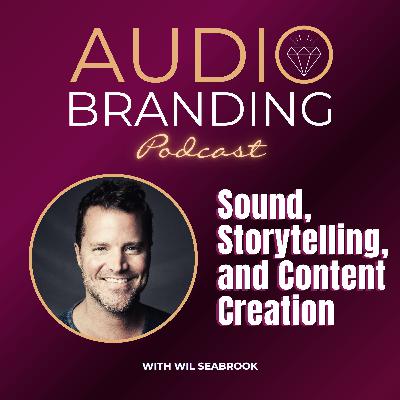
“I will say, as someone who has auditioned hundreds and hundreds, if not over a thousand, voiceover artists and listened to very talented people doing the same take over and over again, the recording quality, the sound quality, absolutely matters. And it's an immediate… There are so many people for me where it's an immediate ‘no,’ because the moment I hear the sound quality and it's not totally up to a pro level, I assume tons of things about that.” – Wil Seabrook This episode’s guest is a former Warner Bros recording artist and the founder of two award-winning creative agencies, and he’s produced over 8,000 videos and commercials for some of the world's biggest and most successful companies. His name is Wil Seabrook, and this week we’ll be talking about how sound design affects his creative process, what people should keep in mind about sound when it comes to their own projects, and what role he sees AI playing in the short and long term when it comes to sounds of all sorts. If you work in sound and you’re struggling to find your place in the modern marketplace? You’ll definitely want to listen in on this conversation. As always, if you have questions for my guest, you’re welcome to reach out through the links in the show notes. If you have questions for me, visit audiobrandingpodcast.com, where you’ll find a lot of ways to get in touch. Plus, subscribing to the newsletter will let you know when the new podcasts are available, along with other interesting bits of audio-related news. And if you’re getting some value from listening, the best ways to show your support are to share this podcast with a friend and leave an honest review. Both those things really help, and I’d love to feature your review on future podcasts. You can leave one either in written or in voice format from the podcast’s main page. I would so appreciate that. (0:00:01) - Musicians' Early Sound Influences and JourneysAs our conversation starts, Wil recall his earliest memories of sound, and the impression that hearing a Simon & Garfunkel song made on both him and his parents. “I came home from preschool,” he recalls, “and I was talking to my mother, and I kept saying Funkle, Funkle. She's like, ‘what the heck are you talking about? You want a pencil?’ And she finally figured out that I wanted to listen to Simon & Garfunkel.” He talks about his early career as a musician, some of his missteps along the way and how he’s helped his son avoid them, and how social media has transformed the music scene. “I think the rise of social media,” he says, “the way things have changed in the last ten, fifteen years, you just realize what an incredible amount of talent there is in the world… now you can just sit down with your phone and a guitar and make a beautiful noise and inspire people, and I do think that part's neat.”(0:08:57) - The Power of Music in CommunicationThe discussion continues as Wil talks about his shift from working with Fortune 500 companies to helping small businesses establish their brand, and the different approach it requires. “It's a much more emotional journey,” he explains. “But I get to be more helpful with more things. I'm not just creating content, I'm helping them put it out into the world, improve their business, and I find that fun and engaging.” He also offers some firsthand advice to voice actors who might find themselves frustrated with the auditioning process. “Don't automatically assume that you did something wrong,” he tells us, “or that you've made a mistake, or that you're not talented, or that you're not doing everything right. You could do everything right and still not be the person who gets selected.”(0:14:20) - Creating Music for Brands With PurposeAs the first half of our conversation comes to a close, Wil shares a surprising discovery about the power of authenticity while recording an Instagram spot. “I did two versions in the studio and, on a friend's recommendation, I did a version on my couch, just to see. The version on my couch outperformed the other two versions, two to one.” He points out the work that can go into such seemingly organic spots, however, and cautions against not taking it seriously. “It's very important for people to understand that simple or homemade style does not mean that it's not produced,” he explains. “It's just a different medium, in a way, than trying to make a TV show or a movie.” Episode SummaryWill shares his musical journey, from old records and school choirs to recording singles.Sound’s subliminal impact on consumers and how clients can tap into that power.How the right environment and equipment can make or break a voiceover audition. Be sure to tune in for next week’s episode as Wil and I discuss AI’s place in the music industry and Wil’s own business, why he thinks we may be in for a new golden age once the dust settles, and how musicians and producers are adapting to the mile-a-minute landscape of social media. Connect with the Audio Branding Podcast:Book your project with Voice Overs and Vocals by visiting https://voiceoversandvocals.comConnect with me on Instagram - https://www.instagram.com/jodikrangle/Watch the Audio Branding Podcast on YouTube - https://www.youtube.com/c/JodiKrangleVOConnect with me on LinkedIn - https://www.linkedin.com/in/jodikrangle/Leave the Audio Branding Podcast a review at https://lovethepodcast.com/audiobranding (Thank you!)Share your passion effectively with these Tips for Sounding Your Best as a Podcast Guest!https://voiceoversandvocals.com/tips-for-sounding-your-best-as-a-podcast-guest/Get my Top Five Tips for Implementing an Intentional Audio Strategyhttps://voiceoversandvocals.com/audio-branding-strategy/Editing/Production by Humberto Franco - https://humbertofranco.com/ This podcast uses the following third-party services for analysis: OP3 - https://op3.dev/privacy

“I think sound is important because I believe it's the first sense that we develop even before we're born. And it's a way of knowing things, knowing the world. Even if you have your eyes shut, you can feel the place. You can feel if it's a big space, if it's an open space, a closed space. So I think it's our most basic feeling instinct that we have, and I remember, before my daughter was born, I would sing for her and her mom’s belly, would move. She would react to sound even before she was born. Yeah, so that's why I think sound is really, really important in everything.” – Humberto Franco This episode’s a little different than most of our podcasts here at Audio Branding. Instead of a conversation in my studio, this one follows my journey through Portugal, exploring the soundscapes of the Douro vineyards and a boat ride in Aveiro to the hustle and bustle of the Porto airport. This episode also features a very special guest. Humberto Franco is the producer and editor of Audio Branding: The Hidden Gem of Marketing, and he’s a professional, multilingual voice actor, a proud dad, an audio, video, and podcast editor and producer, and self-professed computer geek.We had a chance to catch up during my trip to Europe, and I know firsthand that Humberto has a great deal of insight into the power of sound, from how he approaches video and audio editing to his thoughts on how sound shapes every aspect of our lives. Stay tuned for a fascinating conversation about Humberto’s perspective as an editor and a behind-the-scenes look at Audio Branding itself, framed against the lively audio backdrop of the sights and sounds of Portugal. As always, if you have questions for my guest, you’re welcome to reach out through the links in the show notes. If you have questions for me, visit audiobrandingpodcast.com, where you’ll find a lot of ways to get in touch. Plus, subscribing to the newsletter will let you know when the new podcasts are available, along with other interesting bits of audio-related news. And if you’re getting some value from listening, the best ways to show your support are to share this podcast with a friend and leave an honest review. Both those things really help, and I’d love to feature your review on future podcasts. You can leave one either in written or in voice format from the podcast’s main page. I would so appreciate that. (0:00:00) - Exploring the Power of SoundOur conversation begins along a bridge near the city of Régua, surrounded by green hills and lush grape vines, and Humberto shares his earliest memory of sounds, including his parents’ ABBA albums. “I started to wake up in the morning,” he tells us, “go downstairs to the living room, started to play ABBA music, which was a nightmare for my parents.” We move on to a restaurant in Porto and a conversation over dinner, one that begins with Humberto’s question about the process of becoming a guest on Audio Branding. He in turn shares his process for smoothing out the bumpy road podcast interviews can sometimes take. “I put all the files, the video files and the audio files, in sync and then I'll go through the conversation,” he explains. “If there's a mistake, I will take it. There are tricks that, if there's a cut that I need to make, that I'm able to hide it with some magic sauce, I'll do it.”(0:14:09) - Exploring the Importance of SoundOur next stop is a ride aboard a traditional moliceiro boat in the city of Aveiro, and Humberto talks about what inspired his career and his hopes for the future of sound. “For me,” he explains, “it's to see how far technology can take us, how deep can our knowledge and our curiosity can take us into the world of sounds, and to find new things, like small hidden corners of our brain that a sound can light up. And that's what the future brings.” As we arrive at the Porto airport, Humberto and I discuss the inspiration and goal of Audio Branding, and he closes with his thoughts about the importance of sound in our lives. “It's a way of knowing things,” he tells us. “knowing the world. Even if you have your eyes shut, you can feel the place… I think it's our most basic feeling instinct that we have.” Episode SummaryAs we travel through Portugal, Humberto and I discuss podcasting and audio production.The future of Audio Branding and the impact of sound in Humberto’s own life. Connect with the Audio Branding Podcast:Book your project with Voice Overs and Vocals by visiting https://voiceoversandvocals.comConnect with me on Instagram - https://www.instagram.com/jodikrangle/Watch the Audio Branding Podcast on YouTube - https://www.youtube.com/c/JodiKrangleVOConnect with me on LinkedIn - https://www.linkedin.com/in/jodikrangle/Leave the Audio Branding Podcast a review at https://lovethepodcast.com/audiobranding (Thank you!)Share your passion effectively with these Tips for Sounding Your Best as a Podcast Guest!https://voiceoversandvocals.com/tips-for-sounding-your-best-as-a-podcast-guest/Get my Top Five Tips for Implementing an Intentional Audio Strategyhttps://voiceoversandvocals.com/audio-branding-strategy/Editing/Production by Humberto Franco - https://humbertofranco.com/ This podcast uses the following third-party services for analysis: OP3 - https://op3.dev/privacy
“And if you have fun with it, that's going to come across and, I think that's the missing piece. That's where I would start. If I was going to really trust an agency or musicians to create something for me, it was, like, how do we have a conversation or multiple conversations to get us to the most fun way of executing this? Because if you're having fun, you're going to come up with something unique. If you're not having fun, you're just going to try and get it out the way as quick as possible, right? If it's just transactional, I don't think anybody really gets to that point of exploring an idea beyond what's written on the paper. Although it's hard to predict what makes a successful Sonic brand, I think it's more about the process that gets you to that place.” – George Holliday This episode is the second half of my conversation with producers, composers, and founders of creative music agency Hear Me Out, George Holliday and Luke Moseley as they share their thoughts on what defines a sonic brand, how AI is reshaping the music and advertising industries, and their message to the next generation of musicians as they grow up in the age of generated content. As always, if you have questions for my guests, you’re welcome to reach out through the links in the show notes. If you have questions for me, visit audiobrandingpodcast.com, where you’ll find a lot of ways to get in touch. Plus, subscribing to the newsletter will let you know when the new podcasts are available, along with other interesting bits of audio-related news. And if you’re getting some value from listening, the best ways to show your support are to share this podcast with a friend and leave an honest review. Both those things really help, and I’d love to feature your review on future podcasts. You can leave one either in written or in voice format from the podcast’s main page. I would so appreciate that. (0:00:00) - Creating a Sonic Branding StrategyThe second half of our conversation picks up as Luke shares his thoughts on what makes or breaks an audio brand. “I think, for me, a successful sonic branding strategy is something that has the lowest friction to actually getting to market,” he says, “to showing people the effectiveness of it, and then it can just be developing from there.” “I also think we kind of rely on statistics far too much in the creative phase of doing all of this,” George adds, recalling his marketing experience prior to founding Hear Me Out. “I think when we really understand the brand and you get to have fun with what it is they're about, that's what's going to make the most successful sonic logo for them.”(0:07:31) - Exploring AI's Impact on Music“That's not really what brands are employing us for and having us as partners,” Luke notes as he and George discuss their Hear Me Out clients. “It's for the understanding, it's for the ability to translate their larger goals and their marketing strategy and how music can help elevate that and support it.” Our talk turns to AI and how much it’s impacted the audio industry over the past year or so, and whether machine-generated music might someday replace human artists. “I was thinking about when CGI came into the film industry,” George observes, “and everyone was like, ‘Oh, nobody's gonna go out and make films anymore. We're just gonna hire a studio and make everything in one room.’”(0:12:43) - The Impact of CGI and AIGeorge notes that CGI hasn’t replaced cinematography as much as people expected, partially because movie franchises like Mission: Impossible take pride in their authenticity. “It wasn't CGI,” he says, “because Tom Cruise wouldn't allow it to be CGI. He demands that you would hang off the plane, right? That's why we love watching Mission Impossible and I think that's for me, why I still have hope for music in an AI world.” Luke recalls his conversations with a friend at Pixar during the first rush of CGI films, and how the industry eventually found its balance. “Everyone that was using pen and paper thought ‘I'm out of a job,’” he notes. “And then, all of a sudden, it's like, ‘Oh, now, all my friends have jobs as long as we can use this computer.”(0:22:02) - The Power of Sound and MusicWith our conversation coming to a close, George and Luke offer their advice to the next generation as it navigates social media, streaming media, and generated content. “It would just be trust themselves.” Luke says. " I think it's so easy now, particularly with everyone trying to fit in, and, you know, the world of music and the world of being in music is not a particularly easy one. It's very rewarding, you know, and it's a privilege to be able to, to be in it, but it's not the easiest.” George adds his thoughts and reminds us to hold onto the things that set us apart from algorithmic content. “That's the thing we should never lose touch with,” he says, “our understanding or just feeling. You don't have to understand why, you just have to understand that, that is something that you're feeling.” Episode SummaryLuke and George’s approach to developing unique sonic logos for brands.How AI has reinvented music composition, and human creativity’s role in AI music.Exploring the potential of the human brain and AI consciousness.Insights into enhancing a brand's auditory presence through sonic branding.Connect with the Audio Branding Podcast:Book your project with Voice Overs and Vocals by visiting https://voiceoversandvocals.comConnect with me on Instagram - https://www.instagram.com/jodikrangle/Watch the Audio Branding Podcast on YouTube - https://www.youtube.com/c/JodiKrangleVOConnect with me on LinkedIn - https://www.linkedin.com/in/jodikrangle/Leave the Audio Branding Podcast a review at https://lovethepodcast.com/audiobranding (Thank you!)Share your passion effectively with these Tips for Sounding Your Best as a Podcast Guest!https://voiceoversandvocals.com/tips-for-sounding-your-best-as-a-podcast-guest/Get my Top Five Tips for Implementing an Intentional Audio Strategyhttps://voiceoversandvocals.com/audio-branding-strategy/Editing/Production by Humberto Franco - https://humbertofranco.com/This podcast uses the following third-party services for analysis: OP3 - https://op3.dev/privacy
“You know it's the way that news passed between villages before there were any written word, you know, for anything to get around. I think we all know that it's incredibly integral to, initially, to survival, let alone to emotion. You know, if you could wrap important news in memorable melodies, then people were going to be less likely to die back in the day. So, I think there's a part of that within all of us. So yeah, I think you can speak very little of the same language but still be connected instantaneously through music. I guess that’s what my travels have taught me.” – Luke MoseleyThis episode’s guests are a pair of composers and producers who launched creative music agency Hear Me Out because of their frustration with how the traditional agency model removed the musicians from the decision makers. Hear Me Out is now unlocking value for brands with a tool that’s been used for decades but is hugely underutilised today – and that tool is sound.Their names are George Holliday and Luke Moseley, and we’ll be diving into how sound shapes emotion, memory, and connection from music to business. We’ll also hear from them how taking risks, following curiosity, and listening deeply have guided their creative journey. Get ready for a fascinating conversation about the power of sound!As always, if you have questions for my guests, you’re welcome to reach out through the links in the show notes. If you have questions for me, visit audiobrandingpodcast.com, where you’ll find a lot of ways to get in touch. Plus, subscribing to the newsletter will let you know when the new podcasts are available, along with other interesting bits of audio-related news. And if you’re getting some value from listening, the best ways to show your support are to share this podcast with a friend and leave an honest review. Both those things really help, and I’d love to feature your review on future podcasts. You can leave one either in written or in voice format from the podcast’s main page. I would so appreciate that.(0:00:01) - Musicians' Early Sound Influences and JourneysOur conversation begins with George and Luke’s early memories of sound, and the influences that led them to a career in audio branding. “There was always a piano in the house in all of my family,” George recounts, “with all my family, and we always used to gather around and just sing badly, whether it be at Christmastime or just the weekend.” They share their musical journey, literally in Geroge’s case as he toured Europe by bus, and Luke likewise recalls his early days as an indie musician on the road. “Mine was just going to places to play shows,” Luke explains. “I always just traveled with my longboard skateboard duct-taped to the outside of my guitar case.”(0:08:57) - The Power of Music in CommunicationLuke and George share what their early experiences taught them about music’s power to transcend borders and even language. “You can speak very little of the same language,” Luke says, “but still be connected pretty instantaneously through music. I guess this is what my travels have taught me.” George adds his thoughts about the different cultural directions music has evolved in, and what they have in common. “I think that's why we always, as a species,” he notes, “come back to percussive elements, more so than we come back to melodic elements. I think there's some kind of group feeling about that as well. There's a togetherness with percussion that really makes it work.”(0:14:20) - Creating Music for Brands With PurposeAs the first half of our discussion concludes, George and Luke explain what inspired them as musicians to found their sonic branding agency Hear Me Out. “The thing that separates us from the others is we still make the music,” Luke says. “Like, we're the founders and we make the music.” George recalls the process behind their work on Sky Bingo’s audio brand campaign, which included live singers and instruments. “We were actually able to make real human music,” he explains, “because they wanted to connect with humans and actually make a point about the fact that they weren’t a fussy brand.”Episode SummaryGeorge and Luke's early musical memories and family influences.Music as a universal connector, its cultural variations, and its emotional resonance.How George and Luke used natural acoustics to create a unique ad campaign.Be sure to tune in for next week’s episode as Luke and George talk about their approach to building a sonic branding strategy, what the growth of audio AI has in common with Hollywood’s CGI revolution, and how new technology, including AI, has and is still leading to whole new musical genres.Connect with the Audio Branding Podcast:Book your project with Voice Overs and Vocals by visiting https://voiceoversandvocals.comConnect with me on Instagram - https://www.instagram.com/jodikrangle/Watch the Audio Branding Podcast on YouTube - https://www.youtube.com/c/JodiKrangleVOConnect with me on LinkedIn - https://www.linkedin.com/in/jodikrangle/Leave the Audio Branding Podcast a review at https://lovethepodcast.com/audiobranding (Thank you!)Share your passion effectively with these Tips for Sounding Your Best as a Podcast Guest!https://voiceoversandvocals.com/tips-for-sounding-your-best-as-a-podcast-guest/Get my Top Five Tips for Implementing an Intentional Audio Strategyhttps://voiceoversandvocals.com/audio-branding-strategy/Editing/Production by Humberto Franco - https://humbertofranco.com/This podcast uses the following third-party services for analysis: OP3 - https://op3.dev/privacy
“I have a friend who’s a library film composer and produces podcasts, and I was talking to him, I was giving him the kind of same thesis I talked about today. And he’s like, ‘yeah, I get it. But like, I’m the one who’s going to lose the job.’ Cause what he, this very specific, specified job he has [is] of composing kind of anonymous music for podcasts. And he’s successful, he wrote the theme of Serial, and he’s done a lot of big podcasts in New York Times and NPR and, uh, and he’s like, that’s probably the functional music which employed a lot of composers is probably not going to be needed as much.” – Drew Thurlow This episode is the second half of my conversation with founder of Opening Ceremony Media and author of Machine Music: How AI is Transforming Music’s Next Act Drew Thurlow as we discuss the surprising musical trend Drew foresees as AI becomes more commonplace, the one lesson he always shares with music students when it comes to the future of AI, and the ripple effects that generated audio content and voice clones have already started to have across the music industry. As always, if you have questions for my guest, you’re welcome to reach out through the links in the show notes. If you have questions for me, visit audiobrandingpodcast.com, where you’ll find a lot of ways to get in touch. Plus, subscribing to the newsletter will let you know when the new podcasts are available, along with other interesting bits of audio-related news. And if you’re getting some value from listening, the best ways to show your support are to share this podcast with a friend and leave an honest review. Both those things really help, and I’d love to feature your review on future podcasts. You can leave one either in written or in voice format from the podcast’s main page. I would so appreciate that. (0:00:00) - Future of AI in Creative AestheticsWe pick up the conversation as Drew offers his prediction of how AI music, over time, might become as retro and nostalgic as lofi music today. “I have this theory that with all these AI hallucinations that are happening,” he explains, “that’s going to become its own creative aesthetic, and you’re going to start to see the AI vocal models, you know, the early AI vocal models [return].” He shares his observations as a guest lecturer and why he’s optimistic about the next generation’s relationship with AI, and the lesson he always shares with students. “I’d encourage students to have curiosity be your superpower,” he says. “And community is also really, really important. It was really important for me when I was starting out twenty, twenty-five years ago. It’s even more important now, with so much more noise out there and so many more distractions and so much more music and people doing it.”(0:04:43) - Trends in Music Tech StartupsDrew talks about how the industry is evolving as digital media becomes the norm, and the opportunities for AI to increase revenue. “Streaming growth is slowing down,” he tells us. “You know, we’re running out of subscribers in the West and North America, western Europe and North America, and so labels and rights holders and artists are kind of in the mood to count their pennies.” He notes some of the less obvious ways that AI is increasing revenue, such as black box royalty collections and anti-piracy safeguards, and the versatile uses of generated audio content. “Adaptive audio companies [are] using machine learning and generative AI for health,” he says, “also in the gaming environments, which is a big business, where personalized music can adapt to you and your environment. It kind of reads your environment. So those are interesting, interesting companies.”(0:10:09) - Emerging Trends in Music TechAs our discussion comes to a close, we talk about how AI music is already impacting the industry, particularly for indie productions and freelance composers. “Generative AI instrumental music is probably going to be fine,” he says, “and they’re on a budget anyway. So it’s like that kind of middle class of artist who makes a living writing music for reality TV and podcasts and independent gaming, that’s probably where it’ll hit the most.” Drew talks about his latest projects, including his upcoming book and how listeners can get in touch, and he notes how quickly things have changed in just the last few months. “I remember the first, like, acoustic guitar sounds that came out of AI were pretty bad,” he tells us, “and I was like, don’t worry everybody, this is going to take a while. And then, six weeks later, it wasn’t true anymore. So I’m not putting any limits on how fast this tech can mature.” Episode SummaryGen Z’s relationship with AI and how hallucinations might become an art form.How machine learning has optimized revenue streams and enhanced distribution models.AI’s role in gaming, health care, and more as the technology continues to evolve. Connect with the Audio Branding Podcast:Book your project with Voice Overs and Vocals by visiting https://voiceoversandvocals.comConnect with me on Instagram - https://www.instagram.com/jodikrangle/Watch the Audio Branding Podcast on YouTube - https://www.youtube.com/c/JodiKrangleVOConnect with me on LinkedIn - https://www.linkedin.com/in/jodikrangle/Leave the Audio Branding Podcast a review at https://lovethepodcast.com/audiobranding (Thank you!)Share your passion effectively with these Tips for Sounding Your Best as a Podcast Guest!https://voiceoversandvocals.com/tips-for-sounding-your-best-as-a-podcast-guest/Get my Top Five Tips for Implementing an Intentional Audio Strategyhttps://voiceoversandvocals.com/audio-branding-strategy/Editing/Production by Humberto Franco - https://humbertofranco.com/ This podcast uses the following third-party services for analysis: OP3 - https://op3.dev/privacy
“And we got a new Beatles song. I can’t believe we’re talking about the Beatles…. But John Lennon recorded a really corrupted vocal before he tragically died, and it was just kind of there because of some stem separation tech that is only possible because of machine learning. They were able to clean up the vocals, fully on board with the John Lennon estate and the remaining Beatles members, and there’s a few others, but this is interesting. It’s just, it’s a new way of engaging with audio that people, fans are showing that they really like.” – Drew ThurlowThis episode’s guest is a former professional musician turned music executive and strategist. He served as Senior Vice President of A&R at Sony Music and has held leadership roles at both Pandora and Warner Music. As a graduate of Brown University with a master’s in Technology and Leadership, he blends creative insight with business acumen. His writing has appeared in Billboard, and he remains a sought-after voice on the intersection of music, tech, and innovation. His first book, “Machine Music: How AI is Transforming Music’s Next Act,” will be published in 2026.His name is Drew Thurlow, and he’s also a fellow jury member for the International Sound Awards, which is how we met. As someone on the forefront of music and technology, he has a lot of great advice for sound creatives wanting to make their mark – both now and into the future.As always, if you have questions for my guest, you’re welcome to reach out through the links in the show notes. If you have questions for me, visit audiobrandingpodcast.com, where you’ll find a lot of ways to get in touch. Plus, subscribing to the newsletter will let you know when the new podcasts are available, along with other interesting bits of audio-related news. And if you’re getting some value from listening, the best ways to show your support are to share this podcast with a friend and leave an honest review. Both those things really help, and I’d love to feature your review on future podcasts. You can leave one either in written or in voice format from the podcast’s main page. I would so appreciate that.(0:00:00) - Evolution of Music Industry and TasteOur conversation starts off with Drew’s early memories of sound and his start as a musician. “I was one of those kids,” he recalls, “who just didn’t have idle time without a guitar in my hands, and I didn’t think too much about it. I wasn’t super self-reflective about it, I just kind of like followed my instincts and continued to do that.” He tells us more about his career journey as a music executive and explains how much the business has changed since he first started out. “There’s the whole influencer thing wrapped up in it,” he says, “and the way people, especially Gen Z and younger millennials, fall in love with personalities and artists is different. It’s not necessarily bad, it’s just different.”(0:12:36) - AI Impact on Music IndustryAs the first half of our discussion wraps up, we turn to the question of whether AI might replace human artists, and Drew offers some surprising statistics. “From our best, really good estimates by places like Deezer and Spotify,” he says, “AI-generated music, even though it’s a measurable percentage of all the songs on [digital service providers], is a third of a percent of the royalty pool, and I just want to reiterate that it is a rounding error. Nobody wants this music.” He shares his thoughts on where AI is heading and some of the ways it might help transform the music industry. “On the business side,” he tells us, “there’s a lot of evidence that these fans want to engage with music in cool and interesting ways, and these AI tech tools allow them to do that, and it’s a revenue-generating source.”Episode SummaryDrew’s early experiences with music and how he got his start as a music strategist.What it means to be an artist in the age of social media and AI-driven content.Be sure to tune in for next week’s episode as Drew and I discuss his pivotal role in the International Sound Awards, which AI trends are leading the way in the music business, and how machine learning and generative music are finding uses in everything from video games to medical apps.Connect with the Audio Branding Podcast:Book your project with Voice Overs and Vocals by visiting https://voiceoversandvocals.comConnect with me on Instagram - https://www.instagram.com/jodikrangle/Watch the Audio Branding Podcast on YouTube - https://www.youtube.com/c/JodiKrangleVOConnect with me on LinkedIn - https://www.linkedin.com/in/jodikrangle/Leave the Audio Branding Podcast a review at https://lovethepodcast.com/audiobranding (Thank you!)Share your passion effectively with these Tips for Sounding Your Best as a Podcast Guest!https://voiceoversandvocals.com/tips-for-sounding-your-best-as-a-podcast-guest/Get my Top Five Tips for Implementing an Intentional Audio Strategyhttps://voiceoversandvocals.com/audio-branding-strategy/Editing/Production by Humberto Franco - https://humbertofranco.com/This podcast uses the following third-party services for analysis: OP3 - https://op3.dev/privacy
“If you’re watching any video on how to get started on content for your business, for public speaking, anything like that, the microphone is always the number one thing, they say. And that should be a cue. It’s not the phone and it’s not a video camera. They say use your phone to get started, but buy a better mic and there’s a reason that this matters so much to people.” – Nikolaj Kloch This episode is the second half of my conversation with founder of Thrivr Productions Nikolaj Kloch as we discuss what he’s learned firsthand about sound since becoming a videographer, how AI is reshaping the way we use studio sound effects, and his number one on-site audio rule. As always, if you have questions for my guest, you’re welcome to reach out through the links in the show notes. If you have questions for me, visit audiobrandingpodcast.com, where you’ll find a lot of ways to get in touch. Plus, subscribing to the newsletter will let you know when the new podcasts are available, along with other interesting bits of audio-related news. And if you’re getting some value from listening, the best ways to show your support are to share this podcast with a friend and leave an honest review. Both those things really help, and I’d love to feature your review on future podcasts. You can leave one either in written or in voice format from the podcast’s main page. I would so appreciate that. (0:00:00) - The Power of Audio BrandingThe second half of our conversation picks up as Nikolaj tells us about some of the lessons he’s had to learn by experience while working with sound, such as the hidden biases that have shaped recording equipment for decades. “Audio hardware and software have been set up for a man’s voice, and I didn’t realize this over the years,” he notes. “I had no idea about that, and there’s a lot of intricacies like that which are just out in the industry that have been left over for a hundred years now, and you don’t think how that ties back to history until you dive into it.” He tells us how he incorporates AI into his workflow and where he sees it taking the future of audio/video editing. “I think that’s going to make incredible videography work,” he explains. “I think it’s going to add another layer that you still need people behind it, I think we always will, but… it’s going to be a great tool for us to have.”(0:14:05) - The Impact of Quality AudioAs our conversation comes to a close, Nikolaj shares his strategy for demonstrating the value of sound to skeptical clients. “Just showing them the difference between well-planned audio and something that is just basic, sounds bad, filmed with an iPhone that they’re holding to their mouth and things like that,” he says. “If you show them the side-by-side, I think that’s the easiest way to show them that the transformation is there.” He talks about his latest projects and how listeners can get in touch, and tells us what opened his eyes to the power of sound. “If you could sit down and watch a single video that shows the before and after,” he says, “it changed my view on audio entirely, and it’s something that I always have... when I show these budgets to public speakers, conferences or businesses.” Episode SummaryThe importance of choosing – and properly setting up – the right audio equipment,How sound empowers everything from shaping a narrative to capturing brand synergy. Connect with the Audio Branding Podcast:Book your project with Voice Overs and Vocals by visiting https://voiceoversandvocals.comConnect with me on Instagram - https://www.instagram.com/jodikrangle/Watch the Audio Branding Podcast on YouTube - https://www.youtube.com/c/JodiKrangleVOConnect with me on LinkedIn - https://www.linkedin.com/in/jodikrangle/Leave the Audio Branding Podcast a review at https://lovethepodcast.com/audiobranding (Thank you!)Share your passion effectively with these Tips for Sounding Your Best as a Podcast Guest!https://voiceoversandvocals.com/tips-for-sounding-your-best-as-a-podcast-guest/Get my Top Five Tips for Implementing an Intentional Audio Strategyhttps://voiceoversandvocals.com/audio-branding-strategy/Editing/Production by Humberto Franco - https://humbertofranco.com/ This podcast uses the following third-party services for analysis: OP3 - https://op3.dev/privacy
“If you don’t make the video with audio in mind first, that’s the difference between, you know, a 14% click-through rate versus, you know, a 2% click-through rate. And a lot of people don’t tie those two together, that it matters. It’s something that people should be focusing on with a lot of time and energy.” – Nikolaj KlochThis week’s guest is a videographer, content creator, and former aerospace engineer who helps speakers, entrepreneurs, and brands elevate their presence using impactful video that actually delivers. With a background in both engineering and creative production, he brings a rare mix of precision and artistry to his work, and he’s worked with speakers from TEDx stages to Fortune 500 boardrooms, helping them stand out, connect with audiences, and grow their influence.His name is Nikolaj Kloch, and he’s passionate about the power of sound and its impact on visuals. Stay tuned as he shares his insights on why audio isn’t just important – it’s essential. As always, if you have questions for my guest, you’re welcome to reach out through the links in the show notes. If you have questions for me, visit audiobrandingpodcast.com, where you’ll find a lot of ways to get in touch. Plus, subscribing to the newsletter will let you know when the new podcasts are available, along with other interesting bits of audio-related news. And if you’re getting some value from listening, the best ways to show your support are to share this podcast with a friend and leave an honest review. Both those things really help, and I’d love to feature your review on future podcasts. You can leave one either in written or in voice format from the podcast’s main page. I would so appreciate that. (0:00:00) - The Power of Audio in MarketingAs we start off our discussion, Nikolaj recalls one of his first memories of sound, a Lego commercial his brother starred in when they were children. “They actually had to bring in a mic and he just hit the blocks over and over to get the sound crumbling,” he recalls. “And you know, you don’t put those together as a kid until you get older, but I can always hear those blocks crumbling.” He shares how his background as an aerospace engineer took a surprising turn towards audio production, and the common threads between the two. “A lot of people think they don’t translate as much,” he explains, “but it’s one of those things where, you know, audio is a great example of the nitty gritty. There are specific engineers that dive into this every single day, and spend nothing else for their time.”(0:09:12) - Mastering Precision Audio RecordingWe talk about precision audio, just what that phrase really means, and the extensive background that getting the most out of audio can require. “It’s kind of like Picasso saying he won’t sell his little picture on his napkin because he’s taken so much time learning this,” Nikolaj says. “And I feel like that directly ties into this, because it’s really precision. You know they have to line up perfectly.” As the first half of our talk wraps up, Nikolaj shares how he aims to create the ideal environment for an on-site recording and how he helps clients work around some less-than-ideal ones. “I’m going to be reusing this over and over,” he says. “So I’m always like, please, let me at least talk to them and see what their setup is, let’s dive into it a bit. They usually get a little annoyed, but it makes a big difference.” Episode SummaryHow videographer Nikolaj Kloch transitioned from aerospace engineering to sound design.Nikolaj’s work with precision audio, from live recordings to film collaborations.Be sure to tune in for next week’s episode as Nikolaj shares the lessons he learned from working with Britain’s first female Royal helicopter pilot, where he sees AI taking us when it comes to audio and video production, and the most important message he has to offer about the power of sound. Connect with the Audio Branding Podcast:Book your project with Voice Overs and Vocals by visiting https://voiceoversandvocals.comConnect with me on Instagram - https://www.instagram.com/jodikrangle/Watch the Audio Branding Podcast on YouTube - https://www.youtube.com/c/JodiKrangleVOConnect with me on LinkedIn - https://www.linkedin.com/in/jodikrangle/Leave the Audio Branding Podcast a review at https://lovethepodcast.com/audiobranding (Thank you!)Share your passion effectively with these Tips for Sounding Your Best as a Podcast Guest!https://voiceoversandvocals.com/tips-for-sounding-your-best-as-a-podcast-guest/Get my Top Five Tips for Implementing an Intentional Audio Strategyhttps://voiceoversandvocals.com/audio-branding-strategy/Editing/Production by Humberto Franco - https://humbertofranco.com/ This podcast uses the following third-party services for analysis: OP3 - https://op3.dev/privacy


Download from Google Play

Download from App Store
 United States
Great episode, Jodi! This is something I never realized I've been "caught" by everywhere in life.