


 Claim Ownership
Private Capital Call
Subscribed: 14Played: 200
Subscribe

© Private Capital Call
Description
The only podcast for institutional investors and asset managers of private capital around the world. Our conversations with industry thought-leaders covers the economy, capital markets, as well as private equity and private credit.
137 Episodes
Reverse

Now we come to the G in ESG. The governance link to environmental and social goals was cemented by the sub-prime debacle in 2009. Corporate malfeasance and lack of transparency propelled the need to identify future responsible ESG parties and enforcement...

As with climate change, diversity, equity and inclusion, with its goals of broad representation, fair pay and equal opportunity have become the lens through which investors are judging both managers’ investment selections and their internal DEI efforts...

Despite the politics of #climatechange, the burden of scientific evidence and rise in extreme weather events has compelled global policy makers to largely unite their efforts towards decarbonization...

Today’s #ESG river had many tributaries. From Mosaic law in 1500 BC and the Koran, to 18th century England, to the 20th century’s socially responsible investing, or SRI, all have joined doing business with doing good...

Last week we took our eight-year daughter to the library to stock up on books from her reading list. (The “Ready, Freddy!” series, in case you’re curious.) On the way out, a mother and her two young sons preceded us. The boys ran into the automatic revolving door. “No,” she said. “Come this way,” opening the swinging door...

Investors are settling into the view that economic effects of the war in #Ukraine will be more local than widespread. As the head of equities for a top European asset manager said, “You can draw a correlation map between proximity to the conflict and market impact.”...

It was almost a clean getaway. Two years since it emerged, Covid was crumbling. Vaccinations and infection immunity were finally having an effect. Hawaii became the last state to announce an end to indoor masking...

Increased focus on #ESG has mirrored the rise of private credit as an established asset class. This may not be a coincidence. The examination of environmental, social and governance factors as part of risk management has a long history in private credit given its illiquid nature...

Once considered a novel concept, the #unitranche – a one-stop senior secured financing melding senior and subordinated tranches into one – has captured the attention of private equity sponsors and lenders alike. Unitranche structures accounted for a remarkable 36% of middle market LBO financings in 2021, up from 10% in 2016...

From loan issuance, to LBO and M&A activity, to record CLO volume, 2021 was an unprecedented year in many forms. Coming off that record-breaking activity, we consider what lies ahead in 2022. In December 2021, our content partner S&P / LCD surveyed buy-side, sell-side and advisory professionals to gauge sentiment for the year ahead...

Historically, #covenant-lite was not a topic for much conversation in the middle market, as these loans were seen mostly in the broadly syndicated market. However, as the market has evolved, competition has intensified and lines have blurred between public and private credit. Cov-lite has increasingly gained share among smaller, unrated loans. What prompted this change? We observed the following dynamics...

We caught up recently with our chief investment strategist at Nuveen, Brian Nick for a conversation on markets and the economy:
“4Q was the best quarter of 2021 from a GDP perspective,” he told us. “Last year’s growth was 5.5%, best since 1984. Even half that rate in 2022 would still be above trend. But the hairpin turn by the Fed was remarkable. We went from one possible hike to 4 or 5 hikes today!
“Everything’s selling off in unison with nowhere to hide. Markets are adjusting to a more hawkish Fed, and a different set of winners and losers than we saw last year...

For private capital investors, the recent spate of market volatility is another opportunity to show strength relative to public asset classes.
The threat of higher #interestrates and spiking #inflation sent equity indices on a roller coaster ride. But loan buyers looked at this same data set and voted with their feet.
Last week another $2 billion flowed into retail funds, bringing inflows to almost $7 billion for 2022. Assets in these funds total $93.6 billion, double the level from only a year ago. In contrast, $13 billion flowed out of retail high-yield bond funds...

Last week we held our first “Lead Left Presents” webinar. 500 attendees heard four top middle-market #investment bankers discussing what happened in the M&A market in 2021, and what’s to come for the year ahead.
From a sector perspective, industrials were challenged in 2020, then bounced back sharply last year. Backlogs were “very strong” going into this year. #Covid highlighted increased labor costs and motivated businesses to ramp up in areas such as automation, water filtration, and air purification.
Covid “spiked” growth in some areas, but which ones will fall to earth and which are sustainable? Technology and software are “eating the world” by creating...

Over five hundred registrants tuned in last week for our “Lead Left Presents” 2022 M&A Outlook webinar. Our four panelists crammed in a ton of great content into 60 minutes. Here are a few highlights.
Last year was an “acceleration” of what we saw in 4Q 2020. Not just in sheer volume, but across a variety of sectors. Some slowdown in new deal launches occurred at the end of 2021, thanks to record deal closings.
The Fed’s massive injection of capital boosted equities and “brought courage” to private capital investors. Cash on corporate balance sheets and #PE dry powder fueled M&A growth. A supply/demand imbalance of capital outweighing #investment opportunities is expected to continue...

We’re kicking off the new year next week with our first “Lead Left Presents” webinar. Four top middle market investment bankers will be talking about the deal market, what happened last year, and what’s to come for 2022.
What’s motivating buyers and sellers? How did Covid impact processes and outcomes? How is extreme liquidity affecting the competitive landscape?
We’ll also look at sector behavior. Early in the pandemic you couldn’t give away cyclicals, retail, and travel and leisure. Today, as you’ll hear, everything is selling, and at high multiples.
How have different industries fared and how do bankers think about valuations? What’s the latest view of Covid adjustments to Ebitda? Are supply-chain issues putting a dent in growth and price expectations?

As we wrap up our special series on the 2022 private credit outlook, we turn our attention to #ESG. As our Chart of the Week highlights ESG is a fundamental concern of investors. How impactful it will be on manager behavior will depend on regulation and client demand.
ESG in some form has been around for centuries. From Mosaic law dating back to 1500 BC, to Henry VIII’s legalization of lending, to 18th century England and the Methodist movement, right up to the 20th century’s “socially responsible investing,” practices were rooted in screening out business activities misaligned with stakeholder values.
Today climate change, diversity, equity and inclusion, and corporate integrity, are the lens through which investors are assessing managers’ ability to deal with associated risks and opportunities for every investment...

#Inflation and interest rates are linked but not always in straightforward ways. Fear of higher prices can drive rates up, while markets may ignore actual inflation having anticipated it.
Recent data has certainly created alarming headlines. Last Friday’s CPI report showed November’s consumer prices up 6.8% versus a year ago. Not since 1982 (when Joe Montana’s 49ers beat the Bengals in Super Bowl XVI) has that number been so high.
But as one analyst put it, “It was a high inflation print that was already expected and should have been priced into the market.” Offsetting inflationary worries are #Omicron’s impact on growth and the Fed’s decision to taper faster in front of potentially rate hikes...

In April 2015 we introduced the concept of the “cargo-pants strategy.” For direct lenders to compete against banks for leveraged loans, they needed to hold larger commitments.
So managers raised #CLOs, separate managed accounts, commingled funds, and #BDCs to create loan storage pockets. They could then allocate large commitments across vehicles without any one holding an outsized position.
As pockets were added, hold sizes grew. At the same time, the development of the #unitranche has given managers a competitive instrument to take share from loan arranging (not loan holding) banks.
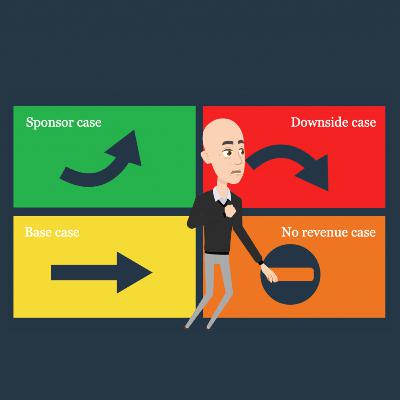
At recent private credit conferences we’ve been asked how managers think about portfolio construction. Kind of depends on your experience over the past twenty-two months.
As one private equity partner told us, “we had a base case and a down-side case, but we didn’t have a no-revenue case.” Consumer-facing sectors had a rough time early on, particularly small retailers. B2B managed better, and in some cases, thrived.
Today the Omicron variant threatens to reverse growth scenarios and capital markets globally. Too early to tell whether this strain will be worse than Delta, or like Mu, disappear without a ripple...

Comments

Download from Google Play

Download from App Store
 United States