


 Claim Ownership
The World of the Greeks and Romans - Fall 2019
Subscribed: 2Played: 6
Subscribe

© All rights reserved
Description
A series of podcasts from students at the College of the Holy Cross that offer a modern take on the ancient environment.
12 Episodes
Reverse
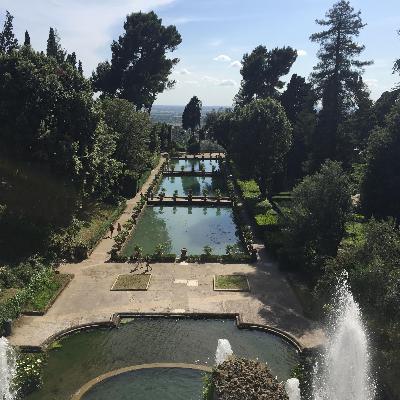
A discussion of the similarities and differences of three different creation stories. The Ancient Greek Theogony compared to the Christian Creation Story and the scientific ideas of the Roman philosopher Lucretius in order to understand each culture's possible relationship to the environment.
In this week’s episode of Figurative Language in the Classical World, Claire and Lucia talk about some of their favorite similes in the Iliad and how they add meaning to the text. Claire focuses on similes pertaining to Achilles, while Lucia analyzes various nature similes.
In this episode, Paul and Colin explore how Lucretius draws readers into his work. They then discuss how these literary techniques can be applied to our daily lives.
Inspired by Lucretius' account of the plague at the end of The Nature of Things, as well as Hughes' descriptions of disasters faced by ancient Greeks and Romans, we set out to investigate the difference between naturally-occurring and human-created environmental disasters. In order to do so, we looked at four different contemporary examples of disasters our modern world has experienced, including wildfires in Alaska, Hurricane Sandy, Deforestation of the Amazon, and The Gulf of Mexico oil spill.
In this podcast we discuss how the ancient Greeks and Romans' perception of the divine changed over time. We discuss Homer's Iliad, the Pre-Socratics, and Lucretius' The Nature of Things.
This podcast explores how Homer and Hesiod use water and wind to convey their message. We then compare and contrast these connotations using our own interactions with these elements.
Our podcast focuses on classical interpretations of environmental change. Through an analysis of classical literature and a modern play, we hope to find connections that will tell us how ideas on climate and environmental change have shifted since the classical period.
In this podcast we discuss some theories of the creation of our universe from the perspective of a few classical thinkers. We also take a look at how some of these thinkers relate to each other as well as some of our creation theories in the present day.
In our podcast, we discuss how various ancient philosophers exemplified similar scientific skills such as observation that we still value today. We discuss how much closer to modern beliefs they were than the average person gives them credit for!
Both Lucretius and Virgil connect the natural world with human societies, whether it be directly or through interpretation. While Lucretius may focus on finite details and rely on science, Virgil aims to teach his audience about politics, animals, farming, and divine intervention.
Two STEM majors discuss "The Nature of Things" and Lucretius' view of the material atomic world. Comparing Lucretius's work to that of the Presocratics, the morality of the soul is then discussed.
An introduction to a series of student podcasts on the ancient environment.
Comments

Download from Google Play

Download from App Store
 United States