


 Claim Ownership
Books Brothers
Subscribed: 4Played: 133
Subscribe

© Copyright 2019 All rights reserved.
Description
Two brothers talk through the BEST non-fiction books about science, evolution, culture, history, complexity science, nature, cognitive neuroscience, artificial intelligence.
22 Episodes
Reverse
If you’ve ever wondered how humans went from chaotic tribes to building governments, empires, and messy modern democracies, this episode is for you. 🏛️
Join JD and Andrew as they break down Francis Fukuyama’s The Origins of Political Order, a sweeping journey through history that asks:
Why do some societies build strong states while others crumble into corruption?
What’s the link between religion, warfare, and political trust?
And is democracy really the end of history… or just another experiment in the grand lab of human civilization?
Expect detours into Chinese bureaucracy, medieval church drama, chimp politics, and why ancient kings were the original startup founders.
It’s political philosophy meets anthropology meets “bro history,” and it’s surprisingly hilarious.
Stick around for the ending discussion, where the brothers wrestle with what “order” even means today.
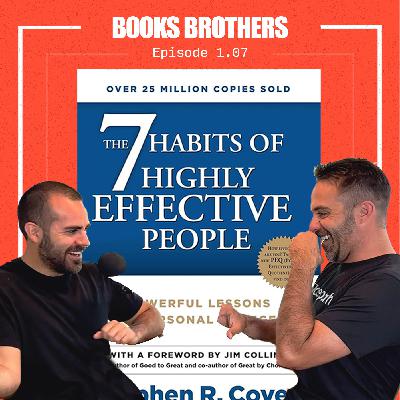
In this episode of Books Brothers, JD and Andrew break down Stephen Covey's seminal work "The 7 Habits of Highly Effective People." Published in over 50 languages and named the most influential business book of the 20th century, Covey's framework distills centuries of self-improvement literature into actionable habits for personal growth. The brothers discuss how Covey spent years studying success literature since 1776 to create principles for living your best life aligned with timeless values. From taking control of your life to building meaningful relationships, this episode unpacks how to move from dependence to independence to interdependence through Covey's transformative seven habits.
Chapter Markers
00:00:00 - Introduction to the book's influence and reach
00:02:00 - Covey's research process and the book's core message
00:04:20 - The Character Ethic vs. Personality Ethic
00:08:10 - Principle-Centered Paradigm and taking responsibility
00:10:57 - Habit 1: Be Proactive
00:13:25 - Viktor Frankl and choosing your response
00:17:15 - The mindset of reactive vs. proactive people
00:19:13 - Habit 2: Begin With the End in Mind
00:21:08 - Leadership vs. Management
00:22:00 - Creating a personal mission statement
00:24:03 - Center of your life: principles vs. other centers
00:26:56 - Habit 3: Put First Things First
00:28:34 - The Four Quadrants of Time Management
00:31:00 - Stewardship vs. Go-for Delegation
00:33:54 - Trust Banks and relationship building
00:36:10 - Habit 4: Think Win-Win
00:38:25 - Problems with competition in society
00:41:51 - Habit 5: Seek First to Understand, Then to Be Understood
00:43:35 - Empathic listening and its power
00:45:44 - Ethos, Pathos, Logos and communication
00:46:13 - Habit 6: Synergize
00:47:52 - Habit 7: Sharpen the Saw
00:49:02 - The Eighth Habit and final thoughts
00:52:09 - Summary of all seven habits
References
Books:
"The 7 Habits of Highly Effective People" by Stephen Covey (00:01:06)
"The 8th Habit" by Stephen Covey (00:49:06)
"The Speed of Trust" by Stephen M.R. Covey (00:50:18)
"Man's Search for Meaning" by Viktor Frankl (00:13:44)
"How to Win Friends and Influence People" by Dale Carnegie (mentioned at 00:06:38)
People:
Viktor Frankl (00:13:44, "friend of the show")
Benjamin Franklin (00:02:30)
Dale Carnegie (00:02:30)
Tony Robbins (00:02:30)
Johann Wolfgang von Goethe (00:18:32)
Warren Buffett (00:50:18)
Peter Thiel (00:38:56, reference to "Zero to One")
Jocko Willink (implied at 00:28:23 as "our guy Jocko, a friend of the program")
Jonathan Haidt (00:42:50, reference to elephant and rider metaphor)
Concepts:
Character Ethic vs. Personality Ethic (00:04:48)
Principle-centered paradigm (00:08:11)
Production vs. Production Capability (P/PC Balance) (00:10:25)
Stimulus and Response model (00:14:29)
Trust Banks (00:33:55)
Four Quadrants of Time Management (00:28:34)
Scarcity vs. Abundance Mentality (00:41:06)
Ethos, Pathos, Logos (00:45:07)
Other Podcast References:
"Righteous Mind" (00:51:40, reference to another Books Brothers episode)
"General Theory of Love" (00:44:26, reference to another Books Brothers episode)
Join the Dennison Brothers as they dive into "A General Theory of Love," a fascinating scientific exploration of what makes us connect on a deeper level. What exactly is love from a neurological perspective? Three psychiatrists from UCSF propose that it's "limbic resonance" - the way our emotional brains synchronize with others.
In this episode, we break down how the limbic system (the emotional part of our brain) creates connections that literally help regulate our emotions and physical well-being. From how mothers shape their children's emotional patterns to why isolation is so damaging to humans, this book offers a scientific framework for understanding our deepest relationships.
Discover why humans are "open loops" that require others to function properly, how childhood experiences encode our emotional responses, and the scientific evidence showing that connection isn't just nice - it's necessary for survival. Whether you're building personal relationships or professional networks, understanding the biology behind human connection gives you powerful insights into yourself and others.
Shownotes:
Book Information
Title: A General Theory of Love
Authors: Thomas Lewis, Fari Amini, and Richard Lannon (all professors of psychiatry from UCSF School of Medicine) [00:03:13]
Studies & Researchers Mentioned
Conrad Lorenz: Study on imprinting in ducklings [00:24:31]
Frederick the Second: 13th century experiment on language development [00:25:47]
Rene Spitz: Studies on orphaned children in the 1940s [00:26:04]
Mary Ainsworth: Research on mother-baby attachments and parenting styles [00:26:45]
Paul Ekman and Carol Izzard: Research confirming universal facial expressions [00:17:36]
Paul Broca: Identified the "great limbic lobe" [00:11:23]
Charles Darwin: "The Expression of the Emotions in Man and Animals" [00:16:36]
Other Books & Authors Referenced
Robert Sapolsky's "Behave": Referenced when discussing the triune brain [00:09:37]
Jonathan Haidt's "The Righteous Mind": Referenced for the elephant and rider metaphor [00:10:01]
Judith Rich Harris's "The Nurture Assumption": Referenced in discussing genetic vs. environmental factors [00:28:27]
Yuval Noah Harari's "Sapiens": Referenced multiple times [00:14:07, 00:29:18]
Sam Harris: Mentioned regarding free will and parenting [00:27:59]
Ralph Waldo Emerson: Quote about temperament [00:19:46]
Blaise Pascal: Quote at the end [00:44:32]
Media & Pop Culture References
Joe Rogan & Elon Musk podcast: Where the hosts first heard about "limbic resonance" [00:24:04]
Into the Wild (Alexander Supertramp): "Happiness is only real when shared" [00:31:00]
Haddaway's "What is Love": Referenced as the episode's theme song [00:01:48]
Notable Quotes
"The mammalian nervous system cannot self-assemble" [00:33:40]
"For a mute mammal, play is physical poetry" [00:13:36]
"Freud's logic was a veritable Mobius strip of circularity and belongs to a priest. Scientific era" [00:05:09]
#BrainScience #EmotionalIntelligence #RelationshipScience #PsychologyBooks #PersonalDevelopment #BookReview #LimbicResonance #NeuroscienceOfLove #MensHealth #SelfImprovement #BookSummary #MindsetMastery #MentalModels #ProfessionalGrowth #BrotherBooks
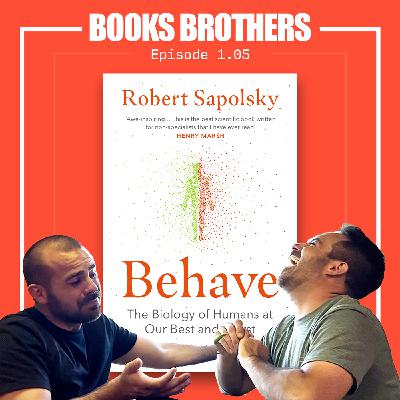
In this epic deep-dive episode, brothers JD and Andrew Dennison tackle Robert Sapolsky's masterwork "Behave: The Biology of Humans at Our Best and Worst." We explore how our brains, hormones, genes, and environment shape human behavior from seconds to millions of years before an action occurs. From the neuroscience of decision-making to the evolutionary roots of tribalism, they break down Sapolsky's fascinating insights into why we do what we do.
Key topics include:
How different brain regions like the amygdala, prefrontal cortex, and dopamine systems influence our choices
Why testosterone isn't just about aggression
The surprising truth about oxytocin (it's not all free love!)
What adolescent brain development reveals about human nature
How cultural evolution and biology intertwine to shape societies
00:07:42 Chapter 2: 1 second before: Neuroscience
00:44:46 Chapter 4 Hours to Days Before: Hormones
1:04:51 Chapter 5: Days to Months Before: Neuroplasticity
01:09:59 Chapter 6 Adolescence or Dude Where’s my Cortex
1:20:21 Chapter 7 Years Before Back to the Crib Back to the Womb
1:29:28 Chapter 8 Fertilized egg or how our genetic affect our behavior
1:38:21 Chapter 9 Centuries to Millennia : cultures
1:47:13 Chapter 11 Us Vs. Them
2:03:06 Chapter 12 Hierarchy, obedience and resistance
2:17:16 Chapter 13 Morality doing the right thing
2:17:22 Chapter 14: feeling someone’s pain as your own
2:23:57 Chapter 15: Metaphors we kill by
2:33:02 Chapter 16: Biology The criminal justice system and oh why not free will
2:45:17 Chapter 17: war and Peace
The brothers share their enthusiasm for Sapolsky's brilliant writing style and humor while navigating complex topics like free will, human nature, and the biology behind both our best and worst behaviors. This comprehensive look at "Behave" showcases why it's a defining book in understanding human behavior through multiple scientific lenses.
Note: This is episode 5 of the "Human Evolution” season, where JD and Andrew explore groundbreaking books about what makes us human, from evolutionary biology to neuroscience and beyond.
Many smart people out there say AI is an existential risk. AI Armageddon is certainly is a top-5 concern of enough people that we feel it warrants a deeper understanding. And in Superintelligence, Bostrom is the perfect robot-impersonating-author to teach us AI 101 while simultaneously capturing AI’s full scale and magnitude. He talked to everybody and covers the biggest questions: what are all the potential outcomes? How likely is AI? When might it happen? What’s the history of AI technology and are we excited about nothing? If an artificial intelligence does take over what would it do? High-probability take-over-the-world is on the early menu.
Plus, what’s the world’s current #robotpopulation? Could #serversruntheworld?
This book will make you think differently about the way your BRAIN and your SOCIETY operate. This Books Brothers summary will do ALL that and make you laugh.
Selfish Gene answers a deep and fundamental question: How does evolution work? We start our story in the Primordial Soup served hot at the Big Bang’s favorite diner, the single-cell-stew that brewed in Earth’s original oceans (after millions of years cooled the atmosphere obviously). The effect those little replicating cells, containing the world’s first DNA structures, have on our behavior today is 😳🤯🤔.
Plus, Dawkins colorfully illustrates why #NatureIsMetal and what really goes on #WhenaManLovesaWoman
This book will make you think differently about the way your BRAIN and your SOCIETY operate. This Books Brothers summary will do ALL that and make you laugh.
With Books Brothers podcasts, we do our best to share the author’s perspective. If you’ve read it before, you’ll know the book better. If you haven’t read it yet, you’ll learn what it contains and we hope you read it soon.
Andrew and JD
The Righteous Mind answers a deep and fundamental question: why can’t we all just get along? Why can’t Democrats and Republicans understand each other better? Haidt answers these better than anyone (ever) by breaking down the social psychology and brain science of why our species is so apt to join groups, take sides and fight. The Righteous Mind covers 17 years of Haidt’s research into moral psychology and human behavior, and he uses it to explain our divided world today.
Plus, Hadit drops some bombs on our next book, Selfish Gene. #EmotionsFirstReasoningSecond #10%bee #BelongingNotBelieving
This book will make you think differently about the way your BRAIN and your SOCIETY operate. This Books Brothers summary will do ALL that and make you laugh.
With Book Brothers we do our best to share the author’s perspective. If you’ve read it before, you’ll know the book better. If you haven’t read it yet, you'll love it so much you'll go out an buy it
Enjoy!
-Andrew and JD
Sapiens is a 416-page story of humankind from 6M years ago to today. Harari wraps it all up: our psychology, technology, religion, economy, politics… Nobody puts things quite the way Yuval does - he’s got some weird/deep thoughts and spits some fire trash talk at basically everything. We guarantee this book will make you stop and think about who we are and where we come from.
Plus it’s got plenty of #CavemanTalk and #YuvalSlamPoetry
This book will make you think differently about the way your BRAIN and your SOCIETY operate. This Books Brothers summary will do ALL that and make you laugh.
We do our best to share the author’s perspective. If you’ve read it before, you’ll know the book better. If you haven’t read it yet, you’ll love it so much you'll buy the book
Enjoy!
-Andrew and JD
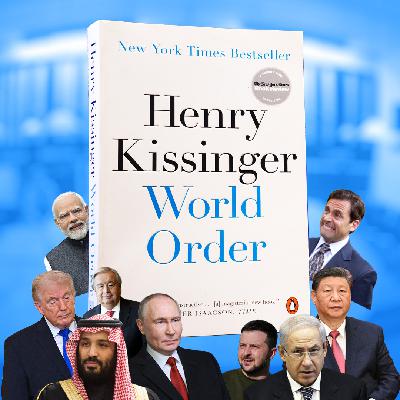
Everyone is talking about the world order right now. China, Russia, Iran, Nato, Ukraine. but if you don't know where the "world order" came from, you're just watching the news without a map. This episode is a map!
World Order by Henry Kissinger (2014): In this episode, we break down Kissinger's sweeping history of how nations have sought stability and power from the 1600s to today, chapter by chapter. Kissinger is one of the most influential and controversial figures in American foreign policy. You don't have to like him to learn from him. And right now, learning from him is the homework. We take you through the book start to finish: from the Peace of Westphalia (1648), the treaty that ended 30 years of religious war and literally invented the modern nation state, all the way through Napoleon, Bismarck, World War I, World War II, the Cold War, Iran, China, and the American moment. We also sit with Kissinger's predictions from 2014, many of which have already come true. This is Part 1 of 2. Part 2 drops in April 2026.
https://linktr.ee/booksbrotherspod #worldorder #kissinger #geopolitics #henrykissinger #booksummary #internationalrelations #historyexplained #booksbrothers #RiseOfStates #foreignpolicy #educationalpodcast #bookspodcast #learnhistory #PeaceOfWestphalia #coldwar
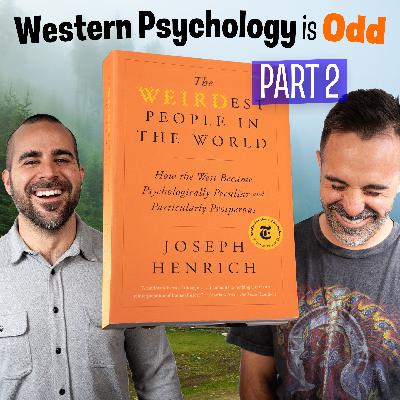
Southern Italy is poorer than northern Italy because the Catholic Church never conquered it. And that's not a hot take, that's what the data says. Part 2 of our deep dive into how the Western church's marriage bans accidentally created modern psychology, and why understanding WEIRD culture matters for everything from trade to testosterone to trust. Not "quirky." Not "unique." Statistically, measurably, scientifically WEIRD (Western, Educated, Industrialized, Rich, Democratic). In Part 1, we covered how banning cousin marriage broke down clans. Now we go deeper into what happened next: charter towns, guilds, impersonal markets, monogamy lowering testosterone, and how commerce created moral norms without anybody planning for it. The church reached down and grabbed men by the testicles (that's an actual Henrich quote). Monogamy domesticated wild males, gave them kids, lowered their T, gave them a stake in the future. Crime rates dropped 35%. Meanwhile in China's one-child policy: 38 million surplus males, crime rates rose 14% per year 18 years later. This is Henrich's answer to Guns, Germs, and Steel. What you'll learn: 🤝 why southern Italy has the Mafia (kinship vs society) 🌾 rice farming in Asia = collectivist = non-WEIRD 🇨🇳 how Communist China in 1950 banned the exact same things the church banned a millennium before 💪 monogamy as a testosterone suppression method 🏛️ charter towns, guilds, universities as kin group replacements 🤝 how markets created interpersonal trust with strangers 📍 every hour closer to a town market = 15 percentage point increase in cooperation scores 🔄 impersonal markets reduce in-group sociality, increase prosocial behavior with strangers ✉️ the Republic of Letters and Europe's collective brain ⚙️ James Watt didn't invent the steam engine from scratch, he added a condenser 📚 why Enlightenment thinkers were just standing on the shoulders of a great society 🧬 cultural evolution shaped our genes, then institutions shaped our psychology Timestamps: 0:00 Intro: Henrik Stays in His Lane 2:01 Breakdown starts here: Southern Italy & the Mafia 4:07 Rice Farming = Collectivist Asia 6:21 Communist China Banned Cousin Marriage 8:03 Monogamy vs Polygamy 10:58 Poor Samuel's Problem 15:16 Monogamy Lowers Testosterone 16:49 China's One-Child Policy: 38M Surplus Males 19:34 Commerce and Cooperation 27:38 Charter Towns & Individual Property Rights 29:04 Domesticating Competition 37:05 Market Mentalities: Time & Clocks 43:18 Trust & Fairness Experiments 48:30 Self-Concept & Mental States 55:52 Law, Science, and Religion 58:31 Afghanistan Democracy Quote 1:01:21 Protestantism: Super WEIRD 1:06:30 Birthing the Modern World 1:14:50 James Watt & the Steam Engine 1:18:47 Dark Matter of History 1:20:37 Henrik's Final Quote 1:22:32 Wrap-Up Last quote from Henrich that sums up the whole book: "The much heralded ideas of Western civilization like human rights, liberty, representative democracy and science aren't monuments to pure reason or logic, as so many assume. People didn't suddenly become rational during the enlightenment of the 17th and 18th centuries and then invent the modern world instead. These institutions represent cumulative cultural products born from a particular cultural psychology that traces their origins back over centuries through a cascade of causal chains involving wars, markets, and monks to a peculiar package of incest taboos, marriage prohibitions, and family prescriptions that developed in a radical religious sect, Western Christianity." Based on The WEIRDest People in the World by Joseph Henrich, this episode explores cultural psychology, human evolution, and how institutions shape our minds. Books Brothers Season 2: The Rise of States examines how states cities and civilizations emerged. Previous episodes covered the Ancient City, Secret of our Success, Against the Grain, Guns Germs and Steel, Origins of Political Order, and the Medici. 📚 book: The WEIRDest People in the World by Joseph Henrich (2020) 🎙 hosts: Andrew and JD let us know in the comments if you're weird or not weird

Why do people in the modern West think the way they do, and why does it feel so different from almost everyone else in history?
In this episode of Books Brothers, we dive into The Weirdest People in the World by Joseph Henrich, a bold and data driven exploration of how culture reshaped psychology in Western Europe, and how that psychological shift helped give rise to modern states, markets, science, and democratic institutions.
We explore what “WEIRD” really means (Western, Educated, Industrialized, Rich, Democratic), why cousin marriage graphs somehow explain half of world history, how literacy literally rewires the brain, and why abstract principles like justice and truth telling end up mattering more than kinship in some societies and not others.
This conversation sits right at the heart of our Rise of States series, connecting anthropology, psychology, religion, and political development into one big, strange, deeply human story.
If you enjoy this episode, please share it with a friend and leave a review. It genuinely helps more curious minds find the show.
And don’t forget: you can find Books Brothers on YouTube, where we post full episodes, clips, and visuals to go along with the conversations. Search Books Brothers and join us there.
Thanks for listening.
Episode 16: The Medici by Paul Strathern**
In this episode, we explore one of the most influential families in European history. Paul Strathern’s The Medici gives an inside look at the rise of a banking dynasty that shaped the Renaissance, shifted the balance of power in Italy, and helped lay foundations for the modern world.
We walk through the political chaos of medieval Italy, the forged documents that created whole kingdoms, the financial innovations that allowed merchants to outgrow monarchs, and the humanist ideas that resurfaced after a thousand years underground. Along the way we meet pirate-cardinals, ambitious bankers, master architects, and the thinkers who revived classical science and philosophy.
This book helps answer our season’s guiding question. Where did nation states come from, and how did modern governance begin? The Medici story shows how money, ideas, and institutions combined to move Europe out of the medieval world and into something recognizably modern.
Join us as we follow Giovanni, Cosimo, and Lorenzo through wars, councils, banks, libraries, and the creation of a cultural revolution that still shapes how we learn, think, and live today.
Why did Europeans conquer the Americas instead of the other way around? In this episode, we dig into Jared Diamond’s Pulitzer Prize–winning classic Guns, Germs, and Steel.
Diamond sets out to answer Yali’s famous question: why do some societies have so much “cargo” while others don’t? His answer boils down to one word: geography.
We trace the story from the collision at Cajamarca, 168 Spaniards defeating tens of thousands of Inca warriors — back through the domestication of wheat, barley, and horses, the east–west axis of Eurasia, and the germs bred in crowded farming societies. Along the way, we wrestle with Diamond’s strengths, poke holes in some of his oversimplifications, and connect the dots to later works like Sapiens, Against the Grain, and The Secret of Our Success.
If you’ve ever wanted the big-picture story of how environment, food, animals, and disease shaped human history — this is it.
Yo! Let’s go. JD and Andrew are back in the Fertile Crescent, baby—where civilization supposedly “leveled up” but maybe just took a massive L. In this episode, the bros break down James C. Scott’s Against the Grain: A Deep History of the Earliest States, a book that argues farming, governments, and the rise of states weren’t exactly the glow-up history books made them out to be. We’re talking fire hacks, Homo erectus barbecue parties, stationary bandits (aka ancient mob bosses), marshland living, and why grain might be the world’s first “Big Tech monopoly.” JD digs into archaeology and science, Andrew keeps us grounded with the big cultural picture, and together they wrestle with whether civilization was really worth all the taxes, laws, and SWAT teams. As always, it’s educational, a little ridiculous, and super accessible. Hit play, grab a snack (non-taxable please), and find out what life was really like before the IRS showed up. Timestamps (Chapters): 00:00:00 – Intro hype + “barbecued cat bones & Homo erectus poop” 00:01:00 – What is this book? Scott vs. the State 00:03:10 – Bandit theory vs. coordination theory (why states even exist) 00:04:50 – Stationary bandits = ancient mob bosses 00:07:00 – Domestication of fire (and how it domesticated us) 00:10:30 – Fire as predator deterrent + the ultimate gang hangout tool 00:13:00 – Niche construction: ancient humans as ecosystem engineers 00:17:30 – Marshlands, mobility, and why early states hated swamps 00:22:00 – Grain: the world’s first surveillance + tax technology 00:28:40 – Bureaucracy, walls, and why early states kinda sucked 00:35:00 – Rebellion, resistance, and the “dark side” of civilization 00:42:00 – Closing thoughts: was the state really progress… or a trap? Listen if you’ve ever wondered: Was grain basically the original Facebook? Why did marshes make governments sweat harder than the IRS in April? Would you rather hang with Homo erectus around a fire… or Mesopotamian tax collectors? Stay tuned, stay curious, and remember—sometimes going “against the grain” is the smartest move.
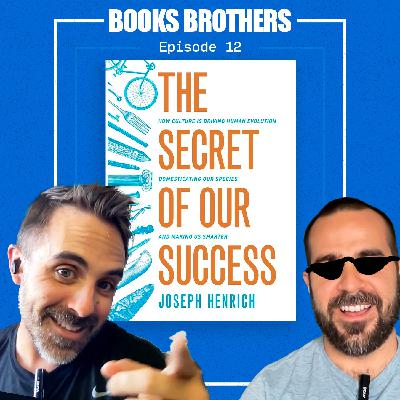
In this episode, we dive deep into Joseph Henrich's groundbreaking book "The Secret of Our Success: How Culture is Driving Human Evolution, Domesticating Our Species and Making Us Smarter." Discover why humans are the only species to dominate every continent with just ONE species (while ants needed 10,000+ species to do the same). We explore how cultural evolution became the primary driver of our genetic evolution, making us the ultimate "copycats" of the animal kingdom.
Key Topics Covered:
Why toddlers crush chimps and orangutans at social learning
How lost European explorers with 5 years of food died while locals thrived
The shocking study comparing human children, chimps, and orangutans
Why we evolved menopause (spoiler: it's about preserving cultural knowledge)
How cooking food literally changed our biology
The incredible story of persistence hunting and why we're the sweatiest species
Why blue eyes evolved in the Baltic Sea region
Cultural customs that save lives (even when people don't know why)
How arrow-making requires 14 steps, 7 tools, and 6 materials
From cassava processing in the Amazon to elephant grandmas remembering 60-year-old water sources, this episode reveals how culture - not individual intelligence - made humans masters of Earth. Subscribe for more deep dives into the books that explain our world! 📚 Other Books in Our Series: Sapiens, Behave, The Righteous Mind, Guns Germs & Steel, The WEIRDest People in the World, and many more!
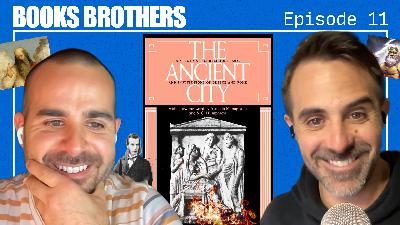
🏛️ THE ANCIENT CITY: How Religion Built Civilization (Books Brothers Podcast) The oldest book we've ever covered reveals the SHOCKING truth about how cities actually formed! Forget everything you think you know about ancient Greece and Rome. French scholar Numa Denis Fustel de Coulanges drops a bombshell in this 1854 masterpiece: RELIGION wasn't just important to ancient people—it WAS their reality. Every law, every custom, every political structure came from one source: worshipping your dead ancestors. From sacred fires that could NEVER go out to marriage ceremonies that were basically religious conversions, this book explains how ancestor worship created the foundation of Western civilization. Plus: Why exile was worse than death, how Rome's secret sauce conquered the world, and the moment Christianity changed everything forever. Books mentioned: Sapiens, Behave, Righteous Mind, Origins of Political Order, and more from our reading list!
📚 CHAPTER MARKERS 00:00 - Intro: The Oldest Book We've Done 02:42 - Ancient Beliefs: Souls, Death & the Afterlife 07:15 - Worship of the Dead: Pour One Out for Grandpa 13:00 - Sacred Fires: Rule #1 - Never Let It Die 17:00 - Marriage = Religious Conversion (Wild Ancient Wedding Rituals) 22:00 - Family Continuity: Why Having Sons Was EVERYTHING 25:00 - Property Rights: How Sacred Land Created Modern Law 29:00 - The Gens: When Families Become Tribes 37:00 - BOOK 3: THE CITY - How Cities Were Actually Born 42:00 - City Founding Rituals: The Badass Story of Rome's Birth 48:00 - Gods of the City: Stealing Enemy Bones for Power 52:00 - Religion = Government (No Separation of Church & State) 58:00 - Citizens vs. Strangers: You're In or You're Out 1:02:00 - THE REVOLUTIONS BEGIN - When the System Breaks Down 1:15:00 - Rise of the Plebs: The First Labor Strike in History 1:20:00 - Tribune of the Plebs: The Untouchable Power Move 1:25:00 - Laws Written in Bronze: The 12 Tables Revolution 1:30:00 - Solon vs. Draco: Democracy's Poet vs. The Harsh Tyrant 1:35:00 - Athenian Democracy: When 5,000 People Actually Talked 1:40:00 - Alexander's Death & Rome's Rise: "To the Strongest!" 1:45:00 - Christianity Changes Everything: The End of Ancient Society Subscribe for more mind-bending books that explain how the world really works! 🧠⚡ #BooksBrothers #AncientHistory #Rome #Greece #Christianity #Philosophy #History #Podcast
Join JD and Andrew as they dive deep into "The Molecule of More" by Daniel Lieberman and Michael Long - exploring how dopamine drives human behavior, relationships, creativity, and our never-ending pursuit of "more."
🧠 What You'll Learn:
The difference between "wanting" and "liking" - and why dopamine controls wanting, not pleasure
How dopamine creates two distinct brain circuits: desire vs. control
Why the honeymoon phase in relationships only lasts about a year
The surprising connection between dopamine and political ideology
How immigrants and entrepreneurs share similar dopaminergic traits
Why creative people are 25x more likely to have bipolar disorder
The neuroscience behind addiction, love, and achievement
🎯 Key Takeaways:
Dopamine is the "molecule of more" - it never says "enough"
There are two types: desire dopamine (limbic) and control dopamine (prefrontal cortex)
Balancing future-focused dopamine with "here and now" chemicals leads to greater happiness
Mastery combines both systems for optimal satisfaction
📚 About Books Brothers:
We read the big ideas books so you don't have to! Subscribe for summaries of books like Sapiens, Righteous Mind, Behave, and more.
🔔 Subscribe for more book breakdowns and hit the bell for notifications!
💭 What's your dopamine weakness? Let us know in the comments!
Chapter Markers
0:00 - Introduction & Book Overview
1:30 - What is Dopamine? The Molecule of More
2:45 - Here and Now vs. Future Molecules
8:15 - Chapter 1: Love - Dopamine in Relationships
16:00 - From Passionate to Companionate Love
19:30 - Sex and the Dopamine Switch
23:00 - Chapter 2: Drugs - Desire vs. Control Circuits
28:45 - Why Adderall Helps ADHD vs. Cocaine Addiction
35:00 - Chapter 3: Domination - Control Dopamine in Action
42:00 - The Buzz Aldrin Effect: Achievement Addiction
45:30 - Willpower as a Limited Resource
48:00 - Chapter 4: Creativity and Madness
52:15 - Why Artists Are 25x More Likely to Have Bipolar
55:45 - John Nash and the Beautiful Mind Connection
58:30 - Isaac Newton: Genius and Virgin
60:00 - Chapter 5: Politics - Liberal vs. Conservative Brains
65:30 - Dopamine and Political Ideology
68:45 - Charitable Giving: Here and Now vs. Abstract Policy
72:00 - Chapter 6: Progress - How Dopamine Got Us Out of Africa
75:30 - The DRD4 Gene and Human Migration
78:15 - Polynesians and Extreme Exploration
80:45 - America as the "Dopamine Nation"
83:30 - Immigration and Entrepreneurship Statistics
86:00 - De Tocqueville's Observations on Restless Americans
88:30 - The Fertility Crisis and Safety Nets
90:45 - Final Thoughts: Balancing Dopamine and Here-and-Now
93:00 - The Avatar Metaphor for Perfect Balance
95:30 - Mastery: When Dopamine and Present Merge
98:15 - Construction Workers and Optimal Happiness
60:00 - Conclusion: A More Balanced Way of Being Human
In this episode, the hosts explore René Girard's mimetic theory through Friar Elias Carr's 2024 book "I Came to Cast Fire: An Introduction to René Girard." The conversation examines how human desires aren't entirely our own but are shaped by imitating others, creating cycles of rivalry and conflict that have defined human societies throughout history.
The hosts discuss Girard's insight that humans are the "culture-making animal" whose social structures evolved from the "scapegoat mechanism" - a process where communities channel violence toward a single victim to restore peace. They look at how this pattern created religious rituals, myths, and prohibitions that formed the foundation of ancient civilizations.
The discussion moves from ancient ancestor worship to biblical interpretations, examining how Jesus's crucifixion and resurrection uniquely exposed this scapegoat mechanism from the victim's perspective, offering humanity a path beyond mimetic violence. The hosts work through these dense philosophical concepts while questioning evidence for some of Girard's more controversial claims.
Connecting cultural evolution, religious worship, and human conflict, this episode presents the hidden mimetic patterns Girard identified in human societies. The conversation covers anthropology, religious studies, and theories about how imitation shapes both our individual desires and our collective institutions.
In this mind-bending episode, Andrew and JD explore René Girard's revolutionary mimetic theory through Luke Burgis's accessible book "Wanting." Discover why your deepest desires might not actually be your own!
We dive into:
Why we mimic the desires of our "models" (from celebrities to rivals)
How mimetic rivalries escalate into violence and conflict
The surprising connection between scapegoating and civilization
Why René Girard became Christian after developing his theory
Practical ways to escape mimetic desire and find authentic purpose
From Peter Thiel's investment philosophy to why hipsters all look alike while no one identifies as one, this episode will transform how you understand human motivation, marketing, social media, and even ancient religious practices.
NEW: We're releasing TWO episodes monthly in April and May!
Watch on YouTube! Our amazing video editor and graphics team illustrates all the key ideas and quotes throughout the episode, creating a visually stunning experience that brings these concepts to life. Trust us - this one is worth watching!
#MimeticDesire #BooksBrothers #PersonalDevelopment
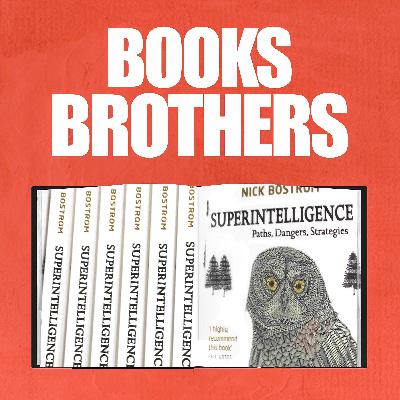

Some of the smartest people out there say a SUPERINTELLIGENT AI is an existential risk. Lets get some deeper understanding, and Bostrom is the perfect machine-impersonating author to give us the basics while capturing magnitude of the potential problem. How likely is a Superintelligence? When might it happen? What’s the history of AI technology and are we excited about nothing? Would a superintelligence try and make itself smarter? It it tried to take over (whoa) what MIGHT it do? High-probability take-over-the-world is on the early menu. #robotpopulations #serversruntheworld


Download from Google Play

Download from App Store
 United States
Wonderful