


 Claim Ownership
Unwrapped: A Food Service Podcast
Subscribed: 2Played: 4
Subscribe

© Copyright MarketScale
Description
This is Unwrapped: A Food Service Podcast by SandenVendo America; exploring the history, innovation and technology of the food service industry.
12 Episodes
Reverse
When you think of vending machines, you probably think of the no-frills, rectangle-shaped machines dishing out your favorite soda or chips. There is nothing fancy to them – put in your loose change or dollar bill, push the button, and out comes your ice-cold soda or delectable candy bar.But, they can be and are so much more than meets the eye. With a slew of new technologies out there, vending machines are primed to move from their outdated ancestors to modern behemoths.Let’s take a look at five technologies breaking ground in the vending machine world.1. Cashless and Contactless PaymentThis one might be the most obvious and the one you’ve most likely seen in the market. The one you’re most likely to see is an option for credit or debit cards. The tech is simple and operates much like a card reader at a grocery store. Pick your product, then slide or insert your card for payment.But, as more folks carry payment-enabled smartphones, this is increasingly becoming an option. The most likely one is Apple Pay. Instead of inserting a card, hover your smartphone or Apple Watch over the payment reader for truly contactless payment.2. Interactive ScreensInteractive screens appear less regularly, but they are out there. They are also popping up in bathrooms and gas stations. It’s an excellent way for a vending machine owner to go beyond the simple task of dispensing goods – and beyond a sale.Vending machines with screens offer the opportunity for owners to access the Internet of Things. Owners can make revenue weekly or monthly from advertising streams. Operators can also use their advertisements or promotions.Another feature of a screen allows the customer to get a refund. They can enter their information, which will enable them to receive their money back. It’s an excellent way for an additional source of customer service.3. Connected Devices, Data, and ServicingWith improved options for screens and cashless options comes the increased capacity for IoT functionality. Owners or operators can get real-time data about sales, stocking and repairs. Repairs will be quick, so the machine stays functional and ready to push out product. Operators can also access the device remotely, allowing a quick fix of any issue.Operational costs will go down, as the machine will stay online and repair costs stay minimal. With quick access to sales data, you can also get rid of the products that don’t sell and upsell the ones that do.4. Side Advertisements via ScreensAs vending machines become more sophisticated than before, the option for side advertisements offers another chance for revenue. On some devices, the opportunity to place simple ads will suffice. But, for modern machines, operators can change the ads on digital screens. This is an often passed-over option but will provide owners a new source of revenue.5. The V21i – The IoT VendorThis isn’t your parents’ vending machine. This interactive, intuitive and inclusive vending machine is equipped to bring vending into the 21st Century. It houses a 21.5” touch screen to make life easier for consumers.Here are some of the features:● There isn’t the need for change, cash, or credit. The intuitive features allow users to utilize their digital wallets.● Users can use the intuitive multi-cart system to buy multiple items in one transaction.● The screen allows for real-time promotion of items. Users can find info about the weather, local sports and events.Perhaps one of the standout options is for those seeking adult beverages at a ballpark or venue. With the V21i, there’s no more waiting in line. Simply use the age-verification mobile app to buy alcoholic beverages.For operators, the screen allows your machine to become revenue-producing via advertisements. Real-time promotions via QR codes can help push your product. Built-in inventory management means no lost sales or disappointed customers.Contact us today to learn more about the V21i and what it can do for your bottom line.
On this episode of Unwrapped: A Foodservice Podcast, brought to you by SandenVendo, host Daniel Litwin talked with Mike Weisser, President & CEO, Joey Lavook, VP of Sales & Marketing and Brad Hutchison, Senior Business Development Manager.This episode was unique as things returned to relative normality for the Nightclub & Bar Show 2021 in Las Vegas. The group discussed the show, how it kicks off a “what’s next” for the industry at-large, and how SandenVendo is innovating for the future of nightlife operations.One of the industries hit hardest by COVID, nightclubs and bars are geared up for a summer of high demand, new consumer and industry standards, and digging out of a financial hole.SandenVendo was on the floor with the rest of those in the industry. This event is huge symbolically for the industry, but also served as a leaping point into the post-COVID future. According to Weisser, the show expected over 40,000 attendees, and it’s almost like it’s kicking off the recovery of the bar industry.“This particular convention is critically important to the industry,” Lavook said. “First of all, we haven’t had any conferences or big meetings for the last year. Second, this is the show to show all the innovation and technology that’s going into restaurants and nightclubs. It’s really the who’s who in the industry.”SandenVendo is working on some innovative technologies at the moment, including a partnership with Nordic Beer Systems Inc. to add a beer dispensing tower system to your product portfolio.
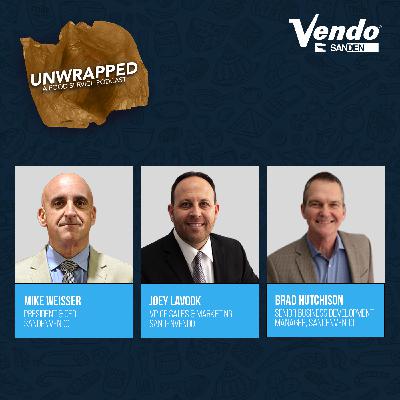
On this episode of Unwrapped: A Foodservice Podcast, brought to you by SandenVendo, host Daniel Litwin talked with Mike Weisser, President & CEO, Joey Lavook, VP of Sales & Marketing and Brad Hutchison, Senior Business Development Manager.This episode was unique as things returned to relative normality for the Nightclub & Bar Show 2021 in Las Vegas. The group discussed the show, how it kicks off a “what’s next” for the industry at-large, and how SandenVendo is innovating for the future of nightlife operations.One of the industries hit hardest by COVID, nightclubs and bars are geared up for a summer of high demand, new consumer and industry standards, and digging out of a financial hole.SandenVendo was on the floor with the rest of those in the industry. This event is huge symbolically for the industry, but also served as a leaping point into the post-COVID future. According to Weisser, the show expected over 40,000 attendees, and it’s almost like it’s kicking off the recovery of the bar industry.“This particular convention is critically important to the industry,” Lavook said. “First of all, we haven’t had any conferences or big meetings for the last year. Second, this is the show to show all the innovation and technology that’s going into restaurants and nightclubs. It’s really the who’s who in the industry.”SandenVendo is working on some innovative technologies at the moment, including a partnership with Nordic Beer Systems Inc. to add a beer dispensing tower system to your product portfolio.
The vending business isn’t exactly cutthroat, but it isn’t easy, either.SandenVendo America President and CEO Mike Weisser said the industry is full of people who will help out those in need of a little advice or clarification on a challenge they’re facing, be it on the technology side or elsewhere.“Let’s not forget the fellow vending operator as a resource,” Weisser said. “There’s not a lot of competitors within the vending operator market, and it really is like a family. Everyone is excited about the success of fellow vending operators. It’s a great resource.”Weisser and his team are among those who happy to help, especially with some of the biggest questions vending operators have. Whether to purchase new or used equipment is often the most important decision. Scott Winters, Regional Business Manager for SandenVendo America, has decades of experience in the space and has seen operators choose both paths.“New equipment provides the operator the peace of mind of knowing exactly what they’re getting, plus the warranty that backs up the equipment,” Winters said. “Purchasing used equipment could mean experiencing costs associated with service calls, repairs and downtime of equipment and, as a result, lost revenue and customer ill-will.”The team tracks both technological innovation and regulatory changes of things like refrigerants to make sure its clients stay on the cutting edge. They’re particularly interested in how environmental regulations will evolve under a new U.S. president. You can be sure if you reach out to them for advice, they’ll have the latest and be happy to help.
Mike Weisser, President and CEO of SandenVendo America, understands the GFV-9 front-loading vendor's importance as a mainstay in the foodservice industry. Since the inception of the glass front vending machine in 1972, technology continues to innovate and change the way people interact with self-service food and beverage devices.
SandenVendo’s GFV-9, likewise, carries on this tradition of advancement, innovation and change to stay relevant to today’s consumer needs. Weisser unwrapped the GFV-9 for a more in-depth look.
“Many different driving forces changed the landscape of cold-drink beverage vending over the years,” Weisser said. “It's consumer trends that shape what the vending machine is going to be, or what it is going to do, or how it is going to interact with the consumer.”
So, if consumers drive where the vending machine industry is going, what are the recent changes fueling today's vending machines?
“Over the last decade, we’ve seen a tremendous shift to healthier products, healthier beverages and a wider variety of products,” Weisser said.
If front glassing vending machines are the product showcase, how important is the product packaging, and does this importance play a role in vending design?
Touchless technology for vending machines isn’t new, but it’s possible you’ll be seeing it for the first time soon at a vending machine near you. The COVID-19 pandemic has forced many companies to think about surfaces that needed to be frequently cleaned. Vending machines can be those surfaces, but as Vagabond CMO Juan Jorquera noted, there is an easy solution that has been around for some time: Going touchless. “The technology is available, and it has been available and compatible with 80%-90% of the machines already out in the field, “Jorquera said. “Partnering with SandenVendo makes that scalability and that deployment even easier because they do have hundreds of thousands of machines out there already, and we’re able to tackle the right machine in partnership with the operators, with the accounts that know they need touchless.” With the pandemic and its quarantine orders also sending vending machine sales plummeting, the demand for new machines hasn’t been high. But Mike Weisser, President & CEO of SandenVendo, says the good news for operators of the 4.3 million vending machines in operation in the United States is that it’s easy to retrofit existing machines. “The overwhelming majority are capable of having this technology upgraded onto those units,” Weisser said. “So, once we consider not just new production units, but the ability to deploy on existing units, we have a little bit clearer image of the scalability of touchless throughout our markets.” American consumers may not be ready for machines like those in China with facial recognition, but paying with their phone and picking the product up from a drawer may be exactly what they need to feel comfortable returning to their previous habits when getting a snack or a drink.
The KuraBan refrigerated food storage unit may look like a typical commercial freezer, but looks can be deceiving. Robert Sparks, product engineer at SandenVendo America, and Mike Weisser, President, and CEO of SandenVendo America, unwrapped this latest product innovation for host Tyler Kern.
“The KuraBan technology deploys non-thermal electric field energy,” Weisser said. “It allows you to extend the shelf life, depending on the food, 10-15 times its normal shelf life.”
“We’re putting 5,000 volts of electricity in through the stored food product. It keeps the molecules within the food moving," Sparks said. "This doesn’t allow the product to freeze while stored in below-freezing temperatures.”
One of the most significant benefits of this process is the food is always fresh.
As for applications, Weisser believes the KuraBan cabinet could benefit the restaurant industry, where extending food storage life can add up to cost savings in reduced spoilage.
This technology will allow restaurants to dry age beef in-house without the expense of purchasing it already aged and without the volume loss that typically accompanies the dry-aged process.
“You can reap 100% of the finished product and the high margins of the aged-beef without any of the waste,” Weisser said.
Internet-connected devices have changed almost every industry, but their influence has been slow to reach vending and foodservice.That’s changing now, with the vending industry deploying many IoT devices and changing the future of vending forever.“I look at it as the connection between man and machine and what we do with it to enhance efficiency or enhance the consumer experience – how we use it to enhance safety,” said Mike Weisser, President and CEO of SandenVendo. “That ability is what IoT means to me in how we utilize that and deploy it throughout the equipment we manufacture in order to make other companies more efficient or enhance their customers’ experience when they make a purchase.”That experience is changing now that IoT technology is becoming more prevalent. Vending machines in the United States have looked very similar over the last four decades, but with touchscreens and other technologies becoming more prevalent, consumers are being reached in a way they never have been before.“With IoT, we are looking at cashless and are taking it one step farther. We’re talking about contactless. With this current technology, we’re able to utilize near-field communication. Before you approach, the vending machine – through the interaction of NFC – is able to communicate with your cell phone if you allow it,” said Paul Yang, General Manager of Aaeon Electronics, “In this case, the machine would know you’re approaching. Then you select your products through a touchscreen or with the app on your cell phone.”There also may be a scenario in which a user approaches the vending machine and yawns, triggering suggestions for a caffeinated beverage like a soda or an energy drink, or is sweating after a run, and the machine serves up its rehydrating options.Some of those advancements may seem far from the current reality, but there are smaller tweaks, as well – things like making suggestions that aren’t in the machine but could be delivered to the customer’s house the next day, or simply serving a relevant advertisement based on selection.Your 3 p.m. snack break may never look the same.
As the pandemic struck the United States, one of the first industries to feel its wrath was the foodservice industry. The majority of foodservice workers are out of work today due to the effect of SARS-CoV-2, more commonly known as COVID-19.
Mike Weisser, President and Chief Executive Officer at SandenVendo America, and Bruce Bickford, Senior Director of Corporate and International Sales at DALB, talked about the impact COVID-19’s having on the food industry and what their businesses are doing to help during this unprecedented moment in the 21st century.
DALB is a global parts provider for the vending industry, creating everything from vending fronts to graphic fronts, tops and sides, and other thermoformed pieces needed for vending machines.
When the pandemic struck and help was needed, DALB took swift action to transform their production into making products that could aid in keeping people safe. They are now producing protective face shields and polycarbonate barriers to protect checkout counters in grocery and convenience stores.
DALB is also producing informational decals stores are using to instruct customers on new safety procedures. As part of DALB and SandenVendo’s long-standing partnership, Weisser said they helped spread the word about DALB’s capabilities to assist with these safety and protection measures.
“While we wouldn’t normally provide or sell a cashier counter shield,” Weisser said, “that is something DALB has made available to us, and we are making available to the convenience store industry.”
Weisser recognizes the need for his company to stay open and continue to supply the needs of the convenience store industry during the pandemic.
“These businesses provide essential items to people at a time when it may prove challenging to get certain products elsewhere,” Weisser said.
From the first dispensers in ancient Rome to today’s cashless machines offering everything from candy to salads, the vending machine’s evolution is a fascinating journey. Mike Weisser, President and Chief Executive Officer at SandenVendo America, spoke about vending’s past, present and future.
In the past 25 years, Weisser’s seen some significant transitions in the industry. The move from 12oz beverage cans to 16 and 20oz bottles was a major shift in vending. And another change was the transition from carbonated soft drinks to bottled water and even sports drink offerings. Cashless systems and pay-by-phone apps are the latest advancements changing the vending machine industry.
Weisser noted that, throughout much of vending’s history, the technology behind it didn’t change much, but around the year 2000, the advent of robotic delivery systems began to transform the industry.
“Vending machines used to be pretty simple. Product packaging was more of a delivery mechanism, and now it’s become a marketing tool,” Weisser said.
All of the different packaging changes, including size, shape, weight and material, impact the delivery mechanisms of vending machines and keep Weisser’s company on its toes.
Consumer changes Weisser sees today are in healthy food, snacks and beverage options.
“These requests are causing us to put more thought into the delivery systems to handle the variances in the packaging of these items,” Weisser said.
How vending handles storing and distributing a salad is different than how it dispenses a bottled beverage.
Everyone has purchased a soda from a vending machine to quench their thirst, but where did they originate? And how does this convenient staple stay relevant? President and CEO of SandenVendo, Mike Weisser and VP of Operations David Button join host Tyler Kern to talk about the 80-plus-year history of the company and how the company has evolved with new technology.
SandenVendo was started in 1937 under the name “The Vendo Company,” and their flagship product was called “The Red Top.” The company and the vending industry saw extreme growth in the 1950s. They are known for being one of the first companies to introduce canned beverages in vending machines in the 1960s. In 1988, the Vendo Company merged with the Sanden Corporation of Japan, and it reached peak production in the 1990s. Japan is known for its proliferation of vending machines, with over 5 million of them, according to Business Insider.
Product development is what keeps SandenVendo moving forward, now. In the very beginning, the machines had trouble making change. Now, with computerization, the machines can take credit cards and payments from cell phones. Weisser and Button talked about the increasing number of products available in vending machines. Some items the two said SandenVendo offers range from hot pizza, fresh foods, technology devices (such as a dongle for a computer) and, of course, the standard soda.
Mike Weisser, President and CEO of SandenVendo America, and Joseph Lavook, Director of Sales & Marketing for SandenVendo America, came into the studio for this episode of SandenVendo's Unwrapped: A Food Service Podcast. They spoke with host Tyler Kern on the evolution of the convenience store, some of the new products introduced to serve the changing needs of the customer, and ways to solve the challenges these changes present.
Some products Weisser and Lavook mentioned help stores maximize the efficiency of their store footprint and shelf space. The purchasing behavior of customers is changing, and those changes present new challenges.
“It’s not so much that the customer has stopped buying chips, but they are making healthier choices,” Weisser said, “and they’re incorporating a salad in with their meal or grabbing a cub of yogurt. Stores need to make these items look attractive to the customer, to generate a faster turn on the shelf, because of the short shelf-life of these products.”
The demand for fresh-food products increases energy use at the store due to heating and refrigeration. Weisser said SandenVendo took that into consideration and focused on delivering new products to help increase energy-efficiency in the stores.
“We have four state-of-the-art test chambers in our facility, where we run a barrage of tests before we can get one of our products into a store for a user engagement trial,” Weisser said.
Lavook dropped some exciting news about a new product entering the U.S. market next year: a dual hot and cold beverage dispenser.
“This product could open up a whole new category and channel for beverage brands,” Lavook said. Another product that excited Lavook was an IoT enabled vending machine capable of age verification. This technology allows the device to sell alcoholic beverages.
Comments

Download from Google Play

Download from App Store
 United States