



 Claim Ownership
 Stinker Madness - The Bad Movie Podcast
Stinker Madness - The Bad Movie PodcastSubscribed: 482Played: 11,633
Subscribe

© All Rights Reserverd - Stinker Madness
Description
Stinker Madness is a bad movie podcast that loves horrible films that might actually be wonderful little gems. Or they could suck. Cult, budget and "bad" movies twice a week.
668 Episodes
Reverse

Everything you want in a cheesy disaster...disaster.
If you’ve ever wondered what would happen if a disaster movie inhaled a gallon of jet fuel, ignored every known law of physics, and then sprinted straight into absurdity with a grin, The Concorde... Airport '79 is your answer. This is high “so bad it’s good” cinema - a movie so committed to escalating nonsense that it becomes a kind of accidental masterpiece. It doesn’t just jump the shark; it straps the shark to the Concorde and fires it into international airspace.
The effects are gloriously, unapologetically cheesy. Miniatures wobble, explosions bloom like overcooked popcorn, and the Concorde itself seems to operate on a proprietary fuel source called “plot convenience.” Missiles zigzag like confused bottle rockets, fighter jets materialize only to be obliterated moments later, and physics as a concept is treated less like a rulebook and more like a vague suggestion. The sheer number of McDonnell Douglas F-4 Phantom IIs that get blown out of the sky “just because” is almost impressive - like the movie is trying to win a bulk discount on destruction.
Then there’s Robert Wagner as the villain, a man so dedicated to covering up his crimes that he creates exponentially worse problems at every turn. It’s like watching someone try to put out a grease fire with dynamite. His master plan hinges on an evil corporation deploying what may be the least effective missile system ever conceived - an instrument so catastrophically unreliable that it becomes the film’s secret comedic MVP. Every time it fires, you’re less worried about the Concorde and more curious about what unintended target it’ll embarrassingly fail to destroy next.
And presiding over this carnival of chaos is George Kennedy, reprising his role with the energy of a genial battering ram. He doesn’t so much act as he exists - a walking, talking, reassuringly friendly phallus of authority who blusters through scenes with unwavering confidence and zero concern for plausibility. It’s oddly comforting. In a movie where nothing makes sense and everything explodes, Kennedy is the human equivalent of a thumbs-up.
All told, The Concorde... Airport ’79 is less a film and more a spectacle of glorious incompetence. The stakes are absurd, the logic is nonexistent, and the execution is delightfully misguided. But that’s exactly why it works. It’s a beautiful disaster - loud, ridiculous, and endlessly entertaining for anyone who appreciates their cinema served with a heavy side of unintentional comedy.

Final Destination 5 arrives with the same promise every installment in the franchise makes: elaborate Rube Goldberg death traps, a group of attractive but personality-free victims, and the vague hope that maybe—just maybe—this time they’ll do something different with the concept. Instead, the film dutifully clocks in for another round of “Death’s master plan,” delivering exactly what you expect and little else. It’s the cinematic equivalent of a factory resetting itself every ninety minutes.
By the fifth go-around, the plot mechanics have become painfully transparent. A premonition saves a handful of people from a spectacular disaster, they try to cheat Death, and then the universe conspires to kill them one by one using household items, loose bolts, and questionable workplace safety standards. The film acts as if it’s revealing some grand mystery about Death’s rules, but if you’ve seen even one previous entry you can practically write the script yourself. The series has settled into a rut where the only innovation is how absurdly complicated the next fatal accident can become.
And even that’s starting to feel tired. The elaborate death sequences still have a certain morbid creativity, but the tension is diluted by the endless fake-outs—every loose screw, dripping liquid, or falling object telegraphs a possible kill before the movie finally decides which one it wants. When the highlight of the film is watching characters stand around while the camera lingers on potential hazards, you start to realize the movie has mistaken suspense for stalling.
What really sinks Final Destination 5 is the sludge of dialogue in between these moments. Characters exist solely to explain the rules or panic about them, and the performances rarely rise above that thin material. The result is a sequel that trudges through the same narrative mud the franchise has been stuck in for years. The deaths might be bigger and dumber, but by this point even those feel oddly unfulfilling—like watching the same carnival trick repeated until the novelty finally wears off.

Chuck, we can't understand the plot because we can't understand your inner monologue. Just kick people in the face!
There’s a version of this movie that exists somewhere in the fog of its own whispery voiceovers—a lean, paranoid ninja thriller starring a prime-era Chuck Norris. Unfortunately, what we actually get is something bafflingly stupid and surprisingly hard to follow. Dialogue drifts in and out like it’s being transmitted through a malfunctioning shortwave radio. Exposition arrives in murmured internal monologues that feel less like insight and more like someone forgot to turn off the narration mic.
To be fair, the ninjas are fine. They look the part. They flip, stab, and smoke-bomb on cue. The action sequences are… fine. Competently staged, occasionally energetic, and punctuated by the sort of sternum-crushing kicks you expect from Norris. When fists are flying, the movie briefly wakes up. There’s even a sense that someone involved cared about presenting ninjas with a degree of mystique rather than just costumed stuntmen in pajamas.
But those moments are islands in a sea of inertia. For long stretches, the film is painfully boring. Scenes drag. Characters speak in hushed tones about vague conspiracies, yet none of it ever quite coheres into something gripping. The supposed menace of the terrorist-ninja training compound never translates into tension. Instead of escalating stakes, we get a parade of bland set-pieces and conversations that feel both overwrought and underwritten at the same time.
In the end, The Octagon isn’t disastrously bad—it’s just inert. The ingredients are there: Norris in his stoic prime, a ninja cult, a secret training fortress. But the muddled dialogue and lifeless pacing sap the energy out of what should have been pulpy gold. If you’re a completist for early American ninja cinema, it’s worth a look. Just don’t expect the kind of delirious nonsense that turns mediocrity into magic.

Did you pack your Ninja Springs, honey?
There are ninja movies… and then there is Super Ninja (1984)—a film so aggressively committed to every ridiculous shinobi trope ever conceived that it loops right past parody and into accidental genius. If you’ve ever wanted to see color-coded assassins deploy zip-lines, burrow through the earth like caffeinated gophers, and—yes—water-ski in full ninja regalia, this is your holy text. And just when you think the well has run dry, it introduces portable ninja trampolines as a legitimate method of tactical traversal. Cinema peaked here.
The plot? Oh, it exists. Somewhere. It requires light excavation. Characters explain things in stilted, echo-chamber-dubbed dialogue that sounds like it was recorded inside a soup can. The villains concoct plans so catastrophically self-defeating that the entire narrative collapses into what can only be described as an “idiot plot.” If any antagonist paused for even a single reflective breath, they’d realize their schemes only accelerate their own doom. In fact, the most logical strategy available to them would be to do absolutely nothing and let events unfold naturally. But no—when you’ve invested in a team of color-coded ninja knockoffs, you’re obligated to deploy them in increasingly absurd ways.
And yet, that’s precisely why Super Ninja works. The dreadful dubbing, the hilariously wooden line readings, the narrative leaps that feel like missing reels—all of it enhances the experience. It’s chaotic, earnest, and completely unselfaware. There’s a strange purity to its excess. This isn’t a film winking at you; it believes every trampoline-assisted midair flip matters. For bad movie enthusiasts hunting that electric “so-bad-it’s-good” high, this is prime territory. It’s messy. It’s nonsensical. It’s spectacularly misguided. And it is absolutely glorious.

The Final Destination is the point where a once-clever horror concept finally admits it has nothing left to say. By the fourth entry, the franchise’s core gimmick—cheating Death via a premonition—has gone from macabre novelty to rote obligation. The film feels less like a continuation and more like a contractual requirement, dutifully shuffling through the motions with no real interest in escalating ideas or tension.
The most obvious sign of creative exhaustion is the desperate embrace of 3D. Objects fly at the camera with all the subtlety of a carnival ride, and none of it integrates meaningfully into the storytelling. Instead, scenes pause so a tire iron, lawn mower blade, or random shard of debris can be hurled directly at the audience, reminding you that the movie exists primarily to justify its ticket surcharge. It’s not immersive; it’s intrusive, and it dates the film almost immediately.
Worse, the kills themselves lack the elaborate Rube Goldberg flair that once defined the series. The chain reactions are shorter, sloppier, and often telegraphed so clearly that suspense evaporates well before the payoff. Characters are thin sketches whose sole narrative function is to stand near something dangerous until the script decides it’s time for gravity or combustion to intervene.
There is, however, one scene that almost feels like effort was expended: a cartoonishly vile Nazi who can’t read addresses and somehow gets blackout drunk on three beers. His demise is abrupt, mean-spirited, and oddly satisfying—less because it’s clever than because the film briefly aligns audience morality with Death’s bookkeeping. He dies, and that’s good. Unfortunately, that single moment of grim amusement isn’t enough to rescue a sequel that mistakes louder, closer, and more gimmicky for fresh.

It shouldn't be possible but we've cracked the code and found the movies villain to be....NEDSTRADAMUS!
Demons is the kind of movie that feels less like it was written and more like it escaped from a nightmare after being fed too much cocaine and heavy metal. Set almost entirely inside a movie theater where watching a cursed film literally turns the audience into demons, it’s pure mid-’80s Italian horror excess—loud, bloody, and unapologetically stupid. It’s also the kind of film where logic checks out early, clocks out halfway through, and never returns.
To be fair, Demons can be tedious and repetitive. The structure settles into a loop of people getting infected, screaming, transforming, and being hacked apart, over and over again. Characters are thin to nonexistent, dialogue exists mostly to scream exposition, and the film often feels like it’s killing time until the next gore effect or shrieking synth cue. There are stretches where you can practically feel the movie spinning its wheels, daring you to lose patience.
But here’s the thing: the story is so profoundly nonsensical that it becomes hypnotic. Plot threads appear and vanish without explanation. Rules are implied and then immediately ignored. Geography inside the theater makes no sense whatsoever. And then there’s the final 15 minutes—an escalation so baffling, so disconnected from reality, that it crosses the line from dumb to glorious. Motorcycles, katanas, helicopters, demon slime—everything is thrown at the screen with reckless confidence, as if the filmmakers themselves stopped asking questions and decided to go all in.
That commitment is what makes Demons a worthwhile “Bad Movie Sunday” experience. It’s not accidentally funny so much as aggressively insane, a film that believes in its own chaos with absolute sincerity. Yes, it drags. Yes, it repeats itself. But by the time the credits roll, you’re not thinking about the dull patches—you’re laughing, confused, and strangely satisfied. Demons may not be good, but it is unforgettable, and sometimes that’s the highest compliment a cult horror film can earn.

Looks like we missed the turn to go to Nilbog, kids. Let's just keep going to Norway.
Troll 2 is the kind of sequel that knows exactly what it is and leans into it with reckless enthusiasm. This is a big, loud, gloriously dumb monster movie that wears its influences proudly on its sleeve—Roland Emmerich disaster excess, Indiana Jones-style pulp adventure, Jurassic Park escalation, and Godzilla-scale city-smashing spectacle. It doesn’t apologize for any of it. Instead, it barrels forward with the confidence of a film that understands the assignment: entertain first, think later.
The plot is predictably ridiculous, but that’s part of the charm. Ancient threats awaken, governments panic, scientists shout exposition, and ordinary people find themselves running very fast from things that absolutely should not exist. The film gleefully stitches together familiar blockbuster tropes, but does so with enough sincerity that it never feels cynical. It’s corny, yes—but it’s fun corny, the kind that invites you to laugh with the movie rather than at it.
Where Troll 2 really shines is in its scale and energy. The action sequences are big, messy, and frequently absurd, but they’re staged with surprising clarity and enthusiasm. The trolls themselves are impressively realized, blending creature-feature menace with just enough mythic weirdness to give the film a distinct Norwegian flavor. The movie may be chasing Hollywood spectacle, but it never completely loses its regional identity, and that grounding helps the madness go down easy.
In the end, Troll 2 is a celebration of blockbuster stupidity done right. It’s not trying to reinvent the genre or inject faux prestige into monster mayhem. It just wants to smash landmarks, crank the music, and keep the audience grinning for two hours—and it succeeds. If you enjoy over-the-top disaster movies, pulpy adventure throwbacks, and unapologetically silly spectacle, this sequel delivers exactly what it promises, and does so with a big, dumb smile on its face.

Seems like this isn't the first time Mrs. Clause has run off to an exotic location filled with thirsty dudes.
“Finding Mrs. Claus” is one of those movies that exists in a very specific cinematic snow globe, and if you’ve spent any time in that globe, you already know exactly what you’re getting. This is pure Lifetime Christmas programming: wholesome, gentle, slightly artificial, and utterly uninterested in surprising you. It’s not bad, not embarrassing, and not particularly memorable—it’s just there, humming softly like a string of pre-lit lights you forgot to unplug.
The premise is simple and relentlessly pleasant: Santa’s been neglecting Mrs. Clause after 500 years of marriage, so she whisks off to Las Vegas to help fulfill a girls dream of her mother finding a new husband. Mira Sorvino brings a level of competence and warmth that slightly exceeds the material, which helps the movie coast along without ever fully collapsing under its own predictability. Everyone involved seems perfectly aware of the assignment and executes it with calm professionalism.
Ultimately, “Finding Mrs. Claus” is a textbook example of its genre. If you enjoy Lifetime or Hallmark Christmas movies, this is a pretty good one and will likely deliver exactly the cozy, low-effort holiday vibes you’re looking for. If you don’t like those movies, absolutely skip this—there is nothing here that will convert you. It’s not trying to win over skeptics, and frankly, it doesn’t need to.

Getting the unique title of being so bland that it isn't worth it's own terribleness.
Aquaman and the Lost Kingdom is the rare kind of bad movie that doesn’t even earn the dignity of being fun bad. It’s a two-hour shrug—completely unremarkable in its beige, water-logged blandness. You keep waiting for something—anything—to break the monotony, but the movie just keeps paddling in circles, content to be as tepid as possible. If “wet cardboard” were a cinematic aesthetic, this would be its crown jewel.
And here’s the truly tragic part: there is plenty of stupidity floating around in this bloated fish tank of a plot. Dumb worldbuilding, goofy lore drops, baffling character motivations—you name it. The ingredients for a delightfully trashy disaster are all right there, begging to be mocked. But the presentation is so suffocatingly dull and flavorless that you can’t even muster the energy to enjoy the nonsense. It’s like being handed a plate of absurdly shaped food but discovering it somehow tastes like nothing at all.
The cast flounders through their scenes, seemingly unsure whether they’re in a superhero epic, a Saturday morning cartoon, or a contractual obligation. The action is limp, over-processed, and slathered in CGI so flat and lifeless it makes a screensaver look dynamic. Even the attempts at humor feel like they’ve been filtered through three committees and a desalination plant.
By the time the credits roll, you’re left not with irritation or amusement but with the numbing realization that you just watched a movie that managed to squander every opportunity to be interestingly bad. Aquaman and the Lost Kingdom isn’t a glorious shipwreck—it’s a soggy beige sponge. And there’s nothing here worth squeezing.

“Air Force One” is the kind of movie that grabs you by the collar, shouts “GET OFF MY PLANE,” and dares you not to grin through the whole ride. It’s the most unabashedly earnest “Fly Hard” ever committed to film—yes, it’s Die Hard on a plane, and yes, it knows it. Yet somehow, through sheer force of will (and Harrison Ford’s presidential scowl), it keeps its two-plus hours aloft with crowd-pleasing momentum.
Sure, the premise is absurd to the point of parody: the President of the United States personally throwing hands with terrorists at 30,000 feet. The script asks you to swallow far more than peanuts—plot holes you could taxi a 747 through, logic leaps that would make John McClane blush, and an “Idiot Plot” where the villains make decisions that seem scientifically engineered to defeat themselves to keep the movie going. But the movie never stops long enough for any of that to really sink in. It just keeps hustling, barreling from corridor shootout to cockpit crisis like a blockbuster with someplace urgent to be.
The special effects… well, bless them. Even in the late ’90s, some of these shots looked suspiciously like the world’s most patriotic PlayStation cutscenes. But their rubbery seams and digital wobble just add to the charm—this is a movie that’s trying so hard to thrill you that you forgive it for occasionally looking like a flight simulator running on Windows 95.
And that’s the thing: despite its flaws—maybe even because of them—Air Force One is a blast. Ford and Oldman chew the scenery with gusto, the pacing never really sags, and the film delivers exactly the kind of fist-pumping, flag-waving nonsense it promises. It might be ridiculous, but it’s ridiculously entertaining.
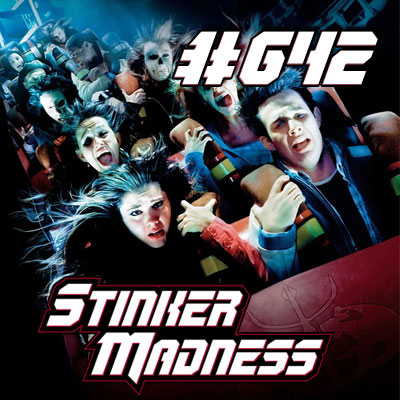
Final Destination 3 marks the point where the series’ once-ingenious death-trap premise starts to feel a bit mechanical. The franchise’s formula — a character foresees a horrific accident, cheats Death, then scrambles to outwit its unseen design — is intact but beginning to show its age. The opening roller-coaster disaster is spectacularly staged, yet it’s also a reminder that we’ve seen this all before, only with diminishing returns.
There are still flashes of the dark humor that made the earlier entries work, particularly in some of the elaborate kill sequences. But here the film seems oddly unsure of whether it wants to play things straight or wink at its own absurdity. Gone is much of the gleeful self-awareness that made Final Destination 2 such a fun, macabre ride; instead, FD3 leans harder into teen angst and pseudo-philosophical dread.
Mary Elizabeth Winstead does her best to ground the chaos with a solid performance, and the inventive set-pieces — especially the infamous tanning bed scene — keep things intermittently lively. Still, the connective tissue between the deaths feels more like an obligation than a thrill, with dialogue that takes itself far too seriously for a film about Rube Goldberg-style fatality.
By the time Death checks off its last victim, Final Destination 3 feels less like an inevitability and more like repetition. It’s not bad, just tired — a middle entry coasting on the momentum of its predecessors rather than carving out a fresh reason to exist.

There’s a great movie hiding somewhere inside The Adventures of Buckaroo Banzai—but you’ll need a map, a microscope, and probably a flux capacitor to find it. Despite its gloriously weird premise and a cast that includes Peter Weller, Jeff Goldblum, John Lithgow, and Christopher Lloyd, the film feels like the cinematic equivalent of someone dumping every genre into a blender and forgetting to hit “mix.” What could have been a clever cult adventure ends up as a directionless mishmash that mistakes confusion for complexity.
The biggest sin here isn’t that the film is weird—it’s that it’s aimlessly weird. One moment it’s a rock ’n’ roll adventure, the next it’s a dimension-hopping sci-fi, and then suddenly it’s a love story or a satire. The problem is it never commits to any of those identities long enough for the audience to care. Every cool idea is buried under three others that go nowhere, leaving the viewer dazed rather than dazzled.
And while the cast is stacked with talent, even they can’t bring focus to the chaos. Weller plays Buckaroo like a man who just read the script five minutes before filming, while Lithgow chews scenery in a way that’s entertaining only because nothing else is. The movie keeps hinting at depth—a sprawling universe, quirky characters, offbeat humor—but it never follows through. It’s as if someone wrote ten beginnings and forgot to write an ending.
At the end of the day, Buckaroo Banzai isn’t strange enough to be a great cult film and not coherent enough to be a good one. It’s a cinematic shrug—full of potential, short on payoff, and surprisingly dull for something that promises interdimensional adventure. A “so bad it’s good” movie at least makes you laugh; this one just makes you wish it would pick a lane and go somewhere—anywhere—interesting.

“Cabin Pressure” (2003) is the cinematic equivalent of being stuck on the tarmac forever with a dying paperback and a screaming air vent. It’s not just dull; it’s aggressively, proudly dull—an unviewable mess that mistakes droning cockpit chatter and recycled stock footage for suspense. If turbulence were interesting, this movie would still find a way to taxi around it.
From the opening minutes, the film announces its priorities: beige sets, beige lighting, beige characters speaking in acronyms about systems we never see break in any satisfying way. Scenes repeat like safety demonstrations—pointless, bloodless, and performed by people who look like they’ve already mentally clocked out of the shift. The “action” is mostly cross-cutting between bored faces and a model plane that’s never given a convincing sense of scale, speed, or danger. You can practically hear the temp track begging to be replaced by something—anything—with a pulse.
The script is a wasteland of clichés and filler, the kind of movie where every problem is solved by the next line of dialogue rather than an actual set piece. No character has an arc; they have altitudes. Every attempt at ratcheting tension stalls into holding patterns: more radio chatter, more hollow commands, more reaction shots that mistake blinking for acting. Even the inevitable “hero moment” feels perfunctory, like someone looked at their watch and said, “Guess we should land this thing.”
For Stinker Madness seekers, there’s no campy payoff here—just the slow, oxygen-starved fade of a production that never gets off the ground. “So bad it’s good” requires swagger, accident, or at least a spectacular crash. “Cabin Pressure” offers none of that. It’s boredom at cruising altitude: a feature-length layover where the only emergency is keeping your eyes open.

If you ever needed a reminder that some remakes shouldn’t exist, 2025’s War of the Worlds delivers it in spades. This is not just a bad movie—it’s the kind of cinematic faceplant that makes you wonder how anyone signed off on it. The acting is flat-out terrible, with Ice Cube headlining in a role that feels less like a performance and more like someone wandered onto set after being told he was shooting a different movie. The whole thing reeks of miscasting, misdirection, and missed opportunities.
The real insult, though, is how aggressively this film relies on the “Idiot Plot”, a story that only moves forward because every single character makes the dumbest possible choice at every possible moment. Characters stand around waiting to get vaporized, make suicidal detours for no reason, and never once act like actual human beings dealing with an alien apocalypse. It’s not suspenseful, it’s not dramatic—it’s just aggravating to sit through.
Visually and tonally, the film is stuck in a post-COVID hangover haze. The world feels small, tired, and drained of life, not in a gritty, artistic way, but in a “we shot this at our desks because we couldn't go outside” kind of way. The whole thing becomes an unintentional time capsule of how much the pandemic gutted creativity and ambition. Watching it is like staring into the ghost of an industry still trying to find its footing—and tripping over itself at every step.
Ultimately, 2025’s War of the Worlds isn’t just a bad remake, it’s a sad reminder of what happens when you try to drag a classic into the present without talent, vision, or even basic competence. It’s noisy without being exciting, dumb without being fun, and joyless to the core. If the aliens really wanted to wipe us out, the fastest method would have been just screening this movie to humanity on loop.

Rutger Hauer and Gene Simmons squaring off sounds like the recipe for a wild cult classic, but Wanted: Dead or Alive (1987) ends up being more lukewarm than explosive. On paper, it’s a hybrid of gritty crime thriller and high-octane action flick, but the way those genres are handled here creates a constant tug-of-war. The crime elements are played too straight, dragging the pacing down, while the action beats aren’t stylish or kinetic enough to pull the film into popcorn territory. The end result sits uncomfortably in the middle—not pulpy enough for “so bad it’s good” status, but not sharp enough to be genuinely gripping.
The script is one of the biggest culprits. Dialogue is so flat and mundane that Hauer, who could carry almost anything with his screen presence, is forced to chew scenery just to keep viewers from nodding off. You can practically see him straining to inject some life into lines that might as well have been lifted from a TV procedural. Meanwhile, Simmons as the villain brings his usual menace, but the writing undercuts him—his terrorist mastermind never feels threatening so much as silly, especially when the movie leans on his boneheaded schemes.
That said, there are flashes of entertainment value if you squint hard enough. The movie indulges in one of the purest forms of “Idiot Plot” with the villain’s bizarre tactic of stuffing henchmen into barrels and honking a horn to unleash them like evil jack-in-the-boxes. It’s laughable, but at least it breaks up the monotony with something memorable. A few of the action sequences manage to land simply because Hauer sells the physicality, even if the staging is clunky.
In the end, though, Wanted: Dead or Alive is a middling watch. It doesn’t embarrass itself enough to be a riot, nor does it have the chops to rise above its B-movie roots. Instead, it drifts in no-man’s-land—a serviceable but unremarkable relic of the late ’80s action-crime craze. Hauer fans might find a few scraps of fun, but anyone else will likely forget it by the next morning.

Fasten your seatbelts and stow your disbelief, because “Crash Landing” (2005) is Wynorski at cruising altitude—never aiming for art, but always ready to drop the landing gear on your funny bone. This is the kind of movie where gravity is optional, logic is banned from the cabin, and an entire cargo hold of explosions—many borrowed from other, possibly better, movies—are always just a nervous copilot away from erupting. If you’re a Wynorski fan, you know exactly what kind of clearance you’re in for: low, turbulent, and unapologetically entertaining.
Antonio Sabato Jr. takes the stick as the world’s most reluctant action hero, trying to land a plane full of rich snotty college kids who end up in a kidnapping plot - over the Pacific Ocean. The acting, if you can call it that, ranges from “midday soap” to “community theater hostage situation.” The villains are less “Die Hard” and more “Weekend at Bernie’s,” bumbling their way through a hijacking plot so dumb you almost wish they’d succeed, just for the novelty.
Special mention must go to the action set pieces—chiefly the endless parade of stock explosions and crash footage Frankensteined from the vaults of late-90s action movies. The airplane’s physics seem to exist in a separate reality where turbulence is whatever the camera operator can shake into frame, and gunfights happen in slow motion, possibly to save money on blanks. Add in the kind of CGI that would embarrass a 2001 Weather Channel forecast and you’ve got a recipe for a beautiful, cheesy mess.
“Crash Landing” isn’t trying to fool anyone. It knows it’s ridiculous, it revels in being ridiculous, and, best of all, it delivers the kind of brainless, late-night fun that Wynorski made his name on. If you’re here for believable drama, you’ve boarded the wrong flight. But if you want to laugh, riff, and marvel at how many ways one movie can break the rules of both Hollywood and aerodynamics, this is your ticket to so-bad-it’s-good bliss.

Final Destination 2 is a symphony of stupidity—and I mean that as a compliment. It’s the kind of gloriously dumb horror sequel that knows exactly what it is, knows exactly what you came for, and wastes not a single moment trying to be anything more. This is 90 minutes of elaborate, Rube Goldberg murder machines soaked in blood and irony, gleefully cooked up for maximum squirm, scream, and laugh-out-loud shock value. It’s dumb, it’s low-brow, and it’s absolutely perfect at being both.
The movie wastes no time setting the tone: a now-iconic highway pile-up that feels like someone gave Michael Bay a box of Hot Wheels and told him to film a snuff film. From there, the film doesn’t bother with character development beyond “this one’s kind of a jerk” and “that one’s probably doomed” because it has better things to do—namely, assembling ludicrous, overly complex death scenes like it’s competing in a sadistic engineering contest. The real star isn’t any of the humans, it’s the absurd chain reactions involving ladders, air bags, barbed wire, and a spaghetti of fate that could only exist in this series.
What sets Final Destination 2 apart from other gore-porn offerings is its laser focus. It has a mission—deliver karmic, over-the-top death scenes wrapped in a thick coating of schlock—and it executes (pun intended). There’s no meandering subplot, no slow-burn psychological twists. It’s pure horror junk food: bloody, crunchy, and instantly satisfying. The movie also dials up the black comedy with every scene, letting the audience lean into the absurdity. It knows you’re laughing at it, and it wants you to laugh harder.
And let’s talk karma—because this sequel adds an extra little spice to the kills. Everyone who gets got sort of had it coming, and the movie leans into this with a smug wink, giving the audience permission to cackle through the carnage. There’s something almost therapeutic about watching these characters try to outmaneuver Death while it patiently flexes its Final Destination “gotcha” muscles. It’s a greasy, gory good time, and unlike many horror sequels, it actually delivers what it promises—nothing more, but certainly nothing less.

Clive Barker’s Nightbreed is the cinematic equivalent of an overstuffed trunk at a goth rave—wildly imaginative, beautifully adorned, and totally incapable of deciding what it wants to be. Packed with jaw-dropping creature designs, luscious makeup work, and a thrilling Danny Elfman score that pulses with dark fantasy energy, Nightbreed sets the table for a full-course horror feast. Unfortunately, the meal comes out half-cooked thanks to tonal confusion and a protagonist who drifts through the story like a half-deflated pool float.
Adapted from Barker’s novella Cabal, the film tells the story of Boone, a tormented man drawn to the subterranean world of Midian—a hidden city of monsters, outcasts, and literal night-breed. It wants to be a dark fairytale, a slasher, and a misunderstood superhero origin story all at once. And it kind of is... but not in a good way. Serial killer subplots rub awkwardly against messianic chosen-one arcs, while police shootouts interrupt poetic monster mythology. It’s like watching Hellraiser crash into X-Men, then take a wrong turn through Copland.
Still, if you’re a fan of practical effects and monster lore, Nightbreed is a visual banquet. The creature makeup is top-tier—each Nightbreed has their own unique look and feel, some terrifying, some oddly beautiful, all memorable. The world of Midian is fascinating in concept, with real potential to launch a whole franchise of supernatural antiheroes (which it almost did).
But anchoring all of this is Boone—a man so passive and charisma-deprived it’s a wonder the monsters didn’t just vote for someone else. His transformation from haunted man to reluctant savior is so subdued it barely registers, making it hard to care when the bullets start flying and Midian burns. Nightbreed deserves credit for aiming high, but its soaring ambitions are clipped by structural chaos and a limp lead. Watch it for the monsters, the mood, and the Elfman score—but don’t expect a satisfying story to match the spectacle.

If you’re in the mood for a mid-altitude crisis that checks every air disaster box without ever pushing the emergency slide of insanity, Rough Air: Danger on Flight 534 is the in-flight entertainment you never asked for—but might not mind watching with a bag of stale pretzels. This 2001 made-for-TV thriller stars Eric Roberts, who delivers one of the most aggressively disinterested performances in a movie about a plummeting death tube ever recorded. And yet, somehow, the film still finds a way to stay airborne as an enjoyable slice of light turbulence TV cheese.
The plot is your standard disaster blueprint: a disgraced pilot (Roberts) is pulled out of aviation exile to take over a flight after the captain suffers a sudden heart attack mid-flight. Cue the typical cabin drama: nervous passengers, a weepy stewardess, shaky controls, a storm system on the radar, and the always-welcome fuel crisis. But instead of going full barrel roll into each disaster trope, the film kind of… brushes up against them. It starts to nosedive into clichés and then levels off just before impact, leaving you wondering if it’s building to something bigger. (Spoiler: it’s not.)
What really sells the surreal mediocrity of the movie is Eric Roberts, who is not so much phoning it in as texting it in from a burner phone. His emotional range here is somewhere between “waiting at the DMV” and “mildly annoyed a vending machine ate his dollar.” The stakes may be life or death, but Roberts plays it like he’s watching a curling match and doesn’t know the rules. He’s not wooden. He’s laminated indifference.
Still, there’s something kind of comforting about the movie’s half-hearted commitment to disaster movie glory. It never crashes and burns, nor does it soar. It just floats in the airspace of “pretty okay.” If you’re a fan of “Fly Hard” flicks—where troubled pilots, stormy skies, and panicked passengers do their dance—this is a breezy 86-minute ride. Just don’t expect to remember anything about it once you’ve deplaned.

This special episode we go through our favorite bad and cult movies from our 10th year in podcasting. We'll also give our favorite 3 movies from the year 2024.


Download from Google Play

Download from App Store
 United States
Seriously guys, even the mythbusters covered that goldfinger thing as an urban myth. The actress was perfectly fine.
y'all guy do problem child
generic diet We Hate Movies that's meh