


 Claim Ownership
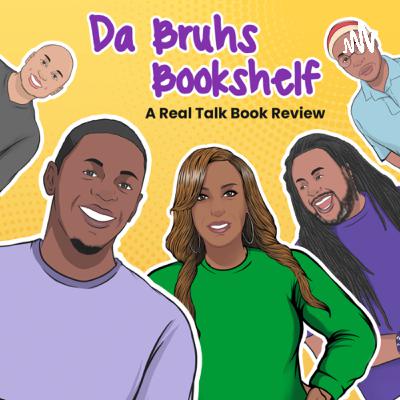
Da Bruhs BookShelf
Subscribed: 16Played: 440
Subscribe

© Da Bruhs
Description
An entertaining book review podcast with host Osborne Givens, Dr. Theresa Smith-Givens, Walter Atkins, Dr. Harvey Hinton III, Donovan Snype, and Steven Gilliam. All the men are members of Omega Psi Phi Fraternity, Incorporated, and they provide raw commentary and in-depth insight on the content. Each episode, they dissect parts of featured books and invite the listeners in on a bruh discussion. This podcast is sure to keep listeners glued to their speakers.
90 Episodes
Reverse
This episode the bruhs discuss From #blacklivesmatter to Black Liberation by Keeanga-Yamata Taylor. Keeanga-Yamata does an excellent job deconstructing the myths around injustices inflicted on blacks, dispelling negative myths regarding work ethic, morals, and will to achieve. We’re taken on a succinct and tacit journey from the middle passage all the way to the killing of Michael Brown. Taylor indicts white-supremacists, black activists, and the black bourgeois for perpetuating the narrative that has been so harmful to blacks. Join the bruhs in this passionate discussions.
On this episode, the Da Bruhs explore Shawn D. Rochester’s “The Black Tax: The Cost of Being Black in America.” The book gives discrete examples not only of how being black causes one to pay more for homes, cars, and all of life’s necessities, but also the missed opportunities and lost wages black people often aren’t even aware of. Join us, as the Da Bruhs share stories of being taxed and the impact on the greater society.
Da Bruhs take on “Hurricanes,” a memoir of Rick Ross. Ross chronicles his life growing up as a middle-class black kid in Mississippi who is uprooted to Miami once his dad got a promotion. It wouldn’t be long before the allure of the streets beckoned him into a life of hustling. We are taken from his early adolescence through his days as a correctional officer and onto his rise as a Rap heavyweight. Da Bruhs meet this story with the skepticism, adulation and hostility usually reserved for the play cousin that likes to lie. Tune in as the Da Bruhs discus
The bruh’s review Brit Bennett’s The Vanishing Half, a tale of twin sisters who now live very distant lives, but are eternally entangled. Twins Desiree and Stella Vignes decide to escape a life of what they believe to be monotony and unreconciled strivings for what they thought would be more. Things take a fascinating turn when one of the twins absconds and decides to live the rest of her life as a white woman. This novel if full of twists and raises questions on what identity is and how its function affects our lives. We cover topics on race, gender, sexuality, and the quality of self-worth versus the world’s continuous effort to define us.
In this episode, Da Bruhs tackles Nigger: An Autobiography by comedian, civil rights activist, and truth-teller Dick Gregory—a bold, unapologetic account of a life lived at the intersection of poverty, pain, protest, and punchlines. First published in 1964, Nigger is not just an autobiography; it’s a declaration, a protest, and a deeply personal journey into the soul of a man who refused to be defined or diminished by America’s most loaded word.Gregory reclaims the slur that once sought to dehumanize him, using it as both the title of his book and the entry point into a story that mixes sharp wit with heartbreaking realism. From his childhood in St. Louis, raised in deep poverty, to his rise as one of the first Black comedians to break the color line in white nightclubs, Gregory uses humor as a weapon and a shield. But this memoir isn’t just about comedy—it’s about protest, sacrifice, and the cost of telling the truth.The episode explores how Gregory's political awakening came at the height of the civil rights movement, shifting his career from comedy to activism. His story becomes a raw chronicle of racism in America, a mirror reflecting the hypocrisy of a nation that celebrates freedom while denying it to so many. The podcast highlights Gregory's voice—fierce, unfiltered, and radically honest—as he details encounters with injustice, brushes with the FBI, and moments of deep personal loss.We also unpack the legacy of the book’s title. Gregory famously wrote in the introduction:"Dear Momma — Wherever you are, if ever you hear the word ‘nigger’ again, remember they are advertising my book.”

Stay With Me - Some marry love. Some marry for money. But when the locus of your marriage's purpose comes from a place without, what are those involved to do to keep the love within? Stay With Me, is the interrupted love story of Yejide (ye gee day) and Akin (akeen), lovers content with one another, whose happiness is put under the strain of pressures of family and what others define a family to be. When the couple experience difficulty having a child, they find they have no safe refuge in family. The ends to which the lovers go to satisfy perceived wants and needs lead to an intimate story of shock, betrayal, and ultimately redemption as told by from the perspective of both spouses.
On this podcast episode, the Bruhs discuss James Baldwin’s “Giovanni’s Room.” This tragic love story follows David, a man who struggles with balancing self-acceptance against the norms of society and ultimately leads him to lose the only person who loved him. Set against a background of 1940's Paris, Baldwin skillfully binds us to these star-crossed lovers who can never be. We’re joined by one of the bruh’s daughters, Nikyya, who offers a fresh perspective on the tale.
Another episode where we delve into the content of a popular book by a popular radio host who has made a career out of broadcasting his truth.
Brother Don a Chicago Police Sergeant walks the host Bro. Lennon Givens and Dr. Harvey Hinton III on a Journey growing up and policing on Chicago’s southside in the notorious West Englewood neighborhood. From shutting down drug houses and working with the city of Chicago’s social services to have practices in place to relocate the residence after their building has been raided by law enforcement.
There’s a discussion about being a part of positive change by reaching back and exposing the under-privilege youth to a world larger than their square radius and offering them a second chance.
We delve into the story of Chicago’s southside corrupt officer Ronald Watts and provided our real talk commentary
We touched on BLM, Laquan McDonald, implicit bias, profiling, and personal accounts of racism on the job as a Chicago law enforcement officer.
An American memoir of a young Mormon girl growing up in a survivalist family on a salvage yard isolated from mainstream society that did not believe in the medical establishment, they never saw a doctor or a nurse. All accidents, injuries, and sickness were treated at home through herbalism. Her father was a zealot Mormon and struggled with mental illness. Constantly being placed in harm's way and experiencing abused at the hand of her older brother, Tara sought to escape the family by attempting to enter college. Being ostensibly homeschool, Tara struggled with the basics. She was able to teach herself enough Algebra and Trigonometry to score a 28 on the ACT which earner her entry into Bringham Young University. From there, her world expanded far beyond the family's junkyard to a vast world of opportunity, growth, and understanding.
Show notes Born a Crime Pt 2
Chapter 9
Read pages 118 and 120 Color
Discuss Colorism in Apartheid and how it juxtaposes to colorism as we know it America.
Proximity to whiteness is a recurring theme on planet earth due white-racism. Everywhere you go people know, if you’re black, stay back. Takao Ozawa v. United States decided that Asians ain’t white. U.S. v. Bhagat Singh Thind decided that not all Caucasians are white.
Talk about the story of the Mulberry Tree and read pg 123 introducing Abel
Chapter 15
Go Hilter!!!
Read pgs 185-186 set the listeners up to what he was doing for a hustle that would continue through post-graduation.`
Discuss how Trevor was able to navigate in and out of both worlds and become the consummate salesman through his language and understanding and respect for different cultures.
Read pg 190 and discuss the bootstrap theory
Read pg 192 discuss the limited options afforded to us if we don’t go to college for whatever reason
Read pages 193-199 GO Hilter Story
Chapter 16
Cheese Boys
Read pg 207 Discuss the plan and how something so small that we in American take for granted as Cheese is a big deal in poorer places.
Read pgs 208-209
Discuss how poverty forces you to do things to survive or to make it out of your dire situation.
And how Trevor humanizes criminals as well.
Chapter 1 Run
Was the author being honest or was he pandering to an audience to increase his ratings?
Christianity, race, and contradiction all wrapped in a punch line called RUN
The dichotomy of the worship, domination, and race how it played out in the Church.
Chapter 2 Born A Crime
How the system of Apartheid made it illegal and the relationship btw his parents
What his mom ready was doing to living in the city
Chapter 3 Trevor, Pray
The efficacies of apartheid and how it made the South Africans believe the white man's ice is colder
Chapter 4 Chameleon
Speaking the language does it 'really' helps you to fit in?
Chapter 5 The Second Girl
His Mother’s relationship with her family and feeling not apart and her drive to expose Trevor to a world outside his immediate surroundings
Chapter 6 Loopholes
Oh Trevor.... That kid thinks and that kid speaks against his injustices
If I can't have any nobody can
This is the final episode of Dr. Chapman's 5 Love Languages.
Love is a Choice: Cheating and rediscovering your love
I Just don’t love her anymore ‘The story of Brent and Becky’
Love Makes the Difference:
Susan and John, I just don’t know what more she wants?
Loving the Unlovely:
Through the manipulation of the scripture
Dr. Hinton and Lennon don't see eye to eye on the content.
The 5 Love Languages
The Secret to Love That Lasts
Act Services:
Summarize the story of Dave and Mary
Physical Touch:
The power of Touch Read the Quote:
· The body is for touching
We are rejoined by my wife Dr. Theresa Givens and the Da Bruhs, myself Lennon Givens, Walter Atkins, Dr. Harvey Hinton III, and Donovan Snype
The 5 Love Languages
The Secret to Love That Lasts
1. Quality Time: Focused Attention, Quality Conversation
3. Receiving gifts:
A Reminder of Love, Best Investment, The Gift of Self
Today DA Bruhs Bookshelf is joined by Lennon's wife Dr. Theresa Givens, Walter Atkins, Dr. Harvey Hinton and Donovan Snype.
The 5 Love Languages
The Secret to Love That Lasts
Falling in Love:
True love cannot begin until the “in-love” experience has run its course.
1. Words of affirmation:
Verbal compliments, or words of appreciation, are powerful communicators of love.
· Encouraging words
· Kind words
· Humble words
Intro:
Introduce the next book:
Lennon Givens and Dr. Harvey Hinton III
Chapter 9
Political Education Neglected
Not long ago a measure was introduced in a certain State Legislature to have the Constitution of the United States thus printed in school histories, but when the bill was about to pass it was killed by someone who made the point that it would never do to have Negroes study the Constitution of the United States. If the Negroes were granted the opportunity to peruse this document, they might learn to contend for the rights therein guaranteed; and no Negro teacher who gives attention to such matters of the government is tolerated in those backward districts. The teaching of government or the lack of such instruction, then, must be made to conform to the policy of "keeping the Negro in his place."
Discussion
“If you can control a man's thinking you do not have to worry about his action. When you determine what a man shall think you do not have to concern yourself about what he will do. If you make a man feel that he is inferior, you do not have to compel him to accept an inferior status, for he will seek it himself. If you make a man think that he is justly an outcast, you do not have to order him to the back door. He will go without being told; and if there is no back door, his very nature will demand one.”
Chapter 12
Hirelings in the Places of Public Servants
Lenny:
Dr. Carter G. Woodson spoke on concept of "hirelings" as opposed to "public servants." Hireling is a person who works for pay. Dr. Carter G. Woodson defines the real servant of the people as "one who lies among them, thinks with them, feels for them, and perhaps dies for them. "
“If the highly educated Negroes have not learned better the simple lessons of life one cannot expect the laboring classes to conduct themselves differently. In the large number of cases the employers of Negroes in common labor, in which most of them are now engaged, assert that there is no hope for advancement of Negroes in their employ because Negroes will not work under foremen of their own color. In other words, the average Negro has not yet developed to the point that one is willing to take orders from another of his own race.”
Final thoughts: Harvey
Host Lennon Givens, Walter Atkins, Dr. Harvey Hinton and Donovan Snype
Intro: Chapter 5 The Failure to Learn to Make a Living.
"The Failure to Make a Living”
In this chapter, Woodson points out the problems of attending college and receives technical knowledge but fails to learn its application. In some cases, the technology or application is antiquated by the time they graduate. Also, we treat our business with a lower tolerance for error when compared to the same white business. The white business and the black business make the same mistakes and the difference is the white continue to support their business through the rough growing pains and they are able to bounce back because they have a safety net of capital
A woman was bills
Chapter 6:
"The Educated Negro leaves the Masses"
Main Idea: The Negro church was a tool that we controlled, and we allowed our class difference fracture that potential
Chapter 7:
"Dissension and Weakness"
Revivals and Dice games
Chapt 8:
"Professional Educated Discouraged"
Discusses the discouragement many black Americans face in academic settings. Some of the prime examples Woodson brings to light are how black Americans are told there will be no job opportunities in particular fields should they choose to study them, being told they are not fit for certain fields, and being discredited or ignored despite being well educated in a particular field.
The story of:
Rebecca Lee Crumpler and Dr. Charles R Drew
Lennon Givens, Walter Atkins and Dr. Harvey Hinton III will break down a book that was published almost 90 yrs ago and how it's relevant today.
Today Brother Dr. Harvey Hinton III will join the podcast to discusses his thoughts on the move and the backlash surrounding it.

Comments

Download from Google Play

Download from App Store
 United States