


 Claim Ownership
EnvironMental with Dandelion
Subscribed: 32Played: 133
Subscribe

© 424845
Description
The sustainability stories you don't want to miss.
175 Episodes
Reverse

This week we're welcoming Lizzie Horvitz, sustainable entrepreneur, onto the podcast to talk about her business, Finch!
Finch is a new browser extension that is about to be a serious game changer in the sustainable ecommerce space. It's going to make it easy (!) to find the most sustainable products on the market, right as you shop!
Imagine that you're browsing around on Amazon, looking for something like, wipes. You choose a product that SAYS it's sustainable - but heck, how can you really know? FINCH! You just open up your Finch browser extension, and you can see both the sustainability rating for the product you're viewing AND a few sustainable alternatives to check out instead. (how incredibly helpful is that, right?)
It's launching in January of 2022, so head over to their homepage to sign up for their waitlist!
https://www.choosefinch.com/#/
Lizzie invites you to reach out to her with any questions - but do it quick. Because they're still small enough that she personally answers questions right now, but we have a sneaking suspicion that it won't be long before Finch is a sustainable-household name!
This is one launch we are waiting in anticipation for!

Less than 20% of textile waste either stay on the market or get recycling Another quarter is incinerated which is CO2 intensive and the rest ends up in the landfill!
Like most things, the problem came up before we had even thought about the future. Literally millions of tons of textile waste is created globally every year and there isn't a clear solution yet.
There are a lot of people that have taken up the challenge though! There are thousands of homesteader articles giving you a lot of ways to upcycle your old clothing. From making kitchen rags and reusable food wraps to makeup removal pads and scrunchies - you can turn your favorite old clothes into new beautiful accessories.
You can also compost your 100% natural textiles and take back programs are cropping up around the world. And there's tech in its infancy that pulls apart clothes, and respins it to twine that can be used to make new fabric!
References and Promised Links:
TerraCycle Program: https://www.terracycle.com/en-AU/zero_waste_boxes/fabrics-and-clothing-en-au
Wolkat: https://www.wolkat.com/
New Order of Fashion lab for recycling clothing: https://neworderoffashion.com/lab/
Fashion Waste Index: https://labfresh.eu/pages/fashion-waste-index
BBC stats : www.bbc.com/future/article/20200710-why-clothes-are-so-hard-to-recycle

In this week's episode, Courtney answered the question:
Which is more sustainable, shopping retail or shopping online?
As per usual, there's no cut and dry answer here.
It totally depends on how you're getting to and from the shop and your online purchasing (and return) behavior.
Finally! Something we can have an impact on with our consumer behavior!
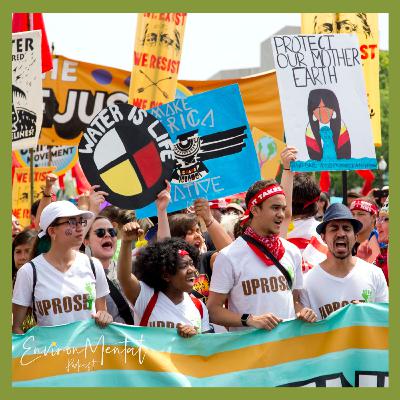
This week's episode Court did a deep dive into the dangers of the Dakota Access Pipeline and Line Three.
The Dakota Access Pipeline gained media attention in 2016 when the Sioux tribe sued the government over the construction project, its lack of environmental protections, and broken treaties with indigenous nations.
Despite the protests the pipeline was built and all lawsuits were eventually (and unfortunately) dropped.
We're seeing very recent news that there are active issues with the DAPL pipeline though, and it's undergoing a full environmental review.
Now, the current pipeline project underway is called Line 3. This pipeline would travel across the Mississippi river, over 200 other waterways, and miles of marshlands.
This land is crucial not only to the First Nation communities that live there, but also to the millions of people who rely on water that passes through it.
Do we never learn?
Construction of these oil pipelines permanently affects environment and ecosystems, regardless of if there are spills. If there are any spills, this would have massive environmental and ecological ramifications.
Why are we taking such risk and continuing to invest in infrastructure for a dying industry?
We must protect our water, not protect the pocketbooks of fossil fuel executives.
Sign the petition and make your voice hear here: https://www.stopline3.org/take-action
Sources:
https://conbio.org/publications/scb-news-blog/scientists-sign-letter-against-dakota-access-pipeline
https://www.reuters.com/business/energy/federal-court-closes-dakota-access-case-allows-fresh-challenges-2021-06-22/
https://elpc.org/blog/nothing-suggests-line-3-pipeline-can-comply-with-minnesota-water-quality-standards/
https://www.honorearth.org/
https://www.stopline3.org/
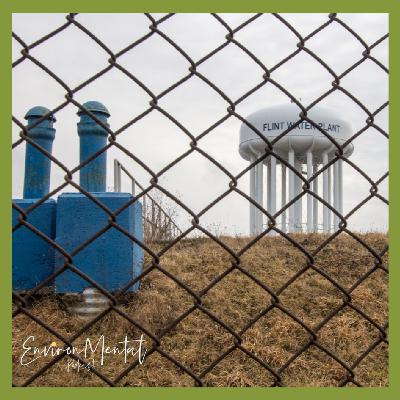
This week on the podcast, we start diving into fresh water access.
In the US, having access to fresh water is treated like a privilege, especially for poor communities. The clearest example of that is the Flint Water Crisis.
aub did a deep dive into the timeline of what happened in Flint - its not pretty.
The problem in Genessee County, Michigan hit national and international news in 2016. But by then it had already been almost two years since the water crisis started.
aub shares the timeline of events because every step of the way show how severely mishandled this situation was from the start. It shows the blatant disregard for the Flint community.
The Flint water crisis is seen as a political scandal now - but that feels like it doesn't do the situation justice.
100,000 PEOPLE DIDN'T HAVE CLEAN DRINKING WATER FOR FOUR YEARS. And the story is still unfolding in the aftermath.
Corruption, mismanagement, and poisoning of an entire community of people, done for a pennies on the dollar savings venture.
The government ignored and gaslit the citizens of Flint, they sidestepped culpability, and treated their city like it was expendable.
Would this happen in a white community? In a rich neighborhood?
In a low-crime city?
No. Absolutely not.
References:
Flint Stats and US stats from the US Census Bureau.
Timeline from NPR
https://www.npr.org/sections/thetwo-way/2016/04/20/465545378/lead-laced-water-in-flint-a-step-by-step-look-at-the-makings-of-a-crisis?t=1628953587723
Associated Press timeline: https://apnews.com/article/us-news-health-michigan-rick-snyder-flint-7295d05da09d7d5b1184b0e349545897
The September 2015 health advisory to the citizens of Flint
http://flintwaterstudy.org/2015/09/public-health-advisory-regarding-lead-in-flint-water-from-the-genesee-county-board-of-commissioners/
The 2017 Michigan Civil Rights Commission statement: The Flint Water Crisis: Systemic Racism through the Lens of Flint
https://www.michigan.gov/documents/mdcr/VFlintCrisisRep-F-Edited3-13-17_554317_7.pdf
Evidence of the cover up found:
https://www.mlive.com/news/flint/2019/04/millions-of-flint-water-documents-found-in-basement-prosecutors-claim.html
The most current info on Rick Snyder charges:
https://www.clickondetroit.com/news/michigan/2021/03/18/ex-michigan-gov-rick-snyder-loses-challenge-to-flint-water-charges/
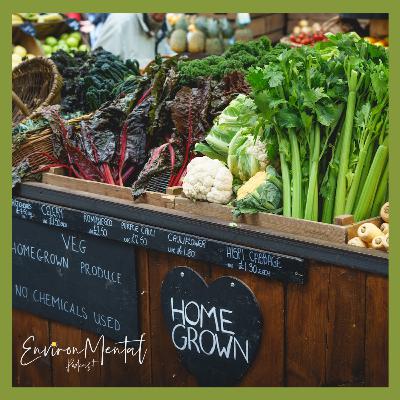
In this week's conversation about sustainability, we're wrapping up the discussion about Food and Agriculture.
This was the biggest topic we've covered so far - the section was 8 weeks long and we didn't get to talk about everything we wanted. In particular, we didn't get to jump into court cases related to farming, commercial agriculture practices, GMOs, or immigrant worker populations.
What we did learn leads us to conclude that the planet, and people, have been treated like an assembly line for far too long. We simply cannot continue to rely on the linear systems that we've been operating for more than a century and expect safe, reliable results for the future.
The issues are extremely multifaceted and they show up in myriad ways. From the loss of fertility in our soil to desertification to the intentional creation of food deserts and food insecurity.
These problems can only truly be solved with holistic priorities like focusing on regenerative agriculture, paying a living wage, healthy community farming techniques, a paradigm shift towards community subsistence first, and cultural education.
We decided to transition at this point because there's another topic that needs a holistic view: fresh water.
We want to know about limitations, where the water is, how we can live (and operate our businesses) more sustainably, plus we want to talk about places like Flint, Michigan (aub's hometown) where the infrastructure breakdown is poisoning the water supply.
Stay tuned!
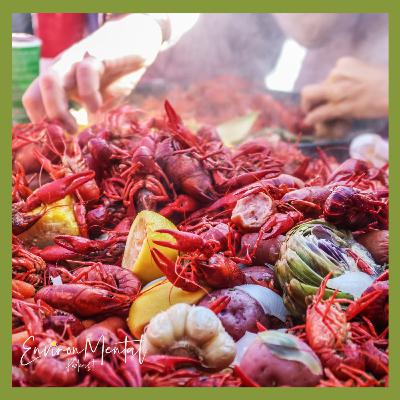
This is the second week we're talking about the book, Black Food Matters. A collection of interdisciplinary articles written or compiled by Ashanté M. Reese and Hanna Garth
We decided to split this up and talk about it over two episodes because this book is an important set of voices sharing the tangible intersection of systemic racism, power, and food culture.
This week Court thoughtfully covers the topics around cultural appropriation and food justice on the restaurant scene.
These are the chapters we talk about:
6 - Soul Food Gentrification: Food, Racial Heritage Tourism, and the Redevelopment of Black Space in Miami by Billy Hall
7 - “Preserve and Add Flavor”: Barbecue as Resistance in Memphis by Kimberly Kasper
8 - Sisters of the Soil: Urban Agriculture in Detroit by Monica M. White
9 - Race, Land, and the Law: Black Farmers and the Limits of a Politics of Recognition by Willie J. Wright, Tyler McCreary, Brian Williams, and Adam Bledsoe
10 - The Mango Gang and New World Cuisine: White Privilege in the Commodification of Latin-American and Afro-Caribbean Foods by Judith Williams
11 - Afterword: Problematizing the Problem by Psyche Williams-Forso
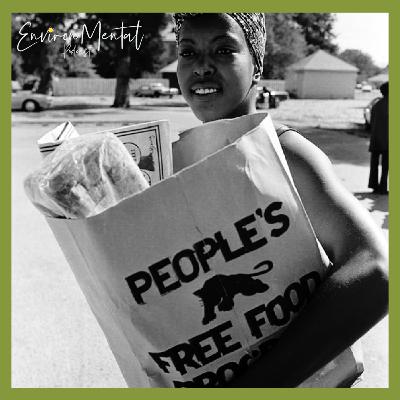
This is the first of 2 episodes dedicated to the book, Black Food Matters. A collection of interdisciplinary articles written or compiled by Ashanté M. Reese and Hanna Garth
We decided to split this up and talk about it over two episodes because this book is an important set of voices sharing the tangible intersection of systemic racism, power, and food culture.
For this first week, aub shares a thoughtful overview of the first half of the book's articles: 1 - In the Food Justice World but Not of It: Everyday Black Food Entrepreneurship by Ashanté M. Reese 2 - The Intersection of Politics and Food Security in a South Carolina Town by Gillian Richards-Greaves 3 - Nurturing the Revolution: The Black Panther Party and the Early Seeds of the Food Justice Movement by Analena Hope Hassberg 4 - Blackness and “Justice” in the Los Angeles Food Justice Movement by Hanna Garth 5 - Good Food in a Racist System: Competing Moral Economies in Detroit Andrew Newman and Yuson Jung
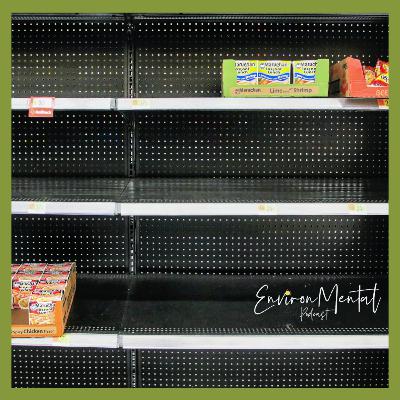
This week on EnvironMental, aub did a deep dive into food deserts.
More than 10% of people in the US live in a food desert, which is a geographic area where access to affordable, healthy food options are limited.
Our ability to create and grow food from a centralized place also allowed for things like urban city sprawl and a decrease in rural farms - and with both of these came food deserts.
There is no perfect solution for the food desert because every area is unique and we're so used to being separate from our food system, that it will take TIME to implement actual systems of change.
Tune in to hear to learn about the prevalence of food deserts and the potential solutions aub found for food deserts around the country.
Here are this week's resources:
https://www.medicalnewstoday.com/articles/what-are-food-deserts#other-terms
https://www.dosomething.org/us/facts/11-facts-about-food-deserts
https://www.aecf.org/blog/exploring-americas-food-deserts
https://mymorningmusings.com/?p=129
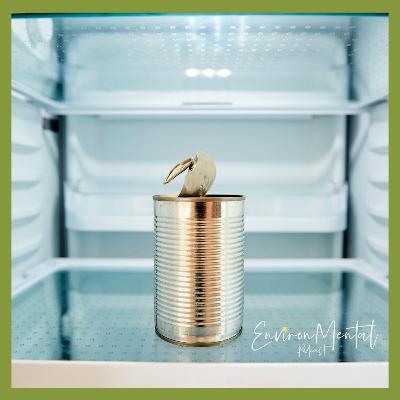
This week on EnvironMental, Courtney did a deep dive into food insecurity.
The long and short is that food insecurity is a trap - it's a cycle that is generationally difficult to escape from.
It is highly correlated with high rates of violence and poverty and while there are solutions like using our food waste more wisely, the only real solution for food insecurity is providing a living wage.
Here are Courtney's resources:
- feedingamerica.org
- Feeding Peace: An Investigation of the Relationship between Food Insecurity and Violence - Illinois state university https://ir.library.illinoisstate.edu/cgi/viewcontent.cgi?article=1019&context=scced
- National Center for Biotechnology Information - https://www.ncbi.nlm.nih.gov/pmc/articles/PMC2805706/
- Frontiers in Sustainable food systems - https://www.frontiersin.org/articles/10.3389/fsufs.2020.00016/full
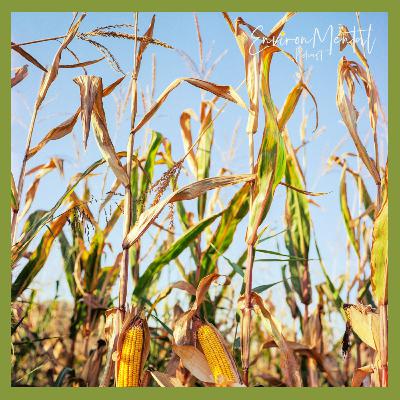
This week on EnvironMental we talk about Farming for the Long Haul by Michael Foley!
This book offers a fantastic look at the history of traditional farming and gives actionable advice for how we can transition to growing food within our communities.
Would we recommend it? Yes! To anyone who felt like they might want to farm or have a garden that grows food.
After reading this, we feel inspired to start growing food and learning more about homesteading techniques that we can share within our communities.
Even though we can connect and share information globally, one thing that we notice month over month is that the real solutions to long-term sustainability are based in community - governance, advocacy, energy, gardening, homesteading, and community living.
Over the past 100 years, we have stepped further and further away from our local communities, to the point now where we are losing the hands-on information we will need when fossil fuel energy isn't available to us anymore.
So this week, we decided to start trying to think and act in a more community-based way.
To take one single step on the journey towards community living - whether that means meeting your neighbors or finding a new homesteading skill to take on - join our little challenge!
This week on the EnvironMental Podcast, we start talking about food and agriculture.
You can tell by the tone of the episode that we’re a little overwhelmed by how big this topic is and how many directions it CAN go in!
Here’s the good news: there’s a lot of room for improvement.
But the reality we’re living is a little dire. Here are some facts that we want to dive deeper into this month:
Food accounts for over a quarter of global greenhouse gas emissions
Hispanic and African American families are twice as likely to experience food insecurity during the pandemic
Food has been losing nutritional value since the 50s
And we are wasting 30+% of all the food we grow on a regular basis.
Throughout the next months, we also want to talk about the intentional design behind food deserts, get a better understanding of the best ways to balance food growth and consumption (like, how is there so much waste AND so many hungry people?!), and talk about the meat production.
This is a huge, huge topic partially because it’s so important for our survival but also because the flaws of the food industry have compounded over time. As big ag has continued to grow, these flaws have become clearer and clearer. Profits over people and planet can’t be the answer on a huge scale anymore!
We’re excited to spend this month learning about how broken the system is, and what steps we can take to help improve it!
References:
https://ourworldindata.org/environmental-impacts-of-food
https://www.oecd.org/agriculture/topics/agriculture-and-the-environment/
https://civileats.com/2019/08/20/study-finds-farm-level-food-waste-is-much-worse-than-we-thought/
https://moveforhunger.org/the-environmental-impact-of-food-waste
https://changeforchildren.org/wp-content/uploads/2016/06/Food-Security-vs-Food-Sovereignty.pdf
https://bioneers.org/hidden-hunger-does-food-lack-essential-nutrients-zmbz2105/
https://www.medicalnewstoday.com/articles/what-are-food-deserts
This week's episode of EnvironMental is a short wrap up of the conversation we have been having around the transition to renewable energy.
The long and short of it is that there are so many solutions out there! And the good news is that there are a lot of people are working on them, but the not-so-great truth is that there's no big global plan for the necessary transition to renewable energy.
While it is awesome to have a lot of people working on energy solutions, we think this is an important conversation that we should be having more often within our communities in general.
Because when it comes to energy usage, there is a lot that we can each do personally to reduce our individual ecological footprint.
One of those big energy drains that we can change personally is FOOD WASTE! So we also announced that the next topic we will investigate is food and agriculture!
Please subscribe to our channel to stay tuned!
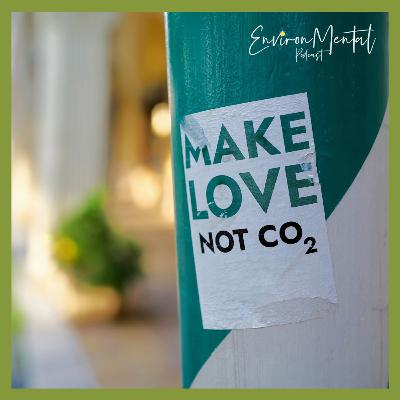
This week we read the Carbon Boycott by Samuel Avery
Do we think it's possible to boycott carbon?
Yes.
Do we think it's going to be easy?
No.
In his book, Sam gives several examples of times throughout human history that we've made huge societal changes for the betterment of our society - from the Boston tea party to the civil rights movement to the end of apartheid.
We ARE capable of the type of boycott that this book calls for.
The carbon boycott is a slow, steady change that we are dedicated to. That we need to work on together individually and in communities.
Because the truth is that the availability of fossil fuels is dwindling.
That means we need to think about the energy issue as "renewable energy VS. no energy." NOT "renewable energy VS. fossil fuel energy."
And the more we transition now, the easier it will be when we don't have fossil fuels anymore.
So how can you take part in the boycott?
1 - Eat less meat. This isn't to say that tomorrow you need to be vegan, but meat production is a massive source of carbon in our atmosphere.
2 - Consider how your other meals make it to you - are they locally sourced? Are they coming from far away? How are they packaged? What can you grow yourself?
3 - Look at your investments. Trace them back to their source, are you supporting the fossil fuel giants? Stop those investments and shift them to a renewable source.
4 - Look into the potential energy sources. Can you pay for your house to be supplied by solar or wind energy? Can you buy solar panels for your house?
5 - Join or create a community that is dedicated to helping with policy change or community/city migration to renewable energy.
6 - Make the big transitions when you're making big life changes. When you get a new car, go for electric. When you move or renovate your house, consider heat pumps and solar energy.
All of these steps help us to move towards less reliance on fossil fuel energy and will make the transition to renewables more smooth! It can be done!!
This week we're leaving the topic of dirty energy and fossil fuels behind to start talking about the necessary transition to renewables.
We split up and independently answered some questions, and then shared it with each other on this week's podcast.
Aub went first and talked about where we are in the transition and what kind of plan we have in place. There's a lot of information out there about this and to make the long story short - we're gaining in renewables for electricity, but buildings (heating and emissions) and travel are still big issues for the transition.
While there are a lot of people focused on individual solutions, there's no overarching plan, and no one taking charge of this transition. There are a lot of pieces missing in the political and environmental priorities, like how we need to invest in improving the efficiency of the current infrastructure while we find new, renewable sources of energy. Or how subsidies for fossil fuels are still double (or more) the subsidies given to renewable sources.
Courtney picked it up from there, sharing information about energy democracy and a few companies that are dedicated to putting people of color in leadership positions.
She said, "We can't expect to have clean energy solutions without having clean election solutions." And this beautifully sums up the discussion. She shared information about "energy cooperatives" and how this feels like something new, but there are actually quite a few already! The heads of the power companies in these regions bank on the fact that people never even know that they have decision power in their community's energy source.
Next week we're going to continue this conversation by reading a book called The Carbon Boycott; A Path to Freedom from Fossil Fuels By Samuel Avery.
We have moved away from using Amazon to find our audiobook sources because Mr. Bezos, respectfully, doesn't need our dollars (or yours) so here's our link to Libro, a site that makes it possible for you to buy audiobooks through your local bookstore: https://libro.fm/referral?rf_code=lfm282860
Here are our sources for this episode:
Transition updates, plans, and efficiency
https://www.vox.com/energy-and-environment/2019/6/18/18681591/renewable-energy-china-solar-pv-jobs
https://www.energy.gov/eere/analysis/energy-efficiency-vs-energy-intensity
https://www.iea.org/reports/the-critical-role-of-buildings
https://www.resilience.org/stories/2020-05-20/nobody-takes-the-renewable-energy-transition-seriously/
Microgrids
https://microgridknowledge.com/microgrid-defined/
greentechmedia.com/articles/read/lessons-learned-from-californias-pioneering-microgrids
Energy Democracy
The webinar Courtney mentioned: https://www.youtube.com/watch?v=Foh7HMthX1w
PDF https://www.rosalux.de/fileadmin/rls_uploads/pdfs/sonst_publikationen/Energy-democracy-in-Europe.pdf
Asian Pacific organization working on BIPOC leadership training
http://apen4ej.org/
This week on EnvironMental, we decided to let sleeping dogs lie.
We spent the past month talking about fossil fuels and the fossil fuel industry, and to be honest, we needed a break.
The more we dig into this industry, the more we find ourselves wading through human rights violations, environmental catastrophes, tax breaks, politics, and corruption.
(hey, there's a reason investigative journalists were called, "muckrakers" in the beginning)
There is seemingly no end to the propaganda or the well placed, oil slick PR people putting pressure on politicians to support dirty energy.
Instead of going over it AGAIN, we decided that the best thing to do would be to spend some time sitting in reverence of our planet. To share a positive intention and a few ideas for how you can connect with the earth.
In our upcoming episodes, we will continue to talk about energy - specifically to transition to renewables.
Subscribe to stay tuned.
After last week's run in with propaganda left us with a ton of questions, we decided to split up and research independently, then come back together and share what we learned.
Courtney looked into the injustices, and potential issues with mining for renewable energy and found that we might just be swapping one issue for another one.
And she updated us on the currently accepted research on climate change - which, in essence, is that shit is about to go DOWN.
We seem to always come back to the topic of injustice from the fossil fuel industry, and to be honest - it was never (we literally mean never) an ethical industry. Human rights violation and ecological destruction started with John D. Rockefeller and never stopped... but it did move (largely) off of US soil.
Where we find that the fossil fuel industry has been sowing the seeds of instability in other countries for decades. And why? For profit.
Because, as Aub found out when she followed the money, we (tax payers) spend upwards of $1 trillion globally in tax breaks and subsidies for the industry (that number does NOT include the various negative externalities) - more than half of which goes towards the projects in "developing nations" to create infrastructure there.
And the industry does this under the guise of "progress" and "unconventional oil and gas development" because, according to Alex Epstein and the other big oil lobbyists, there's a ton of fossil fuels left - we just don't have the tech to get it.
But that's not the whole truth.
Aub also looked into what there IS left and found out that it is indeed very quickly running out. - Like less than a lifetime running out - and what we're pumping up from new tech, like the fracking method, isn't as viable. It needs more refinement.
In general. The relationship we, as a global society, have with the fossil fuel industry, is a toxic, abusive one that we are in the beginning stages of figuring out how to leave.
Based on past behavior, and where the rare elements are for the renewable sources we're trying to create, we don't think this transition will go down without a fight.
See our Youtube video here for a link of our sources: https://youtu.be/6t_p1G5WeJ8
We read The Moral Case for Fossil Fuels by Alex Epstein this week because we're not here just to tow the democratic- climate crisis - anti-fossil fuels line, we're here to investigate the fossil fuel industry and climate change issue deeper.
This wasn't the book that we had hoped it would be.
It was more of a thirsty love letter to the fossil fuel industry than anything remotely resembling an unbiased account of why fossil fuels could be moral to continue using.
We asked last week, "can we separate the energy from the industry" and our distinctive answer is nope. Definitely not.
Hearing someone defend fossil fuels as having a causative relationship for every type of growth and human ingenuity while claiming further ingenuity into renewable resources would be too costly and dangerous was frustrating, to say the least.
Hearing over, and over again the words, "cheap and reliable" intermixxed with standards of the "free world" while being actually shamed for maintaining value in anything other than a Western societal human (read: white, privileged, and American) was infuriating.
Many humans were (and are still) harmed in the making of today's fossil fuel energy technology. This energy is cheap because of deep cut governmental subsidies. It remains cheap because the labor and land to get it remains to be stolen. It stays cheap because the industry would rather pull its strings and start a war (or fund a war) so they can find footholds to create a way to exploit communities and governments (and the land),
We don't pay the true cost of the energy we rely on.
We don't pay the true cost of fossil fuel tech and we never have. Calling it cheap is a gross misrepresentation.
This energy is "reliable" because we have built an infrastructure and invested in the technology to make it reliable. Epstein goes to great lengths to say this and to say that we should fear for our right to pursue cheap, reliable energy - then also to say that investing in any other tech in a similar way is a waste because we should be grateful to the fossil fuel industry for all that it has given us.
And yes, the fact of the matter is that we, as a society, are not ready flip the switch (pun intended) on fossil fuel usage.
We still have years left of development and transitioning into renewable energies. No one is denying that, and no one is saying that we should cut the power off around the world.
But Epstein would have you believe that Environmentalists are out here trying to kill babies by denying NICU units power unless they build new solar and wind farms. Again, a gross misrepresentation of the truth.
All in all, our investigation of the positive side of fossil fuels left us baffled and angry. There was so much conjecture and venom that now we find ourselves on a mission to get to the truth.
So for next week, we decided to do some independent research on funding, injustices, actual risks, and real climate change statistics.
Subscribe and stay tuned!
This week we jump into the topic that we will spend the next two months talking about - Energy.
We're starting with fossil fuels because the industry has its sticky fingers in every pie.
To jump into the topic, we started this with a quote from the epilogue of The Crisis, a new podcast from Vice News, which perfectly describes the issue we want to talk about this month.
"...From our reporting, it's clear that fossil fuels companies can have way more influence over our lives than we might realize. From the highest offices of govt to the smallest towns, they shape the world we live in, the conditions of where we live, the politics of where we live, and the environment around us.
But it takes time and money and effort to bring these realities to light because systems of power are built to keep replicating themselves to keep power concentrated in the hands of a few people, to keep things running exactly as they are."
While we need to break free from fossil fuels, like leaving an unhealthy relationship, we don't want to vilify fossil fuels as a energy source - it has vastly improved the standard of living around the world and has lead to growing technologies that we rely on every day.
However, the fossil fuel industry is responsible for terrible, heinous acts - against the environment and human rights alike. They regularly create sovereign agencies within countries that have corrupt or lazy governments, lax tax laws, and abundant natural resources. They use money to wield political power and exploit the people they take into their service.
- Is it possible to separate the energy from the industry?
- What are the redeeming qualities, if any, in the fossil fuels industry?
- Is there a fossil fuel company that we can trust? Is there a "fair trade" fossil fuel company?
- What is the trade off and the true cost in not sourcing energy from exploited countries?
- How do we keep the people around the world that work in this industry, safe?
- What does the infrastructure of green energy look like? How can we safely transition there?
- Is it possible to shift the job force to clean energy? What would that look like?
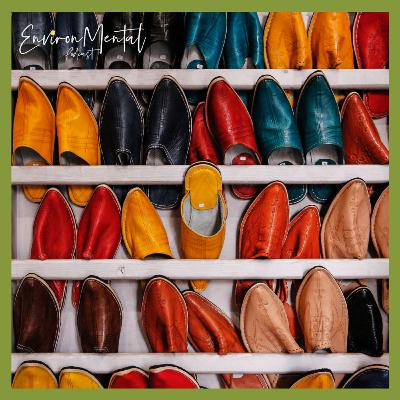
This week we're introducing the new topic for the month: Sourcing.
What we know is that small, sustainable businesses have to navigate through a sourcing nightmare in order to find products and ingredients that are suitable for their own standards and the standards of their customers.
Quality is hard to come by.
It's more expensive for the business owner and that cost has to be passed along to their customers.
While the sustainable brand audience will pay more for the quality, regulations from country to country are different, and from some places, they're easy to fudge.
This month, we're going to talk about what questions to ask as a business owner, and what to ask as a consumer.
We're going to learn about global certifications to trust around the world. Right now we know about Demeter and the FSC, but there HAS to be more, right?

Comments

Download from Google Play

Download from App Store
 United States