


 Claim Ownership
The Imagination Desk
Subscribed: 4Played: 49
Subscribe

Description
Imagination: everyone knows you need it to change the world, but nobody really knows how it works.
In this podcast from Arizona State University, we chat with artists, writers, scientists and engineers to explore how imagination is viewed, valued, and practiced in their work.
In this podcast from Arizona State University, we chat with artists, writers, scientists and engineers to explore how imagination is viewed, valued, and practiced in their work.
37 Episodes
Reverse
In this conversation, Ed Finn and cognitive scientist Brendan O'Connor delve into the multifaceted nature of imagination, exploring its relationship with memory, its role in present experiences, and the dynamics of collaborative imagination. They discuss how imagination can be trained and practiced, the importance of storytelling, and how shared imaginative experiences can enhance social connections and collective beliefs.
In this conversation, Ed Finn and Aarathi Krishnan explore the intricate relationship between imagination, risk governance, and the future. They discuss how imagination is essential for decision-makers to navigate the complexities of the modern world, emphasizing the need for a balance between personal and organizational imagination. The dialogue also delves into the roles of hope and fear in motivating change, the importance of storytelling and art in shaping futures, and the challenges faced by individuals and organizations in envisioning a better tomorrow.
In this conversation, Ed Finn and Ken Liu delve into the significance of imagination in art, storytelling, and life. They explore how imagination shapes human experience, the collaborative relationship between artists and audiences, and the implications of AI in creative processes. Ken shares insights on the nature of creativity, the role of language, and the importance of embodiment in understanding intelligence. The discussion culminates in personal reflections on the evolution of Ken's imaginative journey as a writer.
In this engaging conversation, Ed, Tamara, and Taryn explore the multifaceted nature of imagination and its critical role in creativity, filmmaking, and personal growth. They discuss their individual experiences with imagination, the importance of collaboration in the creative process, and how they navigate challenges in filmmaking. The discussion also delves into the impact of film on audience imagination, the need for imaginative capacity in the future, and personal anecdotes illustrating how imagination has saved the day in their careers. The conversation concludes with reflections on the evolving understanding of imagination and its significance in both professional and personal contexts.
In this conversation, Ed Finn and Ted Chiang delve into the intricate relationship between imagination, storytelling, and the role of language in shaping human experience. They explore how writers and scientists share a fascination with the unknown and the importance of communication in conveying ideas. The discussion also touches on the impact of AI on writing, the authenticity of content in the digital age, and the potential of science fiction to challenge societal norms and open up new possibilities for the future.
In this conversation, Ed Finn and Nancy Baker Cahill explore the intersections of interdisciplinary art, imagination, and technology. Nancy, an interdisciplinary artist and expanded filmmaker, discusses the importance of imagination in her work and its critical role in envisioning new models for governance and civic engagement. The conversation delves into the collaborative nature of art, particularly in the context of augmented reality (AR) and expanded cinema, highlighting how these mediums can foster audience engagement and co-creation. They discuss the importance of participatory art and audience engagement, as well as the challenges and opportunities presented by imagining future humans and post-human concepts. The conversation emphasizes the necessity of nurturing our imagination as a vital resource in a world increasingly influenced by technology.
In this conversation, Ed Finn and renowned film producer, screenwriter, and media executive Walter Parkes (whose credits include WarGames, Sneakers, Men in Black, and Minority Report) explore the relationship between imagination and storytelling, particularly in the realms of film and virtual reality (VR). Walter shares insights from his career in Hollywood, discussing how imagination serves as a catalyst for creativity and problem-solving within the constraints of conventional storytelling. Ed and Walter also chat about the the evolution of narrative techniques in virtual reality, emphasizing the importance of emotional engagement exploring how audiences co-create stories in VR environments.
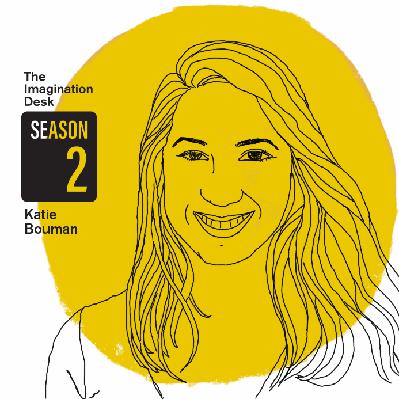
Katie Bouman is an assistant professor of computing and mathematical sciences, electrical engineering, and astronomy at Caltech in Pasadena, California. In this episode, we talk about scientific collaboration, imagination, and Katie's work on the Event Horizon Telescope, which produced the first image of a black hole by combining insights and methods from signal processing, computer vision, machine learning, and physics. *** This work was supported in part by the National Endowment for the Humanities grant AKA-265705-19
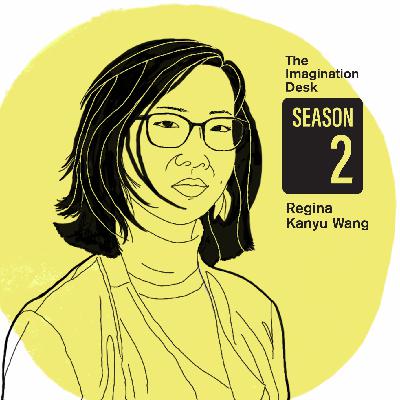
Regina Kanyu Wang is a science fiction writer, researcher, and critic from Shanghai. She is now based at the University of Oslo, where she is part of the CoFUTURES project. In this conversation, we talk about the Chinese science fiction scene, its fan culture, and gender politics in the genre, as well as insights on Regina's own recent writing—including how she builds nuance and complexity into her portrayals of AI and other technologies. *** This work was supported in part by the National Endowment for the Humanities grant AKA-265705-19
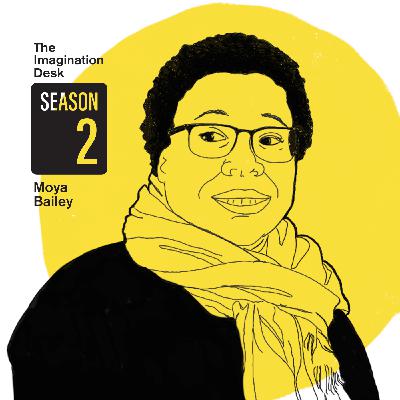
Moya Bailey is a Black queer feminist scholar, writer, and activist. She is the co-author of #HashtagActivism: Networks of Race and Gender Justice and has a new book, Misogynoir Transformed: Black Women's Digital Resistance, coming out May 2021. In this conversation, we talk about online communities of support and activism, racial inequalities in medicine, the healthcare system, artificial intelligence, and Moya's term misogynoir, which describes a specific form of discrimination experienced by Black women. *** This work was supported in part by the National Endowment of the Humanities grant AKA-265705-19.
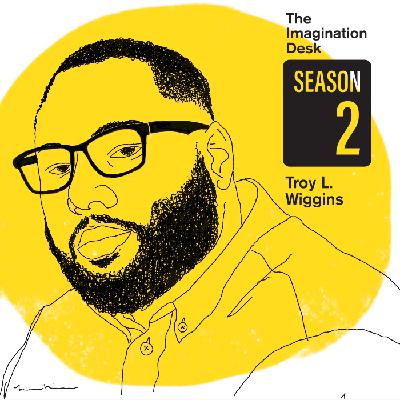
Troy L. Wiggins is a writer and editor with a focus on Black speculative fiction and social justice. In this episode of The Imagination Desk, we chat with Troy about power of speculative art as a tool for Black people around the world to reckon with their realities, share their histories and imagine new worlds.
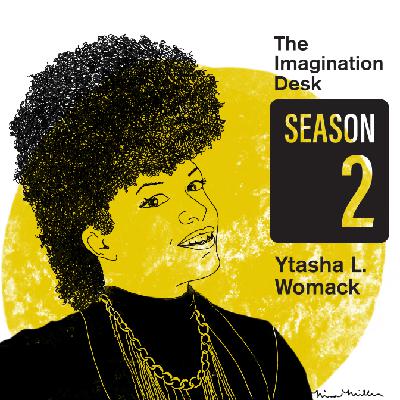
Ytasha Womack is an award-winning author, filmmaker, independent scholar, and dance therapist. She is a leading expert on Afrofuturism, and on the imagination and its applications. In this conversation, we discuss her book Afrofuturism: The World of Black Sci-Fi and Fantasy Culture, her film A Love Letter To The Ancestors From Chicago, and much more.
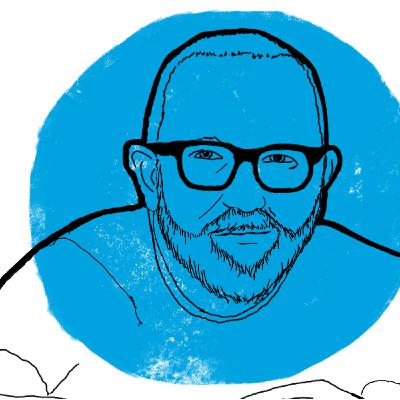
This episode of The Imagination Desk features Jonathan Alexander. Jonathan is Professor of English and Informatics at The University of California, Irvine and author of books such as Writing Youth: Young Adult Fiction as Literacy Sponsorship (2016) and a critical memoir, Creep: A Life, a Theory, an Apology (2017). We take a closer look at popular modern Science Fiction TV shows and their cultural and political uses, along with a look at writing stories in the digital age
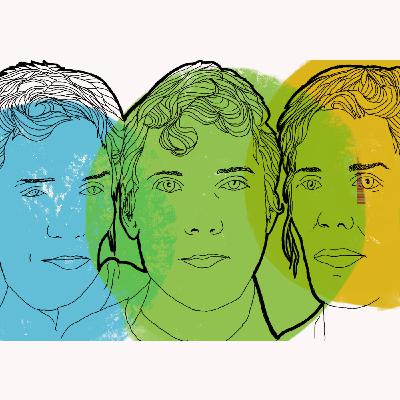
This episode of The Imagination Desk features the band YACHT or Young Americans Challenging High Technology. We spoke with them about their new album Chain Tripping and it's use of machine learning.

This episode of The Imagination Desk features science fiction heavy-weight Paolo Bacigalupi, author of The Water Knife and Shipbreaker. We caught up with him in this bonus episode to discuss the changes in his writing process as well as his latest projects.
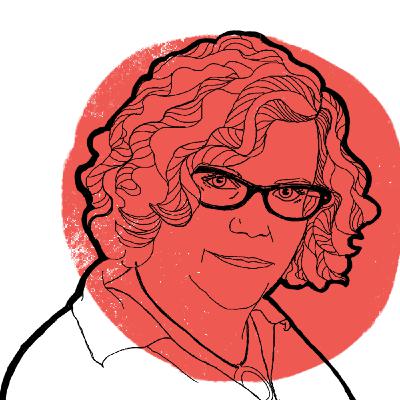
This episode of The Imagination Desk features Maureen McHugh. Maureen is an author and narrative designer who has worked on some of the biggest transmedia stories and alternate reality games (ARGs) in the history of the medium including The Beast for Steven Spielberg's AI, I Love Bees for Microsoft's Halo franchise, Nine Inch Nails' Year One and Why So Serious? for Christopher Nolan's The Dark Knight. Her novels include China Mountain Zhang, Half the Day is Night, Mission Child, and Nekropolis.
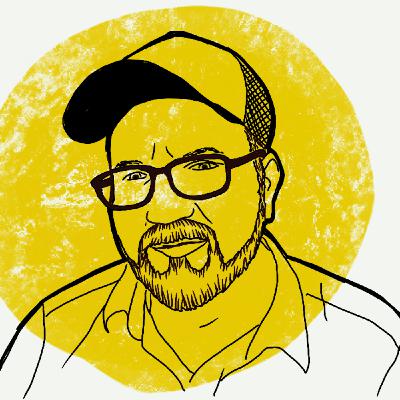
This episode of The Imagination Desk features Matt Derby. Matt is a writer and designer who works on innovative media projects where these two disciplines meet. Matt is a designer at the game studio Harmonix, the co-writer of the serialized fiction podcast, Sandra, for Gimlet and co-creator of The Silent History, the first interactive digital book for iOS devices. Matt's newest project is Phreaks, a fictionalized look at the real-life community of "phone phreakers."

Our first interview for The Imagination Desk features Anne Cofell Saunders. Anne is an award-winning TV writer and producer, who has worked on some of the most popular genre shows of the past decade including Battlestar Galactica, Chuck, Smallville, and 24. Her new show is The Boys, a gritty superhero dramedy based on the Garth Ennis comic book series of the same name. It premieres in Summer 2019 on Amazon.
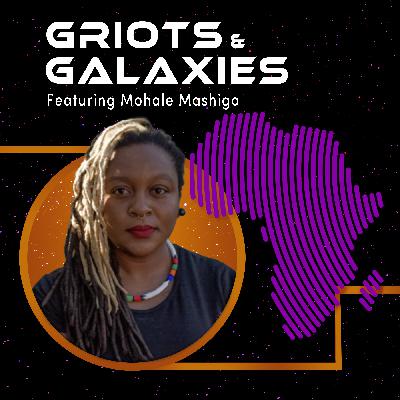
In this episode of Griots & Galaxies, Jenna sits down with award-winning singer/songwriter and author Mohale Mashigo. In this conversation, Mohale shares her experiences in multimedia storytelling, and questions if aliens are truly as scary as Westerners seem to think. Mohale Mashigo is a best-selling multi-award-winning writer. Her work includes The Yearning (University of Johannesburg Debut Prize for South African Writing in English 2016) and a collection of speculative fiction short stories; Intruders. Mashigo also writes children's books and comic books. Some of her comic book work includes Kwezi, and various projects with both DC & Marvel Comics.Mohale was born and raised in Soweto, she is a multi-disciplinary storyteller who loves exploring the unknown. In addition to being a writer, she is also an award winning singer songwriter, who performs under the name Black Porcelain. Mashigo holds a BA (Journalism & Linguistics) degree from Rhodes University. She is currently the Narrative Director for Game Development studio Nyamakop. Griots & Galaxies is produced by the Center for Science and the Imagination, with support from the Institute for Humanities Research and The Transformation Project, all at Arizona State University. The podcast is created and hosted by Jenna Hanchey, Yvette Lisa Ndlovu, and Chinelo Onwualu, with the assistance of sound engineer Bailey Pyritz. The theme music is performed by Sonja Branch and Dethie Sarr Diouf.
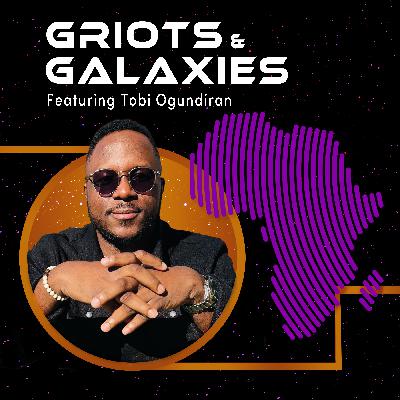
In this episode of Griots & Galaxies, Chinelo and Yvette sit down with critically-acclaimed author Tobi Ogundiran. In this conversation, Tobi takes us into horror and haunting, talking about how fairytales reveal what different societies fear–and long for. Tobi Ogundiran is the author of the critically acclaimed Jackal, Jackal, a collection of eighteen dark and fantastic tales. Tobi has been nominated for the British Science Fiction Association, Shirley Jackson, Ignyte and Nommo awards. His work has appeared in anthologies such as The Book of Witches and Africa Risen. Tobi's work has also appeared in several Year's Best anthologies. His debut novella, In the Shadow of the Fall, is out from Tordotcom in 2024. Born and raised in Nigeria, he spent seven years in Russia where he trained as a physician, and now lives and works in the southern US. Griots & Galaxies is produced by the Center for Science and the Imagination, with support from the Institute for Humanities Research and The Transformation Project, all at Arizona State University. The podcast is created and hosted by Jenna Hanchey, Yvette Lisa Ndlovu, and Chinelo Onwualu, with the assistance of sound engineer Bailey Pyritz. The theme music is performed by Sonja Branch and Dethie Sarr Diouf.

Comments

Download from Google Play

Download from App Store
 United States