


 Claim Ownership
The Penny Dreadful Hour; or, A Feast of Early-Victorian Street Literature and Stories (no AI)
Subscribed: 17Played: 375
Subscribe

© Finn J.D. John/ Pulp-Lit Productions
Description
This is the podcast that carries you back to the sooty, foggy streets of early-Victorian London when a new issue of one of the "Penny Dreadful" blood-and-thunder story paper comes out!
It's like an early-Victorian variety show, FEATURING ...
— Sweeney Todd ...
— Varney, the Vampyre ...
— Highwayman Dick Turpin ...
— mustache-twirling villains ...
— virtuous ballet-girls ...
—wicked gamblers ...
... and more!
Spiced with naughty cock-and-hen-club songs, broadsheet street ballads, and lots of old Regency "dad jokes."
A fresh episode every Sunday and Thursday evening. Join us!
It's like an early-Victorian variety show, FEATURING ...
— Sweeney Todd ...
— Varney, the Vampyre ...
— Highwayman Dick Turpin ...
— mustache-twirling villains ...
— virtuous ballet-girls ...
—wicked gamblers ...
... and more!
Spiced with naughty cock-and-hen-club songs, broadsheet street ballads, and lots of old Regency "dad jokes."
A fresh episode every Sunday and Thursday evening. Join us!
136 Episodes
Reverse
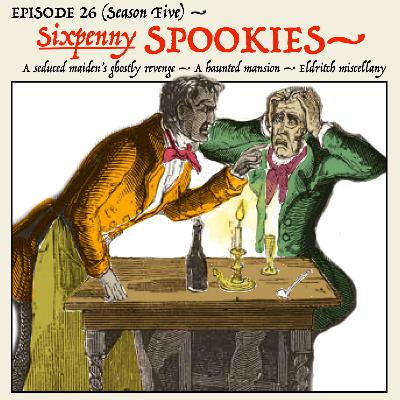
SHOW NOTES — for — MINISODE 26 (Season 5)(March 26, 2026) ———— 00:35: THE TERRIFIC REGISTER: ‘Twas midnight, and a fluttering bird entered the young Lord Lyttleton’s room by moonlight, and became the spectre of a maiden he had seduced and abandoned. She bade him repent, for he had but three days to live ….07:30: EARLY VICTORIAN GHOSTLY SHORT STORY, to-wit: THE STORY OF CLIFFORD HOUSE, by an anonymous but fabulous author; Part 1 of 2 parts: The story is told from the point of view of a deliciously witty and charming upper-class lady named Helen; we don’t learn her last name. She and her husband George have a beautiful country house, but she is bored there and has talked George into renting a town house for them. George immediately found a magnificent place, and best of all the rent was half what it should have been. But after they move in, they start to more than suspect that there is a reason they got the place so cheap …31:40: A SHORT GHOST STORY from the scrapbook of Charles Lindley, Viscount Halifax: THE CORPSE DOWNSTAIRS. In which, a doctor from Madeira tells of a patient he had who dreamed someone brought a dead body into the house where he was staying … and yes, it turned out to be true, which is weird, but nothing shady was going on, so don’t get your hopes up for this one.37:20: A FEW SQUEAKY-CLEAN DAD JOKES from the early-1800s' most popular joke book: "Joe Miller's Jests; or, The Wit's Vade-mecum."GLOSSARY OF EARLY-VICTORIAN SLANG USED IN THIS EPISODE:GNOSTICS: Clever fellows, knowing kiddies.HIGH PADS: The highest rank of robbers who worked on foot, with no horse.VADE MECUM: Latin for "hand book."JOE MILLER: A player at Drury-lane, in the early 1700s, who was famous for a Leslie Nielsen style of stone-faced comedy. Mr. Miller was always so serious (and don’t call him Shirley) that he was hilarious on stage. When he died leaving some dependents uncared-for, the jestbook was created by Joe’s friends as a sort of inside joke, as a fundraiser to support his bereaved family.KIDDIES AND KIDDIESSES: Flash fellows — basically, early-1800s hep cats. SHERRY OFF: Run away. FLATS: Suckers. GET FLY TO THE FAKEMENT: Get wise to the swindle. BUMS: Bailiffs. CRAPPING COVES: (Pronounced “crape-ing” — a reference to the black crepe that was worn by widows in mourning) — Hangmen. YE OLD STONE PITCHER: Newgate Prison. PADDINGTON FAIR: Execution day at Tyburn, which is in Paddington Parish. Paddington is also a pun, as “pad” was a flash word for “thief” or “robber.” BRUSH OFF: Leave. Note this phrase means something slightly different today.
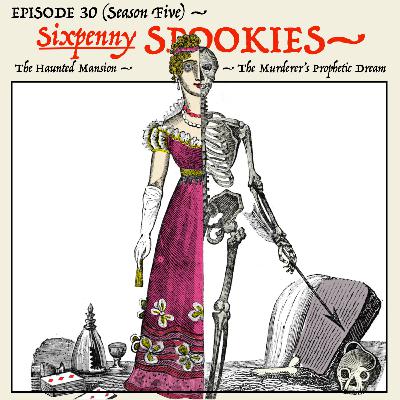
SHOW NOTES — for — MINISODE 30 (Season 5)(April 9, 2026)00:45: THE TERRIFIC REGISTER: An account of how the murder of the Duke of Buckingham, in 1628, was foretold by His Grace’s long-dead father’s ghostly apparition!05:20: EARLY VICTORIAN GHOSTLY SHORT STORY, to-wit: THE STORY OF CLIFFORD HOUSE, by ANONYMOUS, Part 2 of 2 parts: Our narrator, Helen, has been having a thundering good time in the London party scene but just a few weeks into it, it’s rather worn her out. When an invitation to yet another dinner party comes, she begs off, and asks George to make her excuses, and settles in for what she thinks will be a quiet night by herself … but, of course, she’s very wrong about that!35:40: A SHORT GHOST STORY from the scrapbook of Charles Lindley, Viscount Halifax: The Murderer’s Dream. In which: A convicted murderer dreamed they brought him to the hanging place, but the drop refused to work. Next day, they brought him to the hanging place, and … the drop refused to work!40:45: A STREET BROADSIDE on the topic of ghosts, death, and ruin: Messenger of Mortality; or, Life and Death Contrasted. A dialogue in iambic-pentameter couplets, Shakespeare style, between Death and a fair lady whom he is calling upon, to bear away into eternity.GLOSSARY OF EARLY-VICTORIAN SLANG USED IN THIS EPISODE:AUTEM DIVERS: Pickpockets who work the congregations at religious meetings.ANGELICS: Young maidens in their prime.KNIGHTS OF THE BRUSH AND MOON: Drunken fellows running amok in fields and ditches late at night, trying to stagger home. MORRIS OFF: Run away. BEAKS ON THE NOSE: Police detectives or magistrates on an investigation. DIDDLE COVES: Bartender or landlord in a gin palace or dram shop. DAFFY DOXIES: Racy ladies who enjoy drinking daffy (gin). CAPTAIN LUSHINGTONS: Habitual drunks.BOOZING-KEN: Drinking den.SMITHFIELD: In the early 1800s a notoriously crowded and dangerous neighborhood in which a very unsanitary open-air livestock market was regularly held until the 1850s. RUM TE TUM WITH THE CHILL OFF: Most emphatically excellent.
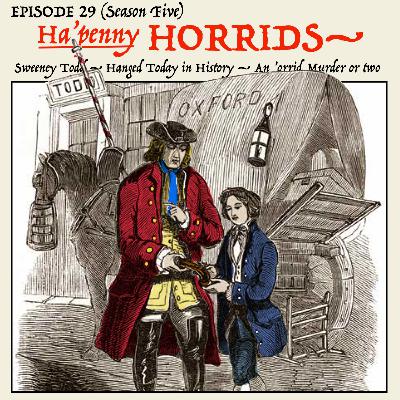
SHOW NOTES — for — MINISODE 29 (Season 5)(April 5, 2026) ———— 01:00: HANGED TODAY IN HISTORY (April 5): Wealthy barrister Arundel Cooke coveted his wife’s family estate … but alas, she had a brother. So he hired John Woodburne to help him solve that problem … with a knife. Alas, the two of them were almost as incompetent at murder, as Mr. Cooke turned out to be as a lawyer (1722) … also, a devout father who murdered his children to save them from eternal hellfire after his wife started bringing them to the “wrong” church.08:10: SWEENEY TODD, THE BARBER OF FLEET-STREET, Chapter 96, 96, and 97: Todd seems inclined to take out his frustration on Johanna, but he settles down when a couple customers come in. The second customer tips her off discreetly that her father is across the street, so she goes right over as soon as she’s sent away for breakfast, and they reunite. Then Sir Richard gives her two pistols and tells her the plan: Two officers will be hiding in the shop. Meanwhile, he has some business he has to wrap up at St. Dunstan’s church … or, rather, underneath it. 43:40: HORRID BROADSIDE: “Trial, Sentence, and Execution of ROBERT BLAKESLEY, for the Wilful Murder of JAMES BURDON, in Eastcheap.” (1841) This murder was the sad result of a psychotic break by a mentally unwell man who, while raving and trying to reach his wife of three months with a knife, fatally stabbed his brother-in-law, who was trying to protect her from him.GLOSSARY OF EARLY-VICTORIAN SLANG USED IN THIS EPISODE:CANARY BIRDS: Prisoners. CONVEYANCERS: Practitioners of larcenous enterprises, from theft to the fencing of stolen goods. KNIGHTS OF THE BRUSH AND MOON: Drunken fellows running amok late at night in fields and ditches, trying to stagger home. TOPPING COVES: Executioners — specifically, hangmen, as “topped” is Flash-cant slang for “hanged” even though it sounds like it ought to refer to decapitation.KNIGHTS OF THE BLADE: Swaggering companions who are boastful of their prowess and may also claim a military rank — Captain, Major, Colonel — that they don’t really have a right to.
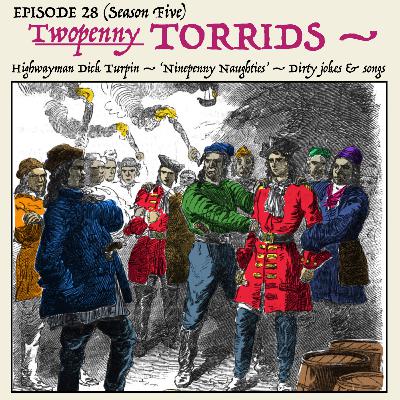
SHOW NOTES — for —MINISODE 28 (Season 5)(April 2, 2026) ———— 01:50: STREET POETRY: From a broadside ballad: “The Lass of ___ Town” and “The Frolicsome Widow” — and if that last title sounds just a little bit spicy, well, it is! (1844).08:00: BLACK BESS; or, THE KNIGHT OF THE ROAD (starring HIGHWAYMAN DICK TURPIN), Chapter 62-64: Our felonious friends are marched through the darkness to a well-lighted cavern and presented to the leader of the band of smugglers, whose goods they stumbled across. They decide not to let the smugglers know their identity, but rather to pretend to be young gentlemen. So they ask for a private meeting with the smuggler chief, who — as hoped — gives them an ultimatum: Join us, or die….38:00: INTRODUCING MISS DAVIS: One of the “ladies of the evening” listed and described in Harris’s List of Covent-garden Ladies, a directory for bucks and bloods out on the town in the early 1800s. Miss Davis is enthusiastically praised for her skill in putting on a “Great Big O Show” for her patrons.44:00: A RATHER NAUGHTY COCK-AND-HEN-CLUB SONG: "THAT’S A WERY NAUGHTY NAME” (a paean of fulsome praise for “my flash Bett” and her “wery naughty” bits)44:30: A FEW MILDLY DIRTY JOKES from what passed in 1830 for a dirty joke book: "The Joke-Cracker" by Martin Merryman, Esq.GLOSSARY OF EARLY-VICTORIAN SLANG USED IN THIS EPISODE:RUBBER: (from broadside ballad, “The Frolicsome Widow”): “Play me a rubber” means play a round of Bridge. It’s possible, but not likely, that this is a sly reference to a condom; the first rubber condoms came out in 1855, so the estimated date of this broadside would have to be off by a decade or two for that to be the case. Before that, they were made with animal intestines.CYPRIANS: (From the introduction to Hostess Miss Davis) Ladies of easy virtue, a classical reference to the island of Cyprus, supposedly peopled with sexually frisky ladies. SPORTING THEIR BLUNT: (ibid) Throwing money around. KIDDY: (from cock-and-hen-club song, “What’s a Wery Naughty Name”) Stylish, flash-talking fellow. PAIR OF CODS: (ibid) Our singer is clearly a fishmonger, so he would be likely to show a customer a literal pair of codfish; but “cod” was also slang for a testicle (as in “codpiece,” which is clearly being punned on here. NO NOSE: (from “The Joke-cracker”) Not an unusual sight back in the early 1800s, because syphilis could cause the cartilage in a person’s nose slough off.
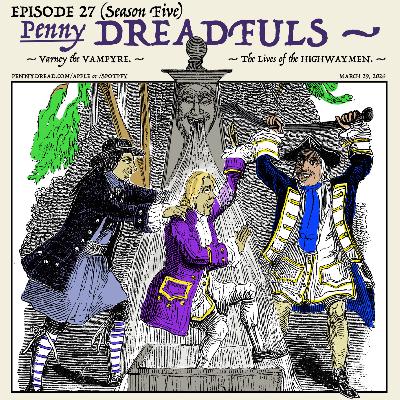
SHOW NOTES — for —EPISODE 27 (Season 5)(March 29, 2026) ———— Join host Corinthian Finn, a.k.a. Finn J.D. John 18th Baron Dunwitch,* for a one-hour-long spree through the scandal-sheets and story papers of early-Victorian London! This show cycles through four segments over a two-week cycle, two shows per week. This is the main show, including the "Penny Dreadfuls" segment. It will be followed by ...The “Twopenny Torrids” minisode, coming this Thursday eve;The “Ha’penny Horrids” minisode, to be posted next Sunday (one week from today); and finally—The “Sixpenny Spookies” minisode, which posts two Thursdays hence. For COMPLETE SHOW NOTES, including art and links to resources, see pennydread.com/discord. ———— IN TODAY'S "PENNY DREADFULS" SEGMENT:02:10: ON THIS DREADFUL DAY (March 29, 1850): Charles Dickens recounts a dreadful fire that struck and destroyed a beautiful old London church.04:15: VARNEY THE VAMPYRE; or, THE FEAST OF BLOOD, Chapter 47-48: The Bannerworths finally reach consensus to move out of Bannerworth Hall, leaving the Admiral to keep the depredations of Varney at bay. Meanwhile, Mr. Chillingworth brings back word of the riot in the nearby town, and it makes everyone all the more eager to get out. But, as we shall soon see, the riotous anti-vampire spirit is by no means gone from the village …34:10: THE LIVES OF THE HIGHWAYMEN: Prison Inspector Arthur Griffiths, writing in 1883, describes the culture of duels and drunken riotousness that was common in the age of highwaymen, including the duels fought by poet Richard Savage and ex-officer and professional gambler Major Oneby.45:15: CATCHPENNY BROADSIDE: The Full & True Particulars OF THE GREATEST OLD [woodcut illustration of a goat inserted here] IN THIS NEIGHBOURHOOD! (1850s).50:00: A FEW SQUEAKY-CLEAN DAD JOKES from the early-1800s' most popular joke book: "Joe Miller's Jests; or, The Wit's Vade-mecum."GLOSSARY OF EARLY-VICTORIAN SLANG USED IN THIS EPISODE:MILLERS: Prizefighters. NABOBS: Men who made their fortunes overseas before returning home to England to retire. KNIGHTS OF THE BRUSH AND MOON: Drunken fellows wandering amok in meadows and ditches, trying to stagger home. CORINTHIAN: A fancy toff or titled swell. Used here as a reference to Corinthian Tom, the quintessential Regency rake depicted in Pierce Egan's "Life in London" (usually referred to as "Tom and Jerry"). CHAFFING-CRIB: A room where drinking and bantering are going on. TOWN TABBIES: A dowager dame of the “diamond squad” set. DIAMOND SQUAD: People of quality, or “big ‘uns.” COVES: Men. BUMPER: Liquor glass. RED TAPE: Brandy. JOLTER HEAD: Stupid country fellow, a yokel or bumpkin. DARBIES: Handcuffs or manacles. ———— * The Barony of Dunwitch is located in a deep forest glade west of Arkham (where, as H.P. Lovecraft put it, “the hills rise wild, and there are valleys with deep woods that no axe has ever cut; there are dark narrow glens where the trees slope fantastically, and where thin brooklets trickle without ever having caught the glint of sunlight.”) Actually it is a good 3,000 miles west of Arkham. It is not to be confused with Dunwich, the English seacoast town that fell house by house into the sea centuries ago, or Dunsany, the home until 1957 of legendary fantasy author Edward J.M.D. Plunkett, 18th Baron Dunsany.
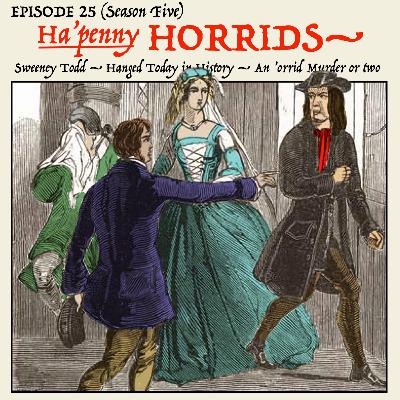
SHOW NOTES for MINISODE 25 (Season 5)(March 22, 2026) ———— 01:00: HANGED TODAY IN HISTORY (March 22): On March 22, 1819, 16-year-old Hannah Bocking was scragged for baking an arsenic-laced spice cake and giving it to a friend, with whom she was angry because she (the friend) had been given a job that Hannah had been rejected for. More details: https://www.executedtoday.com/2014/03/22/1819-hannah-bocking-16-year-old-poisoner/ Links to our runners-up: Thomas Hilliker, framed for arson: https://www.executedtoday.com/2010/03/22/1803-thomas-hilliker-machine-wrecking/ and Richard Overfield, loathsome baby-killer: https://www.executedtoday.com/2016/03/22/1824-richard-overfield-wicked-stepfather/ 08:40: SWEENEY TODD, THE BARBER OF FLEET-STREET, Chapter 92,93,94: Back at Todd’s place, Todd busies himself stuffing comestibles into various corners of his house, so that he will be able to set it nicely on fire when the time comes. Then he hears a thump at the door. It’s a man, hired by Mrs. Lovett to keep an eye on him and make sure he doesn’t bolt the moon. Todd drags him inside, assures him all is right, offers him a drink… Meanwhile, Mr. Lupin carries off his big malicious reveal that Johanna is in boy’s togs, apparently for purposes of running away to sea, but it doesn’t turn out quite the way he’d hoped it would!45:25: HORRID BROADSIDE: Trial, sentence, confession, execution and a gallows ballad supposedly written by F.C. Courvoisier, a Swiss valet convicted of trying to murder his way out of a sticky situation after his boss, Lord William Russell, caught him stealing from him. (1840).GLOSSARY OF EARLY-VICTORIAN SLANG USED IN THIS EPISODE:COUNT-CARDS: Good companions. DIMBER DAMBERS: High-ranking members of the Flash-talking criminal underworld or of “Gypsy” families. KNIGHTS OF THE BRUSH AND MOON: Drunken fellows wandering amok in meadows and ditches, trying to stagger home.
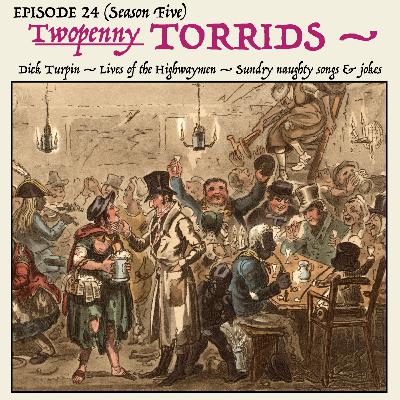
SHOW NOTES for MINISODE 24 (Season 5)(March 19, 2026) ———— EPISODE 24: The highwayman hears a ghostly voice in the deserted mansion! — How Georgian London loved to gamble and guzzle! — Plus a naughty song and dirty jokes! (Segment 2 — The “Twopenny Torrids.”)01:00: THE LIVES OF THE HIGHWAYMEN: Arthur Griffiths, one of Her Majesty’s prison inspectors, takes us on a tour of the state of the kingdom’s criminal-law art circa 1750. TL;DR: It was criminally lawless!14:45: BLACK BESS; or, THE KNIGHT OF THE ROAD (starring HIGHWAYMAN DICK TURPIN), Chapter 59, 60, 61: When Dick gets back to Durley Chine, he is met at the door by Tom King, who urges him to silence. He has heard a voice, somewhere in the old abandoned house somewhere. They are not alone there…. Their explorations lead them into the cellar, which opens out into a rocky cavern facing the sea…40:30: STREET POETRY: From a broadside ballad: Mary of the Dale, The Pilot, and Jack and I Saw Them No More (1830).44:30: A RATHER NAUGHTY COCK-AND-HEN-CLUB SONG: "Cock’s Head Broth; or, The Contented Cuckold” (about — well, take a guess!)48:00: A FEW MILDLY DIRTY JOKES from what passed in 1830 for a dirty joke book: "The Joke-Cracker" by Martin Merryman, Esq.GLOSSARY OF EARLY-VICTORIAN SLANG USED IN THIS EPISODE:SPICY: A double pun. To “mace” meant to cheat or steal; Mace is a spice; so a “spicer” or “spice islander” was a “macer,” that is, a swindler or thief. Thus, “make the Romantic Age spicy” can mean either “make the Romantic Age zesty and interesting,” “make the Romantic Age swindley,” or both.ROARING BLADE: Loud, boisterous, boastful but probably cowardly man. HEEL TAPS: The liquor that remains in the glass after one has taken an inadequately large drink from it. HELLS: Gambling parlours. FLATS: Suckers. FLASH CAPTAIN: Basically a roaring blade, but more pretentiously dressed. CHARLIES: City watchmen. FUNKERS: The lowest grade of thief. HEDGE CREEPERS: Another term for funkers.

SHOW NOTES for EPISODE 23 (Season 5)(March 15, 2026) ———— Join host Corinthian Finn, a.k.a. Finn J.D. John 18th Baron Dunwitch,* for a one-hour-long spree through the scandal-sheets and story papers of early-Victorian London! Each segment is in its own sub-episode. The "Penny Dreadfuls" segment is in this main episode, followed by ...The “Twopenny Torrids” minisode coming this Thursday evening;The “Ha’penny Horrids” minisode coming next Sunday ; and finally—The “Sixpenny Spookies” minisode coming next Thursday . ———— * The Barony of Dunwitch is located in a deep forest glade west of Arkham (where, as H.P. Lovecraft put it, “the hills rise wild, and there are valleys with deep woods that no axe has ever cut; there are dark narrow glens where the trees slope fantastically, and where thin brooklets trickle without ever having caught the glint of sunlight.”) Actually it is a good 3,000 miles west of Arkham. It is not to be confused with Dunwich, the English seacoast town that fell house by house into the sea centuries ago, or Dunsany, the home until 1957 of legendary fantasy author Edward J.M.D. Plunkett, 18th Baron Dunsany.For COMPLETE SHOW NOTES, including art and links to resources, see pennydread.com/discord. ———— IN TODAY'S "PENNY DREADFULS" SEGMENT:02:30: ON THIS DREADFUL DAY (March 15): The Victoria Pit Disaster of 1851 happened on this day, killing 61 men and boys who happened to be in the mine when it exploded.05:23: VARNEY THE VAMPYRE; or, THE FEAST OF BLOOD, Chapter 45-46: Just as the Rev. Mr. Leigh had got the crowd settled down and preparing to return home, Waggles the beadle recovered his senses and with a roar charged them, staff in hand. In the ensuing melee, the crowd rediscovered its enthusiasm for the job at hand, and started hunting for the graves of the recently inhumed….41:50: BROADSIDE BALLAD: Strange Warning to a Reprobate Publican! A “catchpenny,” that is, a phony story written to try and sell copies; in this case, it’s about a ghostly apparition that appeared to a debauched man and urged him to mend his evil ways. (1850s).GLOSSARY OF EARLY-VICTORIAN SLANG USED IN THIS EPISODE:ADELPHI AND ADELPHAI: Brothers and sisters. These are the Greek terms, more used by fancy-toff Flash canters like Pierce Egan’s famous Tom and Jerry. CHICKSTER: A flame or a sweetheart, with the implication that she is a little edgy, possibly dangerous or disreputable. CAPTAIN LUSHINGTONS: Spirited fellows who have had too much to drink. KNIGHTS OF THE BRUSH AND MOON: Drunken fellows wandering amok in meadows and ditches, trying to stagger home. CORINTHIAN: A fancy toff or titled swell. Used here as a reference to Corinthian Tom, the quintessential Regency rake depicted in Pierce Egan's "Life in London" (usually referred to as "Tom and Jerry"). CHAFFING-CRIB: A room where drinking and bantering are going on. WAPSTRAWS: Country bumpkins. TOWN TODDLERS: Easy marks, or suckers. SNICKER OF MAX: Glass of gin. WET YOUR OTHER EYE: Take another drink.
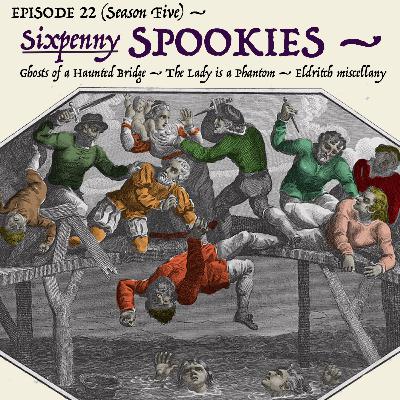
SHOW NOTES — for —MINISODE 22 (Season 5)(March 12, 2026)"THE SIXPENNY SPOOKIES"! ———— 00:30: THE TERRIFIC REGISTER: Five sworn witness descriptions of the haunting of the Portadown Bridge in Northern Ireland, the scene of a dreadful massacre of Protestant settlers by Catholic forces.06:45: EARLY VICTORIAN GHOSTLY SHORT STORY, to-wit: MISS JEROMETTE and the CLERGYMAN, by WILKIE COLLINS, Part 3 of 3 parts: Our clergyman’s sleazy pupil gets a surprise letter, and leaves abruptly for London, claiming he has “business” there. Afterward the maid finds a photograph in his room … of Miss Jeromette. So HE was the unnamed rival, years earlier! But what is he going to do? 26:00: A SHORT GHOST STORY from the scrapbook of Charles Lindley, Viscount Halifax: “The Woman in White.” A short account of a small child who saw a spectral figure in white come into the garden at the same moment her father drowned, far away, while working in the river.31:30: A FEW SQUEAKY-CLEAN DAD JOKES from the early-1800s' most popular joke book: "Joe Miller's Jests; or, The Wit's Vade-mecum."GLOSSARY OF EARLY-VICTORIAN SLANG USED IN THIS EPISODE:VADE MECUM: Latin for "hand book."JOE MILLER: A player at Drury-lane, in the early 1700s, who was famous for a Leslie Nielsen style of stone-faced comedy. Mr. Miller was always so serious (and don’t call him Shirley) that he was hilarious on stage. When he died leaving some dependents uncared-for, the jestbook was created by Joe’s friends as a sort of inside joke, as a fundraiser to support his bereaved family.PIKE OFF: Run away.RED WAISTCOAT: Uniform apparel of the Bow-street Runners, an early London police force replaced by the New Model Police (who dressed in blue rather than red) in 1839.GAMMONERS: Swindlers or bullshitters.ROMONERS: Gammoners who pretend to have occult powers.SHARPS: Swindlers and confidence men, who prey upon the “flats” (marks). OLD ST. GILES: The most famous slum parish of London, also called "The Holy Land."
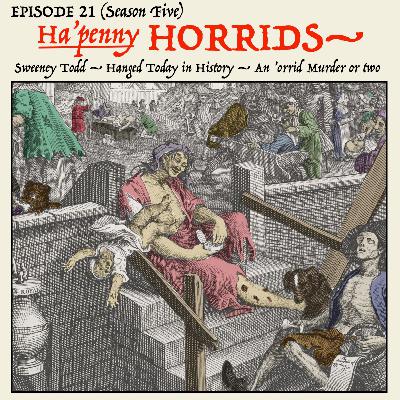
SHOW NOTES — for —MINISODE 21 (Season 5)(March 8, 2026)"THE HA’PENNY HORRIDS"! ———— 01:00: HANGED TODAY IN HISTORY (MARCH 8, 1734): Judith Dufour, convicted of murdering her 2-year-old daughter to sell her clothes for a quartern of gin. It’s a well-known cautionary tale about the evil influence of alcohol. But, is that all there is to the story? No. No, it is not. Let’s explore “The Rest of the Story” of this Lost Girl. (Art: See pennydread.com/discord)11:25: SWEENEY TODD, THE BARBER OF FLEET-STREET, Chapter 90-91: Todd reads the two letters. The first is Colonel Jeffery’s letter, saying he doesn’t find it convenient to prosecute just now, but if Todd ever comes around again, he will. The other letter is from the Hamburg ship line that he’s booked passage on. At Sir Richard’s request, they have sent a letter telling Todd that the ship has been delayed 24 hours. The two letters put Todd into a frightful rage, to Johanna’s great alarm. — Speaking of Johanna: It turns out she’s been recognized in Fleet-street … by Mr. Lupin, the hypocritical drunken Puritan preacher with designs on Johanna. (Art: See pennydread.com/discord)39:15: HORRID BROADSIDE: The Committal of W. THOMPSON, to the County Gaol at Oxford for the MURDER OF HIS WIFE and THREE CHILDREN on the 12th Inst.! (1840s). A probably-made-up account of a super-heinous murder committed under the influence of Demon Rum (or, more likely, Demon Gin). (Art: See pennydread.com/discord)GLOSSARY OF EARLY-VICTORIAN SLANG USED IN THIS EPISODE: (Just two this time.)SCRAGGED: Executed by hanging. QUARTERN: One quarter of an Imperial pint, that is, roughly 5 1/3 ounces. A common measurement of hard liquor.
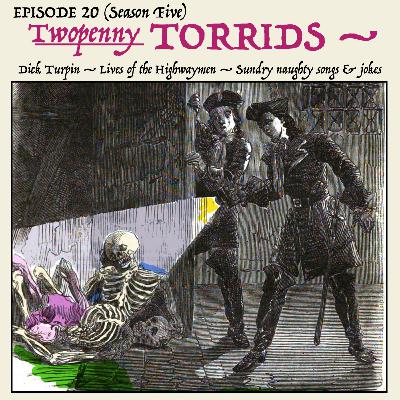
SHOW NOTES — for —MINISODE 20 (Season 5)(MARCH 5, 2026) ———— EPISODE 5.20: The skeletons in the vault. — A golden age of highway robbery and crime! — A very naughty song about sailing on “The Open C—.” (Segment 2 — The “Twopenny Torrids.”)NOTE: The full show notes, including images and links, can be accessed at https://pennydread.com/discord01:20: THE LIVES OF THE HIGHWAYMEN: A little scene-setting of what life was like during the Golden Age of Britain’s criminal underworld, and some theories about what caused such a startling outbreak of violent crime.17:50: BLACK BESS; or, THE KNIGHT OF THE ROAD (starring HIGHWAYMAN DICK TURPIN), Chapter 56-58: The ghostly mystery solved, the two highwaymen start exploring the house. They soon find a locked door that apparently is Sir Ernest’s room; it has a seal stamped over the lock hole with sealing-wax. Somebody really wanted to keep people out of that room … our friends have their work cut out for them, but by the end of the day, they’ve figured out why.46:45: STREET POETRY: From a broadside ballad: “Stock and Wall” and “Low-back’d Car.” (Early 1800s).51:40: TWO RATHER NAUGHTY COCK-AND-HEN-CLUB SONGS: "The C—” (about naughtybits, of course) and “Oh, do it, dear charmer, again.” 54:40: A FEW MILDLY DIRTY JOKES from what passed in 1830 for a dirty joke book: "The Joke-Cracker" by Martin Merryman, Esq.GLOSSARY OF EARLY-VICTORIAN SLANG USED IN THIS EPISODE:SWAG: Stolen property. BULLY: In this context, a brothel muscle-man there to protect the girls and make sure they get paid as agreed.FIDDLER: This word was used to mean a sixpence piece, a whip, a con artist, and sometimes a lady’s reproductive bits. FLASH CRIBS: A hospitality house of ill repute, often a brothel. FANCY GIRLS: Sporting ladies, provocatively dressed. KINCHIN: Child. LINK-BOY: A lad with a link or torch, hired to light the way.
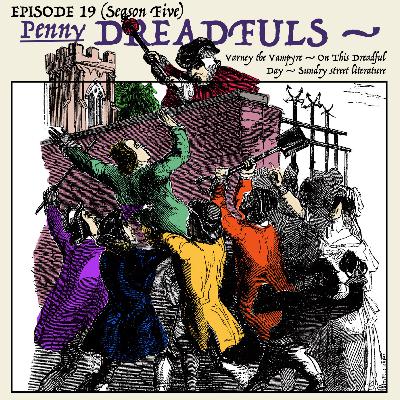
SHOW NOTES — for —EPISODES 19-22 (Season 5)(March 1-14, 2026) ———— Join host Corinthian Finn, a.k.a. Finn J.D. John 18th Baron Dunwitch,* for a one-hour-long spree through the scandal-sheets and story papers of early-Victorian London! Each segment is in its own sub-episode. The "Penny Dreadfuls" segment is in this main episode, followed by ...The “Twopenny Torrids” minisode coming Thursday evening, March 5;The “Ha’penny Horrids” minisode on next Sunday evening; March 8; and finally—The “Sixpenny Spookies” minisode, two Thursdays hence, on March 14. ———— THE "PENNY DREADFULS" SEGMENT:For COMPLETE SHOW NOTES, including art and links to resources, see pennydread.com/discord. ———— 02:20: ON THIS DREADFUL DAY (March 1): It must have seemed like a great idea to embezzle nearly 8,000 quid from a business partner; William Anderson got to feeling differently after his eight-year sentence was handed down. (1854)04:00: VARNEY THE VAMPYRE; or, THE FEAST OF BLOOD, Chapter 44: We cut back to the dungeon in which the prisoner is incarcerated. He hears someone running toward the dungeon, and then a tall gaunt man runs in and collapses beside him. He rises from his bed, grapples him by the throat, and cries, “Villain, monster, vampire! I have thee now!” Meanwhile, the mob of villagers, cheated of their prey, start thinking about seeking more vampyres in the graves of the recently deceased ….42:10: BROADSIDE BALLAD: Basically, an early-Victorian episode of Judge Judy, pitting a disgruntled customer against his tailor — who claimed the unwearable pair of “inexpressibles” (trousers) he made for the customer were a new fashion he’d seen Prince Albert wearing. (1840s).__________________GLOSSARY OF EARLY-VICTORIAN SLANG USED IN THIS EPISODE:HIGH SPICERS: First-class highwaymen. LADYBIRDS: Sweethearts. KNIGHTS OF THE BRUSH AND MOON: Drunken fellows wandering amok in meadows and ditches, trying to stagger home. CORINTHIAN: A fancy toff or titled swell. Used here as a reference to Corinthian Tom, the quintessential Regency rake depicted in Pierce Egan's "Life in London" (usually referred to as "Tom and Jerry"). CHAFFING-CRIB: A room where drinking and bantering are going on. NIPPERKIN: Half a pint. EYE-WATER: Gin. CABBAGE: Fabric used by a tailor to make clothing. KICKSIES: Trousers. ARTFUL CARD: Crafty character. TWIG: Recognize. To twig to something is to figure it out; to twig the prince is to recognize him on the street.KIDDY: Fashionable fellow. FARDEN: Phonetic spelling for the Cockney pronunciation of “farthing,” which was a quarter-penny.SPOOONEY: A silly, stupid fellow. MAG: A ha’penny. * The Barony of Dunwitch is located in a deep forest glade west of Arkham (where, as H.P. Lovecraft put it, “the hills rise wild, and there are valleys with deep woods that no axe has ever cut; there are dark narrow glens where the trees slope fantastically, and where thin brooklets trickle without ever having caught the glint of sunlight.”) Actually it is a good 3,000 miles west of Arkham. It is not to be confused with Dunwich, the English seacoast town that fell house by house into the sea centuries ago, or Dunsany, the home until 1957 of legendary fantasy author Edward J.M.D. Plunkett, 18th Baron Dunsany.
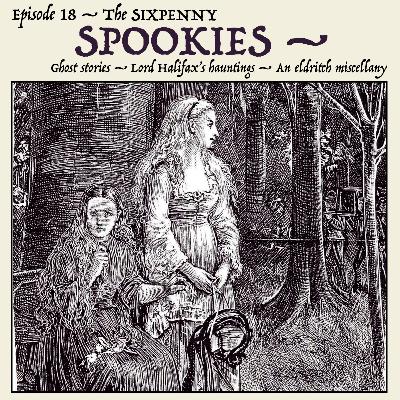
SHOW NOTES — for —MINISODE 18 (Season 5)(February 25, 2026)"THE SIXPENNY SPOOKIES"!For COMPLETE SHOW NOTES, including art and links to resources, see pennydread.com/discord. ———— IN TO-DAY'S "SIXPENNY SPOOKIES" EPISODE:00:45: THE TERRIFIC REGISTER: Screams awakened the traveler, and running to investigate he found the fingers of a corpse, shackled with chains, locked around the throat of his companion!05:15: EARLY VICTORIAN GHOSTLY SHORT STORY, to-wit: MISS JEROMETTE AND THE CLERGYMAN, by Wilkie Collins, Part 2 of 3 parts: After the narrator’s brother’s love affair with Miss Jeromette has been going on in secret for some time, his dying mother begs him to leave off the law and enter the church, and he promises he’ll do it. Obviously carrying on an extramarital with a secret French girl is one thing for a law student, but quite another for a divinity student. He goes to her house, sadly and regretfully, resigned to break it off….28:30: A SHORT GHOST STORY from the scrapbook of Charles Lindley, Viscount Halifax: “Head of a Child.” Guests in the manor of Sutton Verney complained they’d wake up in the night with the feeling of a child nestled in bed with them. It got so nobody would stay in that room; finally, the owners demolished that wing … and thereby learned its secret.30:45: A FEW SQUEAKY-CLEAN DAD JOKES from the early-1800s' most popular joke book: "Joe Miller's Jests; or, The Wit's Vade-mecum."GLOSSARY OF EARLY-VICTORIAN SLANG USED IN THIS EPISODE:VADE MECUM: Latin for "hand book."JOE MILLER: A player at Drury-lane, in the early 1700s, who was famous for a Leslie Nielsen style of stone-faced comedy. Mr. Miller was always so serious (and don’t call him Shirley) that he was hilarious on stage. When he died leaving some dependents uncared-for, the jestbook was created by Joe’s friends as a sort of inside joke, as a fundraiser to support his bereaved family.KIDDIES AND KIDDIESSES: Flash fellows — basically, early-1800s hep cats. SHERRY OFF: Run away. FLATS: Suckers. GET FLY TO THE FAKEMENT: Get wise to the swindle. BUMS: Bailiffs. CRAPING COVES: Hangmen. YE OLD STONE PITCHER: Newgate Prison. PADDINGTON FAIR: Execution day at Tyburn, which is in Paddington Parish. Paddington is also a pun, as “pad” was a flash word for “thief” or “robber.” BRUSH OFF: Leave. Note this phrase means something slightly different today.
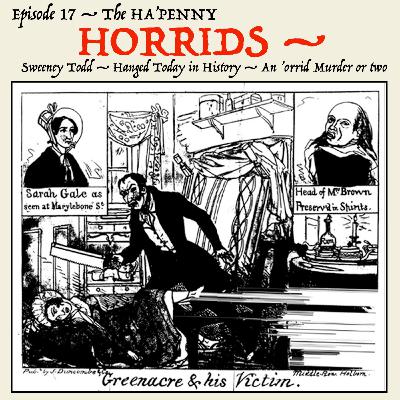
SHOW NOTES — for —MINISODE 17 (Season 5)(February 22-25, 2026)"THE HA'PENNY HORRIDS"!For COMPLETE SHOW NOTES, including art and links to resources, see pennydread.com/discord. ———— IN TODAY'S "HA'PENNY HORRIDS" EPISODE:00:45: HANGED TODAY IN HISTORY (February 24): A real downer, you might want to skip this one. But on Feb. 24, 1823, a 54-year-old closeted gay man named William North, outed by the discovery of some love letters, was hanged for “an unnatural crime.” 07:45: SWEENEY TODD, THE BARBER OF FLEET-STREET, Chapter 89: Todd has escaped through the neighbor’s house, terrifying them in the process. But now he has a problem — the heat is going to be on! And Sir Richard Blunt has a problem: He doesn’t want Todd to go dark quite yet, he’s working on a plan to catch him red-handed. How can he reassure Todd enough to keep him in England for another day — and make sure Johanna is safe in his shop?23:00: HORRID BROADSIDE: “Life, Trial, Confession & Execution of JAMES GREENACRE, for the EDGEWARE ROAD MURDER!” (1836). Truly a nasty crime, in which Mr. Greenacre killed and dismembered his fiancée on Christmas Eve, the night before their wedding.GLOSSARY OF EARLY-VICTORIAN SLANG USED IN THIS EPISODE:SCRAGGED: Hanged. BULLY ROCKS: Swaggering braggadocios.
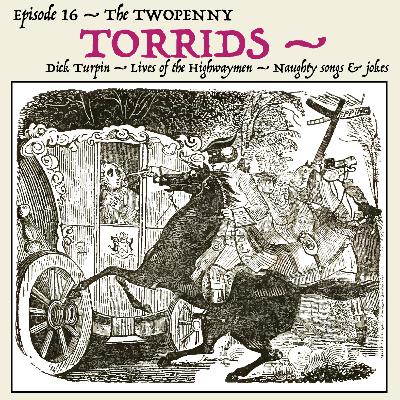
SHOW NOTES — for —MINISODE 16 (Season 5)(February 23, 2026)THE "TWOPENNY TORRIDS"!For COMPLETE SHOW NOTES, including art and links to resources, see pennydread.com/discord. ———— IN TODAY'S "TWOPENNY TORRID" MINISODE:01:00: THE LIVES OF THE HIGHWAYMEN: The short and merry life of one of history’s most gifted con artistes — Mary Carleton, a.k.a. The German Princess.12:15: BLACK BESS; or, THE KNIGHT OF THE ROAD (starring HIGHWAYMAN DICK TURPIN), Chapter 54: Dick finishes telling the story of how he acquired his mare. By the time he’s done, morning has broken; so the two highwaymen set out to explore their new temporary digs. But just as they do, an unearthly scream rings out in their ears …24:45: STREET POETRY: From a yard-long collection of street ballads: “Henry’s Cottage Maid,” and “Single Life for Me!” (Early 1800s).28:00: A RATHER NAUGHTY COCK-AND-HEN-CLUB SONG: "The Lady’s Wound” (about how Simple Simon learned on his wedding night that that, um, wasn’t a wound down there.)30:00: A FEW MILDLY DIRTY JOKES from what passed in 1830 for a dirty joke book: "The Joke-Cracker" by Martin Merryman, Esq.GLOSSARY OF EARLY-VICTORIAN SLANG USED IN THIS EPISODE — just two this time:ARCH DOXY: High-ranking female criminal or underworld figure. CUT AWAY: Fled.
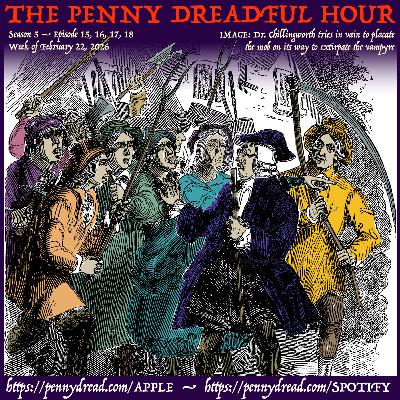
(ART: The angry mob and Dr. Chillingworth, from this episode’s chapter of Varney the Vampyre.)SHOW NOTES — for —EPISODES 15-18 (Season 5)(February 22-25, 2026) ———— Join host Corinthian Finn, a.k.a. Finn J.D. John 18th Baron Dunwitch,* for a one-hour-long spree through the scandal-sheets and story papers of early-Victorian London! Each segment is in its own sub-episode. The "Penny Dreadfuls" segment is in this main episode, followed by ...The “Twopenny Torrids” minisode coming Monday evening;The “Ha’penny Horrids” minisode on Tuesday evening; and finallyThe “Sixpenny Spookies” minisode on Wednesday. ———— THE "PENNY DREADFULS" SEGMENT:For COMPLETE SHOW NOTES, including art and links to resources, see pennydread.com/discord. ———— IN TODAY'S "PENNY DREADFULS" SEGMENT:02:50: ON THIS DREADFUL DAY (February 22): Lord Bellamont, the “Hybernian Seducer,” took a pistol ball to the groin in a duel with Lord Townshend. (1773)04:10: VARNEY THE VAMPYRE; or, THE FEAST OF BLOOD, Chapter 40: The mob of angry villagers arrive at Sir Francis Varney’s house, with Dr. Chillingworth in front, importuning them to turn back the whole way. They form up in front of Ratford Abbey and thunderously demand admittance to the place. Upon getting in, they search it; Varney is not there. Then a shepherd tells them he saw Varney heading towards the duelling-spot, and they race thither, hot on the vampyre’s track … how do you suppose our bold, bad eldritch anti-hero will get out of this one?41:05: BROADSIDE BALLAD: “SECRETS for ladies during courtship! TEASING MADE EASY!” (Mid-1800s).GLOSSARY OF EARLY-VICTORIAN SLANG USED IN THIS EPISODE:WOOD PECKERS: Jokers, with the implication that they favor dry humour. WATER PADS: Highway robbers of the river — freshwater pirates, basically. KNIGHTS OF THE BRUSH AND MOON: Drunken fellows wandering amok in meadows and ditches, trying to stagger home. CORINTHIAN: A fancy toff or titled swell. Used here as a reference to Corinthian Tom, the quintessential Regency rake depicted in Pierce Egan's "Life in London" (usually referred to as "Tom and Jerry"). CHAFFING-CRIB: A room where drinking and bantering are going on. TARTARS: Stern and disapproving old ladies. AUTEM DIPPERS: Hard-shell Baptists. FLICKER: Drinking glass. BLUE JACKY: Gin. * The Barony of Dunwitch is located in a deep forest glade west of Arkham (where, as H.P. Lovecraft put it, “the hills rise wild, and there are valleys with deep woods that no axe has ever cut; there are dark narrow glens where the trees slope fantastically, and where thin brooklets trickle without ever having caught the glint of sunlight.”) Actually it is a good 3,000 miles west of Arkham. It is not to be confused with Dunwich, the English seacoast town that fell house by house into the sea centuries ago, or Dunsany, the home until 1957 of legendary fantasy author Edward J.M.D. Plunkett, 18th Baron Dunsany.
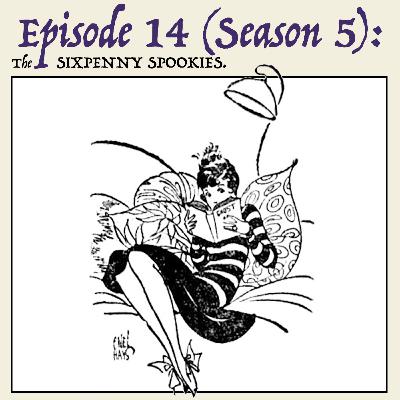
SHOW NOTES — for —EPISODE 14(The fourth of four linked episodes aired February 15, 2026) ———— Join host Corinthian Finn, a.k.a. Finn J.D. John 18th Baron Dunwitch, for a one-hour-long spree through the scandal-sheets and story papers of old London!* ———— "THE SIXPENNY SPOOKIES" segment (No. 4 of 4):00:30: THE TERRIFIC REGISTER: God’s judgement on a bishop who became cruel to his congregation.02:05: EARLY VICTORIAN GHOSTLY SHORT STORY, to-wit: MISS JEROMETTE AND THE CLERGYMAN, by WILKIE COLLINS, Part 1 of 3 parts: We open on our narrator’s brother reading a book about famous criminal trials, when his brother, a clergyman, sees the one he’s reading about. The defendant was acquitted in the trial — but the brother knows with absolute certainty that the man was guilty of the charge. How so, the narrator asks? Instead of answering, the brother asks if the narrator believes in ghosts … and then agrees to tell his story if the brother will promise to let the story be revealed only after his death.On his deathbed, then, he beckons to the narrator and tells him he may now share his strange tale ….19:15: A SHORT GHOST STORY from the scrapbook of Charles Lindley, Viscount Halifax: “Here I am again!” — a story of a most persistent, if rather ineffectual, haunt.25:25: A FEW SQUEAKY-CLEAN DAD JOKES from the early-1800s' most popular joke book: "Joe Miller's Jests; or, The Wit's Vade-mecum."GLOSSARY OF FLASH TERMS USED IN THIS EPISODE:VADE MECUM: Latin for "hand book."JOE MILLER: A player at Drury-lane, in the early 1700s, who was famous for a Leslie Nielsen style of stone-faced comedy. Mr. Miller was always so serious (and don’t call him Shirley) that he was hilarious on stage. When he died leaving some dependents uncared-for, the jestbook was created by Joe’s friends as a sort of inside joke, as a fundraiser to support his bereaved family.TIP YOUR RAGS A GALLOP: Run away as fast as you can.GRABS: Police and magistrates.THE TOUCH: Getting arrested.HELL CATS: Dangerous ladies who frequent the “hells” (gambling dens).BLACKLEGS: Professional gamblers who cheat to win.SPEELING-CRIB: A gambling den. RUM TE TUM WITH THE CHILL OFF: Most emphatically excellent.————* The Barony of Dunwitch is located in a deep forest glade west of Arkham (where, as H.P. Lovecraft put it, “the hills rise wild, and there are valleys with deep woods that no axe has ever cut; there are dark narrow glens where the trees slope fantastically, and where thin brooklets trickle without ever having caught the glint of sunlight.”) Actually it is a good 3,000 miles west of Arkham. It is not to be confused with Dunwich, the English seacoast town that fell house by house into the sea centuries ago, or Dunsany, the home until 1957 of legendary fantasy author Edward J.M.D. Plunkett, 18th Baron Dunsany.
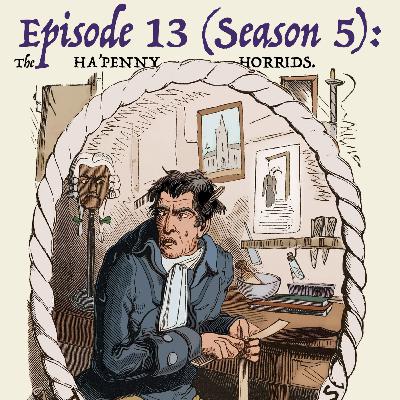
SHOW NOTES — for —EPISODES 11-14(The third of four episodes aired February 15, 2026) ———— Join host Corinthian Finn, a.k.a. Finn J.D. John 18th Baron Dunwitch,* for a one-hour-long spree through the scandal-sheets and story papers of old London! ———— "THE HA'PENNY HORRIDS" (Segment 3 of 4):00:30: HANGED TODAY IN HISTORY (February 15, 1688): On this day, Philip Stansfield was hanged for murdering his father. And yeah, he probably did it — there was a lot of circumstantial evidence — but the clincher was an account of how, when the body was found and Philip helped retrieve it, it bled on him. Which, the prosecutor said, “he must ascribe to the wonderful Providence of God, who in this manner discovers murder.” Divine forensics!04:55: SWEENEY TODD, THE BARBER OF FLEET-STREET, Chapter 88: Todd, stuck on the roof, jumps across to the next house and makes his way out through it. As he leaves, he overhears Colonel Jeffery giving a letter to his footman to carry to Sir Richard Blunt … Todd follows him, wondering what’s in that letter … and making plans to find out!19:25: HORRID BROADSIDE: The confession and execution of William Corder, who murdered his onetime sweetheart Maria Martin (1828).GLOSSARY OF FLASH TERMS USED IN THIS EPISODE:PADDINGTON FAIR: Hanging day at the old Tyburn Tree gallows, which was located in Paddington Parish. Many of the convicts hanged there were “pads,” that is, thieves. ————*The Barony of Dunwitch is located in a deep forest glade west of Arkham (where, as H.P. Lovecraft put it, “the hills rise wild, and there are valleys with deep woods that no axe has ever cut; there are dark narrow glens where the trees slope fantastically, and where thin brooklets trickle without ever having caught the glint of sunlight.”) Actually it is a good 3,000 miles west of Arkham. It is not to be confused with Dunwich, the English seacoast town that fell house by house into the sea centuries ago, or Dunsany, the home until 1957 of legendary fantasy author Edward J.M.D. Plunkett, 18th Baron Dunsany.
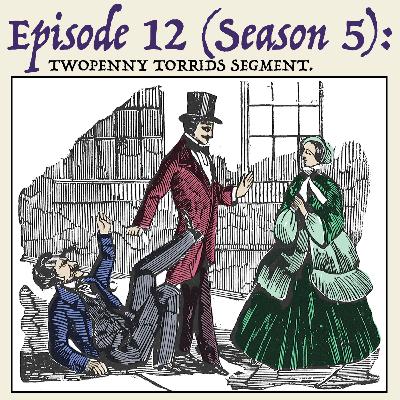
SHOW NOTES — for —EPISODES 12(The second of four aired on February 15, 2026) ———— Join host Corinthian Finn, a.k.a. Finn J.D. John 18th Baron Dunwitch,* for a one-hour-long spree through the scandal-sheets and story papers of old London! ———— "THE TWOPENNY TORRIDS" SEGMENT:00:40: THE LIVES OF THE HIGHWAYMEN: The affair of Count Koenigsmark, a feisty Swedish nobleman who in 1682 tried to murder his way into the good graces of a 13-year-old heiress, and barely got out of the country unhanged ….12:13: BLACK BESS; or, THE KNIGHT OF THE ROAD (starring HIGHWAYMAN DICK TURPIN), Chapter 54: Turpin continues the story of his first heist. After it was over, he tried to go back to honest work; but he found nobody would hire him, so back he went upon the road! Also, Dick tells how he became the owner of his amazing mare, Black Bess.24:20: STREET POETRY: From a broadside ballad: The Young Woman’s ABC (a delightfully flirty bit of fun in the vein of Lou Bega’s “Mambo No. 5”) on the same page as a deeply moving ballad of a Maryland man whose (free) Black wife was kidnapped by a gang of “fugitive slave catchers.” (1860).30:45: A RATHER NAUGHTY COCK-AND-HEN-CLUB SONG: "The Metal Spoon-makers” (about sex, of course; what else?)33:00: A FEW MILDLY DIRTY JOKES from what passed in 1830 for a dirty joke book: "The Joke-Cracker" by Martin Merryman, Esq.GLOSSARY OF FLASH TERMS USED IN THIS EPISODE:KNIGHT OF THE BLADE: A swaggering braggadocio. BLUNT: Money, with the implication that there is a lot of it. RHINO: Same as “blunt.” BULLY ROCKS: Cheap muscle, usually a reference to “protection” men in a whorehouse. BOLT THE MOON: Fly by night. * The Barony of Dunwitch is located in a deep forest glade west of Arkham (where, as H.P. Lovecraft put it, “the hills rise wild, and there are valleys with deep woods that no axe has ever cut; there are dark narrow glens where the trees slope fantastically, and where thin brooklets trickle without ever having caught the glint of sunlight.”) Actually it is a good 3,000 miles west of Arkham. It is not to be confused with Dunwich, the English seacoast town that fell house by house into the sea centuries ago, or Dunsany, the home until 1957 of legendary fantasy author Edward J.M.D. Plunkett, 18th Baron Dunsany.
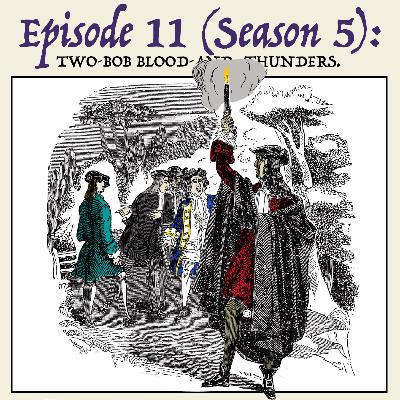
SHOW NOTES — for —EPISODE 11(One of four aired on February 15, 2026) ———— Join host Corinthian Finn, a.k.a. Finn J.D. John 18th Baron Dunwitch,* for a one-hour-long spree through the scandal-sheets and story papers of old London! ———— * The Barony of Dunwitch is located in a deep forest glade west of Arkham (where, as H.P. Lovecraft put it, “the hills rise wild, and there are valleys with deep woods that no axe has ever cut; there are dark narrow glens where the trees slope fantastically, and where thin brooklets trickle without ever having caught the glint of sunlight.”) Actually it is a good 3,000 miles west of Arkham. It is not to be confused with Dunwich, the English seacoast town that fell house by house into the sea centuries ago, or Dunsany, the home until 1957 of legendary fantasy author Edward J.M.D. Plunkett, 18th Baron Dunsany.————SEGMENT 1 of 4: “THE TWO-BOB BLOOD-AND-THUNDERS.”02:10: ON THIS DREADFUL DAY: The story of a man garrotted and robbed at Leeds; but he survived to identify his attackers! (Feb. 15, 1853)03:45: VARNEY THE VAMPYRE; or, THE FEAST OF BLOOD, Chapter 39: It’s dueling time! But only Henry fires his pistol. It’s a clean miss, apparently. Varney raises his pistol … and fires at the sky. Henry demands another fire, as Marchdale and the Admiral urge him to call it good. But just then Mr. Chillingworth arrives … with a mob of villagers equipped with torches and pitchforks, chanting “Down with the vampire!”31:00: BROADSIDE STREET BALLAD: Opening the Exhibition! A fantastic example of street-poet John Morgan writing about the exhibition at the Crystal Palace in 1854. It was the event of the century!GLOSSARY OF FLASH TERMS USED IN THIS EPISODE:CONVEYANCERS: Highway robbers and thieves. CAPER MERCHANTS: Dancing instructors. KNIGHTS OF THE BRUSH AND MOON: Drunken fellows wandering amok in meadows and ditches, trying to stagger home. CORINTHIAN: A fancy toff or titled swell. Used here as a reference to Corinthian Tom, the quintessential Regency rake depicted in Pierce Egan's "Life in London" (usually referred to as "Tom and Jerry"). CHAFFING-CRIB: A room where drinking and bantering are going on. HENS: Married ladies, usually of middle age. JET AUTEMS: Preachers and parsons. WHITE TAPE: Gin. SLUICE YOUR GOB: Take a big drink.

Comments

Download from Google Play

Download from App Store
 United States