


 Claim Ownership
Vision Church Podcast - Raleigh, NC
Subscribed: 3Played: 316
Subscribe

© 2026 Vision RDU
Description
A Gospel-centered church located in the Raleigh-Durham area of North Carolina. Our mission is simple and that's to Glorify God and Make Disciples. Visit us at visionrdu.com!
315 Episodes
Reverse
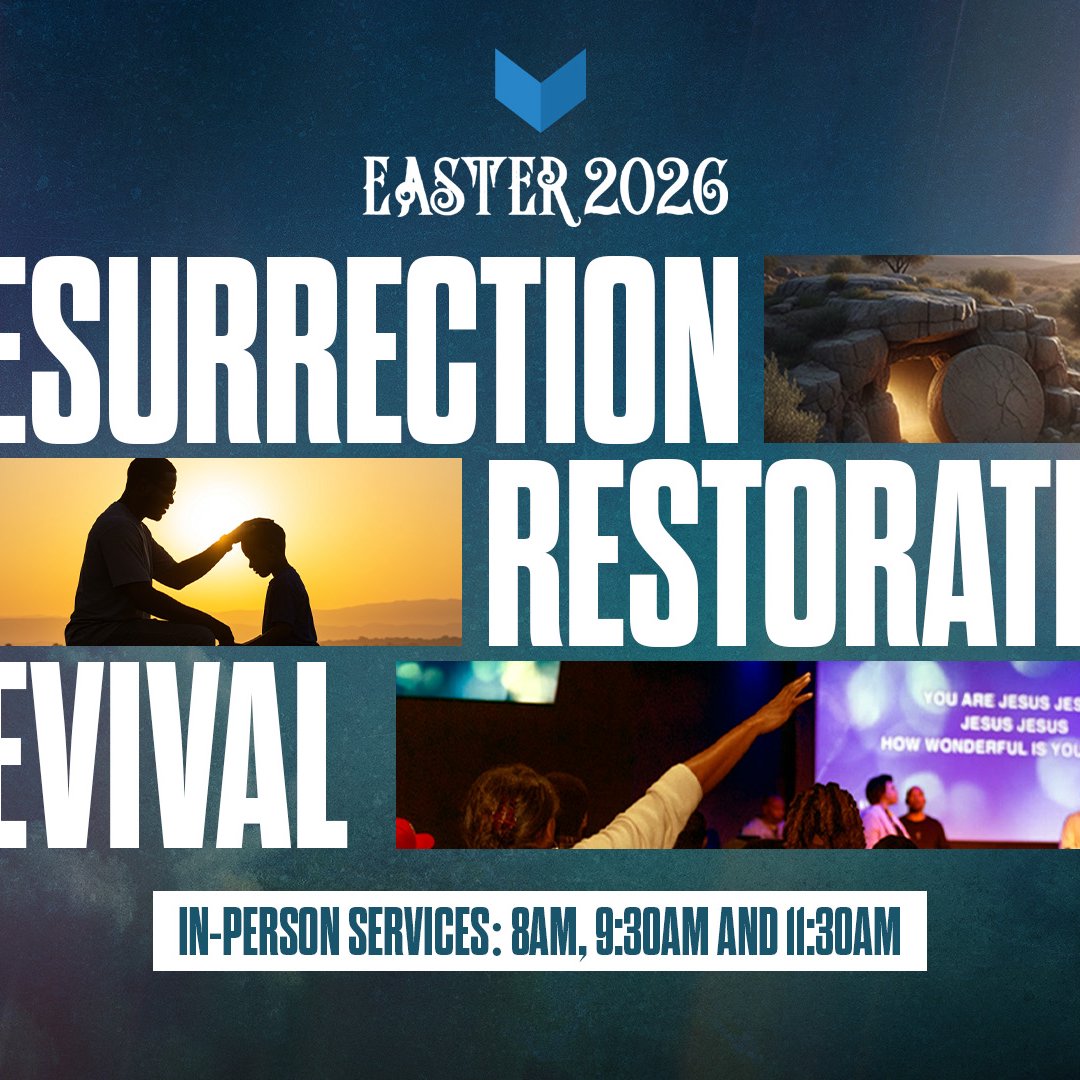
As you go throughout the week reflect on these takeaways:- The resurrection addresses our disbelief and dissonance. Just as the stone, seal, and soldiers couldn't keep Jesus in the tomb, our doubts cannot diminish God's power. Even when we struggle to fully understand His ways, God meets us with grace. Faith sometimes precedes complete understanding, and that's okay—God won't let go of us as we wrestle with Him.- The resurrection comforts us in our despair. Mary's grief blinded her to Jesus' presence even when He stood right before her. Yet Jesus called her by name, transforming her mourning into joy. When the Good Shepherd calls His sheep by name, we respond. Whatever despair you're facing today, remember that your source of hope may be closer than you realize.- The resurrection compels us to declare His goodness. Mary, delivered from seven demons, couldn't help but cling to Jesus and then proclaim, "I have seen the Lord!" Our deliverance demands a declaration. We're called not just to hold onto Jesus privately, but to fulfill the mission He's given us—to tell others about the risen Savior who has conquered death.

As you go throughout the week reflect on these takeaways:- Stay focused on God the Father in the face of fear: Esther didn't use prayer as procrastination. After three days of fasting, she acted in faith, putting on her royal robes and approaching the king uninvited, ready to die for others. Prayer should fuel action, not delay it.- Stay focused on God's plan when presented with prosperity: When offered half the kingdom, Esther refused the detour. Satan often funds our distractions with attractive offers that derail God's assignment for our lives. Don't confuse progress with completion or accept partial blessings that compromise your calling.- Bitterness is a prison, not power: Haman had wealth, sons, honor, and rank, yet one man's refusal to bow stole all his joy. Bitterness blinds us to our blessings, keeps us angry, exposes our pride, and makes us receptive to ridiculous counsel. Guard your heart against making an idol out of what you lack.

As you go throughout the week reflect on these takeaways:- You are united with Christ in both His death and resurrection. When you placed your faith in Jesus, you were baptized into Him—fully immersed into His person and work. Your old self was crucified with Him, and sin's power over you has been rendered powerless. You are no longer who you used to be.- Change requires your faithful and patient participation. While Christ has done the work to make change possible, we must actively participate by faith. This means considering ourselves dead to sin and alive to God, refusing to let sin reign in our bodies, and offering ourselves to God as instruments of righteousness. Engage in counseling, practice spiritual disciplines, and place yourself in God's greenhouse where growth can happen.- Change is always hard but always worth it. The process of transformation involves affliction that produces endurance, endurance that produces proven character, and character that produces hope. This hope will not disappoint us because God's love has been poured into our hearts through the Holy Spirit. Trust the Gardener's work in your life, even when the process is difficult.
As you go throughout the week reflect on these takeaways:- Fear is real, but reverence for God should be greater. Esther was "overcome with fear" (Esther 4:4), yet she moved forward anyway. You don't have to wait until fear disappears to obey God—do it afraid. The feeling of fear doesn't disqualify you; giving in to fear does.- Pressure is often providential, not punitive. Much of what Esther faced wasn't her fault—her parents' death, the exile, the pageant, Haman's plot. Sometimes God uses pressure not to correct us but to perfect us and position us for His purposes. Ask yourself: "How are you perfecting me, God?" rather than "Why is this happening to me?"- Your moment isn't about you—it's about stewardship. Mordecai's famous words, "for such a time as this," remind us that our gifts, relationships, positions, and moments are not for self-promotion but for God's glory. When we shift from "my crown" to "His crown," we become part of something that outlives us and impacts eternity.
As you go throughout the week reflect on these takeaways:- Circumstances do not dictate your response in the midst of chaos, calling does. Sometimes God will call you to do the hard thing while everyone else is doing what is easy.- Every believer is called to leverage their influence for the King. You have been positioned where you are for such a time as this.- Desperate times call for divine intervention. Like Mordecai pleaded with Esther, we must cry out to our true Savior who can deliver us from the hands of our enemies.
As you go throughout the week reflect on these takeaways:- People Are Put in Positions Providentially: God orchestrates complex circumstances to position people exactly where they need to be. Just as Mordecai's placement in the palace wasn't accidental, neither is your current position. Hold fast to God's promises—He works all things for your ultimate good (Romans 8:28), provides what you need (Philippians 4:19), and will never leave you (Hebrews 13:5).- Emotions Dictating Decisions Creates Distress: Haman's rage-fueled decision to exterminate an entire race shows the danger of unchecked emotions. In our digital age where we can instantly act on impulses, we must learn to be emotional circuit breakers, not conduits. See stress as integral to your formation, create healthy rhythms to metabolize emotions, and don't let your feelings become your idol.- Isolation Leads to Poor Counsel: Haman made catastrophic decisions alone, without seeking wise counsel. The person who talks to you most is yourself, and you regularly give yourself bad advice. Don't make major decisions in isolation. Wait, pray, and seek godly counsel from older, wiser believers. Trust in the Lord with all your heart rather than relying on your own understanding (Proverbs 3:5-6).
As you go throughout the week reflect on these takeaways:Regret is not repentance - King Ahasuerus felt remorse about losing Vashti, but never took responsibility for his actions. True repentance requires owning our mistakes and actually changing, not just feeling bad or repeating destructive cycles. When we refuse to process pain properly, we hurt more people in the process.Your decisions have generational effects - Mordecai and Esther faced consequences from choices made by previous generations who stayed in Persia beyond God's appointed time. The decisions we make today don't only affect us—they create either collateral damage or collateral blessing for those who come after us.God's favor guides us through difficulty, not around it - Esther was adopted, then abducted, but ultimately advanced to queen "for such a time as this." God weaves what the enemy meant for evil into something good. Where man abuses power to regulate, God applies power to restore. Where earthly kings leave shame, our King loves shame away.You don't have to audition for God's affection - Unlike the women who prepared 12 months for one night with an earthly king, only to become a number instead of "the one," Christ makes you His one without audition. Your body count, past mistakes, or current struggles don't disqualify you from His unconditional love and adoption.
As you go throughout the week reflect on these takeaways:- Regret is not the same as repentance. Xerxes remembered Vashti and likely felt regret, but he never turned his heart toward true change. As 2 Corinthians 7:10 reminds us, godly grief produces repentance that leads to salvation, while worldly grief produces death. This week, ask yourself: Am I merely regretting consequences, or am I genuinely repenting and turning away from sin?- Surround yourself with voices that confront, not just confirm.Xerxes' advisors offered counsel that matched his desires rather than challenged his heart. We must intentionally seek godly counsel that calls us toward holiness, not voices that simply validate our appetites. Consider: Are the people speaking into your life helping you pursue Christ, or are they helping you justify your choices?- God's providence operates even in dark seasons.While Xerxes was building a system of exploitation, God was positioning Mordecai and Esther for the protection and eventual redemption of His people. You may be in a season where God feels absent, but remember: He is sovereign over evil without being the author of it. Faith is not having all the answers but obeying a trustworthy God while the story is still unfolding.
As you go throughout the week reflect on these takeaways:- Power and possessions will never satisfy your soul. King Ahasuerus had wealth, authority over 127 provinces, and threw a six-month party, yet he remained insecure and empty. Only God can fill the eternity He has placed in our hearts.- God redeems rejection. Vashti's refusal to be objectified set in motion the events that would bring Esther to the throne and ultimately save God's people. What looks like setback in our lives may be God's setup for His greater purposes.- Bad counsel comes from insecure people who fear losing control. Ahasuerus consulted friends who projected their own insecurities rather than seeking godly wisdom. We must be careful whose advice we follow, ensuring we walk in the counsel of the righteous, not the wicked.
As you go throughout the week reflect on these takeaways:- The gospel compels believers to engage people without embracing their views. Paul was deeply distressed by the idolatry in Athens, yet he didn't retreat or conform. He conversed with compassion, contended with clarity, remained cordial without compromise, and refused to condemn before sharing truth. We must do the same in our workplaces, neighborhoods, and online spaces.- The gospel will draw some to faith and drive others away. Our responsibility is sharing, not saving. Some mocked Paul, others were curious, and a few believed. When we faithfully proclaim Christ as Creator, Sustainer, Ruler, and Pursuer of humanity, we can trust God with the results. Don't let fear of rejection silence your witness.- The gospel empowers us to not retreat from declaring repentance. Paul didn't soften his message to make it more palatable. He called everyone to repent because God has appointed a day of judgment and provided proof through Christ's resurrection. The exclusivity of salvation in Jesus, the reality of bodily resurrection, and the certainty of coming judgment still offend today—but they remain true and must be proclaimed with both boldness and love.
As you go throughout the week reflect on these takeaways:- Six Warning Signs of Inauthentic Revival: Watch for these red flags: sacrificing Scripture for spiritual experiences, self-promotion, superseding God's glory, sensationalism, spiritual abuse, and spiritual simulation. When any ministry or movement exhibits these characteristics, we must exercise discernment and test everything against God's Word.- The Holy Spirit Cannot Be Bought: God's grace, salvation, and miracles are never for sale. Simon's attempt to purchase spiritual power reveals a fundamental misunderstanding of God's kingdom. We must remember that authentic spiritual gifts and experiences come through surrender to God, not through manipulation or transaction.- Biblical Literacy Protects Us: Many people remain in deceptive and abusive church environments due to biblical illiteracy, fear, or comfort. Grounding ourselves in Scripture equips us to recognize truth from error and empowers us to make wise decisions about where we worship and serve.
As you go throughout the week reflect on these takeaways:- Revival requires personal transformation, not just emotional experiences. True revival involves conviction, confrontation of sin, divine discomfort, and life change that pleases God.- We must obey God rather than people. When governing authorities or social pressure contradict kingdom values, we're called to speak truth rooted in God's love and Word, even when facing ridicule, rejection, or resistance.- Internal killers of revival include pride, pessimism, pragmatism, and people-pleasing. We must guard against quenching or grieving the Holy Spirit through compromise or living contrary to God's holiness.- When united, committed, and submitted to God's mission, believers are unstoppable. The apostles rejoiced not that they escaped punishment, but that they were counted worthy to suffer for Jesus' name.
As you go throughout the week reflect on these takeaways:- Revival requires conviction before comfort. Personal revival begins when we allow God's Spirit to confront us about specific areas of sin in our lives. The early church experienced this when Peter's message "pierced their hearts" (Acts 2:37). We cannot experience transformation if we prioritize comfort over conviction and consecration. True change happens when we accept God's correction and do things His way, not our own.- Revival is sustained through devotion to four foundational practices. The early church devoted themselves to: (1) the apostles' teaching—remaining rooted in Scripture, (2) fellowship—authentic community where we serve, not just spectate, (3) breaking of bread—grateful remembrance of God's provision and Christ's sacrifice, and (4) prayer—consistent and persistent communication with God. These aren't optional activities but essential elements that keep revival alive in our hearts.- Revival produces fruit that reaches beyond ourselves. When we experience genuine revival, it leads to miraculous displays of God's power, radical generosity, unified community, and evangelism. The early church didn't keep their experience to themselves—"every day the Lord added to their number those who were being saved" (Acts 2:47). Revival compels us to be witnesses, not spectators, sharing what God has done in our lives with others who need transformation.
As you go throughout the week reflect on these takeaways:- Fortify in the Truth: Like the measles virus spreads rapidly, we should pray for God's Word to spread with equal intensity in our lives and communities. Put on the full armor of God daily by reciting fighting Scripture, recognizing deliverance from evil, remembering God's strength and protection, reinforcing obedient instruction, and rejoicing in Christ's enduring love.- Fortify Against Inactivity: Spiritual idleness is as dangerous as physical inactivity is to our hearts. We're called to work diligently—not out of legalism, but as an act of worship and witness. Stay active in prayer, community, Scripture reading, and evangelism. Don't grow weary in doing good, even when efforts feel tiresome or fruitless.- Fortify in the Lord of Peace: True peace doesn't come from circumstances aligning, endless scrolling, or temporary escapes. The Prince of Peace offers himself to us, providing rest for our souls now and for eternity. Create space for the Spirit in your daily habits and don't allow circumstances to dictate your peace.
As you go throughout the week reflect on these takeaways:- Discernment is spiritual radar that examines our hearts and helps us distinguish truth from error. It goes beyond mental sharpness—it's rooted in God's Word and empowered by the Holy Spirit, protecting us from being deceived by false teaching or worked up by unfounded fears.- The "man of lawlessness" (antichrist) is coming and will deceive many through counterfeit miracles and satanic power, but Christ will effortlessly destroy him at His return. While we may not face this figure directly, the spirit of antichrist is already at work, making discernment essential for our daily walk.- Our identity and destiny are secured by the gospel. Rather than being consumed with anxiety about end times, we're called to stand firm in what we've been taught, encouraged by God's eternal love and strengthened for every good work and word.
As you go throughout the week reflect on these takeaways:- Flourishing faith fuels perseverance.Your faith should never be stagnant. Keep it growing through constant communication with God (pray constantly), cultivation of spiritual disciplines (supplement your faith), consecration (be separate from worldly patterns), and concentration (withdraw to be with Jesus).- Trials reveal the authenticity of your faith.The Thessalonians' suffering wasn't evidence of God's absence but proof of His presence—He was strengthening them to believe. Your hardships will either draw you closer to God or drive you away, depending on the depth of your faith. Endure faithfully by praying in your pain, processing with mature believers, proclaiming His victory, and praising Him anyway.- Persevering faith rejects revenge and receives relief from God. Don't be discouraged by those who seem to prosper without God. Justice is coming. Everyone will be used by God—you'll either be an example of judgment or an example of surrender. Your future is secure, so live worthy of His calling today, knowing that the same God who will glorify you then is at work in you now.

As you go throughout the week reflect on these takeaways:- The way to God can be known and has been shown. Jesus doesn't merely point us toward heaven; He IS the way. His death tore the veil separating us from God, and His resurrection proved His victory over sin and death. We don't have to guess or hope—we can know with certainty through Christ.- Truth is not subjective or self-determined. When Jesus declares "I am the truth," He establishes that absolute truth exists and is found in Him. While culture asks "What is truth?" like Pilate and moves on without answers, we anchor ourselves in God's Word, which Jesus called truth (John 17:17).- Exclusivity is the proper response to a God who saved the rebellious. God's covenant faithfulness demands our exclusive devotion—not out of insecurity, but out of love. The exclusivity of Christ reveals that God places covenant above convenience. We must believe in His salvation, sanctification, and security, and believe about His deity, His finished work, and His exclusive claim as the only way to the Father.
As you go throughout the week reflect on these takeaways:- We are image bearers first, not defined by our orientation or desires, but by our Creator who calls us beloved.- God's design for sexuality is one man and one woman in lifelong covenant marriage—essential, covenantal, sacramental, and procreative—meant for our flourishing, not our restriction.- Transformation doesn't happen in isolation; we need community, honesty, and accountability to step out of shame and into the light where healing can begin.

As you go throughout the week reflect on these takeaways: - Your good is not good enough. God's standard is 100% perfection, and we all fall short because of our sin nature inherited from Adam. You can help those in need, serve in the community, and do many good things while still remaining in spiritual darkness. Jesus doesn't want us to become better versions of ourselves—He wants to make us completely new creations.- God will meet you in your dark place. Nicodemus came to Jesus at night, surrounded by external and internal darkness, and Jesus graciously met him there. There is no place too dark where Jesus won't come to meet you—whether you're battling depression, anxiety, grief, or spiritual emptiness. God uses every life situation to draw you closer to Him.- Being born again is not about religion but relationship. Nicodemus knew Scripture, followed all the rules, and held religious power, yet he still needed to be born again. The new birth happens when the Spirit of God interacts with the Word of God to create new spiritual life in us. This isn't achieved through our efforts but received through faith in Jesus—simply looking to Him as our Savior, just as the Israelites looked to the bronze serpent and lived.

Comments

Download from Google Play

Download from App Store
 United States