


 Claim Ownership
The Extraordinary Business Book Club
Subscribed: 174Played: 3,238
Subscribe

© (c) Alison Jones
Description
Alison Jones, publisher and book coach, explores business books from both a writer's and a reader's perspective. Interviews with authors, publishers, business leaders, entrepreneurs, tech wizards, social media strategists, PR and marketing experts and others involved in helping businesses tell their story effectively.
486 Episodes
Reverse

'If you're into it, read into it.' Fresh (sic) from the London Book Fair, this week's episode brings together perspectives from across the industry on the National Year of Reading campaign. Does reading even still matter? [Spoiler alert: it matters more than ever!] And how can we - as an industry and as individuals - encourage people to do more of it, given all the competing demands on their attention? As well as finding out what's happening in the industry, learn how you can join the movement to make reading a more intentional, joyful part of your everyday life, and I'm not just talking about business books. Your attention is under siege like never before - reading is a radical act of resistance, as well as a practice of self-development, a powerful way of supporting your wellbeing and the best route to becoming a better writer.
'If you love somebody, set them free,' advised Sting back in 1985. Little did he know he was setting out a core principle of leadership for the 21st century. It's the big idea behind award-winning author Helen Beedham's second book People Glue: Hold on to your best people by setting them free, which leans into that paradox with rather more by way of helpful detail than the Police front man ever provided. Through rigorous research and conversations with top CEOs she has identified four key freedoms that top talent most values, and also the anti-freedom forces that most frequently prompt them to walk out of the organizational door. We also talk about what it means to write a second book – why WOULD you put yourself through that again? And what might you do differently second time around?
'We don't understand much about hope, and yet people are crying out for it from leaders.' If you ever hear someone dismissively say 'hope is not a strategy', be sure to introduce them to Ian Pettigrew, author of Hope is a Strategy. He will disabuse them of the idea that hope is simply wishful thinking and introduce them to a more muscular, active concept: hope that can be – MUST be – wielded with rigour and realism. In Ian's book (quite literally), hope isn't rainbows and unicorns; if it is, you don't get away with that twice. Neither is it about ignoring reality until something good happens. Strategic hope is gritty and demanding, but it's also the most powerful force in the world for both personal and organizational transformation. We also talk about the practicalities of applying this theory of hope to the business of writing a book, both the inner game and the getting of the words onto the page. So if you're feeling a bit hopeless about your own project, this is for you.
'O nce you know that you can't do it all, it becomes a little bit easier.' Why do so many of us feel like we're drowning in endless demands and to-do lists, at work and at home? Why, when we have so many smart productivity tools, is it so damn hard to get the important things done? If you relate, I'd like to introduce you to Chris Lovett. Because HE can introduce you to the genius idea of 'strategic laziness', and also explain how an author with no time can write a book perfectly designed to be read by people with no time. If you're looking for the antidote to hustle culture, if you're ready to face the fact that you will NEVER get to the bottom of your to-do list and if you fancy embracing tiny acts of rebellion to stem the relentlessness, this is for you.
'The crux of our whole business is just really finding talented people to help others do what they can't do themselves as well.' Kevin Anderson never planned to become CEO of one of the biggest editorial agencies in the world, but that's where his knack for seeing opportunities in a fast-changing industry together with the guts to take them has landed him. In this episode, we talk about how publishing professionals can support authors at every stage – from clarifying the concept through writing the manuscript to securing the right deal (and we note that 'the right deal' means different things to different authors.) From the impact of AI on writing and piracy to top tips for writing business books, the enduring appeal of long-form nonfiction to the plethora of publishing options open to authors today, it's packed with insights and advice for aspiring authors. Don't wait until you've written your manuscript to listen to this!
"Love feedback, hate feedback, feel sort of somewhere in the middle, it still creates this sense of anxiety for everyone around." Organizational psychologist Becky Westwood is an expert in social anxiety at work. And that gives her a unique persepctive on the situation guaranteed to created anxiety in ALL of us: giving and receiving feedback. In her book Can I Offer You Something? Expert Ways to Overcome the Horrors of Organizational Feedback, she invites us to reject the grim reality of most workplace feedback processes and return to the original sense of the word: nourishment. It's refreshingly human, and might just save you some lost sleep, not to mention relationships. This book was named Short Business Book of the Year, and we talk about what length is the right length for a book, and how the answers come as you write, not before you start. So start.

"We need to think carefully about whether it's going to be the kind of pressure that creates energy and joy and diamond-style transformation, or the sort that sucks the air out of the room and makes things buckle and break." Pressure is the new normal - in life, at work, in leadership, and also in writing. Other people put pressure on us, we put pressure on ourselves, we put pressure on other people... This Best Bits episode explores how we deal with that, and also whether it's possible to use it well, and to find some joy in it. (Spoiler alert: it is.) Hear from: Henry King on becoming 'change native' David Sinkinson on how to enjoy pressure in the moment George Walkley on turning negative feedback into fuel for progress Dominic Colenso on the transformative power of career meltdown John Amaechi on curating your own power and the discipline of writing Zoe Arden on the pressure to do justice to others in your writing Catherine Xiang on the pressures you don't even know are there. Pressure is inevitable, how we respond is down to us.
' An author might be thinking, I can't wait till the book is out on a bookshelf... I would suggest focus on the experience of the writing and the pleasure of actually writing the book and the satisfaction you're going to get in doing that.' David Sinkinson, SaaS entrepreneur, podcaster, and co-author of Startup Different (all of this done in partnership with his brother, Chris) is a big fan of business books. On long commute after long commute they taught him pretty much everything he needed to know to start and succeed with his own business, and one of the reasons he wrote his own book was a desire to pay that back. One of the ways he does that is by rejecting the easy myths: he's open about the doubt, the missteps and the WFIO moments (you'll have to listen) along the way, and along with the practical wisdom addresses the emotional weight of building a business, what he describes as 'baked-in empathy'. Having read a lot of business books is a great start when you're writing a business book, but nothing is ever going to make this easy. David has some great advice for anyone taking the job on (especially in partnership with a fellow author), and draws out the parallel with entrepreneurship: it's hard, you're constantly doubting yourself, but if you can let yourself appreciate the process while you're in it rather than obsessing about the outcome, you might just find it's one of the most grittily joyful experiences of your life.
'I think that flow is quite important. It's almost like a cultural logic.' Intercultural communication is always complex, but for Western leaders seeking to build relationships as a way in to the mighty Chinese market, it's particularly tricky. From seating plans to changing job titles to how to ask for a solution to a problem, there are very different assumptions and unspoken rules. Which is why Catherine Xiang, UK Director for LSE's Confucius Institute for Business, wrote Bridging the Gap: An introduction to intercultural communication with China, named Specialist Business Book of the Year. It's tricky enough when everyone is speaking English, but if you're learning Mandarin, it gets even trickier: get the stress on a word wrong and you could easily proposition someone by mistake! For writers with an eye to the global market, there's a deeper significance too: not only language and metaphor but even the way the book opens or an argument is structured can embody a particular cultural bias. Practical strategies and a thoughtful perspective on how to build genuine, effective cross-cultural relationships, at the meeting table and on the page.
'Our businesses have been designed for us by us, for humans by humans, and that's what the big change is now.' What's the real promise and transformative power of AI in business? In their new book Autonomous: Why the fittest businesses embrace AI-first strategies in digital labor, Henry King and his co-author Vala Afshar make the case that organizational design will be transformed by agentic AI, with intelligent agents and humans collaborating seamlessly. It's an empowering vision: just as autonomous vehicles will democratize and expand humans' ability to move around, they argue that AI can augment and democratize our creativity and effectiveness. And Henry talks me through their ecosystem of iterative idea development, including the use of AI to challenge and expand those ideas, and offers super-practical advice for other writers in this space. If you're here for the intersection of cutting-edge technology, business strategy, the future of work and writing, this episode is very much here for you.
'You have a choice about how you put content out into the world in 2026, and that choice isn't just a business choice, it's about who you are and what's important to you.' It's the time of year when we traditionally think about the changes we want to make in our lives to help us become the people we want to be. In 2026, I think we also need to think about what we want to KEEP doing for ourselves, even though AI tools might be able to do those things more quickly and easily. Writing is a great example. From exploratory writing - early-stage, messy, private thinking-onto-the-page - to social media posts to writing a book, embracing the messiness and the hard yards is what will set you apart, personally and professionally. Get out of your comfort zone and lean into writing that sparks genuine connection, builds trust and results in words worth reading. Because if you delegate your writing now, you're delegating you might just find you're delegating your thinking in the future.
'Christmas is so many things, but it is also quite simply a moment of pause between the year that's ending and the year ahead. And as every writer knows, pauses can be extraordinarily powerful.' It may be the most wonderful time of the year, but Christmas is also very often a hot mess of busy-ness, stress and tricky relationships. So in these few days as the excitement/expectations build, here's an invitation to press pause, just for a few minutes, and try something a little different. Because Christmas - together with the odd days of Twixmas that follow ahead of the new year - is a great opportunity to press pause just for a few minutes. And sometimes, that the gift we REALLY needed.
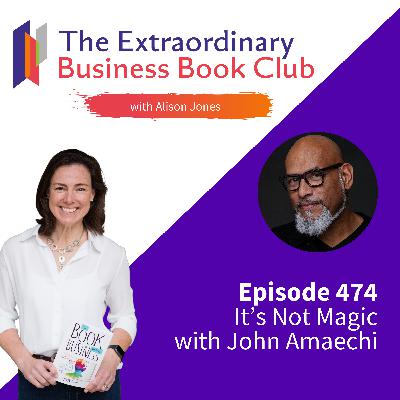
'Almost every experience that I have is a story that I'm going to tell.' We often think of great leadership as 'magic,' but the truth is that's a convenient excuse. Great leaders aren't born that way - they become great by leaning in to what John Amaechi describes as ' a very boring set of skills and a huge amount of personal effort'. John's own background in the NBA showed him that the most extraordinary athletic achievements are the result of dull, consistent, mundane practice. That makes greatness accessible - though not necessarily easy - for anyone who chooses it. One of the most fundamental skills of leadership is storytelling, and John is a master at turning the raw material of daily experience into stories that connect, challenge and inspire. He has a model of storytelling that I guarantee you'll never forget. And why turn stories into books? Because books force the 'so what?' question. And that changes everything.
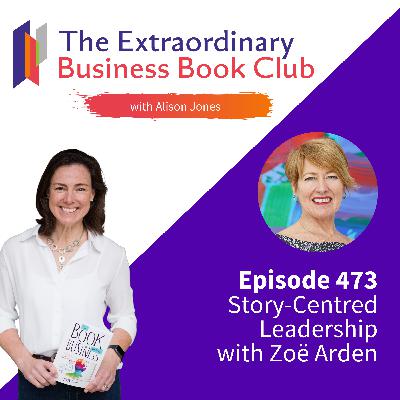
'The research shows that it's stories that are the most powerful mobilizers of change.' What does 'story' mean to you? Zoe Arden asked that question of more than 100 people, beginning her research, as she encourages us all to begin our stories, by listening first. Leaders have at their disposal more facts and data than ever before, but the research and our lived experience confirms that facts and data are not what we need to catalyse real change. Our brains are wired in such a way that only stories have the power to mobilise us into action - they are, in Zoë's words, both levers of connection and levers of change, so understanding how they work is vital for any leader who wants to gets stuff done. But stories aren't just for telling, they're for living - and we need to make choices about the stories we tell ourselves, more or less consciously, just as much as the ones we craft for others. Zoë's own story of finding her voice as a writer amongst the many voices of her interviewees will be invaluable if you're drowning in reseach, and her remarkable journey to publication might just be the inspiration you need to get started...
'When you read a book... it's like when you watch a TV show or go to the theatre; you don't think about all of the work that went in behind the scenes.' I don't know about you, but I couldn't claim any of the following distinctions before I turned 26: flying a spaceship, losing a million dollars, being fired by Simon Cowell or dodging paparazzi. Dominic Colenso, author of Cut-Through, ticked off all of these in the course of his acting career. Life is a little calmer now that he's discovered how his acting skills could translate into a unique framework for effective business communication, helping leaders and teams pitch and present with impact. It turns out that rehearsing for a stage role has many parallels with preparing a business pitch, and even with writing a business book - not just delivering a message, but discovering the purpose, distilling the essence, drilling and debriefing repeatedly to get feedback on and refine the text. And if you've been making excuses as to why now isn't the right time to get started, prepare to have them blown away...
' This technology isn't going to go away. We need to figure out what role it has.' George Walkley is a legend in the publishing world. Over the last three decades, and particularly at Hachette, he has not only witnessed but helped shape the digital transformation of the industry, and these days he's focused on how publishers respond to the challenges and opportunities of AI. While the book itself has proved remarkably resilient as a technology, technology has transformed the ways in which they are written, discovered, read and published. What are the ethical and practical considerations of AI for publishers, authors and readers? And what does all that mean for George himself as he writes and considers how to publish his OWN book? Essential listening for anyone curious about where publishing is going, and the implications for authors, plus top tips on building an audience through writing an unmissable newsletter.
When we talk about writing business books, we usually focus on concepts, models, clarity, structure, impact. But alongside the head work is a whole invisible heap of emotional labour: behind every sentence lies a secret history of fear, doubt, frustration and occasionally joy. In this Best Bits episode, we're bringing that emotional undercurrent front and centre. Because writing a business book, just like starting a business, isn't simply an intellectual exercise. There's a profound inner journey behind every book, from the creative spark of the idea, so often born of frustration, through the gritty, vulnerable, exhausting middle, the stress of overwhelm and deadlines and the courage it takes to complete, and throughout it all, the unexpected moments of joy. Writing a book is a whole-brain, whole-person exercise, and these conversations prove it. Hear from: Eleanor Tweddell on turning anger and confusion into the first steps of the writing journey. Parul Bavishi on accepting fear as part of the process and showing up anyway. Rachel Fairley and Sarah Robb on building trust and joy through collaboration. Alice Driscoll and Louise van Haarst on navigating difficult moments with curiosity and respect. Tomas Chamorro-Premuzic on the three moments of joy (and the many hours of masochism). Maria Franzoni on falling out of love with you book (and then back in again). James Spackman on making choices guided by pride, joy and connection. Sally Percy on overcoming overwhelm. The work is real - but the good news is you don't have to do this alone.

'If you haven't diagnosed where the problem lies in the first place, how do you know which lever to pull?' If your idea of a rebrand is a new colour palette and an updated logo, think again. Too often, superficial design changes don't just fail to deliver growth, they actively damage the brands they were intended to bolster. Rachel Fairley and Sarah Robb have helped some of the world's biggest companies refresh their brands from the inside out. They argue that rebranding is more a strategic undertaking than a design project, and it's definitely NOT something that should be driven by a new leader's ego. This is a conversation for anyone invested in understanding the deeper mechanics of making a brand work over the long term, but also for anyone who wants to write a book that makes a real difference for its readers.
'That's all we've got as well in this age of AI… we have to put heart and soul into what we create.' When someone cheerfully tells you that when one door closes another door opens in the midst of the rawness of redundancy, you'd be forgiven for wanting to punch them. Eleanor Tweddell certainly did. But then she made a conscious decision to 'lean in' to the idea of another door. It turns out that opportunity is often disguised as messy chaos – it's all about how you choose to view it. Eleanor shares how her 'Another Door' blog, podcast and book came about – the idea that wouldn't leave her alone, the conversations that moved it forward and the creative process that begins – like all good things – with a whiteboard and is so very, very different from the polished, orderly approach of her corporate comms background. This is a conversation about what it means to be human in the act of creation, and to seek out connection before your ideas feel ready to share. It's about jealousy and comparisonitis and courage and designing for your reader, and it might just be the best thing you hear this week.

'The absence of healthy conflict is a large part of why people will leave jobs, because it's not where the growth happens.' How do you feel about hard conversations at work? Our approaches to conflict are often less than smart. Whether your tendency is towards avoidance or aggression, unless you're actively rejecting 'enforced harmony' for an environment in which people are able to disagree well, you're not getting the best out of your individuals or your organization. (Plus, given that most people are so bad at it, mastering hard conversations is the ultimate leadership edge.) Alice Driscoll and Louise van Haarst, co-authors of Smart Conflict: How to Have Hard Conversations at Work, are experts at diagnosing the wide range of conflict styles and helping leaders make better decisions about how they adjust their approach for the situation and the person in front of them. But could they walk the talk when it came to the ultimate stress test: writing a book together for the first time? Spoiler alert: yes. But what they discovered in the process will be gold to anyone considering a co-authored project.

Comments

Download from Google Play

Download from App Store
 United States