


 Claim Ownership
Planet Money
Subscribed: 748,479Played: 18,584,033
Subscribe


© Copyright 2015-2021 NPR - For Personal Use Only
Description
Wanna see a trick? Give us any topic and we can tie it back to the economy. At Planet Money, we explore the forces that shape our lives and bring you along for the ride. Don't just understand the economy – understand the world.
Wanna go deeper? Subscribe to Planet Money+ and get sponsor-free episodes of Planet Money, The Indicator, and Planet Money Summer School. Plus access to bonus content. It's a new way to support the show you love. Learn more at plus.npr.org/planetmoney
Wanna go deeper? Subscribe to Planet Money+ and get sponsor-free episodes of Planet Money, The Indicator, and Planet Money Summer School. Plus access to bonus content. It's a new way to support the show you love. Learn more at plus.npr.org/planetmoney
1003 Episodes
Reverse
 1
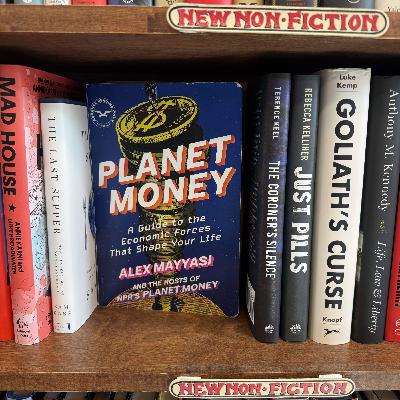
1How do bookstores choose the books they stock, and how does that affect what customers read? It may not seem like it, but every shelf in a bookstore is a highly valuable and contested piece of commercial real estate. And for every new book that a bookstore decides to stock, there are thousands of others that did not make the cut. So how do bookstores make those decisions? And how will the Planet Money book fare under the discerning eyes of the booksellers, the final gatekeepers in the long gauntlet of the publishing industry?Today on the show: the third episode in our series. Planet Money sets out to actually sell a book. We burrow behind the bookstore shelves to learn the secret codes that publishers use to try to convince booksellers to carry the book, from little mom and pops to airport juggernauts. There will be corporate intelligence networks, bargain bin shenanigans, and a giant industrial saw chewing up books by the thousands. Call it Pulp Non-fiction.Related:- Fisher Nash’s Substack- Episode 1: Inside a BOOK auction- Episode 2: Our BOOK vs. the global supply chain - Series: Planet Money makes a bookLive show tour and book info. / Subscribe to Planet Money+Listen free: Apple Podcasts, Spotify, the NPR app or anywhere you get podcasts.Facebook / Instagram / TikTok / Our weekly Newsletter.This episode was produced by Willa Rubin with help from Emma Peaslee. It was edited by Jess Jiang, fact-checked by Sierra Juarez, and engineered by Robert Rodriguez. Alex Goldmark is our executive producer. Music: NPR Source Audio - “A Peculiar Investigation,” “Round Round,” and “Neighbourhood Watcher.”To manage podcast ad preferences, review the links below:See pcm.adswizz.com for information about our collection and use of personal data for sponsorship and to manage your podcast sponsorship preferences.NPR Privacy Policy
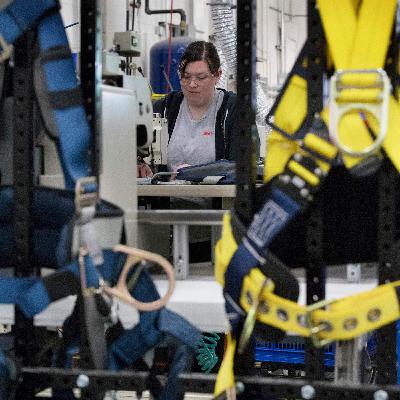
Live event info and tickets here. If your company got bought by a private equity firm, how would you feel? Maybe a little nervous? You might find yourself wondering if there will be layoffs.And you’d be right to worry about that. Research shows that while private equity ownership can boost a company’s productivity, it does generally result in job cuts. But one private equity executive is trying to do things a different way – giving workers equity, little cuts of ownership in their own companies. To see if doing so can improve outcomes overall. On today’s show, private equity is not widely beloved for its societal costs – job losses, product degradation, worsening inequality. And this one guy at this one firm can’t solve all of his industry’s ills. But for the past 15 years, he’s been running a large-scale, real-world experiment to see if giving workers ownership can fit into the big bad world of PE. And maybe lead to more … equity. Recommended Listening/Reading:What Do Private Equity Firms Actually Do?The risk of private equity in your 401(k)Here's what happens when private equity buys homes in your neighborhood (newsletter)JScrewed Find the Planet Money book. / Subscribe to Planet Money+Listen free: Apple Podcasts, Spotify, the NPR app or anywhere you get podcasts.Facebook / Instagram / TikTok / Our weekly Newsletter.This episode was hosted by Mary Childs and Wailin Wong. It was produced by Sam Yellowhorse Kesler. It was edited by Jess Jiang with an assist from Marianne McCune, fact-checked by Sierra Juarez, engineered by Cena Loffredo with help from Jimmy Keeley. Alex Goldmark is Planet Money’s executive producer. Music: Universal Production Music - "Make Me Want You," "Baby I Surrender," and "Bye Bye Bye"To manage podcast ad preferences, review the links below:See pcm.adswizz.com for information about our collection and use of personal data for sponsorship and to manage your podcast sponsorship preferences.NPR Privacy Policy
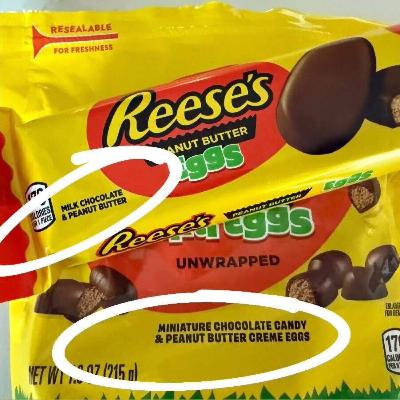
Live event info and tickets here. When ingredient costs skyrocket, companies have three basic options: They can raise their prices (a sort of product-specific inflation), shrink the size of the products (often called “shrinkflation”), or, sometimes, find more creative ways to reduce costs by degrading the quality of their products - which our very own Greg Rosalsky has dubbed as “skimpflation.” The latest alleged culprit? Hershey’s.The Hershey Company is using ingredients in some of their Reese’s candies that — legally — they cannot call milk chocolate or peanut butter. This has infuriated Brad Reese, a grandson of H.B. Reese, the inventor of the Reese’s Peanut Butter Cup. On today’s show, why chocolate makers might be skimping on chocolate and peanut butter, what else might explain these ingredients, and how Brad Reese has launched a skimp-shaming campaign to get Hershey’s to go back to using classic Reese’s ingredients.And – EXCLUSIVE – you’ll hear Planet Money break some big news to third-generation peanut butter cup scion Brad Reese.Pre-order the Planet Money book and get a free gift. / Subscribe to Planet Money+Listen free: Apple Podcasts, Spotify, the NPR app or anywhere you get podcasts.Facebook / Instagram / TikTok / Our weekly Newsletter.This episode was hosted by Greg Rosalsky and Sarah Gonzalez. It was produced by James Sneed. It was edited by Kenny Malone, fact-checked by Sierra Juarez, and engineered by Cena Loffredo. Alex Goldmark is Planet Money’s executive producer.To manage podcast ad preferences, review the links below:See pcm.adswizz.com for information about our collection and use of personal data for sponsorship and to manage your podcast sponsorship preferences.NPR Privacy Policy

Live event info and tickets here. For more than 60 years, Cuba has survived on two seemingly contradictory economic strategies: leaning on friendly communist and socialist countries, and flirting with capitalism. And right now it seems the US is making both strategies impossible.Since January, the U.S. has been preventing almost all oil from reaching the island. Doctors can’t get to the hospitals where they work, many buses aren’t running, trucks can’t deliver food and medicine where they’re needed. And there have been frequent blackouts. On more than one occasion over the last few weeks, the entire country has lacked power. It’s hard for people to even talk on the phone because they can’t always charge them or get cell service. So we asked them to send us voice notes describing this moment in Cuba’s history. We also wanted to know: How did Cuba get here? On today’s episode: a brief history of Cuba’s communist-capitalist experiment. Pre-order the Planet Money book and get a free gift. / Subscribe to Planet Money+Listen free: Apple Podcasts, Spotify, the NPR app or anywhere you get podcasts.Facebook / Instagram / TikTok / Our weekly Newsletter.This show was hosted by Erika Beras and Nick Fountain. It was produced by Luis Gallo. It was edited by Marianne McCune. It was fact-checked by Sierra Juarez and engineered by Robert Rodriguez. Alex Goldmark is Planet Money’s executive producer. To manage podcast ad preferences, review the links below:See pcm.adswizz.com for information about our collection and use of personal data for sponsorship and to manage your podcast sponsorship preferences.NPR Privacy Policy

LIVE SHOW TOUR INFO HERE. New stories, live tapings, special guests, book signings and more. What would you build on a piece of land when all the normal rules go out the window?On today’s show, how the Squamish Nation reclaimed a sliver of prime urban real estate and were liberated from zoning restrictions, to the consternation of their wealthy NIMBY neighbors.We trace the 100 year saga of what might be the most interesting real estate development in North America right now: There’s a violent eviction, a tense legal battle, and a giant, tough decision for the Squamish Nation that culminates in the daring project that they’re building today.It’s a story with lessons for every city trying to lower housing costs and build more.This episode is adapted from Planet Money: A Guide To The Economic Forces That Shape Your Life. Pre-order before April 7 and you can get a poster. Details here. The working paper we mentioned on “ready-to-issue” permits in Los Angeles.Subscribe to Planet Money+Listen free: Apple Podcasts, Spotify, the NPR app or anywhere you get podcasts.Facebook / Instagram / TikTok / Our weekly Newsletter.This episode was produced by Sam Yellowhorse Kesler with an assist from Emma Peaslee. It was edited by Jess Jiang, fact-checked by Sierra Juarez and engineered by Cena Loffredo. Alex Goldmark is Planet Money’s executive producer. To manage podcast ad preferences, review the links below:See pcm.adswizz.com for information about our collection and use of personal data for sponsorship and to manage your podcast sponsorship preferences.NPR Privacy Policy
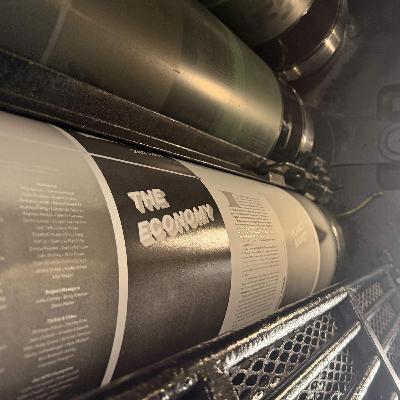
When you come across a book at a yard sale or a bookstore, you might pay more attention to the words between the covers than the physical form of the book itself. But content and the form are both crucial to a book’s success. Each book you pull off the shelf, is the product of thousands of decisions, big and small, tying together vast supply chains and armies of workers from around the world. On today’s episode, the second episode in our series: Planet Money sets out to actually write, design, and manufacture a book. We go spelunking deep inside the bowels of the publishing industrial complex. There will be trade wars, sunken cargo containers filled with lost cookbooks, deforestation regulations, and just a whiff of scratch and sniff. Related:- Watch our book being printed: TikTok, Instagram, Spotify- Episode 1: Inside a BOOK auction- Episode 3: BOOKstore Economics- The laws of the office revisited - Series: Planet Money makes a book Live event info and tickets here. Pre-order the Planet Money book and get a free gift. / Subscribe to Planet Money+Listen free: Apple Podcasts, Spotify, the NPR app or anywhere you get podcasts.Facebook / Instagram / TikTok / Our weekly Newsletter.This episode was produced by Willa Rubin. It was edited by Jess Jiang, fact-checked by Sierra Juarez, and engineered by Robert Rodriguez. Alex Goldmark is Planet Money's executive producer. Music: NPR Source Audio - “Motivation Or Mayhem,” “Missing A Deadline,” and “No Limits After All.”To manage podcast ad preferences, review the links below:See pcm.adswizz.com for information about our collection and use of personal data for sponsorship and to manage your podcast sponsorship preferences.NPR Privacy Policy
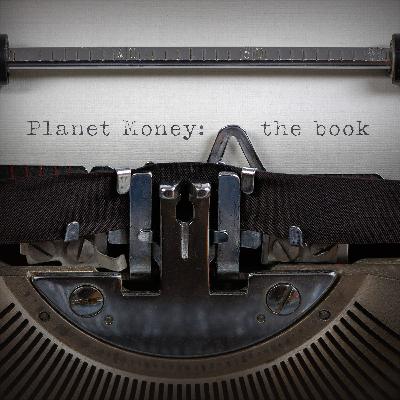
In the age of TikTok and Polymarket, it can be easy to overlook the humble book. But books are one of the most influential technologies ever invented. From “The Wealth of Nations” to “Das Kapital,” books have the power to shape whole economic systems… and everything else in our world. The market for books can determine which ideas make it to the masses. So when Planet Money was approached to make its own book, not only did it present an opportunity to spread the gospel of whimsical economic infotainment to new audiences everywhere, but it also presented an opportunity to get a rare peek behind the curtain of the notoriously opaque world of publishing. On today’s episode, the first chapter in our series on the making of a book: Planet Money sets out to land a book deal. We enter the high stakes, high school drama of the publishing industry, where literary agents try to woo powerful book editors. And we learn what happens when lofty artistic ideals meet the cold logic of the market. It’s a courtship dance with millions of dollars potentially on the line. There will be whale fights, corporate speed dating, and a literary shotgun wedding.Related: - Episode 2: Our BOOK vs. the global supply chain- Episode 3: BOOKstore Economics- Series: Planet Money makes a book Live event info and tickets here. Pre-order the Planet Money book and get a free gift. / Subscribe to Planet Money+Listen free: Apple Podcasts, Spotify, the NPR app or anywhere you get podcasts.Facebook / Instagram / TikTok / Our weekly Newsletter.This episode was produced by Willa Rubin with production help from Sam Yellowhorse Kesler. It was edited by Jess Jiang, fact-checked by Sierra Juarez, and engineered by Robert Rodriguez. Alex Goldmark is Planet Money's executive producer. To manage podcast ad preferences, review the links below:See pcm.adswizz.com for information about our collection and use of personal data for sponsorship and to manage your podcast sponsorship preferences.NPR Privacy Policy

The cardinal tetra is one of the most popular pet fish in the world. They look like little red and blue sequins. You've almost certainly seen them at the pet store or the fish tank at your dentist's office. They're everywhere. Not so long ago, most of the world's supply of cardinals came from just one place. It's a little town deep in the rainforests of Brazil, where locals still catch these fish by hand. But the business that this town has relied on for decades has come under threat. Recently, we hopped on a plane to see this unusual economy for ourselves — and, two different visions for how to save it. For more information about these fish, check out Project Piaba. Pre-order the Planet Money book and get a free gift. / Subscribe to Planet Money+Listen free: Apple Podcasts, Spotify, the NPR app or anywhere you get podcasts.Facebook / Instagram / TikTok / Our weekly Newsletter.This episode was hosted by Jeff Guo. It was co-reported and produced by Luis Gallo. It was edited by Marianne McCune, fact-checked by Sierra Juarez and engineered by Kwesi Lee. Alex Goldmark is Planet Money’s executive producer.To manage podcast ad preferences, review the links below:See pcm.adswizz.com for information about our collection and use of personal data for sponsorship and to manage your podcast sponsorship preferences.NPR Privacy Policy
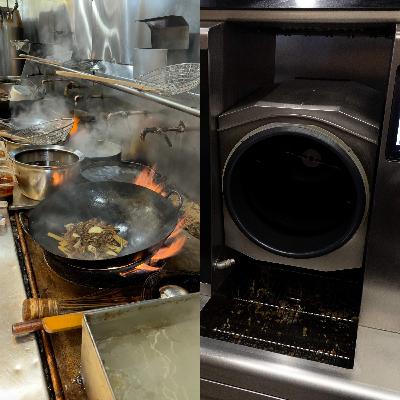
Robby the chef has lots of endearing qualities. He can make over 5000 dishes, he’s a consistent cook, and he’s never late for work. But he’s not a human. It is a 750 lb. stainless steel robot. With a rotating wok at its center. It’s a wok-bot. Automation has changed many industries. But automation only started entering restaurant kitchens in the past couple decades. Which raises the question – what will robots mean for the restaurant industry? How will automation change jobs and how will it change the very food we eat?Today on the show, we talk with a Nobel prize-winning economist, Daron Acemoglu, about when automation is complementing or displacing workers. And we decide to put this wok-bot to the test. We pit a human chef against Robby the wok-bot in a head-to-metalhead smackdown. Further Listening/Reading:How AI could help rebuild the middle class The Big Red Button Check out our AI series: Planet Money makes an episode using AIWhy Nations Fail, America Edition (newsletter)A New Way To Understand Automation (newsletter)Get your book tour tickets here. / Pre-order the Planet Money book and get a free gift.Subscribe to Planet Money+Listen free: Apple Podcasts, Spotify, the NPR app or anywhere you get podcasts.Facebook / Instagram / TikTok / Our weekly Newsletter.This episode was hosted by Erika Beras and Justin Kramon. It was produced by Sam Yellowhorse Kesler. It was edited by Jess Jiang. It was fact-checked by Sierra Juarez and engineered by Robert Rodriguez with help from Cena Loffredo. Interpretation help from Huo Jingnan. Alex Goldmark is Planet Money’s executive producer.To manage podcast ad preferences, review the links below:See pcm.adswizz.com for information about our collection and use of personal data for sponsorship and to manage your podcast sponsorship preferences.NPR Privacy Policy
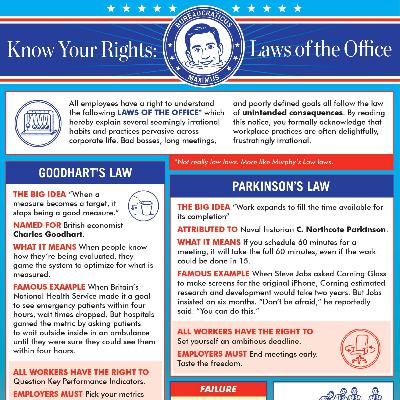
Live event info and tickets here.If something is going wrong in your workplace, there's probably a law that explains why. Meetings always seem long, and never end early? There’s Parkinson’s Law, which says work expands to the time allotted, or, restated: meetings will always take up all the time blocked on Outlook calendars. Is your boss bad at managing? Check the Peter Principle, which says people are promoted to their level of incompetence. A good worker does not a good manager make. And yet … here we are. Once you hear these laws, and a few others, you start to spot them everywhere. Today on the show, we picked a few of the most famous and powerful ‘laws of the office’ and tested them out on each other. Pre-order the Planet Money book and get a free gift. / Subscribe to Planet Money+Listen free: Apple Podcasts, Spotify, the NPR app or anywhere you get podcasts.Facebook / Instagram / TikTok / Our weekly Newsletter.This episode was hosted by Kenny Malone, Sarah Gonzalez, and Alexi Horowitz-Ghazi. It was produced by Alexi Horowitz-Ghazi. Bryant Urstadt edited this show. Planet Money’s executive producer is Alex Goldmark.To manage podcast ad preferences, review the links below:See pcm.adswizz.com for information about our collection and use of personal data for sponsorship and to manage your podcast sponsorship preferences.NPR Privacy Policy

What do we want from sports? The very best athletes competing as hard as they know how, putting all their effort and training and natural ability to the test against their opponents. But this time of year, that’s not the product the NBA is putting on the court. Instead, teams at the bottom of the league are competing … to lose, because it could help them get a top pick in next year’s draft. It’s called tanking — it’s bad for fans, and it’s bad for the league.Tanking has gotten especially egregious this year. Even NBA Adam Silver has called out teams for tanking. He recently announced that league bigwigs are considering “every possible remedy” to “align incentives.”Today on the show — Planet Money fixes the NBA’s tanking problem by … fixing the NBA draft. We get solutions from Hockey Hall of Famer Jayna Hefford, World Cup Champion Sam Mewis, and long-time NBA analyst Zach Lowe. Handles for the NBA fans in the episode: thevoiceofevan, fullcourtblitz, ashleynevel, igotnxtpodcast, finesse.wes, basketballsavant, and mikedaddino__.Live event info and tickets here / Pre-order the Planet Money book and get a free gift. / Subscribe to Planet Money+Listen free: Apple Podcasts, Spotify, or the NPR appFacebook / Instagram / TikTok / Our weekly NewsletterThis episode was hosted by Keith Romer and Erika Beras. It was produced by James Sneed with an assist from Sam Yellowhorse Kesler. It was edited by Jess Jiang and fact-checked by Sierra Juarez. Alex Goldmark is our executive producer.To manage podcast ad preferences, review the links below:See pcm.adswizz.com for information about our collection and use of personal data for sponsorship and to manage your podcast sponsorship preferences.NPR Privacy Policy
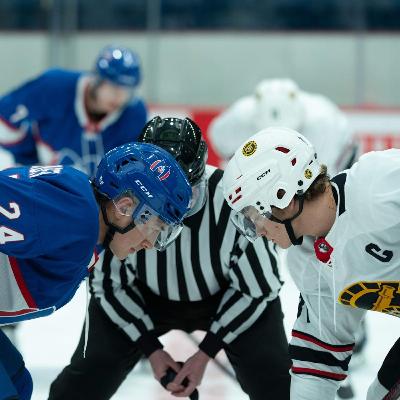
Heated Rivalry, the steamy hockey romance show, was made for about $2 million per episode. That is remarkably cheap for an hour-long drama.Today on the show, a conversation with Heated Rivalry creators Jacob Tierney and Brendan Brady about their television miracle on ice.It’s not just that the show was made efficiently and cleverly. Heated Rivalry comes from a Canadian economic system of making TV and movies that is completely different from how we do things in the US.In this episode of Planet Money, in partnership with the Pivot podcast co-hosted by Kara Swisher, we hear about a Canadian production model for making TV and movies and how it’s different from the U.S. model. And we learn what the experience of making Heated Rivalry teaches us about the current state of both industries.Live event info and tickets here.Pre-order the Planet Money book and get a free gift. / Subscribe to Planet Money+Listen free: Apple Podcasts, Spotify, the NPR app or anywhere you get podcasts.Facebook / Instagram / TikTok / Our weekly Newsletter.The original Pivot episode from New York Magazine and The Vox Media Podcast Network was hosted by Kara Swisher, produced by Lara Naman, Zoë Marcus and Taylor Griffin and engineered by Brandon McFarland. Nishat Kurwa is Vox Media's Executive Producer of podcasts. This episode of Planet Money was hosted by Kenny Malone, produced by James Sneed, edited by Jess Jiang and fact-checked by Lara Naman. Alex Goldmark is our executive producer.To manage podcast ad preferences, review the links below:See pcm.adswizz.com for information about our collection and use of personal data for sponsorship and to manage your podcast sponsorship preferences.NPR Privacy Policy
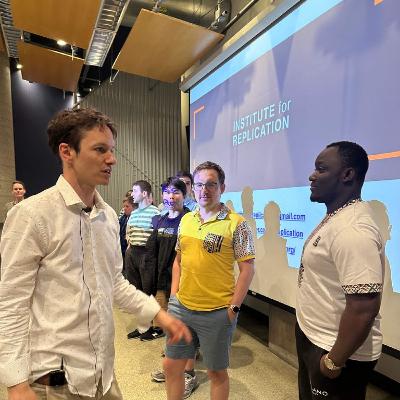
The world of science has been stuck in an existential crisis over whether we actually know the things we thought we knew. Re-running an old study today doesn't always yield the same result. Same with re-enacting old experiments. Collectively, this is known as the “replication crisis.” Economist Abel Brodeur has come up with one way to help fix this crisis: he’s invented an internationally crowdsourced surveillance system, designed to keep social scientists honest. He calls it the “Replication Games.” Further Listening:Fabricated data in research about honesty. You can't make this stuff up. Or, can you? The Experiment Experiment How Much Should We Trust Economics?This episode was hosted by Mary Childs and Alexi Horowitz-Ghazi. It was produced by James Sneed and Emma Peaslee, with help from Willa Rubin. It was edited by Jess Jiang, fact-checked by Sam Yellowhorse Kesler, and engineered by Ko Takasugi-Czernowin. Alex Goldmark is Planet Money’s executive producer. Find more Planet Money: Facebook / Instagram / TikTok / Our weekly Newsletter.Listen free at these links: Apple Podcasts, Spotify, the NPR app or anywhere you get podcasts.Help support Planet Money and hear our bonus episodes by subscribing to Planet Money+ in Apple Podcasts or at plus.npr.org/planetmoney.To manage podcast ad preferences, review the links below:See pcm.adswizz.com for information about our collection and use of personal data for sponsorship and to manage your podcast sponsorship preferences.NPR Privacy Policy

Live event info and tickets here. ICE is scaling up, with rapid new hiring. So we ask, has training new officers changed? At what cost? Also, the Trump administration has plans to pour billions of dollars into warehouses for mass immigrant detention centers, which can totally change the economy of some areas. We hear from a rural town in Georgia that wants an ICE facility in its own backyard. These episodes were originally published on Planet Money’s sister daily podcast The Indicator.Pre-order the Planet Money book and get a free gift. / Subscribe to Planet Money+Listen free: Apple Podcasts, Spotify, the NPR app or anywhere you get podcasts.Listen to the Indicator from Planet MoneyFacebook / Instagram / TikTok / Our weekly Newsletter.The episodes of The Indicator were produced by Julia Ritchey, with engineering by Jimmy Keeley. They were fact-checked by Sierra Juarez. Kate Concannon is our show's editor.This episode of Planet Money was produced by Luis Gallo, with help from James Sneed. It was edited by Planet Money’s Executive Producer, Alex Goldmark.To manage podcast ad preferences, review the links below:See pcm.adswizz.com for information about our collection and use of personal data for sponsorship and to manage your podcast sponsorship preferences.NPR Privacy Policy
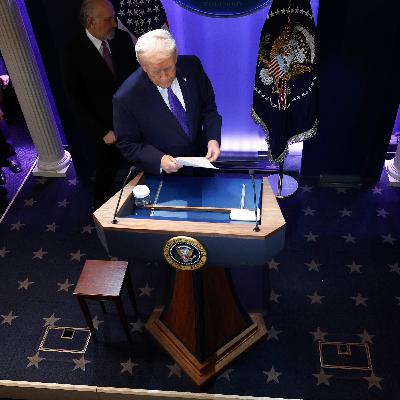
Live event info and tickets here.The Supreme Court has spoken. Those big, sweeping tariffs that President Trump imposed early last year? They’re illegal. On today’s show: Why were those tariffs struck down? Will anyone get refunds? And …what about this new 10 percent tariff the President just announced today? Plus — a growing market for tariff refunds.Further Listening: - Worst. Tariffs. Ever. - Tariffs: What are they good for? - What "Made in China" actually means - The 145% tariff already did its damage - Are Trump's tariffs legal? - Days of our Tariffs - Trump's backup options for tariffs - What would it mean to actually refund the tariffs? Pre-order the Planet Money book and get a free gift. / Subscribe to Planet Money+Listen free: Apple Podcasts, Spotify, the NPR app or anywhere you get podcasts.Facebook / Instagram / TikTok / Our weekly Newsletter.This episode was hosted by Jeff Guo, Mary Childs, and Sarah Gonzalez. It was produced by Sam Yellowhorse Kesler and Willa Rubin. It was edited by Marianne McCune. It was fact-checked by Sierra Juarez. Alex Goldmark is Planet Money’s executive producer. To manage podcast ad preferences, review the links below:See pcm.adswizz.com for information about our collection and use of personal data for sponsorship and to manage your podcast sponsorship preferences.NPR Privacy Policy

Book tour and ticket info here.Greenland has said it is not for sale. Denmark has said it can’t even legally sell Greenland. And at a security conference in Munich over the weekend, U.S. lawmakers spent a lot of time trying to walk back some of President Trump’s recent threats to try to buy, or even take over, the territory. But whether Trump can or will or should try to control or purchase a territory that doesn’t want to be sold is not the interesting question. What is interesting is how we got to this moment. And, how we might gracefully get out of it. Greenland is valuable for its minerals and because of its physical location in the world. (It’s easy to keep an eye on other countries from Greenland).Our latest: How the U.S. dropped the ball on the rare earths race. And one way the U.S. gets strategic locations without threatening to buy or take over an entire territory.Further listening: - Is Greenland really an untapped land of riches?- Add to cart: GreenlandPre-order the Planet Money book and get a free gift. / Subscribe to Planet Money+Listen free: Apple Podcasts, Spotify, the NPR app or anywhere you get podcasts.Facebook / Instagram / TikTok / Our weekly Newsletter.This episode was produced by Willa Rubin with help from Sam Yellowhorse Kesler. It was edited by Marianne McCune. Fact-checking help from Sierra Juarez. It was engineered by Kwesi Lee and Robert Rodriguez. Alex Goldmark is our executive producer.Music: Universal Music Production - "The Attraction,” “Carnivore,” and “Walls Come Out.” To manage podcast ad preferences, review the links below:See pcm.adswizz.com for information about our collection and use of personal data for sponsorship and to manage your podcast sponsorship preferences.NPR Privacy Policy

Book tour event details and ticket info here.An iconic cartoon character liberated from copyright, journalism from the world of competitive spreadsheeting, a controversial piece of US currency. Each year the Planet Money team dedicates an episode to the things we simply love and think you, our audience, will also love.In this year’s Valentine’s Day episode:The Public Domain Day list from Jennifer Jenkins’ of Duke’s Center for the Study of the Public Domain and her colleagues. Jesse Dougherty’s article “Between the sheets at the college Excel Championship” which is behind a paywall. Here is Jesse’s substack. 404 Media’s excellent journalism on the tech that ICE is usingAn ode to the language of the penny, including songs like Pennies from Heaven. The only self-check out that doesn’t waste your time. And we made public domain Valentine’s cards. Download THE OFFICIAL Planet Money valentine here.Pre-order the Planet Money book and get a free gift. / Subscribe to Planet Money+ Listen free: Apple Podcasts, Spotify, the NPR app or anywhere you get podcasts.Facebook / Instagram / TikTok / Our weekly Newsletter.This episode of Planet Money was hosted by Kenny Malone. It was produced by James Sneed with help from Sam Yellowhorse Kesler, fact-checked by Sierra Juarez, engineered by Cena Loffredo & Kwesi Lee, and edited by our executive producer Alex Goldmark.To manage podcast ad preferences, review the links below:See pcm.adswizz.com for information about our collection and use of personal data for sponsorship and to manage your podcast sponsorship preferences.NPR Privacy Policy
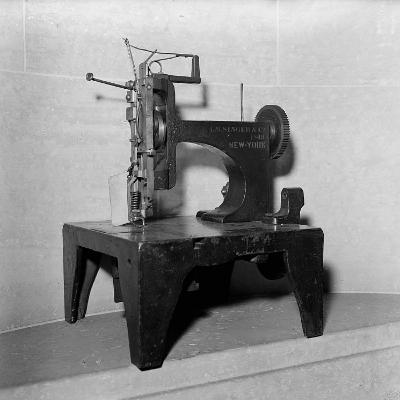
Book tour tickets and details here.Today, the story of three inventions. The first, the sewing machine, was created by a selfish and ambitious inventor who wanted all the credit and was willing to fight a war for it. The second, a more modern invention, was made by an Italian inventor who wanted only to connect the world through video, so “evvvvverybody can talk with evvvvverybody else.”And, a third invention that tied them both together across more than a century. The patent pool.How do people get motivated to invent, and how do they get rewarded for their ideas? Usually through a patent. And, when the thicket of patents becomes too thick, how do we simplify, and make it so inventors can work together? The answer will involve bitter rivals, a sewing machine war, the nine no-no’s of anti-trust, and something called a gob-feeder. Subscribe to Planet Money+Listen free: Apple Podcasts, Spotify, the NPR app or anywhere you get podcasts.Facebook / Instagram / TikTok / Our weekly Newsletter.This episode was hosted by Erika Beras and Sam Yellowhorse Kesler. It was produced by Luis Gallo and edited by Marianne McCune. It was fact-checked by Sierra Juarez and engineered by Cena Loffredo. Alex Goldmark is Planet Money's executive producer.To manage podcast ad preferences, review the links below:See pcm.adswizz.com for information about our collection and use of personal data for sponsorship and to manage your podcast sponsorship preferences.NPR Privacy Policy
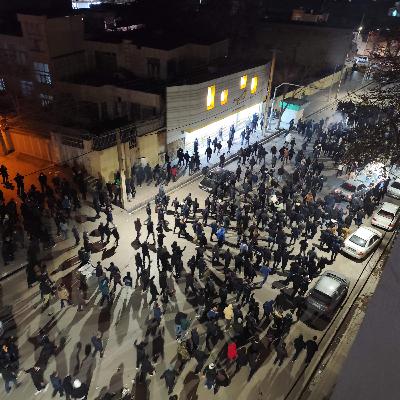
Book tour tickets and details here.The recent protests in Iran are about so many things. Human rights, corruption, freedom. But this time – they are also motivated by economic hardship. Hardship caused, in part, by US sanctions. The US has been sanctioning Iran in one way or another for 47 years. But sanctions, as a tool, only work some of the time, and US sanctions on Iran have not always conformed to what experts consider best practices.On today’s episode: What did US sanctions do to Iran's economy? How did they feed into the latest protests and crackdown in Iran? Sanctions are supposed to avert war, but how different from war are they?To learn more about the protests in Iran and the country’s history, check out our great friends at Throughline:Iran Protests ExplainedIran and the U.S., Part One: Four Days In AugustIran and the U.S., Part Two: Rules of EngagementIran and the U.S., Part Three: Soleimani’s IranSubscribe to Planet Money+Listen free: Apple Podcasts, Spotify, the NPR app or anywhere you get podcasts.Facebook / Instagram / TikTok / Our weekly Newsletter.This episode was hosted by Mary Childs and Nick Fountain. It was produced by James Sneed with help from Willa Rubin. It was edited by Marianne McCune, fact-checked by Sierra Juarez, and engineered by Cena Loffredo and Jimmy Keeley. Planet Money’s executive producer is Alex Goldmark. To manage podcast ad preferences, review the links below:See pcm.adswizz.com for information about our collection and use of personal data for sponsorship and to manage your podcast sponsorship preferences.NPR Privacy Policy
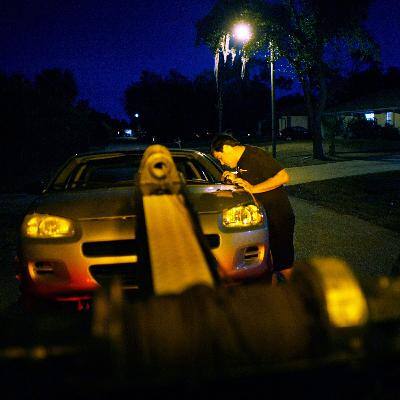
Planet Money book tour ticket info and dates here. A record number of Americans with poor or just okay credit are behind on their car payments. And once last year’s numbers are tallied, an estimated 3 million cars will have been repossessed in 2025. That would be on par with how bad it got during the Great Recession. What’s going on? And why now? Today on the show, we focus on the micro part of the story to answer the macro question. First, we hear a favorite story of ours from 2019. We follow the lifecycle of a delinquent car loan from three different perspectives: the salesman, the driver, and the repo man. Then we’ll hear an update from them in 2026 as we try to find out why so many Americans are behind on their car payments. Subscribe to Planet Money+Listen free: Apple Podcasts, Spotify, the NPR app or anywhere you get podcasts.Facebook / Instagram / TikTok / Our weekly Newsletter.This episode is hosted by Kenny Malone and Preeti Varathan. It was originally produced by Darian Woods and edited by Bryant Urstadt. Our update was reported by Vito Emanuel and produced by Sam Yellowhorse Kesler, and edited by Planet Money’s executive producer, Alex Goldmark.To manage podcast ad preferences, review the links below:See pcm.adswizz.com for information about our collection and use of personal data for sponsorship and to manage your podcast sponsorship preferences.NPR Privacy Policy


Download from Google Play

Download from App Store
 United States
Patent pools - another example of the myth of rugged individualism as well as the realities of collectivism's beneficial impact on our world via economics and industry.
Nice episode, but one thing barely gets mentioned: regular Iranians are getting crushed by sanctions while the same officials who enforce them get filthy rich by dodging the sanctions. Their kids live it up abroad luxury, parties, top schools and it’s sickening hypocrisy. Western politicians are just as pathetic for never seriously going after these families: no real asset freezes, no kicking the kids out of universities or countries. Total double standards.
What was the real reason? The regime spent oil money on terrorists group includes Hamas, Hezbollah,Huthis, who killed many Americans! It was not a crackdown! It was a massacre, in only 2 days more than 30000 deaths. Check it at least for yourself! Due diligence Don’t ask someone like Batmanghelich who is a regime lobby and white washer! Indeed the well known one! Please re produce the new program with real facts, no lies, distortions & disinformation! Your audience deserve to handle better
@planetmoney last Episode on Iran Full of disinformation, distortion, lies! No talk about real reason which is a gov who spent t money on terrorism instead for its people. Your so called expert @yarbatman is a well known white washer from Regime lobby! Shame on you NPR
in some of Iran's protest area, People burn food to say the main problem isn't poverty. it is a child-killing government. please talk more about the situation in Iran.
They shot people to raise the cost of protesting and killing over 30000 people.
omg I called it with the international problem! I'm a translator and I was like seskwatch doesn't exist in Europe haha and then it came on
this is fucking bullshit fron the start. The country that snakes abd helps is also the one destroying
❤️
great episode, but also makes me discouraged about our elected politicians crazy how we sabotage the future taxpayers with these crazy deals!
"That's a really important point that often gets overlooked in the push for green energy. I was all for getting solar panels until my neighbor, a building surveyor, pointed out the potential for hidden damage. He's seen numerous cases where the installers, in their rush to mount the racking, completely compromised the weatherproofing of the roof. His biggest warning was about improper flashing around the penetrations, stressing that if they don't use the correct https://s6energy.co.uk/blog/cavity-wall-insulation-pros-and-cons/ integration or similar specialized flashing methods for the specific roof and wall type, you're almost guaranteed to have water ingress and structural rot within a few years. It seems like the long-term integrity of your home is a massive gamble if the installation crew isn't meticulous."
So, not only did Amelia NOT ultimately learn from the experience, she willingly made herself a cog in the influencer Social Media machine driving rampant consumerism for Gen-Z at a rate far exceeding the normal "young-and-dumb" college student phenomenon of falling prey to predatory credit lenders.
as always; thanks for the info that provides perspective!
🤯
Greqt eoisode, the study has some interesting results.
This is nerd heaven- economics, tabletop games, and market research. 😂
About 22:40 concern was expressed about not looking in the crisper drawer as of recent times. Not to worry, I'm pretty sure whatever may be hiding in said refrigerated drawer will crawl out, revealing itself in due time.
🧊
เรื่องราวเกี่ยวกับ Bitcoin น่าสนใจมากครับ 📈 เหมือนกับโลกของคริปโต การเล่นคาสิโนออนไลน์ก็ต้องใช้การวางแผนและความเข้าใจในความเสี่ยง การรู้ขีดจำกัดของตัวเองช่วยให้สนุกได้โดยไม่เสียมากเกินไป สำหรับใครที่สนใจลองเล่นคาสิโนออนไลน์อย่างปลอดภัย สามารถเข้าไปที่ https://extradethailand.com/ เว็บนี้มีเกมหลากหลาย โปรโมชั่นดี และระบบฝาก-ถอนง่าย ทำให้ผู้เล่นสนุกได้เต็มที่ 🎲
Phil is a nut. He doesn't trust the pharmaceutical companies, but he trusts cut rate drugs from China and his own home school pharmacy "skills"?! Dude, American drug companies have FDA rules and safety regulations they must follow unless they want massive lawsuits. Making drugs you're injecting into yourself like how you'd homebrew bathtub gin doesn't sound like a smart, sensible way to save a couple of bucks, just saying.