


The Black Myths Podcast
Subscribed: 133Played: 2,464
Subscribe

© 2020
Description
The Black Myth Podcast is an informative conversational show analyzing popular myths about Black culture of a sociopolitical nature. Translation: We debunk the bs said about Black People. Host - Too Black. Co-hosts - Shelle, Terrell, Kam, and Ryan.
130 Episodes
Reverse


We are still joined by Dr. Charisse Burden and Dr. Jared Ball. In part two of our conversation on 'The Revolution Will Not Be Televised,' we explore how the themes discussed in the first episode (Anti-communism, Black buying power, The Black bourgeoisie, etc) relate to our current political moment. We discuss the current propaganda machine, class dynamics of Black lives matter, the negotiating between organizing and ideology, and how red-baiting is ever so present in our political cycle.
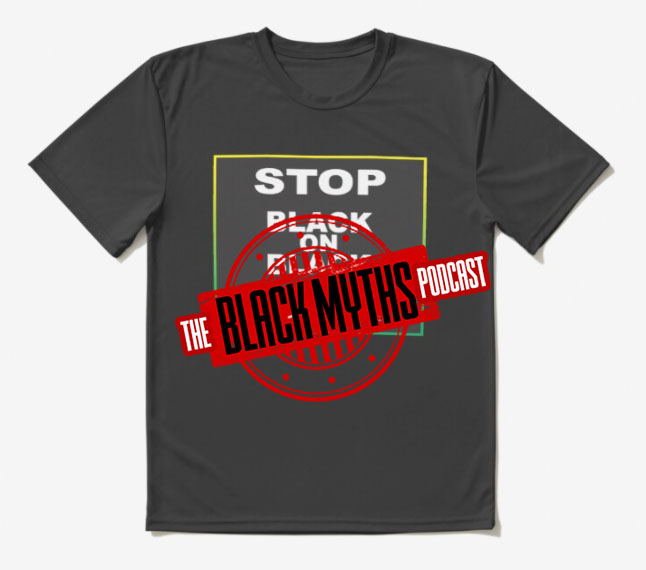
In part one we discussed how crime is an idea defined by the state, not by morality, how harm is a product of oppression, and most harm committed between black people is not racially motivated therefore the term black on black misleads us in understanding what occurred. In part 2 we will be speaking with Jacques Lesure. He is currently pursuing a Ph.D. in Educational Policy Studies at the University of Wisconsin-Madison. Earlier this year he had a piece published in Race-Baitr called "The Problem With Using Proximity in Poverty to Dismiss the Fallacies of Black-on-Black Crime." He essentially argues we need to move beyond the liberal and conservative binary of so-called black on black crime that either blames poverty or blames the victim for the problem. https://racebaitr.com/2020/08/05/the-problem-with-using-proximity-poverty-to-dismiss-the-fallacies-of-black-on-black-crime/?fbclid=IwAR3McHsfCXEYQtNCCp15ogglyepqskwbklvDDXTVpvwv98P28TxhhaX6qos

Black-on-Black crime is one of the most commonly held myths In relation to Black people. It pathologizes the harms that Black people commit and endure between each other into a racist myth about criminality. In this episode, we not only challenge the poor racial logic but the foundation of crime itself. We explore gang violence, underground economy, state repression, and how Black people care for each other beyond the definitions of the state.
 1
1This month we celebrate Black August in memory of George Jackson and Black resistance. In this episode, we spoke with the executive editor of the Black Agenda Report, Glen Ford. We held a robust conversation with Mr. Ford about Bill Clinton, Obama, Malcolm X, criticizing our leaders in the public, the Democratic party, Kamala Harris, political prisoners, his ideas about defunding, and abolishing the police, and if we should call for community control of the police. We did not enter this episode with a specific myth but we concluded with the myth that Dem. Politics is Black Politics.
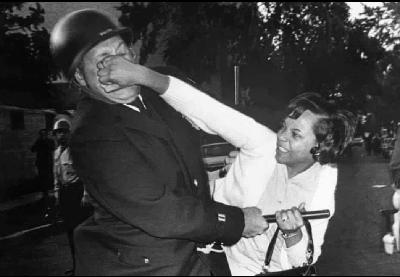
In part two of 'We Are Not Our Ancestors' we explore The significance of Malcolm X's "Message to the Grassroots" speech. We discuss how the vision that Malcolm X articulates impacts the following generation in a way that completely defies the idea of docile ancestors. We also briefly discuss the Black Panther Party and the implications of radical politics today within the Black lives matter context.
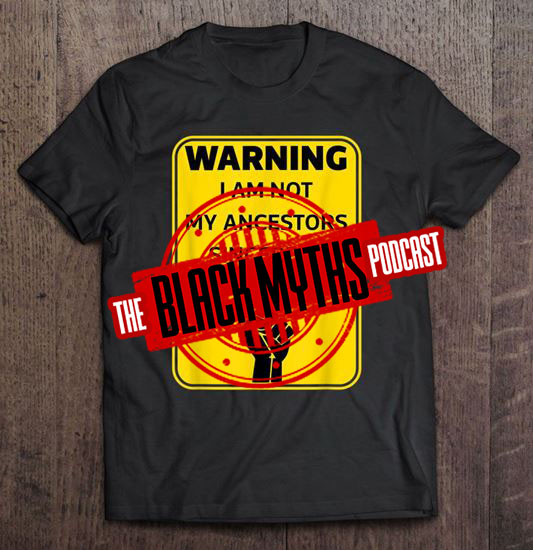
As Kanye disrespects Harriet Tubman, the prevailing notion of this myth continues to expose itself. 'We are not our ancestors' was always a black brunch charade of militancy attempting to hide the fact that they don't read. It perpetuates the myth that all black people have ever done to resist was sing songs and turn the other cheek as if today's young generation is the first to fight back. Therefore, in this episode, we focus on the role of armed resistance in the US black struggle.
We spoke with the author and Indiana University professor Micol Seigal. She is the author of Violence Work: State Power and the Limits of Police. In this episode, we expand our conversation about the meaning of police in society And across the world.
‘We need the police’ is an old adage used to redirect any alternative conception of safety. As the murder of George Floyd has sparked unrest across America, black activist organizers have forced the nation to question what the role of the police is in our society. In this episode, we interrogate their role by investigating the true origins of police (union-busting and slave patrolling), who they are meant to protect and serve, and what alternatives we should explore beyond the police....This is the first episode in our new season covering black social movement myths.
In part two of our myth Black Don' Crack: Black Women Die Because They Don’t Take Care of Themselves, we interview social worker Tynisha Collins. Collins lays out her traumatic experience with her pregnancy to shine a light on the issues black women experience under maternal care. Collins also lays out ways in which black women can speak up for themselves when facing neglect from medical professionals. Great episode.
Black women make up 57 percent of maternal deaths in America despite being less than 10 percent of the US population. Overall, Black women suffer disproportionately from obesity, heart disease, blood pressure, and more issues related to the medical field. In this episode, we debunk the myth that these disparities are a result of Black women's lack of personal responsibility and apathy to take care of themselves.
Myth: Police Killings are Modern Day Lynchings. Considering the climate in America today in relation to police violence we sit down with Dr. Rasul Mowatt, (Professor, American Studies, Recreation, Park, and Tourism Studies at Indiana University) to discuss the importance of naming history in the past and present for what it is. We explore the definitions, history, and nature of lynchings, and how they correspond with our understanding of police killings today. Support the Family/organizations PayPal.me/blmindy - Black Lives Matter Indy $DemetreeWynn - Dreasjon Reed’s Mother for legal help
For part 2 of 'Is Melanin a Super Power?' we interview Dr. Nina Jablonski. She is an anthropologist and paleontologist, known for her work on the evolution of skin color in human beings. She is currently the Evan Pugh University Professor of anthropology at Penn State University. Dr. Jablonski is the author of two books Skin: A Natural History, and Living Color: The Biological and Social Meaning of Skin Color. She has also been featured on PBS, TED Talk, and the Bill Nye Science Podcast among many more publications and broadcasts.
From claims of physical and intellectual superiority to spiritual and paranormal capabilities, Melanin has become a mystifying subject within and outside the Black World. We set the record straight by separating the facts from the folklore and per usual....asking the dumb questions so you don't have to.
In this second episode, we conclude our discussion of the coronavirus. We have a special breakdown of the newly passed 2 (6) trillion Coronavirus bill passed by Congress. We explore who gets what, how it relates to black people, and it's general political implications. We also with an interview from journalist Brandon Pope regarding the importance of digital literacy in the information age.

The Black Myth Podcast is an informative conversational show analyzing popular myths about Black culture of a sociopolitical nature. This first season will be covering the infamous myth Black Don't Crack. We will explore the myths about Black health. This first episode discusses the Coronavirus, it's general myths, and ones specifically related to black people. Fact Sheet
This podcast delves into the violent contradictions at the heart of mass movements, challenging the idea of "spotless innocence." We explore how tactics of nonviolence function as a form of sacrificial violence, drawing in the State—both as a protector and a predator—and how insurgent violence acts as a "positive radical flank," forcing political concessions. From the Civil Rights Movement's reliance on federal troops to the global legacy of colonialism, discover why violence is the inevitable companion to confrontation, and why movements must seize the power to impose peace. https://www.patreon.com/blackmyths
This episode challenges the term "nonviolence," proposing that movements for social and political change often succeed by relying on the opponent's violence. We introduce the concept of sacrificial violence: the intentional absorption of an opponent's brutality to gain strategic concessions, a topic explored in the article "Nonviolence is Violence, Too: Somebody's Gotta " written by BMP host Too Black. The discussion analyzes historical actions like the Freedom Rides and the Albany Movement, drawing on the work of figures such as Dr. Martin Luther King Jr., Mahatma Gandhi, and political scientist Erica Chenoweth. It explores the idea that confronting established power inevitably results in conflict and, often, violence. Nonviolence is violence, too: Somebody's gotta die https://www.grassrootsthinking.com/nonviolence-is-violence-too-somebodys-gotta-die/Die
In this episode, we talk with the Millennials Are Killing Capitalism podcast about their series on organized white supremacist groups, a series that has centered in particular around the KKK. We also talk about the academic use of the term "white supremacy" in recent years, which has been taken up in many left-wing movement spaces. We discuss the utility of this analytical framework alongside the lack of serious engagement with the politics and ideology of white supremacist, far right, and white nationalist organizations. https://www.patreon.com/c/blackmyths
We explore the inconsistent history of the political slogan "America First." We are joined by environmental sociologist and Black Alliance for Peace Comrade, Kim Miller. We delve into the earliest documentation of America First including its use by the nativist "Know Nothing" party in 1855, tracing its evolution through various eras of American policy. Then we examine how the Monroe Doctrine coincides with sentiments. The discussion also covers its contemporary applications, such as in Secretary of State Marco Rubio's "Americas First Foreign Policy," particularly concerning Venezuela. By defining key concepts like nationalism, non-interventionism, and anti-imperialism, we seek to understand the various meanings—or lack thereof—that have been attached to "America First" throughout American history. Kimberly Dawn Miller is an environmental sociologist who holds a PhD in Global Studies with a concentration in Sociology from Florida International University. Her dissertation, Ecotourism Development in the Nature Isle: Navigating the Politics of Eco-Cultural Sovereignty in Dominica, examines the intersections of ecotourism, post-disaster reconstruction, Indigenous cultural revival, and sustainable land-use politics in the Eastern Caribbean. https://www.patreon.com/c/blackmyths
This episode challenges the myth that white supremacy inherently means white unity. We'll explore the various groups that existed before the white power movement unified, their differing politics, and why they haven't always been united. We'll examine how their ideology and aims shifted, what conditions led to these changes, and who they perceived as their enemies. We deal with the ideological differences and how flattening them creates confusion. https://www.patreon.com/blackmyths

Comments

Download from Google Play

Download from App Store
 United States