


 Claim Ownership
let's THiNK about it
Subscribed: 6Played: 157
Subscribe

© 2020 Ryder Richards
Description
A cultural detective's journey into philosophy, art, sociology, and psychology with Ryder Richards. (Formerly known as "The Will to DIY")
89 Episodes
Reverse
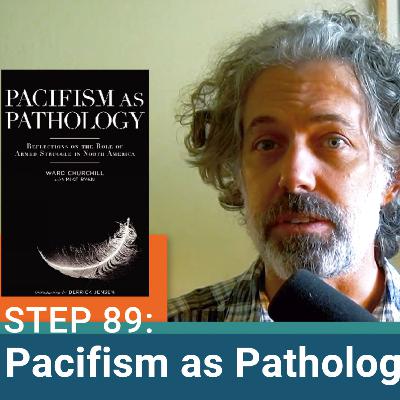
In the latest episode of Let Us Think About It, host Ryder Richards tackles the provocative and polarizing work of Ward Churchill, Pacifism as Pathology. Published in 1986 and later expanded, this essay challenges the sanctity of nonviolent activism, arguing that it not only fails to dismantle oppressive systems but actively reinforces the state’s power. Churchill, a controversial scholar and activist known for his radical critiques of American imperialism and colonialism, wrote this piece out of frustration with the dominance of pacifist tactics in North American progressive movements during the 1980s—a time marked by Reagan’s Cold War policies, military interventions, and rising economic inequality.Richards sets the stage with a vivid metaphor: a towering fortress representing the state’s violent, coercive power, unshaken by protesters wielding candles and moral conviction. Churchill contends that pacifism is a pathological delusion, rooted in historical revisionism, moral contradictions, and a refusal to confront the state’s inherent violence. The episode breaks down his critique into three key arguments:Pacifism as Delusion: Churchill likens pacifism to medieval alchemy—a futile attempt to transform oppressive systems through wishful thinking. He argues that pacifists naively believe their moral purity and symbolic acts (marches, vigils, sit-ins) can erode state power, ignoring its reliance on armed forces like police and military. This “sublime arrogance” limits transformative potential, allowing the state to thrive on empty gestures.Historical Revisionism: Churchill debunks pacifism’s supposed victories by examining historical failures. He points to the Jewish communities in Nazi Germany, where pacifist strategies facilitated the Holocaust’s efficiency, with no significant armed resistance. Similarly, he challenges the myth that the anti-Vietnam War movement’s nonviolence ended the war, noting that Vietnamese armed resistance and internal U.S. military breakdowns were the true catalysts for change. These examples expose pacifism’s practical shortcomings and reliance on cherry-picked narratives.Pacifism as Racist and Suicidal: Churchill argues that pacifism displaces state violence onto marginalized groups, particularly people of color, while white activists remain in a “comfort zone.” He calls this a racist paradox, where pacifists support armed struggles abroad (e.g., Vietnam’s National Liberation Front) but demand nonviolence domestically. Furthermore, he labels pacifism suicidal, claiming it invites state violence by refusing self-defense, as seen in the Holocaust’s tragic outcomes. This pathology, Churchill suggests, is akin to a dogmatic, quasi-religious belief system, resistant to logic or critique.Richards contextualizes Churchill’s work within the 1980s progressive landscape, shaped by the legacies of Gandhi and Martin Luther King Jr., and highlights his perspective as an indigenous scholar critical of liberal dogmas. The episode acknowledges the discomfort of challenging widely held values like peace and nonviolence, encouraging listeners to absorb the critique before part two, which will explore Churchill’s proposed solutions, incorporate current events, and draw on thinkers like Slavoj Žižek to broaden the discussion.This episode is a bold invitation to question assumptions about social change and confront the harsh realities of state power. Whether you agree or disagree with Churchill’s radical stance, Richards’ engaging analysis sparks critical reflection on the effectiveness of nonviolent activism in the face of systemic oppression. Stay tuned for the next installment, where the conversation will deepen with practical remedies and contemporary perspectives.
In Step 87 of LetUsThinkAboutIt, host Ryder Richards dives into Part II of Richard Rorty’s Contingency, Irony, and Solidarity (1989), exploring the clash between ironists and metaphysicians. Fresh off recording Step 86, Ryder unpacks Rorty’s seductive vision of the liberal ironist—a figure who privately doubts their beliefs while publicly fighting cruelty, as defined by Judith Shklar’s maxim, “cruelty is the worst thing we do.” Rorty argues language, self, and community are contingent, not grounded in eternal truths, and pits ironists, who redescribe reality with new vocabularies, against metaphysicians, like Plato and Kant, who chase a “final vocabulary” to capture reality’s essence. With direct quotes, Ryder showcases Rorty’s witty jabs at philosophy’s old guard, exposing their logical traps, like Kant’s obsession with universal reason. From Proust’s self-creation to Derrida’s playful deconstruction, Rorty celebrates private irony but insists it stay separate from public hope. Ryder pushes back, questioning whether Rorty’s neat private-public split undermines moral conviction and if his narrative-driven solidarity is too fragile against competing stories. Packed with insights and skepticism, this episode sets the stage for Part III’s dive into cruelty and solidarity. Join Ryder to tinker with your mental toolbox and question your own vocabulary!
In "Step 88: Rorty’s Solidarity," the concluding episode of our three-part series on Richard Rorty’s Contingency, Irony, and Solidarity (1989), host Ryder Richards explores Part III, Chapters 7–9, where Rorty tackles cruelty and solidarity. Rorty argues that solidarity isn’t a universal human essence but a contingent creation, forged through imaginative identification with others’ pain via narratives like novels. We delve into vivid examples: Nabokov’s Lolita and its “tingles” of aesthetic bliss, which reveal cruelty through inattention and inspire moral empathy; Orwell’s 1984, where O’Brien’s intelligent cruelty underscores the fragility of liberal hope; and Sellars’ “we-intentions,” showing how solidarity expands “us” through shared stories, not abstract truths.Rorty’s appeal lies in his witty, pragmatic blend of literary insight and moral hope, empowering us to craft kinder worlds without metaphysical crutches. Yet, Ryder remains skeptical, critiquing how Rorty’s vision has materialized but been subverted in 2025. While his liberal ironist thrives in self-creation and anti-cruelty movements, mimetic identities—adopting others’ vocabularies for social gain—and weaponized solidarity, where anti-cruelty fuels division, distort his utopia. This episode traces Rorty’s narrative-driven philosophy from language and selfhood to community, urging listeners to question vocabularies while imagining a broader “we.” Join us for a compelling finale to this philosophical journey, available on LetUsThinkAboutIt. 0:00 Intro 2:23 Noticing Cruelty through Narrative: Nabokov 7:18 Fragility of Liberal Hope: Orwell 11:50 Creating Solidarity: Sellars 15:48 Rorty's Legacy: subversion and capture 20:28 Outro
In the first of a three-part series on Richard Rorty’s Contingency, Irony, and Solidarity (1989), Let Us Think About It delves into the concept of contingency. Host Ryder Richards guides listeners through Rorty’s radical argument that language, selfhood, and liberal communities are not grounded in universal truths but are crafted through historical chance, like tools in a dynamic toolkit. Drawing on Chapter 1, Ryder explores how language, far from mirroring reality, builds truths through evolving vocabularies, with examples like the French Revolution and Donald Davidson’s “passing theories.” Chapter 2 reveals the self as a contingent construction, sculpted through redescriptions, as seen in Freud and Proust. Chapter 3 examines liberal societies as experimental creations, sustained by imaginative solidarity rather than fixed foundations, referencing Isaiah Berlin and Judith Shklar. While admiring Rorty’s vivid metaphors and provocative ideas, Ryder critiques his potentially reductive view, questioning whether freedom alone can ensure moral progress. Packed with direct quotes and punchy insights, this episode sets the stage for upcoming discussions on irony and solidarity. Tune in to rethink how we create our world with the tools of language!
 1
1Ryder Richards discusses the evolution and degradation of the concept of "good" in moral language, referencing Nietzsche, Shell, and McIntyre. Nietzsche argues that "good" originated as a term for nobility but was inverted by the oppressed into a virtue of meekness. Shell suggests that modern morality has been corrupted by utility, aligning with capitalism and democracy. McIntyre claims that modern society suffers from moral fragmentation, rendering ethical discussions incoherent. Richards ties these ideas to Orwell's 1984, emphasizing the structural collapse of language and the futility of moral progress in modern culture wars. He concludes that the concept of "good" has lost its original meaning and is now used without clear definition.
Language Failure: How Words Shape Our RealityA Long-Form Summary of the PodcastOpening Hook: The Illusion of RealityImagine walking through downtown San Francisco. On your phone, you see pristine streets and a bustling city. But when you look up, the reality is starkly different—crumbling infrastructure, vacant storefronts, and widespread urban decay. This isn't an episode of Black Mirror; it's what happened in 2023 when San Francisco created a Potemkin village—a facade meant to impress foreign dignitaries while hiding the city’s deeper issues.This phenomenon isn't just about urban aesthetics; it signals something deeper: the failure of language to accurately reflect reality. When we manipulate language, we manipulate perception, and when perception detaches from truth, society begins to collapse.The San Francisco example proves that we know what a functional city looks like—we can manufacture an illusion of order when necessary—but we don’t maintain it. Instead, we mask the problem rather than solving it. This mirrors the broader theme of the podcast: language, like infrastructure, is breaking down, and instead of repairing it, we disguise its failure with illusions.The Problem: The Breakdown of RealityWhat happens when our words and perceptions no longer match reality?We see this in:Infrastructure decay: Baltimore’s bridge collapse, failing subway systems, and deteriorating roads.Media and distraction: Instead of addressing problems, we divert our attention—scrolling through TikTok instead of engaging with real-world issues.Social and political discourse: Headlines inflame emotions, but we rarely engage with the underlying facts.We live in a loop of anxiety and escape, toggling between existential threats and dopamine-fueled distractions. This is not just modern life—it’s a historical pattern that has preceded societal collapse before.Historical Warning Signs: Orwell, Cuenco, and the Soviet UnionMost people remember 1984 for its themes of surveillance and thought control. But Orwell also illustrated a world where physical reality itself was decaying—the elevators don’t work, the food rations shrink, and yet, the Party insists everything is improving.Michael Cuenco builds on this idea in his 2021 essay, Victory Is Not Possible, arguing that today’s culture wars function in the same way as Orwell’s language control. The ruling elite isn’t just lying—it’s actively shrinking language, making dissent impossible because people lack the vocabulary to express opposition.The Soviet Union offers another chilling parallel. Adam Curtis’s documentary, HyperNormalisation, explores how, in the USSR’s final years, everyone knew the official narrative was false—record-breaking harvests were announced while store shelves were empty. But rather than resist, people played along, creating a world where fantasy replaced reality.The result? A world where illusions become more real than facts. People, exhausted by the gap between truth and propaganda, retreated into cynicism, vodka, and pop culture.Today, we are experiencing a similar detachment from reality—not through authoritarian control, but through semantic drift, emotional manipulation, and digital distractions.The Mechanism: How Language Becomes UntetheredHow does language lose its connection to reality? Through concept creep and false logic.Concept Creep (Semantic Drift)Words broaden in meaning, diluting their original precision.Example: Trauma once meant a physical wound (1850s), but by 1895, William James and Freud extended it to psychological wounds. Today, it describes any discomfort—I was traumatized by cold coffee.Hyperbole and Semantic InflationOveruse weakens terms: Abuse now includes neglect, fascism is applied to trivial disagreements, bullying can refer to mere criticism.Example: Courage once meant facing real danger, but now can mean avoiding offense.Semantic InversionWords flip in meaning—what was once good can become bad and vice versa.Example: Freedom increasingly means freedom from reality and consequences rather than actual agency.When words become unanchored from objective meaning, they create ideological vacuums—leaving us drifting like astronauts in space, weightless, disconnected, and incapable of grappling with reality.The Ladder of False Logic: How We Convince Ourselves of LiesThe Ladder of Inference, or false logic, explains how we trick ourselves into believing distorted realities:Observable Facts – A politician says, Education is declining despite higher spending.Selected Data – You focus on a single phrase that confirms your bias.Interpretation – This sounds like something a dictator would say.Assumption – They must have a hidden agenda.Conclusion – They’re trying to destroy public education.Belief – They are evil and must be stopped.Action – Post an outraged rant online, comparing them to Hitler.Each step takes you further from reality—until your worldview becomes purely ideological, detached from objective facts.At this point, we are radicals—not because of some external manipulation, but because we self-radicalized through unchecked emotional reasoning.The Philosophical Root: Kant’s Detachment from RealityMatthew Crawford critiques Immanuel Kant, arguing that his philosophy set the stage for modern detachment from reality.Kant suggested true freedom means acting according to self-imposed rational laws, independent of external influences.This led to a view of reality as subjective—where internal logic overrides external truth.Instead of grounding ourselves in the real world, we live in a mental space station, floating free but becoming increasingly weak and incapable of dealing with reality.Astronauts in zero gravity may enjoy their detachment, but their bones and muscles deteriorate. Likewise, the more detached we are from reality, the weaker our ability to engage with it becomes.Contemporary Crisis: The Illusion EconomyModern financial markets and politics operate not on productivity or value, but on perception and emotion.Stocks rise and fall based on optimism, not output.Presidential campaigns are waged on vibes, not policy.Social movements focus on interpretations rather than material outcomes.In San Francisco, the government hid homelessness rather than solving it. This is how language manipulation replaces action.When words detach from material reality, truth becomes contingent, and society drifts into ideological orbit.The Challenge of Re-Entry: Reclaiming RealityHow do we return from orbit and reconnect words with truth?Verify personally – Base beliefs on direct observation, not media narratives.Reality-check assumptions – Climb down the ladder of inference before reacting.Resist semantic drift – Demand precision in language.Closing: The Fight for TruthWe are at a turning point. We can either continue floating in ideological orbit, or we can re-enter reality.Re-entry is painful. It requires effort, humility, and engagement with the material world—but it’s necessary.In the next episode, we’ll explore specific tools for resisting semantic drift and maintaining a clear connection to reality.Until then, stay grounded.
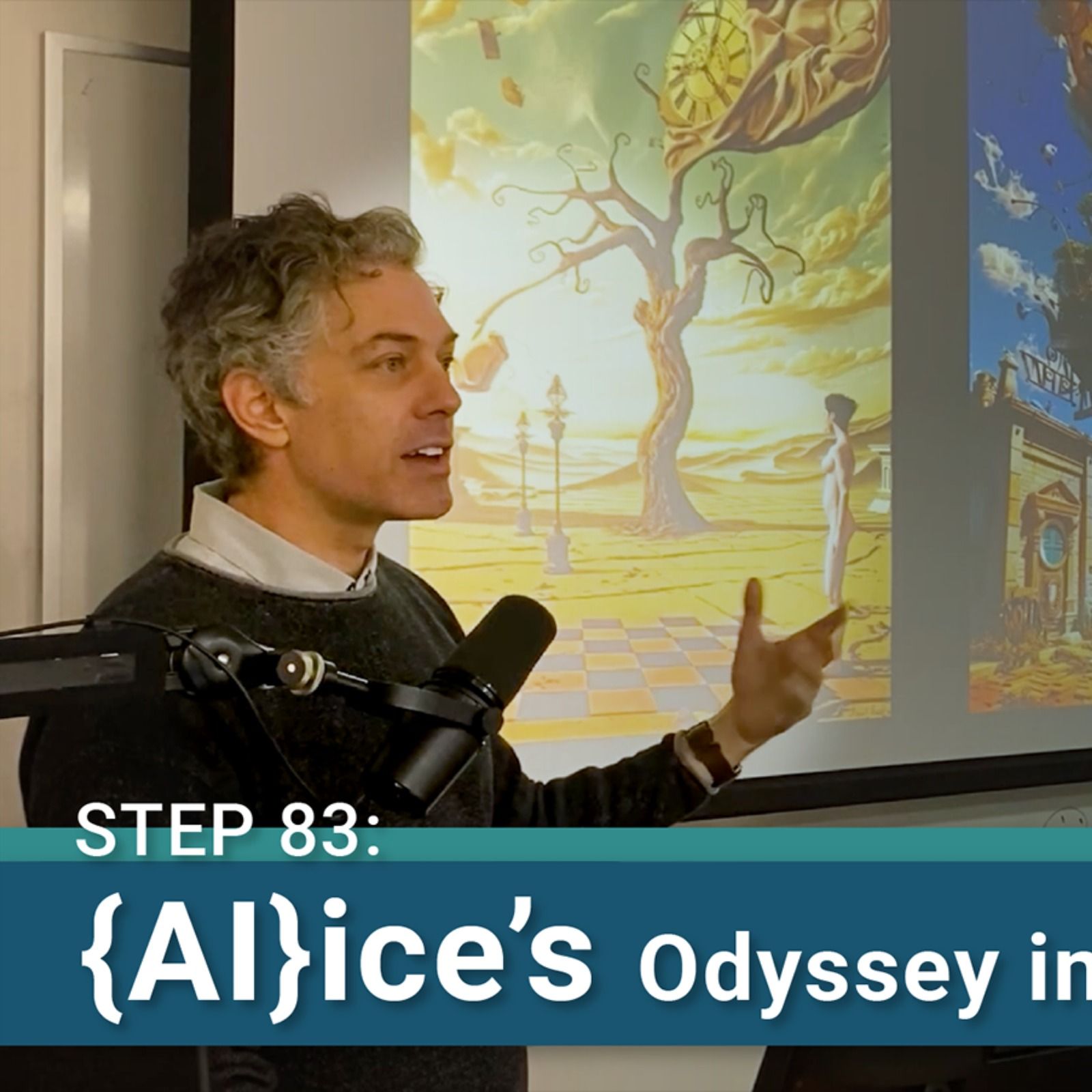
In this lecture, Ryder Richards, an artist currently based in Fort Worth, explored the intersection of art and artificial intelligence (AI), specifically focusing on a project that reimagines Salvador Dali's "Alice in Wonderland." Richards delved into public fears and misconceptions about AI, emphasizing a lack of understanding about how AI algorithms function, including generative adversarial networks (GANs) and diffusion models. By showcasing AI-generated images and discussing the differences between various AI platforms like Dolly, Midjourney, and Stable Diffusion, he illustrated AI's capabilities and limitations. Richards highlighted how each platform has its strengths and weaknesses in creating art, the humorous mistakes they can make due to misunderstandings, and the importance of understanding these tools to navigate the burgeoning field of AI art effectively.The lecture further ventured into the implications of AI in society, touching on concerns of dependency, the impact on human skills and creativity, and the ethical dilemmas surrounding AI-generated content. Richards presented a nuanced view of AI's role in art, arguing that while AI can facilitate the creative process, it also raises questions about originality, authorship, and the value of human touch in art. Through the lens of his project, which attempted to fuse AI's capabilities with the essence of Dali's work, Richards explored the challenges of using AI to replicate human creativity. He concluded by discussing the broader societal and philosophical questions AI raises, including the potential loss of human agency and the importance of storytelling in preserving humanity's unique attributes. This reflection underscored the complex relationship between technology and human creativity, suggesting that while AI can be a powerful tool, it also prompts us to reevaluate the essence of art and creativity in the digital age.

Essay, Deck and Transcript can be found at https://www.letusthinkaboutit.com/step-82-art-and-ai/The Future of Art and AI: Promises and PerilsArtificial intelligence (AI) has exploded onto the cultural scene, raising pressing questions about the role of technology in art and society. Artist and thinker Ryder Richards recently gave a lecture analyzing AI through a philosophical lens, exploring its potential promises and perils.Understanding AI AdoptionRichards began by taking the pulse of AI adoption, finding about a quarter to a third of attendees actively using AI for creative pursuits. With hype swirling, many came curious to know more. Richards set forth to report his findings from the AI landscape.Weaving history, art, and philosophy, Richards traced how we arrived at this crossroads. He discussed early 20th-century visions of fusing humans and machines, driven by the worship of progress, machinery, and speed. Richards questioned assumptions of human rationality and effectiveness, asking if AI necessarily leads to worse outcomes.The Allure and Alienation of AIRichards suggested that while AI promises to democratize creativity, it may also distance us from the personal touch of craft. He demonstrated how artists employ AI to generate variations and select results. While convenient, this process mediates the human-object bond. Richards pondered if submissions lack an imprint of humanity itself.Reckoning with BiasExamining racial and gender bias in AI datasets, Richards noted the need to peer inside “black box” algorithms. He considered whether language models actually “think” creatively. While founders exude optimism, their infighting hardly inspires confidence. With AI infiltrating emotional resonance and politics, vigilance seems vital.The Sentient Machine?Richards explored speculation that glitches enable AI creativity, just as neurological differences may have sparked human innovation. He discussed AI’s potential for independent evolution, questioning our ability to discern machine consciousness. If the future remains opaque, Richards suggested artists’ role is to absorb and share cultural truths.Owning Our CreationsLawsuits against AI companies form growing resistance. But will profit motives trump ethics? How do we balance an accelerating economy with human dignity? As the lines blur between creator and creation, now is the time to ponder what kind of future we want to code.

https://www.letusthinkaboutit.com/step-81-kant-and-the-rise-of-subjective-realism/Reality, belief, and the apocalypse. 0:00Ryder Richards discusses the demotion of reality in favor of subjectivity, exploring the tension between science and religion, and the consequences of refusing to acknowledge the apocalypse.Kant's false dichotomy between freedom and determinism is questioned, with a focus on the historical context of Thomas Hobbes and Galileo's views on a mechanical reality.Kant's philosophy and its impact on understanding reality. 4:10Kant introduces philosophy that squares God observation conundrum.Kant argues that objects in reality interfere with self-governance, leading to a moral argument that demonizes reality.Kant's philosophy and its implications. 8:46Ryder Richards argues that our perceptions are limited to appearances and cannot account for reality, leading to the idea of a "noble realm" beyond our understanding.Kant suggests that this inaccessible realm, the "nomina," contains the truth of objects beyond what we can know, but is beyond physical laws and changeable.Kant argues that autonomy and free will are possible despite determinism.Transcendental ideologies promise freedom and understanding but also introduce contradictions and limit rational contemplation.Free will and agency in Kant's philosophy. 15:43Kant's philosophy on freedom vs. determinism challenged by Matthew Crawford.Crawford proposes meaningful choice emerges through attentive interaction with realities, not abstract visions.Kant's philosophy and its impact on modern society. 19:45Ryder Richards critiques Kant's moral philosophy, arguing that it leads to self-entitlement and diluted agency.Ryder Richards argues that society's tendency to believe in self-important truths can lead to scapegoating and denial of implications, despite the appearance of novelty and esotericism.Ryder Richards argues that Kant's philosophy led to overconfidence in transcendent visions without evidence.

In this episode of Let's Think About It, host Ryder Richards examines the relationship between truth, reality, and abstraction. He proposes reality filters profound ideologies like religion and science, which rely on belief, from superficial falsehoods like marketing propaganda that obscure reality. Richards argues both sides undermine truth, but marketing inflames desire and bypasses reality altogether. Using quantum physics and art as examples, he shows how we use weighty abstractions to escape reality's limits. Ultimately, Richards says our tendency is to use fantasy to disregard reality, envisioning catastrophe to then deny it through rigid universal rules that validate our desires.https://www.letusthinkaboutit.com/step-80-transcendent-escapism/Richards begins by reminding us that while seeking transcendent truths, religion and science require belief, making them vulnerable to subjectivity. Next he discusses how marketing contains truth but uses it to inflame desire and promote amnesia. From here Richards explores how quantum physics appeals precisely because it hints at being free from reality's rules. He shares an anecdote about artists citing ungrasped quantum concepts as justification for unrelated work. Finally, Richards applies Slavoj Žižek's ideas about imagining catastrophe to then envision rigid orders that deny reality. Our escapist visions allow necessary blindness to humanity's failings but spawn dangerous universals.0:00 Truth, abstraction, and manipulation. 4:22 Reality, science, religion, and marketing. 7:57 The relationship between science, reality, and abstraction. 11:50 Epistemology, science, and art. 15:44 Escaping reality through abstraction.
Ryder Richards builds on thinkers like Kant, Rorty, and Baudrillard in this podcast to argue that reality can filter problematic abstractions. He proposes reality as a net separating transcendental truths and superficial advertising. Without reality's grounding, these abstractions reinforce each other's weaknesses.Part 1 - Reality as a Net for AbstractionsRichards lays out the idea of reality as a net dividing two types of abstraction. On one side is a transcendental ideology or truth claim, such as religion or science. On the other is superficial simulacra like advertising. Usually, reality forces these to grapple with concrete pragmatism. But as reality's power fades, these abstractions intertwine dangerously.Richards relates this to Plato's cave - the shadows are lies, but the light of the exterior, truth itself, can also be an abstraction. Modern thinkers like Rorty argued truth and reality are separate. So, going from cave to light just shifts one abstraction for another.Part 2 - Disneyland as an ExampleRichards uses Baudrillard's concrete example of Disneyland as an abstraction slipping into dangerous territory. Disneyland pretends to be fiction but reveals a desire for moral truth. However, this yearning abstracted into blind faith leads to fanaticism and policing "outsiders." The virtues represented become ways to enforce arbitrary hierarchies. In this case, the morality play of virtuousness, combined with fictional advertising, exemplifies Hofstader's 'hyper system," or tangled hierarchy, without referencing reality. Part 3 - Lowering Abstractions' PowerTo counter abstraction's excesses, Richards offers two main methods:Way 1 - Communicative RationalityThe first way is Isiah Berlin's communicative rationality - agreeing on language, intent, and logic tied to reality. This raises the "net" by grounding thought in the concrete.Way 2 - MeditationThe second way is meditation, recognizing our physical body to quiet constant abstraction. This reduces reactivity and teaches us to filter manipulations.ConclusionIn sum, abstraction untethered from reality breeds instability and vulnerability to facile beliefs. Reality anchors us against these excesses. In future episodes, Richards will continue exploring pragmatism, AI, and the limits of language.

https://www.letusthinkaboutit.com/step-78-the-parallax-view/Ryder discusses the concept of Slavoj Zizek's "The Parallax View" in three parts.Part 1: Ryder defines the parallax view as the convergence of seemingly parallel perspectives. He draws a connection to optical illusions of perspective and discusses how the parallax view involves looking beyond the central focus point. The author also touches on its use in astronomy.Part 2: Ryder discusses Slavoj Žižek's use of the parallax view in his book and how it reconsiders the traditional Hegelian dialectic of synthesis or sublation. He explains how Žižek's approach doesn't seek to overcome oppositional positions but acknowledges their inherent contradictions as perspectival points. (This involves Lacan, Freud, Marxism, and Levi-Strauss's sociology, and more.)Part 3: Ryder provides two examples of how the real-life parallax view works. First, he discusses faith and love as a parallax, emphasizing the need to change one's position to understand faith truly. Second, he references a scene from the movie "Guardians of the Galaxy" to illustrate how understanding can shift over time, emphasizing the importance of changing perspectives. He also shares the paralysis that multiple positions can invoke.
Welcome to the problematic realm of perspective framing. Ryder Richards will be your dubious guide through this profound exploration of self-awareness and understanding. Central to our journey is the parallax view, a powerful method of finding our place in the world by establishing reference points by Slavoj Zizek. But first, we must challenge hegemonic narratives and reconsider Hegel’s notion of negation, as breaking free from (or subsuming and overcoming) conventional beliefs allows us to envision new possibilities.As we progress, we’ll examine how psychology analysis, meditation, and Buddhism provide tools to reshape our perspectives and alleviate societal discontent. Psychoanalysis will offer unique insights into the human psyche, highlighting the potential for multiple points of fixation as normalcy which creates markers to allow a fixed identity.Moreover, we’ll consider all of these topics related to the “desiring self” and its role in identity. Most pointedly, we will look at Christianity’s perspective on sin related to desire, and how desire is necessary to align with God.Stay tuned for the next post, where we will dive deep into the intricacies of the Parallax View, a possibly revolutionary approach to subjective positioning that allows understanding without always negating the negation, as deconstrcutionism does. 0:00 Introduction of the parallax view.Introducing ryder richards and the concept of the parallax view, which is a means to find a position by establishing points of reference.The next episode is all about the next episode.2:19 Breaking the power of hegemonic narratives.Post structuralist or deconstructionist. All of their arguments today can arguably be post-structuralist or post-deconstructionist, where brains are trained to be creatively destructive.Hegel's notion of negation, the ability to negate impact or power of something.4:28 We must retain the positions we've just cancelled.Hegel makes his point that cancellation preserves the positions that were just cancelled, but that there is a need for a visual goal to position ourselves in society.Hegel argues that every cancellation is a new position, so every cancellation adds more gravel to the pile.6:44 Why we need to break traditional beliefs.How modernist thinkers broke traditional beliefs to avoid the totalitarian narrative and nationalistic mindset that was sweeping through Europe 100 years ago.Two dispositions in the rubble of the rubble.8:47 How to choose a new perspective.Society is more unhappy, anxious and despairing than it was in the past, according to the studies.Psychology analysis and therapy are tools for relief from the society that we live in and what we feel we deserve, and help pull us out of instant reactions11:23 Psychoanalysis is more about sizing the psychotic subject than the ego.Zizek, Lacanian psychoanalysis is more about hysteria sizing the psychotic subject. To be non-psychotic is either to have multiple points of fixation or never know exactly who you are.Buddhism and meditation.13:41 How to become an individual subject without ego.CBT therapy and meditation help reframe how you fit into the world and how you see your position in the world. It allows you to prioritize your desires differently.Buddhism is ridding yourself of attempting to desire anything at all.16:18 To sin is to miss the mark.To sin is to position yourself further away from god, to miss the mark, and to be aligned with god to grow near the object of desire.Christianity uses desire rather than negates it.18:44 Reframing the problem into parallax.Walking us through the conundrum of the desiring self and the methods of reframing it and positioning in it.Instead of the negation that is a deconstructivist rubble that has created an apocalyptic landscape, there might actually be a solution that is apparent here.

🗑️ Garbage represents the concrete universal of waste.🎨 Picasso's art exemplifies the concrete universal through different periods and works.🌌 Failures and contradictions can lead to transcendence.🎭 Art expresses both expression and concealment simultaneously.🔀 Concrete universalism combines the concrete and the abstract into one concept.💡 The concept of concrete universalism challenges fixed definitions and highlights the dynamic nature of objects, people, and ideas.🔄 The concrete universal constantly expands, while the defining object fails to fully capture its totality. ---- TIMING/CHAPTERS----0:00 Welcome back to the show.Fiction is bleeding into reality and confusing.1:34 Relating to god through the son.How god was impossible to relate to.Concrete universalism and the food processor.2:53 How can something be concrete but applicable to everything?Concrete universalism vs abstract universalism.Kantian antinomies or even Hegelian antagonisms.5:04 The apex of the movement is the definition.Overcoming the other side, overcoming their limits.The movement has an extreme peak, which defines it.7:20 A new more robust form of universalism.New universalism founded on a very real thing, trash.Example of concrete universalism, garbage.9:02 Definition of the concrete universal.The concrete universal and the black sack of trash.How to use the concrete universal.10:53 The central problem of art.The central problem of art, referencing Picasso.How art expresses the inability to clearly express.12:33 The antagonisms in Guernica.Back to the concrete universal in the case of Pablo Picasso.The antagonisms in Guernica.14:18 The problem with the object definition of the universal.Deification of objects, people and ideas.The parallax gap.
Christianity operates through a lack: we cannot know God, so a “gap” must be filled between God and Humans. Christ is God splitting from 1 into 2, allowing us to identify and get closer to the mystery of God, but in so doing, Christ was subjected to the filth of this world. (Zizek) The reversal of the one God splitting into two (only to mysteriously re-unify us) is the process of poop: taking all values and reducing them into one homogenous, non-mysterious pile. (Bataille) Growth can occur from this filth (otherwise known as manure), producing roses. Beauty from secular waste, rather than an excessive effort towards mysteries that only slip away as you approach them. (Hegel) {{This is a continuation of Step 74: Symbolic Victory}} https://www.letusthinkaboutit.com/step-75-holy-to-holy-s/---0:00 Introduction to this episode.Introduction to the episode.How symbols create a mystery which drives us.1:16 Limitations of the self and the symbolic unknowable.The gap between being human and achieving the transcendental.The symbolic unknowable and god's sacrifice.3:41 How we identify with the filth and alienation. 3:41God forces himself to become a fragment of himself.The shape of conflict.5:30 The fragmentation of the monolith.Division creates a distance in the one god.The holy nature of shit.7:30 Moving the sacred to the secular.Moving the sacred to the secular in pop culture.Non-mysterious, non-motivation unification.9:39 Solving the mystery leads to more mysteries.The attempt to resolve the mystery is the point of failure.Mimetic desire, scapegoating and sacrifice.12:16 How mimetic desire works.Mimetic desire and the hedonic treadmill.The steam valve of society is sanctioned murder.13:41 Moving from the real to the symbolic.Moving from the real to the symbolic for stability.The egyptians and their claims to permanence.15:29 We shun the real shit and believe bullshit.We shun the real shit and believe the bullshit.The beauty of the poop pile.

0:00 The contradictory injunction of double binds.• The contradictory injunction in double binds.• The binary trap in cyberpunk. 2:15 The death drive of determinism.• The death drive of determinism.• How to transcend the binary. 4:44 How the capitalist system capitalizes on our stress.• The capitalist system surprisingly capitalizes on stress.• The anxious revolt is fuel for the bureaucratic nightmare. 6:33 Intro to the show.• America and political symbolic winning, and camouflage.• The wild west of America. 8:55 Virtue signaling to win elections.• Virtue-signaling to win elections. 10:58 Trump's anointed tool.• Trump as an anointed tool of the Christian right.• Winning dignity is absurd. 12:54 How symbolic acts can function in reality.• How the symbolic act can function in reality.• Culture of honor, reputational honor. 14:30 Protecting your reputation through overreaction.• Protection through overreaction• The reversal of the reversal. 16:10 You become what you fight you become.• The unseen aspect of antagonistic opposition in step 65.• Respect for native americans over time. 17:47 How we grasp and use models.• Mimetic desire to dissimulate thoughts into the real.• Symbolism as a faulty translation.• Symbols can become an affectation.• The danger of the symbol that is mistaken
0:01 Why camouflage is like a rhizome.The complexity of camouflage and abstraction.Why camouflage is a better survival strategy.2:44 The servant as master.How to become low like water and remain powerful.Master as servant - martyr. 5:16 The boss who tries to also be your best friend.The parent who guilts you. Undermined core self: camouflage needed for shame concealment. 6:56 The ubiquity of repetition and mass media.The ubiquity of marilyn monroe as a sex symbol. (Andy Warhol)Society normalization disperses desire: at once object and landscape. 9:18 Desire has become decentralized and dispersedMimetic desire has become decentralized and mimetically dispersed. The role of libido in camouflaging.12:13 The decentralization of the self.Camouflage through subject, context, confusion or dispersal at scale.Decentralization of self: the self or desire as a rhizome.14:45 Disguise is the facade that shelters the self, but also enables psychopathic killers. The digital world lacks trust, artificial intelligence, and the travails of insecurity.Crowdsourcing wikipedia is a battleground.16:57 We no longer trust the image.The attention economy and the loss of trust.The destabilization of America, 19:28 Do you still have the power to focus or just act?Focus is the only thing that can determine who we are.Hunker down and live dangerously.
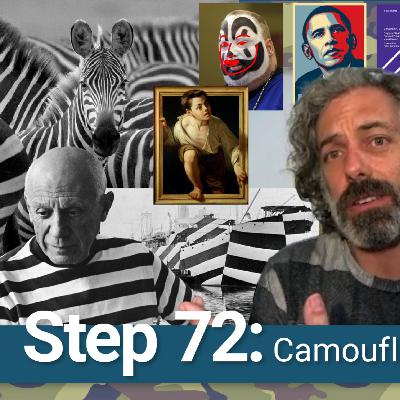
Introduction - Recap of previous episodes on the mimetic desire.- Rene Girard's model of scapegoating.2:33 How do we prevent mimetic desire?- One way to solve mimetic desire and scapegoating.- The dispute plan to prevent future luxury.4:42 What do you do after the revolution?- Government ineptitude and bureaucracy is what the people actually want.- What to do after the revolution, or after the orgy.- The French army became the first to create a dedicated camouflage unit.- Art as an artificial art.8:54 Fiction is artifice that becomes truth.- Imitation is natural to man from childhood.- Art is the lie that makes us realize truth.11:17 Three ways to hide; camouflage in nature, military and politics.- The three main purposes of camouflage.- Three ways to hide camouflage via nature.- Blending or hiding in nature, military and politicians.- Blending in politics.16:02 Dazzle Camouflage.- Dazzle in the animal kingdom.- Trump is a dazzler like AOC.18:53 Dissembling and dazzle.- The third type of camouflage, obfuscation, is dissembling and dazzling simultaneously.- Obscure and dazzle.21:28 Mimicry of the actor.- Mimicking a skunk to endear yourself with someone unlike you.- Mimicry and mimicry.- The pantomime of the mime, mimicry of the mimic.- Art vs art.26:15 Camo as a symbol of confusion.- The role of camo in the city.- How camo has evolved in the modern world.28:40 Turning camouflage into a threat.- The reversal of utility in camo and dazzle.- A densely packed spiral of signals and motivations.30:44 Simulating media into the real.- The seduction by aesthetics and ideology.- Camo as a tactic for minimal distance
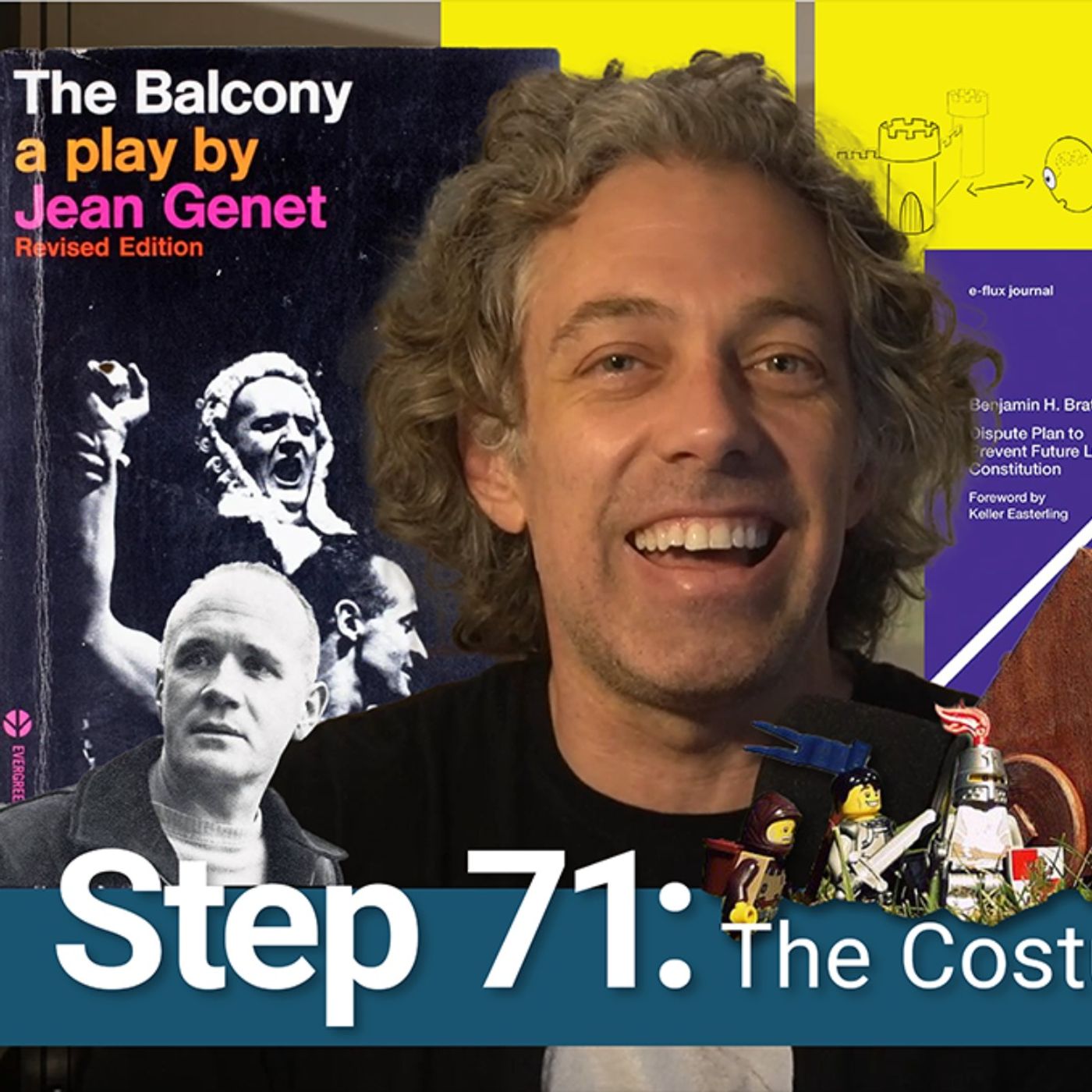
0:00 How violence is provoked by fantasy.2:31 The balcony and the revolution.5:14 How far does mimetic desire go?6:54 Most things happen twice: the story, then reality9:41 Post-terrorist architecture.12:40 Turning the desire into a blueprint (simulation to be de-simulated) 14:37 Recognize that the world is f***ed.16:43 The parable of Bill Clinton or George W. Bush.18:55 The desire to be the simulacra of man. (oh, to be a machine)21:43 The black mirror of capitalism. (Amazon and the state)
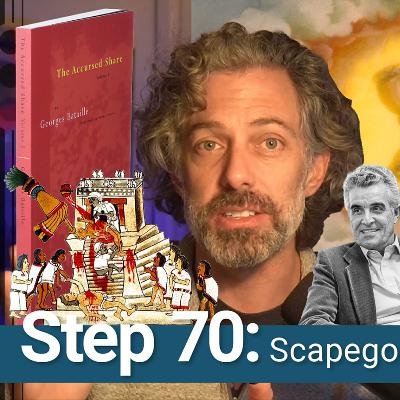
Reversing inner pressure outward requires a scapegoat to sacrifice in order to stabilize society. By discovering the hidden models driving it reveals our motivations, but more importantly, Rene Girard‘s theory accounts for civilizations' cybernetic energies and release valves. Paired with Georges Bataille’s theory of sacrifice necessary due to excess (the general economy) we find explanations for seemingly irrational behavior. Drawing from Luke Burgis's "Wanting: Memetic Desire in Everyday Life" we look at the basics of memetic rivalry, hidden models, and mediators before jumping to scapegoating, then we move into Lacan's notion of the "objet petit a" to consider the subject as desiring, and the self as commodified. In the end, we turn to Bataille's "The Accursed Share, vol. 1" to intertwine scapegoating and sacrifice. --- 0:00 Intro: Mimetic desire and the imitation loop.2:37 We are programmed automatons who will never capture the flag.5:00 Introduction of the desire by a mediator.7:57 Intentional rationality vs instrumental rationality.12:38 How to relieve the anger?15:17 Happiness is created by condemning one: scapegoating. 17:41 Old habits are hard to break.22:57 Bataille: The general economy of the natural economy is excess. 25:01 How do you deal with excesses? through sacrifice.27:28 Violence comes from memetic desire.

Comments

Download from Google Play

Download from App Store
 United States