


 Claim Ownership
Audio Branding
Subscribed: 33Played: 926
Subscribe

© Copyright 2025 Jodi Krangle
Description
Keeping a consistent sound in how you present your company really is the "hidden gem" of marketing. But audio or sonic branding influences us in many different ways and in many different places within our lives. Education is key! I explore that here, both with my own observations and by interviewing knowledgeable professionals in the field of advertising, marketing, music, technology and science.
Want to be a guest on Audio Branding? Do you contribute something unique to the world of sound? Send me a message on PodMatch, here: https://www.podmatch.com/hostdetailpreview/jodikrangle and we'll talk.
This podcast uses the following third-party services for analysis:
OP3 - https://op3.dev/privacy
Want to be a guest on Audio Branding? Do you contribute something unique to the world of sound? Send me a message on PodMatch, here: https://www.podmatch.com/hostdetailpreview/jodikrangle and we'll talk.
This podcast uses the following third-party services for analysis:
OP3 - https://op3.dev/privacy
316 Episodes
Reverse
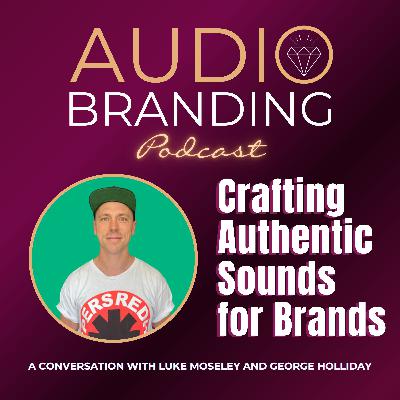
“You know it's the way that news passed between villages before there were any written word, you know, for anything to get around. I think we all know that it's incredibly integral to, initially, to survival, let alone to emotion. You know, if you could wrap important news in memorable melodies, then people were going to be less likely to die back in the day. So, I think there's a part of that within all of us. So yeah, I think you can speak very little of the same language but still be connected instantaneously through music. I guess that’s what my travels have taught me.” – Luke MoseleyThis episode’s guests are a pair of composers and producers who launched creative music agency Hear Me Out because of their frustration with how the traditional agency model removed the musicians from the decision makers. Hear Me Out is now unlocking value for brands with a tool that’s been used for decades but is hugely underutilised today – and that tool is sound.Their names are George Holliday and Luke Moseley, and we’ll be diving into how sound shapes emotion, memory, and connection from music to business. We’ll also hear from them how taking risks, following curiosity, and listening deeply have guided their creative journey. Get ready for a fascinating conversation about the power of sound!As always, if you have questions for my guests, you’re welcome to reach out through the links in the show notes. If you have questions for me, visit audiobrandingpodcast.com, where you’ll find a lot of ways to get in touch. Plus, subscribing to the newsletter will let you know when the new podcasts are available, along with other interesting bits of audio-related news. And if you’re getting some value from listening, the best ways to show your support are to share this podcast with a friend and leave an honest review. Both those things really help, and I’d love to feature your review on future podcasts. You can leave one either in written or in voice format from the podcast’s main page. I would so appreciate that.(0:00:01) - Musicians' Early Sound Influences and JourneysOur conversation begins with George and Luke’s early memories of sound, and the influences that led them to a career in audio branding. “There was always a piano in the house in all of my family,” George recounts, “with all my family, and we always used to gather around and just sing badly, whether it be at Christmastime or just the weekend.” They share their musical journey, literally in Geroge’s case as he toured Europe by bus, and Luke likewise recalls his early days as an indie musician on the road. “Mine was just going to places to play shows,” Luke explains. “I always just traveled with my longboard skateboard duct-taped to the outside of my guitar case.”(0:08:57) - The Power of Music in CommunicationLuke and George share what their early experiences taught them about music’s power to transcend borders and even language. “You can speak very little of the same language,” Luke says, “but still be connected pretty instantaneously through music. I guess this is what my travels have taught me.” George adds his thoughts about the different cultural directions music has evolved in, and what they have in common. “I think that's why we always, as a species,” he notes, “come back to percussive elements, more so than we come back to melodic elements. I think there's some kind of group feeling about that as well. There's a togetherness with percussion that really makes it work.”(0:14:20) - Creating Music for Brands With PurposeAs the first half of our discussion concludes, George and Luke explain what inspired them as musicians to found their sonic branding agency...
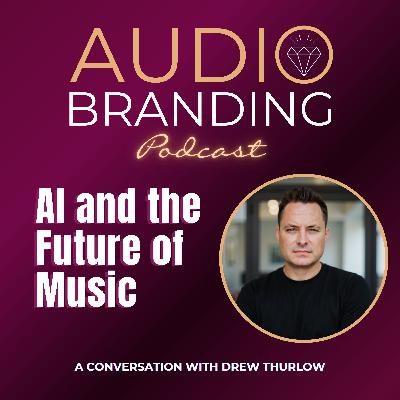
“I have a friend who’s a library film composer and produces podcasts, and I was talking to him, I was giving him the kind of same thesis I talked about today. And he’s like, ‘yeah, I get it. But like, I’m the one who’s going to lose the job.’ Cause what he, this very specific, specified job he has [is] of composing kind of anonymous music for podcasts. And he’s successful, he wrote the theme of Serial, and he’s done a lot of big podcasts in New York Times and NPR and, uh, and he’s like, that’s probably the functional music which employed a lot of composers is probably not going to be needed as much.” – Drew Thurlow This episode is the second half of my conversation with founder of Opening Ceremony Media and author of Machine Music: How AI is Transforming Music’s Next Act Drew Thurlow as we discuss the surprising musical trend Drew foresees as AI becomes more commonplace, the one lesson he always shares with music students when it comes to the future of AI, and the ripple effects that generated audio content and voice clones have already started to have across the music industry. As always, if you have questions for my guest, you’re welcome to reach out through the links in the show notes. If you have questions for me, visit audiobrandingpodcast.com, where you’ll find a lot of ways to get in touch. Plus, subscribing to the newsletter will let you know when the new podcasts are available, along with other interesting bits of audio-related news. And if you’re getting some value from listening, the best ways to show your support are to share this podcast with a friend and leave an honest review. Both those things really help, and I’d love to feature your review on future podcasts. You can leave one either in written or in voice format from the podcast’s main page. I would so appreciate that. (0:00:00) - Future of AI in Creative AestheticsWe pick up the conversation as Drew offers his prediction of how AI music, over time, might become as retro and nostalgic as lofi music today. “I have this theory that with all these AI hallucinations that are happening,” he explains, “that’s going to become its own creative aesthetic, and you’re going to start to see the AI vocal models, you know, the early AI vocal models [return].” He shares his observations as a guest lecturer and why he’s optimistic about the next generation’s relationship with AI, and the lesson he always shares with students. “I’d encourage students to have curiosity be your superpower,” he says. “And community is also really, really important. It was really important for me when I was starting out twenty, twenty-five years ago. It’s even more important now, with so much more noise out there and so many more distractions and so much more music and people doing it.”(0:04:43) - Trends in Music Tech StartupsDrew talks about how the industry is evolving as digital media becomes the norm, and the opportunities for AI to increase revenue. “Streaming growth is slowing down,” he tells us. “You know, we’re running out of subscribers in the West and North America, western Europe and North America, and so labels and rights holders and artists are kind of in the mood to count their pennies.” He notes some of the less obvious ways that AI is increasing revenue, such as black box royalty collections and anti-piracy safeguards, and the versatile uses of generated audio content. “Adaptive audio companies [are] using machine learning and generative AI for health,” he says, “also in the gaming environments, which is a big business, where personalized music can adapt to you and your environment. It kind of reads your environment. So those are...
“And we got a new Beatles song. I can’t believe we’re talking about the Beatles…. But John Lennon recorded a really corrupted vocal before he tragically died, and it was just kind of there because of some stem separation tech that is only possible because of machine learning. They were able to clean up the vocals, fully on board with the John Lennon estate and the remaining Beatles members, and there’s a few others, but this is interesting. It’s just, it’s a new way of engaging with audio that people, fans are showing that they really like.” – Drew ThurlowThis episode’s guest is a former professional musician turned music executive and strategist. He served as Senior Vice President of A&R at Sony Music and has held leadership roles at both Pandora and Warner Music. As a graduate of Brown University with a master’s in Technology and Leadership, he blends creative insight with business acumen. His writing has appeared in Billboard, and he remains a sought-after voice on the intersection of music, tech, and innovation. His first book, “Machine Music: How AI is Transforming Music’s Next Act,” will be published in 2026.His name is Drew Thurlow, and he’s also a fellow jury member for the International Sound Awards, which is how we met. As someone on the forefront of music and technology, he has a lot of great advice for sound creatives wanting to make their mark – both now and into the future.As always, if you have questions for my guest, you’re welcome to reach out through the links in the show notes. If you have questions for me, visit audiobrandingpodcast.com, where you’ll find a lot of ways to get in touch. Plus, subscribing to the newsletter will let you know when the new podcasts are available, along with other interesting bits of audio-related news. And if you’re getting some value from listening, the best ways to show your support are to share this podcast with a friend and leave an honest review. Both those things really help, and I’d love to feature your review on future podcasts. You can leave one either in written or in voice format from the podcast’s main page. I would so appreciate that.(0:00:00) - Evolution of Music Industry and TasteOur conversation starts off with Drew’s early memories of sound and his start as a musician. “I was one of those kids,” he recalls, “who just didn’t have idle time without a guitar in my hands, and I didn’t think too much about it. I wasn’t super self-reflective about it, I just kind of like followed my instincts and continued to do that.” He tells us more about his career journey as a music executive and explains how much the business has changed since he first started out. “There’s the whole influencer thing wrapped up in it,” he says, “and the way people, especially Gen Z and younger millennials, fall in love with personalities and artists is different. It’s not necessarily bad, it’s just different.”(0:12:36) - AI Impact on Music IndustryAs the first half of our discussion wraps up, we turn to the question of whether AI might replace human artists, and Drew offers some surprising statistics. “From our best, really good estimates by places like Deezer and Spotify,” he says, “AI-generated music, even though it’s a measurable percentage of all the songs on [digital service providers], is a third of a percent of the royalty pool, and I just want to reiterate that it is a rounding error. Nobody wants this music.” He shares his thoughts on where AI is heading and some of the ways it might help transform the music industry. “On the business side,” he tells us, “there’s a lot of evidence that these fans want to engage with music in cool and interesting ways, and these AI tech tools allow them
“If you’re watching any video on how to get started on content for your business, for public speaking, anything like that, the microphone is always the number one thing, they say. And that should be a cue. It’s not the phone and it’s not a video camera. They say use your phone to get started, but buy a better mic and there’s a reason that this matters so much to people.” – Nikolaj Kloch This episode is the second half of my conversation with founder of Thrivr Productions Nikolaj Kloch as we discuss what he’s learned firsthand about sound since becoming a videographer, how AI is reshaping the way we use studio sound effects, and his number one on-site audio rule. As always, if you have questions for my guest, you’re welcome to reach out through the links in the show notes. If you have questions for me, visit audiobrandingpodcast.com, where you’ll find a lot of ways to get in touch. Plus, subscribing to the newsletter will let you know when the new podcasts are available, along with other interesting bits of audio-related news. And if you’re getting some value from listening, the best ways to show your support are to share this podcast with a friend and leave an honest review. Both those things really help, and I’d love to feature your review on future podcasts. You can leave one either in written or in voice format from the podcast’s main page. I would so appreciate that. (0:00:00) - The Power of Audio BrandingThe second half of our conversation picks up as Nikolaj tells us about some of the lessons he’s had to learn by experience while working with sound, such as the hidden biases that have shaped recording equipment for decades. “Audio hardware and software have been set up for a man’s voice, and I didn’t realize this over the years,” he notes. “I had no idea about that, and there’s a lot of intricacies like that which are just out in the industry that have been left over for a hundred years now, and you don’t think how that ties back to history until you dive into it.” He tells us how he incorporates AI into his workflow and where he sees it taking the future of audio/video editing. “I think that’s going to make incredible videography work,” he explains. “I think it’s going to add another layer that you still need people behind it, I think we always will, but… it’s going to be a great tool for us to have.”(0:14:05) - The Impact of Quality AudioAs our conversation comes to a close, Nikolaj shares his strategy for demonstrating the value of sound to skeptical clients. “Just showing them the difference between well-planned audio and something that is just basic, sounds bad, filmed with an iPhone that they’re holding to their mouth and things like that,” he says. “If you show them the side-by-side, I think that’s the easiest way to show them that the transformation is there.” He talks about his latest projects and how listeners can get in touch, and tells us what opened his eyes to the power of sound. “If you could sit down and watch a single video that shows the before and after,” he says, “it changed my view on audio entirely, and it’s something that I always have... when I show these budgets to public speakers, conferences or businesses.” Episode SummaryThe importance of choosing – and properly setting up – the right audio equipment,How sound empowers everything from shaping a narrative to capturing brand synergy. Connect with the Audio Branding Podcast:Book your project with Voice Overs and Vocals by visiting...
“If you don’t make the video with audio in mind first, that’s the difference between, you know, a 14% click-through rate versus, you know, a 2% click-through rate. And a lot of people don’t tie those two together, that it matters. It’s something that people should be focusing on with a lot of time and energy.” – Nikolaj KlochThis week’s guest is a videographer, content creator, and former aerospace engineer who helps speakers, entrepreneurs, and brands elevate their presence using impactful video that actually delivers. With a background in both engineering and creative production, he brings a rare mix of precision and artistry to his work, and he’s worked with speakers from TEDx stages to Fortune 500 boardrooms, helping them stand out, connect with audiences, and grow their influence.His name is Nikolaj Kloch, and he’s passionate about the power of sound and its impact on visuals. Stay tuned as he shares his insights on why audio isn’t just important – it’s essential. As always, if you have questions for my guest, you’re welcome to reach out through the links in the show notes. If you have questions for me, visit audiobrandingpodcast.com, where you’ll find a lot of ways to get in touch. Plus, subscribing to the newsletter will let you know when the new podcasts are available, along with other interesting bits of audio-related news. And if you’re getting some value from listening, the best ways to show your support are to share this podcast with a friend and leave an honest review. Both those things really help, and I’d love to feature your review on future podcasts. You can leave one either in written or in voice format from the podcast’s main page. I would so appreciate that. (0:00:00) - The Power of Audio in MarketingAs we start off our discussion, Nikolaj recalls one of his first memories of sound, a Lego commercial his brother starred in when they were children. “They actually had to bring in a mic and he just hit the blocks over and over to get the sound crumbling,” he recalls. “And you know, you don’t put those together as a kid until you get older, but I can always hear those blocks crumbling.” He shares how his background as an aerospace engineer took a surprising turn towards audio production, and the common threads between the two. “A lot of people think they don’t translate as much,” he explains, “but it’s one of those things where, you know, audio is a great example of the nitty gritty. There are specific engineers that dive into this every single day, and spend nothing else for their time.”(0:09:12) - Mastering Precision Audio RecordingWe talk about precision audio, just what that phrase really means, and the extensive background that getting the most out of audio can require. “It’s kind of like Picasso saying he won’t sell his little picture on his napkin because he’s taken so much time learning this,” Nikolaj says. “And I feel like that directly ties into this, because it’s really precision. You know they have to line up perfectly.” As the first half of our talk wraps up, Nikolaj shares how he aims to create the ideal environment for an on-site recording and how he helps clients work around some less-than-ideal ones. “I’m going to be reusing this over and over,” he says. “So I’m always like, please, let me at least talk to them and see what their setup is, let’s dive into it a bit. They usually get a little annoyed, but it makes a big difference.” Episode SummaryHow videographer Nikolaj Kloch transitioned from aerospace engineering to sound design.Nikolaj’s work with precision audio, from live recordings to film...
“[What] a lot of sonic branding agencies aren’t aware of is that sonic branding can also be used as a tool to address a concern that the client might have. So, for example, a new competitor has come in and now they feel dated. Okay, let’s write a sonic branding that’s based around being modern. Okay, they’ve had a big knock on trust, like I mentioned before, with a data breach. This is a great opportunity to write a sonic branding that builds customer trust. So, it can be used as another mode along with your visuals, along with your tone of voice. Your branding tone of voice is in, like, the words that are spoken, not the like the language, right? It’s a tool to convey your brand.” – Dr. Thomas Dickson This episode is the second half of my conversation with musicologist and sonic branding strategist Dr. Thomas Dickson as he shares his thoughts on maintaining a long-term branding, the growing use of AI for everything from monitoring to mock-ups, and the versatility of an effective sonic logo. As always, if you have questions for my guest, you’re welcome to reach out through the links in the show notes. If you have questions for me, visit audiobrandingpodcast.com, where you’ll find a lot of ways to get in touch. Plus, subscribing to the newsletter will let you know when the new podcasts are available, along with other interesting bits of audio-related news. And if you’re getting some value from listening, the best ways to show your support are to share this podcast with a friend and leave an honest review. Both those things really help, and I’d love to feature your review on future podcasts. You can leave one either in written or in voice format from the podcast’s main page. I would so appreciate that. (0:00:01) - Impact of Sonic Branding VariationsMy conversation with Dr. Dickson picks up as we talk about the challenge of maintaining a consistent audio brand through changing management and brand strategies. “They might not even have been strategically sonic branding,” he notes. “It could have just been some brand music that they turned into a mnemonic or brand music they’ve just been using for years, and then a brand manager will come in and just throw out everything.” He points out McDonald’s as a prime example of an audio brand that’s only gotten stronger over the past twenty-five years, and how consistency has been its key to success. “It’s a really good case study for sonic branding agencies to look at,” he says, “how you can take a mnemonic [and] use it in, there’s videos on YouTube where it’s, like, using like thirty different contexts, and it’s just changed instrumentation slightly, changed the speed, [and] added swing .”(0:07:38) - Sonic Branding Evolution and ImpactDr. Dickson tells us about his worth with agencies that are increasingly turning to AI for solutions, especially when it comes to catching online plagiarism. “They are using AI to identify melodies that are shared and then taking them to court once the melody’s been used sufficiently,” he cautions. “Day one, a song comes out, they don’t take them to court. They wait till the song is a massive hit and it’s got enough revenue, and then they take them to court.” We discuss AI’s growing presence in everything from audio mastering and editing to generating new music, and he points out some of the roles he sees it filling over time. “I’m imagining in the future there will be the option to take a track,” he explains, “and then just [have AI] re-tailor it to that context and stretch it out so that, for the conference that goes for two hours, there’s appropriate backing music based on your sonic branding.”(0:16:24) - Future of...
“If you imagine a company has a ten million dollar marketing budget, right? And then you imagine they have a sonic logo on every single TikTok ad, Facebook ad, YouTube ad, all these new media where the majority of the traffic’s coming from now. If they can increase conversion rates marginally, they can have a huge difference to their bottom line. And it’s one of those things where, because sonic branding, once it’s done, once, and, well, yes, there might be a brand refresh where it’s changed in ten years, um, or it’s updated, or maybe it’s changed slightly to work with a different culture, right? There might be like a version which sounds slightly more Canadian, right? Or more Christmasy, or things like that. But the point being is this is an asset that they develop once, and then it can be used on these campaigns that can have huge advertising budgets, which makes it very cheap when you compare it to the actual campaign marketing spend.” – Dr. Thomas Dickson My guest on this episode is a musicologist who specializes in how we perceive sound and how it shapes brand communication. With a PhD in Music Psychology, he helps brands create emotionally resonant and research-backed sonic identities. His work reduces subjectivity, improves creative decisions, and even addresses legal risks like plagiarism in audio branding.His name is Dr. Thomas Dickson, and he’s advised national retailers, tech firms, and service brands throughout his career. And, as if the subject of musicology isn’t fascinating enough, we’ll also be discussing how businesses can make sure their sound stays original and protected. As always, if you have questions for my guest, you’re welcome to reach out through the links in the show notes. If you have questions for me, visit audiobrandingpodcast.com, where you’ll find a lot of ways to get in touch. Plus, subscribing to the newsletter will let you know when the new podcasts are available, along with other interesting bits of audio-related news. And if you’re getting some value from listening, the best ways to show your support are to share this podcast with a friend and leave an honest review. Both those things really help, and I’d love to feature your review on future podcasts. You can leave one either in written or in voice format from the podcast’s main page. I would so appreciate that. (0:00:00) - The Power of Sound in AdvertisingOur discussion begins with a look back at Dr. Dickson’s early memories of sound, and he came prepared with a more recent, but still memorable, experience that demonstrated the power of sound. “By the grand finale,” he recalls as he describes an outdoor concert featuring the Melbourne Symphonic Orchestra, “it’s a bucketing down, raining and everyone’s still there. So we’ve got this huge event, it’s bucketing down, raining, [and] no one’s leaving because they want to hear the finale.” He tells us more about musicology, what it means, and how it can help build a stronger brand. “Musicology is like the academic and rigorous study of music,” he explains. “It comes down to a broad range of different styles, so this could be like music history, it could be music psychology, which is what I looked at, the psychology of music or sound, [or] it could be ethnomusicology.”(0:09:05) - Musicology and Plagiarism in Sonic BrandingDr. Dickson tells us about the different dimensions of musicology and how sound influences us, such as musical expectancy and episodic memory, and how much our impression of sound comes from the media we consume. “We have cultural norms associated with electronic music,” he explains, “digital sounds, hard hitting bass, all that kind of stuff that we
“And they had people that had either the escalator going up on the right-hand side or you could take the stairs, and each stair played a different key on the piano. More people took the stairs than they did the escalators because it was more fun. So, they did something they hadn't done before that was better for them. So, it all wraps up beautifully, and was such a fun campaign. And again, it didn't have to cost a lot of money. They didn't do many of those piano stairs. And it's that old thing, or the new thing that we try and do now, [which] is ‘experienced by few, seen by many.’ And you see it all the time, you know, you do one small little activation that really doesn't have to cost a lot of money, but you film it beautifully, put a good track to it, you make sure it gets shared correctly. And all of a sudden, you've got a hit.” – Darren Borrino This episode is the second half of my conversation with executive creative director of Inkfish NYC Darren Borrino as we talk about building the foundation of an effective sonic brand, how digital tools and the internet age have redefined the strategies, development, and time frame of an ad campaign, and the growing value of authenticity in a world where AI content is becoming the norm. As always, if you have questions for my guest, you’re welcome to reach out through the links in the show notes. If you have questions for me, visit audiobrandingpodcast.com, where you’ll find a lot of ways to get in touch. Plus, subscribing to the newsletter will let you know when the new podcasts are available, along with other interesting bits of audio-related news. And if you’re getting some value from listening, the best ways to show your support are to share this podcast with a friend and leave an honest review. Both those things really help, and I’d love to feature your review on future podcasts. You can leave one either in written or in voice format from the podcast’s main page. I would so appreciate that. (0:00:00) - Global Advertising Culture Differences and CampaignsThe second half of our conversation begins as Darren and I talk about his work all around the world, from his home in South Africa to Prague, Australia, and eventually the U.S. “The biggest culture shock I got was actually coming to New York,” he says. “Although I'm South African, my parents are British, so I was brought up on British comedy like quite sarcastic, quite dry, quite undertone.” We discuss the one ad campaign he wishes he’d written, and an inventively musical approach Denmark took to encouraging drivers to slow down: a melody based on the driver’s speed. “If you went too fast, it became annoying,” he explains. “We've all had kids in the car before. Everybody wants to slow down and just enjoy it, and there's no reason to race. So you may as well just enjoy the track.(0:05:20) - Innovative Sound Marketing CampaignsWe talk about what’s changed in the advertising world in recent years, and how even a seemingly successful marketing strategy can have unintended consequences for a brand. “That's going to reposition the brand in the market,” he tells us. “But if you don't have a full perspective of where everything is, you could accidentally position that brand right next to a competitor that will easily outspend them.” Darren talks about the impact of such AI tools as Midjourney in his agency, its uses and limitations, and the unlikely sounds of inspiration all around us “I can guarantee you nine times out of ten,” he says, “it's when you're cycling home, or when you're washing your dog at home, or you're out with a friend having coffee. You'll see something happen, you'll go, ‘wait a minute....
“If you're going to be doing a commercial, for example, for BMW, where people are spending a lot of money on a Seven Series and it's a luxury car, but then you hear the TV ad or the radio ad or wherever you're listening, and that sound isn't recorded at the highest quality. Like, your logical mind might not pick it up, but if it sounds a little tinny or it's too much of an echo, you pick that up, and that really does build into the overall feeling of the brand in terms of quality. There was an interesting example with Nissan. They launched one of the first electric vehicles a long time ago, and when they put it out into the market, they found that people felt that maybe it was a little flimsy, it didn't feel quite right, like, well made. So obviously they went in to fix their upholstery, and they started making things a little more high quality, and consumers are still saying, ‘I don't know what it is, there's something about this, it just doesn't feel like a quality vehicle.’ And what they did was they changed the audio. Through the speakers in the car, when you start it up, it will make a fake sound of the car starting up. And, all of a sudden, people are like, ‘ah, now it feels like a car.’” – Darren Borrino This week’s guest is an art director at heart and an ECD-level creative with over twenty years experience, working all across the globe. He’s led teams at some of the world’s top agencies, such as TBWA, DDB, and Saatchi & Saatchi, and has won multiple awards for his work. He launched Inkfish, a boutique agency in New York that helps smaller challenger brands take on the big guys with sharper strategy, more disruptive creative, and budgets that go into the work, not overheads. He’s endlessly curious about what persuades the human mind, loves ideas that actually land, and believes that the best work comes from collaboration and clarity, as well as a healthy sense of humor.His name is Darren Borrino, and in this episode, we’ll be discussing how companies can shake things up using sound, the difference between clever and persuasive, and how to stay relevant in a changing ad world – especially in the age of AI. Stay tuned for a Masterclass in being different! As always, if you have questions for my guest, you’re welcome to reach out through the links in the show notes. If you have questions for me, visit audiobrandingpodcast.com, where you’ll find a lot of ways to get in touch. Plus, subscribing to the newsletter will let you know when the new podcasts are available, along with other interesting bits of audio-related news. And if you’re getting some value from listening, the best ways to show your support are to share this podcast with a friend and leave an honest review. Both those things really help, and I’d love to feature your review on future podcasts. You can leave one either in written or in voice format from the podcast’s main page. I would so appreciate that. (0:00:00) - The Power of Sound in AdvertisingWe start off our discussion with Darren’s childhood impressions of sound, which include the Universal audio logo when he and his dad used to watch movies. “You'd made it home, you'd finished everything you wanted to do,” he says, “and you could sort of relax with a little bit of popcorn and maybe watch a movie and just take it easy. So that was probably the first time.” Our discussion turns to audio branding in the age of social media, and just how quickly things move today – especially audience attention. “People switch off very quickly,” Darren explains. “So you need to make sure you have a brand that has the right qualities, and then you match that with the right voice to bring that to...
“The brief was ‘we want to sell some more train tickets to Germany, where you can go to Berlin for a techno party, you can go to Hamburg for the opera, have a famous opera in Hamburg, or you can go to Munich for the beer festival.’ And we made this audio journey with sound, and you definitely can hear, ah, now we’re in Berlin, it’s the opera, and now we go to Munich. So yeah, we can play with that. And the client just also loved the idea. It takes two to tango, as you say, the client also needs to value and understand if you want the effect of this. You need to work with this in an ambitious and professional way.” – Karsten Kjems This episode is the second half of my conversation with audio branding specialist and founder and CEO of Sonic Minds Karsten Kjems, as we talk about the surprising value of silence in sound design, why familiarity doesn’t always breed contempt when it comes to sonic logos, and what it means to be a musician in a world where both instruments and vocals can come from a laptop. As always, if you have questions for my guest, you’re welcome to reach out through the links in the show notes. If you have questions for me, visit audiobrandingpodcast.com, where you’ll find a lot of ways to get in touch. Plus, subscribing to the newsletter will let you know when the new podcasts are available, along with other interesting bits of audio-related news. And if you’re getting some value from listening, the best ways to show your support are to share this podcast with a friend and leave an honest review. Both those things really help, and I’d love to feature your review on future podcasts. You can leave one either in written or in voice format from the podcast’s main page. I would so appreciate that. (0:00:00) - The Power of Sound DesignAs the second half of our conversation starts, Karsten points out how effective sound design isn’t always intuitive, and that less is sometimes more. “I’ve played some gigs, sometimes for a reception,” he says, “and people were just talking and talking, and they didn’t listen to the music at all. But then suddenly if we start to play really soft, then people go, ‘oh, I think the band is playing.’” He adds that sonic interfaces today are, in some ways, reminiscent of the early days of web design. “In the old days, they had flashes and everything moving,” he recalls. “You know, now we just go back to ‘give me a simple burger menu,’ ‘click contact,’ or whatever. User usability is also very important.”(0:06:41) - The Evolution of Sound DesignOur discussion turns to audio marketing, and Karsten points out how much of effective sonic branding depends on the demographics. “There has actually been a study for that, that shows that we create our musical preference, I think, when it’s between we are 17 and 21,” he says. “We’re about to get the first boyfriend or girlfriend, moving away from home, these really high peak moments in our lives.” We talk about AI in sound, and the direction he sees it taking in the industry. “It’s just like when the sampler came out,” he recalls. “’What should drummers do?’ And now the drummer plays on top of samplers, so every drummer has a sampler or a drum machine next to him, so he uses it as a tool.”(0:20:22) - Quality Sound DesignAs our conversation comes to a close, we talk more about the role of shifting demographics in sound design and how they impact not just relatability but the user’s experience. “If you’re having hearing loss or having, you know, difficult hearing,” Karsten notes, “then you don’t want products that really annoy you. You want to be able to understand them.” He shares some of his...
“If you can see that your product is selling better with better sounds, and it gets better reviews Actually, I saw a car review that scored the car better just because the sounds were better. He didn’t talk about how fast it could go, how fast it could brake or how many airbags, he talked about the user experience. A car today is a driving iPad on wheels. So, all these sounds here, I got so stressed from these beeps and boops, suddenly it was too close to the edge, or too close to that... sometimes there wasn’t even a thing, and it just starts to, what was that? Was a fly running through the camera? What was it? So, I think it’s so important that we also choose brands and products with our ears as well with our eyes, and also with our wallets.” – Karsten Kjems This episode’s guest was raised in a musical home with a studio in the basement. He began drumming professionally at 23, and his passion for sound design and early use of digital audio tools like ProTracker on the Amiga shaped his approach to music and technology. While working at a branding agency, he noticed companies struggling to define their sonic identity, leading him to launch one of the first strategic audio branding agencies, Sonic Minds, in 2004. Today, he’s a recognized expert in the field, frequently speaking and teaching about sound design.His name is Karsten Kjems, and you’ll want to hear more about his perspective on brand sounds, why he believes audio branding to be so important, and what sets good and bad sound apart. If you’re still on the fence about audio branding for your own company, or if you’re struggling to explain why it’s important to your clients, you should definitely check out this conversation. As always, if you have questions for my guest, you’re welcome to reach out through the links in the show notes. If you have questions for me, visit audiobrandingpodcast.com, where you’ll find a lot of ways to get in touch. Plus, subscribing to the newsletter will let you know when the new podcasts are available, along with other interesting bits of audio-related news. And if you’re getting some value from listening, the best ways to show your support are to share this podcast with a friend and leave an honest review. Both those things really help, and I’d love to feature your review on future podcasts. You can leave one either in written or in voice format from the podcast’s main page. I would so appreciate that. (0:00:00) - The Power of Sound in BrandingAs we start things off, Karsten shares his early memories of sound, and how growing up with ADHD in a musical family shaped his formative years. “I was brought up in a family where my father was a drummer,” Karsten recalls, “so I’ve always been around musicians and music and the first time I really discovered that I had this almost perfect pitch was when I went to music school.” He explains how a surprising discovery at a concert led to his career in marketing and audio branding, and the seismic shift that the streaming era – and particularly the rise of YouTube – represented for the industry. “Suddenly brands and companies need to communicate in these spheres,” he tells us. “How did they do that? How did they choose music? How should they buy music? So it’s a whole new game, from only being on TV and radio to being on all the time, to keep… producing content all the time.”(0:12:18) - Designing Meaningful Audio Branding ExperiencesOur conversation turns to UX and branding through sound design, and Karsten points out how ubiquitous sound interfaces have become these days. “A headset, a modern headset, for whatever company, it can have up to around 15 different sounds,” he...
“If it’s stock music, unless you’re paying, like, some libraries have exclusivity, but most of them don’t. So that’s what I always say to clients, like stock music. You might hear that Joe’s ice cream shop also has the same music that you have. And you’re Chrysler – I keep saying Chrysler, but whatever, a big brand. A good example of an audio branding that we did was the Rogers. That was huge, and when we first did that, it was for a very close friend of mine, Philippe Garneau, and Mark’s brother, the astronaut, and he came to me, and he had the Rogers account. He said, ‘We want a mnemonic on the end of the spot, but we’re only going to use it for three commercials.’ And so they lost the business, and Rogers loved that mnemonic.” – Ted “Theo” Rosnick This episode is the second half of my conversation with music and audio director/producer Ted Rosnick, as we discuss the use of AI, especially digital voice clones, in advertising, the impact of the SAG-AFTRA strike, and the unwritten rule voice artists follow when it comes to branding. As always, if you have questions for my guest, you’re welcome to reach out through the links in the show notes. If you have questions for me, visit audiobrandingpodcast.com, where you’ll find a lot of ways to get in touch. Plus, subscribing to the newsletter will let you know when the new podcasts are available, along with other interesting bits of audio-related news. And if you’re getting some value from listening, the best ways to show your support are to share this podcast with a friend and leave an honest review. Both those things really help, and I’d love to feature your review on future podcasts. You can leave one either in written or in voice format from the podcast’s main page. I would so appreciate that. (0:00:00) - Evolution of Music Production and AIThe second half of our conversation starts with Ted’s perspective on advertising in the 21st century, and one early trend that marked a turning point. “One of the main things I remember changing a lot was when Napster came along,” he recalls. “People could download a hundred songs in an hour, and I noticed it was, all of a sudden, we were expected to do seven or eight demos, because that’s what they were used to, like, pulling music down all night long and hearing their stuff.” We talk about digital studios and sound design, and how AI voice cloning has transformed the industry, including a recent commercial campaign that featured a synthetic likeness of a human actor. “We asked his permission,” Ted tells us, “and so we AI’d his voice, and it worked out really well. Nobody would know. I know the difference because I just know, but you wouldn’t know the difference.”(0:10:42) - The Impact of AI on CreativityTed tells us about his experience with AI-assisted brainstorming and its limitations as a content writer. “I’ve written them and then thrown them into ChatGTP,” he explains, “and then said, ‘Can you just make it a little warmer?’ But the truth of the matter is that I’ve always gone back to my own, because I don’t think it’s as warm as or as good as what’s in here, you know.” We discuss what sets human and AI creativity apart, and how what makes a work human often comes down to the very things AI would try to fix. “A lot of it is that human subtleties are mistakes,” he tells us. “When you start tearing it down for the mix, you hear all sorts of mistakes. They’re not glaring mistakes that are going to ruin it, but they’re not perfect, and that’s what makes it human. And that’s what makes it great.”(0:23:10) - The World of Audio BrandingOur conversation closes with some of Ted’s most...
“We did one for Mercedes, which again was very unique and very simple. It was about this guy Raymond who had never tried ice cream before. And it was a great commercial, and it talked about Raymond never having ice cream, and he waited, and he would watch other people have ice cream, and then one day Raymond decided to have ice cream. And then all of a sudden it cuts to a Mercedes logo. And then the last ten seconds, it was for Mercedes, but it was so well done and so unique, and the score was very, very, very unique.” – Ted “Theo” Rosnick This episode’s guest returned to Toronto from Boston in 1974 after attending Berklee College of Music. He soon began working as a studio drummer, but his passion for audio production quickly led him to start his own jingle production company, Rosnick Productions, in 1975. Through hard work and dedication, he quickly established himself as Canada’s top audio producer and audio director for commercials. He went on to partner with Steve McKinnon in 1990, forming RMW Music, and the company remained the top music production company in Canada for decades before being sold to Vapor Music in 2016. Since that sale, he’s remained with Vapor as a Creative Director, continuing to bring his expertise and passion to many projects and to the industry. His work is recognized not just in Canada but globally, having shaped the sound of major brands like IKEA, Molson, Subaru, Mercedes, Peroni, and Heinz, among many others. Over his five-decade career, he’s earned hundreds of advertising awards for his music and sound design, always pushing creative boundaries with fresh ideas and meticulous attention to detail – all of which are things we definitely appreciate here.Beyond advertising, he’s made his mark in sound design and music for feature films and documentaries, and he’s the executive producer and audio director of the well-known advertising podcast IOFA with Aaron Starkman. He’s also mentored countless emerging talents over the years, a role that he takes great pride in. Just this past February, he decided to retire from the advertising industry after an illustrious fifty-year career, and he now enjoys spending time at his cottage in northern Ontario with family and friends, playing the drums, and catching Raptors games.His name is Ted, or “Theo,” Rosnick, and getting the opportunity to speak with someone who has such a rich knowledge of the advertising industry and how it’s evolved over the years – not to mention how much sound has played a part in that – is a real treat. If you want to know where advertising’s been, where it is now, and where it might be heading, this is a discussion you won’t want to miss. As always, if you have questions for my guest, you’re welcome to reach out through the links in the show notes. If you have questions for me, visit audiobrandingpodcast.com, where you’ll find a lot of ways to get in touch. Plus, subscribing to the newsletter will let you know when the new podcasts are available, along with other interesting bits of audio-related news. And if you’re getting some value from listening, the best ways to show your support are to share this podcast with a friend and leave an honest review. Both those things really help, and I’d love to feature your review on future podcasts. You can leave one either in written or in voice format from the podcast’s main page. I would so appreciate that. (0:00:00) - Legendary Marketing and Music MemoriesOur conversation starts off with Ted’s early memories of sound, and it’s one a few guests have shared: The Beatles’ unforgettable performance on The Ed Sullivan Show. “I had never heard that kind of music before,” Ted tells us....
“There’s a quote from a famously terrible person, Thomas Jefferson, who said – I don’t particularly like him or a lot of the things he did, but I do agree with this, I do agree with this specific quote. ‘I will study war and strategy so that my children may study science and maths, so that their children may study art and poetry.’ I’m sure I’m butchering the exact quote, but the sentiment is there. Why are we creating robots to do art for us? Why do we not yet have something that can fold my laundry? Wouldn’t that be useful? That’s what I want. And at the end of the day, if I had to pick either having a robot to do my art for me so that I have time to fold my laundry, or having to do both, I’d rather do both. I’m fine living. I enjoy being alive and being a human. I don’t need a robot to take away what, to me, is the most human thing about us, which is that we can create.” – Benjamin Kapit This episode is the second half of my conversation with Benjamin Kapit of Second World Entertainment as he shares some of the more obscure sounds that he’s turned into cinematic effects, discusses the ethics of AI training and what it gets right and wrong about human creativity, and the message he’d most like to share with future generations about the power of sound. As always, if you have questions for my guest, you’re welcome to reach out through the links in the show notes. If you have questions for me, visit audiobrandingpodcast.com, where you’ll find a lot of ways to get in touch. Plus, subscribing to the newsletter will let you know when the new podcasts are available, along with other interesting bits of audio-related news. And if you’re getting some value from listening, the best ways to show your support are to share this podcast with a friend and leave an honest review. Both those things really help, and I’d love to feature your review on future podcasts. You can leave one either in written or in voice format from the podcast’s main page. I would so appreciate that. (0:00:00) - Exploring Sound in Film ProductionAs our discussion begins, Benjamin shares more of his hands-on experience with audio production, from the studio apps and audio plugins he prefers to the challenge of bringing it all together in the film’s final cut. “You have to record sound and work with the sound props make,” he says, “the way that people talk, or rather who’s mic’d up in certain shots. You have to work with the edit. You have to have that somehow in your mind because you, the director, are the only one who really knows what it’s going to look like when it’s done.” He tells us about some of his more inventive sound sources, such as a microphone specifically tuned to record static. “When it comes to post-production,” Benjamin says, “especially sound,” I hate rules. I don’t want to do things the way that everyone else does. I don’t want to sit down and say, okay, well, this sound sounds like this, so it has to be this thing.”(0:11:06) - Exploring AI in the Sound IndustryBenjamin and I talk about the groundbreaking audio work in sci-fi movies like Dune and Interstellar, and how they’ve inspired his approach to sound design. “It never really occurred to me that, like, oh, you can just mess with a synth or with a sound so much that it becomes something else,” he says about Interstellar’s distinctive soundscape. “You can completely shift the tone and the meaning behind audio and make it yours and make people think, yeah, this is this other thing and it’s not.” Our conversation turns to AI’s transformative role in the industry, and his concern that the distinction between different forms of AI, and the question of
“If you have a screen that goes very bright white or if you have a screen that goes very dark, people can deal. Their eyes will adjust, or they’ll just accept that. But if you have bad sound, people will leave. They’ll turn off the movie. If they have to be adjusting the volume, if they have to adjust the volume of a video more than like two times, they’re very likely to leave. If the sound is just, like, bad audio and they can’t understand it, they won’t follow what’s going on. They’ll leave. So even from that most basic perspective, just passable good audio is more important than passable good visuals, because people can forgive bad visuals. But they cannot and will not forgive bad sound, because bad sound hurts.” – Benjamin Kapit This episode’s guest is a filmmaker, composer, and sound designer who started his production company at the age of fifteen. He’s currently in post-production for multiple short films and web shows, and he’s working on his fifth vocal album. His name is Benjamin Kapit, and our two-part conversation covers a wide range of sound-related issues when it comes to creativity. Stay tuned for more insights into, among other things, what it was like starting his sound career at such a young age, the balancing act of creating sound-based art and film in the age of AI, and his approach to movie soundtracks. As always, if you have questions for my guest, you’re welcome to reach out through the links in the show notes. If you have questions for me, visit audiobrandingpodcast.com, where you’ll find a lot of ways to get in touch. Plus, subscribing to the newsletter will let you know when the new podcasts are available, along with other interesting bits of audio-related news. And if you’re getting some value from listening, the best ways to show your support are to share this podcast with a friend and leave an honest review. Both those things really help, and I’d love to feature your review on future podcasts. You can leave one either in written or in voice format from the podcast’s main page. I would so appreciate that. (0:00:00) - Exploring Sound, Film & AutismAs our discussion begins, Benjamin shares his early memories of sounds and how his older brother’s musical talent inspired his own career path. “We had an upright piano,” he recalls, “and eventually got a baby grand, and my house growing up was constantly filled with music, and I look up to my brother so much because he’s the one that got me into piano.” He talks about his autism diagnosis and how being on the spectrum can be a double-edged sword when it comes to filmmaking. “I see a lot of the work that I do as a puzzle,” he explains, “and so, you know, despite the shortcomings of it, I’m able to utilize whatever’s going on in my brain to actually end up helping the work that I do.”(0:11:30) - Creativity in Sound Design and FilmThe topic turns to cinematic audio and the challenge of inventing whole new sounds that have no counterpart in the real world. “How do you approach making a sound for, you know, shooting magic out of their wand,” he says, “because that’s not a real thing. So what do you do for it? Do you go for the more realistic element, or do you head towards, like, complete synthesis?” We discuss film scores and their role in shaping not only the narrative but also the performances. “One of my shortcomings is communication,” Benjamin tells us, “and if I can’t get an idea or the feeling of a scene out verbally to an actor, I bet I can do it with music. So I’ll write pieces before I even get on set that I can hand to the actor and say, ‘This is how this scene should feel.’ Then we’ll be able to discuss it...
“And then his youngest daughter, who’s six years old, comes up, and she’s into gymnastics and she’s kind of cartwheeling around the room while everyone else is playing. And then, ‘All right, she’s going to play you a song.’ And she comes up, and she’s all full of beans, and then she sits down and she plays the most somber Debussy song. And it was, like, there was so much soul in what she played for a six-year-old. I’m like, ‘whoa!’ Like, the amount of depth in what she did was, like, whoa! ‘You are, like, a wise young girl.’ That’s an old soul. And I looked at him, and he’s crying. And then at the end of this evening, we again get to talking about AI, and he was asking, this comes full circle, this is the reason I bring this story up, is he’s invested heavily in various different AI projects. And one of them is this company that’s gonna be, like, a prompt and then it makes music. And he said, ‘Well, you know it’s cool, but are you not worried about AI, like, taking you out?’ And I was like, ‘Well, do you think I should be? You probably know better than me.’ And he said, ‘Well, you know, AI can do exactly what she just did, just so you know, like right now, I could get AI to play that song and it can play it perfectly.’ I was like, ‘Yeah, but would it make you cry?’" – Stephen Ridley This is the 300th episode of Audio Branding: The Hidden Gem of Marketing, and my conversation with international pianist and founder of the Ridley Academy, Stephen Ridley, continues as we discuss why Stephen prefers live performances to studio recordings, the school he’s now running to help others find their own passion for music, and the one song he’s vowed to never play on the piano. As always, if you have questions for my guest, you’re welcome to reach out through the links in the show notes. If you have questions for me, visit audiobrandingpodcast.com, where you’ll find a lot of ways to get in touch. Plus, subscribing to the newsletter will let you know when the new podcasts are available, along with other interesting bits of audio-related news. And if you’re getting some value from listening, the best ways to show your support are to share this podcast with a friend and leave an honest review. Both those things really help, and I’d love to feature your review on future podcasts. You can leave one either in written or in voice format from the podcast’s main page. I would so appreciate that. (0:00:01) - The Future of Creativity and AIThe second half of our conversation picks up with Stephen’s illuminating discussion of AI with a billionaire tech investor, and where he sees AI leading us in the future. “There are a lot of things in life where we don’t necessarily need to put ourselves into it,” he explains. “They don’t require our imagination, creativity, any spiritual anything. Those things probably can be replaced by AI.” We discuss AI’s limitations as a way of conveying emotion, and where the new economy might lead us once machines are handling the busy work. “I actually think the future economy will be heavily into creativity, and into art,” Stephen adds, “since I think that’s exactly where culture will go.”(0:07:16) – The Unique Power of Live EntertainmentStephen recalls his brief and unexpected foray into iTunes after discovering that a record label had uploaded his music without permission. “They’re like, ‘Okay, if you don’t like it, sue us.’ And obviously I wasn’t in a position to do that, and they have all the money in the world,” he explains. “So I was like, ‘Okay, well, I can’t do that, but what I can do is remove it. So I just removed it.” He talks about why, even though he’s starting to return to social
“Chick invited me to go to this jazz club in Soho called Ronnie Scott’s in London. And it was, like, two o’clock in the morning – I was like, ‘I don’t think it’s gonna be open.’ I did not know who I was dealing with. It’s Chick Corea. He just makes a call, it’s open, and they’d set out three pianos in a room facing each other. And we walked in this room, we sat down, and Chick could play a few notes. Herbie had joined in, I’d joined in, and we kind of each took it at turns in leading the thing. This song went on for hours. It changed, it evolved, it moved. It was the most amazing thing. And Herbie said something really, really amazing. He was like, because even though we didn’t say anything to each other, I like, know these people in this moment. I know, I feel them, like there’s something happening, and so here’s the super geek moment. He said something in it, and it really resonates with me: he’s like, ‘You know, music’s not about the sound, right? The sound is carrying an intention.’" – Stephen Ridley This week’s guest is a world-renowned British pianist, composer, and visionary in modern piano education. His journey from high-flying investment banker to global musical sensation is as remarkable as his performances. He discovered his passion for the piano at age two and received formal training when he was eleven, but it wasn’t until he left the corporate world that his true artistry flourished. Starting as a London street performer, his raw talent and electrifying performances quickly garnered international attention and propelled him onto some of the world’s most prestigious stages.His name is Stephen Ridley, and our conversation ranges from how music connects us and transcends language to how it prolongs our lives. Keep listening to learn more about the power of sound! As always, if you have questions for my guest, you’re welcome to reach out through the links in the show notes. If you have questions for me, visit audiobrandingpodcast.com, where you’ll find a lot of ways to get in touch. Plus, subscribing to the newsletter will let you know when the new podcasts are available, along with other interesting bits of audio-related news. And if you’re getting some value from listening, the best ways to show your support are to share this podcast with a friend and leave an honest review. Both those things really help, and I’d love to feature your review on future podcasts. You can leave one either in written or in voice format from the podcast’s main page. I would so appreciate that. (0:00:00) – The Power of SoundAs our discussion begins, Stephen shares his memories of a turbulent childhood in northern England, and what he discovered about the power of sound when he found a case full of his dad’s old cassettes. “The most amazing thing of this,” he tells us, “was I saw it change my dad, and he went into this other person, a much more beautiful, calm, serene sort of English version of Elvis. He sort of became a bit Elvis and he was singing to my mom and they were sweet and romantic together and I was like, ‘What is this superpower?” He remembers how that moment, and a neighbor’s gift of a simple toy piano, sparked his love of music, and his ongoing fascination with its impact on listeners. “It’s a magic which I’ve now come to know intimately,” he explains, “and I get to go around the world and share that magic with people and I’ve seen it now just millions of times. It’s so amazing to me.”(0:07:00) - Inspirational Journey of Music and PassionStephen shares more of his early memories of sound, and how growing up in a secluded village with nothing to do proved to be a blessing in disguise for learning...
“I have a regular chat with a friend of mine in New Zealand. He’s a tetraplegic and a musician, so he invents his own music instruments that he can play with his limited motion, and he can send me his instrument over MIDI to where I am across the ocean and we can play together and we can have an engagement. It’s not possible for him to come to see me in Europe. It would be so expensive, and a lot of work. So, you know, thank God there’s the internet for him, you know. He gets to participate, he has remote concerts, he still plays with his friends. It’s really special.” – Rebekah Wilson This episode is the second half of my conversation with Source Elements CEO and remote collaboration specialist Rebekah Wilson as we discuss how physics and neurology collide when it comes to reducing latency, how the pandemic transformed online music collaboration and gave rise to today’s generation of at-home musicians, and where Rebekah sees sound, technology, and music itself heading in the future, over both the coming decades and even generations from now. As always, if you have questions for my guest, you’re welcome to reach out through the links in the show notes. If you have questions for me, visit audiobrandingpodcast.com, where you’ll find a lot of ways to get in touch. Plus, subscribing to the newsletter will let you know when the new podcasts are available, along with other interesting bits of audio-related news. And if you’re getting some value from listening, the best ways to show your support are to share this podcast with a friend and leave an honest review. Both those things really help, and I’d love to feature your review on future podcasts. You can leave one either in written or in voice format from the podcast’s main page. I would so appreciate that. (0:00:01) - Impact of Latency on Music CollaborationWe continue our talk about the science of latency, and Rebekah explains how it impacts music in ways that our brains only dimly perceive. “If you add a little bit of latency onto that,” she says, “music’s like, one, two... three… music’s not very friendly to that [sort of] latency.” She tells us more about how our brains unconsciously adapt to latency, and how technology relies both on improving speed and taking advantage of our ability to filter out information gaps. “What’s happening is that you’re anticipating it based on this model that’s in your brain,” Rebekah explains. “For example, every time you look at a wall or your surroundings, if it’s not moving, your brain’s not processing it.”(0:06:02) - Advancements in Remote Music CollaborationShe talks about how the COVID-19 pandemic’s lockdown phase led to a boom in online collaboration, some of which continues to thrive today. “There remained a group of people,” she says, “a small group of people, you know, scattered around the world… who were like, ‘You know what? Some interesting things came out of this. Some interesting artistic development is possible here and it’s worth pursuing.” We discuss the technical and creative innovations that emerged from that period, and where they might lead in the years to come as we continue to innovate. “What we love as humans,” Rebekah says, “is to seek new forms of expression. This is what we do, we’re adventurers. So we go out, we go into the desert, we go out into the oceans, and we look for where something new is. And you know, music and performance and being together on the internet is still very new for us as humans.”(0:12:42) - Expanding Music Collaboration With TechnologyOur conversation wraps up as we continue to talk about online collaboration and creative efforts that can now
“So I’m in Chicago, I’ve quit my job, I’ve almost run out of money. You know, you’re young, you don’t care. And I met Robert, who’s now my co-founder. He had mixed a CD of mine a couple of years before through friends of friends. So we meet up, have a beer, and then he’s like, ‘Oh, you know, I’m spending all this money on IT every month,’ because he was a sound engineer. And he’s like, ‘But we’ve got this thing called the internet, right? I thought, ‘I’ve got 1 MB internet in my studio, why can’t I use that? It’s free.’ And I was like, ‘Yeah, let’s do it.’ And because I, you know, had been doing software development and the internet, it just made sense. The two of us really bonded, and I went home to New Zealand and he stayed in Chicago, and we built Source-Connect.” – Rebekah Wilson This episode’s guest is the co-founder, technical director, and CEO of Source Elements, and has worked for over twenty years with customers and industry partners like Avid and Dolby. Since the release of their pioneering remote audio app Source-Connect in 2005, she’s advocated for the benefits of remote collaboration in all sorts of areas, including sound engineering, voice acting, music performance and production, film and cinema production, and education.Originally trained as a composer, she’s now a software developer and expert in the fields of music technology and networking, and, as a New Zealand native, she understands very well how important it is to stay connected no matter where we are. Her name is Rebekah Wilson, and you’ll want to hear what she has to say about how Source Connect is making our creative lives easier, what it’s like being a woman in a male-dominated field, and where she sees this technology going in the future. As always, if you have questions for my guest, you’re welcome to reach out through the links in the show notes. If you have questions for me, visit audiobrandingpodcast.com, where you’ll find a lot of ways to get in touch. Plus, subscribing to the newsletter will let you know when the new podcasts are available, along with other interesting bits of audio-related news. And if you’re getting some value from listening, the best ways to show your support are to share this podcast with a friend and leave an honest review. Both those things really help, and I’d love to feature your review on future podcasts. You can leave one either in written or in voice format from the podcast’s main page. I would so appreciate that. (0:00:01) - Musical Journey to Tech InnovationWe start off with Rebekah’s early memories of her father playing the guitar, and how it helped spark her love of music. “I must have been four or five,” she tells us, “and I can see the house that we were living in at the time. So, yeah, around their age and um, just those lovely, warm feelings.” She shares her experience growing up in New Zealand and how quickly things changed as the internet began to connect the world. “I went out and told everybody,” she explains, recalling the day she learned about Princess Diana’s passing on a web forum. “I was like, ‘Oh my God, oh my God.’ And they’re like, ‘How do you know? The internet? What, that’s crazy!’ And so it was like one of those first moments of finding out that you can connect to the rest of the world with this medium.”(0:11:06) - Navigating Gender Dynamics in TechRebekah shares her journey from orchestral composer to tech entrepreneur in the ‘90s, and just how much things have changed for women since those early days. “I went in for the job interview and, uh, they, they show me where the programmers work,” she explains. “It’s a dark room in the middle of the building with no...
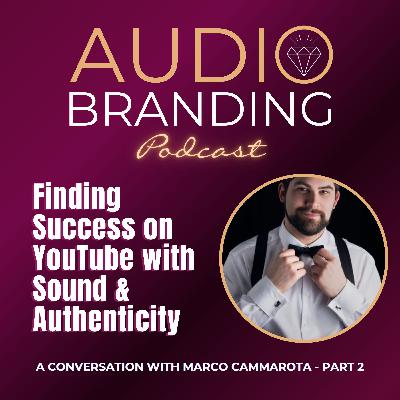
“Listen, I got unbelievably lucky with YouTube, and I don’t know why. I still really, I mean, I know why in theory, like, people have been like, well, ‘You provide XYZ,’ but I don’t know why I get to do this. Like, I know that I have certain qualities that lend themselves to my strengths, that lend themselves to this medium, but it’s completely and utterly luck. Putting out good videos, having a high-quality camera, a high-quality microphone, having a, you know, finding out what your skill set is that you can use. So, the thing is, I remember five years ago when I wasn’t even, or well, let’s say six years ago, I’d be like, they would be talking about a streamer that had a shtick. And I guess I accidentally fell back into my shtick, which was the opera singer, right?” – Marco Cammarota This episode is the second half of my conversation with voice actor and YouTube sensation Marco Cammarota as we discuss how the YouTube and Twitch algorithms can make or break a channel’s audience size, Marco’s voiceover work in such games as Metal Slug and Genshin Impact, and how a creative approach to sound, including silence, can have a dramatic impact on listeners. As always, if you have questions for my guest, you’re welcome to reach out through the links in the show notes. If you have questions for me, visit audiobrandingpodcast.com, where you’ll find a lot of ways to get in touch. Plus, subscribing to the newsletter will let you know when the new podcasts are available, along with other interesting bits of audio-related news. And if you’re getting some value from listening, the best ways to show your support are to share this podcast with a friend and leave an honest review. Both those things really help, and I’d love to feature your review on future podcasts. You can leave one either in written or in voice format from the podcast’s main page. I would so appreciate that. (0:00:00) - Navigating a Career in Content CreationMy conversation with Marco picks up with his frank advice to people looking to follow his winding career path. “I remember when people would be like, how do you get into voiceover? And I’d always be like ‘Don’t, don’t!’ How do you get into opera? ‘Don’t!’” We discuss how much of a role luck and the YouTube algorithm played in his success, and he does offer some tips to anyone looking to start their own channel. The topic turns to AI in sound, its growing prevalence in social media, and whether it can replace human video game compositions. “There was an instance where I was listening to some YouTube music on a playlist,” he recalls. “And I was like man, this, like this guy goes off. And then I looked, and it was actually AI, and I was like, oh. And so then the question became do I still listen to this or do I not care, or do I, like, turn it off? And I eventually decided to turn it off.”(0:15:25) - Exploring Video Game Music CommunityMarco tells us more about the community he’s built online with MarcoMeatball and his hopes for his fellow gamers and listeners. “The goal is to have it be a hub of video game music where,” he says, “if someone maybe doesn’t know something or likes something or doesn’t like something, they can come and hear a person who is just like them with a little bit of extra experience, or equal experience, or the person could actually have more experience than me and also offer their insight.” We also discuss how the channel led to a newfound appreciation for video game soundtracks as art, even compared to his childhood love of games. “I’ve learned about so many more pieces of music,” he adds, “like I had a deep, fundamental love for music and games, but I didn’t...


Download from Google Play

Download from App Store
 United States
Great episode, Jodi! This is something I never realized I've been "caught" by everywhere in life.