


 Claim Ownership
Womanhood & International Relations
Subscribed: 30Played: 292
Subscribe

© Natalia A. Bonilla Berrios
Description
Womanhood and International Relations is a weekly podcast created by Natalia A. Bonilla Berrios to explore the intersection of feminist theory from a personal to an international level.
199 Episodes
Reverse

Are digital masculinities being radicalized or commodified by social media platforms? How much of Technology-Facilitated Gender Based Violence is a result of human or machine amplified decisions? To what extent do algorithms impact our identities and the cultural or advocacy groups we choose to join, are unconsciously drawn into, or find ourselves being pitted against? In what ways has the evolution of the internet, apps, and social media platforms mined or eroded our offline human rights, civil rights and sovereignty?A new interview conducted in the Spanish language with Nicko Nogues, director of Instituto para el Desarrollo de las Masculinidades Anti-Hegemonicas.For the full C.A.R.A. research in the English language please visit: Paper: Relational Risk in Recommendation Systems: Evidence from a 45-day Instagram Field Study and Implications for EU Platform Oversight Listen to related episodes: 143. Roundtable: Countering Militarized Masculinities for Feminist Peace190. Dr. William T. Armaline on The Crisis of Human Rights in the Age of Global CapitalismRecommended links to this episode:Investigación C.A.R.A. Website Instituto para el Desarrollo de las Masculinidades Anti-Hegemónicas
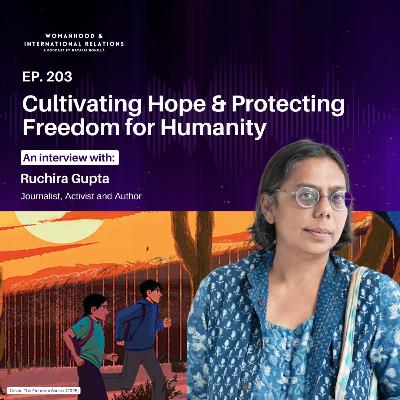
Why are hope, kindness, and freedom essential to safeguarding humanity’s future? And how can arts and storytelling serve as powerful tools for social justice and interfaith understanding?In this conversation with journalist, activist and bestselling author Ruchira Gupta, we explore the transformative power of storytelling to bridge divides surrounding interfaith relationships, migration, and systemic violence, central themes in her new novel The Freedom Seeker.We discussed how small acts of kindness can restore our shared humanity in a time when freedoms—of speech, movement, and the press—are increasingly under threat due to armed conflicts, authoritarianism, and the misuse of emerging technologies like AI.Together, we reflected on the role of advocacy through the arts and how both young and adult audiences can draw powerful life lessons from literature to inspire resilience and collective action from grassroots to policymaking levels.Join us in this exploration, follow us on LinkedIn and subscribe to our podcast newsletter community here.Recommended links to this episode:Ruchira Gupta’s Official WebsiteApne Aap Women WorldwideThe Freedom SeekerI kick and I fly Documentary: The Selling of Innocents

Are citizens evolving into fans or merely behaving like it? Does the worship of political figures, celebrities, pop culture or sports idols reflecting a deeper cultural shift in how people engage with democracy and its values?How does the creation and following of idols, and the emotional investment they evoke, affecting the mental health of individuals and collectives?Is the fixation on seemingly superficial cultural phenomenons, such as tv programming, famous celebs or child-like items like dolls mirroring back to us how unsafe and restrictive political discourse and freedom of speech have become?What are the economic ideologies running, advertently or not, behind these figures and the media narratives that sustain them?How and why do "the masses" willingly surrender so much of their power, effectively infantilizing themselves in the process?An interview with Kurt Warner, psychotherapist, LCSW, and author of the book “False Idols: How Diversion is Destroying Democracy”. Listen to related episodes:91. Dr. Paul Slovic & Dr. Scott Slovic on the Science Behind the Limits of Compassion165. Rachel Winny on the Rise of Disinformation & Conflict Escalation190. Dr. William T. Armaline on The Crisis of Human Rights in the Age of Global Capitalism192. Nicole Steward on Radical Self-Care for ChangemakersRecommended links to this episode:Kurt Warner Books Official WebsiteVictory in Every Fall: The Antaeus Approach to Overcome DisabilitiesFalse Idols: How Diversion is Destroying Democracy

Are feminist foreign policy models from the Global South being constrained by unequal power dynamics? To what extent must they conform their design and implementation to norms or expectations set by Global North states in order to be recognized as legitimate? Why some ffps in Latin America are falling for the allure of the “branding” because of a secure hegemonic bet that discourages deep and meaningful structural reforms? What can we learn from Sweden’s FFP model implementation in Bolivia? In what ways do decolonial feminist perspectives from Latin America expose the enduring legacies of colonialism and the presence of a double patriarchy that may shape the current and future adoption of feminist foreign policies in the region? Why does Brazil, under Lula da Silva’s Administration, serve as a compelling example of these tensions and contradictions?A new interview conducted in the Spanish language with Dr. Bruna Soares de Aguiar, Coordenadora de Projetos doObservatório de Política Externa Inclusiva in Brazil and author of the new book Política Externa Feminista como Branding Governista. Listen to related episodes: Ep. 9 Marissa Conway on How Feminist Foreign Policies is Transforming World AffairsEp. 47 Isabella Esquivel Ventura on Mexico's FFPEp. 130 Alice Ridge and Liz Gill-Atkinson on FFP Research in Australia and the Global SouthEp. 149. Kirthi Jayakumar on Anticolonialism in International RelationsEp. 189. María Paulina Rivera Chávez on How Mexico's FFP is Part of a Global ProjectRecommended links to this episode:OPEFI Official WebsitePolítica Externa Feminista como Branding GovernistaBruna Soares de Aguiar: LinkedIn profilePolicy Brief: Only a Label? The Dilemmas of Maintaining A Feminist Foreign Policy (Available in English, Portuguese and Spanish languages)Policy Brief: Feminist Development Policies and the Reform of Global Governance: Challenges and Opportunities (Available in English, Portuguese and Spanish languages)Politicas Externas Feministas en Perspectiva: Tendencias e DebatesSeminario de Politica Externa Feminista Inclusiva en Brasil 🌟Join our podcast newsletter community here.
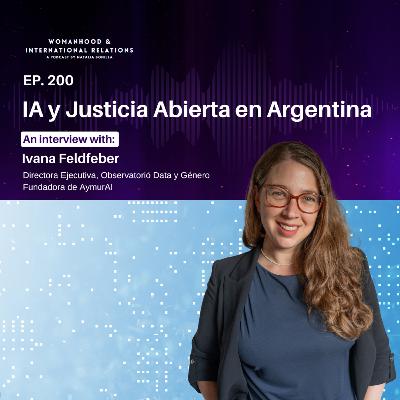
What challenges and opportunities does AI presents for States and Peoples? How can the data from our online and offline lives be coded and used to support or threaten our livelihoods? What are feminist perspectives to the responsible uses of AI? What social phenomenons caused the heavy reliance on AI and what can we expect or prepare for in the future?A new interview conducted in the Spanish language with Ivana Feldfeber, executive director of Observatorio Data Género and founder of the open justice software AymurAI.Listen to related episodes: 190. Dr. William T. Armaline on The Crisis of Human Rights in the Age of Global Capitalism196. Rebecca Irby on Rethinking Nuclear Deterrence & Youth Action for PeaceRecommended links to this episode:Observatorio Data GéneroAymurAI SoftwareDoing the Feminist Work in AI: Reflections from an AI Project in Latin America Perspectivas Feministas de la Inteligencia Artificial¿La IA es realmente neutral? Una charla sobre poder, género y regulación en América LatinaWebinar “Justicia abierta: un enfoque desde los datos y la Transparencia” a cargo de Ivana Feldfeber

Comments

Download from Google Play

Download from App Store
 United States