


 Claim Ownership
BAJ Podcast
Subscribed: 15Played: 245
Subscribe

© Copyright British Academy of Jewellery 2020 All rights reserved.
Description
Discussion, analysis and comment from the British Academy of Jewellery on the latest industry issues.
74 Episodes
Reverse
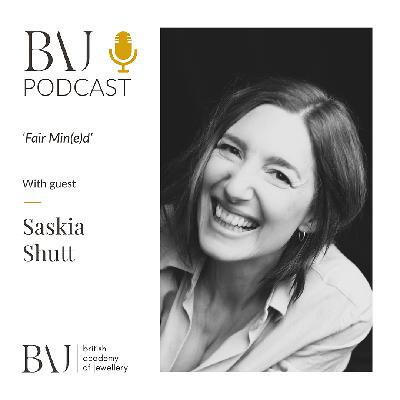
In this episode of the BAJ Podcast, Sofie Boons speaks with jeweller and ethical‑making advocate Saskia Shutt. Rooted in a practice shaped by transparency and responsibility, Saskia is a Fairmined‑licensed maker whose work directly supports artisanal mining communities and promotes traceable, positive sourcing. Beyond her own bench, she is an active contributor to groups such as Fair Luxury, Truly Precious, Ethical Metalsmiths, and organisations including Diamonds for Peace, where she helps drive conversations around fairness, accountability, and sustainability within the industry.
Together, Sofie and Saskia explore what ethical jewellery looks like in practice, from sourcing Fairmined gold and navigating relationships with mining communities, engaging in policy discussions, to participating in networks pushing for systemic change.
This episode offers a thoughtful and grounded look at the evolving landscape of ethical jewellery, and the role individual makers can play in shaping a more transparent future for the craft. Tune in to hear Saskia’s story, her experiences, and the ideas currently shaping her work.
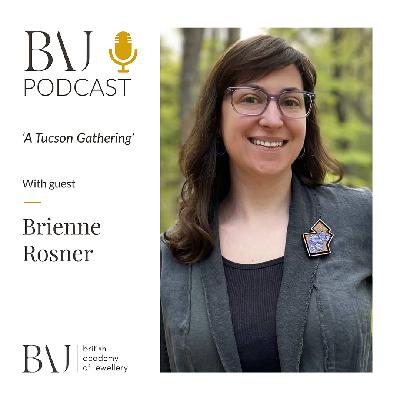
In this episode, recorded on location in Tucson, Arizona, we explore the vibrant world of the Tucson Gem and Mineral Showcase. Joined by Brienne Rosner, a leading voice within the Society of North American Goldsmiths (SNAG), we discuss the organisation’s mission, its commitment to supporting contemporary jewellery practice, and its long-standing presence at this internationally renowned event.
We delve into Brienne’s own creative background, the relationship between jewellery and display in her work, and what visitors can expect from SNAG @ Tucson 2026, including the exhibition Mineral Minded.
Join us as we reflect on community, connection, and the ways makers continue to bridge distances, whether in person or online, at a time when travel and sustainability shape how we come together.

Inspiration often comes from the world around us. But what if your context is the Antarctic, one of the most remote and fragile ecosystems on Earth? In this episode of the BAJ Podcast, Sofie Boons speaks with Dr Katrin Linse, marine biologist with the British Antarctic Survey and jewellery maker whose work bridges science, art, and responsibility. Katrin shares how her experiences studying ocean biodiversity informs her creative practice, and how jewellery can be a catalyst for awareness and change. Together, they explore the pressing threats to our oceans and the power of multidisciplinary approaches to tackle global challenges. Listen in to a conversation that invites reflection on our relationship with nature and shows how creativity can inspire stewardship, even from the farthest reaches of the planet.
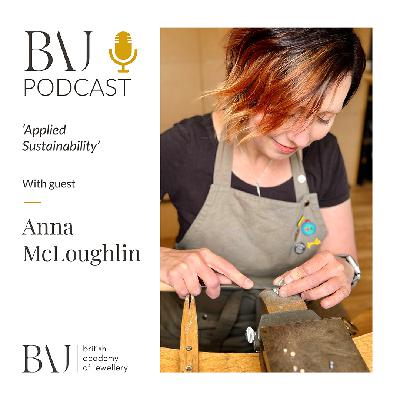
In this episode, Sofie speaks with Anna McLoughlin, a jewellery designer and maker who creates sculptural, ethical pieces from her off-grid Eco Studio.
With a background in teaching and a deep respect for traditional craftsmanship, Anna’s practice is grounded in sustainability, storytelling, and the visible mark of the maker’s hand. Her jewellery, described as miniature wearable sculptures, often incorporates heirloom materials and is crafted using low-impact, hand-powered techniques.
As a certified B Corp, Anna is dedicated to transparency and ethical sourcing, proving that beauty and responsibility can coexist.
Together, Sofie and Anna explore the meaning of integrity in contemporary jewellery, the quiet power of making by hand, and how creativity can nurture both people and planet.
Tune in for practical tips and a thoughtful conversation with Anna, whose jewellery tells stories, honors the planet, and inspires meaningful change.
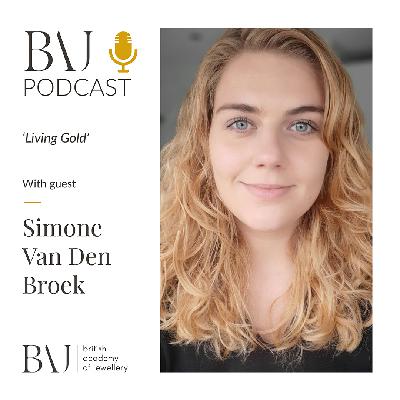
In this episode, Sofie speaks with Simone Van Den Broek, a lecturer and researcher whose pioneering work explores the potential of mycelium, a living organism more commonly associated with fungi, as a material for jewellery. Through her project Living Gold, Simone challenges conventional notions of luxury and permanence, inviting us to imagine a future where materials are grown.
Together, they discuss Simone’s interdisciplinary background, her role within the Situated Art, Design and Technology research group at Avans University of Applied Sciences, and the mindset shift required to collaborate with living materials. From the benefits of bio-based design to the importance of storytelling in sustainable practice, this conversation offers a compelling glimpse into jewellery’s regenerative potential.
Tune in to discover how Simone’s research redefines beauty through ecological harmony, and why growing our own materials might be the next radical step in sustainable adornment.
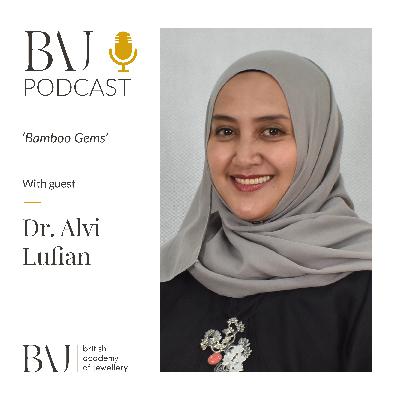
In this episode, Sofie Boons speaks with Dr Alvi Lufiani, jewellery lecturer and researcher at the Indonesia Institute of the Arts in Yogyakarta. Together, they discuss the potential of bamboo as a sustainable material for jewellery, its cultural significance in Southeast Asia, and the role of craft in shaping a more environmentally conscious industry. Discover how traditional practices and innovative thinking can help redefine what sustainable jewellery could look like.

In this episode of the BAJ Podcast, host Dr. Sofie Boons is joined by designer, maker, and content marketer Rebecca Maddock to explore the state of sustainability in the jewellery industry.
As a member of the Fair Luxury collective and co-organiser of the recent ‘State of Sustainability in the Jewellery Industry’ conference, Rebecca shares insights into the challenges of greenwashing, the importance of transparency, and the role of storytelling in shaping a more ethical future.
Tune in for a thoughtful conversation on how jewellers can contribute to meaningful change, from grassroots practices to industry-wide initiatives.

What does sustainability really mean in jewellery and why does it matter now more than ever? In this episode of the BAJ Podcast, we speak with Vivien Johnston Glass, a trailblazer in ethical sourcing and expert in responsible jewellery practices. With two decades of global experience, Vivien shares her journey from launching an ethical brand to consulting across continents, helping businesses rethink how they source precious materials.
From the challenges of greenwashing to the promise of local gold mining in the UK, Vivien offers a fresh perspective on how sustainability can drive innovation, transparency, and positive change. A conversation packed with insights, practical advice, and a powerful reminder that every choice we make can shape a better future for the industry, and the planet. Tune in to discover how you can be part of the movement toward a more sustainable jewellery world.

In this episode of the BAJ Podcast, we speak to Rob Bates, award-winning journalist and News Director at JCK, to explore the ever-evolving world of jewellery—from the rise of lab-grown diamonds and the fall of De Beers’ Lightbox, to the challenges of global news reporting and the future of journalism in the age of AI.
With over 30 years of experience covering the industry, Rob shares fascinating insights into the trends shaping jewellery today and tomorrow, while also revealing how his passion for storytelling extends into the world of diamond-themed mystery novels.
Tune in for a compelling conversation at the intersection of fact, fiction, and the future of sparkle.
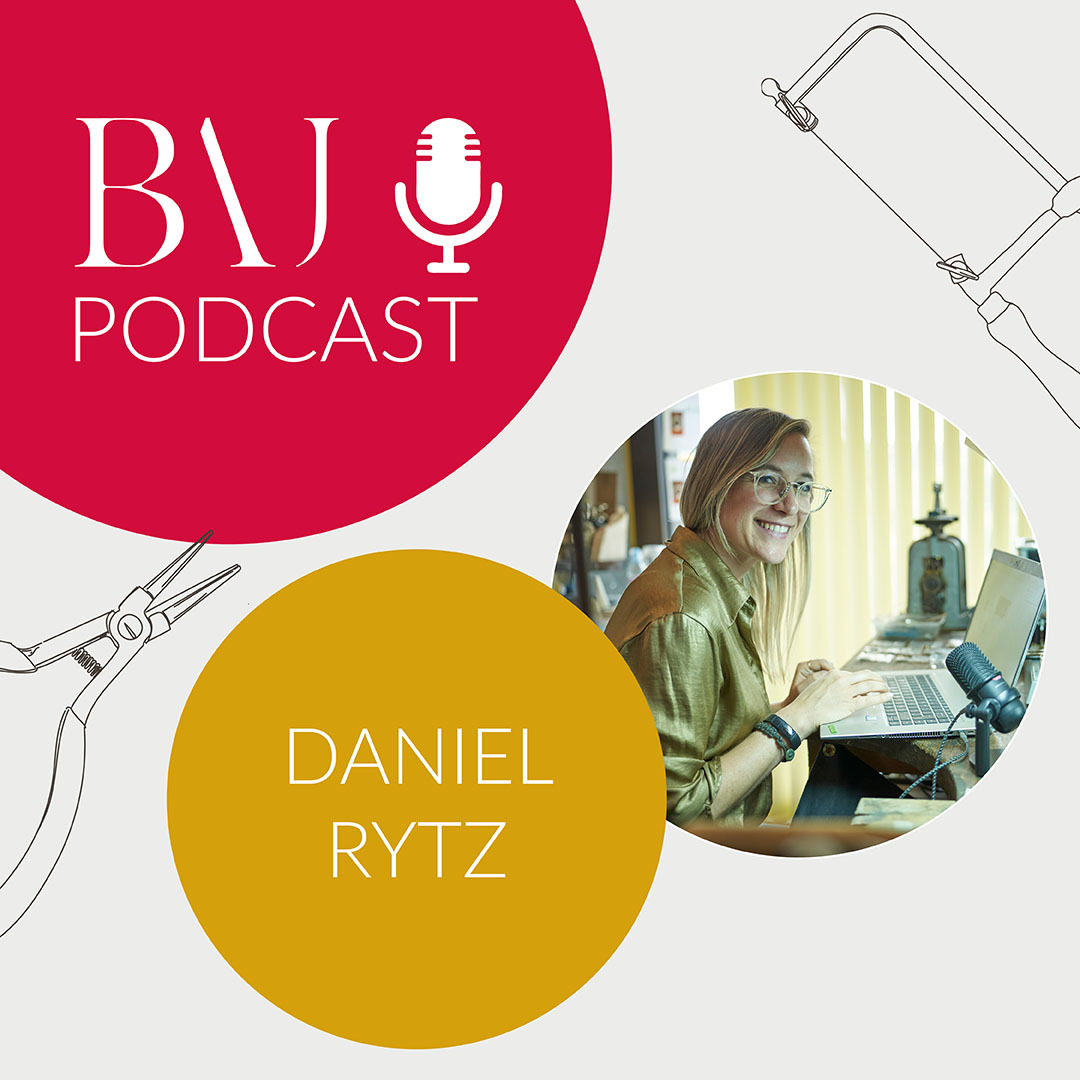
Since 2020 Sofie Boons has been collaborating with a physicist and crystal grower as part of her, recently completed, doctoral research. Her collaborator, Daniel Rytz, has been active in the field of crystals for optical, piezoelectric and other applications since 1977. In 2012, together with his partner Corinne Siegrist, he founded BREVALOR as a platform to develop crystals with novel properties for ornamental applications. One of the innovations he has been working on, are phosphorescent crystals. The materials BRG and BRB have similar properties to classical gemstones: their hardness allows them to be shaped and facetted, and they have the optical appearance of gems. This light-emitting gemstone material, capable of storing energy and generating its own light, is taking the quest to optimise light reflection in gemstones to a whole new dimension. In this episode, Sofie and Daniel discuss his career, the subject of crystal growth and his thoughts on the future of these and other novel materials for the jewellery industry.
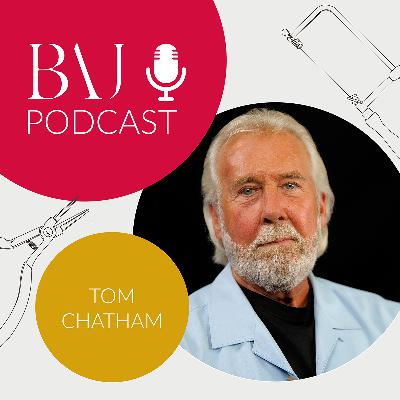
Tom Chatham is currently chairman of the board at Chatham Created Gems & Diamonds, Inc. Previously, he was CEO of Chatham Created Gems & Diamonds, Inc. The firm's accomplishments include the first successful production of emerald (1935), ruby (1959) sapphires of many colors (1970's) alexandrite (1972) and Lab Grown diamond (1996). Tom Chatham has been active in the gem production area for over 55 years and has been a frequent speaker world wide on the subject of gemstone and diamond production. Tom Chatham is also an author, releasing the book "The Chatham Legacy" in 2023. Chatham Inc sells to every level of the gem business, world wide, on the wholesale level. Today, principle aim is at independent jewelry outlets numbering in the thousands of outlets
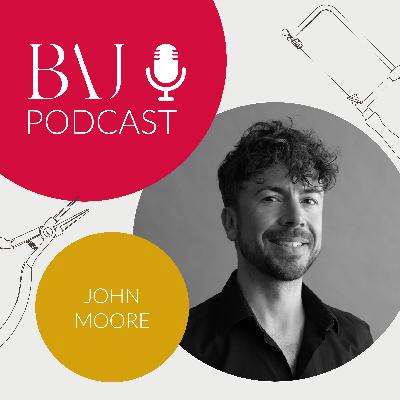
Our bodily presence in the world is likely of ever greater interest to artists, designers and makers in our increasingly digitally navigated context. What it feels like to engage with the physical world and how this influences our understanding of it has been the subject of investigation in theories such as phenomenology dating back to the early 20th century. Of continued relevance today, as designers we ask ourselves what it feels like to wear jewellery, how does it respond or relate to the movements of our body, and can jewellery be in artistic dialogue with these motions, highlighting the human body and its interactions with the world? This approach can encourage us to create jewellery that resonates on a sensory and emotional level, making the experience of wearing the piece as significant as the piece itself. A jewellery artist who has been fascinated by these contemplations, and who has collaborated with choreographers, dancers, musicians, filmmakers and scientists to investigate, create and capture movement narratives, is John Moore. His work challenges traditional boundaries, positioning the wearer as an active participant in the jewellery’s expression. Join us to find out more about his work and what it means to design for movement.
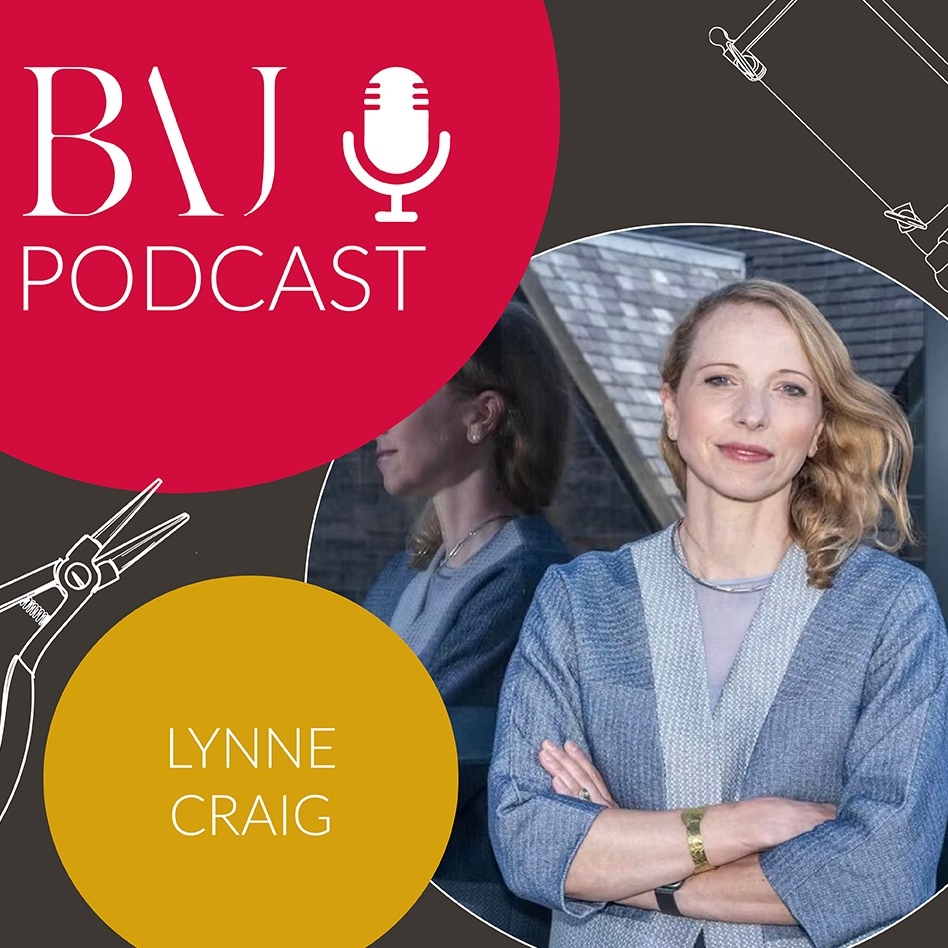
A lot of jewellery designers are no stranger to shifting between the digital and physical both for the creation of work and the communication of work. There are companies and researchers/practitioners that question and advance these practices, considering craft thinking in the context of digital experience and asking what it means to be human in an increasingly layered physical and digital world. Lynne Craig is an innnovation director, academic and founder of computational adornment. Her work, research and practice connects design, technology, education and business development; exploring the frontiers of emergent technologies and cultural change. To talk to me today about her work and what it means to be a digitally conscious maker/thinker today
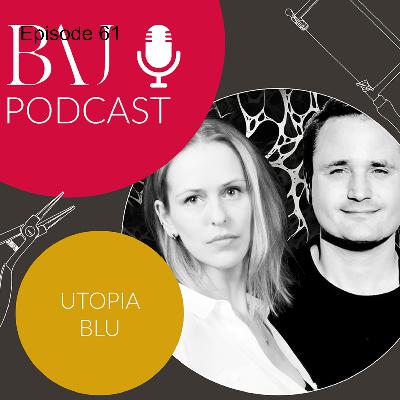
Tiia Vahula and Philip Wilck, founders of Utopia Blu aim to embrace the boundless potential of human imagination, whilst striving for a future that is not only visually appealing but also sustainable and meaningful. Breaking disciplinary boundaries, the couple look to technology to enable creative innovations that strike the right balance between culture and nature. For this podcast episode we review how the self-proclaimed formalists have been nourishing an ability to envision sensitive possibilities, finding inspiration in nature whilst advocating for progress, by exploring emerging technologies, such as artificial intelligence, augmented reality, and virtual reality, to create transformative experiences that blend seamlessly with the physical world.

Sustainable practice can be seen from a range of perspectives, including the idea of Urban Mining materials, rather than using virgin materials. What we choose as materials to work from has a big impact on our practice. A researcher who has taken the practice of urban mining one step further, and has been working in the Bio-Design field for quite some time is Marie Melcore. With her work she is keen to transcend disciplinary boundaries in order to address common sustainability issues and offer out of the box design and ideas proposals that can contribute to solving the big problems we face. In this episode she tells us more about her career, practice and the materials she’s been locating, questioning and transforming as part of her projects.

When considering alternative approaches to materials and making, you may come across Bio-design, which can be understood as a means to incorporate the inherent life-conducive principles of biological living systems into the design and making process - and this in order to move towards a more sustainable and caring future. If we want to become more empathic towards our environment, so we can co-create, collaborate with non-humans whilst constructing and most importantly improving our context, wouldn’t it be important we gain an understanding of these living systems first? What does the world feel like to a tree? And can jewellery provide an ecological service to our environment? Someone who has asked themselves these very questions, and many more questions in relation to the topic of bio-design, is researcher, designer and artist Yuning Chen. Join us in this episode, where she tells us more about her career, practice and the materials she’s been investigating as part of her projects.
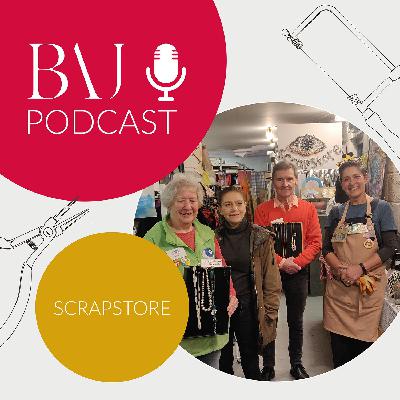
Hidden behind a colourful facade on a small estate in South London, you can find a treasure trove of carefully reviewed, sorted and organised ‘waste’ materials. The Work and Play Scrapstore, and its team of passionate volunteers, enable artists, makers and anyone with any use for materials, to come and be inspired. From discarded famous costumes to offcuts of wood, textiles, plastics and much, much more, the Work and Play Scrapstore is a place where anyone with an interest in materials and making could spend hours exploring. Tune in to hear more about the concept of the store, the materials and objects it holds, and how anyone can engage with and support the cause.

Gold, as we know it best, is not really a material that gets distributed fairly, or even gets worked on in cooperation. But there is archaeological evidence for spectacular goldwork in stateless societies providing compelling proof that complex technologies could be sustained in the absence of coercive powers. With cooperation being a key to tackling some of our greatest global concerns, and fair distribution of materials such as gold and access to luxurious objects an ethical ambition, this should pique our interest. This month we speak to a researcher who has been tracing our fascinating relationship with gold and other luxurious materials in various places and across segments of time. Professor Marcos Martinón-Torres is the Pitt-Rivers Professor of Archaeological Science at the University of Cambridge and researches the archaeology of alchemy and metals, investigating different forms of craft organisation, knowledge transmission, innovation, and value systems. We speak to him about his research, and how looking back can maybe inspire moving forward.

When thinking about materials and objects as a maker, it is important to consider the impact these materials and objects have. In a first instance that can involve considering the life cycle of materials, and constructing objects well so they are cared for and passed on rather than discarded. But what does it mean to create objects that get ‘passed on’? These objects could also be referred to as ‘kinship objects’. A thought that crossed my mind upon finding a small book that packs a punch titled ‘The Material Kinship Reader’ edited by Kris Dittel and Clementine Edwards. What role do materials and objects play in the organisation of social relationships? What does it mean to possess materials and objects? To discuss their work and ponder these interesting and necessary topics, we will delve into the world of artist Clementine Edwards.
In a world full of objects, and as makers of objects, the agency of objects and materials is fascinating. Why do certain objects become valuable to us, and others not? Today sustainable making is a key consideration, and waste poses a real sustainability challenge. Are there opportunities in waste? Can we re-consider waste sensitively, incorporating it into our practices as tools, materials and actors?
A maker who has been fascinated with the temporality of materials is Katy Gillam-hull. A maker of objects and jewellery who reflects upon found and archival materials and objects and their capacity for encounter and for accumulating narrative through time. In this episode we talk about her views on waste, ponder materials and their stories, and delve into her practice, where waste is not wasted.

Comments

Download from Google Play

Download from App Store
 United States