


 Claim Ownership
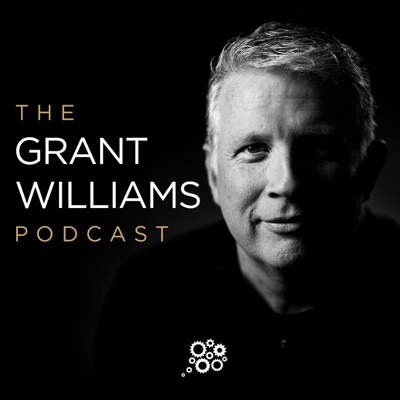
The Grant Williams Podcast
Subscribed: 1,492Played: 75,398
Subscribe

© Copyright 2021 Grant Williams. All rights reserved.
Description
Join Grant Williams and his guests for a series of random walks around the fringes of finance and gain a better understanding of how the economic sands are shifting beneath our feet. https://www.grant-williams.com
233 Episodes
Reverse
Marvin Barth of Thematic Markets returns to The Grant Williams Podcast for a conversation I think is particularly important—not because his recent forecast for the US midterm elections proved correct, but precisely because it didn’t. Before the election, Marvin laid out a carefully reasoned argument that conventional polling was missing a significant population of low-trust, politically disengaged voters who had gravitated towards Donald Trump. As it turned out, he was right about the polling errors but wrong about where those voters would ultimately place their support. Rather than quietly moving on, Marvin joins me to examine exactly what he missed, why those voters appear to have turned against the administration and what the result tells us about the increasingly fluid nature of American politics. We explore the apparent disconnect between voters’ support for certain policies and their rejection of the politicians advocating them, the implications for both parties, and why the Iran war may have played a decisive role in changing the political landscape. From there, we turn to the economic consequences of the election, including fiscal policy, the Federal Reserve, real interest rates and the potential for slower AI-related investment to weigh on equity markets. Above all, this is a discussion about the discipline of forecasting: the importance of identifying where your assumptions failed, separating sound reasoning from an incorrect conclusion, and being willing to change your mind when the evidence demands it.
Every episode of the Grant Williams podcast, including This Week In Doom, The End Game, The Super Terrific Happy Hour, The Narrative Game, Kaos Theory, Shifts Happen and The Hundred Year Pivot, is available to Copper and Silver Tier subscribers at my website www.Grant-Williams.com.
Copper Tier subscribers get access to all podcasts, while members of the Silver Tier get both the podcasts and my monthly newsletter, Things That Make You Go Hmmm…
In this episode of The Grant Williams Podcast, I’m joined by returning guest, forensic accountant and investment analyst Steve Clapham for a wide-ranging conversation about what happens when markets built on cheap money, leverage and compelling narratives are forced to confront a rather less forgiving financial reality. We begin with the normalisation of interest rates, the mounting cost of servicing government debt and the growing strains on US finances before turning to private equity, where Steve argues that much of the industry’s extraordinary historic performance came not from operational brilliance but from falling rates, expanding multiples and leverage—a combination that looks very different when financing costs rise and exits become harder. From there, we examine the economics of AI, including the uncomfortable gap between soaring GPU and data-centre costs and falling token prices, the valuations being attached to companies such as OpenAI and Anthropic, and some intriguing features of CoreWeave’s accounts. Steve also explains why proposed changes to SEC reporting requirements could make forensic analysis—and the detection of fraud—considerably more difficult. Finally, we discuss his plans for 6040 Publishing and why, after years in which a good story could carry almost anything, markets may once again be entering an environment where cash flows, balance sheets and valuation begin to matter.
Every episode of the Grant Williams podcast, including This Week In Doom, The End Game, The Super Terrific Happy Hour, The Narrative Game, Kaos Theory, Shifts Happen and The Hundred Year Pivot, is available to Copper and Silver Tier subscribers at my website www.Grant-Williams.com.
Copper Tier subscribers get access to all podcasts, while members of the Silver Tier get both the podcasts and my monthly newsletter, Things That Make You Go Hmmm…
Marvin Barth of Thematic Markets returns for a fascinating conversation about the approaching US midterm elections and why he believes the consensus view of what happens in November may be resting on some very shaky assumptions. While conventional polling and political analysis point towards significant Democratic gains, Marvin has developed a very different framework based on the possibility that pollsters are systematically failing to capture a growing population of low-trust voters who are reluctant to participate in surveys but nevertheless turn out when populist candidates or issues are on the ballot. We explore the evidence behind that thesis, the limitations of polling data, and Marvin’s Bayesian-inspired approach to updating his views as new information emerges. From there, we discuss what an unexpectedly strong Republican performance might mean for Donald Trump’s remaining time in office, his Jacksonian political instincts, the Iran conflict and the possibility of meaningful fiscal reform. Along the way, Marvin explains why populism is better understood as a response to political disenfranchisement than as a conventional left-right ideology, and why the distinction between measurable risk and genuine uncertainty is particularly important when markets attempt to price events for which historical probabilities may be of little use. It’s a conversation less about predicting an election than about recognising how easily a widely accepted narrative can conceal the variables that ultimately determine what happens next.
Every episode of the Grant Williams podcast, including This Week In Doom, The End Game, The Super Terrific Happy Hour, The Narrative Game, Kaos Theory, Shifts Happen and The Hundred Year Pivot, is available to Copper and Silver Tier subscribers at my website www.Grant-Williams.com.
Copper Tier subscribers get access to all podcasts, while members of the Silver Tier get both the podcasts and my monthly newsletter, Things That Make You Go Hmmm…
In the latest episode of Hundred Year Pivot, Demetri Kofinas and I welcome Philipp Carlsson-Szlezak, chief economist at Boston Consulting Group, for a spirited conversation about one of the most persistent assumptions of our time: that Gen Z and millennials have been dealt a substantially worse economic hand than the generations that preceded them. Philipp’s research suggests the data tells a rather different story. Comparing generations at the same age and adjusting for inflation, he argues that younger Americans generally enjoy higher incomes and stronger balance sheets, but that the way they build their lives and wealth has changed significantly. We explore delayed careers, expensive cities, housing affordability, the shift from property towards equities and the extraordinary effect social media has had on perceptions of success, before Demetri and I push back on some of Philipp’s conclusions around parental support, childcare costs, inequality and the emotional consequences of feeling financially excluded for decades. From there, the conversation broadens into the K-shaped economy, financial nihilism and the question of whether slower progress at the bottom is being mistaken for outright decline. Finally, Philipp offers a cautiously optimistic possibility: that Gen Z may prove to have been the guinea-pig generation for smartphones and social media—and that society is already beginning to understand, and respond to, the damage they have caused.
Every episode of the Grant Williams podcast, including This Week In Doom, The End Game, The Super Terrific Happy Hour, The Narrative Game, Kaos Theory, Shifts Happen and The Hundred Year Pivot, is available to Copper and Silver Tier subscribers at my website www.Grant-Williams.com.
Copper Tier subscribers get access to all podcasts, while members of the Silver Tier get both the podcasts and my monthly newsletter, Things That Make You Go Hmmm…
Ian Cassel, founder of MicroCapClub and author of Stock Picker, joins me for a fascinating conversation about investing, conviction and the advantages that can still exist for individuals willing to venture into the neglected corners of public markets. Ian’s journey began with a $20,000 family gift that he turned into $120,000 during the dot-com bubble before promptly losing 90% of it when the bubble burst—an experience which, rather than driving him away from markets, made him determined to understand what he’d got wrong. We talk about the chance investment in XM Satellite Radio that introduced him to the power of meeting management teams face-to-face, why micro-caps offer individual investors opportunities that simply aren’t available to large institutions, and the crucial difference between believing in an investment and developing genuine conviction through doing more work than everybody else. Ian also talks candidly about the things that have “chased” him throughout his life—from proving doubters wrong when he was younger to family, legacy and the growing awareness of the scarcity of time—and the lessons his mentor Skip taught him about concentration, communication and earning the attention of people from whom you want to learn. Along the way, we discuss Monster Beverage, XPEL, insider selling and some decidedly unconventional due diligence, as Ian explains why the greatest investment opportunities often look anything but obvious at the beginning—and why the beautiful long-term charts we admire afterwards conceal just how difficult those companies were to own while the story was actually unfolding.
Every episode of the Grant Williams podcast, including This Week In Doom, The End Game, The Super Terrific Happy Hour, The Narrative Game, Kaos Theory, Shifts Happen and The Hundred Year Pivot, is available to Copper and Silver Tier subscribers at my website www.Grant-Williams.com.
Copper Tier subscribers get access to all podcasts, while members of the Silver Tier get both the podcasts and my monthly newsletter, Things That Make You Go Hmmm…

Comments

Download from Google Play

Download from App Store
 United States