


 Claim Ownership
Software Development, Finance and AI
Subscribed: 34Played: 333
Subscribe

© Copyright 2025 All rights reserved.
Description
We’ve been doing Software Development and Architecture work for a while at Snowpal, and currently have several B2B and B2C products in production. In this podcast, we’ll share our experiences on a regular basis to help you & your teams build great software. The topics covered in this podcast will include Product Management, Project Management, Architecture, Development, Deployment, Security, Release Management, Sales, Marketing, Advertising, and just about everything else an ambitious, fast growing startup based out of the US is likely to be involved in. So, join us. Let’s become better!
468 Episodes
Reverse

In this conversation, Krish Palaniappan, a product-focused technologist and podcast host, sits down with Jose Duarte (Founder of DockPops) to explore how AI-assisted development is reshaping software creation. Jose, who leads performance marketing at Pangea Money Transfer, brings a unique perspective as a non-traditional engineer who built internal tools using AI without formal coding expertise. Together, they unpack the technical workflows, architectural decisions, and mindset shifts required to move from manual processes to scalable, API-driven systems in today’s AI-first development landscape.

In this episode of the Snowpal Podcast, Krish Palaniappan sits down with Neil Winward, CEO of Dakota Ridge Capital and a seasoned advisor and investor in clean energy with over three decades of experience in structured and project finance (AI Newsletter). The conversation explores the rapidly growing intersection of artificial intelligence and energy infrastructure, unpacking how the surge in AI-driven data centers is creating unprecedented demand for power. Neil shares insights into clean energy financing, the challenges of grid infrastructure, and why the future of AI is deeply tied to the ability to generate, finance, and deliver energy at scale.

Artificial intelligence is often discussed through visible products such as chatbots, copilots, or autonomous systems. However, the AI economy is built on a deeper industrial stack. NVIDIA CEO Jensen Huang described this structure as “AI’s Five-Layer Cake,” where multiple industries combine to power modern AI systems.
The five layers are:
Energy → Chips → Infrastructure → Models → Applications

In this episode, Charles Craggett, Marketing Automation Specialist at Become The Authority, discusses how automation and AI are transforming sales and marketing for trades businesses like roofing and plumbing. He shares insights on building systems that generate leads, improve customer engagement, and increase conversions, all while maintaining control and ownership of data.

In this episode of the Snowpal Podcast, Krish hosts Gaurav Verma, Chief Marketing Officer at Kanerika, for a conversation about scaling early-stage technology companies. Their discussion explores how startups can build effective inbound marketing engines with limited budgets, leverage AI to streamline marketing workflows, and distribute content across modern platforms. They also examine the shift from traditional SEO to broader search strategies, the evolving future of consulting in the AI era, and the skills professionals need to succeed in a rapidly changing technology landscape.

In this conversation, Krish speaks with Farah Farid Kazani, Director of PR at Rosarium Collective, about her journey from India to the United States and her path into entrepreneurship and public relations. They discuss early business experiences, career transitions, and the growing importance of personal branding, visibility, and authentic storytelling for founders and professionals looking to build influence and meaningful connections in today’s digital world.

Krish Palaniappan opened the conversation by framing a reality many engineering founders quietly experience: building great software no longer guarantees discovery. As a product-focused technologist, he described how teams obsess over features, architecture, and scalability—only to realize after launch that visibility is an entirely different discipline. His questions weren’t theoretical; they came from lived experience. Why doesn’t technically superior software automatically surface in search? When did marketing become both art and science? And at what point should engineering teams start thinking about discoverability instead of treating it as an afterthought?
Jimi Gibson, VP of Brand Communications at Thrive Agency, responded from the vantage point of two decades in digital marketing, explaining that the rules of visibility have fundamentally shifted. Traditional SEO, he noted, focused on ranking pages, but the AI era evaluates trust, authority, and structured answers. Businesses are no longer competing just for keywords; they are competing to become the verified entity an AI system chooses to cite. Throughout the discussion, Jimi unpacked how Answer Engine Optimization, structured content, and visible expertise are redefining how companies get found—and why engineering-led organizations must adapt sooner rather than later.
With increasing layoffs and the rapid rise of AI-assisted development, more professionals are considering entrepreneurship—especially in software. While AI tools have empowered non-engineering founders to build more independently than ever before, many still turn to managed services firms or external developers to bring their ideas to life.
If you’re planning to outsource software development—whether for a mobile app, web platform, backend system, or API—this guide outlines the critical considerations to help you avoid costly mistakes and reduce risk.
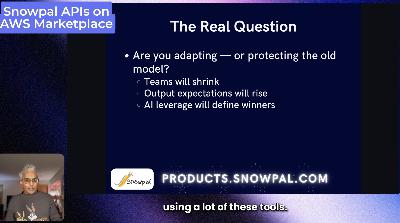
Artificial Intelligence is no longer a future possibility—it is actively reshaping industries in real time. Conversations with founders, engineers, and product leaders reveal a consistent theme: AI is not simply enhancing workflows; it is redefining how work gets done. The next 6–12 months are likely to create lasting structural changes across software development, hiring, infrastructure, and business models.

Artificial intelligence is not merely influencing cybersecurity — it is redefining it. What was once a battle of firewalls and antivirus software has become an intelligence war between automated defenders and increasingly automated attackers. As discussed in the Snowpal podcast conversation with Alex Lanstein, CTO of StrikeReady , the landscape has evolved from spam botnets and early cybercrime to highly targeted, state-sponsored, and supply-chain-level attacks. Today, AI accelerates both sides of the battlefield.

In a recent episode of the Snowpal Podcast, Krish sat down with Al Schuster, Co-Founder of Sample Finder and President of Polaris Brand Promotions, to discuss a timely and pressing topic: using experiential marketing to save the retail industry . Krish, a product leader and technology entrepreneur, guided the conversation through retail disruption, digital transformation, and the future of in-store engagement. Al brought firsthand industry insight from nearly a decade of building experiential brand activations across brick-and-mortar environments. Together, they explored how technology and human-centered experiences can coexist to reshape the future of retail.

With Nvidia set to report earnings shortly, investor anticipation is running high. The company sits at the center of the AI infrastructure boom, and expectations for another “blowout” quarter are widespread. But with the stock already rallying into earnings, the key question becomes: is the good news already priced in?

In this episode, April Palmer (Instagram: @hotmessboss) discusses her expertise in cloud cost containment and her role as a fractional chief growth officer. She emphasizes the importance of balancing engineering speed with cost management, the challenges of communication between finance and engineering teams, and the impact of AI on business growth. April shares insights on vendor lock-in, multi-cloud strategies, and the necessity of understanding market opportunities. She also provides valuable advice for startups and entrepreneurs, highlighting the need for clear communication and the importance of slowing down to ensure sustainable growth.

In this conversation, Chris Pearcey, founder of Decisio, explains that his mission is to restore decision-making power to users overwhelmed by choice . In an environment where recommendation engines increasingly optimize for platform revenue rather than user clarity, Decisio attempts to formalize explicit preference capture through structured interaction.

In this conversation, Krish Palaniappan and Logan Kelly, CEO of Waxell AI, discuss the evolving landscape of AI agents, focusing on the importance of governance and orchestration in managing these technologies. They explore the challenges and risks associated with deploying AI agents in production, the onboarding process for governance platforms, and the technological advancements that are shaping the future of enterprise software. The discussion highlights the need for effective governance policies to mitigate risks and ensure safe operations of AI agents in various business contexts.

In this episode, Krish interviews Benjamin Stover, Chief Commercial Officer at AI Med Consult. They discuss the transformative role of AI in patient engagement, the importance of building AI products that deliver real business value, and the differences between generalist and specialist AI. Benjamin shares insights on how AI accelerates software development, the changing landscape of consulting, and the evolving composition of engineering teams. The conversation also touches on the balance between AI and human creativity, emphasizing the need for critical thinking in an increasingly automated world.

In this episode, Robby Cobbs, CEO of TechMySchool and Tech Plan Genie, discusses the transformative role of AI in education, the challenges faced by modern educational systems, and the importance of soft skills. Krish & Robby explore the evolving landscape of college education, parental guidance, and the cultural perspectives on learning. Robby shares insights from his experiences in education and emphasizes the need for adaptability in an ever-changing world.
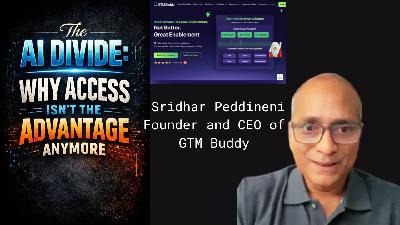
Sreedhar brings deep experience building and scaling B2B technology companies and offers a grounded, operator’s perspective on enterprise AI adoption. The discussion explores where AI is truly creating leverage inside organizations, why access to AI tools is no longer a competitive advantage, and how leaders, engineers, and GTM teams must rethink workflows, skills, and execution to stay ahead.

In a fast-paced follow-up episode of the Snowpal Podcast, host Krish Palaniappan sits down again with Sai Dhanak, CEO and co-founder of Deduction, for a refreshingly human conversation. Unlike their previous deep dive into product and technology, this discussion focuses on identity, immigration, risk, and what it really means to pursue ambition in America.

In this episode, Krish speaks with Sai Dhanak, founder of Deduction, an AI-driven tax platform aimed at simplifying tax preparation for consumers. They discuss the challenges faced by traditional tax preparers, the innovative use of AI in the tax industry, and the importance of user experience in financial services. Sai shares insights on the technology stack behind Deduction, the evolving dynamics of software development teams, and the future of accounting in a rapidly changing landscape.


Download from Google Play

Download from App Store
 United States
This is fantastic! Sharing your real-world experience across such diverse topics is incredibly valuable for startups and teams aiming to grow. Excited to learn from Snowpal's journey and insights.Click here to learn more-https://www.decipherzone.com
We've come across this ordeal when we tried to scale up our business. Because we tried to complete all tasks by ourselves, we failed. That was a stupid thing, I know. Now we use https://www.n-ix.com/offshore-development-services/ and never try to squeeze an octagon into a cylinder. All we need to do is just trust our software engineering tasks to professionals.
So as I know that https://uitop.design/ is a top-tier service for businesses looking to elevate their digital presence. I used them for a web project, and their attention to detail was impressive. They specialize in UI/UX design and truly understand user-centric solutions. They listen to your needs and provide creative, yet functional, designs. Highly recommend!
We https://calistu.com/ help businesses grow by delivering effective and customized Software, Network, and Marketing solutions. Together, we can create measurable value and drive sustainable growth all the way through the great journey of transforming your business.
https://calistu.com/ We help businesses grow by delivering effective and customized Software, Network, and Marketing solutions. Together, we can create measurable value and drive sustainable growth all the way through the great journey of transforming your business.
for example, anyone can create their own website using web page design templates https://www.templatemonster.com/website-templates.php . One of the biases that surrounds site templates is the belief that all template sites are the same. In fact, this is far from the case. There are dozens and hundreds of different templates, among which you can find a suitable option for a website of any subject.
you don't have to be an advanced webmaster to take full advantage of web design
if your business needs to develop business solutions then you need to contact the ruby on rails agency https://jetruby.com/ruby-on-rails-development-company/ . JetRuby Agency employs excellent specialists who, using innovative technologies, create effective solutions.