


 Claim Ownership
Infectious Historians
Subscribed: 70Played: 1,828
Subscribe

© InfectiousHistorians
Description
Covering infectious diseases through history from plague to COVID-19.
144 Episodes
Reverse
 1
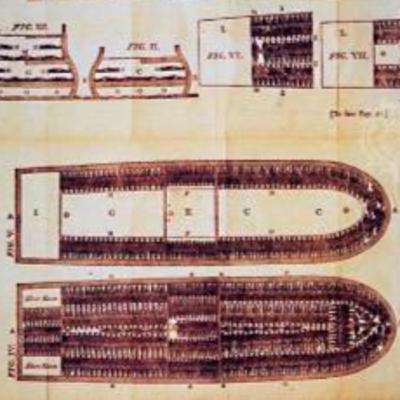
1Elise Mitchell (NYU) sits down to talk to Merle and Lee for the second episode of their mini-arc on vaccines and vaccinations. They discuss the impact of smallpox and forced inoculations on enslaved people during the 17th and 18th centuries, the experiences of enslaved people during this process, and governmental and non-governmental responses to epidemic outbreaks. At the end, Elise talks about the importance of her work during the ongoing Covid-19 pandemic.
This episode concludes our two-episode mini-arc on vaccinations, and we recommend listening to them both if you’re interested in the topic!
John Eicher (Penn State Altoona) joins the Infectious Historians to discuss his project on the 1918-1919 Influenza Pandemic that examines the pandemic from a translocal and comparative perspective. John begins by describing the broad contours of the pandemic and reflects upon the different approaches scholars have adopted in telling the story of the pandemic so far. John’s own project builds upon a digitized collection of over a thousand letters describing memories and stories from the influenza pandemic, offering him a unique understanding of what the pandemic did in a variety of locales. Throughout the interview John shares some of the stories that appear in the letters, and jumps between trying to think about the pandemic as a whole and focusing on the individual experience that the sources provide. Among the topics that are discussed in the interview are the features that appear (e.g. war) or do not appear (e.g. blame) in the letters, and attempts to compare different understandings of the pandemic - for example in the United States and in Europe. Near the end the conversation moves to a discussion of Rosenberg’s understanding of an epidemic as well as a comparison to Covid.
Bruno Strasser (University of Geneva) and Thomas Schlich (McGill University) come on the Infectious Historians podcast to discuss their recent book on the history of masks. As usual, the episode begins with definitions, then moves to discuss some of the commonly known kinds of masks in history - such as the plague doctor bird-like beaked mask, or the masks worn in the US during the 1918 Influenza Pandemic. The conversation addresses not only the masks themselves, but also their cultural meanings, the stereotypes associated with them, as well as the public’s reluctance to wear them. At the end of the interview Bruno and Thomas reflect on writing such a book during Covid, and share some of their experiences in co-authoring their book.
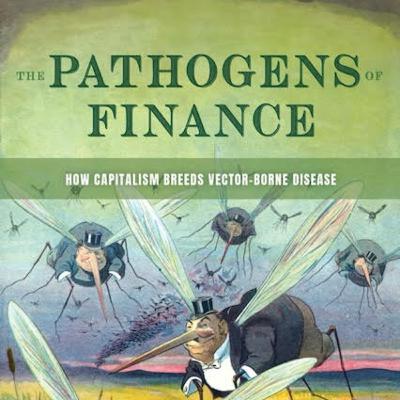
Brent Kaup (William & Mary University) and Kelly Austin (Lehigh University) come on the podcast to discuss their new book connecting disease and capitalism. They begin by discussing the financialization of America and link it as a cause of climate change. Financialization is also linked to diseases and specifically vector borne diseases through the suburbanization of areas such as Virginia. In parallel, Brent and Kelly also examine financialization in the context of malaria in Uganda, and how the increased exploitation of coffee created an environment that is more conducive to mosquitos, which coincided with a deterioration of the public health system. At the end of the interview, Brent and Kelly discuss how to do co-authorship.
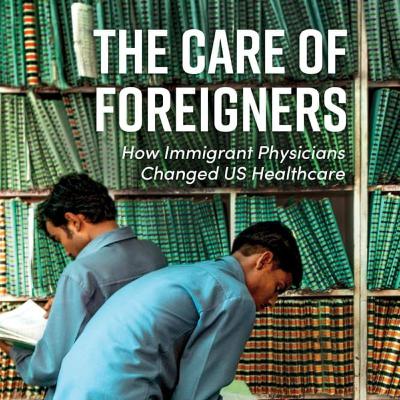
Eran Alam (Harvard University) speaks to the Infectious Historians about foreign healthcare workers in the US. The conversation begins with an examination of doctors in the US - how many are trained (and retire), different fields and different parts of the country. Historically, immigration has been a key way in which the US has historically addressed shortages of doctors. Eram highlights the different countries - particularly in South Asia - from which doctors immigrated to the US, where they became instrumental for the US healthcare system. At the same time, this migration also had long-term impacts on doctors’ home countries.
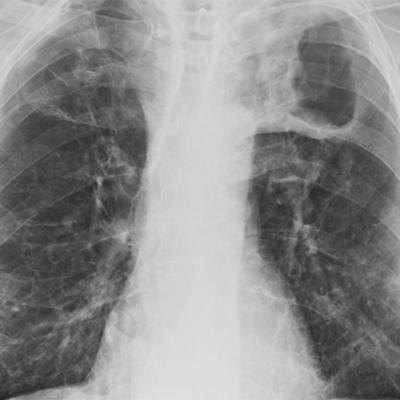
In this episode Merle and Lee speak with Eric Story (Western University) about his work on tuberculosis in the Canadian army during World War I. Eric begins by discussing disability studies and tuberculosis before focusing on the Canadian military during the war. As a social historian, Story examines the impacts of tuberculosis on different groups in Canadian society. He then expands on some of the attempts to treat tuberculosis through sanatoria while also calling attention to the fact that Canadian governments took care of soldiers’ present and future, investing substantial resources for this purpose. The conversation also includes a reflection on writing about tuberculosis during Covid, public health and the forgetting(?) of Covid.
Cam Grey (University of Pennsylvania) comes on the podcast to discuss his book on risk in the late Roman world. The conversation begins with a discussion of how to define disasters and risk, before moving on to examine the ways in which risk was conceived and mitigated in the past. Cam speaks about the importance of putting back together the human and natural worlds, but is also aware of how the problem of scales - as many small stories often do not add up to larger ones. He raises several other points reflective of his research, for example how late disasters and risk in the present influence our understanding of their counterparts in the past, or the importance of the state and its role in managing and mitigating disasters. More broadly, Cam argues that late antiquity is important because of a goldilocks effect - it has just enough - and not too much - sources to be able to produce a robust but also a near-comprehensive analysis.
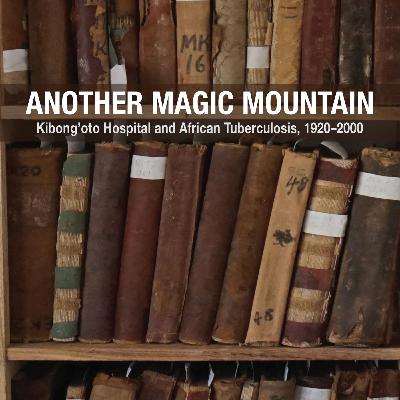
Christoph Gradmann (University of Oslo) joins Merle and Lee to discuss his new book on 20th century tuberculosis in Tanzania seen through the records of Kibong'oto hospital, the main hospital that treated the disease in the region. The conversation begins with some context about Tanzania and its history during and after the colonial period. As a case study, Kibong'oto is important in two ways that comes across the discussion. First, it highlights tuberculosis as a 20th century disease, as opposed to the 19th century disease that appears in most textbooks. Second, it represents a story about biomedicine under difficult conditions - including patient resistance to certain treatments. In the discussion, Christoph points out some of the sources he uses - such as case books - and the changes in their quality over time. Before conclusion, Christoph also reflects on writing his book during Covid and goes into some detail in discussing Covid in Tanzania.
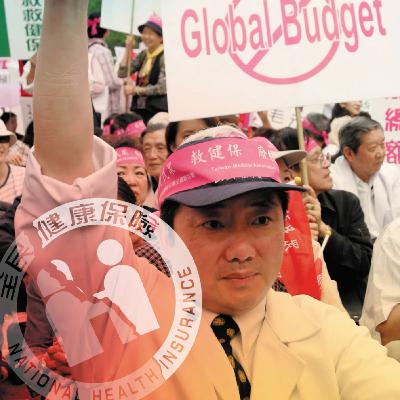
Wayne Soon (University of Minnesota) joins the Infectious Historians to chat about his work on Taiwan. Wayne begins with a survey of Covid in Taiwan, highlighting state responses and how other countries featured in Taiwan during the pandemic. The conversation then moves back to examine the impacts of the SARS epidemic on Taiwan - including mask-wearing and mask production - and how those impacts would later influence the ways in which Taiwan responded to Covid. Wayne highlights Taiwan’s health insurance model as a source of strength in the Taiwanese response, and uses the Taiwanese case to argue more broadly that democracies, rather than only autocracies, can effectively deal with pandemics. Wayne finishes with some of the personal lessons he had learned during his work.
Jordan Wilson (Georgetown University) and Janet Kay (Independent Scholar) join Merle and Lee to talk about bioarchaeology in light of an article they wrote on the bioarchaeology of the first plague pandemic. The conversation starts off with an explanation of bioarchaeology, its methodologies (including bone identification!) and how does daily work in that field look like. Within the context of the joint paper, Jordan and Janet also explain how they see collaborations in general and working with historians more specifically. They also weigh in on how one might reconcile both disciplines, and speculate about collaborations in the future and their potential.
Natalie Porter (independent scholar) joins Merle and Lee to discuss her work on Avian Flu in Vietnam. Natalie begins with an explanation of what Avian (Bird) Flu is, alongside a survey of the culling that happens when epidemics occur among birds. Natalie explains how she came to work on this topic, and shares some of her own experiences as an anthropologist conducting research on this subject in Vietnam. She also analyzes the Vietnamese response to such outbreaks as divided between local, national and international levels. The conversation concludes with Natalie talking about her trajectory out of academia and into IT and her reflection on the differences between her old and new roles.
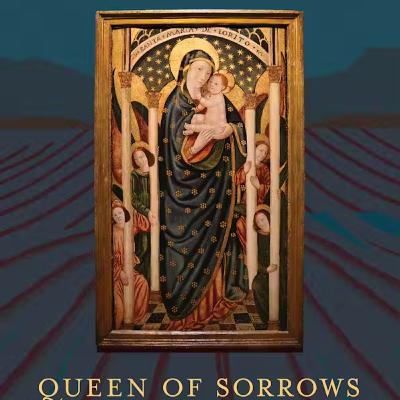
Bianca Lopez (Southern Methodist University) joins the Infectious Historians to discuss her recent book on plague, piety and power in late medieval Italy. Lopez begins with a survey of the impact of the Black Death and subsequent second pandemic outbreaks on Italy and moves on to talk about the specific area she studies - Santa Maria di Loreto. She examines the indirect impacts of plague on the rural area while using some of the surviving testaments to better understand mortality in the area in the late 14th century and early 15th century. The discussion covers the physicality of the site as well as the challenges in making causal connections. Before wrapping up, Lopez also touches upon her experience writing a history of disease during Covid, and reflects on how her pandemic work might help researchers working on other pandemics.
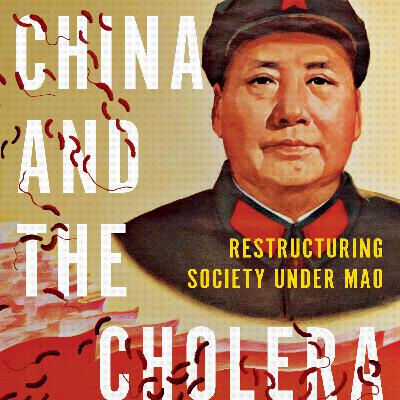
Xiaoping Fang (Monash University) comes on the podcast to discuss his recent book about cholera’s role in mid-20th century China. Fang begins by discussing cholera broadly before moving to focus on its role in China, primarily through examining it as a public health event. Although the mortality of the cholera epidemic was not very high, it was more important in restructuring the Chinese sociopolitical system while also restablishing its legitimacy. Fang touches upon the differential impact of the pandemic and state response on urban and rural Chinese populations. Finally, the conversation moves to Covid and potential linkages between both disease events.
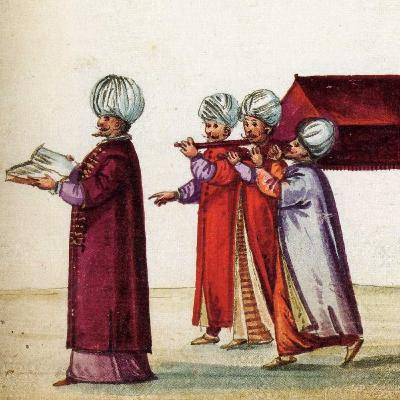
Einar Wigen (University of Oslo) joins the Infectious Historians to talk about the Ottoman experience of plague. The conversation begins with a reflection on the beginning and end of epidemics, as well as the purpose of such discussions - as people bestow importance upon epidemics. It then transitions to plague in the Ottoman Empire - covering its impact as well as how the Ottomans themselves thought about the plague. Einar points out some of the (few) sources and their nature, discusses the differences between impacts on the hinterland and rural areas, and connects the discussion to orientalist stereotypes about the Ottomans. Finally, Einar reflects on his historical work within the context of Covid.
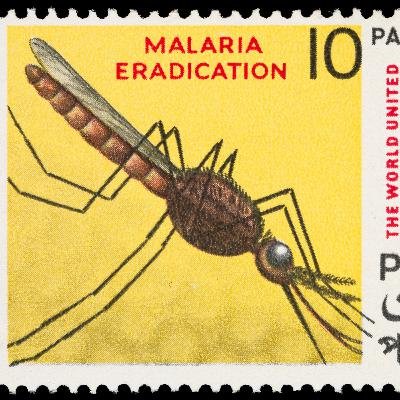
Erica Charters (University of Oxford) comes on the podcast to discuss how pandemics end. Erica begins by pointing out that we tend to pay far less attention to the end of pandemics, reflecting on the ending of Covid in public discourse. Erica then discusses a large project she ran which brought together over 40 international scholars on the end of pandemics which also examined the same issue. The conversation then moves to discuss endemic diseases, as well as the possibility that an epidemic disappears in a sense by becoming endemic and therefore less noticeable as an exception. Erica also notes the role of endemic diseases, for example in the early modern period.
Robert Zaretsky (University of Houston) joins the Infectious Historians to reflect on his experiences during Covid as he read “plague literature” and volunteered as an aide at a nursing home. The interview begins with Robert reflecting on his thinking during Covid and how he moved from reading history to literature. The conversation continues by moving between Robert’s voluntary work at the nursing home and the books he read upon during Covid. Robert reflects on how he read Camus differently during Covid, drawing parallels between the novel and his own personal experiences. He proceeds to raise some of the existential questions from the book, and recounts how he left the nursing home and what happened afterwards.
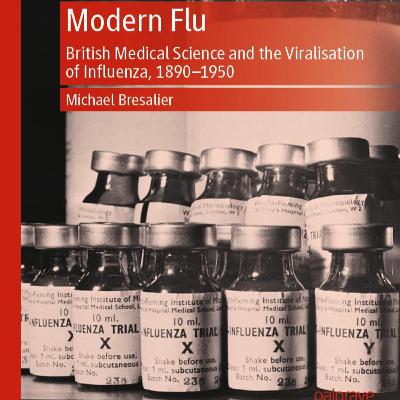
Michael Bresalier (Swansea University) discusses his work on the modern flu with Merle and Lee. Michael begins with talking about influenza in general and how the virus is constantly changing. The conversation then moves to focus on the annual flu shot - including its composition and how it is manufactured. Michael answers questions about a few other topics - including the impact of the 1918 pandemic on the knowledge of the flu in medical thinking, and the classic story of how the flu virus was discovered - where he highlights the invisible institutional framework that enabled the discovery to happen. The interview concludes with a reflection on the work needed to control a disease and the necessary multi-species approach required to do so.
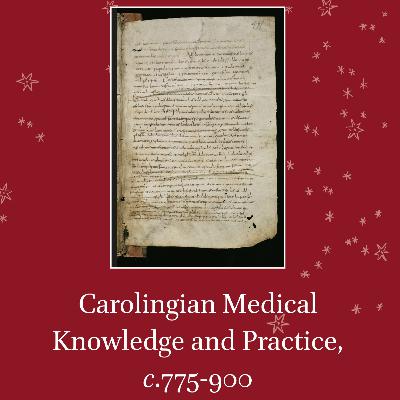
Claire Burridge (University of Oslo) comes on the podcast to discuss her work on “medical minitexts” such as recipe added to medieval manuscripts otherwise unrelated to medicine. The conversation begins with a broad framing of the period of and the genre of medical manuscripts before zooming into some of the recipes that address a variety of health issues. Claire reflects on the ingredients for the recipes, the ways in which they changed over time, whether or not they work, and the extent to which they circulated in and beyond regions. She also draws some of the new connections between some recipes and osteological research.
Erin Welsh and Erin Allmann Updyke, hosts of This Podcast Will Kill You, probably the first podcast on diseases - join Merle and Lee to reflect on podcasting and infectious diseases over the past several years. The conversation traces the beginnings of Erin and Erin’s podcast and the reason why they decided to launch it. Erin and Erin talk about how things changed since the beginning of their podcast, their listeners and their expectations, and academia and science communication. They reflect about what worked (and what didn’t) in their podcast, and about keeping a balance between the podcast and their life. Throughout the conversation, Merle and Lee point to the similarities and differences between the two podcasts their formation, and their development.
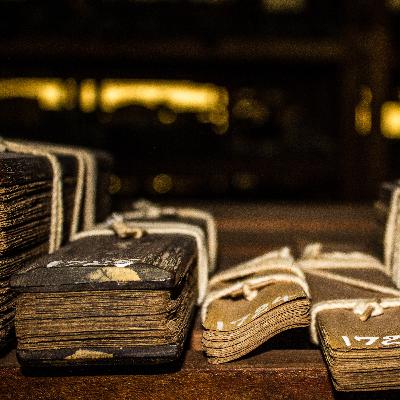
Anthony Cerulli (University of Wisconsin - Madison) joins the podcast to discuss his work on medicine in South Asia, focusing on ayurvedic medicine in premodernity. After some basic background contextualizing south Asian medicine, Anthony provides an overview of the three foundational texts for it. The conversations touches upon subjects such as the role of the patients, how healing is achieved in south Asian medicine, and similarities between south Asian medicine and Greek/Arabic medicine. Although most of the conversation focuses on the premodern past, Anthony also draws connections with the present, including with Covid. The interview ends with some reflections on the broader theme of health and the humanities in academia.

Comments

Download from Google Play

Download from App Store
 United States