


 Claim Ownership
I've got a little black book (@Occams_Beard)
Subscribed: 0Played: 11
Subscribe

© Occams_Beard
Description
Currently reading poems.
34 Episodes
Reverse
For this reading I am going to read two poems the first is typical of the period and the second for comparison is by Shakespeare.
I will pass no judgment but let you decide which you prefer.
My ladies hair
By Bartholomew Griffin. Published 1596
My Lady's hair is threads of beaten gold;
Her front the purest crystal eye hath seen;
Her eyes the brightest stars the heavens hold;
Her cheeks, red roses, such as seld have been;
Her pretty lips of red vermilion dye;
Her hand of ivory the purest white;
Her blush AURORA, or the morning sky.
Her breast displays two silver fountains bright;
The spheres, her voice; her grace, the Graces three;
Her body is the saint that I adore;
Her smiles and favours, sweet as honey be.
Her feet, fair THETIS praiseth evermore.
But Ah, the worst and last is yet behind :
For of a griffon she doth bear the mind!
Sonnet 130 - My mistress' eyes are nothing like the sun
William Shakespeare
My mistress' eyes are nothing like the sun;
Coral is far more red, than her lips red:
If snow be white, why then her breasts are dun;
If hairs be wires, black wires grow on her head.
I have seen roses damasked, red and white,
But no such roses see I in her cheeks;
And in some perfumes is there more delight
Than in the breath that from my mistress reeks.
I love to hear her speak, yet well I know
That music hath a far more pleasing sound:
I grant I never saw a goddess go,
My mistress, when she walks, treads on the ground:
And yet by heaven, I think my love as rare,
As any she belied with false compare.
Weary with toil, I haste me to my bed,
The dear repose for limbs with travel tired;
But then begins a journey in my head
To work my mind, when body's work's expired:
For then my thoughts--from far where I abide--
Intend a zealous pilgrimage to thee,
And keep my drooping eyelids open wide,
Looking on darkness which the blind do see:
Save that my soul's imaginary sight
Presents thy shadow to my sightless view,
Which, like a jewel hung in ghastly night,
Makes black night beauteous, and her old face new.
Lo! thus, by day my limbs, by night my mind,
For thee, and for myself, no quiet find.
When I have seen by Time's fell hand defaced
The rich proud cost of outworn buried age;
When sometime lofty towers I see down-razed,
And brass eternal slave to mortal rage;
When I have seen the hungry ocean gain
Advantage on the kingdom of the shore,
And the firm soil win of the watery main,
Increasing store with loss, and loss with store;
When I have seen such interchange of state,
Or state itself confounded to decay;
Ruin hath taught me thus to ruminate
That Time will come and take my love away.
This thought is as a death which cannot choose
But weep to have that which it fears to lose.
When in disgrace with fortune and men's eyes
I all alone beweep my outcast state,
And trouble deaf heaven with my bootless cries,
And look upon myself, and curse my fate,
Wishing me like to one more rich in hope,
Featured like him, like him with friends possessed,
Desiring this man's art, and that man's scope,
With what I most enjoy contented least;
Yet in these thoughts my self almost despising,
Haply I think on thee, and then my state,
Like to the lark at break of day arising
From sullen earth, sings hymns at heaven's gate;
For thy sweet love remembered such wealth brings
That then I scorn to change my state with kings.
Shall I compare thee to a summer's day?
Thou art more lovely and more temperate:
Rough winds do shake the darling buds of May,
And summer's lease hath all too short a date:
Sometime too hot the eye of heaven shines,
And often is his gold complexion dimm'd;
And every fair from fair sometime declines,
By chance, or nature's changing course, untrimm'd;
But thy eternal summer shall not fade
Nor lose possession of that fair thou ow'st;
Nor shall Death brag thou wander'st in his shade,
When in eternal lines to time thou grow'st;
So long as men can breathe or eyes can see,
So long lives this, and this gives life to thee.
Touch
Iva Hotko
You feel me
Not in the light of day
Or in the summers rain
But in the depths of your being
Where you hide all
That is not to be seen
I tickle you mind
I scratch on your heart
I'm retracing your steps
Lost in time
From the shadows of you soul
I speak to you
From the deepest of your desire
I comfort you
From this dance of passion and despair
We lustfully take all that we can
You hide from the truth
Which you laid so bare for me to see
And yet you are begging me
to set you free.
If I could tell you.
WH Auden
Time will say nothing but I told you so,
Time only knows the price we have to pay;
If I could tell you I would let you know.
If we should weep when clowns put on their show,
If we should stumble when musicians play,
Time will say nothing but I told you so.
There are no fortunes to be told, although,
Because I love you more than I can say,
If I could tell you I would let you know.
The winds must come from somewhere when they blow,
There must be reasons why the leaves decay;
Time will say nothing but I told you so.
Perhaps the roses really want to grow,
The vision seriously intends to stay;
If I could tell you I would let you know.
Suppose the lions all get up and go,
And all the brooks and soldiers run away;
Will Time say nothing but I told you so?
If I could tell you I would let you know.
Pablo Neruda
Tonight I can write (The Saddest Lines)
Tonight I can write the saddest lines.
Write, for example, ‘The night is starry and the stars are blue and shiver in the distance.’
The night wind revolves in the sky and sings.
Tonight I can write the saddest lines.
I loved her, and sometimes she loved me too.
Through nights like this one I held her in my arms.
I kissed her again and again under the endless sky.
She loved me, sometimes I loved her too.
How could one not have loved her great still eyes.
Tonight I can write the saddest lines.
To think that I do not have her. To feel that I have lost her.
To hear the immense night, still more immense without her.
And the verse falls to the soul like dew to the pasture.
What does it matter that my love could not keep her.
The night is starry and she is not with me.
This is all. In the distance someone is singing. In the distance.
My soul is not satisfied that it has lost her.
My sight tries to find her as though to bring her closer.
My heart looks for her, and she is not with me.
The same night whitening the same trees.
We, of back then, are no longer the same.
I no longer love her, that’s certain, but how I loved her.
My voice tried to find the wind to touch her hearing.
Another’s. She will be another’s. As she was before my kisses.
Her voice, her bright body. Her infinite eyes.
I no longer love her, that’s certain, but maybe I love her.
Love is so short, forgetting is so long.
Because through nights like this one I held her in my arms
my soul is not satisfied that it has lost her.
Though this be the last pain that she makes me suffer
and these the last verses that I write for her.
For Jane a true friend, from Madelaine
Milesha Appavoo
A friend is a gift
A friend is
A gift full of strength
That comes with a hug
And wrapped in a smile,
Giving that extra ounce of comfort
We need it every once in a while.
Dylan Thomas - Light breaks where no sun shines
Light breaks where no sun shines;
Where no sea runs, the waters of the heart
Push in their tides;
And, broken ghosts with glow-worms in their heads,
The things of light
File through the flesh where no flesh decks the bones.
A candle in the thighs
Warms youth and seed and burns the seeds of age;
Where no seed stirs,
The fruit of man unwrinkles in the stars,
Bright as a fig;
Where no wax is, the candle shows its hairs.
Dawn breaks behind the eyes;
From poles of skull and toe the windy blood
Slides like a sea;
Nor fenced, nor staked, the gushers of the sky
Spout to the rod
Divining in a smile the oil of tears.
Night in the sockets rounds,
Like some pitch moon, the limit of the globes;
Day lights the bone;
Where no cold is, the skinning gales unpin
The winter's robes;
The film of spring is hanging from the lids.
Light breaks on secret lots,
On tips of thought where thoughts smell in the rain;
When logics dies,
The secret of the soil grows through the eye,
And blood jumps in the sun;
Above the waste allotments the dawn halts.
Dylan Thomas
Do not go gentle into that good night,
Do not go gentle into that good night,
Old age should burn and rave at close of day;
Rage, rage against the dying of the light.
Though wise men at their end know dark is right,
Because their words had forked no lightning they
Do not go gentle into that good night.
Good men, the last wave by, crying how bright
Their frail deeds might have danced in a green bay,
Rage, rage against the dying of the light.
Wild men who caught and sang the sun in flight,
And learn, too late, they grieved it on its way,
Do not go gentle into that good night.
Grave men, near death, who see with blinding sight
Blind eyes could blaze like meteors and be gay,
Rage, rage against the dying of the light.
And you, my father, there on that sad height,
Curse, bless, me now with your fierce tears, I pray.
Do not go gentle into that good night.
Rage, rage against the dying of the light.
Dylan Thomas
The force that through the green fuse drives the flower
The force that through the green fuse drives the flower
Drives my green age; that blasts the roots of trees
Is my destroyer.
And I am dumb to tell the crooked rose
My youth is bent by the same wintry fever.
The force that drives the water through the rocks
Drives my red blood; that dries the mouthing streams
Turns mine to wax.
And I am dumb to mouth unto my veins
How at the mountain spring the same mouth sucks.
The hand that whirls the water in the pool
Stirs the quicksand; that ropes the blowing wind
Hauls my shroud sail.
And I am dumb to tell the hanging man
How of my clay is made the hangman's lime.
The lips of time leech to the fountain head;
Love drips and gathers, but the fallen blood
Shall calm her sores.
And I am dumb to tell a weather's wind
How time has ticked a heaven round the stars.
And I am dumb to tell the lover's tomb
How at my sheet goes the same crooked worm.
Dylan Thomas
In my craft or sullen art
In my craft or sullen art
Exercised in the still night
When only the moon rages
And the lovers lie abed
With all their griefs in their arms,
I labour by singing light
Not for ambition or bread
Or the strut and trade of charms
On the ivory stages
But for the common wages
Of their most secret heart.
Not for the proud man apart
From the raging moon I write
On these spindrift pages
Nor for the towering dead
With their nightingales and psalms
But for the lovers, their arms
Round the griefs of the ages,
Who pay no praise or wages
Nor heed my craft or art.
Dylan Thomas
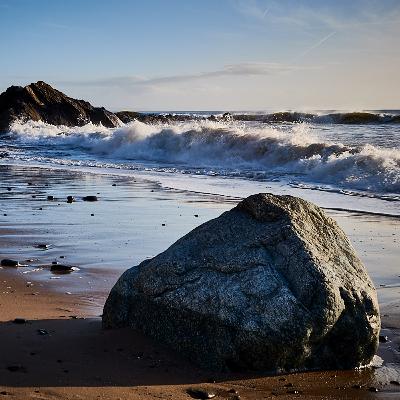
And death shall have no dominion
And death shall have no dominion.
Dead man naked they shall be one
With the man in the wind and the west moon;
When their bones are picked clean and the clean bones gone,
They shall have stars at elbow and foot;
Though they go mad they shall be sane,
Though they sink through the sea they shall rise again;
Though lovers be lost love shall not;
And death shall have no dominion.
And death shall have no dominion.
Under the windings of the sea
They lying long shall not die windily;
Twisting on racks when sinews give way,
Strapped to a wheel, yet they shall not break;
Faith in their hands shall snap in two,
And the unicorn evils run them through;
Split all ends up they shan't crack;
And death shall have no dominion.
And death shall have no dominion.
No more may gulls cry at their ears
Or waves break loud on the seashores;
Where blew a flower may a flower no more
Lift its head to the blows of the rain;
Though they be mad and dead as nails,
Heads of the characters hammer through daisies;
Break in the sun till the sun breaks down,
And death shall have no dominion.
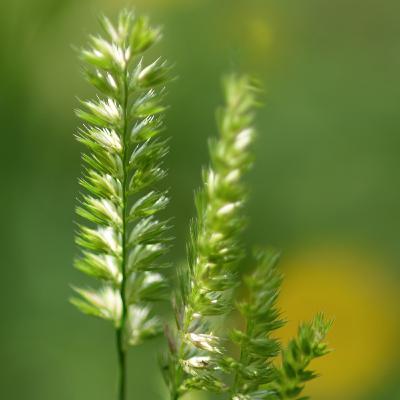
Now as I was young and easy under the applle boughs
About the lilting house and happy as the house was green
The night above the dingle starry,
Time let me hale and climb
Golden in the heyday of his eyes,
And honoured among the wagons I was prince of the apple towns
And once below a time I lordly had the trees and leaves
Trail with daisies and barley,
Down the rivers of the windfall light.
And as I was green and carefree, famous among the barns
About the happy yard and singing as the farm was home,
In the sun that is young once only,
Time let me play and be
Golden in the mercy of his means,
And green and golden I was huntsman and herdsman, the calves
Sang to my horn, the foxes on the hills barked clear and cold,
And the sabbath rang slowly
In the pebbles of the holy streams.
All the sun long it was running, it was lovely, the hay
Fields high as the house, the tunes from the chimneys, it was air
And playing, lovely and watery
And fire green as grass.
And nightly under the simple stars
As I rode to sleep the owls were bearing the farm away,
All the moon long I heard, blessed among stables, the nightjars
Flying with the ricks, and the horses
Flashing into the dark.
And then to awake, and the farm, like a wanderer white
With the dew, come back, the cock on his shoulder: it was all
Shining, it was Adam and maiden,
The sky gathered again
And the sun grew round that very day.
So it must have been after the birth of the simple light
In the first, spinning place, the spellbound horses walking warm
Out of the whinnying green stable
On to the fields of praise.
And honoured among foxes and pheasants by the gay house
Under the new made clouds and happy as the heart was long,
In the sun born over and over,
I ran my heedless ways,
My wishes raced through the house high hay
And nothing I cared, at my sky blue trades, that time allows
In all his tuneful turning so few and such morning songs
Before the children green and golden
Follow him out of grace,
Nothing I cared, in the lamb white days, that time would take me
Up to the swallow thronged loft by the shadow of my hand,
In the moon that is always rising,
Nor that riding to sleep
I should hear him fly with the high fields
And wake to the farm forever fled from the childless land.
Oh as I was young and easy in the mercy of his means,
Time held me green and dying
Though I sang in my chains like the sea.
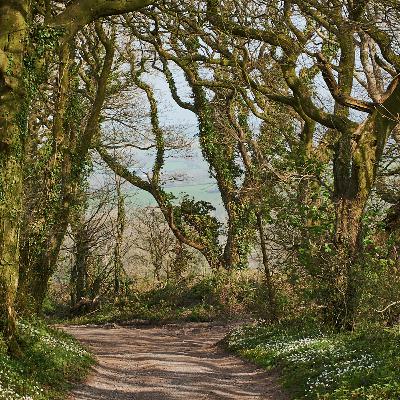
A Shropshire Lad 31: On Wenlock Edge the wood's in trouble
BY A. E. HOUSMAN
On Wenlock Edge the wood's in trouble;
His forest fleece the Wrekin heaves;
The gale, it plies the saplings double,
And thick on Severn snow the leaves.
'Twould blow like this through holt and hanger
When Uricon the city stood:
'Tis the old wind in the old anger,
But then it threshed another wood.
Then, 'twas before my time, the Roman
At yonder heaving hill would stare:
The blood that warms an English yeoman,
The thoughts that hurt him, they were there.
There, like the wind through woods in riot,
Through him the gale of life blew high;
The tree of man was never quiet:
Then 'twas the Roman, now 'tis I.
The gale, it plies the saplings double,
It blows so hard, 'twill soon be gone:
To-day the Roman and his trouble
Are ashes under Uricon.
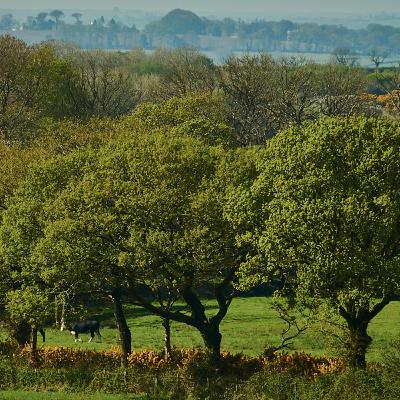
A Shropshire Lad 35: On the idle hill of summer
BY A. E. HOUSMAN
On the idle hill of summer,
Sleepy with the flow of streams,
Far I hear the steady drummer
Drumming like a noise in dreams.
Far and near and low and louder
On the roads of earth go by,
Dear to friends and food for powder,
Soldiers marching, all to die.
East and west on fields forgotten
Bleach the bones of comrades slain,
Lovely lads and dead and rotten;
None that go return again.
Far the calling bugles hollo,
High the screaming fife replies,
Gay the files of scarlet follow:
Woman bore me, I will rise.
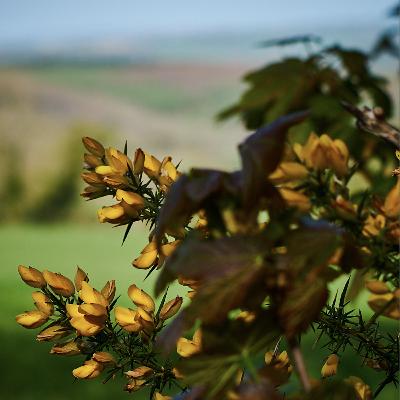
A Shropshire Lad 52: Far in a western brookland
BY A. E. HOUSMAN
Far in a western brookland
That bred me long ago
The poplars stand and tremble
By pools I used to know.
There, in the windless night-time,
The wanderer, marvelling why,
Halts on the bridge to hearken
How soft the poplars sigh.
He hears: long since forgotten
In fields where I was known,
Here I lie down in London
And turn to rest alone.
There, by the starlit fences,
The wanderer halts and hears
My soul that lingers sighing
About the glimmering weirs
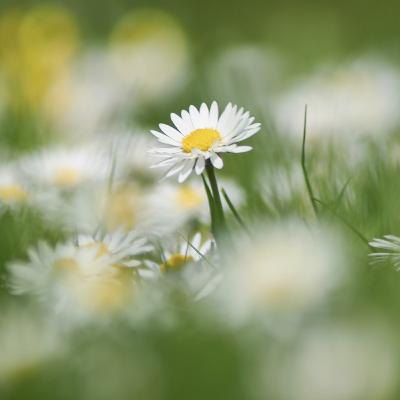
A Shropshire Lad 26: Along the field as we came by
BY A. E. HOUSMAN
Along the field as we came by
A year ago, my love and I,
The aspen over stile and stone
Was talking to itself alone.
"Oh who are these that kiss and pass?
A country lover and his lass;
Two lovers looking to be wed;
And time shall put them both to bed,
But she shall lie with earth above,
And he beside another love."
And sure enough beneath the tree
There walks another love with me,
And overhead the aspen heaves
Its rainy-sounding silver leaves;
And I spell nothing in their stir,
But now perhaps they speak to her,
And plain for her to understand
They talk about a time at hand
When I shall sleep with clover clad,
And she beside another lad.
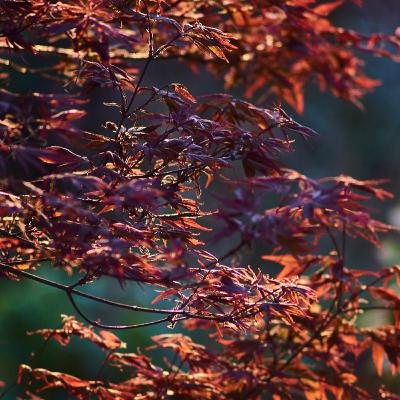
A Shropshire Lad 2: Loveliest of trees, the cherry now
BY A. E. HOUSMAN
Loveliest of trees, the cherry now
Is hung with bloom along the bough,
And stands about the woodland ride
Wearing white for Eastertide.
Now, of my threescore years and ten,
Twenty will not come again,
And take from seventy springs a score,
It only leaves me fifty more.
And since to look at things in bloom
Fifty springs are little room,
About the woodlands I will go
To see the cherry hung with snow.

Comments

Download from Google Play

Download from App Store
 United States