


 Claim Ownership
Labor History Today
Subscribed: 48Played: 1,212
Subscribe

© Copyright 2020 All rights reserved.
Description
Gripping stories of the historic battles for worker rights and how they fuel today’s struggles. Part of the Labor Radio/Podcast Network: #LaborRadioPod
349 Episodes
Reverse
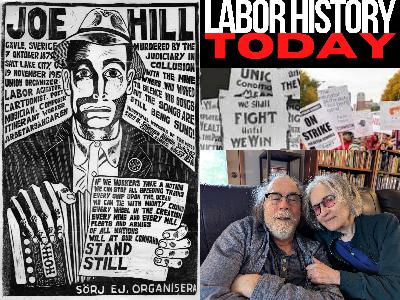
On this week’s Labor History Today, producer producer Harold Phillips talks with Victoria McCallum and Lantz Simpson, co-writers of The Last Words of Joe Hill, a short play imagining Joe Hill in a modern coffee shop, sparking conversations about unions, work, and power.
The interview is interspersed with scenes from the radio version of the play, as Hill’s voice challenges young workers navigating low wages, job insecurity, and organizing drives—echoing struggles that continue today.
From the legacy of the Industrial Workers of the World to current campaigns like Starbucks Workers United, the episode explores how labor history still speaks to the present—and why, as Hill urged, the message remains: don’t mourn, organize.
Questions, comments, or suggestions are welcome, and to find out how you can be a part of Labor History Today, email us at LaborHistoryToday@gmail.com
Labor History Today is produced by the Labor Heritage Foundation and the Kalmanovitz Initiative for Labor and the Working Poor.
#LaborRadioPod #History #WorkingClass #ClassStruggle @GeorgetownKILWP #LaborHistory @UMDMLA @ILLaborHistory @AFLCIO @StrikeHistory #LaborHistory @wrkclasshistory
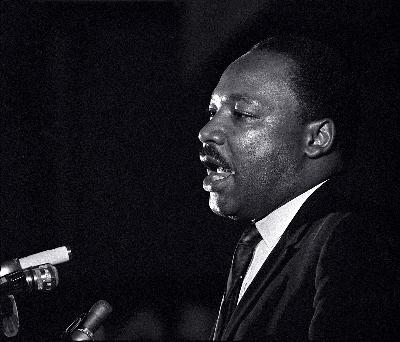
On this week’s Labor History Today: In April 1968, Martin Luther King Jr. stood with striking sanitation workers in Memphis—members of AFSCME Local 1733—delivering his powerful “Mountaintop” speech just one day before his assassination. We reflect on King’s labor legacy and what it means for organizing today.
With the 2026 baseball season underway, we also take a look at the business of the game, featuring a segment from the Heartland Labor Forum on how players organized to break free from a system that bound them to their teams—and built one of the most powerful unions in the country.
Along the way, Conor Casey, Labor Archivist and Head of the Labor Archives at the University of Washington, brings us the story of the Seattle Union Record, a pioneering labor newspaper that showed the power of workers telling their own stories.
Questions, comments, or suggestions are welcome, and to find out how you can be a part of Labor History Today, email us at LaborHistoryToday@gmail.com
Labor History Today is produced by the Labor Heritage Foundation and the Kalmanovitz Initiative for Labor and the Working Poor.
#LaborRadioPod #History #WorkingClass #ClassStruggle @GeorgetownKILWP #LaborHistory @UMDMLA @ILLaborHistory @AFLCIO @StrikeHistory #LaborHistory @wrkclasshistory

On this week’s Labor History Today: As Women’s History Month draws to a close, we mark the founding of the Coalition of Labor Union Women in 1974, when more than 3,000 women from 58 unions came together in Chicago to demand a stronger voice in the labor movement.
Then, from America’s Workforce Union Podcast, historian Carie Rael takes us inside the largest strike in Disneyland history, when workers across multiple unions joined forces in the Reagan era to challenge one of the most powerful corporations in the country.
From the Labor Heritage Foundation’s Labor Landmarks project, producer Anthony Dominiczak travels to Victor, Colorado, where the bullet-scarred remains of a union hall tell the story of the violent 1903–04 Colorado labor wars — and the ongoing fight to preserve this historic site.
We also remember the 1911 Triangle Shirtwaist Factory fire, one of the deadliest workplace disasters in U.S. history, which galvanized the fight for workplace safety reforms.
And we close with music: a new song written and performed by Mike Stout, “Women of Steel,” honoring the United Steelworkers women who fought discrimination, organized for equality, and helped reshape the labor movement.
Questions, comments, or suggestions are welcome, and to find out how you can be a part of Labor History Today, email us at LaborHistoryToday@gmail.com
Labor History Today is produced by the Labor Heritage Foundation and the Kalmanovitz Initiative for Labor and the Working Poor.
#LaborRadioPod #History #WorkingClass #ClassStruggle @GeorgetownKILWP #LaborHistory @UMDMLA @ILLaborHistory @AFLCIO @StrikeHistory #LaborHistory @wrkclasshistory

This week on Labor History Today, we explore moments when workers didn’t just demand change—they forced it.
Detroit, 1937: sit-down strikers face a violent police raid—and resist, floor by floor, in a pivotal moment in the fight for union recognition.
Seattle, 1919: Conor Casey takes us inside the Labor Temple, as workers coordinate a general strike that briefly turns organized labor into the city’s governing force. See photos on LHF’s Labor Landmarks Map.
New York City, 1970: postal workers launch an illegal strike that spreads nationwide, defies federal troops, and wins real gains.
From America’s Workforce, historian Jesse Wilkerson takes us to the 1929 Elizabethton Rayon Strike, where young women led thousands in a bold challenge to low wages, toxic conditions, and repression.
In Michigan, from Madison Labor Radio, we hear the story of “Big Annie” Clements, who led copper miners in 1913—and the effort today to honor her legacy with a long-overdue monument.
And in Labor History in Two: Alice Henry, journalist and organizer, who helped amplify the voices of working women in the early labor movement.
Questions, comments, or suggestions are welcome, and to find out how you can be a part of Labor History Today, email us at LaborHistoryToday@gmail.com
Labor History Today is produced by the Labor Heritage Foundation and the Kalmanovitz Initiative for Labor and the Working Poor.
@AWFUnionPodcast @ILLaborHistory #LaborRadioPod #History #WorkingClass #ClassStruggle @GeorgetownKILWP #LaborHistory @UMDMLA @ILLaborHistory @AFLCIO @StrikeHistory #LaborHistory @wrkclasshistory

This week on Labor History Today: From the fiery tragedy that shocked the nation—the 1911 Triangle Shirtwaist Factory fire—to the powerful solidarity of the 1912 Bread and Roses strike in Lawrence, Massachusetts. We’ll also hear how a rebellious group of DJs turned a Bay Area radio station into a labor battleground in 1968, proving that the counterculture wasn’t just about rebellion—it was also about dignity, creativity, and fair pay on the job. And we visit Idaho’s Sunshine Mine Disaster Memorial, where a towering miner stands watch over 91 tombstones honoring workers lost in one of the deadliest hard-rock mining disasters in U.S. history. Reports from UUP’s The Voice podcast, Madison Labor Radio, and Labor History in 2:00.
Questions, comments, or suggestions are welcome, and to find out how you can be a part of Labor History Today, email us at LaborHistoryToday@gmail.com
Labor History Today is produced by the Labor Heritage Foundation and the Kalmanovitz Initiative for Labor and the Working Poor.
#LaborRadioPod #History #WorkingClass #ClassStruggle @GeorgetownKILWP #LaborHistory @UMDMLA @ILLaborHistory @AFLCIO @StrikeHistory #LaborHistory @wrkclasshistory
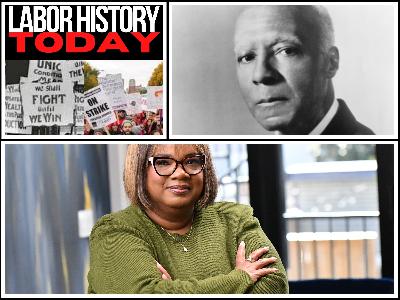
On this week’s Labor History Today, we continue our look at the legacy of A. Philip Randolph and the Brotherhood of Sleeping Car Porters, the first major Black-led union in the United States.
Recorded at Georgetown University’s Kalmanovitz Initiative for Labor and the Working Poor, SEIU International President April Verrett reflects on what Randolph’s legacy means for workers today.
Posting on International Women’s Day, this conversation highlights the role of women workers—especially in care and service jobs—in carrying forward the fight for dignity, organizing rights, and democracy. Verrett connects the porters’ struggle a century ago with today’s battles over worker power, immigration, and the changing nature of the working class.
PLUS: Remembering Lucy Parsons on Labor History in 2:00 and We Were There, from Bev Grant and the Brooklyn Women’s Chorus.
Questions, comments, or suggestions are welcome, and to find out how you can be a part of Labor History Today, email us at LaborHistoryToday@gmail.com
Labor History Today is produced by the Labor Heritage Foundation and the Kalmanovitz Initiative for Labor and the Working Poor.
#LaborRadioPod #History #WorkingClass #ClassStruggle @GeorgetownKILWP #LaborHistory @UMDMLA @ILLaborHistory @AFLCIO @StrikeHistory #LaborHistory @wrkclasshistory
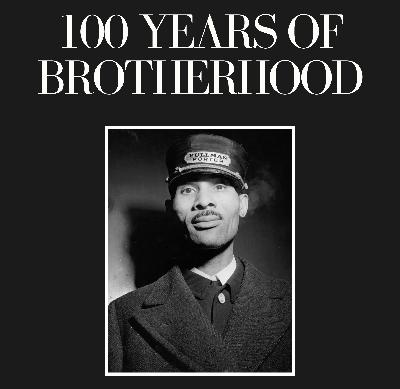
On this week’s Labor History Today, historian Eric Arnesen marks the centennial of the Brotherhood of Sleeping Car Porters, tracing how A. Philip Randolph and Black railway workers built the first major Black-led union in 1925, fought for what Randolph called “manhood rights”—dignity on the job—and helped lay the groundwork for the 1941 and 1963 Marches on Washington, reshaping both the labor movement and the modern civil rights struggle.
Plus, on Labor History in 2:00: The Price of Demanding Equal Pay, The 1937 Woolworth Sit-Down, and Remembering E.D. Nixon.
NOTE: Arnesen’s February 10 talk was part of a special Black History Month and Labor Spring event featuring April Verrett, the first Black woman president of SEIU, the Service Employees International Union, sponsored by the Kalmanovitz Initiative for Labor and the Working Poor at Georgetown University. We’ll bring you highlights from Verrett’s talk in next week’s show.
Explore LHF’s new Labor Landmarks Map and suggest a site near you at laborheritage.org!
Questions, comments, or suggestions welcome, and to find out how you can be a part of Labor History Today, email us at LaborHistoryToday@gmail.com
Labor History Today is produced by the Labor Heritage Foundation and the Kalmanovitz Initiative for Labor and the Working Poor.
#LaborRadioPod #History #WorkingClass #ClassStruggle @GeorgetownKILWP #LaborHistory @UMDMLA @ILLaborHistory @AFLCIO @StrikeHistory #LaborHistory @wrkclasshistory
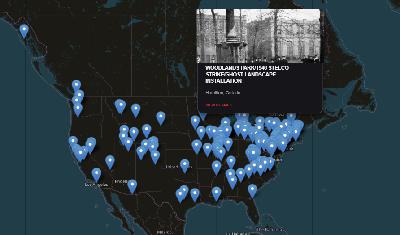
On this week’s Labor History Today, host Chris Garlock explores how workers’ struggles leave lasting marks—not just on history, but on the physical landscape itself.
In Hamilton, Ontario, the 1946 Stelco strike helped secure collective bargaining rights for Canadian steelworkers—but also triggered a backlash that literally reshaped Woodlands Park, once known as the “People’s Park,” to prevent workers from gathering there again.
And in Marion, North Carolina, Chris traces the story of the 1929 Marion Massacre, when sheriff’s deputies opened fire on striking textile workers. Today, even the small gravestone marking where workers were killed may have disappeared—raising urgent questions about how labor history is remembered, and how easily it can be erased.
These stories are drawn from the Labor Heritage Foundation’s new Labor Landmarks Map, a growing, crowd-sourced resource documenting sites of working-class struggle, resistance, and memory.
In our second segment, Tales from the Reuther Library celebrates its 100th episode by exploring how bold philanthropy helped fund labor organizing and civil liberties movements during some of America’s darkest times.
Plus, four from Labor History in 2:00: Fighting for a Floor, The First Female Telegraph Operator, The Elusive 8 Hour Workday and Historic Sit-In by Memphis Sanitation Workers.
Together, these stories remind us that labor history lives all around us—in parks, factories, memorials, and the landscapes workers fought to shape.
Explore the Labor Landmarks Map and suggest a site near you at laborheritage.org!
Questions, comments, or suggestions are welcome, and to find out how you can be a part of Labor History Today, email us at LaborHistoryToday@gmail.com
Labor History Today is produced by the Labor Heritage Foundation and the Kalmanovitz Initiative for Labor and the Working Poor.
#LaborRadioPod #History #WorkingClass #ClassStruggle @GeorgetownKILWP #LaborHistory @UMDMLA @ILLaborHistory @AFLCIO @StrikeHistory #LaborHistory @wrkclasshistory
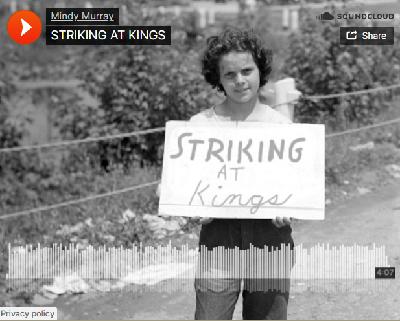
On this week’s Labor History Today: Labor History in 2:00 on the Sons of Vulcan’s 1865 strike, a Labor Jawn conversation with songwriter Mindy Murray about her song “Striking at Kings,” and a return to 1937 Anderson, Indiana, and the violence following the Flint sit-down strike. Questions, comments, or suggestions are welcome, and to find out how you can be a part of Labor History Today, email us at LaborHistoryToday@gmail.com
Labor History Today is produced by the Labor Heritage Foundation and the Kalmanovitz Initiative for Labor and the Working Poor.
#LaborRadioPod #History #WorkingClass #ClassStruggle @GeorgetownKILWP #LaborHistory @UMDMLA @ILLaborHistory @AFLCIO @StrikeHistory #LaborHistory @wrkclasshistory
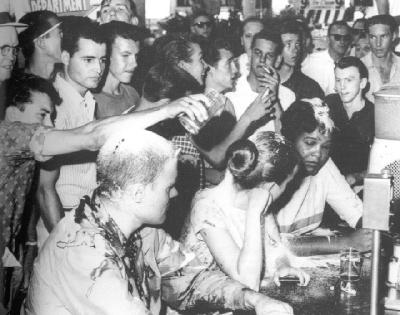
This week on Labor History Today: The 66th anniversary of the Greensboro sit-ins — a turning point that helped ignite the modern Civil Rights Movement and reshaped American politics. We feature an in-depth conversation from The Green and Red Podcast, tracing the origins of the sit-in movement, from Greensboro and Nashville to the rise of SNCC, and exploring how militant nonviolence, media exposure, and youth-led organizing forced a national reckoning — with powerful parallels to today’s struggles against state violence.
Then, on Labor History in 2:00, we revisit another watershed moment in collective action: the 1919 Seattle General Strike, when tens of thousands of workers shut down a city and demonstrated the power of solidarity.
Questions, comments, or suggestions are welcome, and to find out how you can be a part of Labor History Today, email us at LaborHistoryToday@gmail.com
Labor History Today is produced by the Labor Heritage Foundation and the Kalmanovitz Initiative for Labor and the Working Poor.
#LaborRadioPod #History #WorkingClass #ClassStruggle @GeorgetownKILWP #LaborHistory @UMDMLA @ILLaborHistory @AFLCIO @StrikeHistory #LaborHistory @wrkclasshistory
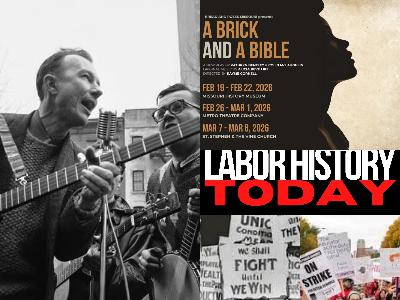
This week on Labor History Today, we remember Pete Seeger and how his songs helped build movements—from union halls to civil rights and environmental campaigns. Then we turn to the 1933 Funsten Nut Strike in St. Louis, led by Black women who organized more than 2,000 workers, and talk with the creators of the new play A Brick and a Bible.
Questions, comments, or suggestions are welcome, and to find out how you can be a part of Labor History Today, email us at LaborHistoryToday@gmail.com
Labor History Today is produced by the Labor Heritage Foundation and the Kalmanovitz Initiative for Labor and the Working Poor.
#LaborRadioPod #History #WorkingClass #ClassStruggle @GeorgetownKILWP #LaborHistory @UMDMLA @ILLaborHistory @AFLCIO @StrikeHistory #LaborHistory @wrkclasshistory

This episode of Labor History Today features historian Marcella Bencivenni on Arturo Giovannitti—Italian immigrant, poet, socialist, and labor organizer—whose role in the 1912 Lawrence textile strike made him a target of state repression and a powerful voice of labor resistance. Arrested for his words, Giovannitti turned imprisonment into poetry that helped define an era of immigrant-led radical organizing. The episode explores free speech struggles, anti-immigrant repression, and labor solidarity—lessons from more than a century ago that still resonate in 2026 America. We close with the Labor Song of the Month, featuring “Joe Hill’s Ashes,” performed by Otis Gibbs. Today’s show comes to us from the always fabulous Heartland Labor Forum on KKFI in Kansas City.
This week on Labor History Today, we explore how the 1892 Homestead Strike continues to live on—not just in books and archives, but in film, music, and living memory.
We begin with labor scholar and cultural critic Kathleen Newman, who takes us inside Ting Tong Chang’s The Hidden Shift, a two-screen film installation at Pittsburgh’s Mattress Factory. Inspired by the Homestead Strike, the piece layers a fictionalized labor drama with behind-the-scenes footage of museum workers making the work itself—blurring the lines between labor and culture, past and present.
Kathleen reflects on Homestead as both a proud moment in worker history and a shameful chapter in corporate history, and connects the strike’s legacy to today’s service-sector workers—from museum staff to baristas—whose labor too often goes unseen.
We close with music that has carried the story for more than a century. “Homestead Strike Song” turns the events of 1892 into a communal act of remembrance. In this 1980 recording, Pete Seeger sings the song, invites a singalong, and shares the story of how the song survived—passed down in halls and bars long after the strike itself was crushed.
Together, these segments remind us that labor history isn’t just remembered—it’s made, performed, and sung.
Questions, comments, or suggestions are welcome, and to find out how you can be a part of Labor History Today, email us at LaborHistoryToday@gmail.com
Labor History Today is produced by the Labor Heritage Foundation and the Kalmanovitz Initiative for Labor and the Working Poor.
#LaborRadioPod #History #WorkingClass #ClassStruggle @GeorgetownKILWP #LaborHistory @UMDMLA @ILLaborHistory @AFLCIO @StrikeHistory #LaborHistory @wrkclasshistory
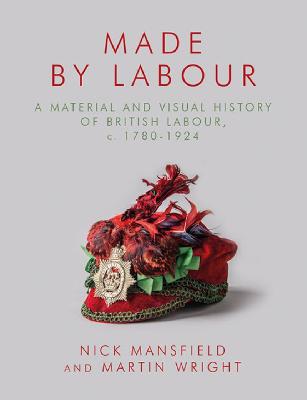
This week on Labor History Today, Simon Sapper talks with historian Martin Wright, co-author of Made by Labour: A Material and Visual History of British Labor, 1780–1924. The book traces the rise of the world’s first modern labor movement through banners, boxes, coins, tools, and images created by working people during the Industrial Revolution and beyond—right up to the moment labor stood on the brink of political power in the 1920s.
Questions, comments, or suggestions are welcome, and to find out how you can be a part of Labor History Today, email us at LaborHistoryToday@gmail.com
Labor History Today is produced by the Labor Heritage Foundation and the Kalmanovitz Initiative for Labor and the Working Poor.
#LaborRadioPod #History #WorkingClass #ClassStruggle @GeorgetownKILWP #LaborHistory @UMDMLA @ILLaborHistory @AFLCIO @StrikeHistory #LaborHistory @wrkclasshistory
This week on Labor History Today, we move from repression to resistance—and from history to possibility.
We begin with Labor History in Two and the 1917 trial of labor leader Tom Mooney, a stark reminder of how the justice system has been used to silence working-class dissent.
Then we turn to the present with a report from the Working Class History podcast, bringing us to the 2025 Working Class Literature Festival at the occupied former GKN factory outside Florence, Italy—where workers are fighting not only to save their jobs, but to transform their workplace into a cooperative and tell their own stories.
We close with another Labor History in Two—the 2006 Sago Mine disaster—underscoring the deadly consequences of corporate negligence and regulatory failure.
History doesn’t just explain the world we’re in. It helps us imagine the one we’re trying to build.
Questions, comments, or suggestions are welcome, and to find out how you can be a part of Labor History Today, email us at LaborHistoryToday@gmail.com
Labor History Today is produced by the Labor Heritage Foundation and the Kalmanovitz Initiative for Labor and the Working Poor.
#LaborRadioPod #History #WorkingClass #ClassStruggle @GeorgetownKILWP #LaborHistory @UMDMLA @ILLaborHistory @AFLCIO @StrikeHistory #LaborHistory @wrkclasshistory
On this week’s Labor History Today: From Camp Solidarity in Matewan, West Virginia—the heart of the legendary Mine Wars—UMWA President Cecil Roberts reflects on the long struggle of coal miners to claim America’s promise that “this land belongs to all of us.” On the eve of his retirement, Roberts’ words connect today’s fights for justice with a century of labor history rooted in the hollers of Appalachia. (Originally broadcast 9/21/25; updated with today’s Labor History in 2:00)
Questions, comments, or suggestions are welcome, and to find out how you can be a part of Labor History Today, email us at LaborHistoryToday@gmail.com
Labor History Today is produced by the Labor Heritage Foundation and the Kalmanovitz Initiative for Labor and the Working Poor.
#LaborRadioPod #History #WorkingClass #ClassStruggle @GeorgetownKILWP #LaborHistory @UMDMLA @ILLaborHistory @AFLCIO @StrikeHistory #LaborHistory @wrkclasshistory

In this episode of Labor History Today, labor organizer and researcher Eric Dirnbach talks with Dave Kamper, author of Who’s Got the Power: Hope for Troubled Times, about the post-pandemic union upsurge. From graduate student organizing and teachers’ strikes to the UAW’s stand-up strike and bargaining for the common good, Kamper reflects on what history can teach us about moments of possibility, and why solidarity is re-emerging as a force for change.
Labor History in 2:00: Red Scare Hysteria Deportations Begin
Music: Little Flame, by Carsie Blanton.
Questions, comments, or suggestions are welcome, and to find out how you can be a part of Labor History Today, email us at LaborHistoryToday@gmail.com
Labor History Today is produced by the Labor Heritage Foundation and the Kalmanovitz Initiative for Labor and the Working Poor.
#LaborRadioPod #History #WorkingClass #ClassStruggle @GeorgetownKILWP #LaborHistory @UMDMLA @ILLaborHistory @AFLCIO @StrikeHistory #LaborHistory @wrkclasshistory
This week on Labor History Today, we head to Philadelphia with an excerpt from the Labor Jawn podcast. Hosts Sam and Gabe talk with labor historian Dr. Francis Ryan about Philly’s central role in U.S. labor history, why working-class stories are often erased, and what today’s movement can learn from the city’s past.
Plus, on Labor History in 2:00: the birth of civil rights organizer Ella Baker in 1903.
Questions, comments, or suggestions are welcome, and to find out how you can be a part of Labor History Today, email us at LaborHistoryToday@gmail.com
Labor History Today is produced by the Labor Heritage Foundation and the Kalmanovitz Initiative for Labor and the Working Poor.
#LaborRadioPod #History #WorkingClass #ClassStruggle @GeorgetownKILWP #LaborHistory @UMDMLA @ILLaborHistory @AFLCIO @StrikeHistory #LaborHistory @wrkclasshistory

This week on Labor History Today, we revisit the 1946 Oakland General Strike through the eyes of labor educator and activist Stan Weir — and uncover the surprising role a chart-topping “country” hit played on the picket line. After we hear the day’s events from Labor History in 2:00, host Chris Garlock digs into Weir’s vivid account of the strike’s carnival-like atmosphere, where bars rolled jukeboxes into the streets and “Pistol Packin’ Mama” — the first country song ever to top the Billboard pop chart — echoed off downtown buildings for 54 hours. We trace how an American Federation of Musicians strike helped turn the tune into a national sensation, and why its defiant energy resonated with the mostly women department-store strikers who ignited the Oakland uprising.
Questions, comments, or suggestions are welcome, and to find out how you can be a part of Labor History Today, email us at LaborHistoryToday@gmail.com
Labor History Today is produced by the Labor Heritage Foundation and the Kalmanovitz Initiative for Labor and the Working Poor.
#LaborRadioPod #History #WorkingClass #ClassStruggle @GeorgetownKILWP #LaborHistory @ILLaborHistory @AFLCIO @StrikeHistory #LaborHistory @wrkclasshistory

This week on Labor History Today, we’re marking the 50th anniversary of the Walter P. Reuther Library building at Wayne State University with a special episode from our friends at Tales from the Reuther Library. Hosts Dan Golodner and Troy Eller English revisit the origins of one of the nation’s premier labor archives, sharing stories from its early days and reflecting on why preserving labor history remains vital in a moment of renewed attacks on worker rights.
As part of the celebration, they sit down with Sara Nelson, president of the Association of Flight Attendants, whose union recently placed its records with the Reuther. Nelson discusses the history and evolution of the flight attendant profession, the fights that shaped it, and why knowing our past is essential to winning today’s battles.
Plus, on Labor History in 2:00: the 2012 walkout by more than 100 New York City fast food workers that helped spark a movement.
A NOTE TO OUR LISTENERS: Recently we passed the 100,000-download mark here at Labor History Today. Now, we don’t pay a whole lot of attention to metrics and all that sort of stuff; we don’t have sponsors and we’ve been putting the show together every week since 2017 because – like Sara Nelson – we believe that the key to the future of working people and their unions lies in knowing about our past struggles.
Still, it’s nice to know that so many of you are listening out there; so here’s a promise: you keep listening and we’ll keep putting out the show. And if you get a chance, share the show with a colleague, friend or family and what the hell, let’s rack up another hundred thousand downloads even quicker!
Questions, comments, or suggestions are welcome, and to find out how you can be a part of Labor History Today, email us at LaborHistoryToday@gmail.com
Labor History Today is produced by the Labor Heritage Foundation and the Kalmanovitz Initiative for Labor and the Working Poor.
@ReutherLibrary @FlyingWithSara #LaborRadioPod #History #WorkingClass #ClassStruggle @GeorgetownKILWP #LaborHistory @UMDMLA @ILLaborHistory @AFLCIO @StrikeHistory #LaborHistory @wrkclasshistory

Comments

Download from Google Play

Download from App Store
 United States