


 Claim Ownership
Digital Innovations in Oil and Gas with Geoffrey Cann
Subscribed: 203Played: 5,902
Subscribe

Description
A weekly podcast on the impacts of digital on the oil and gas industry.
466 Episodes
Reverse
Data is emerging as the new unspoken battleground for oil and gas supremacy. The oil and gas industry is exceptionally data rich, and generates terabytes by the minute. Why is this happening and should it be a concern? I clearly see the emerging outline of a war for data. Duration: 10m 52s
"First thing you need to connect the assets first and get the data. So that's we call it like static digital twin, and then you can use it for simulation. Then you move to the second version, which having like a shadow, digital twin, which you have an image of what's happening, but you can monitor. But the truly digital twin is monitor and control." In this episode, I'm in conversation with Ammar Sabbagh who is the Vice President Industry and Partnership for Private Networks for Oil and Gas at Ericsson. 5G networks are a huge step forward for telecommunications, offering a step change performance boost over 4G. If you want to run an industrial-grade, resilient, and secure network for your digital devices, you need to be on 5G. Here are some of the key questions addressed in the episode: What is 5G, and why is it better than 4G? What is a private network? What kinds of problems does a private network solve? What kinds of innovations are enabled by 5G? What are some of the use cases that 5G unlocks? How do you deliver 5G networks where there are no towers? Ammar Sabbagh is a technology professional specializing in 5G private cellular networks, cloud, decentralized cloud, and IOT solutions for business and industry. Currently, Ammar serves as vice president of industry & partnership at Ericsson for energy and ports, where he leads business development and global partners management. Ammar holds a BS in Electrical Engineering from Portland State University and an MBA in Management, and has completed various executive leadership training courses, including Design Thinking for Innovation from the London Business School. AMMAR's QUOTABLE QUOTES With 4g, you're getting 100 megabits per second. With 5G you are getting one gigabit per second and even 20 gigabits pers second planned for next year or after. So 20 gig per user device. A single 5G radio station can connect over a million connected devices at one radio station. With WiFi 6, you can stream one gig, but the reliability of the Wi Fi is a concern, because Wi FI struggles to penetrate metallic structure [common] in the industry, for indoor. You can trust 5G for robotics, for autonomous gantry vehicles, for assets moving. With 5G we are not planning to replace any [SCADA] wiring. 5G [latency] operation, we are talking about 20 millisecond max. We are dropping it to one millisecond in the next version updates… But the requirements from our Oceaneering partner is only 100 millisecond. The first question we ask what are the use cases or application you want to use? And then it's a journey. It's like you start today with one thing, and later, you move to other applications as needed. If you have a worker with a mobile phone or connected, you know, worker, you will know exactly where they are. And you can communicate with them and support them during that session. We like to call it dynamic digital twin. We believe the 5g will be you know, hugely valuable, because you don't want to run all these cables connecting all these sensors to the main data center, you're just wirelessly spread them. And they're connected, and sit and analyze and collect all the data and take actions from there. Wind turbines are virtually autonomous. I mean, we connect them with cellular network, we have several references. With a cellular network, they connect the operator connect cameras and control functionality. And they remotely see what's happening on the outside and inside and adjust accordingly. first thing you need to connect the assets first and get the data. So that's we call it like static digital twin, and then you can use it for simulation. Then you move to the second version, which having like a shadow, digital twin, which you have an image of what's happening, but you can monitor. But the truly digital twin is monitor and control CONTACTING AMMAR ammar.sabbagh@ericsson.com
To break free of the limitations of yesterday's technologies, the oil and gas industry is accelerating its adoption of private 5G networks. Some time ago, I helped an oil field logistics company respond to customer feedback that its services were "in the Stone Age". Its systems were entirely manual, inaccurate, slow, and error prone. Virtually every invoice was disputed, causing cash flow problems. Worse, its multi-year contracts were coming up for renegotiation, and there was a real risk that the contracts would not be renewed, stranding an enormous fleet of 750 vehicles. We decided to create a fundamentally new business model that would upend the prevailing customer service standards in the industry, dramatically improve the utilization of the fleet of assets, staff, and facilities, and transform for the better its overall competitive position. Market-leading companies in oil and gas recognize that the status quo industrial network (SCADA) and public networks are simply not fit for the purposes of responding to the pressures. Private 5G networks offer a highly appealing alternative. As private networks, they eliminate the problem of contention for third party access or bandwidth. Solutions are free to run as designed delivering continuous near real time service. 5G networks run at much lower levels of latency compared to other network technologies such as 4G, and private 5G networks lower the latency further. Private 5G networks offer dramatically improved bandwidth compared to 4G, operating at gigabits per second, versus megabits per second. Private networks are far more secure as network access is under much tighter control. 5G networks can be deployed far more quickly than wired networks, and offer improved future-proofing for assets intended to run for years.
"We really kind of focus on the data and analytics side, really helping identify challenges where innovative data solutions, machine learning and AI technologies can be leveraged to drive more data driven insights." In this episode, I'm in conversation with Clark Lai, the CEO of Motiv Innovation Group. Clark's team helps businesses apply data analytics, machine learning and AI tools to some of their more intractable problems. A great example is letting generative AI models feast on proprietary company data, such as engineering content, and using those models to create first drafts of new engineered assets. They won't be perfect, but the speed to get to an editable first draft is the real prize. "Our client is able to simply search through unstructured text and the AI will be able to retrieve and reference the associated documents within their workspace." Clark Lai is the CEO of Motiv Innovation Group—an internationally recognized, award-winning digital innovation and venture building company. Since 2013, Clark has led the strategic vision, execution, and expansion of various business units within Motiv. Under his leadership, Motiv has helped its clients and partners increase shareholder value by over $2 billion. "Now that you have your documents embedded within this AI model, using generative AI, you can now generate net new content and net new value as a result." With a commitment to excellence, Motiv has been honoured with several prestigious accolades, including The Webby Awards, W3 Awards, German Design Awards, and Ember Awards. He has over 16 years of software development experience in full-stack development, system architecture, cloud computing, data science, and machine learning. Clark has also successfully launched multiple ventures across a range of verticals, including advertising and PPC, health and wellness, data analytics, e-commerce and social commerce, professional services, and AI. "We are solving the challenges for our team that actually matter. Rather than just building the next shiny toy." USEFUL LINKS LinkedIn profiles (personal, business): Personal: https://www.linkedin.com/in/clarklai/ Business: https://www.linkedin.com/company/motivdigital Website: https://motiv.digital/
"There's been a real reluctance on the part of operators to jump back in to some of these higher-cost opportunities. That's further constraining exploration and development of supply." In this episode, I'm in conversation with Howard Crosby, the Founder and CEO of LGX Energy Corporation. Howard and a partner acquired an oil company in Indiana and the acquisition included some 400 miles of 2D seismic data that had been shot some 15 years earlier, but never processed. By putting this old data through new tools, LGX was able to reveal oil plays that had been overlooked. The team then shot the highly prospective locations with 3D, which helped pinpoint more precise drilling locations. What was thought to be 15 possibilities turned into 50+. "Instead of stringing wires across farmer's cornfields to set up the geophones prior to making the recording, they're using wireless geophones that don't need to be strung together with the wire." Howard Crosby is the Founder and Chief Executive of LGX Energy Corporation. Howard was raised in the Pacific Northwest, and is a successful entrepreneur who has founded several companies over the years. With his background in finance and natural resources, Howard has over 40 years working with mining, gas and oil developments. "You look at the Lima Peru field where [Rockefeller] had the first 100 million barrel field in Allen County, Indiana. They recovered over 100 million barrels, but they estimate, because of poor technology in the 1890s and early 1900s, they left 100 million barrels behind, stranded." USEFUL LINKS LinkedIn profiles (personal, business): Personal: https://www.linkedin.com/in/howard-crosby/ Facebook pages: https://www.facebook.com/lgxenergycorp/ Website: https://www.lgxenergycorp.com/
Halloween. A gory and ghastly night of ghouls, ghosts, and goblins. And as with previous years marking All Souls, I reflect on the latest digital demons molesting the oil and gas industry, how best to exorcise them, and how to speedily return them to the land of the undead. When you open the front door to this season's mob of treat-hunting ghouls, just remember that your work world is not only facing its own cyber spooks at the gate. There's a better than even chance that you have more than one zombie system staggering around, AI Apparitions secretly messing up your performance system, and a cloud vampire sharpening its fangs. Good luck.
A pioneering application of artificial intelligence at Woodside Energy is finally ready for wider deployment in oil and gas. I learned about this use case back in 2016, at APPEA's annual conference in Perth, where Woodside's data science team presented their work. Surprisingly, few companies bothered to replicate this innovation, even though it was both proven and easy to execute. Many oil and gas facilities have been in production for decades, and want to be in production for decades more. Not only do these assets handily outlast their designers, but they're now outlasting their maintenance engineering staff, operations, logistics managers, and key suppliers. In short, the complete original workforce. But the oil and gas industry has long relied on the memory of its people to recall critical information about its assets, information beyond the kinds of data easily found in modern systems. Answers to questions like "why did we design it this way", and "have we encountered this problem before" depend on the memories of workers. Oil and gas companies cannot reliably use ChatGPT, as it was trained on the whole of the internet, and is a mix of fact and fiction, science and religion, truth and lies, and faulty logic. However, training a private version of ChatGPT unlocks a huge use case that was proven many years ago.
"Aviation fuel because it is a big amount of emissions, roughly 2% in actual measurement, but about three and a half percent in terms of impact. It's not likely to change because you need high density fuels, so batteries aren't going to work for long haul flights. And 90% of aviation is long haul flights." In this episode, I'm in conversation with John McDougall, who is the CEO and founder of SynBioBlox Innovations, a company seeking to solve the global emissions problem by applying synthetic biology to the creation of sustainable aviation fuel. Imagine the ability to design, test, and then build, at scale, a biological microorganism that ingests a given feedstock and produces, at scale, a valuable compound. That's the promise of SynBioBlox. "The GHG that's being emitted and being thrown away essentially, is the opportunity to create value by turning it into products." John McDougall is the founder and CEO of SynBioBlox Innovations Ltd. A fourth generation Albertan, he spent two decades as President of the Alberta and National Research Councils following leadership positions in real estate, engineering consulting, manufacturing, oil and gas and technology businesses. He is a former Chair of APEGA and Engineers Canada, the Edmonton Chamber of Commerce, and many other social and not-for-profit organizations. "Rather than waiting for them to evolve on a hit or miss basis, with the tools that exist today, we can actually explicitly design them and make them." He has been an appointed member on numerous agencies and advisory committees related to trade, education, innovation, engineering, economic development and employment at the local, provincial, federal and international level. The recipient of numerous awards and recognitions, he continues to support the community with his time and resources in education, voluntary and not-for profit agencies, advisory and philanthropic roles. "If you really want to make a difference in greenhouse gases, if you're not looking at things that are a billion tons a year or more, you're not going to make a difference." USEFUL LINKS LinkedIn profiles (personal, business): Personal: https://www.linkedin.com/in/john-mcdougall-049280124 Business: https://www.linkedin.com/company/synbioblox Website: https://www.synbioblox.com/
If you want to be a successful digital leader, you need to be able to sell your ideas to a reluctant oil and gas buyer. Selling is so innately human we don't even know when we're selling or being sold. Have you ever been to a restaurant and found yourself ordering something you would usually not ever have at home, like some decadent dessert? The end of the main meal arrives and the server kindly brings you a fresh menu already open to the dessert page. They innocently ask "can I tempt you with some freshly brewed coffee?" Next thing you know you're scarfing 2000 calories of cheesecake drizzled with butterscotch sauce. You were sold. Selling your digital ideas to a manager in oil and gas is more complicated. Virtually everyone in oil and gas start out as digital doubters. This is a structural feature of the industry, part of the culture, linked to its safety and process adherence needs, and rooted in how the industry trains its people to manage risk. Here's some tactics to consider.
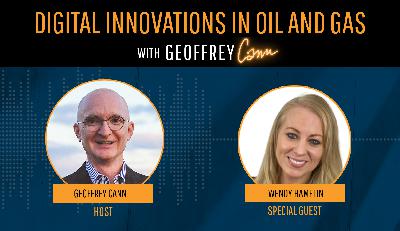
"Turnover and mergers are one of the biggest disruptions in companies. So when you have that factored in, if you have someone who leaves the company, then everything that they've ever done, that human brain of knowledge as well and experience within that company is gone." In this episode, I'm in conversation with Wendy Hamelin, the CEO of Astraea Energy, an advisory firm in the area of high performance organizations. Wendy notes how there is a significant loss of organizational know how when we adopt new technologies that displace human capability (think of how the lowly calculator has eroded our ability to do math by hand). Extend this to an organization scale, as we are now doing with tools like AI, and our organizations are at some risk. "I use an iPhone, for example, an iPhone is the actual device itself. And then we add our apps to our device. So the hierarchy of information and device software, if we add a hack, or add a hacked app to our iPhone, then that violates the entire phone." Wendy Hamelin is the President and CEO of Astraea Energy, an advisory firm founded in 2014 to provide consulting and advisory service to oil and energy projects in Northern Alberta. Wendy provides safety training and performance improvement consulting services. "If we're onboarding a contractor, we need to remember to off board every single part of that contractor when they're completed." USEFUL LINKS LinkedIn profiles (personal, business): Personal: https://www.linkedin.com/in/wendyhamelin Business: https://www.linkedin.com/company/astraea-energy-inc/ Facebook pages: https://www.facebook.com/astraeaenergy Website: http://www.astraeaenergy.com/
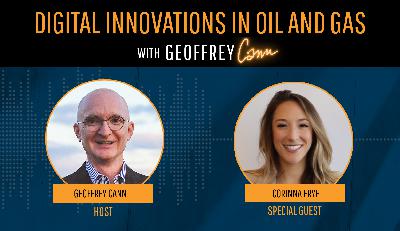
"Those who are working in any energy sector right now are best place to be working in that sector in another 10 years, even if it's going to be on a different technology." In this episode, I'm in conversation with Corinna Frye, who is the National Head of Renewable Energy and Clean Technology, with LVI Associates. As a recruiter focused on the energy industry, Corinna has seen first hand the demand pull from the energy industry for talent, and the best positioned to satisfy that demand are professionals already working in energy. However, it takes foresight to see the opportunity, and not all professionals anticipate the coming changes to the talent landscape. "Clean energy is employing over 40% of all energy workers in America at this stage." Corinna Frye is the National Head of Renewable Energy and Clean Technology, LVI Associates, a Phaidon International brand in Boston, Massachusetts, US. "We're going to end up pulling from the traditional oil and gas backgrounds, because there aren't huge numbers of people with an anaerobic digestion background specific to biogas here yet." USEFUL LINKS LinkedIn profiles (personal, business): Personal: https://www.linkedin.com/in/corinna-frye-5b577858/ Business: https://www.linkedin.com/company/lviassociates/ Twitter handles: @PhaidonIntl @lviassociates Website: https://www.lviassociates.com/
Canada's largest private oil company, and operator of the largest oil refinery, is carrying out a strategic review, which includes the possible sale of the company. Why would they do this? I grew up in Saint John, and had the privilege to work at this company for a few years. My extended family members who still live and work in the area, have reached out to me for a perspective. They are naturally concerned about what the sale of the largest business in town means for their future. Setting aside any private reasons that the family might want to sell out (from the complexities of intergenerational wealth transfer to family taxation strategies), the most important reasons involve upcoming market changes. My advice: keep calm and carry on refining.
In case you missed it, WPC24 took place recently in Calgary, Alberta, for the second time in its history. WPC itself was established way back in the 1930s as a forum for the global industry to discuss common themes on a triennial basis. As a global event, it attracts an audience from around the planet.. The voices discussing the global energy industry's challenges included the Energy Minister from Saudi Arabia, and the CEOs of Saudi Aramco, ExxonMobil, Repsol, WestJet, Accenture, Pertamina, KNOC, Kuwait Petroleum Corp, ONGC, NNPC (Nigeria), NOCK (Kenya), Oil India, and managing directors, presidents, vice presidents, and board chairs from Cenovus, Petronas, Petrobras, Petronet, Suncor, Deloitte, Brookfield, Platts, S&P, Shell, and many others. You never know who you'll meet at such a gathering. As I ascended the escalator to the event floor for the opening ceremonies, I found myself standing beside a trade ambassador from Libya, who shared some personal details of the immense tragedy stemming from the floods from his country. My fellow panelists hailed from Calgary, Houston, and Saudi Arabia. I have a collection of business cards from Tema (Ghana), St. John's, Midland (Texas), Bogotá (Colombia), Pittsburgh, Berlin, Washington, and Uruguay. Under the broad theme 'path to net zero', the range of topics under discussion were in equal parts bracing and confronting, taking in supply and demand, energy transition, decarbonization, industry growth and/or decline, financing strategies, infrastructure challenges, energy security, hydrogen developments, carbon capture and storage, net zero pathways, indigenous engagement, and talent issues. It is impossible for one person to summarize the conference because there are multiple parallel tracks, a full poster and paper show, and dozens of talks and panel discussions. You simply can't take it all in. Then again, you can always form a point of view based on the dialogue you did take in, so here's mine.
Markets are starting to show interest in commodity products that are produced more responsibly, notably natural gas. The key is to be able to prove it, and that requires some changes. Customers and markets are starting to demand evidence that energy products such as natural gas are making a positive contribution to buyers' emission reduction goals. Responsibly sourced gas will experience demand growth, rewarding gas producers for their efforts at reducing emissions in the industry. Digital innovations have unlocked many businesses' ability to offer variations of tracking and tracing services. Tracking is by far the easier of the two, and Apple, as one example, has created its AirTag product to exploit this opportunity. AirTags connect up with passing iPhones and relay their coordinates via the cloud to the AirTag owner, pinpointing the tag's location. Tracing is decidedly more difficult as it requires a date, time, and location log of the events, changes of state, and changes in ownership of the item that is being traced. There are few examples of full item tracing in industry for this reason. Tracing is doubly hard for commodities that are fungible (how dto you tell one organic tomato from another), or blended with other similar products (such as green energy). Tracing of energy is coming to the commodity industry as market participants express greater interest in energy provenance.
Companies working in the energy sector are now prosecuting their own self-defined pathways to achieve carbon zero or carbon neutral business profiles. Digital innovations play a key role. As part of the World Petroleum Congress, September 17-21, 2023 in Calgary, I was on a panel discussion to discuss digital transformation on the route to Net Zero. By now, hopefully, all energy companies will have defined their own pathways to zero carbon (either absolute or net). Our goal on the panel discussion is to peel this problem apart, layer by layer. It's great that digital innovation is a topic at this event, a once-in-three years affair. The panel agreed that there is some consensus on the need to address climate change at an industrial level, and that the question is no longer "should we", but "how should we". The panel discussed the following: The drivers of change that provide the shape and contours of the net zero journey. The various pathways to net zero that could be pursued by the various players in the oil and gas value chain. The digital building blocks that the petroleum industry will leverage to achieve net zero. The panel hopes to reveal the outlines of how digital enables transparent, auditable and cost-effective carbon emission reduction strategies for petroleum companies. This will not be easy.
The energy worker of the future will require a different set of personal attributes than those normally selected for today. Energy companies may well find these attributes in short supply. One of my more interesting roles is the occasional advisory work for educational institutions on the skills requirements for the energy worker of the future. Since I research and write about energy topics, including energy futures, I do have an opinion on the likely skills, particularly those in the digital area. Now energy systems are entering a phase of high uncertainty. Major questions abound on the eventual scale of various energy products, such as the various shades of hydrogen, nuclear energy, battery and energy storage technologies, fusion, fossil fuels, the renewables, geothermal, tidal, and many others. Loyalty seems rather a quaint notion in an aggressive merger and acquisition world. Most schools lack the capacity to place risky bets on possible energy futures that might not play out, and so seek lots of input before making commitments to new educational directions. Digital innovations are evolving even faster. Recently I participated in a working session at SAIT on these questions, and this episode sets out some of the findings.
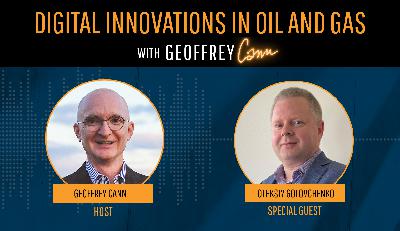
"Emissions combine all of the activities a company has. It's the tailpipe of the company, but it entails all of the activities that company undertakes." In this episode, I'm in conversation with Oleksiy Golovchenko who is a Senior specialist, EHS Data and Analytics with Ovintiv, a large North American oil and gas producer. Oleksiy has been part of a team delivering a real time emissions inventory management system at a highly granular level of detail across the full measure of the company. This is a hard problem to solve, and a lot of companies will want to simply buy such a solution. But Oleksiy discusses why there are no out of the box solutions in this field, that it requires a committed team and organization, and coding skills (not computer scientists) are needed. "There's no such thing as an out of the box Emission Inventory Management System. And the reason for that is that it needs to be configured to company individual requirements, business processes that you have." Oleksiy Golovchenko is a Senior specialist, Environment Health & Safety Data and Analytics with Ovintiv. He began his career working in environmental labs where he performed a range of chemical analyses for various media, including air, water, and soil. From there, he joined NOVA Chemicals, working variously in Catalysts, Polymers, and Petrochemicals, earning co-authorship on several patents. At Ovintiv, he deploys automation to minimize regulatory compliance, sustainability, ESG and safety risks, turning data into actionable insights and creating disruptive innovation. Oleksiy holds a Bachelor of Science in Chemistry from Simon Fraser University (SFU), a Master of Science in Sustainable Energy Development (SEDV) from the University of Calgary (U of C), and an MBA from the Jack Welch Management Institute. "Excel doesn't have the capabilities to handle the sheer amount of data, let alone have the functionality to do things you need to do. And let alone think about doing it all in real time, from a variety of data sources." USEFUL LINKS LinkedIn profiles (personal, business): Personal: https://www.linkedin.com/in/oleksiygolovchenko/ Business: https://www.linkedin.com/company/ovintiv/ Website: https://www.ovintiv.com/https://www.ovintiv.com/https://www.ovintiv.com/
For all the talk about energy transition, many aspects about transition remain unexplained. I'm in the midst of a home renovation. The renovation should allow the house last another 20-30 years with minimal upkeep, and may well be our final home as we embrace the ideal to age-in-place. The renovations are extensive—walls are being opened up for the first time in 30 years, the flooring is being upgraded, and we've had to move out for the four months it will take to carry out. What's remarkable is that it falls entirely to me to take the initiative on all new energy ideas for the house. I would have thought that the instant I surface at the local planning office to secure a building permit, someone with knowledge about the national agenda for energy transition would be chasing me to encourage me to do the right thing, and embrace these (and likely other) innovations. Instead, it's been crickets. In the meantime, I'm curious how many other aspects of modern life are going to cope with the transition. Here are four that puzzle me about how transition will work.
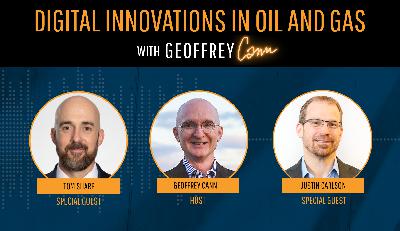
"I'm also a very strong advocate personally of a sort of an all in approach, meaning we aren't going to solve this with one magic silver bullet, right? If that doesn't exist, we need to develop these things over time." This is part two of a two part podcast recording with Tom Sharp, the Director of Permitting Intelligence with Arbo, and Justin Carlson, founder and Chief Commercial Officer of East Daley Analytics on the issues and challenges facing energy infrastructure projects, and some of the solutions. "Where we've arrived is a place where agencies are getting sued so much, that the process is getting dragged out and the cost of delays is used to halt projects, regardless of whether or not this is a project for traditional energy or renewables." Tom Sharp is a thought leader on infrastructure permitting and an expert in environmental and energy law and policy. His unique perspective is informed by 12 years of federal experience, most recently as Director for Permitting Excellence at the Federal Permitting Improvement Steering Council (FPISC), and by positions at the White House Council on Environmental Quality (CEQ) including Deputy Director for NEPA, attorney in the Office of the General Council, and Senior Advisor for Infrastructure. Tom also worked for 9 years as an attorney at FERC specializing in natural gas pipeline certificates and hydropower licenses. He graduated with a Certificate in Environmental Law from the Tulane University Law School and enjoys teaching law classes focused on NEPA and permitting reform. "If there's a transmission line that's being built from one state to another, crossing four different states, and those states in the middle aren't necessarily getting benefit from that, you're going to probably see increased opposition there." Justin Carlson is the Co-Founder and Chief Commercial Officer of East Daley Analytics. With a passion for strategy and deep expertise in oil and gas market supply and demand, Justin co-founded East Daley Analytics to creatively transform data and information into market moving knowledge and wisdom to drive client success. He has also authored articles on the energy financial markets for Forbes, Oil and Gas Journal, and Seeking Alpha. Justin has a BS in Mechanical Engineering and an MS in Engineering Management from the Colorado School of Mines. "You've got all this data that you've actually got to normalize, bring together and that's what really slows the process down. It's not all unified. It is very independent and a bit disorganized and you're not always sure what to trust." USEFUL LINKS LinkedIn profiles (personal, business): https://www.linkedin.com/in/justin-carlson-b8033b5/ https://www.linkedin.com/in/thomaslsharp/ https://www.linkedin.com/build-relation/newsletter-follow?entityUrn=7075561315259338752 Website: http://www.goarbo.com/ https://www.eastdaley.com/
"There's a lot of different things that are plaguing infrastructure developers or have been for a long time, and they're all sort of coming to a head now." This is part one of a two part podcast recording with Tom Sharp, the Director of Permitting Intelligence with Arbo, and Justin Carlson, founder and Chief Commercial Officer of East Daley Analytics on the issues and challenges facing energy infrastructure projects, and some of the solutions. "We don't build a road that no one's going to travel on. You build a pipeline, because somebody has supply and someone has demand." Tom Sharp is a thought leader on infrastructure permitting and an expert in environmental and energy law and policy. His unique perspective is informed by 12 years of federal experience, most recently as Director for Permitting Excellence at the Federal Permitting Improvement Steering Council (FPISC), and by positions at the White House Council on Environmental Quality (CEQ) including Deputy Director for NEPA, attorney in the Office of the General Council, and Senior Advisor for Infrastructure. Tom also worked for 9 years as an attorney at FERC specializing in natural gas pipeline certificates and hydropower licenses. He graduated with a Certificate in Environmental Law from the Tulane University Law School and enjoys teaching law classes focused on NEPA and permitting reform. "You really have two kinds of risk. You've got risk borne by the project developer, and then you've got policy risk." Justin Carlson is the Co-Founder and Chief Commercial Officer of East Daley Analytics. With a passion for strategy and deep expertise in oil and gas market supply and demand, Justin co-founded East Daley Analytics to creatively transform data and information into market moving knowledge and wisdom to drive client success. He has also authored articles on the energy financial markets for Forbes, Oil and Gas Journal, and Seeking Alpha. Justin has a BS in Mechanical Engineering and an MS in Engineering Management from the Colorado School of Mines. "Midstream companies are out wanting to develop hydrogen projects, but we don't really know where the supply is. And we also don't know who wants it, so I don't know what to do." USEFUL LINKS LinkedIn profiles (personal, business): https://www.linkedin.com/in/justin-carlson-b8033b5/ https://www.linkedin.com/in/thomaslsharp/ https://www.linkedin.com/build-relation/newsletter-follow?entityUrn=7075561315259338752 Website: http://www.goarbo.com/ https://www.eastdaley.com/


Download from Google Play

Download from App Store
 United States
hahahaha, Do you really believe blockchain can resolve 'contracts' issues? just bring the contract engineers with the contract copies and get it resolved. Blockchaing has nothing to deal with contracts