


 Claim Ownership
Data For Future
Subscribed: 4Played: 58
Subscribe

© Tammy and Pavlo
Description
A growing body of knowledge on Data and Sustainability.
61 Episodes
Reverse
Did you know that over 70% of global greenhouse gas emissions are generated by just 100 companies? Managing and reducing these emissions requires a robust understanding of carbon footprints, and that’s where carbon accounting steps in. By identifying emission sources, optimizing reduction strategies, and increasing accountability, carbon accounting is becoming a cornerstone of sustainability efforts worldwide.
🎙️ Joining us is Prakhar Agarwal, a product manager at Carbon Direct and a passionate advocate for leveraging technology and data to tackle climate challenges. In this episode, we discuss:
The essence of carbon accounting: How it uncovers hidden emissions and drives real climate action, making it a linchpin for achieving net-zero goals. 🌍
The power of data in innovation: How smarter, data-driven carbon accounting tools are reshaping the way businesses measure and reduce their environmental impact. 📊
Big challenges and bold opportunities: From untangling the complexity of Scope 3 emissions to creating accessible solutions for companies of all sizes. ⚙️
Prakhar’s transformative journey: His leap into climate tech, embracing failure as a catalyst for growth, and his practical, empowering advice for anyone ready to turn passion into impact. 💡
This conversation offers valuable insights into how businesses and individuals can leverage data to drive meaningful climate action. Don’t miss it! Tune in to learn how data and innovation are shaping the future of sustainability. 🎧
Cows and climate change? You bet! In this Data for Future episode, we explore the role of cow burps in methane emissions and the innovative solutions being developed to tackle this surprisingly significant problem.
🎙️ Our guest, Barrett Olafson, is the Project Manager for Spark’s livestock enteric methane mitigation program. With over 15 years of experience leading major projects for brands like Carhartt, Levi’s, and Under Armour, Barrett now manages stakeholder engagement, policy coordination, and roadmapping efforts for methane reduction.
🎧 Listen to this episode to discover:
Why methane matters for climate change 🌡️
Enteric methane and cow digestion 🐮
Innovative solutions like feed additives, seaweed, and more 🧬
Real-life challenges in reducing methane on farms 🚜
Barrett's unique journey to climate career🌱
Don’t miss this insightful discussion on how we can cut methane emissions and move toward a more sustainable future! Tune in and enjoy! 🎙️
Book Recommendation: Switch: How to Change Things When Change is Hard, by Chip & Dan Heath
Welcome to another episode of Data for Future, where we dive into the intersection of data and sustainability! 🌍✨ This season, we’re focusing on careers in the growing climate sector. Today, we’re joined by Louis Chan, a seasoned sustainability manager with extensive experience across industries.
Louis leads sustainability initiatives at an investment holding company, conducts ESG due diligence, and oversees sustainability reporting. Beyond his day job, he’s a trustee for a UK charity, shaping sustainability policies, and a co-founder and advisor to multiple climate tech startups. In this episode, we explore sustainability management, climate tech trends, and actionable insights for professionals in the field.
Key Discussion Points:
The Role of a Sustainability Manager: Louis discusses his daily responsibilities and the dynamic nature of his work.
Sustainability in the Commodities Sector: Challenges and opportunities in implementing sustainability strategies, how to stay up to date with upcoming policies and emerging technologies.
Understanding ESG Reporting: Key metrics, decision-making processes, and challenges in data quality and scope 1,2,3 emissions.
Biodiversity Data and TNFD: The growing importance of biodiversity data, challenges in obtaining it, and emerging solutions.
Energy Market Trends and Climate Tech: Insights into promising climate tech sectors such as Carbon Capture and Storage (CCS) and Direct Air Capture (DAC)
Staying Ahead: Louis’s approach to continuous learning, including highlights from the MIT sustainability program, with LCA and learnings on circular economy
Career Development Advice: Tips on transitioning into sustainability roles, networking, and the importance of volunteering. More specifically mapping out your ideal role, and work backward to find people who has been on that path to seek inspirations.
Speaker Bio: Louis Chan is a sustainability manager at an investment holding company, leading sustainability strategies, ESG due diligence, and reporting. He is also a trustee for a UK charity, aiming for carbon neutrality by 2030, and a co-founder and advisor to climate tech startups. Louis is passionate about driving sustainable investments through capital markets.
Resources Mentioned:
TNFD - Nature-Related Financial Disclosure Recommendations
MRV - Measurement, Reporting, and Verification of Carbon Credits
Australian Safeguard Mechanism
Stay tuned for more episodes where we continue to explore the intersection of data and sustainability. Don’t forget to subscribe and leave a review if you enjoyed the show! 🎧🌱
🎙️In this episode, we dive deep into the world of climate finance with our special guest, Daisy Pacheco, a senior associate at RMI. Daisy shares her insights on how the financial sector can drive the transition to a low-carbon economy and the crucial role of data in this journey.
🌟 Episode Highlights:
Exploring Climate Finance: Dive into the critical importance of climate finance in achieving net-zero emissions by 2030.
Role of Financial Institutions: Learn how financial institutions like banks, asset managers, and insurance companies measure the alignment of their portfolios with climate goals. Understand the different motivations and outcomes for various types of financial institutions.
PACTA Methodology: Get a clear explanation of the Paris Alignment Climate Transition Assessment (PACTA) methodology. Daisy explains how PACTA helps financial institutions assess the alignment of their lending and investment portfolios with climate scenarios, providing a snapshot of their current alignment and a forward-looking perspective.
Data and Disclosure: Understand the importance of both qualitative and quantitative data in climate finance. Daisy discusses the types of data used in PACTA, including financial portfolios, climate scenarios, and real-sector company information, and the challenges of data accuracy and consistency.
Impact and Implementation: Hear about Daisy's work with financial supervisors and the technical capacity building provided to implement PACTA. Learn how this methodology empowers institutions to assess and manage climate risks more effectively.
📚 Resources Mentioned:
Asset Impact: https://asset-impact.gresb.com/
PCAF: https://carbonaccountingfinancials.com/standard
IPCC:https://www.ipcc.ch/
Climate Courses:
- Principles of Sustainable Finance
https://www.coursera.org/learn/sustainable-finance
- The Finance of Climate Change
https://www.coursera.org/learn/the-finance-of-climate-change
- The Oxford Sustainable Finance Grouphttps://www.smithschool.ox.ac.uk/oxford-sustainable-finance-group/research/teaching
Stay tuned and enjoy this episode full of insightful discussions and practical advice on integrating data with sustainability efforts. Don't forget to subscribe and leave a review if you find our content valuable! 🌱📈
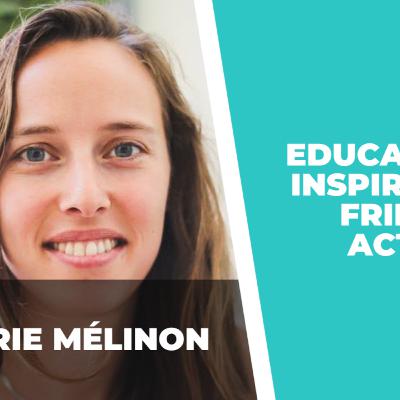
In this heartening episode of Data for Future, Marie Mélinon unfolds her journey into a sustainability career, detailing the inception of her circular economy nappy business and her current dedication on climate education through workshops. 🔄🍃 Through her experiences, she highlights the significance of empowering individuals with knowledge and the critical nature of climate adaptation. Let’s dive in!
Key Takeaways:
Courage in Transition: Transitioning to sustainability requires courage and deep self-reflection, never will it feel to be the perfect time. 🌟
The Power of Workshops: Climate workshops serve as a potent tool for spreading awareness and motivating actionable change. 📚🌱
Urgency of Adaptation: The necessity for climate adaptation shines through as an essential, yet often overlooked, aspect of sustainability. 🌧️➡️
Rewarding Experiences: The most rewarding aspect of all? Spoiler: for Marie, it is witnessing participants' empowerment and training new facilitators to enlarge the community. 🌟📢
Conscious Consumption: A simple step towards sustainability can be questioning our consumption habits and understanding the impact of our choices. 🤔🌍
Rethinking Digital Impact: The environmental impact of digital devices v.s. data center impacts. 💻🌳
Chapters Breakdown:
00:00 Introduction and Background: Marie shares her roots and the evolution of her passion for sustainability. 🌳❤️
03:01 Starting a Circular Economy Business: Insights into the creation of Pana and its mission to reduce diaper waste. ♻️👶
08:10 Challenges and Highlights: Reflecting on the hurdles and achievements of running a circular economy enterprise. 🚧🏆
11:32 Hosting Climate Workshops: The transformative power of facilitating workshops on climate topics. 📈📚
23:53 Long-Term Goals and Passion for Biodiversity: Marie discusses her dreams of rural living and deep connection with nature. 🌄🌿
26:41 Workshops for Companies and Individuals: Tailoring workshops to inspire corporate and personal environmental responsibility. 🏢👥
30:07 Adaptation to Climate Change Workshop: A deep dive into preparing for and mitigating climate change impacts. 🛡️🌍
33:28 Sustainability Tip: Question everything - A mantra for mindful living and sustainable choices. ❓♻️
34:06 Book Recommendation: "World Without End" - A comic book that explores complex sustainability themes in an accessible format. 📖🌏
Episode Summary 🌿
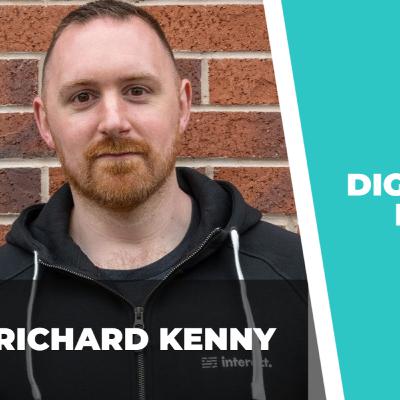
In this episode of "Data for Future," 🎧 we shine a spotlight on the digital sector's staggering energy consumption, accounting for an estimated 4-6% of global electricity use. 🌍💡 As we navigate through the complexities of our digital carbon footprint, we're joined by Richard Kenny, Managing Director at Interact, to discuss sustainable solutions and innovative strategies aiming for a greener digital future.
Key Insights 📊
- Digital Sector's Environmental Impact: Exploring the significant energy usage and carbon emissions of the digital sector, focusing on data centers 🖥️, transmission networks, and internet end-use.
- Digital Sobriety: What is digital sobriety, and how to have mindful digital consumption 💡
- Path to Digital Sustainability: To achieve digital sustainability, we need collective efforts from individuals, enterprises, and governments through education, policy, and groundbreaking innovations. 🌱
- The Ethical and Environmental AI Challenge: Do we need an 'AI solution' for everything? The dilemmas posed by AI's growth, touching on energy consumption, ethical concerns, and the risk to human creativity. 🤖
- Importance of Circular Economy: The circular economy's essential role in diminishing the digital footprint by promoting product life extension and waste reduction. ♻️
- Data Storage Challenges: Addressing the burgeoning issue of data storage and the pressing need for minimizing data proliferation and innovating storage solutions. 📈
- Interact's Impact on Carbon Reduction: Rich shares how Interact's secret sauce on drastically reducing energy and carbon usage through server efficiency optimization, some useful AI practice cases here. 🔋
Detailed Chapters 📖
01:00 Introduction: Overview of the digital carbon footprint and the urgency of addressing the digital sector's energy consumption. 🌍
02:54 Digital Sector's Carbon Footprint: Rich discusses the estimated energy use of the digital sector, its components, and the growth projection. 🔌
04:11 Data Centers and Their Impact: Energy use of data centers, highlighting their significant contribution to the sector's total energy consumption. 💡
05:10 Embodied Cost of IT Hardware: Rich and Tammy touch on the environmental impact of producing IT hardware, including the extraction and use of critical raw materials.
08:31 The Paradox of Clean Energy Creation: A deep dive into the environmental footprint of creating assets for clean energy and the systemic approach needed. 🔄
09:01 Discussing the Total Carbon Life Cycle of Data Center Equipment: Rich emphasizes the significant carbon footprint involved in the creation and use of data center equipment. 📊
10:35 Digital Sobriety: Introducing the idea of digital sobriety and the balance between consumption and its environmental costs. 📉
13:01 The Efficiency of Modern Telecom Networks: The conversation shifts to the carbon intensity of data transmission and the potential benefits of more efficient telecom networks. 🌐
17:36 The Need for Data Economy and Conscious Consumption: Highlighting the importance of being mindful about data production, storage, and consumption. 📚
26:19 The Circular Economy in the Digital World: Rich discusses the importance of a circular economy approach in IT to extend product life and reduce waste. ♻️
33:33 Addressing the Challenge of Data Storage: Tackling the growing issue of data storage and the need for innovative solutions to manage the data deluge. 💾
37:07 Interact's Mission and Impact: Rich provides insight into Interact's work, how they help optimize server efficiency, and his personal sustainability goal. 🎯
46:33 Future Trends and Technologies in Digital Sustainability: Discussing the potential of emerging technologies and trends to reduce the digital carbon footprint. 🚀
Tune in for a deep dive into how we can all contribute to a greener, more digitally responsible world. 🌐🍃
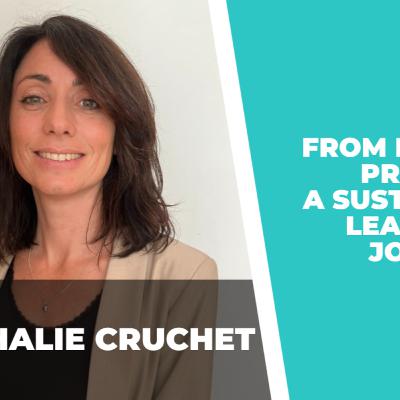
🎧 Welcome to Season 2 of "Data for Future," the podcast where data meets sustainability! 🌟 In this episode , we're thrilled to spotlight Nathalie Cruchet, Head of ESG and Sustainability at Submer, and her inspiring journey into the heart of sustainable leadership. 🚀
What to Expect:
🔍 Nathalie's Background: Discover Nathalie's inspiring switch from a 20-year career in the IT industry to championing sustainability at Submer. 🔄
🌿 Sustainability at Submer: Nathalie delves into crafting and executing Submer's sustainable strategy, from ESG reporting to certification processes. 💡
💬 Coaching and Mentorship: Insights on the pivotal role of coaching and mentorship in Nathalie's career transition towards sustainability. 🌱
📈 Career Transition: Nathalie shares the ups and downs of shifting her career path towards sustainability and ESG. 🛤️
🗓️ Daily Life of a Sustainability Leader: A peek into Nathalie's day-to-day work, her strategic approaches, and the broader impact of her role. 🔎
Resources Mentioned:
📚 Doughnut Economics: A revolutionary approach to economics that balances human needs and planetary boundaries. Doughnut Economics 🍩
📖 World Without End: A historical novel that offers lessons on resilience and community. World Without End 🌍
🎙️ Coaching Resource: Personal growth and transformation at Change Ma Vie. 💼
🌱 LCA Assessment by Marcel Gómez Consultoría Ambiental: Explore life cycle assessment services. Marcel Gómez Consultoría Ambiental 📊
📉 Scope 1,2,3 Assessment with Sami: Get comprehensive assessment tools for understanding environmental impact. SAMI 🌐
📘 Additional Resources:
Intergovernmental Panel on Climate Change (IPCC) Reports: IPCC 📚
The Shift Project: The Shift Project ⚙️
Our World in Data: Our World in Data 🌎
Freedom House: Freedom House 🗽
Contact Nathalie Cruchet: For deeper insights into sustainability and ESG, find Nathalie on Linkedin 📧
👉 Tune in on YouTube and Spotify to explore Nathalie's vision of integrating data, technology, and sustainability for a greener future. 🎤🍃
#DataForFuture #SustainabilityLeadership #TechForGood #ESG #SustainableTech

We often hear about new installations of solar panels that make renewable energy transition real. But how often do we hear about the importance of keeping solar modules clean? Dirt and soiling can lower the performance of solar panels by as much as 50%!
Inti-tech is a startup that was created to address exactly this issue in the country with one of the favorable locations for solar energy, Chile. With help of autonomous and semi-autonomous robots, they offer on-demand cleaning services for both residential and industrial solar installations. And they clean them with no water consumption!
Dive in with us into this interview with Inti-tech's CCO, Felipe Urritia!
Resources:
☀️ Inti-tech's LinkedIn
🔋 Inti-tech's website
🇨🇱 Chile's energy country profile
Cryptocurrencies are still gaining popularity. The total cap of the crypto asset market has reached $2.3 trillion, making it larger than the market capitalization of any company and possibly any asset except for gold. El Salvador has even made Bitcoin an official legal currency in the country. Meanwhile, what role is crypto playing in terms of sustainable development? And what are the uncovered use cases of blockchain that could move us in the direction of an environmentally clean and socially just future?
In our last episode on cryptocurrency and blockchain, we discussed EthicHub project in particular, whose founder discovered an awesome opportunity to make the world a better place through this technology. This time, we speak about blockchain more generally and develop a more holistic and global conversation around crypto with Carlos Gomez, the Chief Investment Officer at Belobaba crypto asset fund. Join us to unravel the power of blockchain for sustainability and find out how crypto can be useful for you personally even if you’re relatively new to the topic.
Resources:
📢 El Salvador makes bitcoin a legal tender
🎓 Anthony Pompliano (learn about crypto)
🎓 Coin Bureau (learn about crypto)
Building AI models is still a VIP fiesta that is only reserved for somewhere between 0.002% and 0.02% of the global population looking at how many data scientists are out there. What if everyone could build a machine learning model to solve their personal and/or business problem with NO code at all? That’s already happening, my friend, and Peltarion is one of the pioneers enabling this revolution!✊
Korey Stegared-Pace, an AI Developer Advocate at Peltarion, is sharing his amazing insights about this data riot and it looks like opportunities are endless.
With us all using AI on a daily basis without even knowing it, isn’t it democratized already? What will the world look like when just as many people build AI models through platforms like Peltarion as building web pages through WordPress? And are Data Scientists going to disappear?!
Resources:
🎙️The Maikers Show: https://maikersshow.com/
🤖Peltarion’s website: https://peltarion.com/
👨🎓Intro to AI slides: https://bit.ly/3msGIn4
💡Ethical AI: https://dataforfuture.org/episodes/gemma-galdon-clavell-eticas-consulting/ (episode mentioning the example of Barack Obama turned white by an ML algorithm)
Our current financial system is far from perfect and one of the biggest issues with it is that it leaves aside about a quarter of humanity, 1.7 billion people! With the arrival of blockchain and DeFi (decentralized finance), there is a big hope that this technology will create a more fair, inclusive, and efficient financial ecosphere.
One of the pioneers in the field is our guest Jori who created Ethichub, a company that makes socially responsible investment easy and secure, eliminating major barriers to capital flow through the use of blockchain, cryptocurrencies, and a so-called peer-to-peer crowdlending. It connects people in developed countries that want to invest their money in a socially beneficial and profitable cause with solvent farmers around the globe and creates a win-win situation where farmers pay less interest and investors receive more returns.
How exactly does it work? Is this investment risky? How do you approach farmers with something as fancy-sounding as “blockchain peer-to-peer crowdlending”?! All this and more in this episode, so tune in!
Join EthicHub community: www.ethichub.com/en/
Jori's LinkedIn: www.linkedin.com/in/jori-armbruster/
Join our team: dataforfuture.org/join-our-team/
Seemingly objective and research-driven AI systems are in reality full of bias, and it becomes increasingly important as more and more decision-making is being outsourced to machine learning.
Eticas Consulting, under the leadership of Gemma Galdon-Clavell, teams up with organizations to identify black box algorithmic vulnerabilities and retrains AI-powered technology with better source data and content. Since their inception, they have built a track record with a proven methodology that equips clients with a more cognitively diverse algorithm. Moreover, instead of punishing the algorithm performance, it improves it!
Tune in with us to learn about how Eticas identifies vulnerabilities and biases and corrects them using their unique methodology!
Resources:
Eticas Consulting homepage
Gemma’s LinkedIn
Barack Obama turned white by an algorithm
Our webpage: https://dataforfuture.org/
Young people, most probably like you, tend to experience issues marked by the distance and mistrust between citizenship and politics. Society and its needs both evolve at such a great speed. Today’s society is democratically mature, highly skilled, restless, and eager to take part in shaping the world around them. How to close this gap in communication between the government and society? Here’s when Smart Citizenship and Smart Governance come into play.
Our guest this time is one of the 50 best experts in Smart Cities at world level nominated by the World CSR organization, Carles Agustí i Hernández. He and his team leveraged Smart Citizenship and Smart Governance in Barcelona city, using technology to improve the communication between people and its government. In particular, he has led the Barcelona Open Government and Open Data initiatives, building it from scratch to make the administration more transparent and using the power of data.
Dive in to find out how Barcelona has become smarter since the launch of these initiatives, what have the successes and challenges been, and where the project is moving towards in the future!
Decidim: https://www.decidim.barcelona/
Open Data BCN: https://opendata-ajuntament.barcelona.cat/en
Carles' Linkedin: https://www.linkedin.com/in/carles-agusti-i-hern%C3%A0ndez-488292a/
Our website: https://dataforfuture.org/
Website of AI Scope: https://aiscope.net/
Eduardo’s LinkedIn: https://www.linkedin.com/in/eduardopeire/
And email: edu@aiscope.net
Taking into account the current COVID pandemic, it is easy to oversee the persisting impact of other infectious diseases in the world. Nevertheless, malaria alone continues to take over half a million lives each year, along with other spreading diseases that need to be taken care of. Diagnosis, the first step of the cure, turns out to be very expensive and sometimes impossible to carry out in developing regions, especially in rural areas. Microscopic blood tests are expensive and there’s a clear lack of trained staff to perform analyses.
Eduardo Peire, the Founder and the Head of Innovation at AI Scope, has found a brilliant application of AI to serve a higher purpose. He and his team are developing an app, powered by computer vision Deep Learning algorithms, that by connecting a phone to a microscope can automatically detect infectious diseases and confirm a need for further diagnostic. This allows to drastically reduce the cost and increase the scale at which diagnoses can be performed. However, the application does not exclude humans from the process and serves as a collaboration tool between the human and the machine. The algorithm is used to filter out people who certainly are not infected, to allow more resources and time to be allocated for people who really need it.
Tune in with us in this discussion with Eduardo where he explains how the idea was born, how he gathered resources to power the non-profit project, and what humbling learnings he and his team have encountered on their way.
-------------------
Looking for data-powered solutions for your business problems? We are here to help you with data cleaning, analytics, and machine learning: https://dataforfuture.org/services/
Data Science in the world of marketing. How does marketing effectiveness get measured? How do we develop metrics and models to shape decisions? Is data science really science?
Join our conversation with Alicia to talk about her experience working as a data science in Social Point. We explore when fancy algorithms meet reality, how challenging it is to deliver and translate data insights to stakeholders, as well as where shall we draw the line between data asset and user privacy.
Also don’t forget to connect with the Women in Data Community!
Holaluz is a renewable energy provider in Spain and today their Sr. Data Scientist Pablo Rosado is sharing his challenging experience of working in the renewables industry. Oftentimes, people refer to deep neural networks and the most advanced and complex algorithms talking about data science. But, as Pablo says, having robust knowledge of the basics of data cleaning, wrangling and engineering is even more important for working in a real-life business setting.
After switching from academia and research in Astrophysics into the data science industry, Pablo has also made many discoveries and overcome many challenges along the way. His insights about what is really important while learning to work with data will be of great value to both academics as well as aspiring data scientists.
Pablo's blog: https://pablorosado.com/
Linkedin: https://www.linkedin.com/in/pabloarosado/
Data Science For Social Good Summer Project: https://warwick.ac.uk/research/data-science/warwick-data/dssgx/
Have you ever wondered how a smart city actually looks like? Most of us probably imagine a vast metropolitan area covered with futuristic IoT devices, drones delivering commercial products to customers by air, and skyscrapers bedecked with vertical gardens. Meanwhile, what about small cities and towns that hardly can afford a data scientist to get even the simplest insights into the city’s life? How could they make decisions about the city infrastructure and budget? Keep in mind that those cities comprise the majority!
That's where CITYDATA comes in. Its proprietary AI transforms real-world geospatial data into "People Intelligence" (trademarked) for smarter cities and enterprise businesses. As a GovTech 100 company, CITYDATA builds and maintains daily-refreshed anonymized knowledge graphs about people-presence, activity, and movement for 1566 cities on a global scale. The company also sees many opportunities for a sustainability-centered future, working hand in hand with the agenda of the United Nations Sustainable Development Goals.
You can find CITYDATA and its services through the following links:
CITYDATA.ai - the company website
CITYDASH.ai - the company’s People Intelligence platform
CITYCHAT.ai - mobile chatbot for citizens and cities
We're offering data science and machine learning services: http://dataforfuture.org/services
Have you ever thought of changing your career and entering the tech world? Or maybe are you already doing it and find it difficult? Whatever stage you are at, this episode is here to motivate you. Vincent van Grondelle tells us about MigraCode today, an open-access coding academy that teaches migrants from all over the world to become full-stack developers and find employment in Europe. If MigraCode’s students make it, you are able to make it, too.
Support MigraCode by volunteering in different (also non-technical) roles or just sharing stories of their students to create more awareness about people with a migration background: https://migracode.openculturalcenter.org
You can also text Vincent via email: barcelona@migracode.org
We offer Data Science services: https://dataforfuture.org/services
What, do you think, is the secret of Google, Amazon, Netflix, and other Big Tech companies to become the most powerful and rich firms in today’s arena? Arguably, this is thanks to the invisible gold of the 21st century in their possession we call data. Today’s internet still remains a mostly unregulated space where profound manipulation and surveillance takes place. If we work for free on creating that data that is the essence of all the state-of-the-art algorithms today, then why don’t we have a say in how we want this technology to be used? And if it is worth so many $$$, shouldn’t we get paid for it?
The following is the conversation with the creator of the first data union in the world, Reinier Tromp. Just like labor unions used collective power to pressure capitalist firms and governments to create better conditions for the workers, a data union aims at creating better conditions for data producers, aka internet users just like you and me.
Get in touch with us on Linkedin: https://www.linkedin.com/company/dataforfuture/
Facebook: https://www.facebook.com/dataforfuture
Email: pavlo@dataforfuture.org
Sources mentioned:
The Data Union Website: https://thedataunion.eu/
Blueprint For Better Digital Society (Data Dignity by Jaron Lanier) : https://hbr.org/2018/09/a-blueprint-for-a-better-digital-society
Fake News spread faster than normal news: https://www.bbc.com/news/technology-43344256
Study about Facebook, negative emotions are easier to trigger than positive ones: https://www.theguardian.com/technology/2014/jun/29/facebook-users-emotions-news-feeds
Visualization of Neural Net Layers: https://cs231n.github.io/understanding-cnn/
If you are one of those people who are/were lost while being a student, then welcome to our club, you’re not the only one. How to find your calling while still being at the university? Should you go a non-traditional way, like joining a bootcamp? And why the hell are they so expensive?! This is the time to answer all of your questions! Today, by the CEO of Akademy.AI bootcamp, Jan Carbonell. Looking at Jan’s serial entrepreneurial career today, it is hard to imagine that he once, too, didn’t know where to go. Not only he shares honest insights about the non-traditional education sphere, Jan also gives excellent tips on how to find yourself while following your uni undergraduate program.
Jan’s contacts:
LinkedIn: https://www.linkedin.com/in/jancarbonell/
Twitter: https://twitter.com/jcllobet
Support us here! https://www.patreon.com/dataforfuture/
Our webpage: https://dataforfuture.org/

Comments

Download from Google Play

Download from App Store
 United States