


 Claim Ownership
Relentless Health Value
Subscribed: 117Played: 3,716
Subscribe

©BD Bridges LLC, All Rights Reserved.
Description
American Healthcare Entrepreneurs and Execs you might want to know. Talking.
Relentless Health Value is a weekly interview podcast hosted by Stacey Richter, a healthcare entrepreneur celebrating fifteen years in the business side of healthcare.
This show is for leaders in pharma, devices, payers, providers, patient advocacy and healthcare business. It's for health industry innovators, entrepreneurs or wantrepreneurs or intrapreneurs.
Relentless Healthcare Value is the show for you if you want to connect with others trying to manage the triple play: to provide healthcare value while being personally and professionally fulfilled.
Relentless Health Value is a weekly interview podcast hosted by Stacey Richter, a healthcare entrepreneur celebrating fifteen years in the business side of healthcare.
This show is for leaders in pharma, devices, payers, providers, patient advocacy and healthcare business. It's for health industry innovators, entrepreneurs or wantrepreneurs or intrapreneurs.
Relentless Healthcare Value is the show for you if you want to connect with others trying to manage the triple play: to provide healthcare value while being personally and professionally fulfilled.
634 Episodes
Reverse
Episode 503 of Relentless Health Value features Stacey Richter with Adam Stavisky, Dr. Leo Spector (OrthoCarolina), and Ryan Wells (Health Here) discussing how self-insured employers and specialists rarely connect directly due to intermediaries and fee-for-service "rails." They outline three common pitfalls when bridging this gap: defining and measuring quality and appropriateness (limits of claims data and missing patient-reported outcomes), achieving scale across geographies and specialties, and ensuring benefit design and incentives so members actually use direct-contracting programs. The conversation frames the evolution of Centers of Excellence from 1.0 (travel to brand-name hospitals) to 2.0 (more local but administratively manual) to 3.0 (new infrastructure enabling direct, efficient contracting). Health Here is described as a digital bridge to support payment and communication pathways and reduce administrative waste. === LINKS === 🔗 Show Notes with all mentioned links: https://cc-lnk.com/EP503 ✉️ Enjoy this podcast? Subscribe to the free weekly newsletter: https://relentlesshealthvalue.com/join-the-relentless-tribe 🫙 Support the podcast with a small donation to the Tip Jar: https://relentlesshealthvalue.com/join-the-relentless-tribe 🎤 Listen on Apple Podcasts https://podcasts.apple.com/us/podcast/feed/id892082003?ls=1 🎤 Listen on Spotify https://open.spotify.com/show/6UjgzI7bScDrWvZEk2f46b 📺 Subscribe to our YouTube channel https://www.youtube.com/@RelentlessHealthValue === CONNECT WITH THE RHV TEAM === ✭ LinkedIn https://www.linkedin.com/company/relentless-health-value/ ✭ Threads https://www.threads.net/@relentlesshealthvalue/ ✭ Bluesky https://bsky.app/profile/relentleshealth.bsky.social ✭ X https://twitter.com/relentleshealth/ 00:00 Introduction. 00:32 Collaboration as the next breakthrough innovation. 02:24 A summary of the upcoming conversation. 05:45 A summary of where we are and what the future looks like. 06:24 A relevant post from Jonathan Baran. 08:12 The conversation with Ryan Wells, Dr. Leo Spector, and Adam Stavisky: collaboration from the standpoint of a specialist. 12:22 The pitfalls of data accuracy and defining what quality means from the POV of a self-insured employer. 15:36 Defining quality and data accuracy from the POV of a physician. 15:57 How do you measure outcomes when assessing quality and looking at the available data? 21:45 EP294 with Steve Schutzer, MD. 22:06 Scale and operationalization: How do we do it? 27:00 Shout-out to OrthoForum. 29:58 Take Two: EP398 with Jacob Asher, MD. 30:13 EP501 with Ivana Krajcinovic, PhD. 30:30 How things could be better. 33:29 One last complication and how to structure benefit design to align incentives. 35:33 What an "anti-cricket" program looks like. 37:24 EP308 with Mark Fendrick, MD. 37:34 How do we operationalize benefit design and aligned incentives? 39:39 What we're seeing today in Centers of Excellence 2.0. 41:47 What Adam wants to make clear in all of this.
Episode 502 features Stacey's conversation with Brian Machut (Alliant Health) on how widespread Medicare fee-for-service fraud is inflating costs and undermining ACO shared savings in MSSP and ACO REACH. ACOs uncovered major urinary catheter fraud in 2023 tied to codes A4352/A4353, totaling about $3.5B, with some beneficiaries billed for items never received (including a case shared by Dr. Tara Lagu). CMS created a "SAHS" (significant, anomalous, highly suspect) process to remove certain suspect costs, but benchmark effects can unevenly impact ACOs; catheter fraud is still projected at $3–$3.5B in 2025. The episode also highlights rapidly growing "skin substitute" spending projected at $13–$15B in 2025; CMS did not classify 2024 skin substitute costs as SAHS, leaving them in ACO performance calculations. Machut explains this fraud and missed CMS trend projections can reduce provider earnings, discourage participation in value-based care, and potentially drive cost shifting into higher commercial rates—affecting plan sponsors such as self-insured employers. === LINKS === 🔗 Show Notes with all mentioned links: https://cc-lnk.com/EP502 ✉️ Enjoy this podcast? Subscribe to the free weekly newsletter: https://relentlesshealthvalue.com/join-the-relentless-tribe 🫙 Support the podcast with a small donation to the Tip Jar: https://relentlesshealthvalue.com/join-the-relentless-tribe 🎤 Listen on Apple Podcasts https://podcasts.apple.com/us/podcast/feed/id892082003?ls=1 🎤 Listen on Spotify https://open.spotify.com/show/6UjgzI7bScDrWvZEk2f46b
📺 Subscribe to our YouTube channel https://www.youtube.com/@RelentlessHealthValue === CONNECT WITH THE RHV TEAM === ✭ LinkedIn https://www.linkedin.com/company/relentless-health-value/ ✭ Threads https://www.threads.net/@relentlesshealthvalue/ ✭ Bluesky https://bsky.app/profile/relentleshealth.bsky.social ✭ X https://twitter.com/relentleshealth/ 00:00 One way hackers are using medical data to commit Medicare fraud. 01:49 What today's conversation with Brian Machut entails. 02:16 The downstream impact that this Medicare fraud can have. 03:30 A brief outline of how plan sponsors can be affected by this Medicare fraud. 06:38 What does a value-based actuary do? 08:04 The conversation with Brian Machut: What caused his team to look into DME costs and uncover Medicare fraud? 08:46 How much did this fraud scheme cost organizations in 2023? 09:57 How this data was tracked down and uncovered. 11:13 How fee-for-service ACOs work, and why this Medicare fraud affected the ACOs' shared savings. 12:46 The two codes that were the target of this fraud. 15:13 Across the U.S., how much money in 2023 did this fraud, waste, and abuse cost, and what was done about it? 16:14 The framework that was created to combat this fraud spend. 17:49 Why the CMS decision to pull those expenditures negatively affected some ACOs. 20:17 Where things stand now with this catheter fraud. 21:33 Why this fraud is still able to happen. 22:19 Is this a use case for prior authorizations? 23:49 How this Medicare fraud affects self-insured employers and what they should keep in mind. 25:12 What is the correlation to employee affordability? 27:08 A cost that dwarfs the catheter Medicare fraud. 28:21 A brief summary of skin substitutes. 29:32 What SAHS means, and how CMS uses it to calculate an ACO's shared savings. 31:21 Why CMS chose not to classify skin substitutes as SAHS. 33:26 Why this fraud affects ACOs' prospective trend pricing risk. 36:40 Why these fraud cases make participating in ACO programs less appealing to provider organizations. 38:28 Medicare Advantage Advance Notice for 2027.
Episode 501 of Relentless Health Value features Stacey Richter interviewing Ivana Krajcinovic, outgoing Vice President of Healthcare Delivery at Unite Here Health, about extreme and persistent price variation for medical infusions as evidence of a "no market" in healthcare. They cite examples where the same chemotherapy drug (Oxaliplatin), long off patent, cost Medicare about $35 (or $185 for a series), an independent practice about $135, but a hospital in Chicago charged $13,560 and a hospital in Monterey billed $90,000 for a series—markups described as up to nearly 500x and far beyond Medicare. The discussion highlights how these prices create major member affordability problems through co-insurance and reduce funds available for wages, with one Monterey analysis showing nearly $1 million in annual savings by moving just two patients to an independent oncology practice. They argue that functioning markets would rationalize prices and that carrier networks often fail as a demand curve, showing apathy and relying on broad "discount" negotiations even when prices differ by hundreds of times, including cases within the same health system. Krajcinovic describes a roadmap to fight back: drill into claims data, push back on providers and networks, use benefit design to steer site of care, carve out utilization management and case management to support member navigation, and pursue direct contracts with independent practices. They also discuss the "whack-a-mole" dynamic of hospital pricing and the value of collective action, media attention and regulatory forums such as California's Office of Health Care Affordability. === LINKS === 🔗 Show Notes with all mentioned links: https://bit.ly/Episode501 ✉️ Enjoy this podcast? Subscribe to the free weekly newsletter: https://relentlesshealthvalue.com/join-the-relentless-tribe 🫙 Support the podcast with a small donation to the Tip Jar: https://relentlesshealthvalue.com/join-the-relentless-tribe 🎤 Listen on Apple Podcasts https://podcasts.apple.com/us/podcast/feed/id892082003?ls=1 📺 Subscribe to our YouTube channel https://www.youtube.com/@RelentlessHealthValue 🎤 Listen on Spotify https://open.spotify.com/show/6UjgzI7bScDrWvZEk2f46b === CONNECT WITH THE RHV TEAM === ✭ LinkedIn https://www.linkedin.com/company/relentless-health-value/ ✭ Threads https://www.threads.net/@relentlesshealthvalue/ ✭ Bluesky https://bsky.app/profile/relentleshealth.bsky.social ✭ X https://twitter.com/relentleshealth/ 00:00 $135 vs $13,560: How infusion drug prices play into the "Inches All Around Us" series. 02:02 How infusion drug pricing fits into the "No Market" series. 03:19 A roadmap and more episodes on this topic. 04:36 Introducing this week's expert, Ivana Krajcinovic, PhD. 05:10 A must-read Bloomberg News article on infusion pricing. 05:33 An overview of what to expect from this episode. 06:54 The first tell of the infusion nonmarket. 07:41 The price variations that Ivana has seen in the infusion nonmarket. 11:39 How hospital spend affects wage increases affects patients and employees twice over. 12:04 EP373 with Cora Opsahl. 13:43 The second tell of the infusion nonmarket. 14:33 Take Two: EP398 with Jacob Asher, MD. 14:55 EP483 with Jonathan Baran. 16:15 Why networks are apathetic to this pricing discrepancy. 17:55 The factors that play into the nonmarket issue of infusion drug pricing variations. 18:26 EP475 with Peter Hayes. 19:18 EP370 with Erik Davis and Autumn Yongchu. 19:45 Are pricing discrepancies easy to spot? 22:38 Where we have power in a nonmarket situation. 23:22 A recap of the advice in the show so far. 23:39 EP493 with John Quinn. 23:41 EP496 with Mark Newman. 25:51 How you place pricing pressure on an entity. 28:47 EP482 with Preston Alexander. 29:34 How an improved market creates time for better care coordination. 30:52 EP486 with Stan Schwartz, MD. 33:23 The fourth part of the roadmap. 36:41 EP492 and EP490 with Sam Flanders, MD, and Shane Cerone. 36:49 Why serving the community and being fiscally responsible should go hand in hand. 38:05 EP500 with Stacey.

The Non-Market Reality of Healthcare Carrier Marketplaces with Dr. Jacob Asher. In this episode of Relentlessly Seeking Value, host Stacey Richter introduces the 'No Market' series focused on the healthcare sector's lack of competitive market dynamics, which affects cost and quality. The episode features a conversation with Dr. Jacob Asher, who has extensive experience as a Chief Medical Officer at major healthcare plans. They discuss the stagnant nature of commercial carrier marketplaces, particularly in California, and the various factors contributing to this stasis, including employer inertia, the influence of employee benefit consultants, and the strategic focus of carriers on Medicare Advantage over commercial business. They also explore how carriers' dependence on existing provider networks and contractual negotiations based on member volumes contribute to a lack of meaningful competition. The episode highlights the challenges faced by plans attempting to innovate or differentiate on quality and the systemic issues that perpetuate the current equilibrium. === LINKS === 🔗 Show Notes with all mentioned links: https://cc-lnk.com/Take2-EP398 ✉️ Enjoy this podcast? Subscribe to the free weekly newsletter: https://relentlesshealthvalue.com/join-the-relentless-tribe 🫙 Support the podcast with a small donation to the Tip Jar: https://relentlesshealthvalue.com/join-the-relentless-tribe 🎤 Listen on Apple Podcasts https://podcasts.apple.com/us/podcast/feed/id892082003?ls=1 🎤 Listen on Spotify https://open.spotify.com/show/6UjgzI7bScDrWvZEk2f46b 📺 Subscribe to our YouTube channel https://www.youtube.com/@RelentlessHealthValue === CONNECT WITH THE RHV TEAM === ✭ LinkedIn https://www.linkedin.com/company/relentless-health-value/ ✭ Threads https://www.threads.net/@relentlesshealthvalue/ ✭ Bluesky https://bsky.app/profile/relentleshealth.bsky.social ✭ X https://twitter.com/relentleshealth/ 00:00 Introduction to the episode. 00:42 The "No Market" series. 01:51 Why is the carrier market boring? 04:26 A breakdown of what follows. 05:48 Six reasons why a marketplace doesn't actually exist. 10:04 Upcoming episodes in the "No Market" series. 10:41 The conversation with Dr. Jacob Asher. 11:01 What is the competitive picture of California's health plans? 11:03 Understanding the California health plan market. 12:28 What the competitive landscape looks like to get market share in California. 12:55 Challenges in market competition. 13:14 What are micro markets and market drivers? 15:14 How brokers and consultants shape the marketplace. 15:49 Why is it difficult to take market share? 16:56 Who was Dr. Asher pitching to and why? 18:56 How is Kaiser's position in the marketplace unique? 19:29 Did employers ever buy plans for quality? 23:23 What does this look like from the payer perspective? 27:42 What improvements have there been to engagement in health plans? 29:47 Have plans gotten better at communicating with employers? 31:19 Why is it hard to compare the Kaiser world to the non-Kaiser world? 31:19 Dr. Asher's final thoughts and reflections. 33:40 EP390 with Gloria Sachdev, PharmD, and Chris Skisak, PhD.
In the milestone Episode 500 of the 'Relentless Health Value' podcast, Stacey Richter reflects on the significant influence and community formed around the platform. Initiated by a conversation with Cora Opsahl, the episode transforms into a heartfelt ode to the listeners — healthcare entrepreneurs, executives, and change-makers, whom Stacey refers to as 'the tribe.' Featured contributions from several listeners highlight themes such as moving from theory to practical transformation, the power of collective momentum, and 'unplugging from the Matrix' of opaque healthcare practices. Notable testimonials underline how the podcast has guided real-world decisions, fostered community connections, and provided actionable insights that have tangibly influenced the healthcare sector. The episode concludes with gratitude for the tribe's effort toward transforming the healthcare system and a forward-looking encouragement to remain relentless in their mission. === LINKS === 🔗 Show Notes with all mentioned links: https://cc-lnk.com/EP500 ✉️ Enjoy this podcast? Subscribe to the free weekly newsletter: https://relentlesshealthvalue.com/join-the-relentless-tribe 🫙 Support the podcast with a small donation to the Tip Jar: https://relentlesshealthvalue.com/join-the-relentless-tribe 🎤 Listen on Apple Podcasts https://podcasts.apple.com/us/podcast/feed/id892082003?ls=1 🎤 Listen on Spotify https://open.spotify.com/show/6UjgzI7bScDrWvZEk2f46b 📺 Subscribe to our YouTube channel https://www.youtube.com/@RelentlessHealthValue === CONNECT WITH THE RHV TEAM === ✭ LinkedIn https://www.linkedin.com/company/relentless-health-value/ ✭ Threads https://www.threads.net/@relentlesshealthvalue/ ✭ Bluesky https://bsky.app/profile/relentleshealth.bsky.social ✭ X https://twitter.com/relentleshealth/ 00:00 Introduction and episode 500 announcement. 00:22 The origin of episode 500. 01:49 The LinkedIn post and its impact. 02:43 Celebrating the Relentless Health Tribe. 07:55 Clip from Michelle Bernabe and how EP373 gave her a framework to model off of and understand that the failures in healthcare weren't personal failures. 10:08 Theme 1: Moving From Theory to Practical Transformation. 10:38 Clip from Ken Wosczyna and the episodes that have led to consistently good decisions in his work. 11:27 The Tipping Point by Malcolm Gladwell. 12:55 Examples of tribe members changing and improving their corner of healthcare after being inspired by RHV episodes. 13:54 Clip from Mark Weber. 14:54 Clip from Alex Sommers, MD, and how EP391 and EP462 changed his work 16:13 Clip from John Lee, MD, and how RHV helped him realize that "gaming the system" can also be used for good. 18:42 Theme 2: The Power of the Tribe and Collective Momentum. 19:28 Clip from Justin Leader. 21:45 Why being a "good villager" is so important to the overall outcome of healthcare. 23:22 Clip from Cristin Dickerson, MD, and how she draws inspiration from various RHV episodes. 25:21 Clip from Andrew Gordon. 27:39 Theme 3: Unplugging From the Matrix of Healthcare Opacity. 28:32 Clip from Andrew Tsang. 29:29 RHV episodes that cover better value out of health benefits. 32:15 Clip from Sergei Polevikov. 34:11 What tech needs to do in order for healthcare to succeed and improve. 35:06 Clip from Bryce Platt, PharmD. 36:01 More RHV episodes on unplugging from pricing opacity.

In this episode of Relentless Health Value, host Stacey Richter talks with Dr. Jay Kimmel, an orthopedic surgeon and co-founder of Upswing Health, about the significant costs associated with musculoskeletal (MSK) injuries and conditions for self-insured employers and other plan sponsors. They explore how a large portion of MSK-related expenses are for low-acuity injuries that often heal on their own without the need for emergency room visits or unnecessary treatments. Dr. Kimmel discusses the importance of addressing the 'white space'—the critical initial moments when a patient decides whether or not to seek emergency care. He emphasizes the value of immediate access to knowledgeable professionals to help guide these decisions and prevent avoidable high-cost care. They also touch on historical practices where physicians would consult each other informally, suggesting that modern solutions like Upswing Health can replicate those beneficial spontaneous interactions to improve patient care and reduce costs. === LINKS === 🔗 Show Notes with all mentioned links: https://cc-lnk.com/EP499 🔗 Visit Upswing Health: https://upswinghealth.com ✉️ Enjoy this podcast? Subscribe to the free weekly newsletter: https://relentlesshealthvalue.com/join-the-relentless-tribe 🫙 Support the podcast with a small donation to the Tip Jar: https://relentlesshealthvalue.com/join-the-relentless-tribe 🎤 Listen on Apple Podcasts https://podcasts.apple.com/us/podcast/feed/id892082003?ls=1 🎤 Listen on Spotify https://open.spotify.com/show/6UjgzI7bScDrWvZEk2f46b 📺 Subscribe to our YouTube channel https://www.youtube.com/@RelentlessHealthValue === CONNECT WITH THE RHV TEAM === ✭ LinkedIn https://www.linkedin.com/company/relentless-health-value/ ✭ Threads https://www.threads.net/@relentlesshealthvalue/ ✭ Bluesky https://bsky.app/profile/relentleshealth.bsky.social ✭ X https://twitter.com/relentleshealth/ 07:49 EP472 with Eric Bricker, MD, on high-cost claimants. 08:01 What is the "white space" in MSK spend? 10:43 Statistics on Connecticut's spending on plan members with low-acuity MSK injuries. 13:30 How back pain also easily transitions from a low-acuity issue to a high-acuity problem. 15:11 How plan sponsors can detect their white space downstream spend. 16:58 EP464 with Al Lewis. 17:02 EP470 with Nikki King, DHA. 18:15 Why where patients start their journey often dictates where they wind up and how costly that medical pathway is. 20:48 Where PCPs fit into this MSK spend issue. 25:26 EP468 with Matt McQuide. 25:34 EP471 with Christine Hale, MD, MBA. 25:39 Why access is key.
In Episode 498, host Stacey Richter converses with Mark Noel of ClaimInsight about the critical aspects of payment integrity within self-insured employers and plan sponsors, focusing on the arms race with revenue cycle management (RCM). The discussion reveals three main insights: the substantial impact of small claim errors, the inherent flaws and conflicts within prepayment analysis by TPAs, and the problematic financial incentives influencing claim processing. Noel emphasizes the importance of prepayment integrity for both plan savings and protecting members, underscoring the need for meticulous oversight and proactive management in payment processes. === LINKS === 🔗 Show Notes with all mentioned links: https://cc-lnk.com/EP498 ✉️ Enjoy this podcast? Subscribe to the free weekly newsletter: https://relentlesshealthvalue.com/join-the-relentless-tribe ✉️ Visit ClaimInsight https://www.claiminsight.com/ 🫙 Support the podcast with a small donation to the Tip Jar: https://relentlesshealthvalue.com/join-the-relentless-tribe 🎤 Listen on Apple Podcasts https://podcasts.apple.com/us/podcast/feed/id892082003?ls=1 🎤 Listen on Spotify https://open.spotify.com/show/6UjgzI7bScDrWvZEk2f46b 📺 Subscribe to our YouTube channel https://www.youtube.com/@RelentlessHealthValue === CONNECT WITH THE RHV TEAM === ✭ LinkedIn https://www.linkedin.com/company/relentless-health-value/ ✭ Threads https://www.threads.net/@relentlesshealthvalue/ ✭ Bluesky https://bsky.app/profile/relentleshealth.bsky.social ✭ X https://twitter.com/relentleshealth/ 06:03 How millions of dollars can be recovered per year from smaller claims under $500. 07:46 EP486 with Stan Schwartz, MD. 09:10 How to get to payment integrity prepayment. 11:20 How payment processing efficiency is necessary to payment integrity. 13:59 How TPAs fit into the claims payment process and how they can add to payment integrity. 15:59 LinkedIn post from Chris Deacon. 16:50 EP433 with Justin Leader. 17:04 LinkedIn post from Justin Leader. 17:10 How shared savings incentives can be perverse incentives. 23:05 How employers are doing retrospective reviews. 24:29 How employers should be negotiating their TPA contracts. 25:41 EP285 with Dawn Cornelis. 25:43 EP480 with Kimberly Carleson. 27:40 Why it's imperative that payment integrity vendors are up-to-date on all policies. 30:00 EP497 with Zack Kanter. 31:13 What should self-insured employers do to assess their payment integrity?
In this Take Two episode of Relentlessly Seeking Value, host Stacey Richter speaks with Gary Campbell, CEO of Johnson Health Center, an FQHC in Virginia. The discussion centers around the importance of fiscal discipline in healthcare, especially in federally qualified health centers where there's no opportunity to cost-shift inefficiencies. This episode also revisits the notable experience and practices of Nikki King, CEO of Alliance Health Centers, focusing on her innovative methods to overcome operational challenges without additional funding. The conversation highlights the importance of visionary leadership, cultural alignment, and operational efficiency to deliver high-quality patient care and maintain financial health. Gary Campbell emphasizes the necessity of strategic planning, involving clinicians in decision-making, and standardizing processes to create a better work environment and optimize patient care. === LINKS === 🔗 Show Notes with all mentioned links: https://cc-lnk.com/TakeTwo-EP341 ✉️ Enjoy this podcast? Subscribe to the free weekly newsletter: https://relentlesshealthvalue.com/join-the-relentless-tribe 🫙 Support the podcast with a small donation to the Tip Jar: https://relentlesshealthvalue.com/join-the-relentless-tribe 🎤 Listen on Apple Podcasts https://podcasts.apple.com/us/podcast/feed/id892082003?ls=1 🎤 Listen on Spotify https://open.spotify.com/show/6UjgzI7bScDrWvZEk2f46b 📺 Subscribe to our YouTube channel https://www.youtube.com/@RelentlessHealthValue === CONNECT WITH THE RHV TEAM === ✭ LinkedIn https://www.linkedin.com/company/relentless-health-value/ ✭ Threads https://www.threads.net/@relentlesshealthvalue/ ✭ Bluesky https://bsky.app/profile/relentleshealth.bsky.social ✭ X https://twitter.com/relentleshealth/ 09:03 Why is there no opportunity to cost shift in an FQHC? 09:34 What happens when an FQHC is operating inefficiently? 10:00 "Have you workflowed it out? … You can overstaff yourself in a way that your cost per patient goes way up." 10:23 Why is taking a lean approach not an excuse to cut staff? 11:27 EP490 and EP492 with Shane Cerone and Sam Flanders, MD. 11:35 EP438 with John Lee, MD. 11:38 EP455 with Beau Raymond, MD. 11:40 EP402 with Amy Scanlan, MD. 11:42 EP405 with Eric Gallagher. 12:48 "The nurses are linchpins to everything." 13:44 LinkedIn post from Eve Cunningham, MD, MBA. 15:10 How does standardizing care lead to personalization of care? 16:34 "Our clinical teams see that we care." 16:53 "If you don't have a vision for where you want to be two and three years down the road, you're struggling." 17:09 "I want everybody to understand, What is their why?" 19:45 Lean & Meaningful by Roger E. Herman and Joyce L. Gioia. 24:44 "You have to project plan things out that you want." 25:51 "They don't teach leadership in most medical schools."—Dr. Robert Pearl 26:46 Outlive by Peter Attia, MD. 27:55 "Get to know these clinicians." 29:39 "From a core values perspective, you can make every single decision … on core values." 30:03 "We always start with those values. … They're embedded in everything we do." 30:20 How does an FQHC or private practices that are patient-oriented attract talent? 35:24 EP297 with Jerry Durham. 35:54 "First and foremost, be visible."
In Episode 497 of Relentless Health Value, Stacey Richter engages in a detailed conversation with Zack Kanter, CEO of Stedi about the complexities and inefficiencies inherent in healthcare transactions and clearinghouses. They discuss how non-standardized processes and legacy systems result in exorbitant costs and delays in claims processing and eligibility checks, which are significantly higher compared to other industries. Despite HIPAA's standardized rules, the lack of competitive pressure and outdated technology contribute to these issues, ultimately impacting patient care and administrative costs. Zack offers insights on how modernizing the clearinghouse infrastructure can lead to substantial cost savings and better patient outcomes. === LINKS === 🔗 Show Notes with all mentioned links: https://cc-lnk.com/EP497 🔗 Visit Stedi: https://www.stedi.com ✉️ Enjoy this podcast? Subscribe to the free weekly newsletter: https://relentlesshealthvalue.com/join-the-relentless-tribe 🫙 Support the podcast with a small donation to the Tip Jar: https://relentlesshealthvalue.com/join-the-relentless-tribe 🎤 Listen on Apple Podcasts https://podcasts.apple.com/us/podcast/feed/id892082003?ls=1 🎤 Listen on Spotify https://open.spotify.com/show/6UjgzI7bScDrWvZEk2f46b 📺 Subscribe to our YouTube channel https://www.youtube.com/@RelentlessHealthValue === CONNECT WITH THE RHV TEAM === ✭ LinkedIn https://www.linkedin.com/company/relentless-health-value/ ✭ Threads https://www.threads.net/@relentlesshealthvalue/ ✭ Bluesky https://bsky.app/profile/relentleshealth.bsky.social ✭ X https://twitter.com/relentleshealth/ 09:47 What things are being paid for that we might not be aware we're paying for in healthcare? 12:09 Why HIPAA actually makes healthcare more standardized than other industries. 15:35 How healthcare is ahead in some ways and behind in others. 18:03 Where do the 4 to 5 days come from in healthcare transaction processing? 20:39 Why these transaction delays affect care delay. 23:14 EP482 with Preston Alexander. 23:18 EP472 with Eric Bricker, MD. 27:10 How should the process work from the time a provider clicks "validate"? 30:19 Why is the clearinghouse the right place to solve all these issues? 31:41 Why are we where we are in terms of these issues? 35:28 Why people should be looking at their clearinghouse costs. 36:59 What to know about Stedi.
In this episode of Relentless Health Value, Stacey Richter engages with Mark Newman, CEO and founder of Nomi Health, in a deep dive into the administrative and transactional inefficiencies plaguing the American healthcare system. The conversation highlights how plan sponsors often spend more than a dollar to purchase healthcare, yet healthcare providers receive only a fraction of that amount due to data fragmentation and varied accounting practices. Mark Newman reveals two main issues: 'data isn't data' and 'a dollar isn't a dollar,' explaining how inconsistencies and misalignments in data and accounting methods lead to significant waste. The discussion also explores innovative solutions Nomi Health is piloting to streamline payments, reduce friction, and ultimately lower healthcare costs while improving care. === LINKS === 🔗 Show Notes with all mentioned links: https://cc-lnk.com/EP496 🔗 Visit our sponsor Nomi Health: https://www.nomihealth.com/ ✉️ Enjoy this podcast? Subscribe to the free weekly newsletter: https://relentlesshealthvalue.com/join-the-relentless-tribe 🫙 Support the podcast with a small donation to the Tip Jar: https://relentlesshealthvalue.com/join-the-relentless-tribe 🎤 Listen on Apple Podcasts https://podcasts.apple.com/us/podcast/feed/id892082003?ls=1 🎤 Listen on Spotify https://open.spotify.com/show/6UjgzI7bScDrWvZEk2f46b 📺 Subscribe to our YouTube channel https://www.youtube.com/@RelentlessHealthValue === CONNECT WITH THE RHV TEAM === ✭ LinkedIn https://www.linkedin.com/company/relentless-health-value/ ✭ Threads https://www.threads.net/@relentlesshealthvalue/ ✭ Bluesky https://bsky.app/profile/relentleshealth.bsky.social ✭ X https://twitter.com/relentleshealth/ 06:48 What is actionable to know about the life of a claim? 08:14 How data can change as it moves through the claims process. 11:45 Why a dollar isn't a dollar in healthcare. 18:50 Why employers are actually paying more than a dollar to access a dollar of healthcare (the medical loss ratio). 21:54 Why cutting out the "friction" is actually better for employees and members. 22:48 EP482 with Preston Alexander. 22:50 EP472 with Eric Bricker, MD. 23:36 EP490 and EP492 with Sam Flanders, MD, and Shane Cerone. 23:53 Infographic by Andrew Tsang showing 27 streams of income. 26:53 How do we fix these issues? 28:05 LinkedIn comment from Sandra Raup. 28:59 How Nomi Health is experimenting with a no co-payment, no deductible model. 31:29 INBW42 with Stacey on moral hazard. 32:26 EP486 with Stan Schwartz, MD. 32:31 EP485 with Cristin Dickerson, MD. 32:56 The Innovator's Dilemma by Clayton M. Christensen. 34:55 How does Nomi Health work with and help employers?

In this Part 2 episode of 'Relentlessly Seeking Value,' host Stacey Richter recaps the prominent themes 4 and 5 from 2025. The focus is on two major themes: the lack of transparency in data access leading to overspending and the necessity of shifting from volume-based to value-based purchasing in healthcare. The discussion includes insights from numerous healthcare professionals and case examples to underscore these vital themes affecting both patients and providers. === LINKS === 🔗 Show Notes with all mentioned links: https://cc-lnk.com/INBW45 ✉️ Enjoy this podcast? Subscribe to the free weekly newsletter: https://relentlesshealthvalue.com/join-the-relentless-tribe 🫙 Support the podcast with a small donation to the Tip Jar: https://relentlesshealthvalue.com/join-the-relentless-tribe 🎤 Listen on Apple Podcasts https://podcasts.apple.com/us/podcast/feed/id892082003?ls=1 🎤 Listen on Spotify https://open.spotify.com/show/6UjgzI7bScDrWvZEk2f46b 📺 Subscribe to our YouTube channel https://www.youtube.com/@RelentlessHealthValue === CONNECT WITH THE RHV TEAM === ✭ LinkedIn https://www.linkedin.com/company/relentless-health-value/ ✭ Threads https://www.threads.net/@relentlesshealthvalue/ ✭ Bluesky https://bsky.app/profile/relentleshealth.bsky.social ✭ X https://twitter.com/relentleshealth/ 00:00 Introduction 03:30 Theme 4: lack of transparency and data access. 04:46 Clip of Elizabeth Mitchell from EP436. 07:07 Is there a tipping point finally coming regarding transparency? 08:58 Why and how siloed data is also part of this transparency issue. 11:37 How opaque pricing leads to more opaque pricing. 13:21 The need for transparency around ownership and what that looks like in healthcare. 14:06 Theme 5: the need to shift purchasing from discounts/volume to value. 14:52 Clip of Mark Cuban from EP488. 16:35 Clip of Sarah Emond from EP494. 17:02 How pricing transparency can eliminate the need for rebates and prior authorizations. 18:30 Why healthcare needs a demand curve. 22:09 Shows covered in 2025 that touched on other timely ideas.
In this 'Inbetweenisode' of the Relentless Health Value podcast, Stacey Richter recaps the major themes covered throughout 2025 in healthcare. In this Part 1, Stacey dives into three critical themes: the necessity of trusted relationships and simplicity, treating primary care as an investment rather than a cost, and the impact of perverse financial incentives and profiteering. Various experts, including Dr. Kenny Cole, Ann Lewandowski, Jonathan Baran, and Yashaswini Singh, share insights on these subjects. The discussion highlights the pervasive lack of trust in the healthcare system, the financial implications of underfunded primary care, and the negative effects of misaligned financial incentives and profiteering within the industry. Check out the show notes using the link below for all of the mentioned links and episodes. === LINKS === 🔗 Show Notes with all mentioned links: https://cc-lnk.com/INBW44 ✉️ Enjoy this podcast? Subscribe to the free weekly newsletter: https://relentlesshealthvalue.com/join-the-relentless-tribe 🫙 Support the podcast with a small donation to the Tip Jar: https://relentlesshealthvalue.com/join-the-relentless-tribe 📺 Subscribe to our YouTube channel https://www.youtube.com/@RelentlessHealthValue 🎤 Listen on Apple Podcasts https://podcasts.apple.com/us/podcast/feed/id892082003?ls=1 🎤 Listen on Spotify https://open.spotify.com/show/6UjgzI7bScDrWvZEk2f46b === CONNECT WITH THE RHV TEAM === ✭ LinkedIn https://www.linkedin.com/company/relentless-health-value/ ✭ Threads https://www.threads.net/@relentlesshealthvalue/ ✭ Bluesky https://bsky.app/profile/relentleshealth.bsky.social ✭ X https://twitter.com/relentleshealth/ 02:06 Theme 1: the critical need for trusted relationships and simplicity. 02:28 The two categories of trust that are needed. 02:43 Clip of Kenny Cole, MD, from EP473. 03:43 Clip of Ann Lewandowski from EP476. 06:07 Why simplicity and trust have to go together. 08:30 Theme 2: primary care as an investment, not a cost. 08:41 Clip of Jonathan Baran from EP483 (Part 1). 09:01 Clip of Nikki King, DHA, from EP470. 09:34 How broken primary care affects self-insured employers. 10:12 Why there are perverse financial incentives to gut primary care. 15:19 Theme 3: the dominance of perverse financial incentives and profiteering. 15:46 Clip of Benjamin Schwartz, MD, MBA, from EP481. 16:18 The actual definition of margin. 16:55 Clip of Mick Connors, MD, from EP495. 18:25 Clip of Yashaswini Singh, PhD, from EP474.
In this encore episode of 'Relentlessly Seeking Value,' host Stacey Richter revisits an inspiring conversation with Marilyn Bartlett, a CPA who transformed the State of Montana's employee health plan from a $9 million deficit to a $112 million surplus within three years. Known for her fiscal discipline and patient-first approach, Marilyn shares her strategic steps, from identifying waste in the system and securing quick wins to negotiating better deals with hospitals and ensuring long-term success. She emphasizes the importance of assembling a strong team, maintaining transparency, and staying focused on the ultimate goal of creating real health value. This episode is a must-listen for anyone looking to drive meaningful change in the healthcare industry. === LINKS === 🔗 Show Notes with all mentioned links: https://cc-lnk.com/EncoreEP450 ✉️ Enjoy this podcast? Subscribe to the free weekly newsletter: https://relentlesshealthvalue.com/join-the-relentless-tribe 🫙 Support the podcast with a small donation to the Tip Jar: https://relentlesshealthvalue.com/join-the-relentless-tribe 🎤 Listen on Apple Podcasts https://podcasts.apple.com/us/podcast/feed/id892082003?ls=1 🎤 Listen on Spotify https://open.spotify.com/show/6UjgzI7bScDrWvZEk2f46b 📺 Subscribe to our YouTube channel https://www.youtube.com/@RelentlessHealthValue === CONNECT WITH THE RHV TEAM === ✭ LinkedIn https://www.linkedin.com/company/relentless-health-value/ ✭ Threads https://www.threads.net/@relentlesshealthvalue/ ✭ Bluesky https://bsky.app/profile/relentleshealth.bsky.social ✭ X https://twitter.com/relentleshealth/ 07:09 What gave Marilyn the confidence to fix Montana's state health plan? 08:35 Why Marilyn knew she would have enough power to make the changes needed in Montana's state health plan. 09:35 What Marilyn achieved in her time as the administrator of the Montana State Employee Health Plan. 11:03 What were the "quick wins" Marilyn was able to achieve when she first took over as administrator? 17:55 EP453 with Claire Brockbank, which covers RFP in detail. 18:12 How Marilyn structured her plan for the Montana State Employee Health Plan. 21:42 What's the key to setting yourself up for success when doing what Marilyn was able to achieve? 25:23 Why putting together your own team is so important. 28:20 EP397 with Paul Homes. 28:24 EP418 with Mark Cuban and Ferrin Williams, PharmD, MBA. 29:28 What happened when Marilyn left the Montana State Employee Health Plan? 31:28 Have the costs of the plan gone up since Marilyn's time working on it?
In episode 495 titled 'Wait. Flip that. A Crazy Revelation I Had About Trying to Fix US Healthcare,' host Stacey Richter speaks with Dr. Mick Connors, an emergency room pediatrician and healthcare entrepreneur, about a groundbreaking insight into the US healthcare system. They discuss the paramount need to flip the way healthcare costs and outcomes are measured: moving towards unit-level cost accounting and whole-patient or whole-community outcomes assessment. The episode delves into the fundamental pitfalls of the current healthcare structure, emphasizing the misalignment between cost aggregation and patient-level outcome measurements. They explore the challenges faced by physicians in the current system, the role of investor mindsets, and the importance of dyad leadership and mission-driven practices to improve overall healthcare value. === LINKS === 🔗 Show Notes with all mentioned links: https://cc-lnk.com/EP495 🔗 Visit this week's sponsor Payerset: https://payerset.com ✉️ Enjoy this podcast? Subscribe to the free weekly newsletter: https://relentlesshealthvalue.com/join-the-relentless-tribe 🫙 Support the podcast with a small donation to the Tip Jar: https://relentlesshealthvalue.com/join-the-relentless-tribe 🎤 Listen on Apple Podcasts https://podcasts.apple.com/us/podcast/feed/id892082003?ls= 🎤 Listen on Spotify https://open.spotify.com/show/6UjgzI7bScDrWvZEk2f46b 📺 Subscribe to our YouTube channel https://www.youtube.com/@RelentlessHealthValue === CONNECT WITH THE RHV TEAM === ✭ LinkedIn https://www.linkedin.com/company/relentless-health-value/ ✭ Threads https://www.threads.net/@relentlesshealthvalue/ ✭ Bluesky https://bsky.app/profile/relentleshealth.bsky.social ✭ X https://twitter.com/relentleshealth 06:32 How Dr. Mick Connors defines margin. 08:18 EP294 with Steve Schutzer, MD. 08:54 Why nobody wants to do cost accounting in healthcare. 09:20 EP490 with Shane Cerone and Sam Flanders, MD. 11:05 Infographic by Andrew Tsang showing streams of income. 12:27 What is the value equation? 15:55 EP404 with Suhas Gondi, MD, MBA. 15:59 EP466 with Vivian Ho, PhD. 16:01 EP482 with Preston Alexander. 16:25 EP474 with Yashaswini Singh, PhD. 17:44 How business decisions can really undermine the value proposition. 18:58 Classic article on incentivizing. 23:07 EP295 with Rebecca Etz, PhD. 24:21 Why it comes down to the 80/20 rule. 26:31 EP445 with Tom X. Lee, MD. 26:35 EP460 with Rushika Fernandopulle, MD. 26:40 Why mission return requires dyad leadership. 27:13 What does dyad leadership mean? 27:33 EP492 with Sam Flanders, MD, and Shane Cerone.

In Episode 494 of Relentless Health Value, host Stacey Richter engages in a detailed discussion with Sarah Emond, CEO of ICER, about the intricate dynamics of pharmaceutical drug pricing. They explore six primary tensions within the current system, including the fair valuation of drugs, the misalignment between drug prices and patient affordability, the disconnect between lifetime drug value and short-term insurance assessments, and the challenge of integrating societal and individual perceptions of value. Emond and Richter also discuss potential solutions, emphasizing the need for value-based pricing models free from financial conflicts of interest. They highlight the critical role of payers, PBMs, and drug manufacturers in aligning pricing with value to improve patient access and reduce overall healthcare costs. === LINKS === 🔗 Show Notes with all mentioned links: https://cc-lnk.com/EP494 🔗 Visit our sponsor Payerset https://payerset.com ✉️ Enjoy this podcast? Subscribe to the free weekly newsletter: https://relentlesshealthvalue.com/join-the-relentless-tribe 🫙 Support the podcast with a small donation to the Tip Jar: https://relentlesshealthvalue.com/join-the-relentless-tribe 🎤 Listen on Apple Podcasts https://podcasts.apple.com/us/podcast/feed/id892082003?ls=1 🎤 Listen on Spotify https://open.spotify.com/show/6UjgzI7bScDrWvZEk2f46b 📺 Subscribe to our YouTube channel https://www.youtube.com/@RelentlessHealthValue === CONNECT WITH THE RHV TEAM === ✭ LinkedIn https://www.linkedin.com/company/relentless-health-value/ ✭ Threads https://www.threads.net/@relentlesshealthvalue/ ✭ Bluesky https://bsky.app/profile/relentleshealth.bsky.social ✭ X https://twitter.com/relentleshealth/ 08:18 Why list prices are a lie. 10:59 How does the rebate model sometimes get in the way of paying for value? 12:50 Bonus clip with Sarah Emond. 13:14 EP491 with Elizabeth Mitchell. 13:20 EP490 and EP492 with Shane Cerone and Sam Flanders, MD. 14:37 The tension that is created between affordability and adherence. 15:03 When cost sharing makes sense in pharmaceutical drug pricing. 17:26 INBW42 with Stacey on moral hazard. 18:53 How GLP-1s are "wildly cost effective." 21:32 Why the sticker shock on cost-effective drugs is a failure in the system for paying for value. 22:38 ICER's report on GLP-1s. 26:59 EP385 with Dan Mendelson. 28:57 How employers and payers can have a value assessment approach and a health insurance system that allows access to cost-effective drugs. 29:48 How cost-effective prices are calculated. 31:55 One of the core value underpinnings for value assessment of drugs. 34:54 Why manufacturers and pharmacy benefit managers should work together more by referencing something like an ICER report. 36:55 EP426 with Nina Lathia, RPh, MSc, PhD. 38:21 "We can make different choices."

In this bonus episode of 'Relentlessly Seeking Value,' host Stacey Richter engages in a conversation with Sarah Emond, CEO of the Institute for Clinical and Economic Review (ICER). They discuss the complex 'arms race' of pharmaceutical pricing in the current healthcare system, emphasizing issues like inflated drug list prices, patient affordability, and cost-effectiveness. They highlight ICER's role in conducting value assessments of prescription drugs to ensure fair pricing and improve affordability and access. The episode underscores the need for multi-stakeholder dialogues to deescalate financial tensions and promote value-based healthcare choices. === LINKS === 🔗 Show Notes with all mentioned links: https://cc-lnk.com/EP494-BonusClip 🔗 Visit our sponsor Payerset: https://payerset.com ✉️ Enjoy this podcast? Subscribe to the free weekly newsletter: https://relentlesshealthvalue.com/join-the-relentless-tribe 🫙 Support the podcast with a small donation to the Tip Jar: https://relentlesshealthvalue.com/join-the-relentless-tribe 🎤 Listen on Apple Podcasts https://podcasts.apple.com/us/podcast/feed/id892082003?ls=1 🎤 Listen on Spotify https://open.spotify.com/show/6UjgzI7bScDrWvZEk2f46b 📺 Subscribe to our YouTube channel https://www.youtube.com/@RelentlessHealthValue === CONNECT WITH THE RHV TEAM === ✭ LinkedIn https://www.linkedin.com/company/relentless-health-value/ ✭ Threads https://www.threads.net/@relentlesshealthvalue/ ✭ Bluesky https://bsky.app/profile/relentleshealth.bsky.social ✭ X https://twitter.com/relentleshealth/ 06:51 EP293 ("Game Theory Gone Wild") with Dea Belazi, PharmD, MPH. 02:38 What is ICER? 02:54 What does the Institute for Clinical and Economic Review do? 05:14 The importance of still showing up, even when others don't understand or disagree. 09:12 Why it's important to think about population health and how our choices impact affordability for everyone.
In this special Thanksgiving episode of Relentless Healthcare Value, the focus is on gratitude and giving thanks to various contributors within the healthcare community. Host Stacey Richter extends her 'baskets of thank yous' to colleagues, mentors, and partners committed to transforming healthcare. These baskets recognize those who maintain respectful dialogues despite small disagreements, those who collaborate and pay it forward within the community, and those who support the concept of a 'demand curve' in healthcare markets. === LINKS === 🔗 Show Notes with all mentioned links: https://cc-lnk.com/INBW43 ✉️ Enjoy this podcast? Subscribe to the free weekly newsletter: https://relentlesshealthvalue.com/join-the-relentless-tribe 🫙 Support the podcast with a small donation to the Tip Jar: https://relentlesshealthvalue.com/join-the-relentless-tribe 🎤 Listen on Apple Podcasts https://podcasts.apple.com/us/podcast/feed/id892082003?ls=1 🎤 Listen on Spotify https://open.spotify.com/show/6UjgzI7bScDrWvZEk2f46b 📺 Subscribe to our YouTube channel https://www.youtube.com/@RelentlessHealthValue === CONNECT WITH THE RHV TEAM === ✭ LinkedIn https://www.linkedin.com/company/relentless-health-value/ ✭ Threads https://www.threads.net/@relentlesshealthvalue/ ✭ Bluesky https://bsky.app/profile/relentleshealth.bsky.social ✭ X https://twitter.com/relentleshealth/ 01:25 First thank you: to those who do not succumb to healthcare narcissism. 01:36 INBW39 with Stacey. 02:51 INBW37 with Stacey. 03:00 EP399 and EP400 with Stacey. 05:40 Second thank you: to those willing to pay it forward. 05:53 EP489 with Dan Greenleaf. 08:12 EP452 with Cora Opsahl. 08:38 Third thank you: to those who aid the demand curve in healthcare. 09:14 EP490 with Shane Cerone and Sam Flanders, MD. 09:16 EP491 with Elizabeth Mitchell. 09:17 EP492 with Sam Flanders, MD, and Shane Cerone. 09:49 Why healthcare needs a demand curve. 13:34 Fourth thank you: to those who have contributed financial support to the Relentless Health Value podcast. 15:47 The final thank you: to the listeners.
This OG of directly contracted high-value networks or Centers of Excellence networks came up, name dropped and everything in the episode with Elizabeth Mitchell from PBGH, the Purchaser Business Group on Health, from two weeks ago. That was episode 491. So, welcome to this deep cut episode with Olivia Ross from way back, pre-pandemic times. This episode of Relentless Health Value revisits the concept of directly contracted high value networks or Centers of Excellence (ECEN) with Olivia Ross. The discussion explores the impact and potential of the ECEN network, emphasizing the importance of quality, price transparency, and multidisciplinary approaches in healthcare. Olivia delves into the reasons why ECEN was significant in past PBGH projects and its current relevance, despite its eventual dismantling due to corporate changes. The episode highlights the benefits for employers in creating their own high-value networks and the positive outcomes from fewer unnecessary surgeries and better quality care. Additionally, it covers the rigorous process of selecting Centers of Excellence and how continuous quality improvement efforts benefit both employers and healthcare providers. === LINKS === 🔗 Show Notes with all mentioned links: https://cc-lnk.com/Take2-EP240 ✉️ Enjoy this podcast? Subscribe to the free weekly newsletter: https://relentlesshealthvalue.com/join-the-relentless-tribe 🫙 Support the podcast with a small donation to the Tip Jar: https://relentlesshealthvalue.com/join-the-relentless-tribe 🎤 Listen on Apple Podcasts https://podcasts.apple.com/us/podcast/feed/id892082003?ls=1 🎤 Listen on Spotify https://open.spotify.com/show/6UjgzI7bScDrWvZEk2f46b 📺 Subscribe to our YouTube channel https://www.youtube.com/@RelentlessHealthValue === CONNECT WITH THE RHV TEAM === ✭ LinkedIn https://www.linkedin.com/company/relentless-health-value/ ✭ Threads https://www.threads.net/@relentlesshealthvalue/ ✭ Bluesky https://bsky.app/profile/relentleshealth.bsky.social ✭ X https://twitter.com/relentleshealth/ 07:40 Prospective bundles and the cost of care. 08:22 How the largest cost savings come from the improvements in quality. 09:51 What Olivia looks for in choosing centers of excellence. 10:36 Creating market pressure and avoiding consolidation. 11:17 Creating positive disruption in the healthcare system. 12:17 How Olivia chooses the centers and providers she works with in the Purchaser Business Group on Health. 13:12 The quality metrics Purchaser Business Group on Health looks at when assessing providers and centers. 14:04 What a team assessment is, and why it's important. 15:07 How local PCPs have to factor into this health care model. 17:57 How Purchaser Business Group on Health intervenes in the patient journey to ensure that the patient and the employer are getting the best quality care for the best price. 19:39 Olivia's suggestions on how to have an intervening conversation with a patient who has already been told he or she needs surgery. 20:18 EP468 with Matt McQuide. 20:20 EP471 with Christine Hale, MD, MBA. 20:22 EP472 with Eric Bricker, MD. 25:27 "Even at a more competitive price point, there's still an upside to them getting this new business." 25:52 How choosing specific physicians is part of the COE designation process. 27:35 How COEs and their physicians are also involved in continuous quality improvement. 30:56 Employers Centers of Excellence Network collaboration with The Leapfrog Group. 32:24 How the Employers Centers of Excellence Network program is open to any employer, no matter the size. 32:54 What it takes to join the Employers Centers of Excellence Network.
In Episode 493 of Relentless Health Value, host Stacey Richter engages in an enlightening discussion with John Quinn, CEO of Wellnecity, about the current revelations and challenges employer CEOs are facing within the healthcare market. Stacey explores whether average employer C-suites are recognizing the fundamental myth that a functioning healthcare market exists. The conversation dives into how self-insured employers are substantially the demand side of the healthcare market and why their lack of insistence on a true market exacerbates high prices. John Quinn shares insights on why C-suites and boards are now more attuned to healthcare spending, emphasizing the need for real-time, correct data and comprehensive vendor accountability. A significant takeaway is the shift from viewing health benefits management as a one-time annual task to adopting a continuous, year-long strategic approach. Finally, the episode delves into actionable steps for employers to manage healthcare costs more effectively without compromising employee health, urging them to move beyond traditional cost-shifting tactics. === LINKS === 🔗 Show Notes with all mentioned links: https://cc-lnk.com/EP493 🔗 Visit our Sponsor Wellnicity https://wellnecity.com/: ✉️ Enjoy this podcast? Subscribe to the free weekly newsletter: https://relentlesshealthvalue.com/join-the-relentless-tribe 🫙 Support the podcast with a small donation to the Tip Jar: https://relentlesshealthvalue.com/join-the-relentless-tribe 📺 Subscribe to our YouTube channel https://www.youtube.com/@RelentlessHealthValue 🎤 Listen on Apple Podcasts https://podcasts.apple.com/us/podcast/feed/id892082003?ls=1 🎤 Listen on Spotify https://open.spotify.com/show/6UjgzI7bScDrWvZEk2f46b === CONNECT WITH THE RHV TEAM === ✭ LinkedIn https://www.linkedin.com/company/relentless-health-value/ ✭ Threads https://www.threads.net/@relentlesshealthvalue/ ✭ Bluesky https://bsky.app/profile/relentleshealth.bsky.social ✭ X https://twitter.com/relentleshealth/ 07:06 Why CEOs are looking more closely at healthcare spend. 08:06 EP397 with Paul Holmes. 08:21 How savings and health benefits are directly connected. 10:45 EP436 with Elizabeth Mitchell. 11:46 What missed earnings look like in relation to healthcare. 14:27 How costs have been shifting to employees for years, and why this doesn't work anymore. 17:36 EP475 with Peter Hayes. 18:23 What employers need to do instead of cost shift. 19:12 EP406 with Lauren Vela. 21:30 Why it's important to make health benefit changes at the speed of business, not at the speed of the benefits year. 26:17 Why is it important to put a finance function into your benefits? 27:10 EP488 with Mark Cuban and Cora Opsahl. 27:33 EP478 (Part 1) with Andreas Mang and Jon Camire. 27:35 Why daily data matters. 31:10 EP487 (Part 1) with Kevin Lyons. 31:21 Why it's important to hold vendors accountable. 31:47 Why it's important to move on from vendors who can't hold up to your scrutiny and needs. 33:46 EP472 with Eric Bricker, MD. 34:46 EP471 with Christine Hale, MD, MBA.
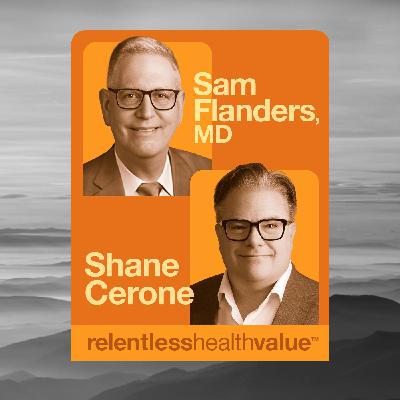
In this episode, host Stacey Richter speaks with Dr. Sam Flanders and Shane Cerone about creating a high-quality hospital management model focused on surviving at 150% of Medicare costs. They discuss the inefficiencies in health systems and practical solutions to improve them without compromising quality. The conversation covers the importance of empowering frontline staff, adopting continuous improvement models like Toyota's, and the critical role of employers in reshaping market dynamics through direct negotiation and price transparency. The episode emphasizes actionable steps for hospital executives, plan sponsors, and employers to drive significant improvements in healthcare efficiency and affordability. === LINKS === 🔗 Show Notes with all mentioned links: https://cc-lnk.com/EP492 ✉️ Enjoy this podcast? Subscribe to the free weekly newsletter: https://relentlesshealthvalue.com/join-the-relentless-tribe 🫙 Support the podcast with a small donation to the Tip Jar: https://relentlesshealthvalue.com/join-the-relentless-tribe 📺 Subscribe to our YouTube channel https://www.youtube.com/@RelentlessHealthValue 🎤 Listen on Apple Podcasts https://podcasts.apple.com/us/podcast/feed/id892082003?ls=1 🎤 Listen on Spotify https://open.spotify.com/show/6UjgzI7bScDrWvZEk2f46b === CONNECT WITH THE RHV TEAM === ✭ LinkedIn https://www.linkedin.com/company/relentless-health-value/ ✭ Threads https://www.threads.net/@relentlesshealthvalue/ ✭ Bluesky https://bsky.app/profile/relentleshealth.bsky.social ✭ X https://twitter.com/relentleshealth/ 07:08 What are the many problems that health systems deal with? 08:44 EP483 (Part 1 and Part 2) with Jonathan Baran. 09:43 What was the real achievement in building this hospital system? 10:25 EP489 (Part 1 and Part 2) with Dan Greenleaf. 10:42 Why productivity and patient access are the top two things to focus on. 11:36 EP488 with Mark Cuban and Cora Opsahl. 12:32 EP455 with Beau Raymond, MD. 12:58 The lean model versus the Toyota model. 16:06 EP438 with John Lee, MD. 16:40 EP481 with Benjamin Schwartz, MD, MBA. 17:44 Why small changes accumulated create greater change than big changes. 21:01 How an efficiency mindset can increase improvement faster. 27:42 Why administrators should not be negotiators. 28:11 EP491 with Elizabeth Mitchell. 29:06 What are the steps to this multifaceted process? 30:17 EP286 with John Rodis, MD, MBA. 30:48 Study by Suhas Gondi, MD, MBA, on hospital boards. 33:03 Why it's important to focus on the pricing issue first. 33:49 What Kada Health is all about.


Download from Google Play

Download from App Store
 United States
Thank you for sharing - this truly proves once again the importance of QME management if you want to avoid errors and injustice. Effective QME management is the backbone of a fair medical evaluation system. Coordinating reports, scheduling, and follow-up communication requires both medical and administrative expertise. A strong management framework helps reduce case delays and improve satisfaction for all parties involved. You can find more information about this here https://www.soundmedeval.com/qme-management/ . Streamlined QME operations ultimately mean better outcomes for patients and providers.