


 Claim Ownership
How Brands Are Built
Subscribed: 131Played: 1,124
Subscribe

© 2018 Heirloom Agency LLC. All rights reserved.
Description
On How Brands Are Built, branding professionals get into the details of what they do and how they do it. Other podcasts about branding focus on news, opinion, and high-level theory. They can give you a 30,000-foot view of branding; How Brands Are Built is where the rubber meets the road. In each episode, Rob Meyerson, a San Francisco-based brand strategist, interviews other strategists, designers, writers, namers, and researchers to help you understand how brands are really built.
54 Episodes
Reverse
On today's episode of How Brands Are Built, host Rob Meyerson of Heirloom speaks with Robin Goffman—brand thinker, design strategist, and founder of Studio RBG—about her career path, her approach to creative work, and her experience designing multiple editions of Designing Brand Identity. Robin shares the story of how she first entered the world of design, from early hands-on tutorials in Adobe software to studying art direction at Temple University. She describes how a single introduction—through her professor, Kathy Mueller—connected her with the late Alina Wheeler and ultimately set her on the path to helping design several editions of the iconic branding book. In the conversation, Robin explains the unique challenges and rewards of book design, including the rhythm of multi-page layout, the importance of a strong grid, the process of curating case studies and imagery, and the extensive coordination required to keep a 300-plus-page reference book consistent and cohesive. She also talks about what she learned through years of collaborating with Alina—from creative rigor to the contagious sense of passion and curiosity Alina brought to every project. The episode also touches on Robin's work as a creative strategist, how she blends design with big-picture thinking, and why she believes great design is as much about listening and problem-solving as it is about aesthetic decisions. Listeners can learn more about Robin's work at robingoffman.com. Join us for a thoughtful, behind-the-scenes conversation about career beginnings, the craft of book design, and the creative lessons that continue to shape how brands are built.
A few weeks back, on LinkedIn and Instagram, I asked whether anyone had questions about branding, naming, or other topics I might be able to speak to. My plan was to do a Q&A episode—and this is it. On this episode, I answer questions from branding professionals and others about branding, naming, and book publishing. Here's a sample of what was asked: How do you manage clients wanting to wordsmith your brand strategy work? What guidance should you give clients to help them implement your recommended brand strategy? How do you maintain brand consistency when people at your company won't use design templates? What is the current state of AI in naming? How can you attract new clients if you can't show your work online due to an NDA? Can you walk through the book publishing process? Here are links to a few things mentioned during the episode: Brand Naming Designing Brand Identity, sixth edition David Placek, founder of Lexicon, on an early episode of the StartUp podcast AI-powered naming agency, Monika Tessera Trademark Screening Brand implementation agencies TenTen, Monigle, and BrandActive Clutch (B2B company reviews) Swiss Cheese Mono font Ohno Type School with James Edmondson Thanks to everyone for your questions. If you have questions that I didn't answer, please reach out—maybe I'll do another one of these episodes at some point.
In today's episode of How Brands Are Built, host Rob Meyerson speaks with Jacob Cass, designer, brand strategist, and founder of Just Creative, about his recent venture: the Brand Builders Summit. This innovative, four-day virtual event featured 24 speakers and attracted over 20,000 attendees from 156 countries, significantly surpassing Jacob's initial goals. Jacob discusses the unique format of the summit, which blended pre-recorded sessions with live Q&As, panels, and workshops, emphasizing the crucial integration of brand strategy, design, marketing, and community. He reveals insights into the promotional strategies that generated buzz and shares logistical lessons learned while managing a large-scale event. The conversation also highlights the importance of speaker relationships, communication tools like AI chatbots for participant support, and plans for future enhancements to improve networking opportunities. Jacob's commitment to feedback and reflection post-event underscores his dedication to continual improvement. Listeners are invited to explore Jacob's work at Just Creative and look forward to the next Brand Builders Summit in 2025 (if Jacob decides to give it another go!). Join us to dive into an inspiring discussion on strategic marketing, community engagement, and the key elements driving successful brand experiences.
Today's guest is Alex Center, a designer and podcaster and founder of the award-winning design and branding studio, CENTER. From 2006 to 2017, Center worked for the Coca-Cola Company, helping build the brands Vitaminwater, Powerade, and Smartwater. Today, he and the team at CENTER are building the next generation of icon brands partnering with companies like United Sodas of America, Apple, HEYWEAR, Good Light, New Balance, SIMULATE, and Liquid Death. One of the reasons I wanted to talk to Alex today is because his agency, CENTER, is a contributor to the new edition of Designing Brand Identity. CENTER pitched in on the pages about package design and differentiation, and also contributed a case study for KatKin, "a nutrition, education, and community-focused cat-care brand based in the UK that works with world-leading veterinarians and nutritionists to develop food that gives cats the nutrients they actually need." We talk about these cases, how Alex approaches branding and package design, and more on this episode of the podcast.
This episode of How Brands Are Built is a live recording of an April 25, 2024 book launch for Designing Brand Identity, sixth edition, held at Noise 13 in San Francisco. The event included a panel discussion moderated by Rob Goodman. The panelists were Dava Guthmiller, founder of Noise 13, Rob Meyerson co-author of the sixth edition of Designing Brand Identity, and Robin Goffman, creative director for the book. The discussion includes thoughts on rebranding, trends in branding, and how Rob and Robin first got involved with Alina Wheeler (the creator and author of Designing Brand Identity, who passed away in December, 2023). Panelists also talked about Noise 13's work for Adventr—a case study featured in the book.
Back in February of this year, I released the first Brand Names Report, an analysis of polling data on brand names from Brand New, the leading brand identity review site edited and written by Armin Vit. From July 2020 to June 2023, visitors to Brand New cast a total of 22,769 votes across 131 brand names, rating each as Great, Fine, or Bad. These polls are the only easily available opinion data on brand names that I'm aware of. And while the data is far from perfect (I'll walk through some weaknesses on this episode), I wanted to see whether it could tell us anything useful about which brand names are preferred, and why. To see the report as I walk through it page by page, visit How Brands Are Built on YouTube: https://www.youtube.com/@howbrandsarebuilt. You can download the the Brand Names Report for free at https://howbrandsarebuilt.com/brandnamesreport/.
Rob Meyerson and Fabian Geyrhalter discuss brand strategy's balance of innovation and foundational rules, touching on brand creation challenges and successful launches in the evolving marketing landscape. Today's episode is special. It's an edited version of a LinkedIn livestream chat with Fabian Geyrhalter, founder and principal at FINIEN, "a purposefully small consultancy based in Los Angeles." Fabian is a brand strategist and creative director and host of the Hitting the Mark podcast. He's also written several best-selling books, including How to Launch a Brand and The Brand Therapy Book. Lastly, Fabian is founder of Toneoptic, which we discuss on the show. Fabian was a guest on season two of How Brands Are Built, and I had a great time talking to him again. I hope you enjoy the conversation as much as I did. To learn more about Fabian, visit www.finien.com. From there, you'll find links to his podcast and books. For Toneoptic, visit www.toneoptic.com.
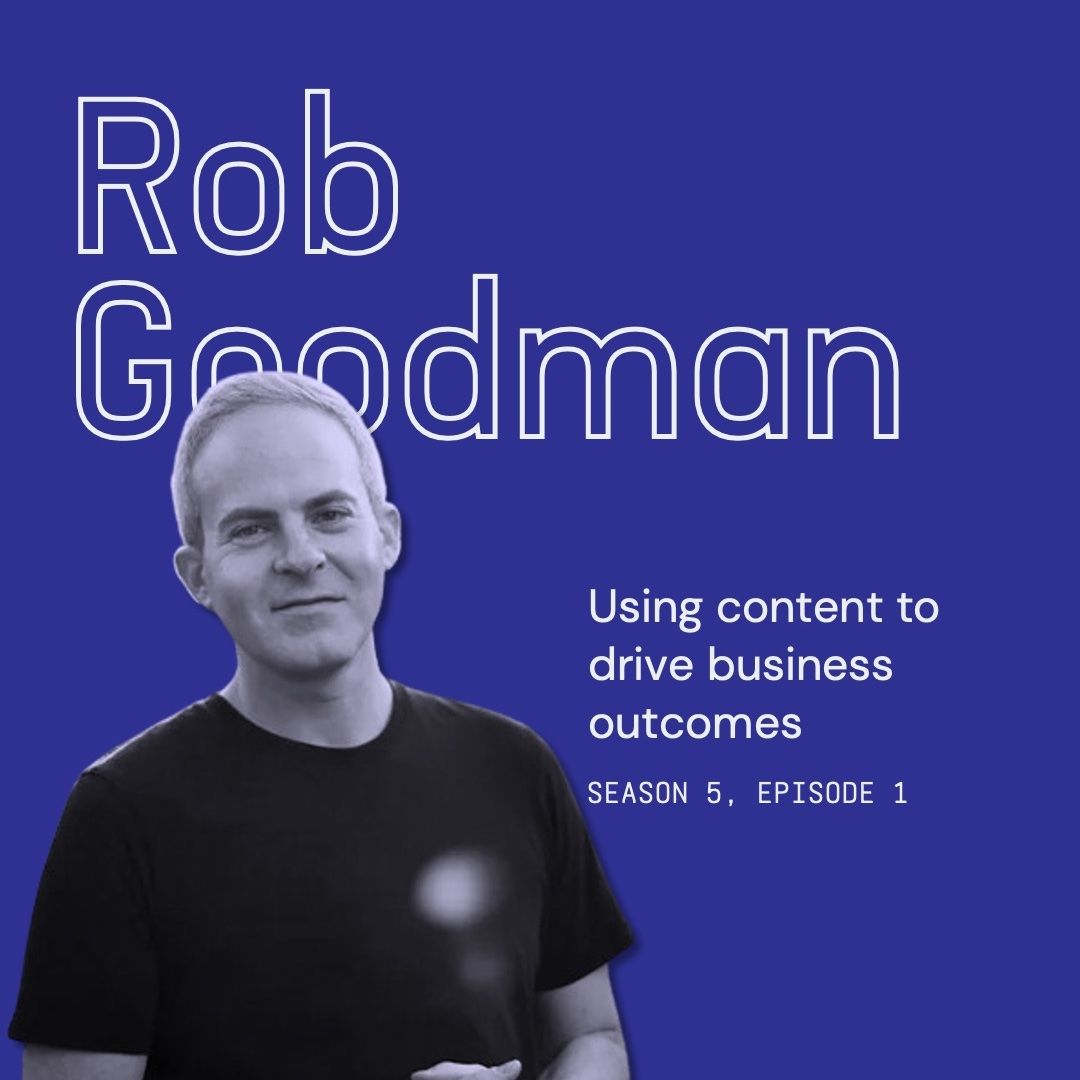
Today's guest is Rob Goodman. Rob specializes in content strategy and creative content production, with experience at companies like Google, Wix, and Webflow. He's delivered award-winning branded content, content strategies, and comprehensive content calendars for these companies and other clients, helping brands transform into publishers built for engaging today's audiences. Rob also hosts his own podcast, Making Ways, about the intersection of art and music. He interviews bands, like Melvins and Nada Surf, and the visual artists they collaborate with to create album art, music videos, and more. It's as cool as it sounds—I highly recommend you check it out. One of the reasons I wanted to talk to Rob is because he's also a contributor to the new edition of Designing Brand Identity, which I co-authored with the late Alina Wheeler. Rob pitched in on the pages about social media and a few others, but his biggest contribution was helping us update the content strategy spread, where you'll find the following quote from him: "The best content cuts through the noise, connects with customers, and drives the business—all while moving at the speed of culture." On the episode, we talk about definitions of terms like content strategy, content planning, and content production. We dive into the different objectives of content strategy, and Rob shares some high-level process tips for creating great content. We also run through Jonah Berger's six "STEPPS" to viral content, and Rob shares his take on a few of them. To learn more about Rob Goodman, visit robgoodman.com or find him on LinkedIn. You can listen to his Making Ways podcast at makingways.co. And if you're interested in the sixth edition of Designing Brand Identity, find it on Amazon or at dbibook.com.

Diego Segura is a design apprentice at Collins, an independent strategy and brand experience design company with offices in New York City and San Francisco. In this episode, Diego describes how he discovered graphic design, his decision to drop out of high school, and what it's like being an apprentice at a prestigious branding and design company. This is the second part of a two-part series; the episode begins with a continuation of my conversation with Brian Collins in part one. Brian shares his side of Diego's story—how Diego first got in touch, how he became a full-time employee, and why, on one of their early days together, Brian took him out to run errands throughout New York City. After a short intro from Brian, the interview with Diego begins. I was eager to get Diego's backstory—it's fascinating (and inspiring) to hear how he got from a small town outside Austin, Texas to Collins in New York City. Along the way, he emailed with Michael Beirut, did multiple remote internships, and wrote The Dropout Manifesto (a chronicle of [my] crazy junior year). We also talked about the importance of agencies and design studios looking outside the traditional design schools, like SVA and RISD—schools Diego wasn't even aware of when he was in high school—for new talent. I'm telling you now: If I was out to start a studio today, I would practically build it solely on young ambitious people led by a really great creative director, head of design. Because the level of talent who reaches out to me personally, because they see I'm the design apprentice on the [Collins] website—the level of talent is insane. They are so, so, so good. ... There's no doubt they can add value. It's just, they didn't come from the same places that all the other designers came from, and we've gotta be okay with that." – Diego Segura To learn more about Collins visit their website. You can learn more about Diego (and see some of his work) at diegosegura.me and you can follow him on Twitter. If you're interested in checking out Diego's book, The Dropout Manifesto, it's available on Amazon, as is his second book, To a Man Much Like Myself.

Today's guest is Alina Wheeler, best known as the author of Designing Brand Identity: An Essential Guide for the Whole Branding Team, now in its fifth edition. One of my favorite memories of this book is seeing it on a desk when I arrived to my first day on the job at Labbrand, where I worked in Shanghai. I already knew the book, but seeing it in use, so far from home—that's when I really understood how influential of a book it is. In fact, it's been translated into Chinese, Spanish, Arabic, Portuguese, French, and other languages—and it's used by brand, marketing, and design teams, undergraduate and graduate students, and brand and business consultancies all over the world. I wanted to get an idea of why Alina wrote the book and what she was doing beforehand (around 2003). Along with being an author, she's a designer with over 40 years of experience working with teams in the public and private sector. She's led the development of integrated brand identity programs, sales and marketing strategies, and design and communications systems. I was excited to have the opportunity to talk to Alina about her career, the book she's created, and what the future holds for Designing Brand Identity. During the conversation, I learned that there will be a sixth edition but she won't be the author (!!!), how she gets case studies and quotes for the book, and the true identity of the mysterious Blake Deutsch. (It's hilarious—listen to find out.) Toward the end of the conversation, I asked Alina whether there's anything she'd like to support and ask that others check out, and she talked about Simon Charwey, a brand identity designer and anthologist on indigenous African design systems and African Symbology. Simon's work includes the African Logo Design book, a compendium of 1,000 unique symbols inspired by indigenous African design systems, symbols, and culture. And off the air, Alina also mentioned Certified B Corporations, something else she's passionate about and recommends everyone checks out. I found the conversation both enlightening and inspiring, and I hope you do too. To learn more about Alina and Designing Brand Identity, visit designingbrandidentity.info. Of course, the book is available on Amazon and wherever books are sold. Alina's also active on Twitter and Instagram.

Nirm Shanbhag is the Chief Strategy Officer of Sid Lee USA, an international creative company. He's also my old boss. Back in 2012, he was running the San Francisco office of Interbrand, and he hired me as Director of Verbal Identity. Before Interbrand, Nirm earned his MBA from London Business School and worked in advertising, at firms like Mullen and McCann. He also ran his own, independent agency, Notch Strategy, for about six years between his roles at Interbrand and Sid Lee. Nirm and I have worked together quite a bit—first at Interbrand, then as independent consultants. We've been called in on brand architecture projects a few times, and Nirm is one of just a handful of people I consider an expert on the topic. Since I haven't had too many (any) episodes focused on brand architecture, I was eager to get Nirm to share some of his insights into brand architecture—what it is, why it matters, and how it should be done. Throughout the conversation, Nirm came back time and again to the idea of keeping the consumer's journey front and center, considering their motivations and approaches to decision-making. We also talked about brand purpose, and whether brands are good or bad for society (heady stuff). At the end of the conversation, Nirm recommended two very different books: The Experience Economy ("a seminal work and … one that not a lot of people know about") and A Brief History of Time, by Stephen Hawking. I've probably read [A Brief History of Time] four times in my life. The reason I think it's worthwhile is because, yeah, it's about physics, but at its heart it's a book about perspective and recognizing that your perspective can change." – Nirm Shanbhag To learn more about Nirm and Sid Lee, visit sidlee.com. I also recommend you check out some of Nirm's blog posts on the Notch blog.

Emily Heyward is co-founder and and Chief Brand Officer at Red Antler, the leading brand company for startups and new ventures. Red Antler is the branding firm behind brands like Casper, Allbirds, Keeps, and Burrow. They also work with established brands like American Express, HBO, Google, and Gap. Emily was named among the Most Important Entrepreneurs of the Decade by Inc. Magazine, and has also been recognized as a Top Female Founder by Inc. and one of Entrepreneur's Most Powerful Women of 2019. She's also the author of a new book, Obsessed: Building a Brand People Love from Day One. I asked Emily what makes Red Antler different from other branding firms and what makes it, in the words of a 2018 Adweek article, one of "the surprisingly small group of branding shops behind today's top challenger brands." She says Red Antler was "the first creative services company that was designed and built to work with startups" and, as a result, "we've thought about brand in an incredibly holistic way … with obviously a particular focus on digital." Next, we turned to Emily's book, Obsessed. "The book really came out of 12 years of running Red Antler, launching new, disruptive businesses into the world, and seeing the ways in which brands' relationships with consumers are shifting. … The rules are not the same as they were, certainly 20 years ago, but even six years ago. Things keep changing." – Emily Heyward Then we turned to the events of 2020, and I asked Emily for her take on how brands should respond to racial injustice, as well as the COVID pandemic. Lastly, I asked Emily some wrap-up questions, including a brand/initiative she recommends checking out (the 15 Percent Pledge), a book recommendation (On Earth We're Briefly Gorgeous), and her advice to you people in the industry: "Be curious. I think that so much of what we do is a response to the world around us—to culture and trends and what makes people tick. And when I meet with someone that doesn't seem like they're passionate about what's happening in the world, and what businesses are out there, and what they're seeing, and what they're loving—for me, that's an immediate red flag." – Emily Heyward To learn more about Emily and Red Antler, visit redantler.com or emilyheyward.com. Obsessed is available on Amazon and wherever books are sold.

Today's guest is Armin Vit, co-founder of UnderConsideration, a graphic design firm, and editor and writer for Brand New, the leading site for reviews of corporate and brand identity design work. Born and raised in Mexico City, Armin—along with his wife and partner, Bryony Gomez-Palacio—have created multiple other design blogs, co-authored books, and organized events like the annual Brand New Conference. I was excited to talk to Armin about design trends, blogging, and the pros and cons of being a professional critic. The conversation started with some ancient history, going back to a blog called "Speak Up," and FutureBrand's 2003 redesign of Paul Rand's UPS logo, which gave rise to Brand New. I asked Armin how he selects which work to review on Brand New, and he said he has a "little grid" in his mind. The more people are likely to be familiar with the client, the more likely he is to write about the work. If the client is small and unknown, the work has to be groundbreaking. Much of the work he sees is "fine"—but work that's just fine is actually less interesting than work that's terrible. I meet other designers [that] will joke that they are always wondering ... what I might say. They're always thinking about, 'Oh shit, I hope this doesn't make it on Brand New. Or if it does, I hope it goes fine.' It just increases that level of stress ... but in a positive way that I have to make sure that what I'm saying is valuable to as many people as possible and doesn't put down anyone just for the sake of it. Armin Vit Armin and I went on to talk about a design trend he's seen lately: a stampede of wordmarks featuring geometric sans fonts, like Airbnb and Google, and the backlash against them, epitomized by the Chobani logotype. Next, we discussed how design and branding can make a positive impact on the world, his experience as a Mexican-American immigrant and how it influences his thinking as a designer—especially given some of the Trump administration's rhetoric and policies toward immigrants and Mexico in particular. I asked Armin for an example of some work he's seen that's making a positive impact, and he mentioned IBM's "Be Equal" campaign, which repurposes a bee designed for IBM by Paul Rand, highlighting an equals sign in its stripes. To close out, I asked for Armin's book recommendations (he likes Branding: In Five and a Half Steps, by Michael Johnson) and his advice for young designers and people in the branding industry: "Look at a lot of brand design ... It's really about building your palate for identity design, how colors work, how typefaces work. It's not about copying anything, but taking bits of pieces from different places, and how you will apply that to your own lens, to your clients, or to your work. It's consuming a lot of identity design and letting it simmer in your subconscious." But honestly, he says, that's not just a pitch for Brand New. To learn more about Armin, visit UnderConsideration, from which you can find Brand New as well as design work by Armin and Bryony, books they've written, like Flaunt, and events like the Brand New Conference.

On the podcast today: Sunny Bonnell, co-founder of Motto, one of the leading branding agencies in the country, with clients like Google, Hershey's, and Twentieth Century Fox. Sunny and her co-founder, Ashleigh Hansberger, recently wrote their first book, Rare Breed: A Guide to Success for the Defiant, Dangerous, and Different. Sunny says the book started with a question: "What if you could take the parts of yourself that other people criticize—traits they call defiant, dangerous, and different—and turn those things into your selling points?" We talked about how Sunny and Ashleigh arrived at the seven "virtues" in Rare Breed: Rebellious Audacious Obsessed Hot-blooded Weird Hypnotic Emotional If you're curious which virtue applies to you, try the Rare Breed quiz. Sunny and Ashleigh also host a YouTube series, also called Rare Breed, where they sit down with guests like Charlamagne Tha God and Jon Batiste. I asked Sunny about Motto's origin story, the challenges of being one of very few female-owned agencies, the importance of diversity, and more. Toward the end of the conversation, Sunny recommended a few books: It's Not How Good You Are, It's How Good You Want to Be and Whatever You Think, Think the Opposite, both by Paul Ardern, as well as The Hero and the Outlaw, by Margaret Mark and Carol Pearson. We ended with some of Sunny's motivating advice for anyone trying to grow their career: "Own who you are. In a world that wants to own you, owning yourself in this way can really hurt like hell. Being defiant, dangerous, and different is a gift. Succeed because of who you are, not despite who you are." To learn more about Sunny, check out her agency's work at wearemotto.com. Rare Breed is available now on Amazon and elsewhere. And, if you go to rarebreedbook.com, you can watch episodes of Sunny and Ashleigh's YouTube show and take the Rare Breed quiz. If you take the quiz or read the book, drop us a line on social media-I'd love to hear your thoughts, and I'm sure Sunny would, too. Episode sponsors The Brand Strategy Kit from Egle Karalyte. Available in both digital and print formats, the Kit provides structure and tools to streamline and gamify your branding process. Squadhelp. To begin a business name contest with hundreds of business naming experts, check out their services to get a fresh perspective on your company.

In this episode, I'm talking to Dava Guthmiller, founder and Chief Creative Officer at Noise 13, a brand strategy and design agency based in San Francisco. She's also cofounder of In/Visible Talks, and annual conference that celebrates the art of design and creativity, and In/Visible Project, which includes a collection of other events that bring people together over the process, inspiration, and challenges for design and creative professionals. Throughout the conversation, we touched on diversity in the worlds of design and branding. I asked Dava what it was like to start Noise 13 as a young, female designer, and how In/Visible Talks is giving a platform to a racially diverse and heavily female-leaning group of speakers. Next, we got into the weeds a bit on how Dava built the In/Visible Talks brand. She told me where the name came from and how the visual identity for year one involved a trip to the dollar store. We rounded out the conversation, as we often do on the podcast, with book recommendations and advice for young professionals in the branding and design industry. Dava recommended The Empathy Edge by Maria Ross (see Maria's post on How Brands Are Built) and Marty Neumeier's Brand Flip. And she had several pieces of advice for young designers, including encouragement to try many different internships and jobs until you find the best fit: "Take internships. Find a mentor. Try it on. Try a small company. Try in-house. Try something big. This is your life. This is your job. Find the right project team fit for you, so that your life is not miserable." To learn more about Dava, visit Noise 13 or In/Visible Talks. The annual conference will be on Jan 14, 2021, and early bird tickets are on sale now.

Season four has arrived, and my first guest is Dr. Jason Chambers of the University of Illinois. The theme for this season will be a bit looser than past seasons, but I'm hoping to get perspectives on the social impact of brands and branding. In other words, are brands a good thing for society, overall? In light of what's happened in 2020-the pandemic, protests for racial justice, increasingly extreme weather as a result of climate change, and even the U.S. presidential election-this topic felt relevant. I first heard Dr. Chambers on 1A, a podcast from WAMU that's distributed by NPR, where he talked about "reckoning with racist brands" like Aunt Jemima and the Washington, D.C., NFL team. I was excited to talk to Dr. Chambers in a little more detail about these brand names, where they come from, why they should change, and how to change them. Dr. Chambers's research is focused on the history of African Americans in the advertising industry, a topic about which he's written a book: Madison Avenue and the Color Line: African Americans in the Advertising Industry. Given his expertise, I also wanted to get his take on diversity in the agency world. I don't often interview professors on the show (which makes sense, given it's a show about "how brands are built"), but I had so much fun talking to Dr. Chambers and exploring his in-depth knowledge of these subjects; I hope this is not the last time I host an academic or professor on the show. To hear more from Dr. Chambers, I encourage you to check out the episode of 1A he joined, "Reckoning With Racist Brands." You can also find his opinions in publications like Ad Age, Adweek, CNN, Forbes, Black Enterprise, and The New York Times. He's written another book, too: Building the Black Metropolis: African American Entrepreneurship. Lastly, you can of course find him on the University of Illinois website and LinkedIn.

Season three of the podcast featured my most wide-ranging conversations yet. I talked to guests about topics such as naming, social influence, and fusing brand and culture. Like last season, I talked to a mix of popular authors and speakers, like Jeremy Miller and Denise Lee Yohn, as well as some people I've worked with closely at agencies like Interbrand, Siegel+Gale, and BrandingBusiness. Thank you to all my guests this season: Jeremy Miller, founder of Sticky Branding; author of Sticky Branding and Brand New Name Ken Pasternak, president of Two by Four (formerly president and COO of Marshall Strategy) Fabian Geyrhalter, principal and founder of FINIEN; author of How to Launch a Brand and Bigger Than This Caren Williams, independent brand consultant Dennis Hahn, Chief Strategy Officer at Liquid Agency Ana Andjelic, strategy executive; PhD in sociology Alan Brew, founding partner at BrandingBusiness Myra El-Bayoumi, strategy director at Character Denise Lee Yohn, brand leadership expert; author of What Great Brands Do and Fusion Thank you, too, for listening, sharing your thoughts, following along the website, social media, and the newsletter. The theme of this season, broadly speaking, was brand experience. In this wrap-up episode, I walk through what a brand experience is and how to create or improve one. First off, how should we define brand experience? About a year ago, before this season started, I posted the following definition: "The totality of all sensations, feelings, thoughts, and actions evoked by a brand." That pretty much aligns with other definitions I've seen from the likes of Marty Neumeier. (His, from The Dictionary of Brand, is "All the interactions people have with a product, service, or organization.") The episode kicks off with Ken Pasternak and Caren Williams each going into detail on how they think about brand experience. Next, we get to the four steps for creating (or strengthening) a brand experience. Sounds simple, but each step requires some serious work. In the episode, each step is fleshed out and supported with audio clips from the season's interviews. Four steps to create or improve a brand experience Get the brand strategy right (should a strategy platform include experience principles?) Outline the context within which the brand will be experienced (e.g., customer journey mapping) Brainstorm ideas for the brand experience (often takes place in a collaborative work session with the client) Implement, measure, and modify (organize ideas by impact/effort, mock up or prototype ideas, and always be iterating) To learn more about brand experience and the guests from season three, listen to each full episode or read transcripts on HowBrandsAreBuilt.com. You'll also find a growing list of books recommended by guests this season and last. Thanks again, especially to those of you who've subscribed, left a rating or review, or connected on social media. If you haven't done those things already, please do-I really appreciate the support!

My final guest for season three of the podcast is Denise Lee Yohn, author of the bestseller, What Great Brands Do: The Seven Brand-Building Principles that Separate the Best from the Rest. She's also an in-demand keynote speaker, and has appeared on CNBC, Fox Business, NPR, and in the Wall Street Journal discussing business and branding issues. Denise cut her teeth in lead strategy roles for the advertising agencies behind campaigns for Burger King and Land Rover, and has held client-side positions at Jack In The Box and Sony. On this episode, Denise and I talk about the relationship between brand and business, why it's important to "sweat the small stuff," brand experience versus employee experience, and her latest book, Fusion: How Integrating Brand and Culture Powers the World's Greatest Companies. I kicked off the conversation with a question about the relationship between brand and business, something I've been interested in since writing an article on the topic for The Guardian in 2014. Denise and I agree that business leaders need to stop thinking of brand and business (or brand strategy and business strategy, at least) as two separate things. They are "one and the same," to use Denise's words. Next, we talked about one of the seven "brand-building principles" from her book, What Great Brands Do. According to the book, great brands "Sweat the Small Stuff." Denise explains that the process she recommends for achieving this goal and introduces one of the free tools she's created, the Brand Touchpoint Wheel. Later in the conversation, Denise and I talked about her latest book, Fusion, which explores the relationship between culture and brand. While she does not recommend creating employer brand platforms (partly because they create an unnecessary divide between the external and internal-facing brand), she does recommend working on the employee experience using a similar approach to that used for customer brand experience. The Brand Touchpoint Wheel can again prove useful when working on the employee experience, as can another tool Denise offers, the Employee Experience Architecture Framework. As usual, we wrapped up the conversation with Denise's book recommendations and advice for junior/aspiring branding professionals. You won't want to miss it! To learn more about Denise, visit deniseleeyohn.com. On her site, you'll find information about her books, speaking engagements, and consulting practice, as well as her blog, and more free, downloadable tools like the ones we mentioned in our conversation. You can also find and follow Denise on Twitter, Facebook, LinkedIn, or YouTube.

My guest on today's episode is Myra El-Bayoumi, Strategy Director at Character, a branding and design studio with offices in New York and San Francisco. Before Character, Myra held senior strategy positions at Landor, Siegel+Gale, and Interbrand (which is where I met her). Myra also holds an MBA from the University of Toronto Rotman School of Management. Given Myra's experience, I wanted to get her perspective on the similarities and differences in brand strategy approach, philosophy, and deliverables among top-tier brand consulting firms. She has a lot of respect for her prior firms, but admits she's biased toward Character now that she's leading their strategy efforts. She says she's "better equipped to see the value of a place like Character because [she] grew up in the big shops," and that differences at Character include more flexibility, the ability to "blow up our process in service of solving" the client's problems, and speed. Myra describes the Character approach to brand strategy as arriving at answers to two key questions: Why did this brand exist, beyond to make money? Why should the world choose this brand? The second question should be answered in a way that's relevant in today's culture but also "evergreen for the future." This link between the brand strategy and cultural trends is equally applicable for B2B brands, Myra says, citing the example of UberConference (a product of Dialpad, a Character client). "One of the examples of a B2B brand that we worked with, who I actually think does the brand experience thing pretty well is Dialpad. You might not know Dialpad, but you probably know UberConference, which is one of their products, and UberConference has that famous hold music. That's an example-and we didn't create that, so I won't take any credit for it-but we know those people now and we know how well that hold music-what it says, the sound of it, and the fact that it exists in the first place-represent the spirit and the DNA of who that company is." I asked Myra what components she thinks are necessary in a brand platform. She says purpose is critical, but that values and personality traits "lack precision, focus, clarity, and sharpness." We got into an interesting conversation about whether personality belongs within a brand strategy platform or should be removed, allowing design principles or voice principles to play a similar role, but "outside" of the brand platform. We wrapped up by talking about a brand Myra thinks is doing "pretty much everyhing right" (Billie) and a book she recommends (Mating in Captivity) even though "it has nothing to do with branding. It just has to do with humans." To learn more about Myra, visit the Character website.

Alan Brew has been in branding since 1985. In this, episode he takes us back to that year to explain how he got into the industry and what he's seen change since then. Along the way, he's worked with clients like Chevron, Elsevier, Tech Data, Royal Bank of Canada, Delta Airlines, and Huawei, as well as a number of startups and small-to-medium businesses. Now a founding partner at BrandingBusiness in Southern California, Alan's career has also included roles at Landor, Addison, and Siegel+Gale. Alan and I met at that last one: Siegel+Gale. I was lowest man on the totem pole (I think that may have actually been my title) when Alan came in as Managing Director of the LA office. I remember an early meeting with Alan. We were in a full conference room with lots of smart strategists and designers sitting around the table. I was used to being a fly on the wall for meetings like this-maybe just taking notes or waiting for some marching orders. I can't remember what the meeting was about or what we were trying to decide, but I remember, vividly, Alan turning to me and asking my opinion on the matter at hand. Now, maybe Alan just didn't know how unimportant I was, but I took it as something else: To me, it was a recognition that my point of view had value, hierarchy be damned. That moment stuck with me, and shortly after Alan left, I followed him to his next agency and joined his strategy team. I wanted to get Alan talking about his early days in the industry, including the origin of "global brands," the first time he saw the book Positioning, the age of the corporate narrative, and a fateful dinner meeting with Walter Landor, back in 1985. Next, we talked about a proprietary tool at BrandingBusiness, the Brand Performance Platform. "The Brand Performance Platform is a databased research program that produces analytics, metrics, for evaluating brands on ... awareness, consideration, preference, and purchase intent-the classic sales funnel," says Alan. "But we can put metrics against those elements and look at where a company is succeeding or where a brand is succeeding. ... We can, on those four metrics, create an index, which we call the Brand Performance Platform, and say, 'This is your index and this is how you increase it,' and we can correlate that increase to revenue performance." Afterward, we got into an interesting conversation about "corporate narrative," which Alan think of as an evolution of positioning. We talked about storytelling and content creation, with Alan explaining that brand strategy has "become more of a fungible externalized set of strategic components rather than just this inert strategic document that lives on somebody's shelf." Lastly, Alan shared some favorite brands (Amazon and Subaru) and recommended some non-business books and authors he recommends every brand strategist and businessperson reads: Dickens, Michael Lewis (including The Undoing Project), Man's Search for Meaning, and The Economist. To learn more about Alan, visit BrandingBusiness, where you can learn about his agency, read his bio, and see many of his blog posts. Speaking of blogs, you should also check out Alan's blog about brand naming: Namedroppings. You can also follow Alan on Twitter.

Comments

Download from Google Play

Download from App Store
 United States