


 Claim Ownership
Future of London CityBites
Subscribed: 0Played: 9
Subscribe

© Future of London
Description
Future of London helps build better cities through knowledge, networks and leadership. We are the capital’s independent network for regeneration, housing, infrastructure and economic development practitioners.
25 Episodes
Reverse
Future of London's Leading the way for cities is an alumni-led series of events, podcasts and blog posts that engage with city-makers in their aspirations for the future of our cities, drawing on their collective experience, ideas, resilience and leadership as we emerge from the pandemic.
The series seeks to re-appraise the status quo, bring fresh thinking to tricky issues, and help us to challenge ourselves on ways to be more ambitious for our cities, through our work.
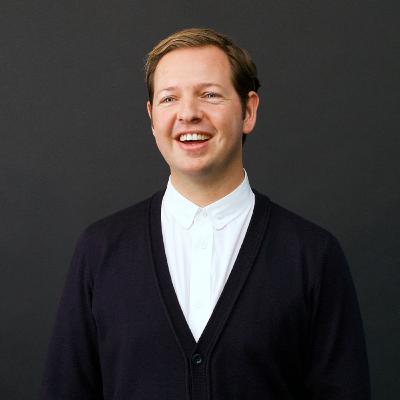
In this episode Inner Circle Consulting's Managing Consultant and Alumni Rep Katie Randall speaks with Adam Cossey, Partner and Civic, Community & Culture Sector Lead at Hawkins\Brown, about how councils are transforming their civic centres to create new mixed-use spaces for the community.
Find out more about the alumni-led series, Leading the way for cities, and the CityBites podcast at futureoflondon.org.uk

Future of London's Leading the way for cities is an alumni-led series of events, podcasts and blog posts that engage with city-makers in their aspirations for the future of our cities, drawing on their collective experience, ideas, resilience and leadership as we emerge from the pandemic.
The series seeks to re-appraise the status quo, bring fresh thinking to tricky issues, and help us to challenge ourselves on ways to be more ambitious for our cities, through our work.
In this episode LB Sutton Programme Manager and Alumni Rep Mandar Puranik speaks with Arthur Kay, chair of the £100m Key Worker Homes Fund and Founder and CEO of Skyroom - an award-winning technology and urban development company which delivers precision-manufactured homes in the airspace above existing buildings.
Find out more about the alumni-led series, Leading the way for cities, and the CityBites podcast at futureoflondon.org.uk

This episode of the #LearningFromCrisis 'Connections' series is on the creative use of public assets and showcases examples of how councils can make the most of their assets for long-term social and economic value.
See the City Bites webpage for info and resources: https://www.futureoflondon.org.uk/knowledge/City-Bites
This episode is the sixth in our Learning from Crisis 'Connections' series. It explores how Covid-19 has affected children, young people and families – and the impact this is having on women's careers, children's education and wellbeing, and our use of public space, particularly green space. You'll hear how children and women have been neglected during the pandemic and what local and national policymakers can do going forward to support families and working parents.
Speakers:
Lucie Stephens, Head of Co-production at New Economics Foundation.
Dr Zubaida Haque, former Interim Director of the Runnymede Trust and a member of the Independent Sage.
Tim Gill, independent academic, advocate and consultant on childhood.
Sophie Nellis, Research & Projects Officer at Future of London (host).
Find out more about Future of London City Bites.
About Future of London
Future of London helps build better cities through knowledge, networks and leadership – across disciplines, organisations and sectors. We are the capital’s independent network for regeneration, housing, infrastructure and economic development practitioners, with 4,800+ professionals using FoL as a hub for sector intelligence, connection and professional development, and a mandate to prepare the next wave of cross-sector city leaders.
futureoflondon.org.uk | @futureofldn | FutureofLondon
This episode of the Learning From Crisis ‘Connections’ series is on the evolving relationship between culture and place. You’ll hear how different types and scales of organisation are mitigating the damage to the creative sector… how society, government and the market are reassessing culture’s value to local identity and economy… and what aspects of this changing world could be with us for the long term.
Speakers:
Gillian Moore CBE, Director of Music, Southbank Centre
Aida Esposito, Founder-director, creativethinking
Paul Augarde, Placemaking Strategist & Associate, Coherent Cities & WorkWild
Lisa Taylor, Executive Director, Future of London & Director, Coherent Cities (host)
Find out more about Future of London City Bites.
About Future of London
Future of London helps build better cities through knowledge, networks and leadership – across disciplines, organisations and sectors. We are the capital’s independent network for regeneration, housing, infrastructure and economic development practitioners, with 4,800+ professionals using FoL as a hub for sector intelligence, connection and professional development, and a mandate to prepare the next wave of cross-sector city leaders.
futureoflondon.org.uk | @futureofldn | FutureofLondon
This episode, the third in our Learning From Crisis 'Connections' series, is about how we're getting back to work in the recovery phase.
As the lockdown eases, all sectors are under pressure to return to work and help get the economy moving. However, Construction, Higher Education and Hospitality are under the microscope perhaps more than other sectors. This is thanks to the number of jobs they generate, and their high contributions to UK GDP.
These sectors also play a significant role in the viability of our local economies and urban spaces and their health has knock-on effects up and down the supply chain. They share multiple challenges such as ensuring employee health and safety, rebuilding consumer confidence and maintaining business viability. The solutions they'll need to find are distinct but transferable to other sectors and to practitioners also working to adapt their work to the new normal.
Speaker:
Chris Wallace, Construction Director, Lovell Partnerships
Rose Luckin, Prof of Learner Centred Design, UCL Knowledge Lab
Ian Coll, FOunder & MD, Mamuska Restaurants
Host & producer: Oli Pinch, Head of Networks, Future of London.
Find out more about Future of London City Bites.
About Future of London
Future of London helps build better cities through knowledge, networks and leadership – across disciplines, organisations and sectors. We are the capital’s independent network for regeneration, housing, infrastructure and economic development practitioners, with 4,800+ professionals using FoL as a hub for sector intelligence, connection and professional development, and a mandate to prepare the next wave of cross-sector city leaders.
futureoflondon.org.uk | @futureofldn | FutureofLondon
For the second episode of our Learning from Crisis "Connections" series, we followed up on our well-received webinar on Community Engagement in a Covid-19 world, with three people working at the heart of these processes - and trying to get them right!
Jenna Goldberg, Director, London Communications Agency
Jamal Miah, Community Liaison Advisor, LB Camden (West Kentish Town Estate)
Sib Trigg, Architect & Community Organiser, People's Empowerment Alliance for Custom House (PEACH)
Host & producer: Lisa Taylor, Executive Director, Future of London & Director, Coherent Cities.
Find out more about Future of London City Bites.
About Future of London
Future of London helps build better cities through knowledge, networks and leadership – across disciplines, organisations and sectors. We are the capital’s independent network for regeneration, housing, infrastructure and economic development practitioners, with 4,800+ professionals using FoL as a hub for sector intelligence, connection and professional development, and a mandate to prepare the next wave of cross-sector city leaders.
futureoflondon.org.uk | @futureofldn | FutureofLondon
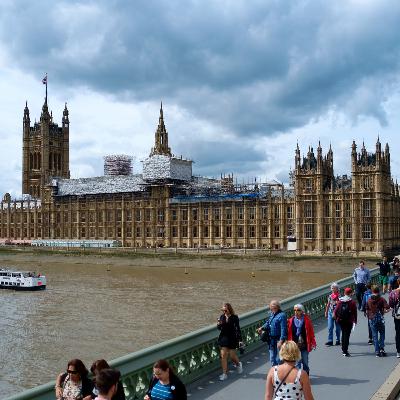
This episode kicks off our Learning from Crisis "Connections" series, where we explore how the pandemic is changing our relationship to shared space, community engagement, negotiation, connectivity and culture.
Interview with:
Barbara Brownlee, Executive Director of Growth, Planning & Housing, Westminster City Council
Professor Tony Travers, London School of Economics
Host:
Lisa Taylor, Executive Director, Future of London / Director, Coherent Cities
Take aways
Treasury needs councils to avoid financial crisis, partly for economic recovery but also because local authorities are best placed for testing and managing all aspects of Covid response and relationships on the ground. Further, as Brownlee pointed out, being forced into a Section 114 budget-balancing exercise by these extraordinary Covid-19 costs would mean harsh cuts and no room for flexibility or collaboration. Despite increasing bluster, Travers says we can expect MHCLG to do its best to help keep boroughs afloat.
Watch for councils, property companies and partners to start referring to all that vacant office space as “new” commercial or mixed-use space (Travers credits Arup’s Alex Jan with this reframing). Where landlords are amenable and planning authorities can flex, this could be a great way to bring fresh energy to town and city centres as smaller/newer/consortium organisations start to afford cheaper floor space.
Brownlee does represent a central London authority, but both make the case for not abandoning central cities (in the UK or elsewhere) in favour of sprawl. They also point out that large, historic landlords in city centres, like London’s Great Estates, have the patience – and patient capital – to make sound decisions, “viewing this as a 200-year thing, rather than a 20-month thing”.
In economic terms, both are particularly worried about the huge hole in TfL and commuter revenues and the impact of that on investment, and about the terrible losses in the cultural sector, for livelihoods, businesses, footfall and export value.
Local authorities have limited powers to take direct action like policing risky queues or offering business rates relief, but they do have unique leveraging powers; watch for – or seek – more of this from them.
Both are convinced we will never go back to business as usual in terms of how we work, with Brownlee citing much more direct working on rough sleeping issues, and “100%” certainty that council staff and committees will stay at least partly remote and be as or more efficient than in the past.
About Future of London
Future of London helps build better cities through knowledge, networks and leadership – across disciplines, organisations and sectors. We are the capital’s independent network for regeneration, housing, infrastructure and economic development practitioners, with 4,700+ professionals using FoL as a hub for sector intelligence, connection and professional development, and a mandate to prepare the next wave of cross-sector city leaders. futureoflondon.org.uk | @futureofldn | FutureofLondon
Source: Jürgen Fabian on Flickr. License (CC BY-NC 4.0)
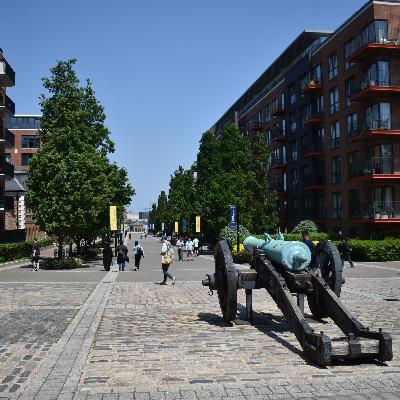
In our two-part podcast, we find out how a major heritage-led regeneration project in London is balancing community identity, housing viability and historic preservation.
In the second part of the series, Bhavna chairs a discussion about heritage lead regeneration with three key members of the Woolwich regeneration partnership:
Emma Sweeney, Head of Regeneration at the Royal Borough of Greenwich
Morgan Roberts, Senior Development Manager of Berkeley Homes
Richard Parish, Historic Places Advisor at Historic England
Music by ArturAravidiMusic from Pixabay
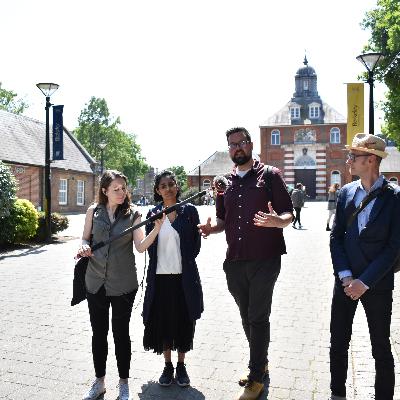
In our two-part podcast, we take the Woolwich ferry to find out how a major regeneration project is balancing community identity, housing viability and historic preservation.
Woolwich is being transformed through the heritage-led regeneration of the high street and the historic Royal Arsenal site.
The Royal Borough of Greenwich has established a long-term investment partnership with Berkeley Homes to deliver housing, public realm and new cultural attractions to bring people to Woolwich.
To find out more about this landmark regeneration project, Future of London alumni Bhavna Brooker visited Woolwich to record a two-part podcast. In the first part, she is given guided tour of the area and people involved in the regeneration partnership who bring the story alive.
Music by ArturAravidiMusic from Pixabay
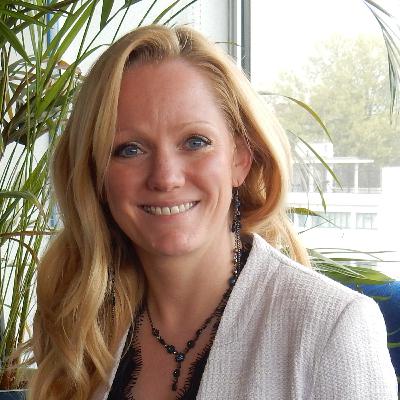
This podcast is the fifth and final episode in a mini-series where influential urban leaders talk to FoL's alumni about staying resilient and effective during the Covid crisis.
Guest: Ria Bailes, Group Director for People & Change, One Housing Group
Interviewer: Peter O'Brien, Assistant Director - Area Regeneration, LB Haringey
Producer: Oli Pinch, Future of London
Find out more about the Alumni Network and get involved in FoL's Covid-19 response and recovery programme: Learning from Crisis
About Future of London
Future of London helps build better cities through knowledge, networks and leadership – across disciplines, organisations and sectors. We are the capital’s independent network for regeneration, housing, infrastructure and economic development practitioners, with 4,000+ professionals using FoL as a hub for sector intelligence, connection and professional development, and a mandate to prepare the next wave of cross-sector city leaders. futureoflondon.org.uk | @futureofldn | FutureofLondon

This podcast is the fourth in a mini-series where influential urban leaders talk to FoL's alumni about staying resilient and effective during the Covid crisis.
Guest: Nazeya Hussain, Executive Director of Place, RB Kingston
Interviewer: Laura Davy, Neighbourhood Regeneration Manager, LB Lambeth
Producer: Oli Pinch, Future of London
Find out more about the Alumni Network and get involved in FoL's Covid-19 response and recovery programme: Learning from Crisis
About Future of London
Future of London helps build better cities through knowledge, networks and leadership – across disciplines, organisations and sectors. We are the capital’s independent network for regeneration, housing, infrastructure and economic development practitioners, with 4,000+ professionals using FoL as a hub for sector intelligence, connection and professional development, and a mandate to prepare the next wave of cross-sector city leaders. futureoflondon.org.uk | @futureofldn | FutureofLondon
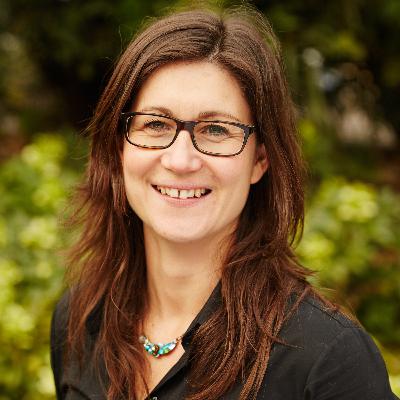
This podcast is the third in a mini-series where influential urban leaders talk to FoL's alumni about staying resilient and effective during the Covid crisis. Our guest is Alex Russell, Joint-CEO, Westway Trust.
Guest: Alex Russell, Joint-CEO, Westway Trust
Interviewer: Leanne Keltie, Programme Manager - Specialist Housing, Greater London Authority
Producer: Oli Pinch, Future of London
Find out more about the Alumni Network and get involved in FoL's Covid-19 response and recovery programme: Learning from Crisis
About Future of London
Future of London helps build better cities through knowledge, networks and leadership – across disciplines, organisations and sectors. We are the capital’s independent network for regeneration, housing, infrastructure and economic development practitioners, with 4,000+ professionals using FoL as a hub for sector intelligence, connection and professional development, and a mandate to prepare the next wave of cross-sector city leaders. futureoflondon.org.uk | @futureofldn | FutureofLondon

This podcast is the second in a mini-series where influential urban leaders talk to FoL's alumni about staying resilient and effective during the Covid crisis. Our guest is Bek Seeley, Lendlease's Managing Director of Development - Europe.
Guest: Bek Seeley, Managing Director of Development - Europe, Lendlease
Interviewer: Nnenna Urum-Eke, Head of Development, LB Enfield
Producer: Oli Pinch, Future of London
Find out more about the Alumni Network and get involved in FoL's Covid-19 response and recovery programme: Learning from Crisis
About Future of London
Future of London helps build better cities through knowledge, networks and leadership – across disciplines, organisations and sectors. We are the capital’s independent network for regeneration, housing, infrastructure and economic development practitioners, with 4,000+ professionals using FoL as a hub for sector intelligence, connection and professional development, and a mandate to prepare the next wave of cross-sector city leaders. futureoflondon.org.uk | @futureofldn | FutureofLondon
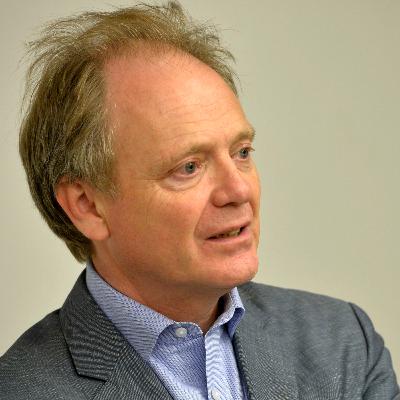
This podcast is the first in a mini-series where influential urban leaders talk to FoL's alumni about staying resilient and effective during the Covid crisis. Our first guest is David Lunts, Executive Director of Housing and Land at the GLA and interim CEO of the Old Oak & Park Royal Development Corporation.
Guest: David Lunts, GLA Housing & Land and Old Oak Park Royal Development Corporation
Interviewer: Lucy Webb, LB Croydon
Producer: Oli Pinch, Future of London
Find out more about the Alumni Network and get involved in FoL's Covid-19 response and recovery programme: Learning from Crisis
About Future of London
Future of London helps build better cities through knowledge, networks and leadership – across disciplines, organisations and sectors. We are the capital’s independent network for regeneration, housing, infrastructure and economic development practitioners, with 4,000+ professionals using FoL as a hub for sector intelligence, connection and professional development, and a mandate to prepare the next wave of cross-sector city leaders.
futureoflondon.org.uk | @futureofldn | FutureofLondon
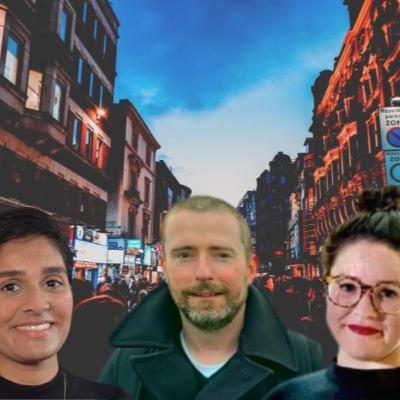
When the pandemic lockdown shut London's night-time economy overnight, the city became a ghost town. This highlighted starkly the importance of night-time economy to the city, making the Mayor's goal of a 24-hour city an important part of the post-pandemic recovery.
In this City Bites podcast, we hear from two urban practitioners who share their insights on the importance of the night-time economy to London's recovery and its long-term economic success. For a start, it's not just about pubs and clubs.
Laetitia Lucy is a social scientist working in the Integrated City Planning team at Arup with colleagues from economics, urban design, landscape architecture and planning disciplines.
Mark Inger is a senior policy officer working on night-time enterprise zones ay the Greater London Authority.
Bhavna Brooker, spatial planning programme lead at Transport for London, chaired the discussion.
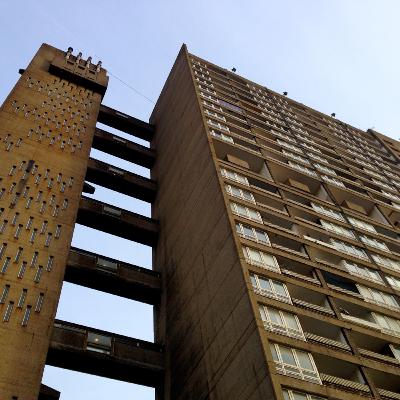
In the first of our City of Tomorrow podcast series, sponsored by Montagu Evans, we consider whether tall residential buildings can be social sustainable. Debating a question that has bothered generations of urbanists are Frank Filskow of Make Architects and Claire Bennie of Municipal. Holding the ring in this podcast is Dr Chris Miele of property consultancy Montagu Evans.
Claire is a tall building sceptic, highlighting the difficulty of providing satisfactory play opportunities for young children and the high costs to families of living in tall buildings with higher maintenance charges.
Frank is more optimistic about the place for tall buildings, not least offering housing density where land is scare. Frank also argues that when done well tall buildings can offer opportunities for different types of households without young children who can realise the benefits.
However Frank and Claire agree that with anything above mid-rise, the embodied carbon involved in building upwards is very hard to justify.
About the speakers
Frank Filskow, Make Architects
Frank is a partner of Make, with offices in London, Hong Kong and Sydney. He joined Make in 2004 and is an architect with over 30 years of international experience. He has been involved in a wide range of masterplanning, healthcare, residential and office schemes, including the award-winning civic and residential quarter in East Greenwich.
Frank is an expert in large-scale workplace schemes and major residential buildings. He focuses on bringing together wellbeing and sustainability to create happier places for people to live and work as a community.
His projects have won numerous accolades, including the NLA Mayor’s Prize for the Chobham Manor Masterplan.
https://www.makearchitects.com/
Dr Chris Meile, Montagu Evans
Chris is a chartered town planner who specialises in all forms of sensitive land, with expertise in the historic environment (listed buildings, conservation areas, World Heritage Sites, Registered Parks, Scheduled Monuments) and related landscapes (such as AONBs).
He also specialises in the planning of tall developments and has promoted many projects successfully over the last 15 years, including townscape, visual impact work and the treatment of amenity issues such as loss of privacy.
He has worked extensively as an Expert Witness at planning inquiries, the Lands Tribunal, the High Court QB Division and Consistory Court.
Chris trained as an architectural historian and is a Fellow of the Royal Historical Society.
https://www.montagu-evans.co.uk/people/chris-miele/
Claire Bennie, Municipal
Claire founded London-based architects Municipal, which specialises in working with local authorities. She was previously development director of Peabody, with a remit of continuing the housing association’s history of enlightened commissioning of new housing.
During that time, she commissioned outstanding design teams and contractors who shared Peabody’s quality ambitions, delivering thousands of new homes across London for those on all incomes.
Claire trained practised for 10 years before switching to the commissioning side. She is a panel member of Design South East which undertakes design reviews for a number of Local Authorities.
https://www.wearemunicipal.co.uk/
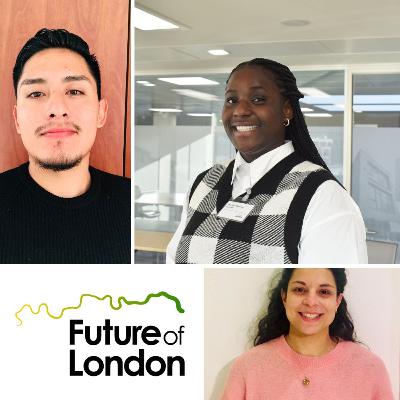
Across the built environment sector, many organisations find that attracting new talent can be a major challenge. The sector also needs to prioritise diversity to ensure it reflects the places and people it serves.
Future of London’s Emerging Talent Programme is working to attract talented individuals from ethnically minority backgrounds to work in the built environment sector, and support them to springboard their careers.
In this episode, three members of our first cohort share their experiences of their work placements and the wider development experiences after six months after starting. Tune in to hear about why Precious Oppong-Gyimah, Safaa Usmani and Israel Aguirre decided to be part of the programme, and how they're finding the experience so far.
Each of the recruits are working in three different host organisations, gaining insight into different professional career paths, as well as developing their workplace skills. They've shared with us about how the programme is providing them with a unique opportunity to really learn about the different careers in the sector, as well as building their professional networks.
At the time of the recording, Precious is on placement at Arup, Safaa with the Department of Levelling up, Housing and Communitie, and Israel is at London Borough of Camden.

How can working in the built environment make an impact on London's communities? What's it like to start a career in housing, planning or regeneration?
In our first interview with members of our inaugural Emerging Talent Programme cohort, Bébert Longi and Khuzaymah Pathan discuss why they applied for the programme, why this kind of project is important, and what they've learned so far with Candice Stanton.
At the time of recording, Bébert and Khuzaymah are on their first placements at Quod and Sanctuary Housing respectively.
About the Emerging Talent Programme
Launched in January 2022, this innovative programme aims to address the lack of ethnic diversity in the Built Environment sector in London.
We've recruited a talented cohort of candidates – all from ethnic minority backgrounds – keen to launch their careers in housing, regeneration, urban and economic development and infrastructure.
The cohort are on a 21-month programme, which consists of three placements into host organisations working across different sectors in the field. Following their induction at the end of January, the cohort are now all in their first placements across fourteen host organisations, including London borough council housing and regeneration teams, central government, regional government, housing associations and private sector developers and consultancies.
Find out more here.
Wonder why so many rooftops are still just dead space? Future of London grad and Pollard Thomas Edwards architect did (not least at his own building), so he came up with a tool owners and councils could use to quickly sort out whether beehives, solar, resident space or other uses could work. Find out more here or at https://bit.ly/2WK4CBU

Comments

Download from Google Play

Download from App Store
 United States