


 Claim Ownership
The Real Estate Market Watch - current events through a real estate lens.
Subscribed: 89Played: 2,724
Subscribe

Unless otherwise indicated, all images, content, designs, and recordings © 2025 GowerCrowd. All rights reserved.
Description
A shifting economic order. Rising geopolitical risk. Capital on edge. In The Real Estate Market Watch, Dr. Adam Gower, author, academic, and commercial real estate veteran with over 40 years of experience, examines the macroeconomic signals reshaping the real estate investment landscape.
This isn't a show about deal hype or trend-chasing. It's about what happens when confidence meets correction - and how investors and sponsors can respond with clarity, discipline, and a focus on downside protection.
Each episode features candid conversations with economists, multi-cycle real estate professionals, and respected market thinkers. The aim: to make sense of fast-moving events without partisan noise or clickbait headlines - only the real implications for real estate.
There's no fixed release schedule. Episodes are published in response to market conditions, not calendars.
If you're trying to navigate uncertainty with a clear-eyed, capital-first approach, this podcast is for you.
Newsletter: GowerCrowd.com/subscribe
Email: adam@gowercrowd.com
Call: 213-761-1000
This isn't a show about deal hype or trend-chasing. It's about what happens when confidence meets correction - and how investors and sponsors can respond with clarity, discipline, and a focus on downside protection.
Each episode features candid conversations with economists, multi-cycle real estate professionals, and respected market thinkers. The aim: to make sense of fast-moving events without partisan noise or clickbait headlines - only the real implications for real estate.
There's no fixed release schedule. Episodes are published in response to market conditions, not calendars.
If you're trying to navigate uncertainty with a clear-eyed, capital-first approach, this podcast is for you.
Newsletter: GowerCrowd.com/subscribe
Email: adam@gowercrowd.com
Call: 213-761-1000
340 Episodes
Reverse
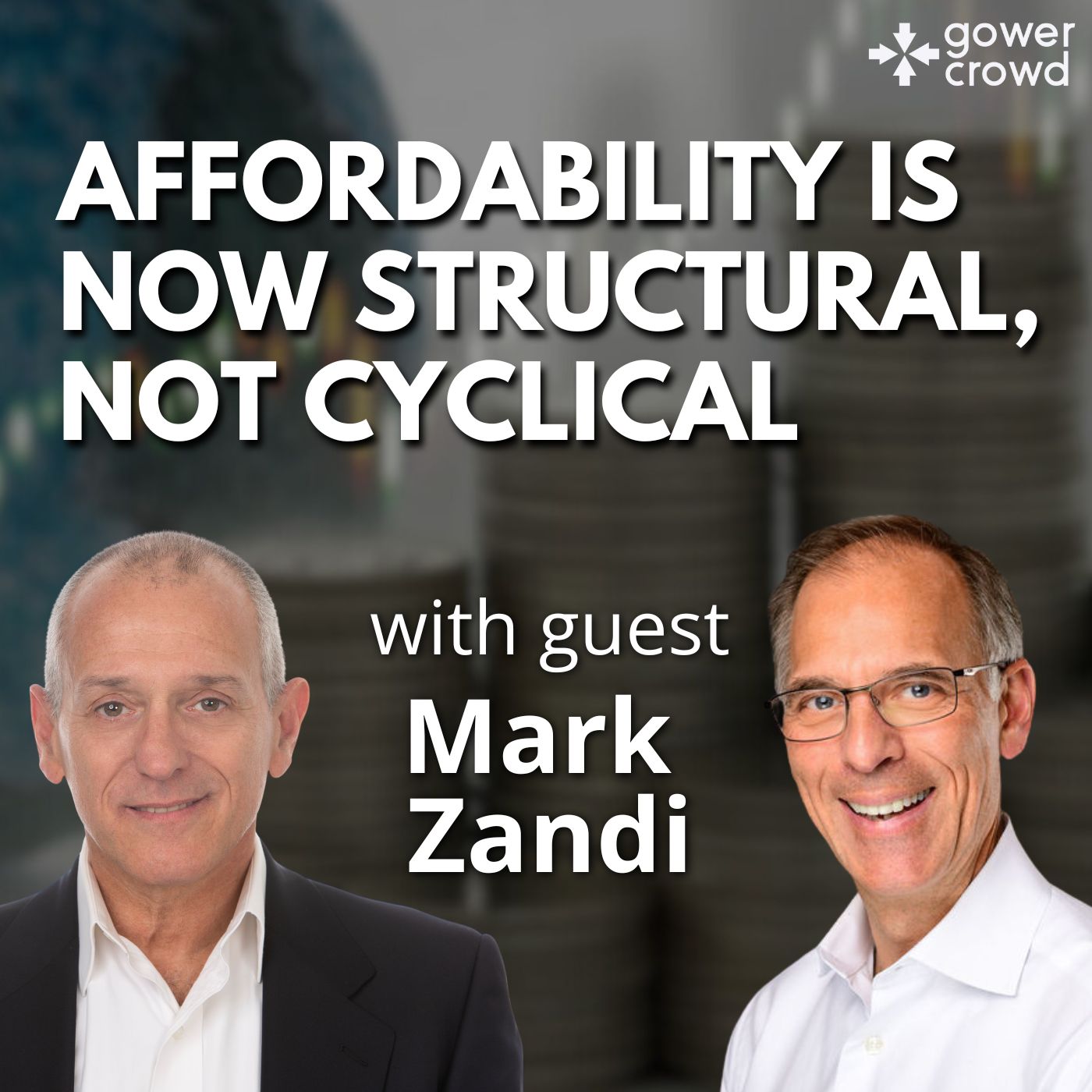
Mark Zandi is one of the few economists who can do two things at once: explain what is happening in the data, and explain why households experience it so differently. He is the chief economist at Moody's Analytics, and in our conversation, the last of my podcast series this year and the second of two Holiday Specials, he connected inflation, affordability, market structure, and geopolitics in a way CRE professionals will recognize immediately. The theme was simple, but not comforting: affordability is no longer a "cycle" story - it is becoming structural. And the US economy is increasingly dependent on a relatively narrow slice of consumers continuing to spend. Zandi's framing matters for sponsors and investors because it changes what "risk" looks like. If the top of the income distribution is carrying demand while the middle and bottom are constrained, the economy can keep moving - but it can also become unusually fragile if equity markets stumble or confidence shifts. He also made a point many people avoid saying plainly: even if AI is transformative, markets may be pricing in an adoption curve that is too fast. That is how you get corrections - not because the technology is useless, but because expectations got ahead of diffusion. Five questions we get into: Why has affordability re-emerged so forcefully in 2025 - and why does it feel like it is not going away? What does a "K-shaped economy" mean in practical terms for spending, jobs, and social stability? If the top 10% accounts for nearly half of spending, what breaks the expansion? Is today's AI boom more like 1997 or 2000 - and what would cause a valuation reset? Why does deglobalization threaten America's "exorbitant privilege," and what does that mean for markets? If you are underwriting 2026 with a clean, mean-reversion narrative, you will want to hear this conversation. *** In this series, I cut through the noise to examine how shifting macroeconomic forces and rising geopolitical risk are reshaping real estate investing. With insights from economists, academics, and seasoned professionals, this show helps investors respond to market uncertainty with clarity, discipline, and a focus on downside protection. Subscribe to my free newsletter for timely updates, insights, and tools to help you navigate today's volatile real estate landscape. You'll get: Straight talk on what happens when confidence meets correction - no hype, no spin, no fluff. Real implications of macro trends for investors and sponsors with actionable guidance. Insights from real estate professionals who've been through it all before. Visit GowerCrowd.com/subscribe Email: adam@gowercrowd.com Call: 213-761-1000
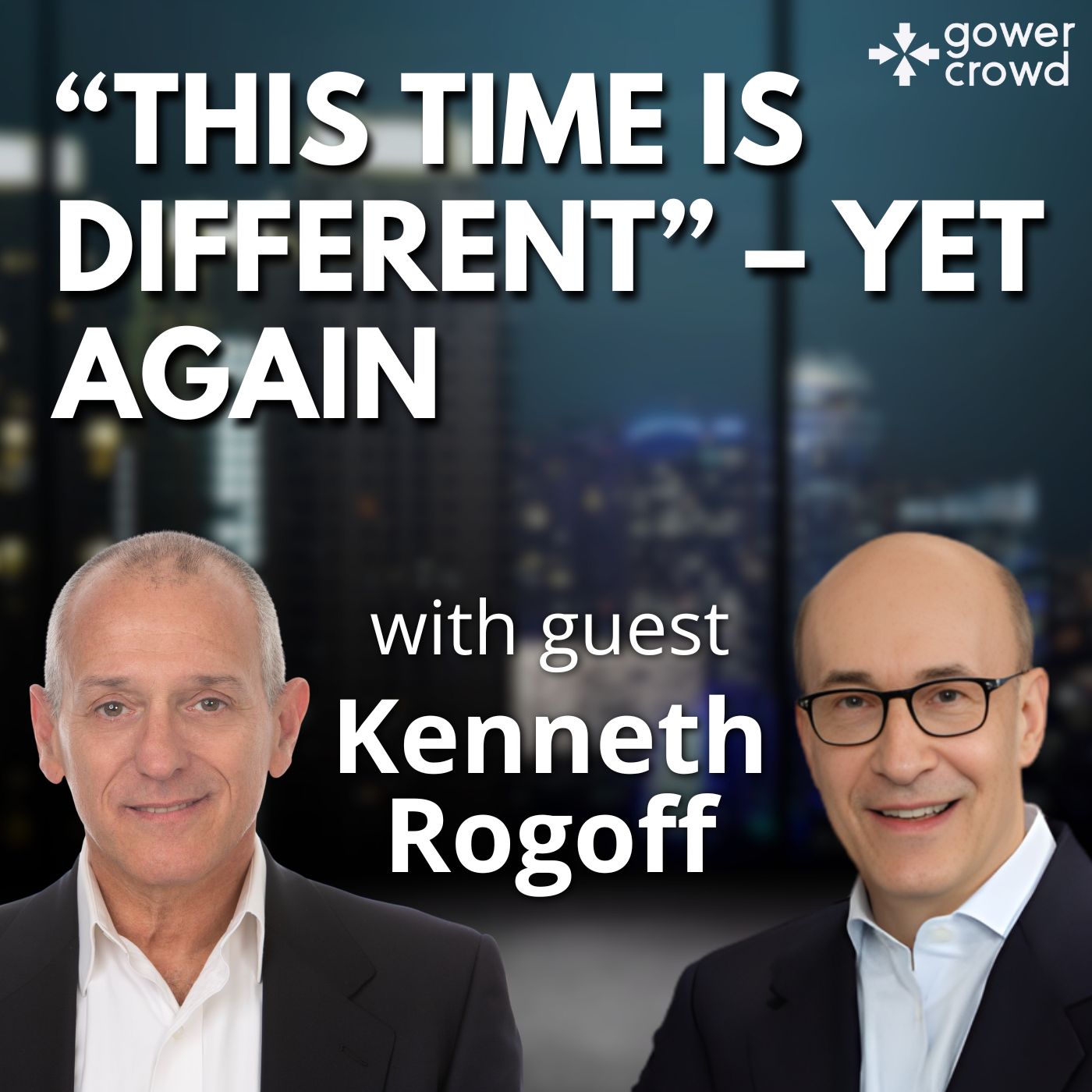
Ken Rogoff does not trade in headlines or market timing. He trades in history. As Professor of Economics at Harvard and co-author of This Time Is Different, Rogoff has spent decades studying what happens when societies convince themselves old rules no longer apply. His latest book, Our Dollar, Your Problem, extends that lens to today's economy – and to the quiet assumptions underpinning U.S. financial dominance. In our conversation, Rogoff unpacked why the dollar's "exorbitant privilege" still matters, why it is slowly eroding, and why the real risks facing the U.S. economy are not where most people are looking. This was not a discussion about panic. It was a discussion about probability. Among the questions Rogoff addresses: Why does dollar dominance lower borrowing costs for U.S. households and businesses – and what happens if that advantage fades? Why is the combination of high debt and higher interest rates historically dangerous, even for advanced economies? Why central bank independence matters more than most people realize – and why it is under pressure from both sides of the political spectrum. Why commercial real estate stress is serious but not systemic – and what risks matter more. Why AI could extend U.S. economic strength or trigger a sharp reversal – and why today's low volatility is misleading. Rogoff's core message is unsettling precisely because it is familiar. The United States has navigated debt, inflation, and institutional stress before. It did not escape unscathed. It adapted under pressure. The question is not whether adjustment comes. It is how – and under what conditions. If you care about macro risk, capital markets, or the long-term assumptions embedded in real estate and investment decisions, this conversation is worth your time. Tune in to hear it in full. *** In this series, I cut through the noise to examine how shifting macroeconomic forces and rising geopolitical risk are reshaping real estate investing. With insights from economists, academics, and seasoned professionals, this show helps investors respond to market uncertainty with clarity, discipline, and a focus on downside protection. Subscribe to my free newsletter for timely updates, insights, and tools to help you navigate today's volatile real estate landscape. You'll get: Straight talk on what happens when confidence meets correction - no hype, no spin, no fluff. Real implications of macro trends for investors and sponsors with actionable guidance. Insights from real estate professionals who've been through it all before. Visit GowerCrowd.com/subscribe Email: adam@gowercrowd.com Call: 213-761-1000

What do the most disciplined investors in real estate have in common right now? They're not chasing themes. They're not waiting for perfect headlines. They're buying when pricing resets and protecting capital at all costs. That's why my conversation with Onic Palandjian, partner at Group RMK, is worth your time. Onic helps steward a family office platform that has grown from $500 million to $2.5 billion by doing something increasingly rare in CRE: investing with patience, low leverage, and long-duration discipline. Their model is built on loss aversion, contrarian entry points, and a refusal to take operating risk without an exceptional basis. We covered a wide range of themes shaping 2026: the rise of family offices as agile allocators, the return of deep-value acquisitions, and why ground leases have become a compelling blend of yield, seniority, and inflation protection. Here are five questions we tackled: Why are family offices so well positioned for today's distressed pricing? How do ground leases deliver seniority, inflation linkage, and zero operating exposure? What makes a low-basis acquisition fundamentally different from a thematic bet? How does discipline with leverage create multi-cycle durability? Which opportunities are emerging as zoning, refinancing pressures, and capital scarcity converge? Onic's perspective is refreshingly unemotional: you only make money when you buy, and you only buy when the basis protects you. In an environment defined by volatility, scarcity of liquidity, and fractured sentiment, this mindset is not just conservative. It's strategic. If you want to understand how patient capital is positioning for the next phase of the market, this episode is a strong place to start. *** In this series, I cut through the noise to examine how shifting macroeconomic forces and rising geopolitical risk are reshaping real estate investing. With insights from economists, academics, and seasoned professionals, this show helps investors respond to market uncertainty with clarity, discipline, and a focus on downside protection. Subscribe to my free newsletter for timely updates, insights, and tools to help you navigate today's volatile real estate landscape. You'll get: Straight talk on what happens when confidence meets correction - no hype, no spin, no fluff. Real implications of macro trends for investors and sponsors with actionable guidance. Insights from real estate professionals who've been through it all before. Visit GowerCrowd.com/subscribe Email: adam@gowercrowd.com Call: 213-761-1000

In this week's episode, I spoke with Lisa Knee, Managing Partner of Real Estate Services at EisnerAmper, one of the largest tax and advisory firms serving institutional owners, funds, developers, and family offices across the country. Lisa works with clients who "touch dirt, own dirt, work with dirt" and her view is clear: the tax landscape has stopped moving, but the real estate market hasn't found its footing. She breaks down what the One Big Beautiful Bill actually settled (199A permanence, 100 percent bonus depreciation, renewed Opportunity Zone rules), and why none of it has thawed capital or clarified pricing. Capital is cautious, lenders prefer extend-and-amend, and investors still don't trust projected rents, expenses, or cap rates enough to lean in. We discuss topics that matter to serious operators, including: Which tax provisions now permanently shape deal economics for partnerships, REIT investors, and developers. How Opportunity Zones 2.0 works and what the 2026 "blackout" means for capital flows. Why B and C assets are under the most pressure even as A and D properties continue to lease. Why adaptive reuse is a specialist's game, not a market-wide solution for office. What lenders are actually doing behind the scenes and how extend-and-amend is shaping distress. If you're underwriting deals, raising capital, or making hold-sell decisions in 2025 as we head into 2026, this conversation gives you a clear, steady framework for understanding how tax incentives, lender behavior, and pricing uncertainty are interacting right now. *** In this series, I cut through the noise to examine how shifting macroeconomic forces and rising geopolitical risk are reshaping real estate investing. With insights from economists, academics, and seasoned professionals, this show helps investors respond to market uncertainty with clarity, discipline, and a focus on downside protection. Subscribe to my free newsletter for timely updates, insights, and tools to help you navigate today's volatile real estate landscape. You'll get: Straight talk on what happens when confidence meets correction - no hype, no spin, no fluff. Real implications of macro trends for investors and sponsors with actionable guidance. Insights from real estate professionals who've been through it all before. Visit GowerCrowd.com/subscribe Email: adam@gowercrowd.com Call: 213-761-1000

Jeff Rosenberg brings a multi-generation perspective to open-air, retail shopping centers, a sector most investors once wrote off. His family built and operated supermarkets and the centers around them starting in the 1940s. Big V Property Group grew out of that platform and today controls a $2.5 billion, 9 million square foot national portfolio of open-air shopping centers anchored by the likes of Target, TJX brands, Ross, HomeGoods, Sierra Trading, and others. That background matters: Big V understands how retailers actually make money, how store-level performance drives traffic, and why certain locations survive every cycle. A few insights stood out in our conversation: • Physical retail never died (online shopping, Covid etc) it evolved. Retailers now use stores as omnichannel infrastructure: showroom, warehouse, and last-mile all at once. • Power-center retail is effectively an ecosystem. A Target anchor drives demographic analysis, infrastructure improvements, credit co-tenancy, and consistent foot traffic for the rest of the center. • Supply discipline is doing the heavy lifting. Two decades of minimal development plus 96–97% occupancy make today's retail fundamentally different from overbuilt asset classes. • Lenders are leaning back in. Big V recently rolled eight core assets, about $1.1 billion, into a single fund and closed a $765 million on-balance-sheet bank loan, the largest retail financing in the country in 2025. • Underwriting today requires humility. Big V assumes no cap-rate compression. All value has to come from NOI growth and execution, not financial engineering. Here are five questions we covered: Why did retail survive when everyone predicted structural decline? How does a Target anchor change a center's economics? What does today's capital stack look like for high-quality retail? How do you underwrite exits when cap-rate compression is off the table? Where are the real risks in a sector that looks "safe" on the surface? If you want a grounded view of where the next leg of the retail cycle is heading and how an operator with a decades-long track record has never lost investor capital, this conversation is worth your time. *** In this series, I cut through the noise to examine how shifting macroeconomic forces and rising geopolitical risk are reshaping real estate investing. With insights from economists, academics, and seasoned professionals, this show helps investors respond to market uncertainty with clarity, discipline, and a focus on downside protection. Subscribe to my free newsletter for timely updates, insights, and tools to help you navigate today's volatile real estate landscape. You'll get: Straight talk on what happens when confidence meets correction - no hype, no spin, no fluff. Real implications of macro trends for investors and sponsors with actionable guidance. Insights from real estate professionals who've been through it all before. Visit GowerCrowd.com/subscribe Email: adam@gowercrowd.com Call: 213-761-1000

Jeff Brown has spent the last 15 years building exactly the kind of platform most sponsors say they want and very few actually execute: niche, disciplined, and trusted by the wealth-management channel. As founder and CIO of T2 Capital Management, he's grown a $1bn platform focused on three things: bridge lending, student housing, and B/C multifamily 'on the banks of the Mississippi.' Most of his capital comes from RIAs – a channel many sponsors talk about but rarely crack. In our conversation, we talked about what it really looks like when investors are bruised, liquidity is scarce, and the opportunity set is quietly improving. Here are five questions Jeff answered that matter for anyone raising or allocating equity today: What separates a real bridge lender from the "tourists" who entered the space in the last cycle? How do you underwrite B/C multifamily and workforce housing when markets are working through a supply glut from the ZIRP era? What's actually happening inside student housing? Why have RIAs made T2 their real estate allocation? How should investors think about 401(k) access to private assets? If you're trying to make sense of where capital will actually move in the next phase of this cycle and what it will reward, this episode is worth your time. Jeff is candid about the scars, clear about the opportunities, and refreshingly sober about what it takes to earn and keep investor trust. Tune in to the full discussion with Jeff Brown of T2 Capital Management to pressure-test your own thesis for the next leg of the market. *** In this series, I cut through the noise to examine how shifting macroeconomic forces and rising geopolitical risk are reshaping real estate investing. With insights from economists, academics, and seasoned professionals, this show helps investors respond to market uncertainty with clarity, discipline, and a focus on downside protection. Subscribe to my free newsletter for timely updates, insights, and tools to help you navigate today's volatile real estate landscape. You'll get: Straight talk on what happens when confidence meets correction - no hype, no spin, no fluff. Real implications of macro trends for investors and sponsors with actionable guidance. Insights from real estate professionals who've been through it all before. Visit GowerCrowd.com/subscribe Email: adam@gowercrowd.com Call: 213-761-1000

My guest today, Tim Bodner, doesn't just analyze capital markets - he helps shape them. As Partner at PwC and Global Leader of its Real Estate Deals business, Tim advises some of the world's largest investors – pensions, sovereign wealth funds, REITs, private capital firms - on transactions exceeding $300 billion. He also is a contributor to PwC's Global Real Estate and Real Assets Deals Outlook, giving him a uniquely panoramic view of how capital, policy, and real assets now intersect. In our conversation, Tim explains why the capital stack is being redrawn. Retail savings and annuities are moving from the periphery to the core of capital formation. Private credit, powered by insurers, is filling the vacuum left by banks. And the definition of "real estate" is expanding fast into "real assets" like data centers, senior housing, manufacturing facilities, sports or entertainment venues and infrastructure. It's not just about what's being built, it's about who's funding it, and how. Here are five questions Tim and I discuss that every serious investor or sponsor should be asking right now: 1. How will retirement-plan capital change the equity landscape for real estate? 2. What does the rise of insurer-backed private credit mean for developers and borrowers? 3. Why are institutions shifting from "real estate" to "real assets" and what falls inside that new perimeter? 4. How should sponsors navigate co-invest and direct-deal demand from pensions and sovereigns without slowing execution? 5. Is the "fog" of uncertainty finally lifting and where is capital rotating back into traditional sectors? If you want to understand where capital is truly flowing, how policy and product design are reshaping investor access, and why operating capability is emerging as the new alpha, this episode is worth your time. Listen to my full conversation with Tim Bodner of PwC, a rare, clear-eyed look at how capital formation in real assets is changing beneath the surface. *** In this series, I cut through the noise to examine how shifting macroeconomic forces and rising geopolitical risk are reshaping real estate investing. With insights from economists, academics, and seasoned professionals, this show helps investors respond to market uncertainty with clarity, discipline, and a focus on downside protection. Subscribe to my free newsletter for timely updates, insights, and tools to help you navigate today's volatile real estate landscape. You'll get: Straight talk on what happens when confidence meets correction - no hype, no spin, no fluff. Real implications of macro trends for investors and sponsors with actionable guidance. Insights from real estate professionals who've been through it all before. Visit GowerCrowd.com/subscribe Email: adam@gowercrowd.com Call: 213-761-1000

Richard Tucker has seen every phase of retail, from enclosed malls to mixed-use, and still chooses the least glamorous corner of the sector: small-bay, necessity-driven strip centers. As CEO of Tucker Development, a 10MM square foot development company, he's now systematizing that playbook into a Midwest portfolio with modest leverage, steady cash, and an exit designed for institutions. In a market obsessed with timing the rate cycle, this is an operator's strategy: buy centers with proven tenancy, fix physical frictions (depth, access, service lanes), keep leverage low (60–65%), hedge rates, and let small rent steps compound at the portfolio level. It's less about shiny anchors and more about durable local habits. Richard and I discuss: Why unanchored strips now. What is WALD and how does it drive resilience and investor returns? Best practices for taking on debt. How 'boring' can yield a 9% current pay. Why taxes matter and what not to look at. If you're underwriting the next two years as an operator, not a speculator, Tucker's checklist is a useful filter for deal flow you can own through volatility. His team spends more time on downside than upside and builds something a bigger buyer can actually absorb. That discipline is scarce. Tune in to hear how Richard separates cosmetic "retail" from real, necessity-based demand and why "good real estate with good business plans always wins out." *** In this series, I cut through the noise to examine how shifting macroeconomic forces and rising geopolitical risk are reshaping real estate investing. With insights from economists, academics, and seasoned professionals, this show helps investors respond to market uncertainty with clarity, discipline, and a focus on downside protection. Subscribe to my free newsletter for timely updates, insights, and tools to help you navigate today's volatile real estate landscape. You'll get: Straight talk on what happens when confidence meets correction - no hype, no spin, no fluff. Real implications of macro trends for investors and sponsors with actionable guidance. Insights from real estate professionals who've been through it all before. Visit GowerCrowd.com/subscribe Email: adam@gowercrowd.com Call: 213-761-1000

Michael Procopio runs a fourth-generation, vertically integrated ground up multifamily development company, Procopio Companies, that's active across the Northeast, Carolinas, Texas, and Florida, 10–12 ground-up projects at a time, from entitlement through construction and hospitality-style management. In other words: he's shipping when many sponsors can't. In my conversation with Michael, we talked about how to get deals done in a market where institutions say they're "active" but still hesitate, why capital structure, not just cap rates, decides feasibility, and where the next leg of multifamily growth may come from (hint: the Northeast, but not how you think). Here are five questions Michael answers that matter if you're deploying real dollars in 2025–26: How should sponsors weigh institutional equity vs. family offices vs. syndicated HNW? Why are institutions "skittish" on development even in top markets and what can sponsors do about it? What's the real cost impact of tariffs and immigration enforcement on ground up construction? Where is Procopio putting shovels in the ground now? What's the case for build-to-rent in the Northeast? We also cover why OZs remain underused by family offices despite flexible timing and the ability to refi out capital mid-hold while keeping cash flow. If you're serious about building, and owning, the levers that create feasibility, you'll find this one useful. Tune in to hear how Michael is aligning capital, costs, and city hall to move 10–12 projects while the herd watches the headlines. *** In this series, I cut through the noise to examine how shifting macroeconomic forces and rising geopolitical risk are reshaping real estate investing. With insights from economists, academics, and seasoned professionals, this show helps investors respond to market uncertainty with clarity, discipline, and a focus on downside protection. Subscribe to my free newsletter for timely updates, insights, and tools to help you navigate today's volatile real estate landscape. You'll get: Straight talk on what happens when confidence meets correction - no hype, no spin, no fluff. Real implications of macro trends for investors and sponsors with actionable guidance. Insights from real estate professionals who've been through it all before. Visit GowerCrowd.com/subscribe Email: adam@gowercrowd.com Call: 213-761-1000

Sean Burton runs one of the most integrated multifamily platforms on the West Coast. As CEO of Cityview, he oversees development, construction management, and property management across ~40 assets in supply-constrained markets. That full-stack view matters right now because capital is moving—and underwriting discipline will separate winners from passengers. Theme: Debt is back, development capital is selectively returning, and OZ 2.0 arrives in 2027. But the only rate that really matters for valuations is the 10-year, not the headline cut. If you build your thesis on structure, not dirt, regime changes will find you out. Five questions Sean answers: What's actually happening in debt? Why are private-credit spreads at cycle lows and banks re-entering, and how should sponsors lock terms without over-betting on near-term policy cuts? Where is equity leaning now? Why are insurance companies and bulge-bracket managers warming to development in true supply-constraints—and why are coastal markets back in the conversation? Do tariffs and immigration enforcement change cost and schedule? What did a 17-sub deep-dive reveal about hard costs (+2.7%) vs. headline noise—and how should you interrogate your supply chain? How should investors think about policy-driven liquidity (Basel relief, rate cuts) vs. the cap-rate anchor at the long end? Where's the line between stimulus and a "sugar-rush" that lifts the 10-year? What can cities do—practically—to attract capital? Why San Diego's timeline certainty (with real affordability requirements) is winning 1,000-unit pipelines while LA's political risk still prices deals wider. If you're underwriting 2025–27, this episode is a field guide: fundamentals over financial engineering, explicit policy-risk pricing, a 2027 OZ relaunch plan, and a daily read on the 10-year. Capital is available; discipline is scarce. Tune in for the full conversation with Sean Burton, CEO of Cityview—and pressure-test your next IC memo against his playbook. *** In this series, I cut through the noise to examine how shifting macroeconomic forces and rising geopolitical risk are reshaping real estate investing. With insights from economists, academics, and seasoned professionals, this show helps investors respond to market uncertainty with clarity, discipline, and a focus on downside protection. Subscribe to my free newsletter for timely updates, insights, and tools to help you navigate today's volatile real estate landscape. You'll get: Straight talk on what happens when confidence meets correction - no hype, no spin, no fluff. Real implications of macro trends for investors and sponsors with actionable guidance. Insights from real estate professionals who've been through it all before. Visit GowerCrowd.com/subscribe Email: adam@gowercrowd.com Call: 213-761-1000

My podcast guest this week is Chris Garner, CEO, Avanti Residential, an owner-operator with thousands of units across seven states, who has four decades in the trenches. Garner explains how the multifamily market is bottoming – with local nuance. The past two years weren't a demand recession, he says, so much as a supply shock in growth metros. Concessions did the absorbing. Now we're approaching the peak of deliveries in places like Nashville, Denver, and Phoenix but investment committees are still anchored to five-year IRR math and negative-leverage scar tissue. His take on timing is blunt – "We're at the bottom of the multifamily cycle, if not the beginning of the recovery," but the irony is that capital is still sidelined. Investment committees remain cautious, waiting for "clear evidence" that fundamentals have turned, even though the best returns are made before that clarity arrives. As Garner put it, everyone talks about not following the herd, "but everybody's part of the herd." When deals finally reprice and capital moves, the easy money is gone. "That's when the best deals get missed because you couldn't raise capital when it was actually the right time to buy." Five questions Chris and I discuss: Where are we in the cycle? What does an efficient operating model look like now? How should value-add evolve? What's the realistic path to transacting again? What hold period wins from here? Tune in for the full conversation with Chris Garner, CEO, Avanti Residential - a masterclass in operating discipline, market selection, and underwriting in the real world. *** In this series, I cut through the noise to examine how shifting macroeconomic forces and rising geopolitical risk are reshaping real estate investing. With insights from economists, academics, and seasoned professionals, this show helps investors respond to market uncertainty with clarity, discipline, and a focus on downside protection. Subscribe to my free newsletter for timely updates, insights, and tools to help you navigate today's volatile real estate landscape. You'll get: Straight talk on what happens when confidence meets correction - no hype, no spin, no fluff. Real implications of macro trends for investors and sponsors with actionable guidance. Insights from real estate professionals who've been through it all before. Visit GowerCrowd.com/subscribe Email: adam@gowercrowd.com Call: 213-761-1000

When workout specialist Norman Radow sat across from a developer who'd just lost a half-billion-dollar condo project in LA and asked what he'd change, the developer pounded the table, "I wouldn't change a thing. I did everything right!" That's when Norman knew exactly why he was there. Norman Radow is CEO of The RADCO Companies, an Atlanta-based opportunistic real estate firm that has acquired, invested in, and operated over 30,000 multifamily units across 15 markets and completed more than 100 deals totaling $3.3 billion over the past decade. But his story begins earlier – as Lehman Brothers' off-balance-sheet workout specialist, where he earned the title "workout king" from The New York Times in 2009 after unwinding some of the most complex distressed assets in modern real estate history. In this conversation, Norman shares battle-tested wisdom from three decades of buying buildings nobody else wanted – from the savings and loan crisis through the GFC to today's market paralysis. Five questions answered: Why did Norman wait three years to get back into the distress game – and what finally triggered his return? What do ALL failed condo projects he studied have in common? (Hint: it's not what you think.) Why are banks giving free extensions to sponsors with "unclean hands" instead of bringing in fresh operators? Where is institutional capital flowing right now – and why non-institutional investors shouldn't compete there. What's the real story behind "extend and pretend" 2.0? If you're trying to make sense of today's multifamily market – the disconnect between debt and equity, why distressed deals aren't trading, and where smart money should position for the next 24-36 months – this delivers hard-earned pattern recognition from someone who's seen this movie before. *** In this series, I cut through the noise to examine how shifting macroeconomic forces and rising geopolitical risk are reshaping real estate investing. With insights from economists, academics, and seasoned professionals, this show helps investors respond to market uncertainty with clarity, discipline, and a focus on downside protection. Subscribe to my free newsletter for timely updates, insights, and tools to help you navigate today's volatile real estate landscape. You'll get: Straight talk on what happens when confidence meets correction - no hype, no spin, no fluff. Real implications of macro trends for investors and sponsors with actionable guidance. Insights from real estate professionals who've been through it all before. Visit GowerCrowd.com/subscribe Email: adam@gowercrowd.com Call: 213-761-1000
My guest today is David Lynn, PhD — CEO of Unity Investment Management, a private-equity real-estate firm with nearly $1 billion AUM across 74 medical outpatient buildings nationwide. A London School of Economics PhD and MIT MBA, David cuts through macro confusion with a steady, data-driven view of where capital and demographics are really pulling the market. Driving Thesis: America's aging population and the rise of personalized medicine, longevity science, and AI diagnostics are reshaping health-care real estate. Telehealth doesn't kill in-person visits — it creates more of them. And as construction costs rise and MOB supply stays tight, low-beta sectors like medical outpatient buildings are poised to outperform high-volatility multifamily and office assets. Why it matters: We're entering a post-banquet cycle — after 15 years of ultra-cheap debt and compressed cap rates. David argues that the "easy-money era" is over, but patient investors still win through cash-flow discipline and blend-and-extend lender relationships. Medical tenants are non-discretionary and financially stable; that stability will anchor returns as rates ease and capital markets thaw. Five questions David answers: Why MOBs held their value while multifamily stumbled. How telemedicine actually drives physical visits. What AI and genomics mean for future space demand. Where we are in the cap-rate cycle (and why this may be the bottom). How tariffs, immigration, and Fed policy feed through to CRE pricing. Takeaways for sponsors & LPs: • Favor low-volatility sectors with durable cash flow. • Shorter leases can beat inflation without adding risk. • Blend and extend — don't panic-sell distress. • Watch employment and energy as deflationary signals. • AI and aging will drive demand more than interest rates. If you believe steady beats speculative, this episode maps how to navigate the new cycle with a scientist-investor's lens — one rooted in data, discipline, and durable demand. David Lynn is that rare voice who bridges macro economics and boots-on-the-ground real estate with clarity and calm. *** In this series, I cut through the noise to examine how shifting macroeconomic forces and rising geopolitical risk are reshaping real estate investing. With insights from economists, academics, and seasoned professionals, this show helps investors respond to market uncertainty with clarity, discipline, and a focus on downside protection. Subscribe to my free newsletter for timely updates, insights, and tools to help you navigate today's volatile real estate landscape. You'll get: Straight talk on what happens when confidence meets correction - no hype, no spin, no fluff. Real implications of macro trends for investors and sponsors with actionable guidance. Insights from real estate professionals who've been through it all before. Visit GowerCrowd.com/subscribe Email: adam@gowercrowd.com Call: 213-761-1000
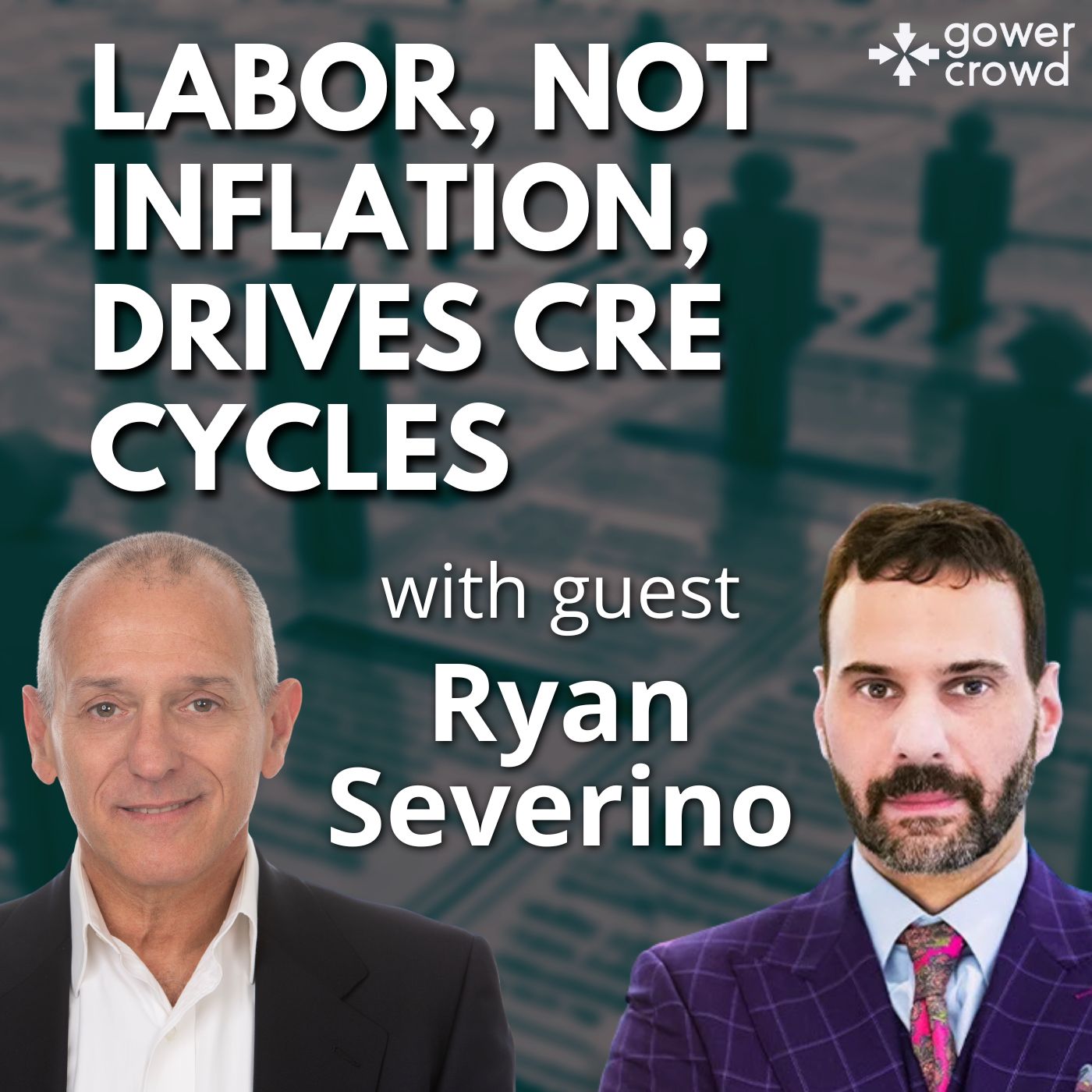
My guest today is Ryan Severino, Chief Economist & Head of Research at private equity real estate shop, BGO ($89 billion of AUM), who cuts through the macro noise with a practical roadmap for real estate sponsors and their investors. Driving Thesis: A new administration: slower immigration, volatile trade policy, and accelerating AI. These three forces are reshaping growth, hiring, space demand, and cap rates. If you're waiting for "inflation down → all clear," you'll miss the real drivers. Why it matters: The biggest hit was capital-markets math. If the Fed guides toward neutral (where the Fed's actions neither stimulate nor restrains economic growth) and the long end eases (10/30 year treasury yields come down), origination, transactions, and pricing can recover faster than fundamentals. Durable investment returns still come down to labor, not inflation headlines. Five questions Ryan answers: Today's savvy investors should be looking at what? What is the cleanest macro signal for CRE? Tariffs vs. uncertainty; what's worse? Rate cuts: boon or "sugar rush"? Where will AI hit property first? Takeaways for sponsors & LPs: Underwrite to jobs, not CPI (inflation) chatter. Get hyper-local; this is a geography-led cycle. Favor durable demand pools (workforce housing). Expect a capital-markets thaw before a fundamental boom. Treat uncertainty as baseline; build flexibility into debt and expand equity capital sources. If you're separating signal from noise, this episode re-anchors the playbook: watch payrolls, heed forward guidance, underwrite locally, own real demand. According to ChatGPT's analysis of Ryan's historical predictions, he has 'called the cycle's shape better than most; no overreaction to inflation, no premature recession warnings, and consistent recognition of labor market strength and capital flow dynamics. That's a rare track record, especially in a market where even top-tier macro shops have missed big turns.' Ryan's the real deal – hardly any wonder he's Chief Economist at an $89 billion AUM shop. *** In this series, I cut through the noise to examine how shifting macroeconomic forces and rising geopolitical risk are reshaping real estate investing. With insights from economists, academics, and seasoned professionals, this show helps investors respond to market uncertainty with clarity, discipline, and a focus on downside protection. Subscribe to my free newsletter for timely updates, insights, and tools to help you navigate today's volatile real estate landscape. You'll get: Straight talk on what happens when confidence meets correction - no hype, no spin, no fluff. Real implications of macro trends for investors and sponsors with actionable guidance. Insights from real estate professionals who've been through it all before. Visit GowerCrowd.com/subscribe Email: adam@gowercrowd.com Call: 213-761-1000
Erica Groshen knows what's behind the numbers. She served as the 14th Commissioner of the Bureau of Labor Statistics and a Vice President at the New York Fed. The BLS is rarely in the headlines but political assaults on its independence have suddenly made its work front-page news. At stake: whether the data that guide trillions in investment and policy decisions can still be trusted. In our conversation, Erica and I explored five questions that matter not just for CRE professionals, but for anyone trying to make sense of today's economy: What happens to markets when political leaders undermine trust in official statistics? How would a politicized Fed and BLS reshape the cost of capital and risk across the economy? How is the nation's labor data actually gathered? Why does the BLS's data matter so much for the business and CRE cycle? How does the Fed use labor data to set interest rates? This isn't an abstract debate. For commercial real estate, cap rates, borrowing costs, and deal structures all trace back to the business cycle - and that cycle is measured first and foremost by BLS data. If you want to look beyond today's headlines and hear why institutional trust translates directly into your cost of capital — this is the episode to listen to. *** In this series, I cut through the noise to examine how shifting macroeconomic forces and rising geopolitical risk are reshaping real estate investing. With insights from economists, academics, and seasoned professionals, this show helps investors respond to market uncertainty with clarity, discipline, and a focus on downside protection. Subscribe to my free newsletter for timely updates, insights, and tools to help you navigate today's volatile real estate landscape. You'll get: Straight talk on what happens when confidence meets correction - no hype, no spin, no fluff. Real implications of macro trends for investors and sponsors with actionable guidance. Insights from real estate professionals who've been through it all before. Visit GowerCrowd.com/subscribe Email: adam@gowercrowd.com Call: 213-761-1000

Greg MacKinnon is Director of Research at the Pension Real Estate Association (PREA), where he updates the world's largest institutional investors on portfolio construction, risk, and strategy. His is a vantage point most sponsors never get to hear directly. In this conversation, Greg and I revisited our conversation from two weeks ago to drill deeper into the housing market. His thesis is simple but surprising: the capital flows and risk assessments at the very top of the pyramid are being reshaped by renter bifurcation and the economics of affordability. Here are five questions Greg answered that every serious CRE professional should consider: Why does the 10-year Treasury matter more than the Fed's 25 bps rate cut last week? How fragile is today's economy, and what does that mean for institutional portfolio construction? How can understanding the "barbell" of renter demand help you make better investment decisions? Why has naturally affordable multifamily historically outperformed luxury on a risk-adjusted basis? Where are institutions actually deploying capital today and why? Greg's insights are drawn from the institutional world, where the stakes are measured in billions and the lens is long-term risk management. For sponsors and operators, listening in offers a rare chance to see how these investors are evaluating markets - and to align your own strategies accordingly. *** In this series, I cut through the noise to examine how shifting macroeconomic forces and rising geopolitical risk are reshaping real estate investing. With insights from economists, academics, and seasoned professionals, this show helps investors respond to market uncertainty with clarity, discipline, and a focus on downside protection. Subscribe to my free newsletter for timely updates, insights, and tools to help you navigate today's volatile real estate landscape. You'll get: Straight talk on what happens when confidence meets correction - no hype, no spin, no fluff. Real implications of macro trends for investors and sponsors with actionable guidance. Insights from real estate professionals who've been through it all before. Visit GowerCrowd.com/subscribe Email: adam@gowercrowd.com Call: 213-761-1000
Reid Bennett knows multifamily. As National Council Chair of Multifamily at SVN and a 24-year broker across market-rate, workforce, and affordable housing, he's completed hundreds of transactions and advised lenders on more than 450 broker opinions of value (BOV) in just the past 18 months. In my recent conversation with him, Reid cuts through the noise to explain what's really happening in multifamily and why sponsors and investors need to pay attention. Here are five big questions he answers: Are the 450+ BOVs a sign that distress is about to hit multifamily, or just lenders marking time? Why are occupancies still in the mid-90s when everything else in the economy feels shaky? What's crushing NOI faster - insurance, property taxes, or payroll? How should investors think about workforce housing as a long-term hedge against oversupply at the top end? Why do Class A buildings show concessions while B and C rents remain sticky, and how does new supply really solve affordability? This isn't 2009, but it isn't 2021 either. Reid explains why today's market feels like a slow-motion reset and what signals to watch if you want to stay ahead. Tune in to hear Reid's unvarnished take. *** In this series, I cut through the noise to examine how shifting macroeconomic forces and rising geopolitical risk are reshaping real estate investing. With insights from economists, academics, and seasoned professionals, this show helps investors respond to market uncertainty with clarity, discipline, and a focus on downside protection. Subscribe to my free newsletter for timely updates, insights, and tools to help you navigate today's volatile real estate landscape. You'll get: Straight talk on what happens when confidence meets correction - no hype, no spin, no fluff. Real implications of macro trends for investors and sponsors with actionable guidance. Insights from real estate professionals who've been through it all before. Visit GowerCrowd.com/subscribe Email: adam@gowercrowd.com Call: 213-761-1000

A Banker's Memory Is a Sponsor's Edge Brad Andrus isn't just another operator in today's market. He's the co-founder of Northbridge Commercial Real Estate and a former community-bank lender who cut his teeth during the 2008 crisis. That experience shaped the conservative, cash-flow-first discipline he brings to self-storage, office, and industrial deals across DFW today. In this episode, Brad lays out why sponsors who master operating discipline—not market timing—win when capital is cautious and debt is expensive. Here are 5 questions he answers that every sponsor and investor should be paying attention to right now: How do you structure debt so it survives a cycle—even if growth underwhelms? Why are community banks still the hidden edge for sponsors, even in today's tighter credit regime? What's the new investor mindset after 2021–2023's write-downs and capital calls? How do you play offense in self-storage when household mobility (and move-ins) slows down? What really earns sponsors repeat checks from equity investors in 2024–2025? Brad's through-line is refreshingly clear: lower leverage, cash-flow bias, relationship banking, and transparent communication. For anyone raising capital or allocating into deals right now, his insights are a blueprint for surviving—and compounding—across market cycles. *** In this series, I cut through the noise to examine how shifting macroeconomic forces and rising geopolitical risk are reshaping real estate investing. With insights from economists, academics, and seasoned professionals, this show helps investors respond to market uncertainty with clarity, discipline, and a focus on downside protection. Subscribe to my free newsletter for timely updates, insights, and tools to help you navigate today's volatile real estate landscape. You'll get: Straight talk on what happens when confidence meets correction - no hype, no spin, no fluff. Real implications of macro trends for investors and sponsors with actionable guidance. Insights from real estate professionals who've been through it all before. Visit GowerCrowd.com/subscribe Email: adam@gowercrowd.com Call: 213-761-1000
Institutional CRE investing: A market run by allocation math – and uncertainty My podcast/YouTube guest today is Greg MacKinnon, Director of Research at the Pension Real Estate Association (PREA). PREA represents the institutional real estate community - think pension funds, sovereign wealth funds, endowments, and other fiduciaries managing hundreds of billions on behalf of millions of beneficiaries. These are the investors who typically allocate to real estate as part of their overall investment portfolios and who set the tone for how capital flows through the entire real estate market. Greg explains how while institutional real estate remains a roughly 10% sleeve in diversified institutional portfolios, the number matters less than the mechanics behind it. When equities rally and private values fall, the real estate slice shrinks—creating a theoretical bid to "rebalance" back to target. In practice, that bid has been clogged by a fund-recycling problem: closed-end vehicles haven't been returning capital as quickly because exits have slowed, which leaves investors waiting for distributions before recommitting. Until that dam breaks more broadly, new capital formation into private real estate remains inconsistent across strategies and managers. Office: price discovery by compulsion Institutional portfolios built in a world where office was a core holding are still working through the repricing. Unlevered office values are down on the order of ~40% from pre-COVID peaks nationally; with leverage, many positions are effectively wiped out, explaining why owners resist selling and why trades are scarce. That stasis is ending as lenders tire of "extend and pretend," loan maturities arrive, and forced decisions accelerate. The practical question for CIOs isn't simply "hold or sell" but how fast to harvest, return, and re-underwrite risk elsewhere. Expect more office volume but much of it distress-driven rather than conviction buying. The rate cut mirage: CRE runs on growth and the 10-year Market chatter obsesses over the next Fed move. Institutional capital takes a broader view. The cost of capital that matters for underwriting – term debt, cap-rate anchoring, discount rates – is tethered more to the 10-year Treasury than the overnight Fed funds rate. A policy cut can coexist with a higher 10-year if inflation risk re-prices, blunting any "cuts are bullish" narrative. More importantly: CRE performance tracks the real economy's breadth and durability. Historically, rising interest rates often coincide with strong growth and healthy real estate. Falling rates tend to arrive with deceleration, which is why "cuts" are not automatically good news for NOI or values. Underwrite your forward cash flows, not the headline. Policy risk is now an underwriting line item Global capital has long treated the U.S. as the default safe harbor. That advantage compresses when macro policy feels unpredictable – tariffs one week, reversals the next, and public debate over central-bank independence. Some non-U.S. allocators have simply chosen not to live with the noise premium, shifting incremental dollars to Europe. Domestic institutions aren't exiting the U.S., but the signal is clear: political-economy volatility now shows up as a higher hurdle rate, more conditional investment committee approvals, and a stronger preference for managers who can navigate policy in both research and structuring. Where the money is actually going Facing actuarial return targets and a cloudy macro, institutions are tilting toward "where alpha lives now": Digital and specialized industrial: data centers; cold storage; and industrial outdoor storage (IOS) – think secured yards for heavy equipment – where supply is constrained and tenant demand is need-based. Housing adjacencies: single-family rental, manufactured housing, student housing, and seniors housing, plus targeted affordable strategies that can layer policy incentives with operating expertise. Selective core logistics and resilient multifamily: still investable but crowded; institutions need an edge in submarket selection, cost basis, or operations to meet return hurdles. Themes in common: operational complexity that deters industry tourists, local expertise that differentiates underwriting, and cash flows less correlated to the office cycle. The portfolio is changing: from "real estate" to "real assets" Many large investors are reorganizing how they bucket risk. Instead of a hard 10% "real estate" sleeve, they're adopting either a broader real assets mandate (real estate + infrastructure + sometimes commodities) or a private markets sleeve (real estate + private credit + private equity). The goal is flexibility: tilt to where relative value is best without tripping governance wires each time. This structural shift makes it easier for a head of Real Assets to move dollars from, say, mid-risk equity in apartments to long-duration infrastructure when spreads and growth argue for it, and to rotate back when underwriting improves. It's a quiet change with large implications for which managers get funded and when. "Institutional quality" is a culture, not a class of building Too many sponsors use "institutional quality" as shorthand for a gleaming asset. Institutions define quality as process: governance, repeatability, controls, reporting cadence, and audit-ready data, plus the discipline to say "no" when the numbers don't clear the bar. That's why a best-in-class niche specialist (e.g., Southwest self-storage or cold-chain) can attract blue-chip LPs without owning a single skyline trophy. Conversely, a sponsor with a glossy deck but ad-hoc reporting will struggle to cross the institutional threshold even in "prime" locations. What to do now (operators and allocators) Own the 10-year, not the headline. Build your assumptions around the 10-year Treasury and the yield curve, not the Fed's short-term rate projections. Stress cash flows under slower growth. Lean into complex operations. Data centers, IOS, cold storage, seniors housing, where capability barriers protect yield. Be distribution-aware. If you're raising from institutions, understand their recycling constraints; design pacing and structures that fit their liquidity reality. Institutionalize the back office. Reporting, controls, and data pipelines are capital-raising assets. Treat them as such. Bottom line: allocations still want to be filled, but the bar is higher and the path is narrower. Those who combine operating edge with institutional process will take disproportionate share when the dam finally breaks. n.b. Greg and I take a detailed look at what 'institutional' real estate really means; how it's defined, structured, and operates. It's worth tuning in so you can separate fact from fiction the next time you see the term in a pitch deck. *** In this series, I cut through the noise to examine how shifting macroeconomic forces and rising geopolitical risk are reshaping real estate investing. With insights from economists, academics, and seasoned professionals, this show helps investors respond to market uncertainty with clarity, discipline, and a focus on downside protection. Subscribe to my free newsletter for timely updates, insights, and tools to help you navigate today's volatile real estate landscape. You'll get: Straight talk on what happens when confidence meets correction - no hype, no spin, no fluff. Real implications of macro trends for investors and sponsors with actionable guidance. Insights from real estate professionals who've been through it all before. Visit GowerCrowd.com/subscribe Email: adam@gowercrowd.com Call: 213-761-1000
The Signal Beneath the Noise Serious operators obsess over the next print, but my podcast/YouTube guest this week, Bankrate senior economic analyst, Mark Hamrick, argues the industry is missing the structural signals that actually set the cost of capital and shape demand. Start with this premise: Data credibility is a macro variable. When the quality of national jobs and inflation statistics is questioned, it is not just an esoteric Beltway quarrel; it becomes a pricing input for Treasuries and, by extension, mortgages, construction loans and exit cap rates. As Hamrick puts it, the path to good decisions for households, enterprises and policymakers 'is lined by high quality economic data, most of which is generated by the federal government.' Hamrick's concern is not theoretical. He links the chain plainly: if markets doubt the numbers guiding the Federal Reserve's dual mandate, you can 'envision a scenario where there's less demand for our Treasury debt,' forcing higher yields to clear supply – an economy‑wide tax that lifts borrowing costs from mortgages to autos and narrows the Fed's room to maneuver. What Happens If Trust Erodes? The near‑term catalyst for this anxiety is unusual: the Labor Department's head statistician was fired after unfavorable revisions, and an underqualified nominee has floated ideas as extreme as not publishing the data at all. Hamrick's advice for investors and executives is simple: pay attention. This may not break the system tomorrow, but it introduces risk premia where none previously existed. Through a real estate lens, the translation is straightforward. Underwriting already contends with volatile inputs on rents, expenses and exit liquidity; add a credibility discount on macro data and your discount rate moves against you. Prudent sponsors should stress‑test deals for a modest upward shock in base rates – an echo of Hamrick's 'economy‑wide tax' – and consider how thinner debt markets would propagate through construction starts and refis. Housing's Lock‑In: Inventory, Not Prices, Is the Release Valve The 'lock‑in effect' remains the defining feature of U.S. housing. Owners sitting on sub‑3% mortgages are rationally immobile, starving resale inventory and suppressing household formation mobility, a dynamic Hamrick equates with today's 'no hire, no fire' labor market: stable but sluggish churn. Builders fill some of the gap, but affordability remains constrained by national price firmness and still‑elevated mortgage rates relative to the pandemic trough. What happens if mortgage rates dip to 6.25% or even 5.5%? Don't expect a binary 'unlock.' Hamrick argues for incremental improvement rather than a light switch: lower rates would expand qualification and appetite gradually, and, crucially, free inventory. He is less worried that cheaper financing simply bids up prices; the supply response from would‑be sellers is the more powerful margin effect. For operators underwriting for‑sale housing (build to rent or single-family home developments), the tactical read is to focus on markets where latent move‑up sellers dominate and where new‑home concessions currently set the comp stack. He also reminds us of the persistent, national‑level truth: prices have been unusually firm for years; in the U.S., homeownership is still the primary path to wealth – advantage owners, disadvantage non‑owners. Wealth Transfer: Inequality In, Inequality Out The widely cited $84 trillion Boomer‑to‑GenX/Millennial wealth transfer via inheritance won't repair the middle class. It will mainly perpetuate asset inequality: assets beget assets, and the recipients most likely to inherit are already nearer the 'have' column. That implies continuing bifurcation in housing demand (prime school districts, high‑amenity suburbs) alongside a renter cohort optimizing for cash‑flow goals rather than equity growth. For CRE, that supports a barbell: high‑income suburban nodes + durable rental demand where incomes grow but deposits lag. Renting Without Shame and the Budget Reality Check Hamrick is refreshingly direct: there is no shame in renting as, perhaps, there used to be. For many households, renting is a rational bridge to other financial goals; build emergency savings, avoid surprise home maintenance expenses, and keep debt service from getting 'too far out over your skis.' For CRE owners, this fortifies the case for professionally managed rental product with transparent total‑cost‑of‑living and flexible lease options. For lenders, it argues for cautious debt-to-income ratios and expense reserves in first‑time buyer programs. Tariffs, Inflation, and the New Dashboard Hamrick closes with a monitoring list to stay on top of dominant economic trends: labor market strength (monthly employment; weekly jobless claims), the inflation complex (Consumer Price Index (CPI), Producer Price Index (PPI), and Personal Consumption Expenditures index (PCE)), and the full housing tape (mortgage rates, existing/new sales, builder confidence, starts) plus, of course, one political‑economy input now impossible to ignore: tariffs, with the effective rate at the highest level since the Great Depression. For CRE, tariffs are not an abstract: they seep into materials costs, fit‑out budgets, and the headline inflation path that steers the Fed. Sponsors should build tariff scenarios into Guaranteed Maximum Price (GMP) contingencies and model procurement alternates. Actionable Takeaways for CRE Professionals Price a credibility premium: Run sensitivities for higher Treasury yields if data trust wobbles; Pay attention to how easily the government can sell its debt and the extra yield investors demand on longer bonds. Both shape interest rates, which then filter into real estate cap rates. Underwrite inventory elasticity, not sticker shock: As rates ease, model inventory release ahead of price spikes; focus on submarkets with pent‑up sellers. Lean into renting's rationality: Product that aligns with household cash‑flow priorities will capture durable demand while affordability resets. Track tariffs as a construction line‑item and macro tailwind to inflation: Feed this into budgets and hold periods. My conversation with Mark really brought home how connected real estate is to the bigger capital markets picture. If you want a sense of where cap rates are heading, keep an eye on the bond market – because that's where the story starts. *** In this series, I cut through the noise to examine how shifting macroeconomic forces and rising geopolitical risk are reshaping real estate investing. With insights from economists, academics, and seasoned professionals, this show helps investors respond to market uncertainty with clarity, discipline, and a focus on downside protection. Subscribe to my free newsletter for timely updates, insights, and tools to help you navigate today's volatile real estate landscape. You'll get: Straight talk on what happens when confidence meets correction - no hype, no spin, no fluff. Real implications of macro trends for investors and sponsors with actionable guidance. Insights from real estate professionals who've been through it all before. Visit GowerCrowd.com/subscribe Email: adam@gowercrowd.com Call: 213-761-1000


Download from Google Play

Download from App Store
 United States
ugh... learned very little, this seems like a pre pitch meeting... not a summary pitch. Is each building stand alone on loan or cross collateralized? and so much more