


 Claim Ownership
Play Therapy Community
Subscribed: 1,915Played: 17,250
Subscribe

© 2016
Description
This podcast was created to help parents around the world with the "biggies" of family life. Play Therapy Community will present a fresh, insightful episode once a week, usually on Thursday mornings.
On this podcast, we will cover topics such as picky eaters, struggles in school, behavioral issues, grief and loss, and so much more. We'll also delve into specific diagnosis such as ADHD, Autism Spectrum Disorder, Specific Learning Disabilities, Oppositional Defiant Disorder, etc. Difficult topics, such as parenting through separation/divorce, depression, anxiety struggles, relationship struggles, and such will be explored as well.
As the host of Play Therapy Community, I feel honored that you are joining us on this journey for knowledge to truly help our children in a way that honors their mind, body, and soul. My name is Jackie Flynn, and I'm a Licensed Psychotherapist, Registered Play Therapist, Education Specialist, Adolescent Life Coach and a Parent Educator.
On this podcast, we will cover topics such as picky eaters, struggles in school, behavioral issues, grief and loss, and so much more. We'll also delve into specific diagnosis such as ADHD, Autism Spectrum Disorder, Specific Learning Disabilities, Oppositional Defiant Disorder, etc. Difficult topics, such as parenting through separation/divorce, depression, anxiety struggles, relationship struggles, and such will be explored as well.
As the host of Play Therapy Community, I feel honored that you are joining us on this journey for knowledge to truly help our children in a way that honors their mind, body, and soul. My name is Jackie Flynn, and I'm a Licensed Psychotherapist, Registered Play Therapist, Education Specialist, Adolescent Life Coach and a Parent Educator.
121 Episodes
Reverse

Dr. Taylor is an assistant professor at the University of Central Florida. She's also the Center for Play Therapy Training and Research Director, as well as the Play Therapy Certificate coordinator. She earned her graduate degrees from the University of North Texas. She learned from many of the leaders in the Play Therapy world. Dr. Taylor is trained in Adlerian Play Therapy developed in the early 1990's by Terry Kottman, Ph.D., Registered Play Therapist-Supervisor, NCC, LMHC Adlerian's belief is that people's behavior is purposeful and goal-directed. Their early childhood experiences influence their behavior, as well as how they view themselves, others and their world. 4 Phases of Adlerian Play Therapy (1) Relationship Building – This phase of the therapy is non-directive and supports safety in the play room. By creating a shared power, the client can really feel like a significant person in their world. This phase supports building trust within the child. (2) Investigating the Lifestyle – In this phase, the therapist becomes more directive in their work. A focus is placed on how they view themselves, others, and the world. There are a lot of things to take into consideration for the client, especially information on their personality, how do they feel like they matter in the world. (3) Gaining Insight – At this point in the therapeutic process, the therapist has a really good idea how the child is viewing themselves, others and world. The treatment plan is developed after phase 2, once the therapist has a good idea of who the child is and how they view the world. (4) Reorientation –In this phase, the therapist teaches the children skillsets through role play, family work, and more. One of the goals is to directly support their ability to generalize the skills in different settings to support their self-efficacy. The therapist looks for signs that the child is ready to move into each phase. It's important to truly understand the child's lifestyle. These 3 things are across each of the categories in the lifestyle: Goals for Change Strategies Progress Parent consultation is an important component of Adlerian Play therapy. Half of the session is spent with the child and ½ of the session is spent with the parent or every other session with parent then with child is scheduled. During the therapy, the parent is also following the 4 phases. During the parent consultation, how the parent is viewing the world is explored since it greatly influences their parenting approach. During the parent consultation, the parent learns many of the same skills as the child, so that they can respond to the child in a different way that is supportive of the treatment plan for the child. Dr. Taylor highly recommends reading Partners in Play by Terry Kottman 3rd Edtion. Crucial C's of Adlerian Play Therapy Courage Connect Capable Count It's important for each therapist to choose a theory that aligns with how you also view the world to foster authenticity of delivery of services. The relationship is the most critical element of the therapy. http://education.ucf.edu/playtherapy/ https://www.eventbrite.com/e/ucf-center-for-play-therapy-research-and-training-first-annual-play-therapy-conference-partners-in-registration-26582158953 https://playtherapycommunity.simplero.com/page/73863-free-download-tips-for-supporting-grieving-children https://www.facebook.com/PLAYTHERAPYCOMMUNITY/ https://www.facebook.com/groups/parentingintherain/ https://www.facebook.com/groups/1130971706932394/ https://www.facebook.com/groups/schoolcounselors/ https://www.facebook.com/counselinginbrevard/ www.counselinginbrevard.com www.playtherapycommunity.com www.parentingintherain.com www.jackieflynnconsulting.com https://twitter.com/jackieflynnrpt

Pam Dyson, MA, LPC-S, RPT-S, is a Licensed Professional Counselor Supervisor, Registered Play Therapist Supervisor, child development expert and parenting coach. In addition to her private practice www.pamdyson.com in Plano, Texas she provides consultation and supervision services and facilitates play therapy workshops at conferences throughout the US. She is the recipient of the Association for Play Therapy 2013 Key Award for Professional Education and Training and is currently serving a three-year term on the APT Board of Directors. Pam is the founder and director of the DFW Center for Play Therapy Training. www.dfwplaytherapy.com In this episode, Pam shares with us how she put together her office space. After a few times of moving her office, she has tweaked her set up until she created it just like she wants it. Pam selected her toys and materials strategically, based on influence from Garry Landreth's work. She referenced his book, Play Therapy: The Art of the Relationship . She has toys from each category: Expressive, Aggressive, & Nurturing. This helps her to determine what toys she has it in her play room. Each toy that she has was selected based on its therapeutic value. How it can help the child express and release their emotions should be considered. It's important to have real-life toys, expressive materials, blocks, playdough, and more. Here's a link to a recommended toy list: http://cpt.unt.edu/about-play-therapy/recommended-toy-list Pam's space is an organized and calming space. Pam has 2 plain looking dollhouses in her space. Having 2 doll houses can help children play out what it is like transitioning between 2 homes. "We can't always change what's going on around them, in their world, in their environment. But, we can help them improve the way they feel about themselves." Pam Dyson Naming the child's emotion is helpful for the child to process situations in their life. Playing activates the right hemisphere of the brain while naming the emotion activates the left. This supports integration of the 2 hemispheres, which allows the child to fully process. Pam couldn't imagine doing the work that she does without play because integrating both sides of the brain is so important. In Pam's space, there's a little table that she uses with her clients for many different purposes. Pam intentionally puts everything in the same place, so that her clients know where things are located. Since they use the toys like we use words, it's important for them to be able to find their words easily. It's important that there's a sense of order in the playroom, so it feels like a safe, predictable experience for them. Pam makes the distinction between Sandtray and Sandplay therapy. She uses Sandtray therapy in a separate room to use with older clients either individually with their parents. Having 2 separate rooms, Play Therapy Room for younger clients and a Sandtray Room for older clients, Pam can best help both ages. And it helps lesson clean-up time as well. Pam allots 15 minutes for clean-up time before the next client. She doesn't feel too rushed in between clients. She starts each session on top of the hour. She has an observation window in the play room to facilitate Child Parent Relationship Therapy. She also uses it to train other therapists how to work with the child. It has recording capacity for training purposes and self-evaluation as well. She always obtains written permission before recording. She records for clinical trainings mostly. Pam is the director the DFW Center for Play Therapy. She offers 2 workshops a month for people interested in learning how to do Play Therapy. She's an approved provider for the Association for Play Therapy. Her trainings offer continuing education credits. She really enjoys it. Play Therapy can be used across the lifespan. It looks a bit different but can be used with any age. Merchandise is available at Pam's trainings. Her trainees can buy toys and miniatures and begin to implement what they learned right away. Her workshops are experiential in nature to support that integration of the brain for the therapists as well. To tour Pam's space, visit www.pamdyson.com Pam meets with the parents before she meets with the child. Based on the information from that session, she makes a recommendation on how to best work with the child. She has a parent consultation room that is comfortable and cozy, which she also uses for family therapy sometimes. Pam keeps a bowl of fidget toys in the room to help ground and relax her clients and their parents. Pam is a doodler! It helps keeps her focused while on the phone, at conferences, etc. Pam models playing with the child for the parent. She stresses the importance of leaving the phone and other electronics in the other room while playing with their child so they can be more present. Weekly playtimes can be so valuable. It's really important to involve the parent in the therapeutic process as much as possible. Pam shares lots of free videos on her social media sites. Play Therapy Community www.playtherapycommunity.com Tour Pam's Office www.pamdyson.com Trainings - www.dfwplaytherapy.com Pinterest - https://www.pinterest.com/pamdyson/ Youtube - https://www.youtube.com/user/PamDysonPlayTherapy
Welcome to EMDR Playground, the podcast for therapists who want to integrate EMDR and play with confidence, clarity, and creativity. Hosted by Jackie Flynn, Registered Play Therapist, EMDRIA Trainer, and author of the EMDR with Kids Flipchart, this show explores how fidelity to the EMDR model, a deep understanding of the nervous system, and the language of play can transform therapy for children, teens, and adults. Each episode offers practical strategies, expert conversations, and insights you can use right away to help your clients heal more deeply. Whether you're EMDR-trained or just beginning to explore this powerful approach, EMDR Playground is your space to grow, connect, and bring more depth and effectiveness to your work. In this episode, Jackie talks with Claudia Ocampo about how she brings Internal Family Systems thinking into her EMDR practice. Claudia shares how a parts lens can help therapists respond with more compassion and clarity when suicidal ideation is present. Rather than seeing suicidality as the whole person, she invites us to consider the part of the client carrying overwhelming pain and desperation. Through a clinical story, Claudia offers a practical example of how this way of thinking can shape the work in session. The conversation points back to an essential EMDR principle. Safety and stabilization come before trauma processing. This episode offers a thoughtful look at how protective parts, careful pacing, and attuned presence can help lay the foundation for deeper healing work. In this episode, we discuss • how Claudia integrates IFS ideas into her EMDR practice • understanding suicidal ideation through a parts lens • a clinical story that shows practical application • the importance of safety and stabilization in EMDR • how protective parts can support the work before trauma processing To Learn More, Visit: www.evegreenjourneycounseling.com Remember, Safety and stabilization come before trauma processing. Protective parts and resources help create that foundation.

Welcome to EMDR Playground, the podcast for therapists who want to integrate EMDR and play with confidence, clarity, and creativity. Hosted by Jackie Flynn, Registered Play Therapist, EMDRIA Trainer, and author of the EMDR with Kids Flipchart, this show explores how fidelity to the EMDR model, a deep understanding of the nervous system, and the language of play can transform therapy for children, teens, and adults. Each episode offers practical strategies, expert conversations, and insights you can use right away to help your clients heal more deeply. Whether you're EMDR-trained or just beginning to explore this powerful approach, EMDR Playground is your space to grow, connect, and bring more depth and effectiveness to your work. In this episode, we explore something we do every week in practice but rarely examine closely. Recommendations. Books. Apps. Breathwork. Sleep tools. Supplements. Journaling prompts. Support groups. Retreats. Productivity systems. These may feel like small suggestions. They are not. Every recommendation is an intervention. It shapes what a client does between sessions, often when they are alone and outside their window of tolerance. When a recommendation fits, it can build regulation and capacity. When it misses, it can amplify shame, threat, or collapse. This episode invites EMDR therapists to apply the same precision to recommendations that we apply to targeting, pacing, and reprocessing. What We Cover Why recommending is clinical, not casual How tools interact with nervous system states The risk of unintentionally reinforcing negative cognitions How power and authority shape client uptake Why cultural context and lived experience must be considered What to do when a recommendation backfires The Three Checks Before You Recommend Anything It Fits Does this align with the client's age, neurotype, cultural context, and current phase of EMDR Does it match your case conceptualization Safety Could this push them outside their window Are there medical, psychological, or digital risks Could it increase dissociation, panic, avoidance, or shutdown Meaning If this does not work, what story might the client make Will it increase shame or performance pressure Will it build capacity or dependency Key Clinical Reminder Recommendations are adjunctive supports. They are not substitutes for assessment, phase based work, or reprocessing. If a tool reinforces "I am not enough," we may be strengthening a network we will later need to target. Memorable Line If we are precise with bilateral stimulation, we need to be precise with what we send clients home with. Reflection Question Before your next recommendation, ask What might be the unintended nervous system cost of this suggestion for this client, right now About EMDR Playground EMDR Playground is a space for therapists who want to practice with depth, precision, and fidelity to the EMDR model across the lifespan. We move beyond hacks and trends toward thoughtful, nervous system informed care.
Welcome to EMDR Playground, the podcast for therapists who want to integrate EMDR and play with confidence, clarity, and creativity. Hosted by Jackie Flynn, Registered Play Therapist, EMDRIA Trainer, and author of the EMDR with Kids Flipchart, this show explores how fidelity to the EMDR model, a deep understanding of the nervous system, and the language of play can transform therapy for children, teens, and adults. Each episode offers practical strategies, expert conversations, and insights you can use right away to help your clients heal more deeply. Whether you're EMDR-trained or just beginning to explore this powerful approach, EMDR Playground is your space to grow, connect, and bring more depth and effectiveness to your work. In this episode of the EMDR Playground podcast, we explore co-regulation through a powerful story shared by Lisa Dion, founder of Synergetic Play Therapy. Lisa shares a moving experience of grief and unexpected connection, describing a moment with a mama turtle laying her eggs. In that space, something shifts. Not because the pain disappears, but because she is no longer alone inside it. This conversation highlights an essential truth for EMDR therapists. What shapes an experience is not only what happened, but whether there was enough support, attunement, and connection in the midst of it. Co-regulation plays a central role in how overwhelming experiences are carried and integrated. It is not separate from EMDR therapy. It lives within the relationship, the pacing, and the therapist's ability to stay present when clients move toward something difficult. In this episode, we explore: The role of co-regulation in trauma and healing How connection influences the way experiences are held and processed Why the therapist's presence matters in every phase of EMDR A story that brings the clinical importance of co-regulation to life As you listen, notice what stands out for you in your own clinical work and how co-regulation shows up in your sessions. Learn more about Lisa Dion and Synergetic Play Therapy SynergeticplaytherapyHomepage - Synergetic Play Therapy Institute Explore more resources and trainings with Jackie Flynn www.jackieflynnconsulting.com You can Find us at jackieflynnconsulting.com emdrplayground.com facebook.com/groups/emdrwithkidscommunity facebook.com/groups/1130971706932394 instagram.com/playtherapycommunity tiktok.com/@jackieflynnconsulting youtube.com/@EMDRPlayground

Welcome to EMDR Playground, the podcast for therapists who want to integrate EMDR and play with confidence, clarity, and creativity. Hosted by Jackie Flynn, Registered Play Therapist, EMDRIA Trainer, and author of the EMDR with Kids Flipchart, this show explores how fidelity to the EMDR model, a deep understanding of the nervous system, and the language of play can transform therapy for children, teens, and adults. Each episode offers practical strategies, expert conversations, and insights you can use right away to help your clients heal more deeply. Whether you're EMDR-trained or just beginning to explore this powerful approach, EMDR Playground is your space to grow, connect, and bring more depth and effectiveness to your work. In this episode of EMDR Playground, host Jackie Flynn discusses the integration of EMDR therapy with children and the role of parents in the therapeutic process. She emphasizes the importance of understanding each child's unique needs and the necessity of creating a safe environment through play. The conversation covers various phases of EMDR therapy, the significance of consent and confidentiality, and cultural considerations in involving parents in sessions. Jackie also shares resources available for clinicians looking to enhance their practice with EMDR. #EMDR #PlayTherapy #JackieFlynnConsulting You can Find us at jackieflynnconsulting.com emdrplayground.com facebook.com/groups/emdrwithkidscommunity facebook.com/groups/1130971706932394 instagram.com/playtherapycommunity tiktok.com/@jackieflynnconsulting youtube.com/@EMDRPlayground
Welcome to EMDR Playground, the podcast for therapists who want to integrate EMDR and play with confidence, clarity, and creativity. Hosted by Jackie Flynn, Registered Play Therapist, EMDRIA Trainer, and author of the EMDR with Kids Flipchart, this show explores how fidelity to the EMDR model, a deep understanding of the nervous system, and the language of play can transform therapy for children, teens, and adults. Each episode offers practical strategies, expert conversations, and insights you can use right away to help your clients heal more deeply. Whether you're EMDR-trained or just beginning to explore this powerful approach, EMDR Playground is your space to grow, connect, and bring more depth and effectiveness to your work. In this episode, Jackie Flynn breaks down the 8 phases of EMDR therapy, explaining what clients and clinicians can expect at each stage of the process. From history-taking and preparation to reprocessing, integration, and closure, Jackie offers a clear, compassionate overview of how EMDR supports trauma healing. Whether you're new to EMDR, considering it for yourself, or a therapist looking to deepen your understanding of the model, this episode provides practical insight into why the structure of EMDR matters—and how it helps create lasting change. #EMDR #PlayTherapy #JackieFlynnConsulting You can Find us at jackieflynnconsulting.com emdrplayground.com facebook.com/groups/emdrwithkidscommunity facebook.com/groups/1130971706932394 instagram.com/playtherapycommunity tiktok.com/@jackieflynnconsulting youtube.com/@EMDRPlayground
Welcome to EMDR Playground, the podcast for therapists who want to integrate EMDR and play with confidence, clarity, and creativity. Hosted by Jackie Flynn, Registered Play Therapist, EMDRIA Trainer, and author of the EMDR with Kids Flipchart, this show explores how fidelity to the EMDR model, a deep understanding of the nervous system, and the language of play can transform therapy for children, teens, and adults. Each episode offers practical strategies, expert conversations, and insights you can use right away to help your clients heal more deeply. Whether you're EMDR-trained or just beginning to explore this powerful approach, EMDR Playground is your space to grow, connect, and bring more depth and effectiveness to your work. Join us in this insightful episode of the EMDR Playground podcast, where host Jackie Flynn engages in a heartfelt conversation with the esteemed Theresa Fraser. Discover how EMDR integrates with play therapy, Sadtray, and the natural world to foster transformation. Theresa shares her wisdom on creating safe therapeutic spaces and the importance of community among therapists. Whether you're new to EMDR or a seasoned practitioner, this episode offers valuable insights into the neurobiological foundations of healing. Don't miss out on this enriching discussion! #EMDR #PlayTherapy #TheresaFraser You can Find us at jackieflynnconsulting.com emdrplayground.com facebook.com/groups/emdrwithkidscommunity facebook.com/groups/1130971706932394 instagram.com/playtherapycommunity tiktok.com/@jackieflynnconsulting youtube.com/@EMDRPlayground
Welcome to EMDR Playground, the podcast for therapists who want to integrate EMDR and play with confidence, clarity, and creativity. Hosted by Jackie Flynn, Registered Play Therapist, EMDRIA Trainer, and author of the EMDR with Kids Flipchart, this show explores how fidelity to the EMDR model, a deep understanding of the nervous system, and the language of play can transform therapy for children, teens, and adults. Each episode offers practical strategies, expert conversations, and insights you can use right away to help your clients heal more deeply. Whether you're EMDR-trained or just beginning to explore this powerful approach, EMDR Playground is your space to grow, connect, and bring more depth and effectiveness to your work. Join Jackie Flynn and Waldo Winborn as we delve into the integration of EMDR therapy with Sand Tray therapy, focusing on trauma and generational healing. Discover the importance of working with parents to address attachment issues and how cultural narratives shape behaviors. This episode highlights the therapeutic process and the power of being present and authentic in therapy. https://sandtraytraining.com/homepage/about/waldo-winborn-lpcc-rpt/ You can Find us at jackieflynnconsulting.com emdrplayground.com facebook.com/groups/emdrwithkidscommunity facebook.com/groups/1130971706932394 instagram.com/playtherapycommunity tiktok.com/@jackieflynnconsulting youtube.com/@EMDRPlayground
Welcome to EMDR Playground, the podcast for therapists who want to integrate EMDR and play with confidence, clarity, and creativity. Hosted by Jackie Flynn, Registered Play Therapist, EMDRIA Trainer, and author of the EMDR with Kids Flipchart, this show explores how fidelity to the EMDR model, a deep understanding of the nervous system, and the language of play can transform therapy for children, teens, and adults. Each episode offers practical strategies, expert conversations, and insights you can use right away to help your clients heal more deeply. Whether you're EMDR-trained or just beginning to explore this powerful approach, EMDR Playground is your space to grow, connect, and bring more depth and effectiveness to your work. Haruna Nail, MA, LMHC is a licensed mental health counselor in Melbourne, Florida. She provides trauma-informed therapy for primarily adolescents and adults, and on case-by-case basis with children and seniors, with expertise in neurodiversity, anxiety, grief, life transitions, identity exploration and LGBTQ+ affirming care. Haruna integrates play, relational, and holistic approaches to support nervous system regulation and mind/body/spirit healing. She is active in the local counseling community through the Space Coast Mental Health Counselors Association and is committed to bringing creative, accessible interventions into clinical practice. Haruna additionally helps fellow clinicians step into their purpose by deepening their integrative clinical skills, expanding their intuitive wisdom, cultivating neurodiversity-informed care, and embodying a grounded, nervous-system–aligned clinical presence. New Consultation Group Cohort starting January 21st, 2026 https://haruna-nail.mykajabi.com/offers/v59X27wP/checkout 1:1 consultations available upon request-can contact via email haruna.nail001@gmail.com You can Find us at jackieflynnconsulting.com emdrplayground.com facebook.com/groups/emdrwithkidscommunity facebook.com/groups/1130971706932394 instagram.com/playtherapycommunity tiktok.com/@jackieflynnconsulting youtube.com/@EMDRPlayground

Welcome to EMDR Playground, the podcast for therapists who want to integrate EMDR and play with confidence, clarity, and creativity. Hosted by Jackie Flynn, Registered Play Therapist, EMDRIA Trainer, and author of the EMDR with Kids Flipchart, this show explores how fidelity to the EMDR model, a deep understanding of the nervous system, and the language of play can transform therapy for children, teens, and adults. Each episode offers practical strategies, expert conversations, and insights you can use right away to help your clients heal more deeply. Whether you're EMDR-trained or just beginning to explore this powerful approach, EMDR Playground is your space to grow, connect, and bring more depth and effectiveness to your work. Join Jackie Flynn and Marshall Lyles as they delve into the transformative power of dissociation in therapy. Discover how EMDR and creative modalities like poetry and sand tray can turn dissociation from a struggle into a resource. This insightful conversation explores the nuances of therapeutic practices and the importance of honoring each client's unique journey. Don't miss this enlightening episode! #EMDR #Therapy #dissociation https://marshall-lyles-s-school.teachable.com/l/pdp/dissociation https://www.marshalllyles.com/ You can Find us at jackieflynnconsulting.com emdrplayground.com facebook.com/groups/emdrwithkidscommunity facebook.com/groups/1130971706932394 instagram.com/playtherapycommunity tiktok.com/@jackieflynnconsulting youtube.com/@EMDRPlayground
Welcome to EMDR Playground, the podcast for therapists who want to integrate EMDR and play with confidence, clarity, and creativity. Hosted by Jackie Flynn, Registered Play Therapist, EMDRIA Trainer, and author of the EMDR with Kids Flipchart, this show explores how fidelity to the EMDR model, a deep understanding of the nervous system, and the language of play can transform therapy for children, teens, and adults. Each episode offers practical strategies, expert conversations, and insights you can use right away to help your clients heal more deeply. Whether you're EMDR-trained or just beginning to explore this powerful approach, EMDR Playground is your space to grow, connect, and bring more depth and effectiveness to your work. Dr. Kristin K. Wallace is a licensed mental health professional in Florida with over 20 years of experience in the field and more than 15 years working directly with families. She earned her Bachelor's degree in Rehabilitation Counseling with a minor in Abnormal Psychology from Florida State University, graduating cum laude, and went on to complete a Master's degree in Marriage and Family Therapy from the University of Central Florida. Driven by a deep curiosity about the emotional lives of therapists themselves, she pursued a Ph.D. in General Psychology, completing a dissertation on how marriage therapists experience the impact of their work on their own marriages. Throughout her extensive education and early career, Dr. Wallace gained wide-ranging experience—from crisis stabilization and residential treatment to school-based services and private practice—developing a clinical lens that is both empathic and evidence-based. Her career reflects a balance of research, teaching, and practice. Dr. Wallace has contributed to studies through the University of Miami and the University of Central Florida, including the development of virtual-reality interventions for adolescent girls, and she currently collaborates with the Life Aid Research Institute to support mental health optimization among service members. In her private practice, Complete Family Consultants, she specializes in trauma, high-conflict divorce, and family dynamics, serving as a Social Investigator and Certified Family Mediator. She also teaches at the University of Central Florida and California Southern University, mentoring the next generation of clinicians. Dr. Wallace is the creator and developer of an online coparenting course, called ExProof Parenting, designed to take stressed coparents from powerlessness to hopeful empowerment. A collaborative professional in Brevard County, Dr. Wallace's approach emphasizes child-centered, solution-focused strategies in divorcing families. Outside of her professional life, she is a wife, mother of six, and car enthusiast who enjoys sports, kava nights with friends, and board games with her family. You can Find us at jackieflynnconsulting.com emdrplayground.com facebook.com/groups/emdrwithkidscommunity facebook.com/groups/1130971706932394 instagram.com/playtherapycommunity tiktok.com/@jackieflynnconsulting youtube.com/@EMDRPlayground
Welcome to EMDR Playground, the podcast for therapists who want to integrate EMDR and play with confidence, clarity, and creativity. Hosted by Jackie Flynn, Registered Play Therapist, EMDRIA Trainer, and author of the EMDR with Kids Flipchart, this show explores how fidelity to the EMDR model, a deep understanding of the nervous system, and the language of play can transform therapy for children, teens, and adults. Each episode offers practical strategies, expert conversations, and insights you can use right away to help your clients heal more deeply. Whether you're EMDR-trained or just beginning to explore this powerful approach, EMDR Playground is your space to grow, connect, and bring more depth and effectiveness to your work. You can Find us at jackieflynnconsulting.com emdrplayground.com facebook.com/groups/emdrwithkidscommunity facebook.com/groups/1130971706932394 instagram.com/playtherapycommunity tiktok.com/@jackieflynnconsulting youtube.com/@EMDRPlayground
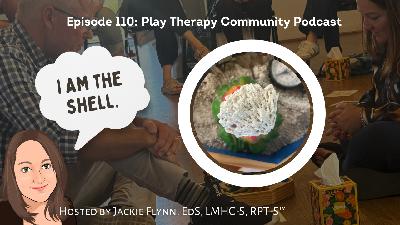
Episode 110: I Am the Shell In this episode, I share a personal moment from the Violet Solomon Oaklander Foundation (VSOF) conference...an experience that stayed with me long after I came home. During a Sandtray demonstration with Dr. Peter Mortola, I was invited to choose a figure that stood out in the tray. I thought it would be the woman reading a book. But it wasn't. It was the shell. Through the Oaklander Model's projective process, I stepped into the voice of that weathered shell and something inside me shifted. What came out surprised me. Moved me. Reminded me of who I am beneath the roles and rhythms of daily life. In this episode, I reflect on • What it felt like to be part of this international community rooted in Violet's legacy • How Dr. Karen Fried's work and mentorship have shaped my clinical path • Why I believe I'll be a forever student of this model • How the Oaklander approach integrates naturally with EMDR • What the shell revealed about identity, belonging, and becoming This story isn't polished. It wasn't scripted or recorded in the moment. It's something I've been holding, returning to, and slowly integrating over time. Like so much of this work, it's lived. If you've ever felt the quiet recognition of seeing yourself in something small and symbolic, or if you're curious about the deeper layers of play therapy and Gestalt, this episode is for you. Thank you for being here. I'm so glad to share this with you. Additional Resources: Play Therapy Community® Facebook Group: Join Here Neuroscience of Play Therapy Course: Learn More EMDR Consultation with Jackie Flynn: Schedule Here Business Coaching with Jackie Flynn: Schedule Here Self-Paced Trainings & Symposium Library: Explore Here Live EMDR with Kids Training: Details Here EMDR with Kids Flip Chart: Purchase on Amazon Book Jackie for Training/Speaking Events: Email: jackie@jackieflynnconsulting.com Polyvagal Theory: Watch on YouTube Synergetic Play Therapy: Learn More Oaklander Model: Explore Here Marshall's Workshop: Discover More Adlerian Play Therapy: Visit Here EMDRIA (EMDR International Association): Find Out More
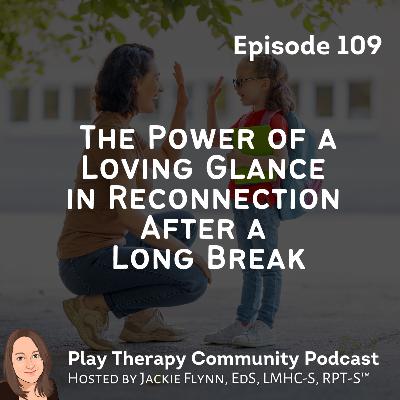
Podcast Episode: The Power of First Connection After a Long Break Welcome back to the Play Therapy Community Podcast. Today, we're focusing on an essential topic that child therapists can use in their own lives and when working with parents and families: the importance of those first moments when reconnecting with a child after a long break. Whether it's been a day, a week, or longer, the way we reconnect carries deep, lasting messages for children. I want to share three key points that child therapists can apply to their work with families, emphasizing the importance of greeting children with love and warmth to help shape how they see themselves and the world. 1. Facial Expressions Communicate Deep Messages Facial expressions are one of the most powerful ways we communicate with children. In those first moments of reconnection, parents' faces tell their children how they are seen and valued. When parents greet their children with love and warmth, they're sending a message that says, "You matter. You are safe. You are loved." On the flip side, if disappointment or frustration shows through, it can have an entirely different impact, often being internalized by the child and affecting how they see themselves. As therapists, we can guide parents to be mindful of how their facial expressions are a mirror that reflects back their child's sense of worth. 2. Pause and Regulate Before Connecting Therapists can help parents understand the importance of taking a moment to pause and regulate before reconnecting with their child, especially after a long day or period of separation. Encourage them to take a breath, check in with their emotions, and clear their minds before the interaction. Without this pause, stress can easily seep into the connection, unintentionally sending the wrong message. By regulating first, parents can bring their full, calm presence, meeting their child with love and patience, which sets a positive tone for the reconnection. 3. Connection Shapes How Children See Themselves and the World As therapists, we understand how connection deeply shapes a child's sense of self and worldview. Children absorb the feedback they get from their environment, especially from their caregivers. That initial moment of reconnection—whether warm or distant—sets the tone for how they see themselves and their place in the world. Encourage parents to offer a loving, calm presence in these moments, affirming their child's value and helping to shape their identity in a positive, supportive way. It's not just about avoiding negative expressions, but about actively showing love, care, and joy. This practice helps children see themselves as worthy and loved, building a strong foundation for their self-esteem. Final Reflection: As child therapists, we have the unique opportunity to support parents in recognizing the powerful impact of these first connections. Encourage families to take a moment to pause, regulate, and connect with love. These small, intentional acts have a lasting impact on how children see themselves and the world. Additional Resources: Play Therapy Community® Facebook Group: Join Here Neuroscience of Play Therapy Course: Learn More EMDR Consultation with Jackie Flynn: Schedule Here Business Coaching with Jackie Flynn: Schedule Here Self-Paced Trainings & Symposium Library: Explore Here Live EMDR with Kids Training: Details Here EMDR with Kids Flip Chart: Purchase on Amazon Book Jackie for Training/Speaking Events: Email: jackie@jackieflynnconsulting.com Polyvagal Theory: Watch on YouTube Synergetic Play Therapy: Learn More Oaklander Model: Explore Here Marshall's Workshop: Discover More Adlerian Play Therapy: Visit Here EMDRIA (EMDR International Association): Find Out More
Welcome Back! Hi, it's Jackie Flynn here! I'm so excited to dive into the world of play therapy with you today. In this episode, I'll be sharing how play therapy has been a huge part of my life and practice, helping people of all ages heal in ways that words alone can't. What We'll Cover: The Power of Play: Play isn't just for kids—we all need it, even our pets! Play helps build deeper connections, manage stress, and create safety, which is essential for healing. Whether it's couples therapy, family therapy, or EMDR, I use play to guide the process. Flexibility of Play Therapy: Play therapy is flexible—it works online, at home, in schools, and even in nature. It meets people where they are, making it such a powerful tool for transformation. The Science of Play Therapy: We'll explore how play creates new neural pathways and increases autonomic flexibility, concepts from Dr. Stephen Porges' Polyvagal Theory. I'll explain how behaviors are adaptations of the nervous system, and how play helps us heal—not just through words, but through movement, metaphor, and changing the narrative. I absolutely love using sandtray therapy for this! Recommended Reading: If you haven't read it yet, I highly recommend The Therapeutic Powers of Play by Charles E. Schaefer and Athena A. Drewes—a must-have for any play therapist. Reflection: How has play shown up in your life? Has it helped you feel more connected, joyful, or supported through tough times? Take a moment to reflect! Let's Continue the Conversation: To learn more or to keep the conversation going, visit my website at jackieflynnconsulting.com, and join our Play Therapy Community® Facebook group. We dive deeper into these topics and share resources and support with one another. Additional Resources: Play Therapy Community® Facebook Group: Join Here Neuroscience of Play Therapy Course: Learn More EMDR Consultation with Jackie Flynn: Schedule Here Business Coaching with Jackie Flynn: Schedule Here Self-Paced Trainings & Symposium Library: Explore Here Live EMDR with Kids Training: Details Here EMDR with Kids Flip Chart: Purchase on Amazon Book Jackie for Training/Speaking Events: Email: jackie@jackieflynnconsulting.com Polyvagal Theory: Watch on YouTube Synergetic Play Therapy: Learn More Oaklander Model: Explore Here Marshall's Workshop: Discover More Adlerian Play Therapy: Visit Here EMDRIA (EMDR International Association): Find Out More
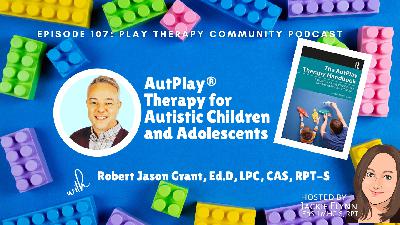
Here's my conversation with Dr. Robert Jason Grant as he shares about AutPlay Therapy. Robert Jason Grant is a licensed Professional Counselor and Registered Play Therapist Supervisor. He currently serves on the Board of Directors for the Association for Play Therapy and is the creator of AutPlay Therapy. To learn more, visit: AutPlay Handbook www.autplaytherapy.com AutPlay Therapy FB page and group AutPlay Therapy YouTube Channel www.playtherapycommunity.com
Christine Mark-Griffin is a Licensed Clinical Social Worker. My conversation with Christine was super exciting, I hope you find it exciting as well. Don't forget to visit Christine's website and show her some love! https://www.sparkallwellness.com/ Here's Marshall's website https://www.marshalllyles.com/
Join me in conversation with Ryan Uner. I met him at the 2nd Annual Neuroscience of Play Therapy Summit. His story is pretty inspirational. He is a grad student at University of Central Florida https://playtherapycommunity.teachable.com/courses/ https://playtherapycommunity.com/
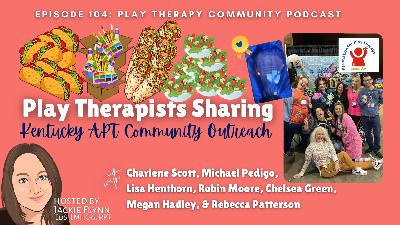
At the time of this recording I at a hotel in LaGrange Kentucky with the board members of Kentucky Association for Play Therapy. I am so inspired by their passion for Play, dedication to helping others, and pure kindness for humanity. If you'd like to learn more about them visit http://kyapt.org/ If you'd like to learn more about Play Therapy visit https://www.a4pt.org/? Visit www.playtherapycommunity.com for more of Jackie Flynn

Comments

Download from Google Play

Download from App Store
 United States