


 Claim Ownership
Right Where You Are Sitting Now
Subscribed: 102Played: 2,228
Subscribe

© Copyright 2020 All rights reserved.
Description
Right Where You Are Sitting Now is a podcast that explores the esoteric and offbeat side of the world. From fringe thinkers and The Occult, to UFOs and Cyber mysteries...basically, if it’s coming from a fresh, funny or different perspective, we are interested in it! Check us out on the web at http://sittingnow.co.uk
128 Episodes
Reverse
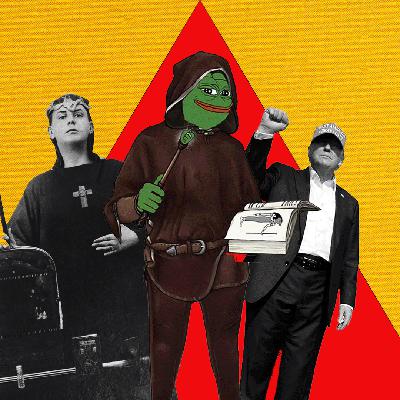
Ken sits down with Shira Chess, cultural scholar and author of The Unseen Internet, for a wide-ranging exploration of magic, myth, and belief in digital culture, examining how the internet has become an esoteric system in its own right — a space where technology, occult practice, conspiracy, and spiritual anxiety collapse into one another. Framed from the perspective of chapel perilous, the conversation traces how memes, algorithms, simulation theory, AI discourse, and techno-paganism function not metaphorically, but as active forces shaping belief, agency, and reality itself.
This episode moves through the haunted edges of online life, from meme magic and technognosticism to AI demons, digital egregores, and the slow erosion of consensus reality — asking what responsibility, belief, and magic mean when nothing is true, and everything is permitted.
This week:
The internet as an esoteric and magical system, Chapel perilous as a method for studying belief online, Meme magic, chaos magic, and the Cult of Kek, The destruction of consensus reality and its consequences, Techno-paganism and the occult roots of internet culture, Simulation theory as modern Gnosticism, Algorithms, platforms, and digital spaces as egregores, AI, demons, and the mystification of technology, Belief, practice, and agency in online magical systems, and “Nothing is true, everything is permitted” as an internet condition
🔗 People, books, and concepts mentioned:
Shira Chess – Cultural scholar and author
https://shirachess.com
The Unseen Internet – Technology, magic, and belief online
https://www.sup.org/books/title/?id=3…
High Weirdness – Erik Davis on esotericism and modern culture
https://en.wikipedia.org/wiki/High_We…
Technosis – Myth, magic, and mysticism in the age of information
https://erikdavis.com/technosis
Chaos Magic – Postmodern magical practice
https://en.wikipedia.org/wiki/Chaos_m…
Meme Magic / Cult of Kek – Internet irony and belief systems
https://en.wikipedia.org/wiki/Kek_(my…)
Grant Morrison – Hypersigils and pop-culture magic
https://en.wikipedia.org/wiki/Grant_M…
Simulation Theory – Digital Gnosticism and modern myth
https://en.wikipedia.org/wiki/Simulat…
Gnosticism – Secret knowledge and false reality
https://en.wikipedia.org/wiki/Gnosticism
AI and Demons – Non-corporeal entities in technological discourse
https://en.wikipedia.org/wiki/Artific…
Egregores – Collective thought-forms and group entities
https://en.wikipedia.org/wiki/Egregore

Ken sits down with Angel Millar — author, esoteric researcher, and former member of the Illuminates of Thanateros — to discuss his latest book, Supernatural Women and the Male Initiate: Bonded Through Dreams. Drawing on mythology, folklore, mysticism, psychology, and his own personal experiences, Angel explores a fascinating and often overlooked phenomenon: the appearance of mysterious feminine figures throughout history, dreams, literature, religion, and the occult. From the Norse fylgja and Valkyries to muses, nymphs, saints, and Jung's anima, these supernatural women appear as guides, inspirers, initiators, and sometimes harbingers of transformation and death. This week:
The inspiration behind Supernatural Women and the Male Initiate
The Norse fylgja and the supernatural feminine
Muses, nymphs, Valkyries, and dream women
Jung, the anima, and the limits of psychology
Creativity, genius, and divine inspiration
Dreams, hypnosis, and altered states of consciousness
Sacred sexuality and erotic mysticism
Initiation, transformation, and encounters with the unknown
Why modern culture struggles with mystery
The relationship between art, magic, and inspiration
Ecstasy, transcendence, and spiritual experience
Whether the supernatural feminine is psychological or something more
Main theme by Simon Smerdon (Mothboy)
Music bed by chriszabriskie.com
🔗 People, Books & Concepts Mentioned
Angel Millar https://angelmillar.com
Supernatural Women and the Male Initiate: Bonded Through Dreams https://www.innertraditions.com/super...
Carl Jung https://en.wikipedia.org/wiki/Carl_Jung
Emma Jung https://en.wikipedia.org/wiki/Emma_Jung
Anima (Jungian Psychology) https://en.wikipedia.org/wiki/Anima_a...
Fylgja https://en.wikipedia.org/wiki/Fylgja
Valkyrie https://en.wikipedia.org/wiki/Valkyrie
Nymph https://en.wikipedia.org/wiki/Nymph
Daemon (Classical Concept) https://en.wikipedia.org/wiki/Daemon_...)
Hypnosis https://en.wikipedia.org/wiki/Hypnosis
Sacred Sexuality https://en.wikipedia.org/wiki/Sacred_...
Tantra https://en.wikipedia.org/wiki/Tantra
Aleister Crowley https://en.wikipedia.org/wiki/Aleiste...
Austin Osman Spare https://en.wikipedia.org/wiki/Austin_...
Illuminates of Thanateros (IOT) https://en.wikipedia.org/wiki/Illumin...
Gurdjieff https://en.wikipedia.org/wiki/George_...
🔗 Angel Millar
Website https://angelmillar.com
Books https://www.amazon.com/stores/Angel-M...
Supernatural Women and the Male Initiate: Bonded Through Dreams https://www.innertraditions.com/super...

Ken sits down with returning guest Tobias Churton — historian of Western esotericism, Gnostic scholar, and one of the most wide-ranging thinkers in the field — to explore his latest book Celestial Realms, an ambitious attempt to map humanity’s ideas of heaven across cultures, religions, and time.
Beginning with Tobias’s own early spiritual experience, the conversation expands outward into a global survey of how different civilisations have imagined the afterlife — from ancient burial rites and Mesopotamian pessimism to Egyptian moral judgment, Eastern philosophies, and the evolution of heaven as both a metaphysical reality and a psychological projection.
What emerges is a sweeping and often provocative exploration of heaven not as a fixed destination, but as a mirror of human consciousness, culture, and desire. Along the way, the discussion touches on psychedelic interpretations, near-death experiences, religious power structures, and the uncomfortable possibility that our visions of the afterlife reveal more about us than any ultimate truth.
This week:
Tobias Churton’s new book Celestial Realms
The first global history of heaven across cultures
Ancient burial practices and early afterlife beliefs
Mesopotamian pessimism vs Egyptian moral judgment
Heaven as projection: “as below, so above”
Near-death experiences and personal encounters with the divine
Psychedelics and the idea of a “backdoor to heaven”
Eastern perspectives: Hinduism, Buddhism, and liberation beyond heaven
Chinese cosmology and the bureaucratic heavens
The role of power, hierarchy, and politics in shaping heaven
Why most early cultures believed heaven was not for humans
The evolution of moral reward and spiritual aspiration
Imagination, culture, and the limits of describing the infinite
Heaven as hope, illusion, or something more
People, books, and concepts mentioned:
Tobias Churton – Celestial Realms
Aleister Crowley – https://en.wikipedia.org/wiki/Aleister_Crowley
Plato – https://en.wikipedia.org/wiki/Plato
Carl Jung – https://en.wikipedia.org/wiki/Carl_Jung
Jacob Boehme – https://en.wikipedia.org/wiki/Jakob_B%C3%B6hme
Nisargadatta Maharaj – https://en.wikipedia.org/wiki/Nisargadatta_Maharaj
George Harrison – https://en.wikipedia.org/wiki/George_Harrison
John Lennon – https://en.wikipedia.org/wiki/John_Lennon
Gautama Buddha – https://en.wikipedia.org/wiki/Gautama_Buddha
Vajrayana Buddhism – https://en.wikipedia.org/wiki/Vajrayana
Tantra – https://en.wikipedia.org/wiki/Tantra
Nirvana – https://en.wikipedia.org/wiki/Nirvana
Moksha – https://en.wikipedia.org/wiki/Moksha
Near-death experience – https://en.wikipedia.org/wiki/Near-death_experience
DMT – https://en.wikipedia.org/wiki/N,N-Dimethyltryptamine
Ancient Egyptian religion – https://en.wikipedia.org/wiki/Ancient_Egyptian_religion
Mesopotamian religion – https://en.wikipedia.org/wiki/Ancient_Mesopotamian_religion
Chinese mythology – https://en.wikipedia.org/wiki/Chinese_mythology
Comparative religion – https://en.wikipedia.org/wiki/Comparative_religion
Afterlife – https://en.wikipedia.org/wiki/Afterlife
Heaven (concept) – https://en.wikipedia.org/wiki/Heaven
Hell (concept) – https://en.wikipedia.org/wiki/Hell
Collective unconscious – https://en.wikipedia.org/wiki/Collective_unconscious
Tobias Churton
Official Website
https://tobiaschurton.com
Books
https://www.amazon.com/stores/Tobias-Churton/author
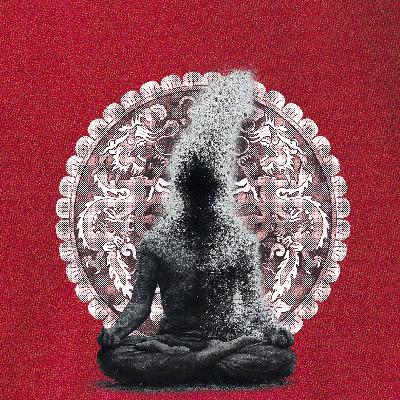
Ken sits down with Greg Kaminsky — host of the Occult of Personality podcast, author, and long-time explorer of Western esotericism turned Vajrayana practitioner — for a deep and uncompromising conversation on the limits of occultism, the demands of genuine spiritual practice, and the often misunderstood path toward enlightenment.
Beginning with Greg’s early immersion in Western magical traditions and podcasting, the discussion traces his journey through alchemy, Kabbalah, and ceremonial magic, before confronting their limitations and turning toward the disciplined, teacher-led path of Vajrayana Buddhism.
What emerges is a stark contrast between Western “talking schools” and Eastern traditions rooted in rigorous practice, direct transmission, and the transformation of the practitioner themselves. Along the way, the conversation explores tantra, the left-hand path, taboo as method, the role of the guru, and the uncomfortable reality that the greatest obstacle on the path may be the practitioner themselves.
This week:
Greg Kaminsky’s background in Western esotericism
The transition from occult practice to Vajrayana Buddhism
Western “talking schools” vs disciplined spiritual traditions
The role of the guru and transmission
Tantra and the left-hand path re-examined
Taboo, ritual, and transformation
The Great Work across East and West
The Grail quest and getting lost on the path
Ego, identity, and the idea that “you are the problem”
Meditation as submission rather than control
Nothingness, reality, and the limits of experience
People, books, and concepts mentioned:
Greg Kaminsky – Host of Occult of Personality
Vajrayana Buddhism – https://en.wikipedia.org/wiki/Vajrayana
Tantra – https://en.wikipedia.org/wiki/Tantra
Left-Hand Path – https://en.wikipedia.org/wiki/Left-hand_path_and_right-hand_path
Nisargadatta Maharaj / I Am That – https://en.wikipedia.org/wiki/I_Am_That
Aleister Crowley – https://en.wikipedia.org/wiki/Aleister_Crowley
Kabbalah – https://en.wikipedia.org/wiki/Kabbalah
Alchemy – https://en.wikipedia.org/wiki/Alchemy
Gurdjieff – https://en.wikipedia.org/wiki/George_Gurdjieff
Greg Kaminsky
Occult of Personality Podcast
https://occultofpersonality.net
Books and Writing
https://www.amazon.com/stores/Greg-Kaminsky/author
 1
1
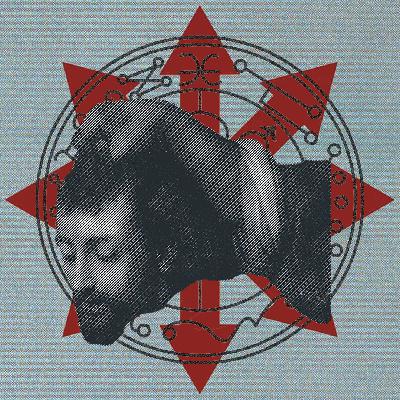
Ken and Ulysses sit down with Duncan Barford — ritual magician, psychodynamic counsellor, and longtime collaborator with Alan Chapman — for a deep exploration of chaos magic, mystical experience, and the strange territory where occult practice, psychology, and awakening intersect. Beginning with the early days of The Baptist’s Head and the revival of mystical aims within chaos magic, the conversation traces Barford’s journey from teenage encounters with spirit phenomena through intensive magical practice, encounters with entities, and the gradual movement from postmodern magic toward a more direct exploration of awakening and consciousness.
This week:
-Duncan Barford’s background in chaos magic and the IOT
-The Baptist’s Head project and mystical approaches within chaos magic
-Ritual experimentation and magical practice in the early 2000s
-The Holy Guardian Angel as a paradigm for non-dual experience
-Mystical awakening and Daniel Ingram’s stages of insight
-The overlap between mystical experience and psychosis
-Encounters with spirits, entities, and magical phenomena
-Abramelin magic and the psychology of ritual practice
-The occult realism of A Dark Song and ritual in film
-Angels, demons, and the nature of spiritual entities
-Chaos magic, postmodernism, and the search for truth beyond belief
🔗 People, books, and concepts mentioned:
Duncan Barford – Occult writer, magician, and psychodynamic counselor
Alan Chapman – Magician and co-creator of The Baptist’s Head
https://en.wikipedia.org/wiki/Alan_Chapman_(magician)
The Baptist’s Head – Early chaos magic blog and body of work exploring awakening
The Abramelin Ritual – Traditional operation to attain the Holy Guardian Angel
https://en.wikipedia.org/wiki/The_Book_of_Abramelin
Holy Guardian Angel – Central concept in Western ceremonial magic
https://en.wikipedia.org/wiki/Holy_Guardian_Angel
Peter J. Carroll – Founder of modern chaos magic
https://en.wikipedia.org/wiki/Peter_J._Carroll
Liber Null & Psychonaut – Foundational chaos magic texts
https://en.wikipedia.org/wiki/Liber_Null
Daniel Ingram – Buddhist teacher and author of Mastering the Core Teachings of the Buddha
https://www.mctb.org
Stages of Insight – Theravada Buddhist map of meditative awakening
The Red Book – Carl Jung’s visionary exploration of the unconscious
https://en.wikipedia.org/wiki/The_Red_Book_(Jung)
A Dark Song – Occult horror film depicting an Abramelin-inspired ritual
https://en.wikipedia.org/wiki/A_Dark_Song
Aleister Crowley – Occultist and proponent of the Holy Guardian Angel working
https://en.wikipedia.org/wiki/Aleister_Crowley
Chaos Magic – Postmodern magical practice focused on belief as a tool
https://en.wikipedia.org/wiki/Chaos_magic
The Abramelin Operation – Ritual process of devotion and invocation leading to contact with the angel
Entities and spirits in magic – Angels, demons, elementals, and spiritual relationships
🔗 Duncan Barford
Occult Experiments in the Home
https://oeith.co.uk
Duncan Barford’s main site featuring essays, podcasts, and writing exploring magic, mysticism, psychology, and spiritual experience.
Counselling / Professional Site
https://www.duncanbarford.uk
Information about Duncan’s work as a psychodynamic psychotherapeutic counsellor.
🔗 Ulysses Black
The World of Ulysses Black
https://www.ulyssesblack.com
Ulysses Black’s main site — an archive of his work as a ritual researcher, writer, artist, and performance practitioner.
The Ritualist (Substack)
https://theritualist.substack.com
Ulysses’ Substack newsletter exploring ritual practice, symbolism, mythology, and esoteric research.

Comments

Download from Google Play

Download from App Store
 United States