


 Claim Ownership
Thyroid Answers Podcast
Subscribed: 634Played: 15,628
Subscribe

©2016
Description
Thyroid Answers podcast is focused on providing answers to the most common question people who have a thyroid problems and thyroid symptoms need and want answers to.
The podcast is hosted by Dr Eric Balcavage and Dr Erica Riggleman. Both are doctors of functional medicine, chiropractors and certified nutrition specialists. Their practices focus on helping people with thyroid conditions improve their symptoms and regain their health using functional medicine.
The podcast is hosted by Dr Eric Balcavage and Dr Erica Riggleman. Both are doctors of functional medicine, chiropractors and certified nutrition specialists. Their practices focus on helping people with thyroid conditions improve their symptoms and regain their health using functional medicine.
242 Episodes
Reverse

The conversation around T3 is one of the most confusing — and divisive — topics in thyroid care. Conventional medicine often ignores T3 entirely. Integrative and functional medicine frequently treats free T3 as the number that must be optimized at all costs. Patients are left stuck in the middle, unsure who to trust, what their labs actually mean, and whether a "low" free T3 is something that needs to be fixed. In this episode of Thyroid Answers, Dr. Eric Balcavage breaks down what free T3 really represents, where T3 actually comes from, and why lower free T3 is often an adaptive, protective response, not a sign of failure or deficiency. You'll learn: Where T3 actually comes from — and why most of it isn't made by the thyroid The difference between thyroid homeostasis and thyroid allostasis Why the body intentionally reduces T4-to-T3 conversion under strain How free T3 and total T3 tell different stories — and why both matter Why raising free T3 can feel better short-term but worsen physiology long-term When lower free T3 is actually the body's solution, not the problem How to ask better questions instead of chasing numbers This episode is not about protocols or "optimizing labs." It's about understanding state, adaptation, and recovery — so you stop fighting your physiology and start working with it.
Why Doing More Is Making You Worse — And Why Recovery Usually Starts With Less If you've been dealing with persistent thyroid symptoms and feel like you're doing everything right — supplements, medications, protocols, lifestyle changes — but still aren't getting better, this episode is for you. In this episode of Thyroid Answers, Dr. Eric Balcavage explores why "doing more" so often feels like the right answer — and why that approach frequently leads to more strain, not recovery. We unpack how escalation happens, why added support can quietly increase physiologic cost, and how compensation can look like progress while actually pushing recovery further away. You'll learn why supplements, thyroid medications, hormones, antimicrobials, and mold protocols can all follow the same pattern when applied to a system already under load. Most importantly, we shift the conversation away from fixing symptoms and toward understanding physiologic state — including what recovery actually looks like, how to reduce load, and how to respond differently to what your body is telling you. This episode is not about doing nothing. It's about doing something different. In this episode, you'll learn: • Why more effort often creates more strain • How compensation masquerades as healing • Why thyroid medication and supplements can stop working over time • What "reducing load" actually means • How to tell what state your body is in • What to focus on when you stop chasing symptoms • What early recovery really looks like — and why people miss it Next steps: If you're interested in a different model of functional medicine care focused on recovery rather than escalation, you can request a discovery call through my website. If you want to start reducing your load on your own, message "Blueprint" on Instagram or email info@DrEricBalcavage.com to get access to the Thyroid Recovery Blueprint, which walks through the key fitness factors that influence recovery and helps you identify where load is accumulating in your system.
T3-based thyroid medications, including desiccated thyroid extract and combination T4/T3 therapy, are some of the most misunderstood and controversial tools in thyroid care. Some patients feel dramatically better. Others feel briefly improved, then crash. Labs often look "optimized," yet long-term recovery stalls. So what's actually happening? In this episode of Thyroid Answers, Dr. Eric Balcavage breaks down the most common mistakes, misunderstandings, and miscommunication surrounding T3-based thyroid therapy — and explains why outcomes vary so widely between patients. You'll learn: Why so many people end up on T3 or desiccated thyroid in the first place The real physiologic arguments clinicians use to justify T3 therapy What a healthy human thyroid gland actually produces — and why that matters Where most of the body's T3 really comes from Why "poor conversion" is often an adaptive response, not a defect Why lowering reverse T3 doesn't necessarily mean recovery Why T3 helps some people and destabilizes others The difference between managing symptoms and restoring physiology This episode reframes T3 therapy through the lens of physiologic state, not just lab values — and explains why adding more thyroid hormone can sometimes push the body further away from recovery. If you've ever wondered whether T3 is helping you, hurting you, or simply masking deeper issues, this conversation will give you a clearer framework for understanding what's really going on.

Why does T3 feel life-changing for some people — and destabilizing for others? In this episode of Thyroid Answers, Dr. Eric Balcavage explains why the answer isn't about the medication itself, but about the physiologic state of the person receiving it. You'll learn why T3 can support recovery in some cases and create symptom volatility in others, and why labeling T3 as "good" or "bad" misses the real issue entirely. This episode introduces a clear, state-based framework: Resiliency — regeneration and adaptive capacity Chronic strain — long-term repair and compensation Overload — defensive, survival-focused physiology Dr. Balcavage explains how T3 interacts differently in each state, why adding T3 can suppress TSH and reduce T4 reserves, and why labs can look better even as physiology becomes less stable. Topics Covered T3 medication benefits and risks Physiologic state and thyroid response Why T3 works for some but not others TSH suppression and T4 reserve depletion Adaptive vs forced thyroid output Why thyroid research produces mixed results This episode is essential for anyone taking T3, considering T3, or trying to understand why thyroid medication responses vary so dramatically.
One of the most common explanations patients hear when they don't feel well on thyroid medication is this: "You're not converting T4 to T3." In this episode of Thyroid Answers, Dr. Eric Balcavage explains why reduced T4-to-T3 conversion is usually not the problem—and why treating it as a defect often leads to aggressive thyroid medication strategies that stabilize labs but destabilize physiology. You'll learn: What T4-to-T3 "conversion" actually is—and why it's regulated, not broken Why clinicians often label symptoms as "poor conversion" How stress, inflammation, infection, sleep disruption, under-fueling, illness, excess T4, and even aging can intentionally reduce T3 production Why adding T3 often backfires and creates symptom volatility How to interpret thyroid labs in context instead of chasing "optimal" numbers Ande More ... This episode reframes reduced conversion as an adaptive signal, not a failure—and explains why true thyroid recovery depends on changing the conditions the body is responding to, not forcing output with medication.
Why do so many people still feel hypothyroid when their labs look "normal"? In this episode of Thyroid Answers, Dr. Eric Balcavage completes the thyroid lab conversation by addressing three of the most misunderstood tests in thyroid care: reverse T3, T3 uptake, and thyroid antibodies. You'll learn: What reverse T3 actually represents—and why it rises or falls Why high reverse T3 does not mean blocked T3 receptors How T3 medication lowers reverse T3 by suppressing T4, not by improving physiology What the T3 uptake test measures and why it still matters Why free T4 and free T3 can be misleading without total hormone levels How binding proteins, estrogen, liver function, inflammation, and medications affect interpretation What thyroid antibodies do—and do not—tell us about thyroid damage and disease activity This episode is essential listening if you've been told your thyroid is "optimized," yet symptoms persist—or if you're trying to understand why thyroid medications work for some people and cause instability for others. This discussion sets the stage for the February series on thyroid medication physiology, including T4-only therapy, T3 therapy, combination therapy, and desiccated thyroid.
T3 is the most talked-about thyroid hormone — and the most misunderstood. In this episode of the Thyroid Answers Podcast, Dr. Eric Balcavage breaks down Total T3 and Free T3 using a clear, Q&A-style format to address the most common questions, mistakes, and treatment traps patients and clinicians fall into. You'll learn: What T3 actually represents — and what it does not The difference between Total T3 and Free T3 (and why you need both) Why low T3 is often an adaptive response, not a deficiency Why adding T3 medication can help short-term but worsen physiology long-term Why "chasing Free T3" is one of the biggest mistakes in functional medicine How stress, inflammation, illness, dieting, and medications alter T3 levels Why labs can improve while patients feel worse How to interpret T3 correctly within the full thyroid panel This episode is essential listening if: You've been told your T3 is "low-normal" but still feel terrible You feel better on T3 medication at first — then worse Your labs look good, but your symptoms don't match You want to understand thyroid physiology beyond numbers and ranges 🎁 Free Resource: If you want a clear, practical guide to understanding thyroid labs, comment LABS and I'll send you my Thyroid Labs Decoded eBook.
Most thyroid patients are told their labs are "normal" because their Free T4 is in range, yet they still feel exhausted, cold, foggy, and unwell. In this episode, Dr. Eric Balcavage breaks down one of the most misunderstood areas of thyroid testing: Total T4 vs Free T4, what each test actually measures, why doctors often run only one, and why relying on a single value leaves millions of people stuck without answers. This is a Q&A-style episode, answering the real questions patients ask every day, including: What Total T4 really tells us about thyroid hormone availability Why Free T4 alone can be misleading How stress, inflammation, and adaptation affect these values Why "normal T4" doesn't always mean normal thyroid function When thyroid medication helps — and when it makes things worse If you've been told your thyroid labs look fine, but you don't feel fine, this episode will help you understand what your labs are actually saying, and what they're not. 👉 Want help interpreting your thyroid labs? Comment LABS to receive my free Thyroid Labs Decoded eBook.

AI is quickly becoming part of health care. Patients are using ChatGPT and other AI tools to interpret symptoms, labs, genetics, and decide what to do next—often before they ever talk to a clinician. But here's the real question: Does AI actually understand the human body—or is it just organizing data without context? In this episode, Dr. Eric Balcavage is joined by Dr. Cam McDonald, a global leader in precision health and AI, and Susan Robbins, an epigenetic human performance coach, to explore the promises, limitations, and hidden assumptions behind AI-driven health advice. Together, they unpack: What AI does well in health care—and where it can go wrong Why more data doesn't always lead to better health decisions How genetics, epigenetics, and body measurements can inform care—but don't tell the whole story The difference between managing numbers and supporting recovery Why optimization isn't always healing When doing less may actually be the most precise approach This conversation is especially important for anyone dealing with chronic symptoms, thyroid issues, anxiety, fatigue, or feeling overwhelmed by conflicting health advice. AI isn't the enemy—but what it assumes about health matters more than most people realize. 🎧 Whether you're a patient trying to make sense of AI health advice or a clinician navigating this new landscape, this episode will help you think more clearly about what true personalized care really means. Guest Information: Dr. CAM MCDONALD BIO: Dr Cam McDonald is a global leader in precision health, AI, and human performance who's redefining how we understand health, wellbeing, and behaviour in the modern world. As the CEO of the Precision Health Alliance and a Fellow of the Australasian Society of Lifestyle Medicine, Dr Cam combines deep scientific expertise with an engaging, down-to-earth communication style that makes complex ideas practical and inspiring. An Accredited Exercise Physiologist, Dietitian, and PhD researcher, Dr Cam has spent over two decades translating the science of epigenetics, AI, and personalised health into real-world systems that improve how people live, learn, and lead. Through platforms like ShaeWellness and Shae Group, his work helps organisations, practitioners, and individuals use technology to unlock human potential, prevent burnout, and create sustainable high performance. He's been featured on ABC Radio, Channel 7 News, and major conferences around the world, sharing the stage with thought leaders including the Dalai Lama and Deepak Chopra. Whether he's speaking to scientists, CEOs, or educators, Dr Cam brings a rare blend of rigour, humour, and humanity, showing how AI and precision health are not the future—they're the tools we can use right now to live and lead better. Website for health professionals - https://precisionhealthalliance.org/contact/ Susan Robbins is a retired law enforcement officer turned certified epigenetic human performance coach and personalized health expert, with over a decade of coaching experience and a specialization in epigenetics since 2019. After facing chronic Lyme disease, autoimmune, and gadolinium deposition disease, she discovered the transformative power of epigenetics—the science of how lifestyle and environment influence genetic expression—and has dedicated her career to helping others optimize their health through a deeply personalized approach. Using DNA testing, the cutting-edge PH360 platform, and epigenetic age testing, Susan guides clients to align every aspect of their lifestyle with their unique genetic and epigenetic blueprint, unlocking sustainable, long-term vitality and wellness. To bring personalized health to the forefront and make this science accessible, she created the podcast Everyday Epigenetics: Raw. Real. Relatable., a platform designed to break down complex epigenetic concepts into practical, relatable conversations that empower listeners to take control of their health journey with clarity and confidence. Website: https://healthyawakening.co Podcast: https://everydayepigenetics.co Instagram: susanrobbins_epigeneticcoach #AIHealth #PrecisionHealth #PersonalizedMedicine #HealthAnxiety #ThyroidHealth #ChronicIllness #FunctionalMedicine #Epigenetics #HealthTechnology #WellnessTruth #HealthData #StressAndHealth #HealingNotHacking #Overwhelmed
TSH: The Most Misunderstood Thyroid Lab — 25 Questions, Answered If you've been told your TSH is "normal" but you still feel exhausted, foggy, inflamed, or hypothyroid — this episode is for you. In this deep-dive Q&A episode, Dr. Eric Balcavage answers 25 of the most common and misunderstood questions about TSH, the lab marker most often used — and misused — in thyroid care. You'll learn: What TSH actually measures (and what it doesn't) Why TSH can go up in some stress states and down in others How inflammation, stress, sleep, dieting, and medication timing distort TSH Why "normal" TSH doesn't guarantee healthy thyroid function How to tell true hypothyroidism from adaptive physiology Why chasing TSH often keeps people stuck How thyroid medications affect TSH differently (T4 vs T3) Why tissue hypothyroidism can exist even when labs look "fine" This episode is designed for: Patients frustrated by "normal labs" Clinicians who want better thyroid interpretation Anyone trying to understand thyroid physiology beyond numbers 👉 Free Resource: Comment LABS to receive my Thyroid Labs Decoded eBook, where I break down TSH, T4, T3, reverse T3, ratios, antibodies, and medication timing in plain language. 🎧 Listen now and finally understand what your thyroid labs are really telling you.
Rewiring the Brain for Thyroid Recovery with Dr. Patrick Porter What if you could train your brain to help your thyroid recover? In this episode, Dr. Eric Balcavage sits down with Dr. Patrick Porter, creator of BrainTap®, to explore how brainwave training, stress regulation, and nervous-system balance can unlock your body's natural healing potential. In this conversation: How chronic stress keeps the brain stuck in "danger mode" and blocks thyroid recovery Why the amygdala, HPA axis, and thyroid are part of one continuous feedback loop The role of neuroplasticity and brainwave entrainment in calming the body's stress response Practical tools to shift from survival to safety mode—naturally How BrainTap supports sleep, energy, focus, and overall metabolic balance 🎧 Listen now to understand how "rewiring the brain" can help your thyroid finally respond the way it should. 👉 Learn more or schedule a Discovery Call with Dr. Balcavage at www.drericbalcavage.com 🎥 Watch more episodes on our YouTube channel: youtube.com/@askdreric Dr. Patrick K. Porter is a pioneer in brainwave entrainment and the creator of BrainTap®, a technology used by over 120,000 people and 3,000+ clinics worldwide to restore balance and optimize brain performance. For more than three decades, he's explored how visualization, neuroplasticity, and sound/light stimulation can help people rewire their brains for better sleep, focus, and healing—without pills or guesswork. Featured in The Wall Street Journal, CNN, and The Joe Rogan Experience, Dr. Porter continues to lead a global movement to help people unlock their brain's innate ability to heal, perform, and thrive. Dr Porter's contact info: https://www.youtube.com/@drpatrickporter https://braintap.com/ https://instagram.com/braintaptech
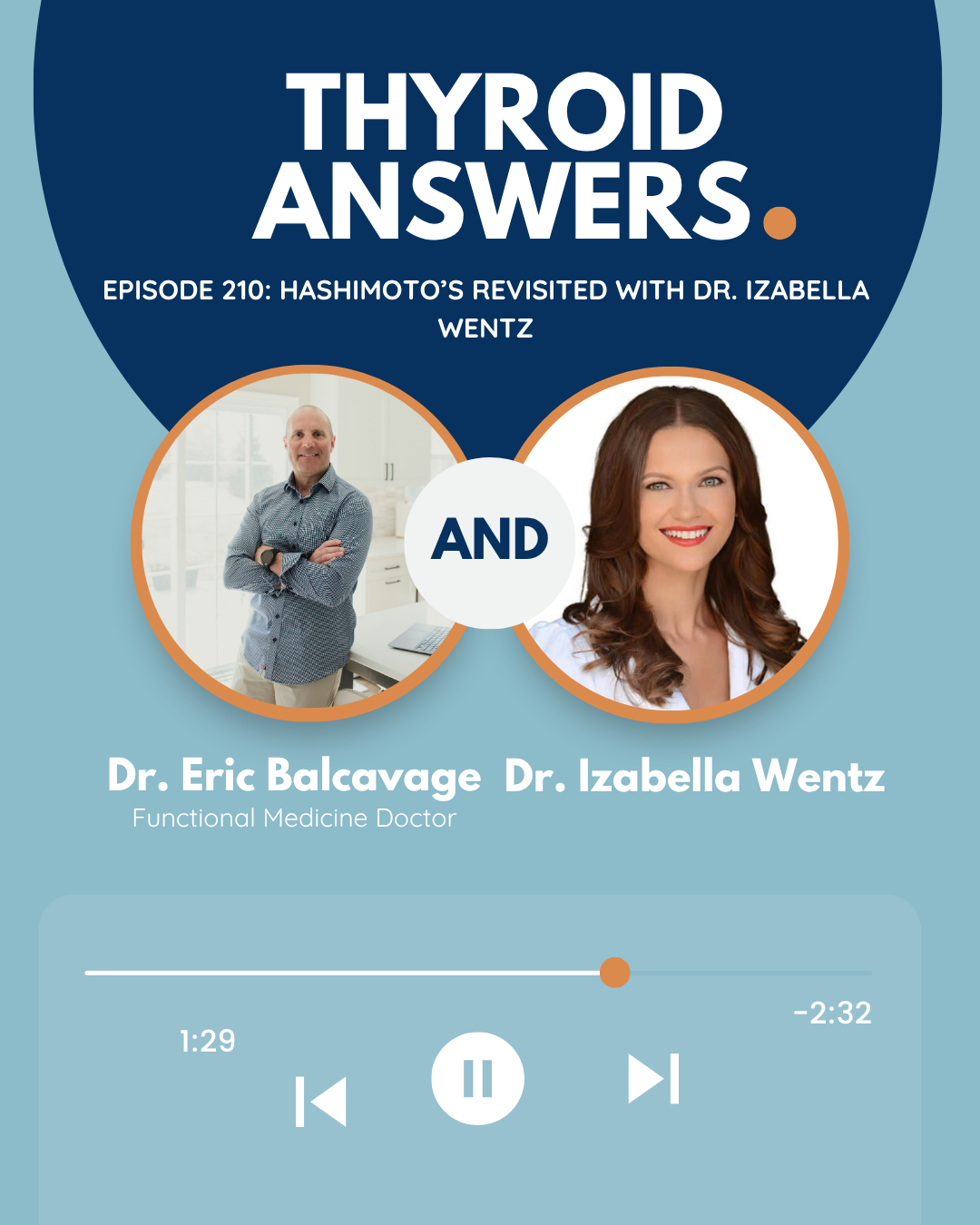
In this episode of Thyroid Answers, Dr. Eric Balcavage sits down with pharmacist and bestselling author Dr. Izabella Wentz to revisit one of the most misunderstood conditions in modern medicine — Hashimoto's thyroiditis. They explore how new research and clinical experience are reshaping what we know about autoimmune thyroid disease, why so many women still struggle with fatigue, weight gain, and brain fog despite "normal" thyroid labs, and what it really takes to recover thyroid function from the inside out. Dr. Wentz and Dr. Balcavage break down the differences between managing Hashimoto's with medication and restoring thyroid health through the Adaptive Thyroid Model™, focusing on root causes suc as gut health, inflammation, hormone balance, and stress physiology. Key Topics: What most doctors miss about Hashimoto's and autoimmune thyroiditis The connection between stress, sleep, gut health, and thyroid autoimmunity Why "normal labs" can hide ongoing thyroid dysfunction How estrogen, cortisol, and inflammation alter thyroid hormone conversion The role of diet, supplements, and lifestyle in reversing Hashimoto's patterns How to know if your low T3 is adaptive — not failure And more ... Dr. Izabella Wentz is a compassionate, innovative, solution-focused integrative pharmacist dedicated to finding the root causes of chronic health conditions. Her passion stems from her own diagnosis with Hashimoto's thyroiditis in 2009, following a decade of debilitating symptoms. As an accomplished author, Dr. Wentz has written several best-selling books, including the New York Times best seller Hashimoto's Thyroiditis: Lifestyle Interventions for Finding and Treating the Root Cause, the protocol-based #1 New York Times best seller Hashimoto's Protocol: A 90-Day Plan for Reversing Thyroid Symptoms and Getting Your Life Back, and the Wall Street Journal best seller Hashimoto's Food Pharmacology: Nutrition Protocols and Healing Recipes to Take Charge of Your Thyroid Health. Her latest book, Adrenal Transformation Protocol, was released on April 18th, 2023. The book focuses on resetting the body's stress response through targeted safety signals and features a 4-week program that has already helped over 3,500 individuals. The program has an impressive success rate, with over 80% of participants improving their brain fog, fatigue, anxiety, irritability, sleep issues, and libido. http://thyroidpharmacist.com/ https://www.instagram.com/izabellawentzpharmd/ https://www.facebook.com/ThyroidLifestyle/
Are you ready to challenge the myths of aging and discover how to stay strong, vital, and resilient for decades to come? In this episode of the Thyroid Answers Podcast, Dr. Eric Balcavage sits down with Dr. Mani Kukreja to explore the cutting-edge science of healthy aging. We dive into: Why aging is not just about years—but about cellular health and resilience The hidden role of thyroid physiology in longevity and vitality Nutrition, movement, and lifestyle strategies that slow the aging clock The difference between simply "managing" disease and truly recovering health Practical steps you can take now to age stronger and live longer And more ... This episode is packed with valuable insights for anyone seeking to protect their thyroid, boost energy, and thrive throughout midlife and beyond. Dr. Mani Kukreja is a medically trained wellness advocate and the founder of LivAgeWell, a comprehensive wellness platform dedicated to optimizing health and preventing disease. With a background in medicine and a Master of Public Health in Clinical Research from Tulane University, Dr. Kukreja combines her extensive medical training with cutting-edge wellness strategies. Her career spans leadership roles at the University of Alabama at Birmingham's Cardiovascular Surgical Research Program and the Medical College of Wisconsin Cancer Research Program, where she directed clinical research operations. She is a sought-after keynote speaker and educator, recognized for her expertise in health optimization, biohacking, and disease prevention. Her holistic approach integrates evidence-based medicine with nutritional science and lifestyle modifications. Featured in Authority Magazine, The Daily Star, Grit Daily, and other leading publications, Dr. Kukreja is an entrepreneur, author, and thought leader who is transforming lives by making personalized wellness accessible to all. She empowers women to take control of their health through science-backed lifestyle changes. Dr Mani's contact information: https://manikukreja.com/ https://www.instagram.com/dr.mani.kukreja/
Episode 208: Nitric Oxide - The Missing Link in Thyroid & Chronic Disease with Dr. Nathan Bryan In this episode, Dr. Eric Balcavage is joined by nitric oxide researcher and author Dr. Nathan Bryan, whose new book The Secret of Nitric Oxide explores why this tiny signaling molecule may be the key to preventing and reversing chronic illness. Together, they dive deep into: What nitric oxide is and why it's foundational for human health. How nitric oxide is made in the body—through both enzymatic and dietary pathways. The connection between nitric oxide, inflammation, oxidative stress, and the Cell Danger Response (CDR). How nitric oxide influences thyroid hormone production, conversion (T4 → T3), and the rise of reverse T3. Why loss of nitric oxide is one of the earliest triggers in chronic disease, including Hashimoto's, cardiovascular disease, Alzheimer's, and more. Common disruptors of nitric oxide production—nutrient deficiencies, environmental toxins, poor lifestyle habits, and even fluoride exposure. Practical steps to restore nitric oxide production naturally for better thyroid, metabolic, and overall health. This is a powerful conversation that reframes nitric oxide not as just a cardiovascular molecule, but as a master regulator of cellular health, energy production, and thyroid physiology. 👉 If you've struggled with thyroid issues, chronic fatigue, or unexplained symptoms, this episode will help you see why restoring nitric oxide may be a critical missing piece in your recovery journey. Dr. Bryan earned his undergraduate Bachelor of Science degree in Biochemistry from the University of Texas at Austin and his doctoral degree from Louisiana State University School of Medicine in Shreveport where he was the recipient of the Dean's Award for Excellence in Research. He pursued his post-doctoral training as a Kirschstein Fellow at Boston University School of Medicine in the Whitaker Cardiovascular Institute. After a two-year post-doctoral fellowship, in 2006 Dr. Bryan was recruited to join faculty at the University of Texas Health Science Center at Houston by Ferid Murad, M.D., Ph.D., 1998 Nobel Laureate in Medicine or Physiology. Dr. Bryan has been involved in nitric oxide research for the past 25 years and has made many seminal discoveries in the field. Dr. Bryan is a successful entrepreneur and Founder, Chairman and CEO of Bryan Therapeutics, Inc., a privately-held, clinical-stage biotechnology company that is actively engaged in the discovery and development of nitric oxide-based therapies. BTI has active drug development programs in heart disease, Alzheimers' Disease and topical drugs for diabetic ulcer and non-healing wounds. Dr. Bryan's consumer line of products are some of the most successful nitric oxide products on the market. Dr. Bryan is an international leader in molecular medicine and nitric oxide biochemistry. Dr. Bryan's website: www.n1o1.com
Are you stuck in "thyroid purgatory" - optimized labs but persistent symptoms? The missing piece might be emotional. In this powerful conversation, Dr. Eric sits down with Licensed Professional Counselor and Board-Certified Art Therapist Kate King to explore the hidden emotional roots of thyroid dysfunction that conventional medicine completely ignores. What You'll Discover: How ancestral trauma and intergenerational patterns literally encode themselves in your cellular metabolism Why your thyroid might be your body's intelligent way of protecting you from feeling too much The difference between managing stress and actually reprogramming your stress response patterns How the Cell Danger Response keeps your thyroid stuck in protection mode Practical steps to shift from emotional survival patterns to thyroid recovery Why accountability and inner work are as crucial as diet and supplements for healing And more... Kate King's experience is sourced from her 17+ year background as a Licensed Professional Counselor, Board-Certified Art Therapist, and award-winning author. As the founder and owner of The Radiant Life Project, Kate's mission is to help individuals heal their inner wounds so that they can positively contribute to the evolving collective. She teaches how to ignite your inner spark with psychology-based personal growth and relationship books, inspirational public speaking, creative consulting, and individual and group coaching. Kate's work is where psychology meets spirit, where creativity meets clarity, and where burnout meets renewal. Kate's impactful resources, tools, and practices provide an accessible entry point into a life of greater authenticity, fulfillment, and illumination. #ThyroidHealth #EmotionalHealing #AncestralTrauma #StressManagement #FunctionalMedicine #ThyroidRecovery #MindBodyConnection #Epigenetics #ThyroidPurgatory #CellDangerResponse Connect with Kat: https://theradiantlifeproject.com Connect with Dr. Eric: 🌐 www.drericbalcavage.com 📱 Follow @dr.ericbalcavage on Instagram
In episode 206 of the Thyroid Answers Podcast, I interview Dr. Justin Marchegiani regarding his newly released book, The Thyroid Reboot. Topics covered in this episode include: Why is The Thyroid Reboot book different than others? What is driving thyroiditis and hypothyroidism? Is hypothyroidism caused by an immune system out of control or an adaptive response? The impact of stressors on driving thyroiditis and hypothyroidism Starting points for addressing hypothyroidism The role of thyroid antibodies And more... Dr. Justin Marchegiani began his medical career at the University of Massachusetts, where he was initially drawn to the surgical field. This early experience gave him a firsthand look at both the capabilities and limitations of the traditional healthcare system. While he appreciated its effectiveness in treating acute injuries and trauma, he also saw a gap in its approach to chronic illnesses like diabetes, heart disease, and obesity. After earning a degree in Kinesiology and Pre-medical studies from the University of Massachusetts, Amherst, Dr. Justin furthered his education at Life West University, where he received his Doctorate in Chiropractic. Now a licensed chiropractor in Texas and Kansas, his commitment to holistic health has driven him to pursue further studies in clinical nutrition, rehabilitative exercise, and functional medicine. His extensive knowledge base enables him to employ innovative techniques that are tailored to address the complex health needs of his patients. Dr. Justin is skilled in helping athletes improve their performance and recovery processes, as well as aiding individuals who struggle with persistent health issues. With a focus on holistic care, he aims to uncover and address the underlying causes of health concerns, leading to quicker recovery and enhanced overall well-being for his patients. https://justinhealth.com/
In episode 205 of the Thyroid Answers Podcast, Dr. Kelly Halderman returns to discuss Thyroid labs and what your doctor might be missing. In this episode, we cover: Why TSH run by itself can be a misleading test Why both total and free hormones should be run, but often aren't Understanding T3 Uptake Reverse T3: what it is and why it is improtant Thyroid antibodies: the reality behind their presence And more... If you struggle with chronic hypothyroid symptoms despite what you have been told is appropriate or "optimized" Thyroid Hormone Replacement, you must listen to this episode. The answers will help you understand why you are stuck in Thyroid Purgatory. Need your personal questions answered? Schedule a Complimentary Discovery call at: https://l.bttr.to/LGjGk Is there a topic you would like covered on the Thyroid Answers Podcast? Send your topic request to info@drericbalcavage.com. website: www.drericbalcavage.com
Join Dr. Eric Balcavage as he explores the critical relationship between gut health and thyroid function with registered dietitian and microbiome expert Kara Siedman. This episode dives deep into how your microbiome - the collection of bacteria, fungi, and viruses living in your gut - directly impacts thyroid physiology and overall health. Kara breaks down the complex science into actionable insights, explaining how gut dysbiosis can trigger thyroid dysfunction through inflammatory pathways, intestinal permeability, and disrupted hormone conversion. You'll discover why digestive symptoms aren't always present even when gut dysfunction is driving thyroid issues, and learn practical strategies for supporting your microbiome through diet, lifestyle, and targeted interventions. Key topics include: The role of short-chain fatty acids, The truth about probiotic supplementation How to evaluate microbiome health The connection between GLP-1 production and metabolic function. Whether you're dealing with Hashimoto's, hypothyroidism, or other chronic conditions, this episode provides the foundational knowledge you need to understand why gut health is often the missing piece in thyroid recovery. Kara Siedman, RDN, CDCES is a registered dietitian and certified diabetes care and education specialist with over 15 years of clinical experience in inpatient care, outpatient program development, and integrative/functional nutrition. She earned her degree from the University of Massachusetts Amherst and completed her dietetic internship at Cal Poly San Luis Obispo. Kara's work in a leading gastroenterology practice sparked her transition into functional nutrition, where she integrated root-cause approaches into GI care and became a mentor and key opinion leader in the field. Her passion for the gut microbiome evolved into a professional specialty, leading her to collaborate with biotech and microbiome-focused companies like Pendulum, Microbiome Labs, and now Resbiotic. As Director of Partnerships at resbiotic, Kara educates healthcare providers on microbiome science and the clinical application of targeted microbiome therapies. Known for her ability to simplify complex research, she brings clarity, credibility, and passion to gut health education. https://resbiotic.com/
In this episode of Thyroid Answers, Dr. Eric Balcavage sits down with functional health coach Anu Simh to explore the critical connection between gut health, thyroid function, and overall metabolism. What You'll Learn: Why normal TSH doesn't mean optimal thyroid function - and what's really happening at the cellular level How chronic stress disrupts your gut microbiome and creates a cascade of health issues The difference between homeostasis and allostatic regulation - and why understanding this changes everything Why gut protocols often fail long-term (and what's missing from most approaches) The truth about probiotics, fermented foods, and prebiotic fibers How ultra-processed foods damage your microbiome - and how quickly you can reverse it Why GLP-1 medications work but don't address root causes The behavioral and mindset shifts that make healing sustainable Key Topics Covered: The mitochondria-microbiome-thyroid connection Why restrictive diets often backfire How to eat for your individual body and microbiome The role of nervous system regulation in gut healing Practical strategies for sustainable behavior change ANU SIMH is a board-certified functional health coach and the founder of 9 Arms of Wellness. She specializes in helping busy women lose weight and maintain their goal weight by focusing on gut health. Her personalized and unique philosophy has successfully guided hundreds of women in achieving and maintaining their goals. Anu is now training other coaches in her methodology. Based in La Jolla, California, Anu sees clients nationwide virtually. Her passion lies in the microbiome; she is also a skilled plant-based chef. Her new book, Flourish From Within, reveals the importance of gut health for overall well-being and includes over 50 plant-based recipes. Anu's guiding principle is to help people get off medications for lifestyle diseases through diet and lifestyle changes. Find her at: ninearmsofwellness.com and @ninearmsofwellness on Instagram.
Dr. Eric Balcavage interviews Nagina Abdullah about why traditional weight loss approaches fail for women with thyroid issues, especially in midlife. Nagina shares her personal journey from yo-yo dieting to losing 40 pounds using metabolism-focused strategies and reveals the framework she's used to help 1600+ women. Key Topics Covered: Why "calories in, calories out" doesn't work in midlife How perimenopause changes metabolism and increases inflammation The role of stress, sleep, and under-eating in weight gain Nagina's "Tested & Perfected Fat Burning Food Framework" Specific macro ratios: 40% protein, 35% healthy fats, 25% healthy carbs When to use advanced strategies like "feeding up" and intermittent fasting Why thyroid patients need digestive support and adequate carbohydrates The connection between liver function and T4 to T3 conversion Perfect for: Women over 40 struggling with weight despite "doing everything right," especially those with thyroid conditions seeking practical, science-based nutrition strategies. Nagina Abdullah is the founder of MasalaBody. She is the metabolism expert for midlife women who feel like their bodies have turned against them. When nothing else works, she helps them fire up their metabolism, burn stubborn fat, and finally see results. After maintaining a 40-pound weight loss for over a decade, she used her Bloat Busting Protocol to shed 14 pounds of perimenopause weight. With a degree in Molecular and Cell Biology from UC Berkeley & an MBA from NYU, she blends scientific research with practical strategies to help midlife women boost their metabolism, shed stubborn weight, and create a sustainable, healthy lifestyle. While most midlife women are told to "eat less and exercise more," Nagina does the opposite. She replaces restriction with metabolism-boosting foods that melt belly fat & make healthy living effortless. Her proven methods have helped 1,600+ women finally break free from stubborn midlife weight, without frustration or deprivation. Guest Links & Resources: 🌐 Website: https://masalabody.com/ 📷 Instagram: https://www.instagram.com/masalabody 📘 Facebook: https://www.facebook.com/masalabody 🎥 YouTube: https://www.youtube.com/c/MasalaBody FREE GIFT - Nagina shares her "Sweet Spice Cheat Sheet" with the spice that is in your kitchen cabinet! It helps to lower blood sugar and curb sugar cravings. The cheat sheet includes: 3 health benefits of using this spice 5 ways to use it in your day An easy recipe using this spice https://masalabody.com/SweetSpicePDF/


Download from Google Play

Download from App Store
 United States
For safety, avoid harsh chemicals like undiluted bleach on ceilings — these can damage paint and create harmful fumes if not used correctly. Light mold can often be removed with natural solutions like vinegar and thorough ventilation afterwards. Here https://gmacleaningsolutions.com.au/how-to-remove-mould-from-ceiling/ you can also find a lot of valuable information on this matter. After successful removal, keep areas dry by running fans after showers and opening windows when possible. If the mold seems entrenched or covers a large area, getting professional help can save you time and ensure complete removal.
Amazing podcast - learnt so much. Very informative around physiology and also actions to take. Really deserves more than one listen (which I will do)😃
this is such a wonderful and interesting show. I was recently diagnosed as hypo but I am 32 and do not want to just go on meds until my thyroid is destroyed so I'm seeking out other methods. I found a functional dr right after listening to my first episode and am so excited to get this under control.
Thank you for the explanation of working out in your fat burning zone amd how it feeds your cells.