


 Claim Ownership
Future security trends: Implications for human rights
Subscribed: 15Played: 51
Subscribe

© Copyright 2026 All rights reserved.
Description
ICoCA, the Responsible Security Association, is a multistakeholder initiative whose mission is to promote responsible, transparent and accountable private security practices worldwide that respect human rights, international humanitarian law and the rule of law, safeguarding communities through robust oversight, collaboration and capacity building. During these podcasts, ICoCA invites different perspectives on what the future holds for responsible private security.
23 Episodes
Reverse
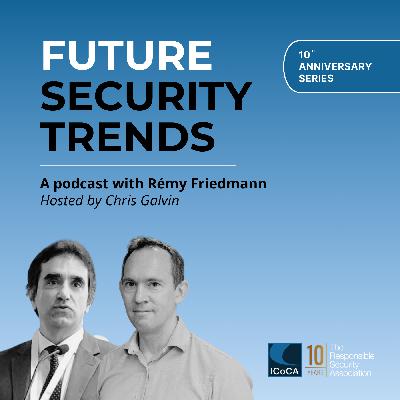
In this episode we speak to Rémy Friedmann, Senior Advisor on Business and Human Rights at the Swiss Federal Department of Foreign Affairs who was ICoCA's first Chair of the Board of Directors and guided the Association through its early years.
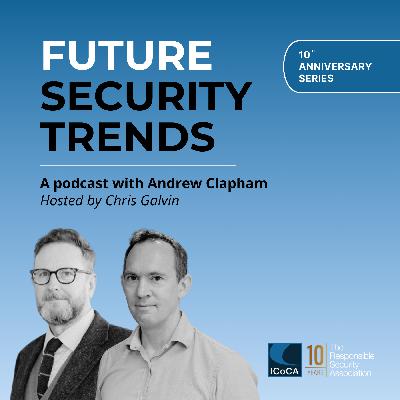
In this episode, we welcome Andrew Clapham, professor of international law at the Geneva Graduate Institute, and member of ICoCA's Advisory Group. Having been involved in the development and drafting of the International Code of Conduct, he will walk us through the context, as well as the process of the negotiations that have preceded the Code's establishment.
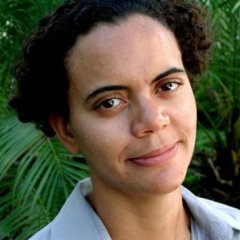
Candace Rondeaux, Professor of Practice at the School of Politics and Global Studies and a Senior Fellow with the Center on the Future of War at Arizona State University, shares her insights on the rise of Russian mercenaries, including the Wagner group, in various conflicts around the world. What's driving the increasing prevalence of mercenaries, and what, if anything, can be done to reign in these actors to ensure human rights and International humanitarian laws are respected?

In the first episode of the second series, we talk to two members of the ICoCA Board of Directors, Jo Anthoine, Director of Risk and Welfare, GardaWorld and Michelle Quinn, Senior Vice President, Patriot Group International. Why did they choose careers in the private security sector? What has their experience been of the challenges and opportunities women face in a male-dominated industry. How and why do private security companies and the communities in which they operate, benefit by bringing more women into the workforce?
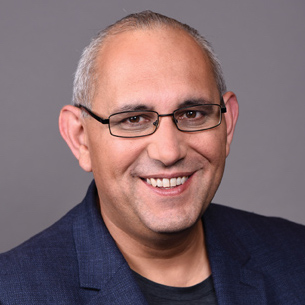
In the 13th episode we talk to Simon Pears, Chair of the International Professional Security Association (IPSA). Simon is implementing a plan that could potentially provide IPSA with key data about the treatment of frontline security personnel around the world. So why is this important, and if successful, how might this data inform policy and practice related to the private security sector and human rights across different jurisdictions?

We talk to Jonathan Drimmer, a Partner at Paul Hastings law firm and Strategic Advisor with the Voluntary Principles on Security and Human Rights to find out why companies should care about human rights and the risks they face if they ignore these risks. Jonathan shares his insights on the challenges organisations face in ensuring human rights compliance throughout their global operations and supply chains. So why is private security so central to this, and what trends should we look out for in the years ahead?
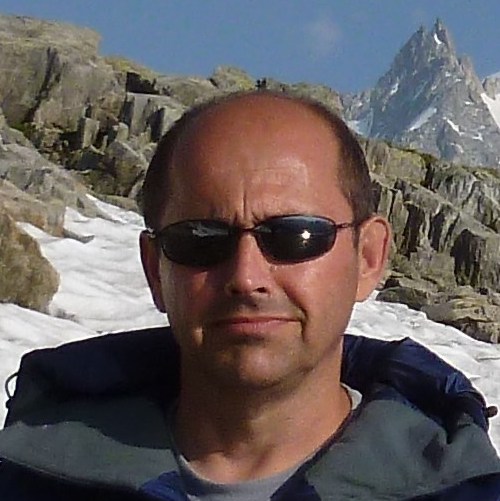
In Episode 7, we talk to Dr. Christopher Kinsey, Reader at Kings College London, who has spent the last twenty years researching and writing on the subject of private security. Dr. Kinsey describes how the private security sector has changed since he started his research, and how accountability mechanisms have developed during this period. So what are the different regulatory models at play, and where does international law fit in?
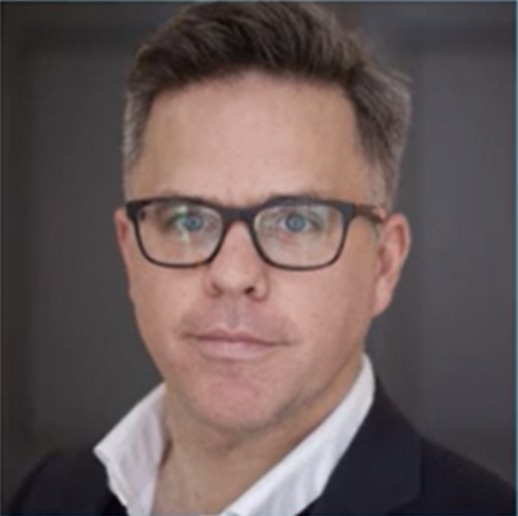
To find out why modern slavery persists in the private security sector we talk to James Sinclair, Executive Director of Ethical Innovations and one of the Co-Founders of FSI Worldwide, an ethical recruitment company with its roots in the private security space. Why have modern slavery and the private security sector become intertwined and what can be done to stop such practices in the future? James, a practicing lawyer and serial entrepreneur who is also currently pursuing a PhD on this subject, shares his insights.

In Episode 5 we talk to Emily Munro, Head of Strategic Anticipation at the Geneva Centre for Security Policy (GSCP). We start by asking what COVID-19 has taught us about strategic anticipation. How well-prepared were we for a pandemic and what has this preparedness taught us about the importance of using strategic foresight to be better prepared in the future? How can we anticipate what will be the most significant challenges to the private security sector in the future? How can strategic anticipation be harnessed by multi-stakeholder initiatives with diverse stakeholder groups like ICoCA?
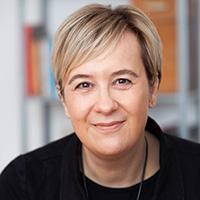
In Episode 4 we talk to Dr Sorcha MacLeod, Associate Professor and Marie Skłodowska Curie Individual Fellow in the Centre for Private Governance (CEPRI) in the Faculty of Law, University of Copenhagen and an independent human rights expert on the United Nations Working Group on Mercenaries and the UN Intergovernmental Working Group on private military and security companies. We ask Dr. MacLeod how private security companies and their role in the COVID-19 pandemic have impacted human rights, why we should be concerned about the increasing use of mercenaries around the world, and what other issues may be on the horizon in the private security space that have implications for human rights.
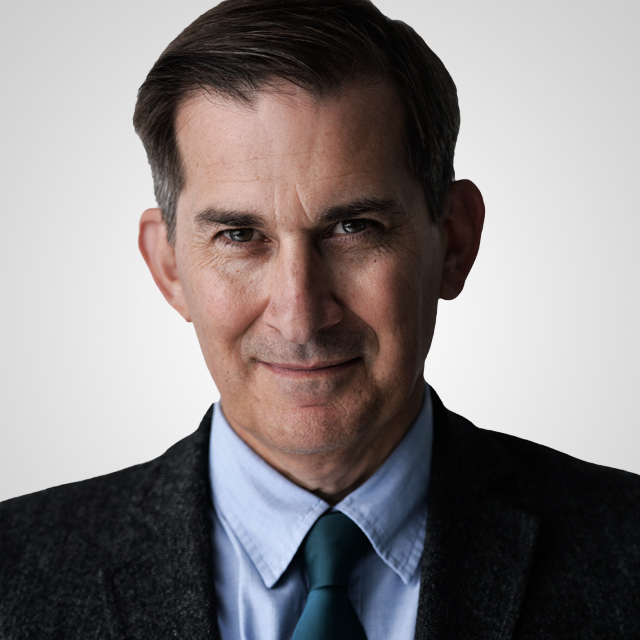
The COVID-19 pandemic has had a major impact on security around the world. In this episode, we talk to Richard Wylde, Director for Government and Defence, and Chair of the UK Security in Complex Environments Group (SCEG). We ask Richard what the UK security sector has learned from COVID-19 and how we can ensure high standards are maintained and human rights respected across the sector during this time. Richard provides his insights on this and other risks on the horizon that we should also be preparing for.
Jamie Williamson, Executive Director of the International Code of Conduct Association (ICoCA) shares his perspectives on the future of responsible private security provision. Recounting the history of the formation of the Association and how the security industry has evolved, Jamie lays out some key emerging issues. These include the role of technology, urbanisation, climate change, and of course, COVID-19. All these trends are impacting the provision of responsible private security. So how are responsible private security service providers adapting to this new world, and how can respect for human rights and humanitarian law be assured in the future?
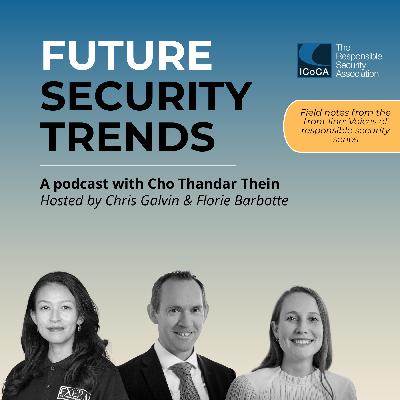
In this second episode of Field Notes from the Front Line: Voices of Responsible Security, we speak with Cho Thandar Thein from EXERA, an ICoCA-certified private security company operating across Myanmar.
EXERA shared this initiative as part of the inaugural ICoCA Responsible Security Awards in 2025, highlighting a training programme developed in partnership with the local NGO Step-In-Step-Up (SISU), which prepares young people in Myanmar for entry-level employment. Launched in 2023, the initiative aims to expand opportunities for women in the private security sector, a field that has long been shaped by rigid gender norms and limited access for women.
In conversation with Cho, we explore how the programme works in practice, the challenges of promoting gender inclusion in a traditionally male-dominated sector, and why creating pathways for women in private security can contribute to more inclusive and responsible security practices.
In July 2025, ICoCA called on its private security company members and affiliates, civil society organisation and observers to share their best practices supporting a Just Transition: the shift toward a greener economy that is fair, inclusive and creates decent work opportunities while leaving no one behind. This initiative led to the creation of the first edition of the ICoCA Responsible Security Awards, recognising PSCs and CSOs that exemplify these principles.
In this new podcast series, Field notes from the front line: Voices of responsible security, we'll be speaking with key individuals from these organisations to explore how responsible security practices are being implemented in real-world contexts – and how accountability across the sector can be strengthened.
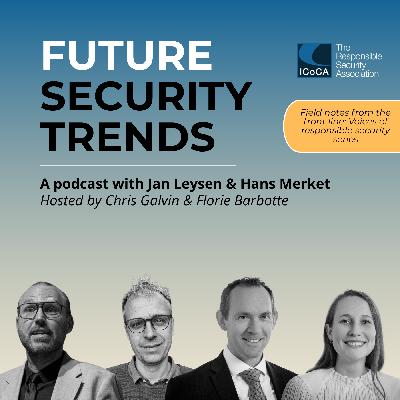
We’re delighted to begin the series with Jan Leysen and Hans Merket from the International Peace Information Service, or IPIS, an independent research institute working on peace, human rights and responsible resource governance.
IPIS were the civil society organisation winner of ICoCA’s inaugural responsible security awards in 2025, recognised for launching two community-based incident-monitoring systems. Operating in eastern DRC to report incidents in the artisanal and small-scale mining (ASM) sector, and in Tanzania to monitor both ASM and large-scale mining operations, the Kufatilia (in DRC) and Kufuatilia (in Tanzania) mechanisms enhance transparency, accountability and safety. They demonstrate how digital reporting tools, paired with strong civil society partnerships, can strengthen responsible mineral supply chains in diverse and often conflict-affected contexts.
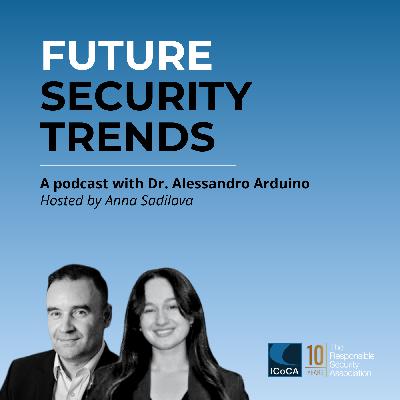
In this episode, we speak with Dr. Alessandro Arduino about his latest book, Money for Mayhem: Mercenaries, Private Military Companies, Drones, and the Future of War. Dr. Arduino shares his insights on the rising influence of private military contractors, particularly from China, Russia, and Turkey, and their impact on global security dynamics. He delves into the role of technology, including UAVs, in modern warfare and discusses the ethical implications of privatizing security. Join us as we explore the future trajectories of private military actors and their significance in shaping the landscape of conflict.
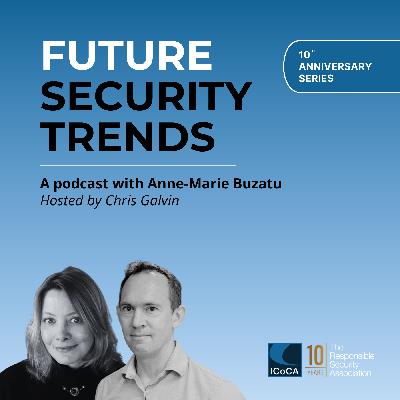
In this episode, we speak with Anne-Marie Buzatu, Vice President and COO of ICT4Peace Foundation, who played a pivotal role in the development of the International Code of Conduct and the founding of ICoCA. Anne-Marie shares insights from her time as a principal architect of the initiative and reflects on the challenges faced during the creation of governance and oversight mechanisms for private security companies.
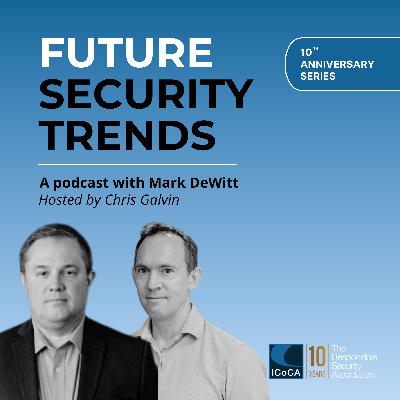
In this episode we speak to Mark DeWitt, chief legal officer and general counsel at Gardaworld Federal Services. He was on the first intake of the ICoCA’s board of directors and played an instrumental role before the association was founded.

S2E3 - In this episode, we welcome Amol Mehra, director of industry programs at Laudes Foundation. He was one of the founding board members of ICoCA. Amol will tell us more about the process of creation of the ICoCA, and specifically, about the role that the civil society play in the process of ensuring accountability of private security companies.

After a career in the Gurkhas and Singapore Police, Ian Gordon founded his own private security company, IDG Security, an ICoCA Certified Member Company with operations in Afghanistan, Iraq, Somalia, and Myanmar. So what are the pitfalls in recruiting private security personnel from South Asia, and how does Ian avoid these? We talk to Ian about the powerful role agents play, and how this is leading to third country nationals contracted as private security guards ending up as bonded labourers in many complex environments.
In the fourteenth episode of ICoCA's podcast series we talk to Mike Blyth, Chief Operating Officer at Risk and Strategic Management, Corp (RSM). With a background in the military, Mike has decades of experience helping humanitarian actors with their security needs and recently completed a PhD on the topic. We ask him about his research and what his experience working with humanitarian agencies and NGOs has taught him about how the sector approaches risk, resilience and security.

Comments

Download from Google Play

Download from App Store
 United States