


 Claim Ownership
Peak Performer
Subscribed: 8Played: 40
Subscribe

© Larry G. Maguire
Description
A show about the mental skills of peak performance from psychologist and lecturer Larry G. Maguire. On Peak Performer, you can get tips and advice on how to obtain the best from yourself and others while maintaining psychological health. We'll examine aspects of performance such as leadership, motivation, well-being, expertise, intelligence, personality and positive psychology. Learn to manage stress and anxiety, cope under pressure and produce consistently higher-level performance at work with the psychological skills of experts. Read more at https://peak.humanperformance.ie/
peak.humanperformance.ie
peak.humanperformance.ie
48 Episodes
Reverse
Most people you meet and know are caught in linear time consciousness - the idea that we live along a line from birth to death and everything that happens is based on cause and effect. Someone must have made that thing happen; someone did something. And if that thing happened to me, then there must be a reason for it, either out there in the world or closer to home.We think in terms of what happened yesterday or ten minutes ago and what will happen tomorrow. We regret or wallow in our past experiences, and we are pessimistic or optimistic about tomorrow. Regardless of our future outcome orientation, linear time is fundamental to our experience.But what if time is simply a social convention?Instead of being a fundamental aspect of reality, time merely allows us to count abstractions of reality like a ruler or weighing scales. In his 1979 book Disturbing The Universe, Freeman Dyson quotes Einstein: “People like us, who believe in physics, know that the distinction between past, present and future is only a stubbornly persistent illusion.The point here is that stress, anxiety, and even depression seem to be very closely related to our perception of and belief in time as a fundamental aspect of reality. Without time, there is no anxiety because tomorrow (and 10 minutes from now) doesn’t and will never exist. When it’s tomorrow, it’s now. The clock ticks on the wall, it gets light and it gets dark, and it’s still now.Now is the only moment we have, and when we realise this – I mean, deeply recognise this truth – anxiety about what will happen tomorrow, or how we will be perceived by the audience, our clients, or our bosses, evaporates.Controlling the controllable is recognising that all imaginations of disaster, all catastrophising about what will happen next is a waste of energy. It is a state of myopic obsession with thoughts. It is being in our heads rather than being in the game, in the moment. We are elsewhere and without presence.The concept of “controlling the controllable” refers to focusing our energy and efforts on aspects of a situation that are within our control rather than worrying about elements that are not. This concept is grounded in various psychological theories and practices, particularly within stress management, cognitive-behavioural therapy (CBT), and resilience building.The idea is closely related to the locus of control concept, introduced by Julian Rotter in 1954. Locus of control refers to the degree to which a person believes that they have power and influence over the outcomes of their lives. People with an internal locus of control believe they have a significant role in shaping their life outcomes. They have a sense of autonomy and personal choice in what happens to them. They take responsibility and exercise choice regardless of the moment-to-moment outcome.Those with an external locus of control attribute external forces such as fate, luck, or other people’s actions to the direction of their lives. This is not an either-or state, however (internal or external locus of control), but rather the degree to which we internally or externally attribute causes of personal life conditions.“Controlling the controllable” aligns with an internal locus of control, as it encourages us to take personal responsibility for our actions and decisions. By focusing on what we can control, we may enhance our sense of agency and reduce feelings of helplessness and victimhood, which are often linked to stress, anxiety and depression (Seligman, 1975).This Sunday at 9 pm, I’m holding a FREE 30-minute workshop on Controlling The Controllable. You can book your place here.Slán for now, Larry This is a public episode. If you would like to discuss this with other subscribers or get access to bonus episodes, visit peak.humanperformance.ie
Every Sunday evening UTC+1, you can join me live on Zoom for a 30-minute Mental Skills Workshop. I walk you through assessments and worksheets that I use with clients to help them develop the mental skills for life and work. Go here to get the Establishing Values Worksheet that I mentioned in the video. And go here to RSVP for the next Mental Skills Workshop.About ValuesEstablishing Personal Values is the first step in the Goal Setting Process. Personal values play a crucial role in shaping individuals' lives and well-being. Psychological research supports the idea that establishing and recording personal values can lead to increased self-awareness, motivation, ethical decision-making, stress reduction, enhanced self-esteem, and more fulfilling relationships. These benefits underscore the importance of this practice for personal growth and overall life satisfaction.When you become a member of The Mental Skills Academy, you get access to assessments, worksheets, course material and other free content. Open Membership is free, but you can upgrade to Pro or Pro+ to access coaching and mastermind sessions. This is a public episode. If you would like to discuss this with other subscribers or get access to bonus episodes, visit peak.humanperformance.ie
Over the past number of weeks, we have taken a deep dive into the nine mental skills of peak performance. But performance is not only about objective achievement and attainment of reward and recognition; it is also about mental well-being. The nine mental skills we explored are;* Mindset serves as the foundation, encompassing your fundamental beliefs about ability, challenge, and growth that shape how you interpret every experience.* Motivation provides the energy for action and direction for sustained effort. It’s what gets you up in the morning and moves you through the day.* Goals Setting creates the structure and accountability necessary for systematic progress. Based on your core values, goals provide the prospect of achievement.* People Skills enable effective collaboration and influence, recognising that peak performance rarely occurs in isolation. It allows you to understand yourself and others.* Thinking Skills involves managing your internal dialogue to support rather than undermine confidence and focus. It is how you speak to yourself on an ongoing basis.* Mental Imagery harnesses your mind's capacity to rehearse success and prepare for challenges through vivid mental simulation. It is the preparation of your organism to perform at its best.* Anxiety Management transforms nervous energy from a performance barrier into a competitive advantage. Anxiety is a natural occurrence, but how you interpret and respond to it matters.* Psychological Flexibility represents the development to respond to challenging emotions in a way that maintains your effectiveness under pressure. It is to be malleable rather than rigid.* Focus allows attention to be directed towards optimal performance without distraction and serves as the gateway to flow states where peak performance feels effortless and natural.Get the full 30 Days of Mental Skills Series here [All Sessions]The Mental Skills Basics CourseIf you have been trying to achieve something but have failed. If you keep falling into the same holes and can't get out. If you've been struggling to get ahead for too long and want change, then this course is for you. In this self-paced course, you'll learn the mental skills of peak performance. (You’ll also get a free first draft of the book “The Mental Skills Handbook”) This is a public episode. If you would like to discuss this with other subscribers or get access to bonus episodes, visit peak.humanperformance.ie
These final sessions serve as your roadmap for implementation of Mental Skills, providing a structured approach to developing these skills systematically while maintaining momentum through the inevitable challenges that accompany any meaningful change process. The journey from knowledge to transformation requires more than understanding—it demands deliberate practice, strategic implementation, and sustained commitment to growth. In other words, show up, do the work, and see positive results.Your Daily Mental Skills Practice: An Evidence-Based FrameworkTo help you begin immediately, here's a structured daily practice that feeds the development of all nine mental skills while building sustainable practice habits. This program requires only 15 to 20 minutes in the morning and again at night, but creates the foundation for lifelong mental skills development. You can even use spare moments during your day to revisit some of these practices. Each component is grounded in extensive research from positive psychology, neuroscience, and performance science.Your Daily Mental Skills Practice1. Journal DailyBuy a small black journal, size A5 is good, and write your thoughts daily. In the morning, before the demands of the day take hold, write in the present tense how you wish your day to go ideally. At night, write about how your day went. Be truthful about it–if it didn't go according to plan, say so. However, don't end on a negative note. If something didn't work out, find a positive aspect to that thing. Ask yourself, what did I learn here? What advantage can I take from this experience? Finish by identifying three things that went well today. No matter how shitty your day was, mine for the good. It’s there; you just need to see it. You've got to mean what you write–this is very important, because you can only move on from difficult conditions if you accept them for what they are. If you fall asleep on a negative tone, you'll wake up with it.2. Meditate for 15 mins DailyMeditate for 15 minutes, either last thing at night before you fall asleep or first thing in the morning before the day begins. Meditation helps you calm your nervous system and purge yourself of negativity. Meditation in the morning helps you “get out ahead of the day, so to speak. When you engage in meditation regularly, there is a compound effect that allows you to approach difficulty with composure.Get this free meditationMeditation represents perhaps the most scientifically validated intervention for stress reduction and cognitive enhancement. Pascoe et al. (2017) reported that when all meditation forms were analysed together, meditation reduced cortisol, C-reactive protein (protein produced by the liver in response to inflammation in the body), blood pressure, heart rate, triglycerides (high triglyceride levels are associated with increased risk of heart disease, stroke, and metabolic syndrome) and tumour necrosis factor-alpha (produced by immune cells when the body detects threats or damage).3. Monitor Your ThoughtsHuman beings have a negativity bias, perhaps as an evolutionary survival mechanism, and so the inner critic is always waiting to pounce. So stay alert. When you catch yourself giving yourself a hard time, stop and ask yourself if your thoughts are true. Ask yourself, “is this accurate? It might be true, but am I so sure that it is?” Look for a counterargument. Ask yourself, what might be an equally plausible and less negative explanation for this situation?Take time and tease that out. Understand that although these automatic responses may accurately reflect past experiences, they do not necessarily have to be true of future events. You have a choice, so learn to question these negative sentiments. You see, you've been conditioned by society and by your immediate environment to be hard on yourself–it’s supposed to motivate you, but it doesn’t, not for very long. Most of the time, other people are concerned for themselves and don't think that way about you. In fact, they don’t think about you at all, so treat yourself like you would a best friend.Get this worksheet to help you4. Mine for the GoodThe world is shaped by our opinions, beliefs, biases, culture, and other factors. It trains us to notice threats even when our environment is overwhelmingly supportive. When faced with unsavoury conditions, acknowledge them and then look for evidence to the contrary. Ask yourself, what am I missing here? Where is the good in this? What am I supposed to learn here? Even when you are otherwise in good form, look for and acknowledge the good in your life. Be grateful for those ordinary, everyday things that make your life better, even though you regularly take them for granted.As mentioned above, take a moment at night to reflect on three things you did well or that worked in your favour today. These things don’t need to be dramatic or stand out; they can be ordinary things that always go your way, but you fail to notice because it has always been this way. So instead of ignoring them, give them credit. Finish the day on a positive note.Get this worksheet to help you5. Visualise DailyMost people go into their day on autopilot and end their day exhausted and relieved. They face tomorrow with the anticipation of “here we go again”. To a greater extent, they are not in control of their lives. The demands of life impress upon them, leaving them exposed to whatever comes their way. If we imagine at all, we tend to imagine things not going our way. We imagine all day long, often without realising it. What mental imagery asks us to do is see today and tomorrow as we would like them to be. We went into detail on this in chapter 7; however, it serves to repeat what research has shown us about the effectiveness of mental imagery conducted regularly.How To Use Mental Imagery* Find a quiet place where you won’t be disturbed. The location doesn’t matter once no one interrupts you. It can even be a toilet cubicle if necessary.* Sit comfortably but upright, and close your eyes.* Take three deep breaths, holding each one for a couple of seconds, and then exhale.* See yourself preparing your equipment or materials. See yourself on the journey to and arriving at your venue or place of work.* See yourself setting up or warming up in the space where you’ll perform.* See yourself, either from your own perspective or from the standpoint of others watching, perform your task as you intend.* See the crowd or the audience, see their faces and their positive responseRun through this as often as is necessary. All the while, remind yourself, either quietly in your own head or whispered to yourself, that you are well-prepared, you’ve done the work, you have the skills and experience, and you have the answers to problems as they arrive.Trust yourself. Regardless of the outcome, you’re ready to go. See yourself perform your thing from start to finish and see the positive response you receive from others around you.6. Technology DowntimeDon't bring your phone or other digital device to the bedroom. Leave them downstairs, or if you must have your phone for an alarm, make sure to turn it off and leave it out of arm's reach. Your mobile phone is a distraction device designed to grab your attention and keep it. This device, and all the applications that operate from and within it, is quite literally designed to capture and maintain your focus and attention. This is not good for you if you want to be effective and make good decisions.Decide to make these tasks non-negotiable. Create a checklist and tick off these tasks every day. Set reminders in your phone for each task and make time in your day to execute them. You’ll be glad you did.Mental Skills Basics CourseSuffering stress and anxiety is not a prerequisite for success in self-employment–there's a better way. Mental skills provide you with the means of coping effectively with difficulty and achieving your goals. I created the Mental Skills Basics Course to introduce business leaders, self-employed individuals, freelancers, consultants, and small business owners to the psychological and emotional skills associated with success. This is a public episode. If you would like to discuss this with other subscribers or get access to bonus episodes, visit peak.humanperformance.ie
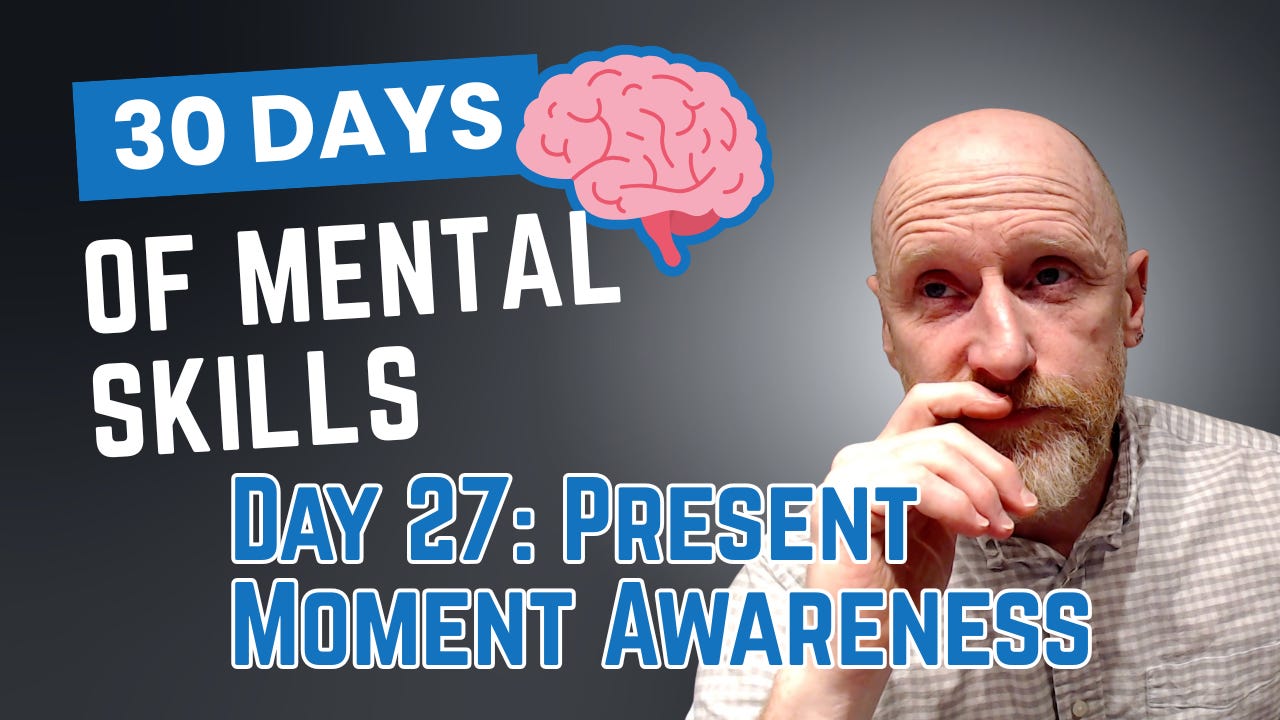
Have you ever been so completely absorbed in something that time seemed to slow down, speed up, or even stand still? You were playing a musical instrument, solving a complex problem, or engaged in a physically demanding activity and you then realised hours had passed in minutes. This is the experience of flow—what researchers call the pinnacle of human performance and the psychology of optimal experience (Csikszentmihalyi, 1990). At the heart of every flow state lies one critical mental skill: present moment awareness.Present moment awareness involves paying attention to current experience with an attitude of openness and acceptance (Bishop et al., 2004). Rather than being lost in thoughts about past regrets or concerns for the future, present moment awareness anchors your attention in the here and now. This isn't merely concentration—it's a broader, more flexible awareness that includes thoughts, emotions, bodily sensations, and environmental cues without judgement or resistance.As defined by one of the leading mindfulness researchers, Jon Kabat-Zinn (1994), it means "paying attention in a particular way: on purpose, in the present moment, and non-judgementally" (p. 4). This quality of attention creates the psychological foundation necessary for optimal experience to emerge.Mental Skills Basics Course (Free)The Gateway to FlowPresent moment awareness serves as the gateway to flow states because it directly enables several critical conditions that research has identified as necessary for optimal experience. When Csikszentmihalyi (1990) first identified the nine characteristics of flow, he discovered that each depends fundamentally on the ability to maintain present-focused attention.Complete Concentration and Action-Awareness MergingFlow requires what researchers call "complete one-pointedness of mind", where focus becomes laser-like and mental energy is entirely devoted to the task at hand (Nakamura & Csikszentmihalyi, 2014). Present moment awareness creates this concentrated attention by training your mind to resist the pull of distracting thoughts and irrelevant concerns. When you're truly present, there's no mental space for worrying about other obligations or ruminating on past mistakes—all cognitive resources become available for task execution.Loss of Self-ConsciousnessOne of the most remarkable aspects of flow is the temporary disappearance of the internal critic that typically monitors and evaluates performance. Present moment awareness facilitates this by reducing what psychologists call "cognitive fusion"—the tendency to become entangled with your thoughts and treat them as absolute truths (Hayes et al., 2006). When you cultivate non-judgmental awareness, you learn to observe self-critical thoughts without being controlled by them, freeing up mental energy for optimal performance.Enhanced Feedback ProcessingFlow states require immediate and continuous feedback to maintain optimal challenge-skill balance. Present moment awareness enhances your sensitivity to environmental cues and bodily sensations that provide this crucial information (Brown & Ryan, 2003). Athletes in flow, for example, report heightened awareness of their body position, breathing, and the subtle changes in their performance environment. This enhanced sensitivity allows for real-time adjustments that keep you in the optimal zone.The Liberation from Linear TimePerhaps the most fascinating aspect of flow states is what Csikszentmihalyi (1990) identified as the "transformation of time", where hours feel like minutes or seconds stretch into eternity depending on the activity's demands. This temporal distortion reveals a profound truth about the nature of psychological time that has critical implications for achieving peak performance.Our conventional understanding of time as a linear, uniform progression is a social construction rather than an inherent property of reality. Clock time—with its rigid schedules, deadlines, and temporal anxiety—represents an artificial framework that we've imposed on experience. This becomes starkly apparent during flow states, when the usual temporal structure that organises daily life dissolves (Csikszentmihalyi & LeFevre, 1989).Research into the neuroscience of flow reveals that this temporal liberation occurs because the dorsolateral prefrontal cortex, which handles temporal awareness and cognitive control, shows decreased activation during optimal experiences (Dietrich, 2004). Simultaneously, the brain regions responsible for present-moment processing become more active, creating what researchers call "transient hypofrontality"—a temporary downregulation of the brain systems that make our sense of linear time.To truly access flow states consistently, we must release our attachment to linear time concepts and embrace what might be called "experiential time"—the natural rhythm of engagement where duration is determined by the depth and quality of attention rather than clock measurements. This doesn't mean ignoring practical time considerations, but rather recognising that peak performance emerges when we prioritise present-moment engagement over temporal anxiety. When you stop watching the clock and start experiencing the moment, you create the psychological conditions where time can bend to serve your optimal experience rather than constraining it.The Neuroscience ConnectionRecent neuroscientific research reveals why present-moment awareness is so crucial for flow. Brain imaging studies show that flow states involve decreased activity in the prefrontal cortex—the brain region responsible for self-criticism and cognitive control—while increasing activation in areas associated with focused attention and reward processing (de Manzano et al., 2010). This pattern, called "transient hypofrontality," allows for the effortless performance characteristic of flow.Mindfulness training directly supports this neural pattern. Research demonstrates that regular mindfulness practice strengthens the anterior cingulate cortex, which monitors attention and resolves conflicts between competing stimuli, while reducing activity in the default mode network associated with self-referential thinking (Katahira et al., 2018). This creates the ideal brain state for flow to emerge.Practical Benefits for Peak PerformanceStress Reduction and Optimal ArousalPresent moment awareness facilitates a shift away from anxiety-producing thoughts about future outcomes or past failures, reducing rumination and worry (Jain et al., 2007). This stress reduction is crucial because flow requires a delicate balance between challenge and skill—too much anxiety pushes you out of the optimal zone into overwhelm. At the same time, too little arousal leads to boredom.Enhanced Attention ControlMindfulness training improves attentional control and sustained focus on specific tasks, as individuals learn to direct their attention intentionally (Jha et al., 2007). This enhanced attention control allows you to maintain focus even in challenging or distracting environments, a key requirement for accessing flow states consistently.Cognitive FlexibilityThe practice of present moment awareness fosters cognitive flexibility, allowing you to adopt alternative perspectives and interpretations of challenging situations (Chambers et al., 2009). This flexibility prevents you from becoming stuck in rigid thinking patterns that can disrupt flow, enabling more adaptive problem-solving during optimal performance.Self-Compassion and ResilienceThe non-judgmental attitude cultivated through present moment awareness promotes self-compassion, which supports overall confidence and self-acceptance (Shapiro et al., 2012). This self-compassion creates the psychological safety necessary to take the risks and embrace challenges that flow states require.Cultivating Present Moment Awareness for FlowResearch by Moore (2013) demonstrates that mindfulness meditation enhances athletes' ability to access flow states by improving present-moment awareness and reducing self-focused attention. Simple daily practices such as breath awareness, body scanning, and mindful walking create the attentional stability necessary for optimal experience.The key is developing what researchers call "attentional training" through mindfulness practice and concentration exercises (Nakamura & Csikszentmihalyi, 2014). These practices build the capacity for sustained focus that flow requires while teaching you to observe thoughts and emotions without being controlled by them. Equally important is learning to let go of clock-time consciousness during performance—allowing yourself to be guided by the natural rhythm of engagement rather than artificial temporal constraints.ConclusionPresent moment awareness isn't just helpful for flow—it's essential. Every characteristic of optimal experience, from complete concentration to loss of self-consciousness to the transformation of time, depends on your ability to anchor attention in the present moment with acceptance and openness. By developing this fundamental skill through mindfulness practice and releasing attachment to linear time concepts, you create the psychological conditions necessary for flow to emerge naturally and frequently. In a world filled with distractions and performance pressure, present-moment awareness offers a reliable pathway to the transcendent experiences that represent the pinnacle of human potential.Mental Skills Basics CourseSuffering stress and anxiety is not a prerequisite for success in self-employment–there's a better way. Mental skills provide you with the means of coping effectively with difficulty and achieving your goals. I created the Mental Skills Basics Course to introduce business leaders, self-employed individuals, freelancers, consultants, and small business owners to the psychological and emotional skills associated with success.References This is a public episode. If you would like to discuss this with other subscribers or get acce
The popular neoliberal narrative in modern capitalist societies shouts loud the idea that success hinges on willpower—that internal grit and self-discipline are the secrets to consistency, focus, and high performance. Anyone can make it, and if you want to succeed, it’s up to you. You’ve got to make it happen. This idea is flawed on so many levels, not least how some parts of society are not afforded equal opportunity. But what if that advice is not entirely untrue? What if we are too willing to accept the current, less-than-optimal status quo?The idea that willpower is a limited resource was popularised in the late 1990s through the ego depletion model. According to Baumeister et al. (1998), willpower behaves like a muscle: it tires with use. In early experiments, participants who resisted eating cookies performed worse on cognitive tasks immediately afterwards. The conclusion? Self-control gets depleted with exertion.This theory found strong support for a time. It gave rise to the belief that we must manage our energy wisely — avoid draining tasks, don’t multi-task, conserve willpower for when it matters. But as psychology moved forward, cracks in this theory began to show. Large-scale replication efforts (e.g., Hagger et al., 2016) failed to reproduce the original findings, casting doubt on whether ego depletion exists at all universally or measurably.What these findings suggest is that willpower may be more context-dependent than resource-limited. Studies show that people who believe willpower is limited are more likely to suffer the effects of depletion (Job et al., 2010). Those who think or believe willpower is unlimited tend to persist longer.So if willpower isn’t a battery that runs out — or at least not always — then what explains our struggles with follow-through and consistency?Poor self-regulation is less about the depletion of a mysterious energy and more about disorganisation, lack of clarity, and emotional mismanagement. When the goals are vague, distractions are plentiful, and we haven’t built systems to support consistent action, we naturally falter. It's not because we’re weak, but because the structure to support success is missing.High performers don’t rely on willpower. They build environments, routines, and habits that reduce friction. They align goals with values, create clarity, and learn to manage stress without draining cognitive reserves. Rather than trying to “force” themselves into discipline, they design systems that make the right actions easier to take.In practical terms, this means reducing reliance on raw effort and instead focusing on mental skills such as planning, attention control, emotional regulation, and habit formation. Self-compassion, too, plays a role. When we understand that willpower fails us not because we’re lazy or undisciplined, but because we’ve overestimated its utility, we can stop blaming ourselves and start working smarter.In the end, the path to consistent performance lies not in summoning more willpower but in building psychological infrastructure that supports us when motivation fades.What You Can Do About It* Use if–then planning to automate action and reduce decision fatigue (Gollwitzer, 1999).* Adopt a non-limited theory of willpower to enhance self-regulation (Job, Dweck, & Walton, 2010).* Practise self-compassion after setbacks to boost motivation and persistence (Breines & Chen, 2012).* Set goals aligned with personal values to sustain intrinsic motivation (Deci & Ryan, 2000).* Train attention through mindfulness to improve focus and reduce impulsivity (Tang, Hölzel, & Posner, 2015).Mental Skills Basics CourseSuffering stress and anxiety is not a prerequisite for success in self-employment–there's a better way. Mental skills provide you with the means of coping effectively with difficulty and achieving your goals. I created the Mental Skills Basics Course to introduce business leaders, self-employed individuals, freelancers, consultants, and small business owners to the psychological and emotional skills associated with success. This is a public episode. If you would like to discuss this with other subscribers or get access to bonus episodes, visit peak.humanperformance.ie
Exploring the drivers behind exceptional performance in business, sports, and art, we inevitably encounter the presence of what Csikszentmihalyi referred to as autotelic personality and Flow State. These two concepts are closely related, with the autotelic individual being motivated intrinsically, seeing activities as valuable in and of themselves. Flow, on the other hand, represents the optimal subjective experience that often results from this self-organising and autonomous approach. Studies in Flow have shown that together, they lay the psychological foundation for peak performance across different areas of life.The autotelic personality is defined by intrinsic motivation, where you pursue tasks for their own sake rather than external rewards like fame or money. This idea is closely related to Self-Determination Theory—where the need for competence, autonomy, and relatedness are met, there is optimal human functioning and wellbeing. This means that the autotelic person finds fulfilment in the process itself, viewing the act as the ultimate reward. According to Csikszentmihalyi, you’ll know you are in Flow when the following nine aspects are evident;The 9 Aspects of FlowFlow is a mental state where time seems to stretch, distractions fade away, and one becomes fully absorbed in an activity. Csikszentmihalyi identified nine conditions that characterise flow1. Clear Goals ExistIn the flow state, Csikszentmihalyi says, we always know what must be done. There is no ambiguity in Flow State. We direct our efforts entirely towards to achievement of goals, and the rules of the game provide us with structure.2. Constant FeedbackCsikszentmihalyi says that feedback is immediate in high-intensity sports such as field sports. But with other performance domains, it is not always so sharp and initial. It varies depending on the task, but is present regardless.3. Balance Between Challenge & SkillThis component refers to matching our skill level to the challenge at hand. If, for example, we are engaged in a task we are not sufficiently skilled to complete, we can frustrate ourselves by our inability to complete it.4. Action & Awareness MergeIn the flow state, Csikszentmihalyi says that the performer requires one-pointedness of mind. Their actions and awareness of what’s required merge into one. There is no buffer of time between the two.5. Loss of Self-consciousnessIn everyday life, most of us are concerned about how the social unit perceives us. It is dominant and pervasive in most of our behaviour. However, in a flow state, there is no room for self-consciousness. Concern for oneself disappears.6. No Concern For FailureWhen we are entirely engaged in the autotelic state, we have no concern for failure. We have complete confidence in ourselves. A more profound sense of confidence is obtained from being at one with the process. The idea of failure doesn’t even come to mind, which contrasts with arrogance–a disguised fear of failure.7. Lack of DistractionEnjoyment in a flow experience comes about as a result of intense concentration on the present. There is no room for idle thoughts about the weather, socialising, or relationships. Outside influences and demands on our time can't get through. All psychic energy is pointed to the task at hand, with unimportant peripheral elements filtered out.8. Feeling of TimelessnessCsikszentmihalyi’s participants reported that time seems to become distorted when they are engaged in the flow state activities. It doesn’t pass as it usually does in the surface-level world of ordinary life. Instead, it slows down, speeds up, or stops altogether. The measure by which we ordinarily structure our lives is dropped as we become immersed in the task.9. Activity Becomes AutotelicLastly, and perhaps most significantly, an essential aspect of Flow State is engagement in the task for its own sake. The experience becomes an end in itself, and all thought of success or failure disappears. There are no ulterior motives for the autotelic personality–no concern for money, status, applause, or recognition–the joy of the task overtakes us. Motivation is intrinsic rather than extrinsic.The Autotelic Personality Questionnaire (APQ)The Autotelic Personality Questionnaire (APQ) was developed as a self-report scale measuring autotelic personality. Based on existing literature on flow theory and identified the common individual attributes and the metaskills and receptive–active models, this 26-item measure covers seven core attributes of autotelic personality (persistence, low self-centeredness, attentional control, enjoyment and transformation of boredom, enjoyment and transformation of challenges, intrinsic motivation, curiosity). Download it and test yourself.Four key dimensions of Autotelic PersonalityAutotelic personality traits play a crucial role in supporting and catalysing these flow conditions. When goals are set with intrinsic focus, feedback becomes meaningful, and self-consciousness diminishes on a more consistent basis. You will be more naturally drawn to challenges, creating an environment where flow becomes a predictable outcome rather than a random occurrence. Here’s how you’ll know you're developing an autotelic personality;* You’ll pursue intrinsic goals that stem from curiosity and interest, rather than external rewards.* Full immersion in tasks with unwavering attention becomes more prevalent for you. Every task has potential enjoyment.* Unwavering focus that blocks out distractions and self-consciousness.* Finding enjoyment in the process, where work and play seamlessly blend into a rewarding experience.These dimensions collectively form a psychological framework that not only fosters flow but actively invites it. Autotelic individuals embody sustainable high performance by remaining grounded in the present moment and resilient in the face of challenges.In a world where external rewards often overshadow the intrinsic joy of work, autotelic individuals serve as a model of sustainable performance that is internally fueled. Research consistently demonstrates that high levels of autotelic traits correlate with increased frequency of flow experiences and greater life satisfaction. Autotelic individuals resist the trend of performance detached from purpose, staying connected to their intrinsic values and displaying resilience in challenging situations.Developing an Autotelic Personality is not an innate trait but a skill set and mindset that can be nurtured through deliberate practices such as seeking meaningful challenges, setting clear goals, cultivating focus, embracing failure as an opportunity, finding joy in daily tasks, and reflecting regularly on intrinsic values. By cultivating these habits, individuals can create an environment where flow becomes a sustainable and enriching experience. This is a public episode. If you would like to discuss this with other subscribers or get access to bonus episodes, visit peak.humanperformance.ie
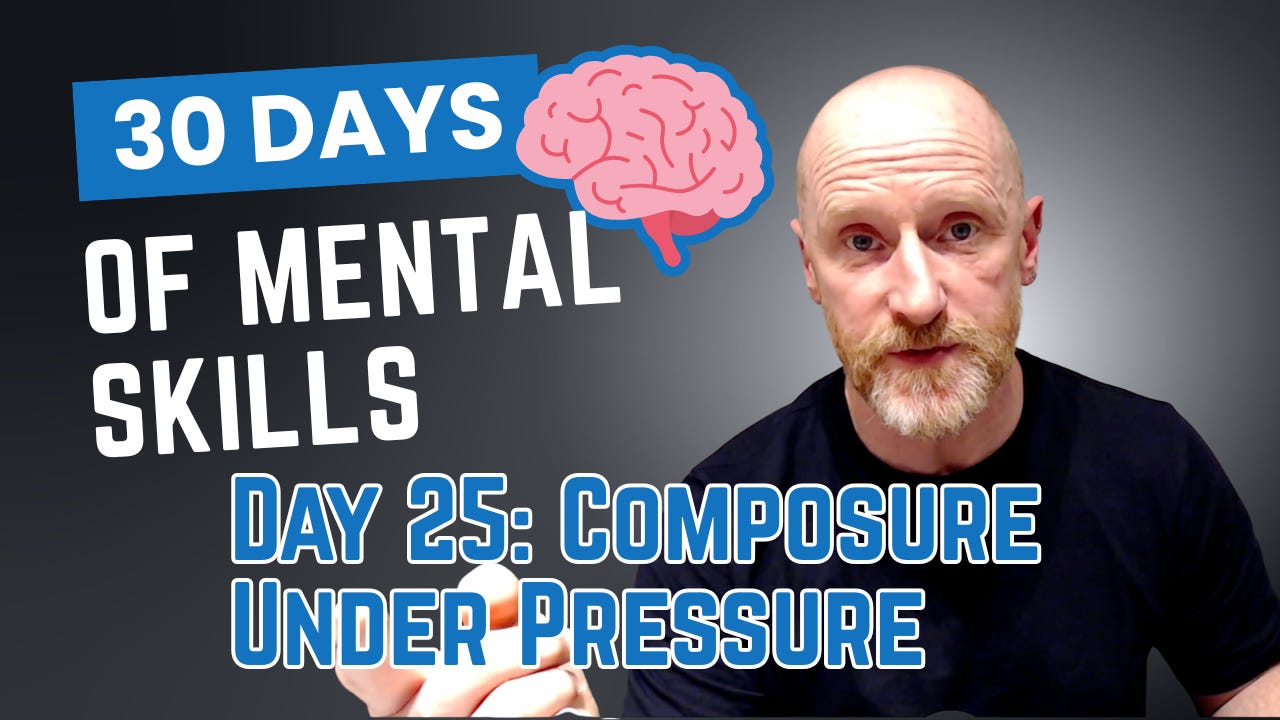
I’m discussing composure today, on Day 25 of the 30 Days of Mental Skills series. In the heat of performance—whether delivering a speech, competing in sports competition, or leading a high-stakes meeting—emotions can either enhance or sabotage our efforts. Emotional regulation, the ability to manage emotional responses in ways that support performance goals, is one of the most vital mental skills for success.Based on Dr. Jack Lesyk’s work at the Ohio Centre for Sport Psychology, this article explores how performers can build emotional resilience and regulate their internal states to perform at their best under challenging conditions.Understanding Emotional Regulation in PerformanceStrong emotions, such as excitement, frustration, nervousness, or even joy, are not your enemy. In fact, they are a natural part of the performance experience. But unmanaged, and despite our best preparation, they can lead to distraction, poor decision-making, and self-sabotage.Emotional regulation is not about suppressing feelings. Instead, it involves recognising, accepting, and using that emotional energy constructively. According to Lesyk, successful performers “accept strong emotions such as excitement, anger, and disappointment as part of the sport experience” and “are able to use these emotions to improve, rather than interfere with high-level performance.”This mindset is central to success across domains of human activity, from sport to surgery, from public speaking to competitive business.Mental Skills that Support Emotional RegulationAs we have discussed over the past three or four weeks, and as Lesyk identifies, there are nine core mental skills that every peak performer must develop. Several of these directly support the process of managing emotions under pressure. These skills are not innate traits. That is to say, it’s not a case of having them or not having them. The nine mental skills are learnable and trainable; let’s review them now.Self-Talk:Negative self-talk often triggers emotional spirals. Doubt, fear, and critical inner dialogue can amplify anxiety, frustration and anger. Successful performers in all walks of life and work use positive self-talk to maintain perspective and composure. They speak to themselves the way they would to a trusted friend: encouraging, realistic, and compassionate. Coupled with deep breathing exercises, you might say to yourself, “I’ve prepared for this, I’ve been here before, and I have the right response”. “I have the skills and ability.” “This feeling will pass.” This self-directed conversation helps shift the emotional tone from panic to a state of presence. However, don’t wait for the event; instead, practice it regularly.Mental Imagery:Mental imagery and rehearsing calmness prime the brain and body to act with control under pressure. When you visualise your desired process executed to near perfection—especially while you’re in a relaxed state—you build neurological readiness for the real event. Your organism knows what to expect without your conscious effort. Emotional regulation improves because the mind has “seen” this situation before and has developed familiarity. A typical imagery routine might involve the following:* Finding a quiet space where you won’t be disturbed* Relaxing your body through conscious attention to your breathing* Create vivid, multisensory images of the event* See yourself play or perform as you desire* See yourself encountering a challenge and responding with calmness, clarity, and effectiveness.* Follow this same process for other members of your teamManaging Anxiety:Emotional regulation is closely tied to anxiety control. Lesyk notes that some anxiety can enhance performance—what matters is how you interpret the experience. For example, accept anxiety as a normal part of the experience. Don’t mistake nerves for fear. Use deep breathing techniques to control your nervous system and regulate automatic responses. Reframe the situation. Thoughts like “This pressure means I care” can help convert anxiety into motivation. By managing your arousal levels, you can maintain emotional control without losing energy or drive.Concentration (we’ll be visiting this in a later session):Distractions, both internal (e.g., worry, frustration) and external (e.g., noise, people), often disrupt your emotional control. Consider your capacity to focus the gatekeeper of emotion. When you stay anchored in the present moment and attend to the task, you are less vulnerable to emotional flooding. Pay attention to what matters most in the moment. Redirect focus when it drifts (especially during high-stress phases). Use controlled breathing and word cues, such as “focused, tuned in, ready, prepared,” to refocus your attention on the task at hand. Again, it’s essential to practice before the situation arises.Emotional Regulation Before, During, and AfterBefore the Event* Accept emotional arousal: Nervous energy is a physiological cue that the body is preparing to perform.* Visualise calm confidence: Use imagery to rehearse emotionally composed responses.* Arrive early: Avoiding time pressure lowers stress.* Warm up fully: Physical readiness helps emotional settling. During the Event* Stay process-focused: Think about the task, not the outcome. * Interrupt negative spirals: Use breath, a cue word, or even a forced smile to reset. * Adopt a playful mindset: When things feel too serious, pressure builds. Relax into the moment by reminding yourself that “you get to play,” regardless of outcomes.After the Event* Debrief with balance: Focus on what went well emotionally—not just tactically. Ask yourself, what went well and what can I/we improve upon?* Reinforce success: Finish by recalling moments of calm, composure, and control. Finish with things you did well.* Mistakes are hot stones: What would you do if you were holding a hot stone? You’d drop it, of course.Emotional regulation is not about being emotionless or suppressing our feelings. Instead, it’s about channelling emotional energy into constructive action. Developing skills such as supportive self-talk, imagery, anxiety management, and concentration enables performers to remain composed, focused, and effective—even in the most demanding situations.Mental Skills Basics CourseSuffering stress and anxiety is not a prerequisite for success in self-employment–there's a better way. Mental skills provide you with the means of coping effectively with difficulty and achieving your goals. I created the Mental Skills Basics Course to introduce business leaders, self-employed individuals, freelancers, consultants, and small business owners to the psychological and emotional skills associated with success. This is a public episode. If you would like to discuss this with other subscribers or get access to bonus episodes, visit peak.humanperformance.ie
Despite its honourable and legitimate origins, positive thinking has become somewhat of a toxic term. What was once a skill for psychological flexibility—emotional agility and emotional intelligence—has, in corporate culture, become a coded expectation of self-regulation and obedience to the machine. To the other extreme, and in efforts to counter this trend, we are encouraged by internet gurus to be vulnerable, to pour our emotional guts out all over the carpet. Instead, there is a middle way, to move from a place of stability, from a place that the development of mental skills provides.Popularised by Susan David (2016), emotional agility originally described the ability to notice, label, and work constructively with one's inner experiences. However, in many workplaces, this concept has arguably been weaponised. As Merve Emre suggests in her 2021 New Yorker article, emotional intelligence frameworks often serve repressive ends, reframing personal distress as a failure of mindset, and encouraging workers to manage emotions not for self-understanding, but to sustain productivity and harmony in the workplace.Under this inverted model of self-management, the experience and outward expression of difficult emotions—anger, exhaustion, sadness—is frowned upon, or even pathologised. Employees are taught that the problem is not the structure of the work environment, but their failure to adapt and manage their animal instincts. And so, the workplace becomes a stage where emotional displays are tightly managed in the name of collaboration and professionalism. We adopt the worker persona and cease, if even for eight hours per day, who we genuinely are. We become socialised. What emerges is not self-awareness, but a performance of emotional competence, one that masks dissent and enforces conformity.In 1959, sociologist Erving Goffman provided an illuminating perspective. In The Presentation of Self in Everyday Life, Goffman argued that individuals perform roles in social contexts, managing impressions to align with audience expectations. In the workplace, the “front stage” performance of positivity, resilience, and composure becomes essential. Emotional agility is co-opted as a script—employees rehearse and display the “right” emotions to be seen as team players, emotionally intelligent, socialised and promotable. The backstage—the authentic emotional experience—is hidden or suppressed, particularly when it conflicts with organisational goals.Such emotional performances are often demanded in the name of “professionalism” but this demand imposes a silent burden. Arlie Hochschild warned in her 1983 book, The Managed Heart: The Commercialisation of Human Feeling, that emotional labour—the requirement to display socially acceptable emotions as part of one's job—can lead to alienation from one’s own internal experience, which spills over into life outside of work. When emotional agility is co-opted to mean “always adapt to fit the organisation,” it becomes another form of labour, not liberation or positive development of self.This concern is echoed in Sharon Fineman’s (2006) critique of corporate positivity culture. She highlights how emotional intelligence programmes, while claiming to foster wellbeing, can suppress authentic dialogue and discomfort—especially when they are blind to power dynamics. Leaders trained in such models may use emotionally intelligent behaviours to deflect criticism, pacify resistance, or manipulate team dynamics—all under the guise of empathy.What is lost in this transactional model of emotion is the space for psychological authenticity. True emotional agility, as originally envisioned by Susan David, involves acknowledging discomfort and choosing actions aligned with one’s values—not simply repackaging distress into motivational soundbites and toxic positivity. If organisations wish to nurture genuinely adaptive and ethical workplaces, they must confront this uncomfortable truth: emotional agility cannot be reduced to a performance metric. It must be reclaimed as a practice of integrity, not a performance of productivity.Mental Skills Basics CourseSuffering stress and anxiety is not a prerequisite for success in self-employment–there's a better way. Mental skills provide you with the means of coping effectively with difficulty and achieving your goals. I created the Mental Skills Basics Course to introduce business leaders, self-employed individuals, freelancers, consultants, and small business owners to the psychological and emotional skills associated with success. This is a public episode. If you would like to discuss this with other subscribers or get access to bonus episodes, visit peak.humanperformance.ie
In her book, Emotional Agility, psychologist Susan David tells the story of a British battleship that was on manoeuvres in heavy weather. While navigating through the fog, the lookout in the crow’s nest reported a light directly ahead. The ship's captain ordered the signalman to send a message:“We are on a collision course. Advise you change course 20 degrees east.”A signal came back:“Advisable you change course 20 degrees west.”Annoyed, the captain instructs the lookout to send a stronger message:“I’m captain of HMS Defiant, a Royal Navy battleship, change course immediately”The response:“I’m a seaman second class. Change course 20 degrees west.”Now furious, the captain insisted:“We are a battleship! I order you to change course!”The reply was calm and final:“We are a lighthouse, Sir.”Emotional agility, as defined by Susan David, is "about loosening up, calming down, and living with more intention. It’s about choosing how you’ll respond to your emotional warning system." It represents a sophisticated approach to dealing with our thoughts, emotions, and stories that differ from reality. Emotional agility encourages a mindful, values-driven response to life's challenges.At its core, emotional agility is about separating ourselves from, yet acknowledging our emotions without being dominated by them. It's recognising that all emotions—even difficult ones like anger, fear, or disappointment—contain valuable information and energy that can be harnessed constructively rather than avoided or suppressed.The Four Key Components of Emotional AgilitySusan David's research identifies four essential components of emotional agility:* Showing Up: Face your thoughts, emotions, and behaviours willingly, with curiosity and kindness rather than judgment. Instead of avoiding difficult feelings, emotionally agile people acknowledge them as data, not directives or confirmations of truth.* Stepping Out: Detach from and observe your thoughts and emotions to gain perspective. David refers to this as "the space between stimulus and response", where we can choose how to proceed rather than being driven by knee-jerk reactions.* Walking Your Why: This means connecting with your core values—what matters most to you—and using them as a compass for decision-making. Emotionally agile people align their actions with their values rather than with transient emotional states. Remember Session 8 in the series?* Moving On: The final component involves making small, deliberate tweaks to your mindset, motivations, and habits in alignment with your values. This isn't about dramatic change, but rather about achieving sustainable progress through consistent, incremental adjustments.Many business and management writers and experts suggest that emotional agility, or emotional intelligence, is about strategy. This flawed thinking assumes that every action is designed and preconceived with the strategic goal of manipulation. It represents what Erving Goffman referred to as surface-level acting. It’s where business leaders put on a show to attempt to convince everyone that they are something other than what they really are.This is not what we are talking about here.Mental Skills Basics CourseSuffering stress and anxiety is not a prerequisite for success in self-employment–there's a better way. Mental skills provide you with the means of coping effectively with difficulty and achieving your goals. I created the Mental Skills Basics Course to introduce business leaders, self-employed individuals, freelancers, consultants, and small business owners to the psychological and emotional skills associated with success. This is a public episode. If you would like to discuss this with other subscribers or get access to bonus episodes, visit peak.humanperformance.ie
Accepting conditions for what they are is probably our greatest challenge, because our surface-level mind is almost always active and almost always looks to the past for evidence of the apparent future. If you take time to contemplate it, you’ll realise that neither the future nor the past exists in reality. Our experience only exists now, all we have is this moment that seems to be both fleeting and yet eternal. Thinking creates the past and the future, and time is merely a social convenience. This is so well established in philosophy and science that it hardly needs discussion, and yet, our society and everyone in it is bound by thoughts of the future or the past, and rarely the present.Developed from behavioural and cognitive therapies, Acceptance and Commitment Theory (ACT) (Hayes, 2006) emphasises the importance of being psychologically flexible. This includes the capacity to remain present and take action in accordance with one's values despite obstacles. Primarily employed in clinical contexts, ACT is now being applied in non-clinical settings, such as workplaces and sports, to help people improve performance, cope with stress, and support overall well-being.The ACT model is grounded on six core psychological processes* Embracing thoughts, emotions, and physical sensations without attempting to suppress or avoid them is referred to as Acceptance.* Reframing thoughts as mental events rather than absolute truths is referred to as Cognitive Defusion.* Developing a mindful, present-focused awareness of the ongoing experience is termed as Being Present.* Understanding the concept of self-as-context involves recognising a consistent sense of self that observes thoughts and feelings without being controlled by them.* Defining personal Values helps in identifying what holds significance for an individual.* Engaging in actions aligned with one's values despite the presence of unwanted thoughts or emotions is known as Committed Action.These strategies aim to enhance psychological adaptability, which is strongly correlated with improved mental well-being and achievements in various aspects of life (Kashdan & Rottenberg, 2010).Kashdan and Rottenberg say that psychological flexibility spans a wide range of human abilities to: recognise and adapt to various situational demands; shift mindsets or behavioural repertoires when these strategies compromise personal or social functioning; maintain balance among important life domains; and be aware, open, and committed to behaviours that are congruent with deeply held values.Applying ACT in Your Daily WorkEngaging in an Acceptance and Commitment Therapy (ACT) process may help you feel less overwhelmed in challenging situations and improve your ability to navigate your thoughts constructively. The core principle involves recognising that your thoughts and feelings are integral to who you are and committing to behaviours that align with your values. A professional will collaborate closely with you to help you achieve your goals, as ACT is highly individualised. Similar to other forms of intervention, you may encounter uncomfortable emotions or memories during the process. This is why it’s best to work with a trained ACT professional.Mental Skills Basics CourseSuffering stress and anxiety is not a prerequisite for success in self-employment–there's a better way. Mental skills provide you with the means of coping effectively with difficulty and achieving your goals. I created the Mental Skills Basics Course to introduce business leaders, self-employed individuals, freelancers, consultants, and small business owners to the psychological and emotional skills associated with success. This is a public episode. If you would like to discuss this with other subscribers or get access to bonus episodes, visit peak.humanperformance.ie
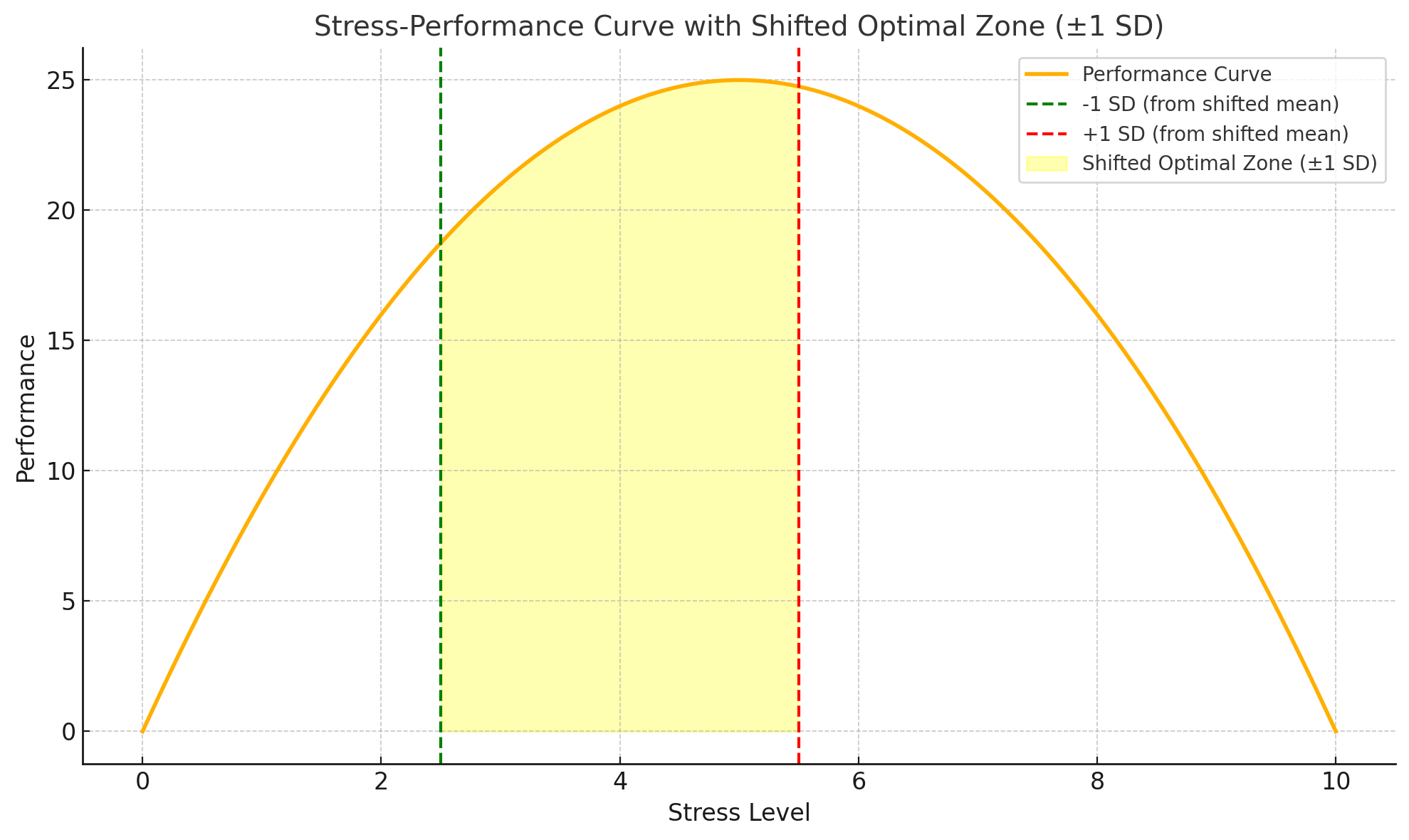
Stress is a normal part of life. It represents the challenge that being alive presents, and without it, life would be very boring. What do you want, an easy and challenge-free existence? Best of luck with that. Yes, I know that pretty much every marketing campaign out there promises you an easier life, a hedonistic life, even, but the truth is that it is idealistic and naive. To live a life full of pleasure and ease, without pain and discomfort, is unrealistic. Instead, you’ve got to embrace whatever life throws at you and, in the meantime, cultivate the skills you need to survive and grow.Aristotle wrote that most people are slaves to their desires. They crave the easy life and run away from difficulty. He stated that pursuing the hedonic lifestyle was detrimental to the good life. Instead, he advocated for the Eudaimonic life—a life spent engaged in things that were inherently challenging and interesting. It was there that he said the meaning and purpose of life could be found. In contemporary terms, we refer to this as flourishing wellbeing. It is the doing of things for their own sake rather than for their outcomes. There is no ulterior motive in our actions, and we accept whatever life sends our way because we possess the mental skills to cope and to flourish regardless.Stress and burnout are significant psychological phenomena with wide-ranging implications for health, well-being, and occupational functioning. While stress is often a short-term response to perceived threats or challenges, burnout is a chronic state of physical and emotional exhaustion that develops gradually in response to prolonged stress, particularly in work contexts. Understanding the pathways from stress to burnout involves examining both dispositional (personality-related) and environmental factors.The Yerkes-Dodson Law (1908) describes the relationship between arousal (or stress) and performance. It proposes that performance improves with increasing arousal, but only up to an optimal point, beyond which performance deteriorates. This relationship is typically represented as an inverted U-shaped curve, as seen below. The curve illustrates that both low arousal levels (leading to boredom) and high arousal levels (leading to anxiety) impair performance, while moderate arousal levels are associated with optimal performance.Originally based on experiments with mice, Yerkes and Dodson found that simple tasks benefited from higher arousal, while complex tasks required lower arousal for a longer time. This idea has since been applied across various domains, including work, education, and sport. In work psychology, the Yerkes-Dodson Law explains how moderate stress can enhance motivation and productivity. Chronic or excessive stress, on the other hand, contributes to burnout—a syndrome marked by emotional exhaustion, cynicism, and reduced professional efficacy (Maslach et al., 2001).Dispositional Stress: The Role of PersonalityDispositional stress refers to an individual's inherent predisposition to stress, as observed in research in personality psychology. High levels of neuroticism—a trait characterised by emotional instability, proneness to anxiety, and sensitivity to adverse situations—have been strongly correlated with higher perceived stress (Ebstrup et al., 2011). If you score high on neuroticism, you may interpret ambiguous situations as threatening, experience greater physiological arousal, and struggle with emotional regulation. In other words, your typical reaction to difficulty is not very productive.Maladaptive perfectionism, in particular, has been linked to chronic stress and increased risk of burnout, especially in achievement-oriented domains (Hill & Curran, 2016). These individuals set unrealistically high standards for themselves and experience distress when they fail to meet them. Influential research by Lazarus and Folkman (1984) highlighted that those who predominantly use emotion-focused coping strategies (avoidance, denial) rather than problem-focused strategies (planning, seeking support) are more susceptible to stress. This highlights the significance of dispositional variables in influencing how individuals perceive and respond to stressors.Environmental StressEnvironmental stressors are external conditions or demands that challenge your ability to cope. In occupational settings, high workload, time pressure, low autonomy, lack of support, and role uncertainty are familiar sources of stress (Karasek & Theorell, 1990). The Effort-Reward Imbalance (ERI) model (Siegrist, 1996) further explains how chronic stress arises when the effort invested in work is not matched by adequate rewards, resulting in a sense of unfairness and a lack of equity. This imbalance can lead to persistent stress and a sense of injustice, fostering emotional exhaustion and depersonalisation, two hallmarks of burnout.Outside the workplace, environmental stress can also stem from team or group conflict, aggressive forms of leadership, and social isolation. In this sense, the environment breeds the culture and attitude of all involved. Significantly, chronic exposure to environmental stressors without adequate recovery or support can shift acute stress responses into long-term patterns of physiological, psychological strain, and underperformance.From Stress to Burnout: A Progressive DeteriorationStress and burnout are conceptually distinct but functionally related. While stress is a state of heightened arousal and responsiveness, burnout is a state of depletion. Leiter and Maslach (2016) describe burnout as a response to prolonged stress that has not been effectively managed. Chronic stress leads to physiological dysregulation, including elevated cortisol levels, impaired immune function, and disrupted sleep, which over time can erode psychological resilience.The progression from stress to burnout typically follows a pattern: initial enthusiasm and high investment in work leads to overextension; persistent demands then generate emotional exhaustion; to cope, individuals begin to distance themselves emotionally (depersonalisation or cynicism); eventually, they may experience a reduced sense of personal accomplishment (Maslach et al., 2001).Stress does not automatically result in burnout, but when stressors are intense, unrelenting, and coupled with inadequate coping resources or recovery time, the risk increases substantially. Individual vulnerabilities (e.g., neuroticism, poor coping) and environmental demands (e.g., high workload, low control) interact dynamically to influence this trajectory (Leiter & Maslach, 2005).Burnout in Clinical TermsClinically, burnout is most commonly measured using the Maslach Burnout Inventory (MBI), which assesses three dimensions: emotional exhaustion, depersonalisation (cynicism), and reduced personal accomplishment (Maslach et al., 2001). Although burnout is not classified as a distinct disorder in the Diagnostic and Statistical Manual of Mental Disorders (DSM-5), it has been recognised in the International Classification of Diseases (ICD-11) as an occupational phenomenon (World Health Organisation, 2019). The ICD-11 defines burnout as "a syndrome conceptualised as resulting from chronic workplace stress that has not been successfully managed" and specifies the three aforementioned dimensions.Burnout is associated with numerous adverse outcomes, including depression, anxiety, sleep disturbances, substance misuse, cardiovascular disease, and decreased job performance (Melamed et al., 2006). Importantly, burnout can also impact interpersonal relationships, leading to social withdrawal and impaired empathy, which is particularly problematic in caregiving professions.ConclusionStress is important for optimal performance, but when it becomes too intense, or sustained for too long, it can bring about negative consequences. Burnout is a related construct with profound implications for psychological health and performance in work and sport. Dispositional factors, such as neuroticism, maladaptive perfectionism, and emotion-focused coping styles, can heighten vulnerability to stress. Environmental factors, particularly in the workplace, significantly contribute to this. When stress is intense and chronic, and coping resources are insufficient, burnout can result. Clinically, burnout is characterised by emotional exhaustion, cynicism, and reduced professional efficacy, and it carries significant health risks. Prevention and intervention efforts must address both individual and systemic factors to reduce the incidence and impact of burnout.Mental Skills Basics CourseSuffering stress and anxiety is not a prerequisite for success in self-employment–there's a better way. Mental skills provide you with the means of coping effectively with difficulty and achieving your goals. I created the Mental Skills Basics Course to introduce business leaders, self-employed individuals, freelancers, consultants, and small business owners to the psychological and emotional skills associated with success.References This is a public episode. If you would like to discuss this with other subscribers or get access to bonus episodes, visit peak.humanperformance.ie
We’ve all felt anxiety at some point in our lives, the apprehension associated with possible adverse future outcomes. It’s usually associated with something important to us, like performing well in a job interview, going to a social event with people that we’re uncomfortable being around, or running our first marathon. We hope things will go well, but we’re uneasy about the unknown and imagine something different. Depending on the person, it can be mild, like butterflies in your stomach. To others, is can become chronic and completely debilitating. Individual differences count, and so too does past experience. Still, essentially, it is our thoughts about the future and our perceived potential for failure that have the most significant influence on the intensity and duration of anxiety we feel. If you want to perform to your best, understanding and managing anxiety is critical.What Is Anxiety?Anxiety is a natural response to perceived threat or danger, characterised by a range of emotional, cognitive, and physiological symptoms. While short-term anxiety can be helpful, allowing you to respond quickly to potential harm, chronic or excessive anxiety impairs healthy functioning. At its worst, prolonged anxiety can lead to physiological illness and psychological disorders. If we can understand anxiety, we may be better able to mitigate against it. Perspectives include neurological, psychological, and physiological mechanisms at work in its presentations. Each perspective offers distinct insights into how anxiety arises, how you experience it, and how you can effectively treat it. Cognitive Behavioural approaches can be very helpful, and you don’t necessarily need a professional practitioner to help you here; you can execute these strategies yourself. Exercise can also have a positive effect.A paper by Severinsen & Pedersine (2020) reported that physical exercise has positive health effects on cognitive function and brain health. Through the muscle’s production of Myokines, they say that physical activity can decrease the rate of cognitive decline in healthy people and in people with neurodegenerative disorders across the life span. Physical exercise has a positive impact on stress, anxiety, and depression, they report. Other studies have shown that an active lifestyle is associated with improved learning and memory, enhanced executive functions, better language skills, faster reaction times, higher academic achievement in children, and increased intelligence in adolescents. Physical activity also has beneficial effects on appetite, sleep, and mood. Difficult and challenging workouts also build resilience to stress.The Neurological Perspective on AnxietyFrom a neurological standpoint, anxiety is rooted in the functioning of several brain structures and neurotransmitter systems responsible for emotional regulation and threat detection. The amygdala, the fear centre, plays a central role in the processing of apparent threat. In anxiety disorders, hyperactivity in the amygdala leads to exaggerated responses to perceived dangers, even in safe situations (Etkin & Wager, 2007). This over-activation is often accompanied by insufficient regulation from the prefrontal cortex, which is responsible for executive control and emotional regulation (Bishop, 2007). When the prefrontal cortex fails to inhibit the amygdala effectively, anxiety symptoms can intensify. What we mean here in practical terms is, the capacity to become accept conditions as they are, and to realise the threat is mostly imagined, not real.The hippocampus, which plays a crucial role in contextual memory and learning, is also implicated. Dysfunction in the hippocampus may lead to overgeneralisation of fear responses—responding with anxiety to cues that resemble, but are not identical to, previous threats. Neurotransmitters such as gamma-aminobutyric acid (GABA), serotonin, and noradrenaline are also key. GABA is the brain’s primary inhibitory neurotransmitter and is responsible for dampening neural excitability. Low levels of GABA are associated with heightened anxiety. Similarly, imbalances in serotonin and noradrenaline systems can lead to increased arousal, poor mood regulation, and hyper-vigilance. Diet can impact neurotransmitter regulation. Exercise also impacts their production in the brain.Summary:* Amygdala hyperactivity and poor prefrontal regulation contribute to anxiety.* Hippocampal dysfunction leads to fear generalisation.* Low GABA and serotonin levels increase emotional reactivity.The Psychological Perspective on AnxietyPsychological theories of anxiety focus on the mental and behavioural processes that contribute to the onset and maintenance of anxious states. Cognitive theory, as proposed by Beck (1976), suggests that individuals with anxiety disorders engage in maladaptive thinking patterns, such as catastrophising or selectively attending to threat-related information and ignoring information that supports alternative possible future outcomes. These cognitive distortions amplify perceived danger and fuel anxiety.Learning theories also explain how anxiety can be acquired and sustained. Through classical conditioning, neutral stimuli can become associated with fear if they occur in conjunction with traumatic events. Operant conditioning plays a role in the maintenance of anxiety, as avoidance behaviours are negatively reinforced by the temporary relief they bring, preventing fear extinction.Trait anxiety—a stable predisposition to perceive situations as threatening—is another factor, as is early life experience. Insecure attachment styles and early trauma can compromise emotional regulation and increase vulnerability to anxiety in later life (Mikulincer & Shaver, 2007). Intolerance of uncertainty, often observed in generalised anxiety disorder (GAD), further contributes by making ambiguous or unpredictable situations especially distressing (Dugas et al., 1998).Summary:* Cognitive distortions maintain anxiety.* Anxiety can be learned through conditioning.* Trait anxiety and early trauma increase vulnerability.Physiological PerspectivePhysiologically, anxiety is manifested through activation of the autonomic nervous system (ANS), particularly the sympathetic branch, which prepares the body for “fight or flight”. In response to a perceived threat, heart rate increases, breathing becomes rapid, muscles tense, and digestion slows. These responses are adaptive in acute situations but become problematic when they persist without real danger.The parasympathetic nervous system, which promotes rest and recovery, is often underactive in individuals with chronic anxiety. This imbalance can lead to sustained physiological arousal and long-term health consequences. The hypothalamic–Pituitary–Adrenal (HPA) axis also plays a critical role, releasing cortisol in response to stress. Chronic activation of the HPA axis, as observed in anxiety disorders, can impair immune function, memory, and emotional regulation (Sapolsky, 2000).Common somatic symptoms of anxiety include muscle tension, fatigue, dizziness, sweating, and gastrointestinal disturbances. These symptoms are not only distressing in themselves but also serve to reinforce anxious thoughts, creating a feedback loop.Summary:* Autonomic Nervous System (ANS) activation leads to fight-flight-freeze responses.* The Hypocampal-Pituitary-Adrenal (HPA) axis releases cortisol, affecting health.* Somatic symptoms reinforce anxious thoughts.ConclusionAnxiety is a multifaceted phenomenon involving brain structures, cognitive processes, and bodily systems. The neurological perspective highlights dysregulation in emotional circuits and neurotransmitter imbalances. The psychological perspective underscores maladaptive thought patterns, learned behaviour, and personality traits. The physiological perspective focuses on the body’s stress response systems. Together, these perspectives offer a comprehensive framework for understanding anxiety and inform integrated treatment approaches involving medication, psychotherapy, and lifestyle modification.Mental Skills Basics CourseSuffering stress and anxiety is not a prerequisite for success in self-employment–there's a better way. Mental skills provide you with the means of coping effectively with difficulty and achieving your goals. I created the Mental Skills Basics Course to introduce business leaders, self-employed individuals, freelancers, consultants, and small business owners to the psychological and emotional skills associated with success.References This is a public episode. If you would like to discuss this with other subscribers or get access to bonus episodes, visit peak.humanperformance.ie
The paper "Mental Imagery and Its Potential for Physical Therapy" by Warner and McNeill (1988) reviewed the existing literature on mental imagery (MI) and mental practice (MP) and their effects on physical skills. The authors aimed to explore the feasibility of these techniques as a supplement to physical therapy. The core premise is that mental processes, particularly imagery, have a tangible influence on physical functions, reflecting a strong mind-body relationship.In 1954, Roger Bannister became the first person to run one mile under four minutes, after which 52 others followed suit the same year. According to pentathlete Marilyn King in a 1985 interview, Bannister had a mental image of being able to surpass the then-existing record, despite "irrefutable" evidence that it was impossible. Olympic champion King trained athletes to utilise Mental Imagery and advocates for a shift in attitude that creates possibilities beyond what individuals think they are capable of. In other words, it is unlikely that one's body will do more than one's mind believes is possible.Mental Imagery can be defined as "cognitively reproducing or visualising an object, scene, or sensation as though it were occurring in overt, physical reality". Mental practice is defined as the "symbolic rehearsal of a physical activity in the absence of any gross muscular movements," achieved through the repetitive use of MI to reach a desired outcome. The paper presents compelling evidence for this mind-body connection as follows;* Perception and Visualisation Similarities: Research by Finke found that mental images exhibit visual properties much like the perception of actual objects, supporting the use of MI for practical purposes like athletic training, which I discussed on Day 17 and Day 18.* Brain Activity Beyond Visual Cortex: Studies using brain electrical activity mapping and positron emission tomography have revealed that mental imaging activates brain areas involved in movement execution (e.g., parietal cortex) in addition to regions involved in visual processing. This suggests MI "mimics actual performance to a greater degree than had been thought previously".* Measurable Muscle Activation: Early electromyography (EMG) studies by Jacobson (1932) demonstrated slight, transitory muscle contractions during MI. While some initial reviews suggested general body activation rather than mirroring specific movement patterns, later research by Harris and Robinson (1986) provided evidence for site-specific muscular activity.Crucially, kinaesthetic imagery, or "visuomotor behavioural rehearsal (VMBR)," which involves mentally recreating the total "feel" of an activity, has been shown to generate EMG activity that matches actual physical performance—we’ve mentioned this before. This muscle activation, in conjunction with Motor Imagery, underscores the direct link.The effectiveness of MI and MP has been extensively studied, particularly in sports and motor learning:* Skill Enhancement: Numerous studies demonstrate that MP can enhance skillfulness. Classic research showed that groups mentally practising basketball free throws or dart throwing improved similarly to those physically practising. More recent studies have replicated these findings.* Cognitive vs. Motor Tasks: Mental practice showed the most pronounced effects and quickest improvement for cognitively oriented tasks (e.g., maze learning, card sorting), while motor skills required more trials and longer sessions for less dramatic improvement.Key variables influencing the successful outcome of MI and MP include:* Vividness and Clarity: Superior results are associated with strong, clear images, which tend to improve with experience and by keeping images simple.* Kinesthetic Imagery: Focusing on the internal "feeling" of the movement, as in VMBR, is critical.* Practice Over Time: Achieving significant results depends on consistently conducting Mental Imagery sessions over time, rather than sporadically or in single instances. A minimum of five sessions, held on separate days, is recommended.* Nondirected Instructions: Allowing subjects to create their own personalised, active mental images is generally more effective than using audiotaped or directed instructions.* Combining Practice Methods: Integrating physical practice (PP) with Mental Practice often leads to the most significant gains in performance.* Positive Outcomes: Visualising successful outcomes and perfect movements also contributes to effectiveness.The paper extends the discussion to health care services, citing evidence for MI's physiological impact:* Cancer Therapy and Psychoneuroimmunology: Mental Imagery has been used to influence immune responses, with patients visualising symbolic ways to fight cancer cells, correlating with increased survival rates and enhanced white blood cell counts.* Biofeedback: Individuals can mentally influence autonomic functions, such as heart rate, muscle tension, and skin temperature, using Mental Imagery techniques, often in conjunction with biofeedback technology.* Physical Therapy Potential: Due to physical limitations and safety concerns, particularly among the elderly, Mental Practice is highly applicable in physical therapy. A study on balance in elderly women showed that mental practice incorporating relaxation and kinaesthetic imagery significantly improved balance.The advantages of MI/MP in physical therapy are numerous:* Immediate Implementation: It requires no special equipment, is easily taught, and can be used when physical practice is impractical due to immobilisation, pain, or fatigue.* Neuroanatomical Circuit Maintenance: It can help keep neural pathways functional when a body part is immobilised.* Accelerated Recovery: Patients can begin mental practice during recovery, potentially reducing healing time and allowing for home practice without specialised equipment.* Psychological Benefits: It aids in stress reduction, enhances concentration and confidence, and facilitates more relaxed performances.However, the paper acknowledges disadvantages: patients may perceive it as too simple, be sceptical of its effects, feel progress is too slow, or therapists may find it challenging to correct covert mental activities.In conclusion, the paper asserts that MI has a significant impact on physiological functions and consistently yields physical results in sports and healthcare. It emphasises that mental practice is not merely "thinking about" an action but actively engaging the brain's motor system in a way that closely mimics actual performance, thereby enabling enhanced physical recovery, performance, mental clarity, and stress reduction. The authors highlight the potential of MI to expand perceptions of human capabilities and serve as a "more inclusive treatment program".Mental Skills Basics CourseSuffering stress and anxiety is not a prerequisite for success in self-employment–there's a better way. Mental skills provide you with the means of coping effectively with difficulty and achieving your goals. I created the Mental Skills Basics Course to introduce business leaders, self-employed individuals, freelancers, consultants, and small business owners to the psychological and emotional skills associated with success.References This is a public episode. If you would like to discuss this with other subscribers or get access to bonus episodes, visit peak.humanperformance.ie
The PETTLEP model of mental rehearsal is a comprehensive framework that enhances the effectiveness of focused and purposeful imagination. The practice of Mental Imagery (MI) is used to enhance performance across various fields and domains of work, including medicine and sports and physical activities. This model, developed by Holmes and Collins in the early 2000s, represents the following components:* Physical aspects* Environmental aspects* Task specifics* Timing of tasks* Learning new tasks* Emotional responses* Perspective of performanceThe PETTLEP approach is rooted in the idea that the more closely mental rehearsal mimics the actual performance, the more effective it will be in enhancing actual performance. What I am suggesting here is that this idea can be extended beyond the sports performance area and into everyday life experience. Here’s some evidence to support my assertion.Extensive research has demonstrated an overlap between active brain regions involved in motor imagery (imagining the behaviour) and motor execution (performing the behaviour). Motor imagery is a simulation of physical activity that relies on similar cognitive representations and shares neural networks (Kalicinski et al., 2016). Neuroimaging studies have shown an overlap in brain regions (Lotze & Halsband, 2006). Decety et al. (1991) found that respiration and heart rate increased during imagined walking. Studies on the real and imagined timing of behaviour have revealed that these are closely aligned (Guillot & Collet, 2005). In other words, participants were able to accurately time imagined behaviours with performed behaviours.“It’s been my dream for as long as I can remember. Every night going to bed, I’d do, I’d slide down the track and go through it, and visualise my dream. But I wouldn’t visualise winning, I’d visualise the process.”Lizzy Yarnold, Olympic Skeleton Gold Medalist 2014“What I do, always before a game, always, every night and every day, is try and think up things, imagine plays, which no one else will have thought of, and to do so always bearing in mind the particular strength of each team-mate to whom I am passing the ball. When I construct those plays in my mind I take into account whether one team-mate likes to receive the ball at his feet, or ahead of him; if he is good with his head, and how he prefers to head the ball; if he is stronger on his right or his left foot. That is my job. That is what I do. I imagine the game”.Former Brazilian footballer, Ronaldinho“This visualisation technique is a sort of clarified daydream with snippets of the atmosphere from past matches included to enhance the sense of reality. It lasts about twenty minutes, and by the end of it, I feel I know what is coming. The game will throw up many different scenarios, but I am as prepared in my own head for them as I can be. If you have realistically imagined situations, you feel better prepared and less fearful of the unexpected.”Former England International, Jonny WilkinsonFor this to be possible, Holmes and Collins (2001) suggested that the actual performance and the environment should be simulated as accurately as possible. The model is based on the work of Jeannerod (1994, 1997), who proposed that specific brain areas are activated during both physical and imagined movements. They suggest that the best results are achieved when mental imagery is combined with physical practice. The PETTLEP Method consists of the following components.* Physical (P): The physical component emphasises the replication of the physical aspects of the performance during mental rehearsal. This includes not only the basic movements but also finer details, such as body posture, specific muscle movements, and even the replication of physical sensations, including touch and proprioceptive feedback (your ability to sense your own movements). The goal is to engage the same neural pathways that would be used during the actual performance, enhancing the mind-body connection.* Environment (E): For the environment aspect, the individual is encouraged to visualise the specific details of the environment where they will perform. This could include the layout of a sports field, the sounds on the field or in a performance hall, or the lighting in a room. The more vividly you can recreate the environment, the more effective the mental rehearsal will be, as this helps you acclimate to the performance context, reduces anxiety, and enhances focus. In this, we develop familiarity with the space.* Task (T): This element focuses on the specific tasks you are to perform, as well as the detailed and precise mental representations of the required skills or activities. It's about breaking down your performance into its constituent parts and rehearsing each one meticulously. This detailed focus helps refine techniques and correct errors, leading to improved execution during your actual performance or situation.* Timing (T): The timing component emphasises the synchronisation of the mental rehearsal with the real-time duration of the task. This means that if a sprint takes ten seconds to complete, the mental rehearsal of the sprint (or the sales presentation) should also take ten seconds. This aspect is crucial for activities where timing and rhythm are essential, ensuring that the mental practice is as temporally accurate as possible.* Learning (L): The learning aspect acknowledges that as your skills develop and evolve, so too should your mental rehearsal. The imagery should adapt to reflect new strategies, improved techniques, or higher levels of complexity as you progress. This ensures that your mental practice remains challenging and relevant, facilitating ongoing development and mastery.* Emotion (E): Emotional content is implicit in behaviour. For mental rehearsal to be accurate, it must incorporate emotional aspects. This could involve visualising success and the associated positive emotions, as well as preparing for potential stressors or negative emotions and planning strategies to manage them. Emotionally charged imagery can enhance motivation and resilience, contributing to a more robust performance under pressure.* Perspective (P): The perspective from which an individual engages in mental rehearsal can influence its effectiveness. An internal perspective (first-person) can enhance the feeling of control and proprioception, while an external perspective (third-person) can help improve strategy and form. The choice of perspective can be tailored to the specific goals of the mental rehearsal, with some evidence suggesting that a combination of both perspectives may offer the most comprehensive benefits.Mental Skills Basics CourseSuffering stress and anxiety is not a prerequisite for success in self-employment–there's a better way. Mental skills provide you with the means of coping effectively with difficulty and achieving your goals. I created the Mental Skills Basics Course to introduce business leaders, self-employed individuals, freelancers, consultants, and small business owners to the psychological and emotional skills associated with success.References This is a public episode. If you would like to discuss this with other subscribers or get access to bonus episodes, visit peak.humanperformance.ie
What do you imagine about yourself and others? What images and pictures appear on the movie screen of your mind as you move through your day? Do you imagine how good you are perceived at your work and how great it will be when you obtain that promotion, or do you imagine being sacked because you’re not quite as sharp as you think you should be? What about knowledge, skills, ability, talent and intelligence—do you imagine you have these in sufficient quantities to succeed, or are you bluffing it? What are your prevailing thoughts about yourself?I’m not suggesting that you walk around all day in a delusional state, disregarding reality, kidding yourself in the face of evidence to the contrary. I strongly suggest that you pay attention to the world around you and the feedback it provides. After all, you don’t want to be mowed down crossing the road. Acceptance of what is, of your current experience and level of expertise, is the starting point for an improved life experience, so get comfortable with what is. That said, if you continually rehearse in your mind the same or similar situations over and over again, it will be very difficult to experience anything other than that, especially if strong emotion accompanies the imagined situation.Consider the person who is unhappy in their job and mentally rehearses confrontations with work colleagues and customers. Ask yourself, could they possibly be in a mood at work that could lead to positive experiences? If all they do is expect confrontation, is that not what they will meet? Are they not primed for it? Every interaction will be an opportunity for their experience to prove to them they were right. Every comment will be a jab at their competency. Every mini-failure may be viewed as evidence that this job is the worst. They see the world and everyone with whom the interact through the lens of, “this job is s**t, and everyone is an a*****e.” Remember our session on Locus of Control?Now, consider a goal you wish to achieve. How do you imagine it?Are you holding fast to the outcome despite current experiences, or do you allow mini-failures to overly influence your imagined result? Most people don’t realise that the content of their imagination, especially where it’s coupled with strong emotion, influences their future experiences. With the thoughts we think from moment to moment, we are literally tuning our organism toward those ends. It is not that you are somehow magically creating your own future, but you are, in a sense. With the movies you imagine, and with the emotion attached to them, you are tuning your attentional faculties towards those experiences. If fear is what you constantly imagine for yourself tomorrow, next week, next month, then your amygdala will be lit up like a Christmas tree—permanently. Your brain will be wired to expect problems. If optimistic thoughts for tomorrow occupy your mind, then you will expect tomorrow to be better than today. Your brain, mind and body (your System 1) will be tuned to find improved life experiences without your conscious effort. This is not magical thinking; this is the science of psychology and neuropsychology.Now, all this doesn’t mean that s**t won’t happen, after all, many things are outside your control, but it will help you better manage difficult situations. When you choose to imagine a better tomorrow, you will build personal resilience and more positive expectations. Your right-now lived experience will be improved, and after all, now is all you have, so you’d better live it as best you can because you may be gone in an instant. Rather than the prospect of death being something to be depressed about, you make it something to be positive about.My message is to choose to imagine a better outcome, not only for yourself, but also for others. When you have time to kill, use it purposely. When you’re on the bus or the train, when you’re queuing for coffee, or you’re waiting for a friend, and at night before you go to sleep, instead of letting your mind drift to automatic negative outcomes, think again. Choose a better but realistic picture to ponder. See things working out for you and others. Start small with things that are believable. This is important because the emotion associated with the thought has a profound impact on your psychological state. In other words, you’ve got to believe the pictures you hold in your mind about tomorrow (or next week or ten minutes’ time) are possible. When you master the small things, move to imagine bigger and better things.In the next few sessions of 30 Days of Mental Skills, I’ll be walking you through structured strategies that, for example, professional athletes use to refine their skills and prepare themselves for competition. You can also apply these methods in your work, business, and daily life, so watch out for those sessions.Mental Skills Basics CourseSuffering stress and anxiety is not a prerequisite for success in self-employment–there's a better way. Mental skills provide you with the means of coping effectively with difficulty and achieving your goals. I created the Mental Skills Basics Course to introduce business leaders, self-employed individuals, freelancers, consultants, and small business owners to the psychological and emotional skills associated with success. This is a public episode. If you would like to discuss this with other subscribers or get access to bonus episodes, visit peak.humanperformance.ie
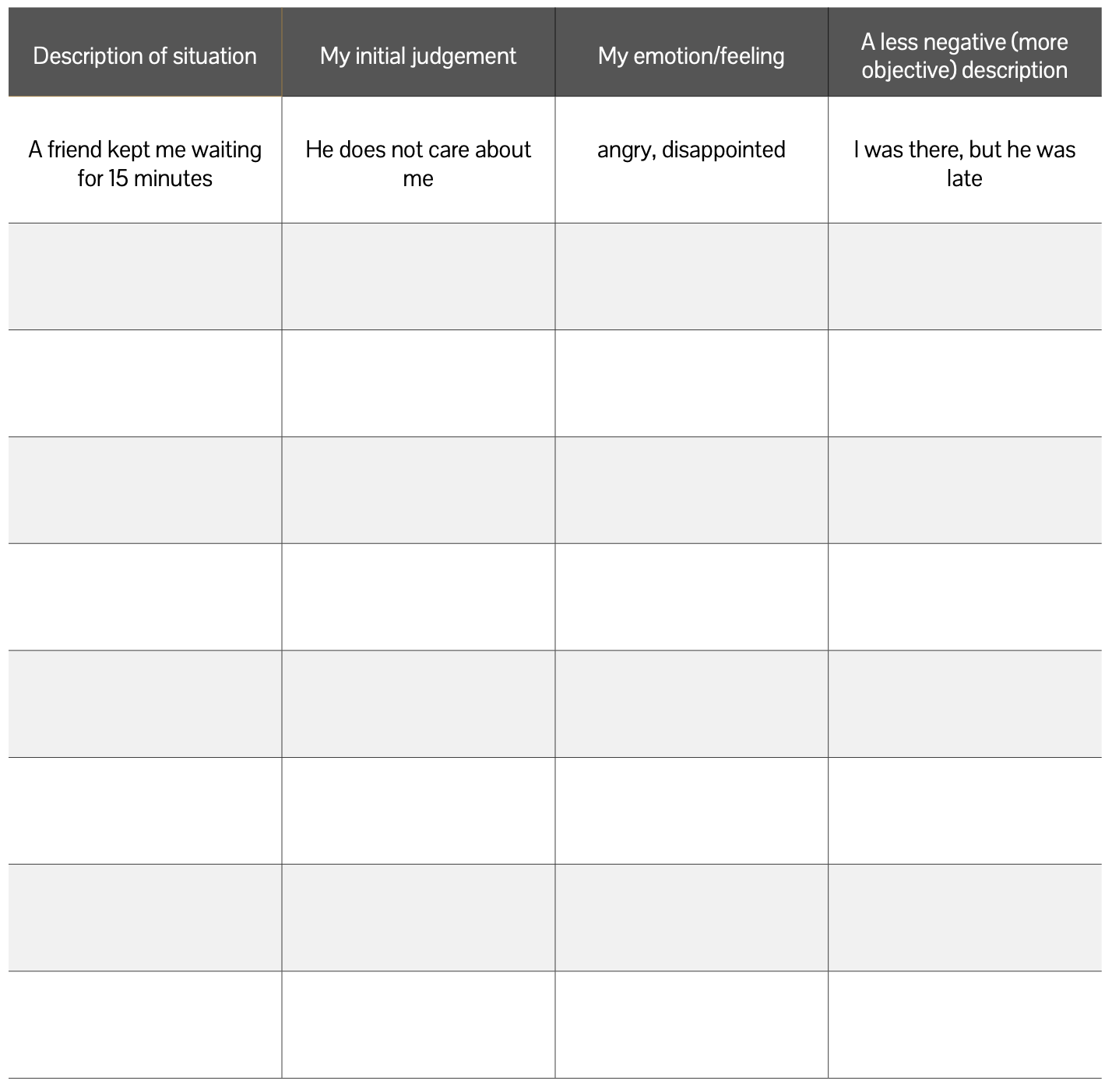
Challenging negative thoughts is a mental skill essential for managing the demands of not only high-stakes situations but also those of everyday life. We talk to ourselves in almost every moment. Except for those situations where we are completely engrossed in something, our minds can be consumed with inner dialogue. Now, that’s not such a bad thing where the thoughts are supportive and encouraging, but where those thoughts are critical and abusive, we are unlikely to create the results we’d like to see.Negative self-talk is often an automatic reaction to stressful events, the extent of which can be primarily influenced by our childhood environment. In youth, we develop or adopt a template for life and relationships. It runs on autopilot; you could say it is a product of System 1 thinking. We’re not stuck with it, however. According to Seaward (2006), reframing is a conscious coping technique that helps us become aware of our internal monologue, widening our perspective on particularly challenging situations. Steps involved in cognitive reframing include;* Becoming aware of our thoughts* Evaluating content.* And challenging negative perceptions by questioning their validity.Modifying negative self-talk is essential in the process of learning to regulate our feelings. Research by Morin (2005) suggests that recognising self-talk helps us consider the perspectives of others in private speech and incorporate multiple perspectives into social and emotional problem-solving. Additionally, self-awareness, monitoring, and communication of our thoughts, feelings, and behaviours are essential prerequisites for healthy emotional functioning, or emotional competence, according to Saarni (1999).I work with male under-18s in an amateur team sport environment. I played the game myself for years, and one of the significant keys to consistent and reliable performance for these lads is composure. If you lack composure, you lose your focus. The voice in your head takes over and tells you you’re a failure, or perhaps that everyone else is to blame. Regardless of where that blame is attributed, the critical voice in your head now runs the show; the game is lost.How To Reframe Automatic Negative ThinkingGet yourself a journal if you don’t already have one. Then, for one week, note down those occasions where your mind jumps to negative judgments. Take time and space to do this exercise where you won’t be disturbed.* First, describe the situation that caused the judgment.* Then, note your initial negative thought about it.* Also note the emotions and feelings that followed this line of thinking. * Next, (and this is the crucial bit) ask yourself, is this thought accurate, could I be wrong about this—how could this situation be different?* Lastly, choose a more positive thought that may be equally true.An example* A friend kept you waiting for 15 minutes.* Your initial thought was that they care only for themselves and not for your time.* You felt irritated and let down.* Then you considered the facts; you were there on time and he was late—that’s it. You elaborated on the possibilities further…maybe someone else delayed them. Maybe they got caught in traffic. Maybe they have an unreasonable boss who keeps them late. Maybe… There could be any number of reasons why your friend was delayed, and entertaining the first thought as fact can be damaging to your state of mind. This is especially damaging if you are in a demanding role that requires composure and emotional stability. Instead of jumping to conclusions and flying off the handle, entertain other possibilities. You might say to yourself, for example;“Hang on a second, does this thought have to be true? What’s an equally possible reason why this may have occurred?”Then continue the conversation with yourself, taking your mind to less dramatic, equally possible scenarios. Couple this with a series of deep breaths, and you’ll notice your mind and body begin to calm down. Now, you may be able to take effective action.This approach can be equally effective when considering both current and future conditions. If you are in the middle of a game, for example, and you feel it slipping away. Instead of catastrophising about the outcome, consider other positive possibilities. After all, it’s what you and your teammates do now that counts, not what you did ten seconds or ten minutes ago. Think differently. Talk differently to yourself. Learn to regulate your emotional state with truthful and positively oriented self-talk, and watch circumstances shift in your direction.Mental Skills Basics CourseSuffering stress and anxiety is not a prerequisite for success in self-employment–there's a better way. Mental skills provide you with the means of coping effectively with difficulty and achieving your goals. I created the Mental Skills Basics Course to introduce business leaders, self-employed individuals, freelancers, consultants, and small business owners to the psychological and emotional skills associated with success. This is a public episode. If you would like to discuss this with other subscribers or get access to bonus episodes, visit peak.humanperformance.ie
Did you know that referring to yourself by your first name or as "you" (instead of "I" or “my“ or “me”) may help you step back from challenging situations and see things more clearly? Studies have shown that it gives you emotional and psychological distance. For example, after a difficult encounter, I might think to myself, “That was a stressful situation, I really felt under pressure, and I thought I’d never get out of there, but I did, and I’m glad that’s over.” Instead, I might say, “That was a stressful situation, you really felt under pressure, and you thought you’d never get out of there, but you did, and you’re glad that’s over.”In the first case, I’m reliving it in my mind, and as I speak about it, referring to myself as I, I recall the emotional state—I experience it again. In the second case, it’s like I have become a passive, non-judgmental observer commenting on the experience of another. In some ways, that’s true, because the event in time has gone, and that person is gone too. Or rather, I have left them behind, and I am in the present here and now, not in the past. Think about a negative experience. Write it down in the first person, then write it again from a non-first-person perspective. Can you feel the difference?You feel something qualitatively different when referring to yourself in the first person compared to referring to yourself in the non-first person. In the first person, you and the feeling are one—you are it and it is you. You refer to your anxiety, your depression, and your feelings, and you own them. But what if you created some space between the feeling or emotional state and what you refer to as you? What if the you to which you refer is, in fact, something that can observe the situation in which you found yourself?“One thing I didn’t want to do was make an emotional decision. I wanted to do what’s best for LeBron James and to do what makes LeBron James happy.”This quote by LeBron James from 2010 was controversial. Many thought he was losing his mind. However, he was simply applying this principle to his decision-making process and self-reflection. You may not want to engage in this method out loud, but you can do so in your own mind. It may help you stay rooted in the present, observing a past event.A study by Kross et al. in 2014 examined the way people talk to themselves in their minds and how it influences their handling of stressful social situations and social anxiety. They conducted seven studies involving a total of 585 people. They found that those who used their name or "you" in their self-talk did better in creating first impressions and in public speaking (according to outside observers) and felt less stressed. They also didn’t dwell on the event negatively afterwards.Two further studies by Kross et al. looked at how this kind of non-first-person self-talk changes how people view anxiety-provoking situations. Using their name or "you" made people see future stressful events as more of a challenge and less of a threat—remember our session on Growth and Fixed Mindset? Finally, the researchers combined all the results and found that these benefits occurred regardless of whether someone had social anxiety, meaning this method of self-regulation could help almost anyone manage challenging situations and engage proactively in self-reflection.What about the execution of skills?When it comes to executing skills in sport, self-talk can help with preparation and focus. When you're doing precise tasks, like taking a free (let’s take hurling, our national sport in Ireland), talking yourself through your process helps. It’s called instructional self-talk. For example, before taking a free, see yourself perform it perfectly and talk yourself through each aspect; "ok, deep breath, exhale. Approach the ball, clean lift, smooth movement, step into the strike, strike and watch it sail over the bar. Research shows that this works better than just trying to pump yourself up with motivational self-talk, like "let’s go, you're the man" etc. Giving yourself instructions is especially beneficial for fine motor skills, much more so than for larger gross movements.Self-talk is essentially about focusing your thoughts to guide your actions, acting as an internal instruction for what you want to do (Johnson et al., 2004). This mental strategy enhances performance in several ways: it helps you sharpen your focus and direct your attention to crucial cues (Landin, 1994; Nideffer, 1993), allows you to regulate your effort and boost your self-confidence (Zinnser et al., 2006), and can even be effective in managing anxiety and prompting the correct response in the moment (Hardy et al., 1996).Mental Skills Basics CourseSuffering stress and anxiety is not a prerequisite for success in self-employment–there's a better way. Mental skills provide you with the means of coping effectively with difficulty and achieving your goals. I created the Mental Skills Basics Course to introduce business leaders, self-employed individuals, freelancers, consultants, and small business owners to the psychological and emotional skills associated with success. This is a public episode. If you would like to discuss this with other subscribers or get access to bonus episodes, visit peak.humanperformance.ie
There is a conversation ongoing inside our heads at every moment. I say inside our heads, but this is a little misleading, because you won’t find this conversation anywhere. There may be neurological activity related to inner conversation, but just like mental images (which we’ll get to in a few days), you won’t find the words or the sounds anywhere inside your head. We don’t know where it is, if, indeed, this is even the correct question to ask. We say, for simplicity's sake, that this conversation goes on in our minds. But where is the mind? We don’t know. All we can say is that it appears to occur, and we’re aware of it.Our inner conversation tells us who we are and what we are capable of. It supports us, and it takes us down. It criticises us in the voice of our most influential other, even though that other may be long gone. It warns us of rational and irrational threats, and it spurs us on in the pursuit of a goal. It prepares us for important events, and it helps us figure out what to make for dinner. It is strongly associated with our executive function, the activity of which is generally considered to be located primarily in the prefrontal cortex. Our inner conversation can be our greatest supporter or our most fervent adversary. And there seems to be little doubt that whatever the primary nature of this inner monologue, it will influence our behaviour and our ultimate place in the world. To take two extremes, consider the athlete who repeats almost unbeknownst to themselves, “I can’t do this, I’m not really that good, and I don’t know why I’m here. I’m the weak link here and worried that I’ll let my teammates down.” It seems that the athlete is always poised for failure, even though they have made the squad. They apparently have some ability and train successfully regularly, yet when it comes to competition, they fail to deliver.Or, consider the guy who was of average academic ability. He decides to work for himself as a mechanic and start a business. He’s nervous but excited. The prospect of earning his own money and being his own boss is motivating. In spite of warnings of failure from his loving parents, his internal conversation is positive. “I want this. This is exciting, I get to decide my own hours and decide what to charge customers. I don’t have all the answers, but it doesn’t matter; I’m a fast learner. This will be a success, I just know it.”These examples are not real people; however, they capture the essence of my own mental conversation as a 19-year-old. The athlete’s potential is there, but they don’t believe they have the ability or indeed that they belong. The newly qualified mechanic is full of energy and perhaps with no right to believe it, they somehow know their efforts will be fruitful. Bottom line, inner conversation matters. Perhaps is reflects a belief, or perhaps it creates belief. I prefer to think of the inner mental conversation as both an antecedent and a consequence of one’s self-concept. Taking conscious command of our inner conversation is critical for the living of a healthy successful life. If you have goals for yourself, begin to notice how you speak to yourself. Ask yourself;* Am I unrealistically optimistic—am I taking account of the potential pitfalls here?* Am I unrealistically pessimistic—am I too narrowly focused on all the prior failures in my life?* Am I holding to a successful outcome despite the challenges, or do I allow these to sink me?The first step in changing an overly pessimistic inner conversation is to stand back from our self-talk and observe it. Take note of it for a week, keep a diary. You’ll notice things. Be careful, though, refrain from using these as further evidence of your inability or incapacity. Think of them instead as evidence of increasing self-awareness and an opportunity to build an alternative inner conversation. It takes effort and some willpower, but it is necessary.Mental Skills Basics CourseSuffering stress and anxiety is not a prerequisite for success in self-employment–there's a better way. Mental skills provide you with the means of coping effectively with difficulty and achieving your goals. I created the Mental Skills Basics Course to introduce business leaders, self-employed individuals, freelancers, consultants, and small business owners to the psychological and emotional skills associated with success. This is a public episode. If you would like to discuss this with other subscribers or get access to bonus episodes, visit peak.humanperformance.ie
Personality is obviously not a skill, but understanding oneself and, by extension, others is important when pursuing goals and objectives. The ability to work successfully with others is a skill—a social skill—and personality theory can give us a lens through which to view behaviour. Therefore, understanding human personality is essential if you want to live successfully. We’re on Day 13 and discussing the role of personality in achievement. It’s an aspect of People Skills, the 4th of the 9 Mental Skills of Peak Performers.Learn more about personality testingIn sport, especially, there appears to be a particular persistent belief amongst players and coaches that you either have talent or you don’t. It seems we look for the simplest answer, and we trust our own automatic judgment on the matter. For example, it’s the new coach who made the team successful. Or, without such-and-such player, the team can’t perform. There may be some truth in this to the extent that an individual may have a significant influence on the group. However, staying within the sporting context, I have also seen teams perform exceptionally without their key player or coach. So let’s say, for argument’s sake, this is true. We believe that to “make it”, one must have the X-Factor. There must be something about this person that makes them special. Something that is required for anyone to make it. So what is it?Is it personality?Is it intelligence?Is it something expressed through genetics?Is it the environment?It is likely to be all these things, and by the very act of definition, we exclude other factors or variables that influence any given outcome. We like to simplify the world, you see. We like to find answers, and using System 1, which we discussed earlier in the series, we usually accept the first answer it presents to us.Let me briefly address the idea that success in life is related to personality. The Big-5 Model of Personality (with the acronym OCEAN or CANOE) suggests that certain life outcomes are correlated with its five primary personality traits, which are,* Openness to Experience* Consciousness* Extraversion* Agreeableness* Neuroticism (Emotionality)Personality is, of course, not limited to The Big-5. However, it is trusted by psychometricians and consistent in its findings, unlike the Myers-Briggs Type Indicator (MBTI), which is argued to be little more than pseudo-science. The Relationship Between Personality & Life Outcomes (in brief)The following is based on the research by Costa & McCrae (1992), Goldberg et al. (2007), Ozer & Benet-Martinez (2006), and Wright & Jackson (2023). When working with clients, I typically administer a version of the Big Five and discuss the test results with them. It helps people turn the mirror on themselves, so to speak, and understand their behaviour better. Personal reflection and introspection, in my view, are essential for living a successful and meaningful life.Openness to ExperienceOpenness to experience is associated with a person’s willingness to engage with new things and a willingness to accept change. Openness levels predict political views, occupational interests, and creativity. It is also related to a higher number of years of education. It is associated with investigative and artistic occupational interests and, interestingly, can predict substance abuse disorders. ConscienciousnessIf you are high on conscientiousness, you are likely to be very particular and highly detailed in most things you do. High conscientiousness is associated with relationship quality and predicts higher health status, greater odds of attaining a university degree, and higher salaries. Attention to detail, in other words, matters for success in life. However, be cautious, as extremely high conscientiousness may indicate inflexibility.ExtraversionHigh levels of extraversion are associated with subjective well-being and social status. In careers, extraversion is associated with increased work engagement and involvement. People high in extraversion are also more likely to assume leadership roles. But it’s not all rosy in the garden for Extraverts. Some research has shown an overlap with dark traits of personality, including narcissism and psychopathy.AgreeablenessAgreeable people can be described as cooperative, polite, kind, and friendly. Those high in agreeableness are more trusting, affectionate, altruistic, and generally display more prosocial behaviours. However, Agreeableness is not always a good thing. Dissenting voices are necessary to prevent biases from overly influencing decisions. To be always agreeable is to your and the group’s disadvantage.Neuroticism (Emotionality)We can describe Neuroticism as the degree to which our emotional state influences our behaviour. Do you fly off the handle easily? If yes, you are likely high on Neuroticism. It predicts lower well-being, psychopathology, and interpersonal problems, as well as poorer relationship quality. High neuroticism is associated with a diminished life span and can contribute to disease by shaping reactions to illness. So all told, high neuroticism is detrimental to success in life.Find out about psychometric testing and book an assessmentMental Skills Basics CourseSuffering stress and anxiety is not a prerequisite for success in self-employment–there's a better way. Mental skills provide you with the means of coping effectively with difficulty and achieving your goals. I created the Mental Skills Basics Course to introduce business leaders, self-employed individuals, freelancers, consultants, and small business owners to the psychological and emotional skills associated with success. This is a public episode. If you would like to discuss this with other subscribers or get access to bonus episodes, visit peak.humanperformance.ie

Comments

Download from Google Play

Download from App Store
 United States